I arrive at the Drobė factory, home to the Tealure teahouse. I know the place well – now and then I help distribute our beloved magazine, and I always leave a few freshly printed copies here.
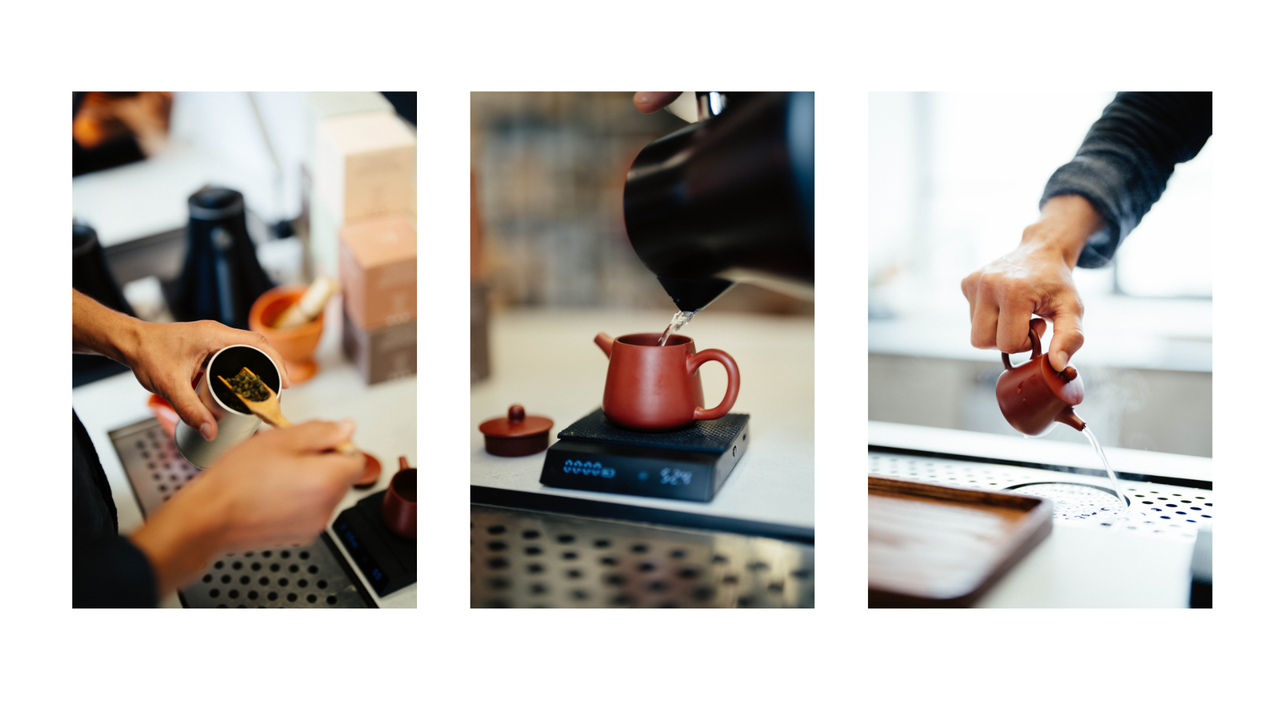
While Ernestas Klevas is preparing tea before the interview, I examine the cup and am pleasantly surprised to discover that its manufacturer is Jiesia. The local porcelain legend, in my eyes, is somewhat undeservedly forgotten today. Thus, before the interview even begins, we chat about the suitability of Jiesia products for tea and their production, which was created specifically for Ernestas’s teahouse.
(This text was published in the August 2026 issue of the magazine “Kaunas Full of Culture”, titled “Refresh”)
While in Nepal collecting data for his postgraduate thesis in Public Health, Ernestas travelled to remote mountain regions. There was little industry there, and the local population relied largely on tea cultivation. Until then, he had never heard of Nepalese tea as a high-quality raw material.
He began buying tea directly from growers he had come to know. During his travels, he saw how little they were paid for their harvest. Much of the tea either remained on the local market, where purchasing power was limited, or ended up in the hands of Indian middlemen. They would transport the Nepalese tea to Darjeeling and sell it as Indian Darjeeling tea. According to Ernestas, that situation is gradually beginning to change.
“It’s still somewhat related. You buy it from people; they get money for food, can go to the doctor, and send their children to school. In Nepal, everything comes down to finances. The more money they have, the better their health,” says the founder of Tealure.
Black Belt And Tea Fields
Tea entered Ernestas’s life long before Nepal did. Growing up in Palemonas, his parents would receive high-quality tea from friends who travelled abroad, which was far superior to what was available on ordinary supermarket shelves. Looking back, he believes this probably helped shape his palate from an early age. His father worked with wood, producing parquet flooring, boards, and other wooden products, so the family’s business environment may also have left its mark. “Business is a contagious thing,” he says.
Karate occupied much of Ernestas’s childhood and youth. He began training in the second grade, later became a member of the Lithuanian national team, won the Lithuanian championship several times, and achieved respectable results in European junior competitions. While living in Denmark, he also represented the Danish national team. Karate introduced him to his first glimpses of East Asian culture: the dojo, Japanese calligraphy, Okinawa, and the image of a sensei dressed in a kimono. “I still have one dream left – to earn my black belt in Japan,” he says of the goal he has yet to achieve.
Ernestas earned his bachelor’s degree in Public Health at the Lithuanian Sports University in Kaunas and later completed his master’s degree in Denmark. During his studies, he spent a semester on exchange in Australia, after which he travelled for six months through India, Nepal, Thailand, Cambodia, Laos, and Vietnam.
Nepal was meant to be the final stop on his journey, but he ended up staying for another six months. He rented an apartment in Kathmandu, made local friends, worked on his master’s thesis, and travelled to other regions to conduct interviews for his research. It was during these trips that he first encountered Nepal’s tea plantations.
The business did not begin with a sudden decision or an overnight success. While living in Denmark, Ernestas took on various side jobs. For a time, he worked as the driver for the Nepalese Ambassador, occasionally accompanying him to official events, including meetings in The Hague.
“That’s where the online shop began, and I started supplying small amounts of tea to local stores,” he recalls. For the first five years of his business, he did everything in Denmark and in Danish. As for Nepali, Ernestas knows only a few basic phrases – enough to ask for directions and to say that he is lost.
When Importing Was No Longer Enough
Ernestas describes himself as a tea creator rather than simply a tea merchant. At first, Nepal itself was what fascinated him. Later, he expanded to other countries, but his guiding principle remained unchanged: travel, meet the farmers, buy directly from them, and oversee the entire supply chain. On tea farms, he tastes tea, stays with the growers, and sometimes makes tea with them.
A few years later, kombucha appeared – another expression of the same tea, one that reflected more of his own creative choices. Ernestas selects the tea, adds herbs, spices, and other ingredients. Later, he began making tea chocolate. “I was bored during the winter, so I wanted to delve deeper into tea processing,” he recalls. From bean to bar, he personally oversees the roasting, grinding, blending, and incorporation of tea.
For many people, their knowledge of tea begins and ends with its colour, green or black, so a tea entrepreneur inevitably must become an educator as well.
“A lot of brands sell an experience: attractive packaging, a pleasant aroma. Most of the tea on the market is flavoured. The base tea is often fairly poor quality, with a very weak, bland taste, so additional ingredients are added to give it character,” Ernestas explains.
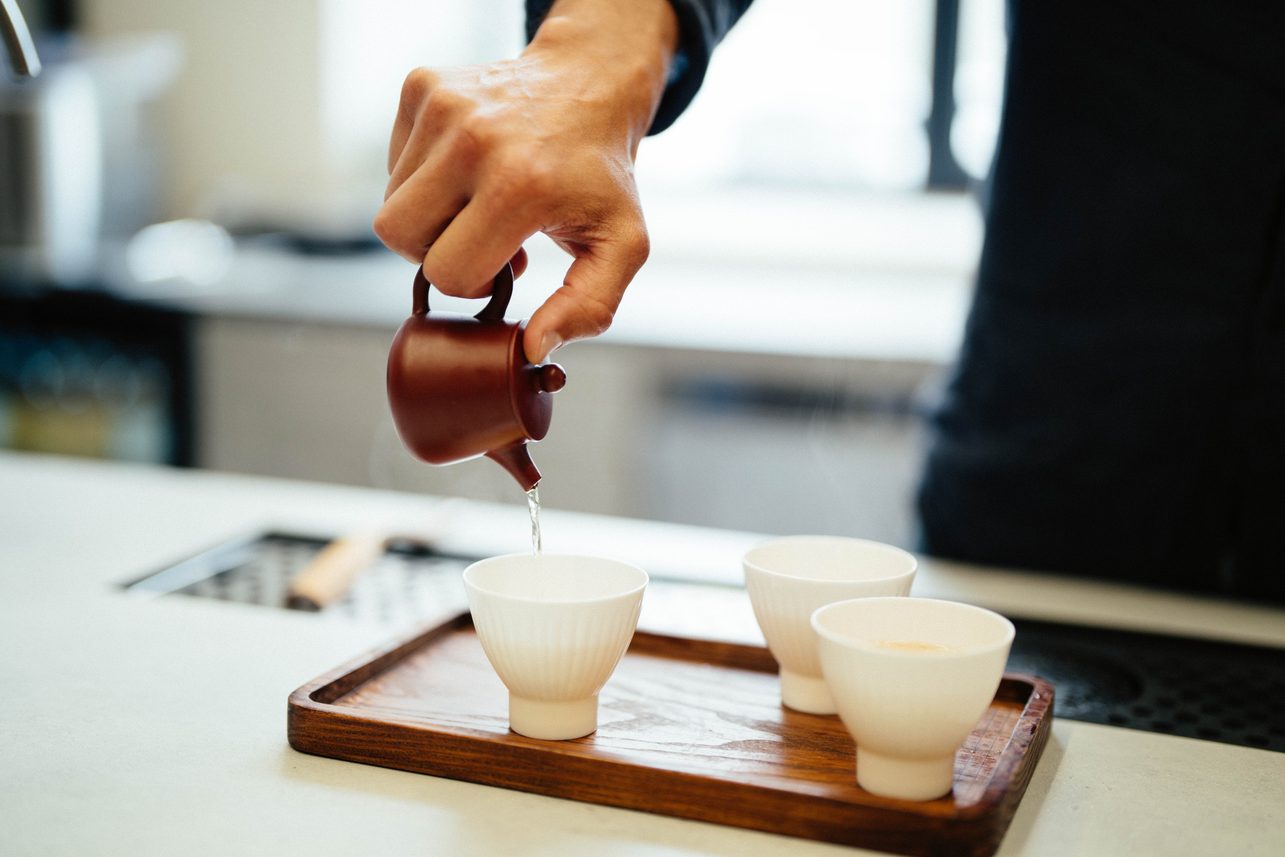
For Tealure, he looks for tea on small farms, often located high above sea level. Here, the plants grow more slowly and have more time to develop the compounds that determine their flavour. Customers need to understand why such tea is more expensive and why factors such as water temperature, brewing time, and other conditions are important for bringing out its full flavour.
People are gradually moving towards specialty tea. Ernestas observed a similar shift in the coffee market a decade ago, and now some tea drinkers are also beginning to care about the tea’s origin, story, and flavour. He describes specialty tea as the original form of tea: mass-market commercialisation came later, because tea of this quality cannot be produced in the quantities or at the prices demanded by the mainstream market. Large tea plantations are often established at lower elevations, where the plants are more susceptible to pests, resulting in greater use of pesticides and herbicides.
In China and Japan, specialty tea existed long before tea bags were introduced. Ernestas describes Nepal and Thailand as younger tea-producing countries that have adopted expertise from their neighbours. In some areas, farmers were encouraged to replace opium fields with tea bushes, while specialists from Taiwan, China, and India passed on their tea-making knowledge to local growers.
On a small farm, only a limited selection of teas is produced from each harvest: one white tea, several green teas, and black teas with varying levels of oxidation. If they sell well, they are produced the following season again. Other farmers experiment with oxidation, combine different production methods, and create teas that are difficult to place within conventional categories. These teas find their way to importers seeking unusual products or to high-end tea houses in France and Germany. Lithuania, too, has a small community of people eager to discover new flavours.
The Community Needed A Festival
After returning to Lithuania from Denmark, Ernestas initially settled in Vilnius. For about six months, he and a friend tried to establish a tea house at the Bernardinai Market. The project worked for a while, but foot traffic at the market began to decline, while living on Pilies Street, right in the city centre, became exhausting. He closed the business, moved sales online, and relocated both his newly launched kombucha production and himself to Kaunas.
For a long time, he didn’t know how many tea connoisseurs and lovers there were in Lithuania. The answer came with the first Lithuanian Tea Festival, held last year, which attracted more than a thousand visitors. Lithuania has no established network of tea houses. Ernestas mentions Jurginas and Tealure, although he does not consider the latter a typical teahouse either, while visits to other tea sellers often have to be arranged in advance.
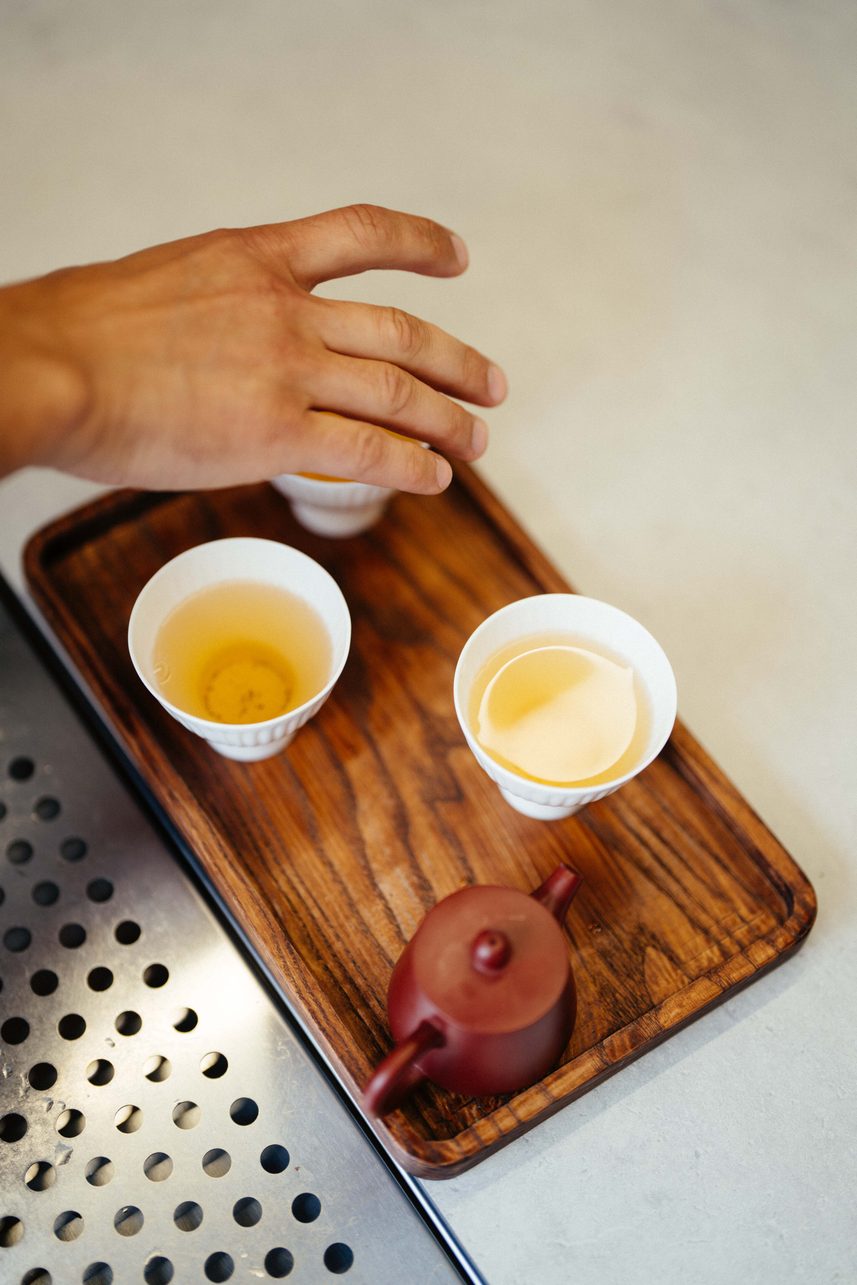
There is also Vilkustė, a community that brings together tea enthusiasts. Its members meet outdoors or in cafés to brew tea and share their knowledge. Social media groups, meanwhile, often go through cycles: they grow rapidly and are highly active at first, only to fade away later. What was missing was something that could bring people involved with tea together in one place at least once a year. It was out of this need that the festival was born.
The first festival, held in Vilnius, brought together Lithuanian and international tea producers, growers, and sellers – around ten brands from Poland, the Czech Republic, India, and other countries. Visitors could prepare and taste tea under expert guidance and attend lectures on different types of tea and tea-growing regions. The festival will return this October.
Tea Without Excessive Rules
In some regions, the origin of tea is protected by geographical indications. The name Darjeeling, for example, may be used only for tea from that specific region.
Water is also crucial to the taste of tea, as it makes up about 99 percent of the prepared drink. In Denmark, Ernestas had a colleague who would bring Greenland glacial meltwater, with its distinctive mineral composition, specifically for brewing tea. At the Tealure teahouse, one filter leaves some minerals in the water used for brewing tea, while another completely purifies the water used for washing. The latter is unsuitable for tea, as minerals help bring out its flavour. Still, Ernestas does not want to get lost in the smallest nuances. He aims to reach a broader audience – one that does not necessarily care about every last detail of the water or the tea leaf.
Trends play a role in the tea market as well. The most obvious example is matcha, which is used in drinks, food, and cosmetics. Ernestas does not believe it is a passing fad. Consumers are placing increasing importance on a product’s origin, natural qualities, and minimal use of additives. Some are also giving up tea bags because of concerns about microplastics. In his view, black tea is becoming less popular, while green tea and other lighter varieties are gaining ground partly because they look more vibrant in social media images.
In Lithuania, herbal infusions are also commonly referred to as “tea”. Ernestas, however, uses the term only for beverages made from the Camellia sinensis plant: white, green, and black tea, pu-erh, and other teas derived from the same plant. In English, the terms tea, tisane, and infusion help distinguish true tea from herbal infusions, whereas Lithuanian has no commonly used separate term for the latter.
Tea is also a ritual, but Ernestas prefers a middle ground. He does not want to turn its preparation into a rigid sequence of steps. “If you overcomplicate the whole process of making tea with tiny details, you automatically alienate people. Sooner or later, they’ll make a mistake and feel discouraged,” he says.
Teapots, cups, ceramics, and natural materials refined over centuries can help prepare tea properly, but there is no need to burden oneself with excessive rules. Nor does Ernestas object to the familiar image of tea as something to drink when you are cold, ill, or have a sore throat: if grandma, honey, and a cup of tea on a cold evening make you feel better, great.
Tea can be paired with food, desserts, cheeses, or meat, but he has no intention of steering every customer towards the world of fine dining. For him, a simpler question matters more: when do you feel like having tea, and what kind of flavour do you want at that moment?
Ernestas drinks tea all day. He starts the morning with black tea and pu-erh, later moves on to oolong and green tea, and finishes the evening with white tea. The flavours progress from the most intense to the most delicate. Tea can also be chosen according to a person’s temperament: green tea can give a more laid-back person a boost, while pu-erh or black tea may suit someone more intense who wants to slow down.
Herbal infusions can have a calming effect, whereas teas made from Camellia sinensis are stimulating. Matcha has the strongest effect because the entire ground leaf is consumed. The caffeine content of green, black, and white tea or oolong is determined not by its colour but by the part of the plant used: young leaves, which produce caffeine as a defence against pests, contain the most. Those looking for less caffeine can opt for genmaicha – green tea with roasted rice – or Japanese hojicha, made from older leaves and the woodier parts of the tea plant.
The Northernmost Festival And Four Hectares Near Kruonis
Ernestas wants to develop the Lithuanian Tea Festival into one of the largest of its kind in Europe. To his knowledge, neither Latvia nor Estonia, Finland, Sweden, or Norway has such an event. The nearest one takes place in Poland.
The current venue limits the festival’s potential for growth. This year, the event will be held in the same location, but next year the organisers plan to look for a larger space and develop the festival into a Northern European hub for tea culture. After the inaugural event, every participating vendor who responded to the survey reported being satisfied with their sales. For Ernestas, this is one of the most important factors: if the festival is financially worthwhile for vendors, they will want to return.
He sees the future direction of the business in an integrated farm in Kaunas County. Herbs would be grown and processed there, kombucha and other non-alcoholic beverages would be produced, and the farm would host educational activities and longer stays. The ultimate goal is to produce non-alcoholic beverages on an industrial scale while keeping the entire process in one location.
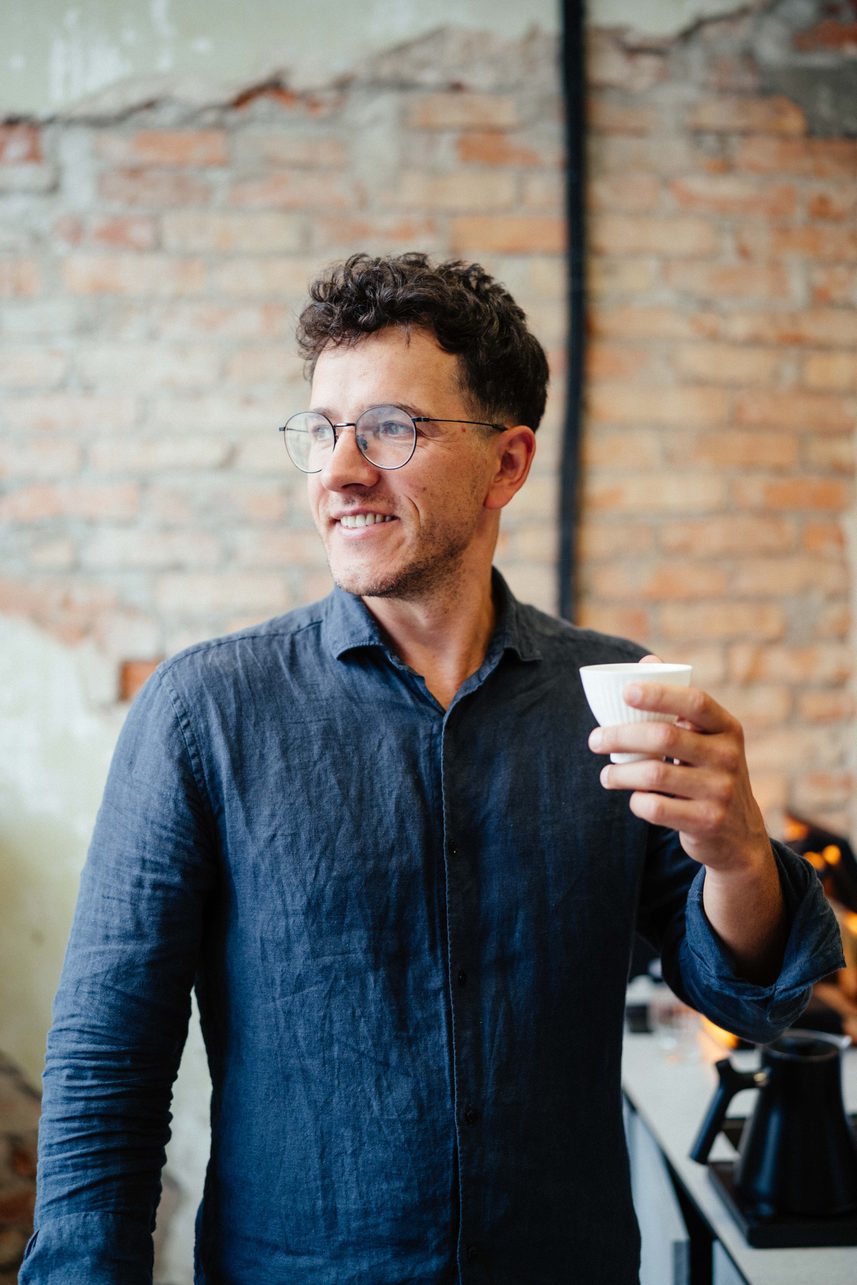
Ernestas has no plans to grow traditional tea in Lithuania. Instead, the farm would cultivate fireweed, lemon balm, thyme, mint, and other local medicinal and aromatic plants, some of which he is already growing on a trial plot. The herbs would be used as additions to tea imported from Nepal and other countries, as well as a base for kombucha. Tea bushes are grown in Denmark, Scotland, and Portugal, but in more northerly climates they require greenhouses and a great deal of additional work. Ernestas sees little point in attempting the same in Lithuania when the country already has such an abundance of native plants.
He would not sell the herbs separately as raw materials; they would be used on the farm to create finished products. For Ernestas, it is important to produce in Lithuania and control the entire supply chain: from tea farms in Nepal and other countries to production here and his own physical retail locations.
He has already searched for a suitable farm. In Kaunas County, he found a property on the banks of the Nemunas with a production facility and a wooden building, but he was unable to secure a loan, and the owners later decided not to sell it after all. Ernestas himself owns four hectares of land in the Kruonis area. The property has a pond, with the Dubrava Forest, Kaunas Reservoir, and the Nemunas nearby. The site is remote and has no access road, so considerable investment in infrastructure would be required. Nevertheless, Ernestas is considering establishing the farm there, allowing him to remain close to Kaunas.