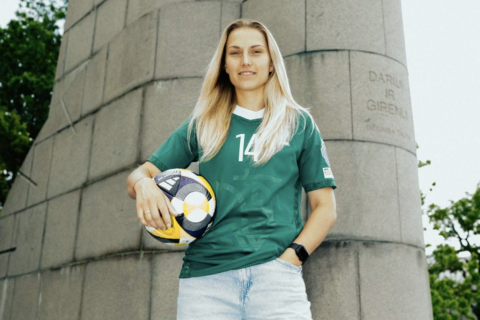
Kaunas is a city of football, women’s football, and women’s amateur football. We talk about Drama, a club where long-time athletes and newcomers lacing up their boots for the first time are equally welcome, with center-back Ingrida, midfielder Ugnė, and full-back Deimantė.
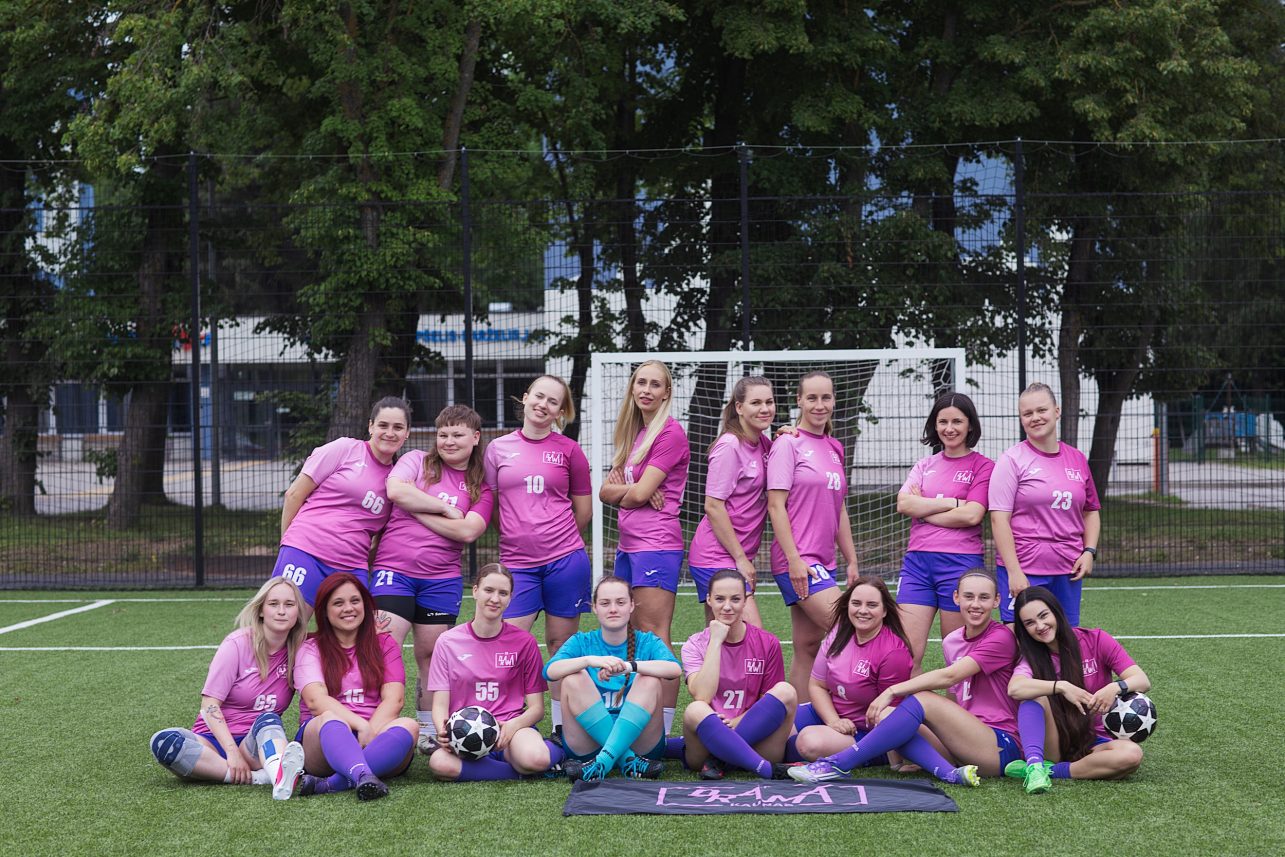
(This text was published in the July 2026 issue of the magazine “Kaunas Full of Culture,” titled “Football”)
You play football in a basketball city. Why? Or perhaps Kaunas is also a city of football?
Ugnė: Trends are changing little by little. There are more stadiums, and football is becoming more visible and accessible, both live and through broadcasts. This is encouraging Kaunas to gradually discover this sport. We can see how FK Kauno Žalgiris changed when the new stadium appeared: the number of spectators grew, and children’s academies are full of young talent. I think we are about to break this stereotype of a “basketball city.”
Ingrida: When I started playing football at school 20 years ago, the reactions were always the same: “A girl playing football? But that’s a man’s sport!” Now, women’s football gets a lot of publicity: we have the A Lyga, the First League, and amateur leagues. Previously, no one would have even thought about amateur football. Today, a woman in football gear on the pitch no longer surprises anyone. The change, compared to what it was two decades ago, is enormous.
Did Drama come from drama?
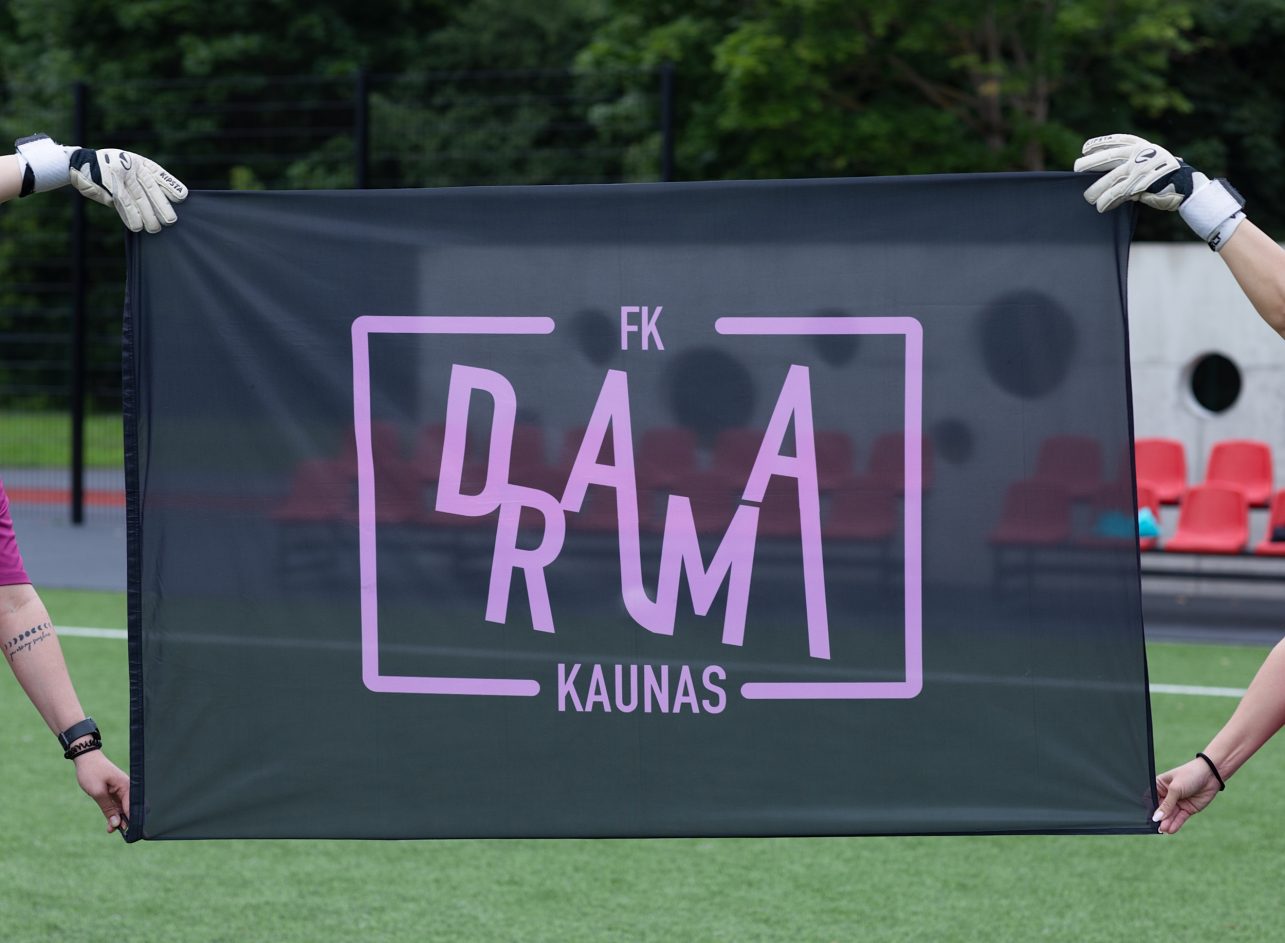
Ugnė: This name appeared quite recently. About three years ago, a number of new girls joined, and we started discussing that the old name, “Damos” (Ladies), didn’t suit us. We look at each other on the pitch – well, what kind of ladies are we? (laughs) After long discussions and some drama brewing in the team, someone joked: “Well, why not ‘Drama’?” At first it sounded strange, but after the tenth time, it stuck.
Deimantė: The core of the team changed, coaches changed, and there were disagreements that once split one team into two. Later, the number of girls decreased and the team began to fade. However, we wanted to play sports, so we sent out messages through social media that we were looking for members. We invited everyone, not necessarily those who knew how to play; the most important thing was and is the desire to try. That’s how Ingrida, Ugnė, and many other girls came. Now everything is running perfectly.
Ingrida: Regarding the name, I can add that we are very happy with the change. We often go to international tournaments, and everyone abroad praises our name. Since the renaming, a new stage for the team has begun. As Deimantė mentioned, at one point the girls wouldn’t show up for training, and there was a sense of disappointment. I personally wanted to return to football after many years, but I had doubts: maybe it would be too hard, I wouldn’t be able to keep up, and I knew little about amateur leagues. However, that advertising worked. Many new people came, and a very strong core was formed that has remained until now. Drama for us is now not just a sport; it is a community that has united us.
You travel quite a bit with the club. What else do you bring back from tournaments abroad, besides victories and losses?
Ugnė: I see it primarily as team building. Of course, on the pitch you always want victories, new experiences, and excitement. However, on trips we get to know each other in a completely different environment, outside the pitch, and we become friends, not just teammates. It is also very interesting to see how amateur football is developed in other countries and what the level of the opponents is there.
Deimantė: We plan trips to balance sport and rest. One day we play, and the others we dedicate to getting to know the country: we go on hikes, visit tourist attractions. We travel like one big family. Football is often just the beginning of the journey.
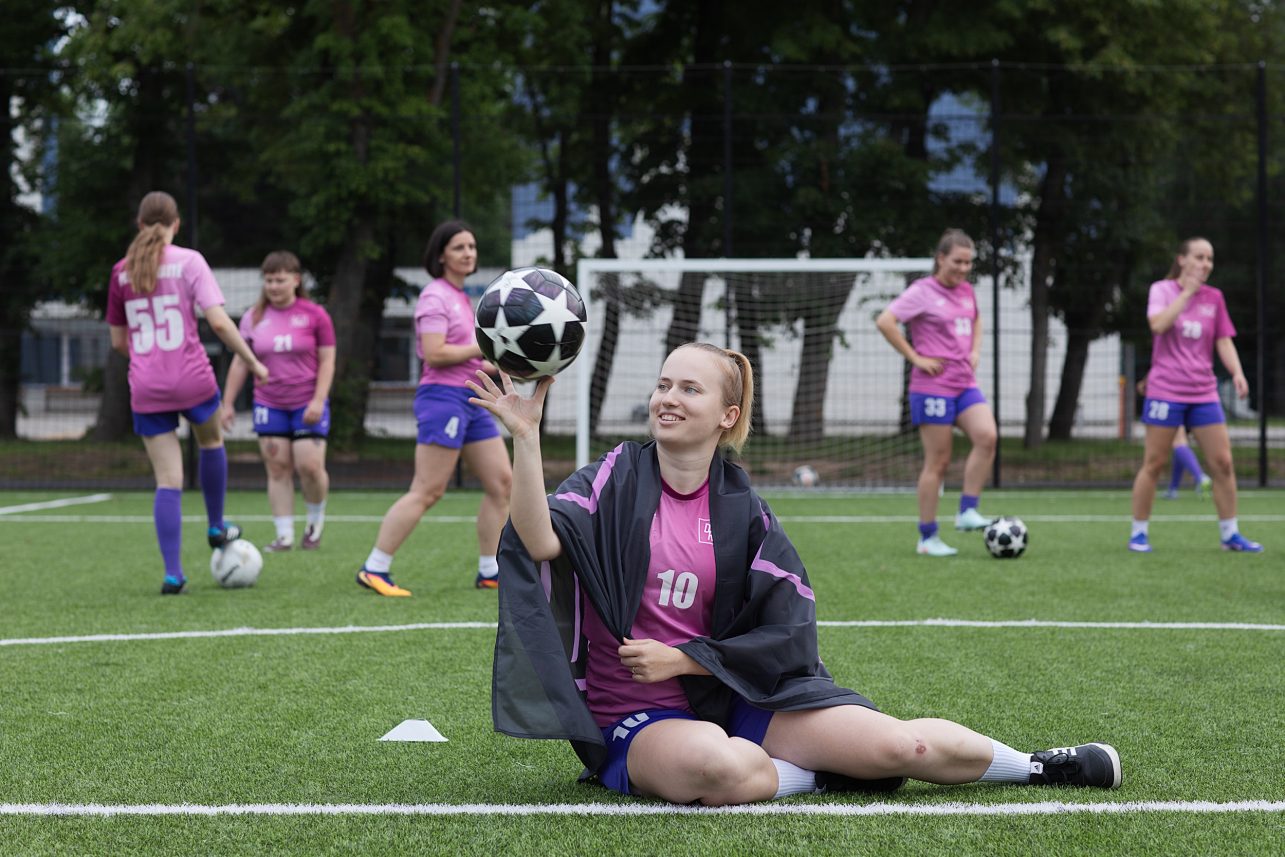
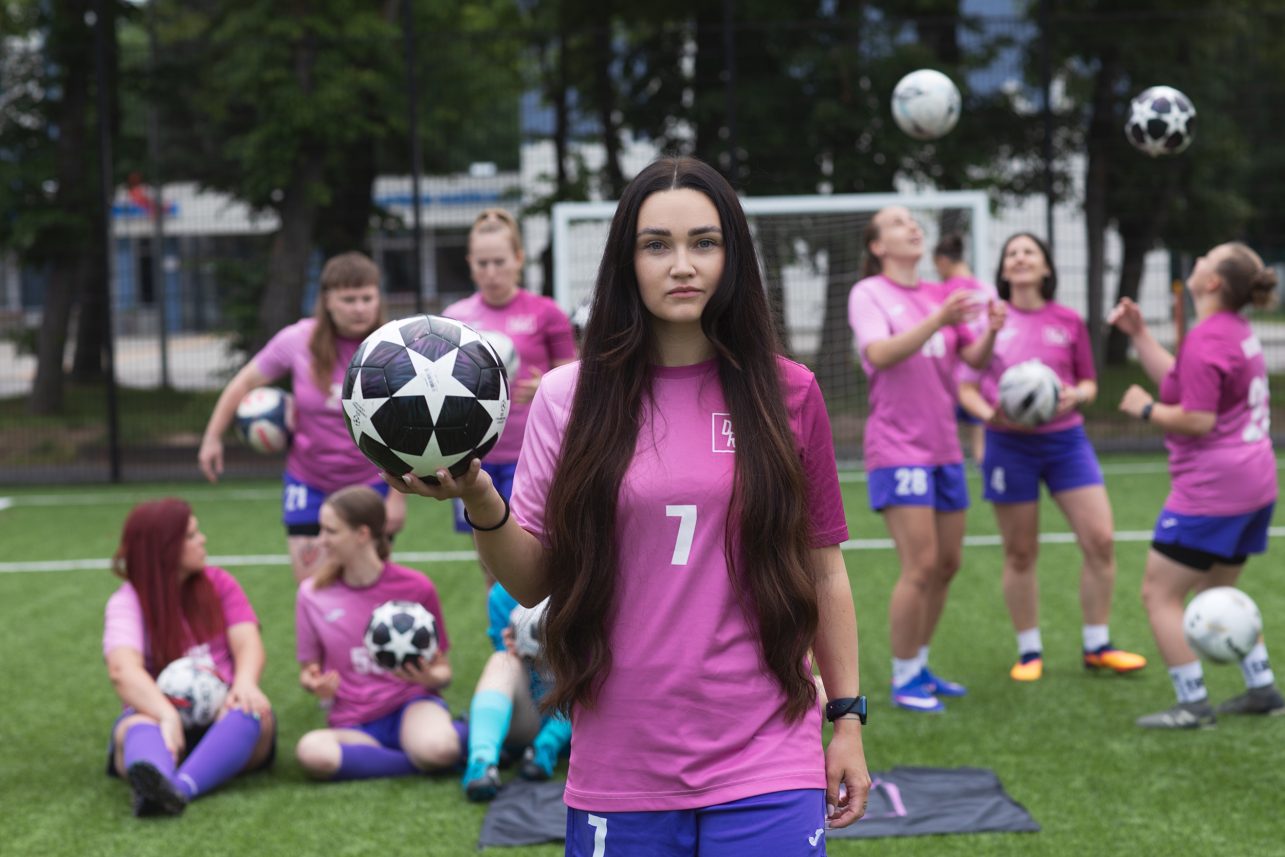
You spend quite a few hours together during the week. What else do you learn during training, besides football tactics?
Deimantė: We have come together from all corners of Lithuania: students, working women, or those who stayed in Kaunas after their studies. We are very different, so the most important thing we learn is communication and the ability to talk to each other without anger. There are no major conflicts in our team because we learn to accept each other.
Ugnė: Yes, emotional flexibility develops. You learn to adapt to every character. We already know each other and know who can be told a harsher word without offense, and who needs to be spoken to more gently. We look for points of contact. That is why our team does not fall apart; we are well-glued together, that is our greatest strength.
Ingrida: Horizons expand significantly in the team because our professions, hobbies, and ages differ. Being together, we learn about each other’s talents and use them for the benefit of the team. For example, in tournaments, one takes photos, another writes articles, a third manages social media or helps with projects. Everyone brings their own contribution, and that is how we grow the club.
What makes a good footballer?
Ugnė: An unselfish player who sees and supports her teammates, looking for the best solution for the whole team, not for herself. A good footballer does not necessarily have to be the most technical; the most important thing is to understand the person next to you.
Deimantė: It’s all about character traits. People often think that success on the pitch is only achieved by aggressive, loud-shouting leaders who go straight for the goal. But not necessarily. A person can be calm, a total introvert, but a wonderful player on the pitch. The essence of football is the team; you really can’t do anything here alone. If you don’t communicate and understand the team, there will be no results.
Ingrida: Deimantė’s observation is very accurate. Both introverts and extroverts come to us. Often a newcomer brings fear and uncertainty, especially if she only kicked a ball in childhood, at school, or just watched the World Cup and decided to give it a try. We accept everyone, regardless of their level. Some succeed right away, others learn more slowly. We try to encourage everyone and show movements and technique so that with each training session they feel more confident and return not only for the sport but for the community.
What is your vision for the club and football in Kaunas? What do you want to give to the city and what do you expect from it?
Ingrida: The first thought that came to my mind: I would like this team to exist until we are pensioners, and then we could play walking football together (laughs).
Ugnė: Speaking of the city: infrastructure is lacking. Many sports face this problem. In winter, everyone crowds into the same halls: children, men, women, volleyball, handball, futsal. It’s incredibly difficult to find places; not all schools let us in. I would really like to see more understanding that amateur sport is also an important part of society. We represent Kaunas: we take the city’s name abroad and across Lithuania, we organize tournaments ourselves and invite other clubs. We are very happy that the Kaunas Municipality has been supporting our projects for a couple of years.
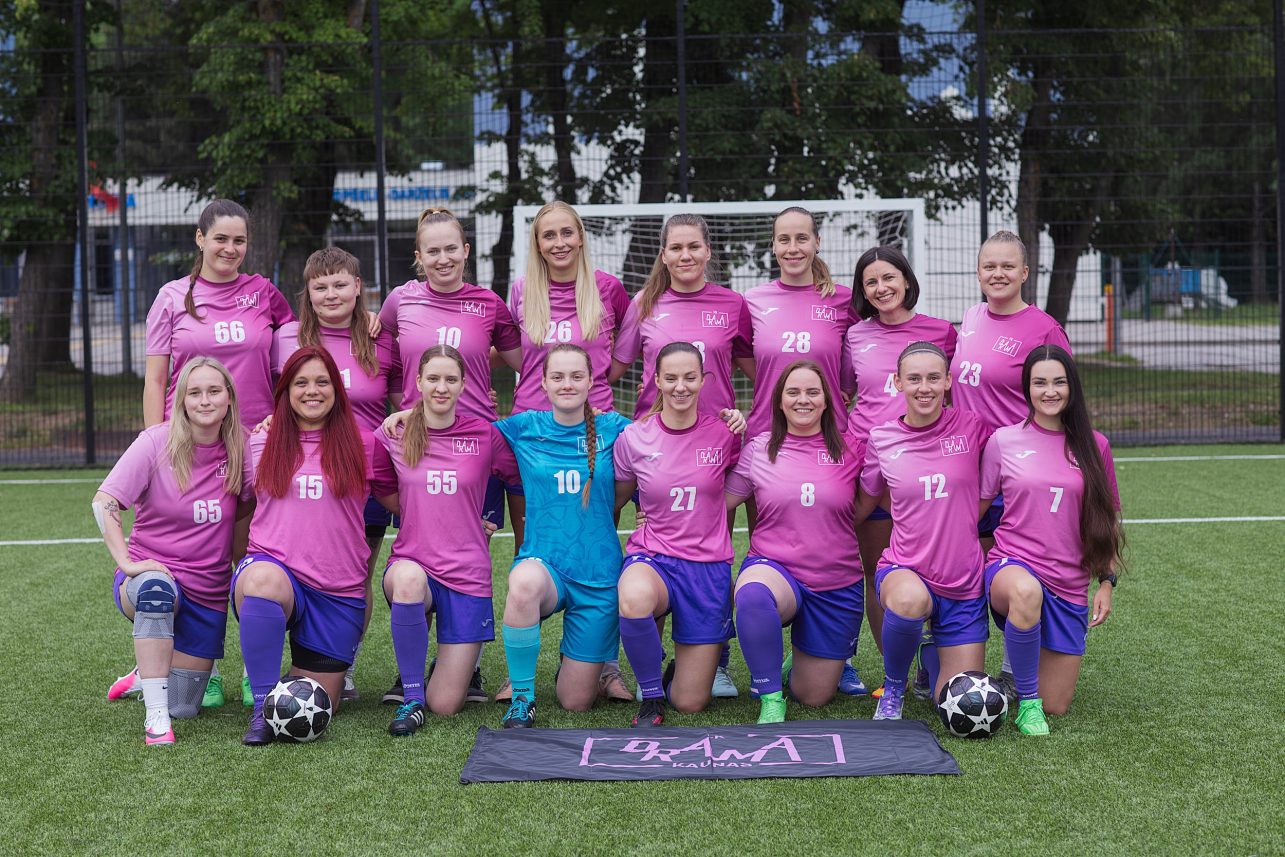
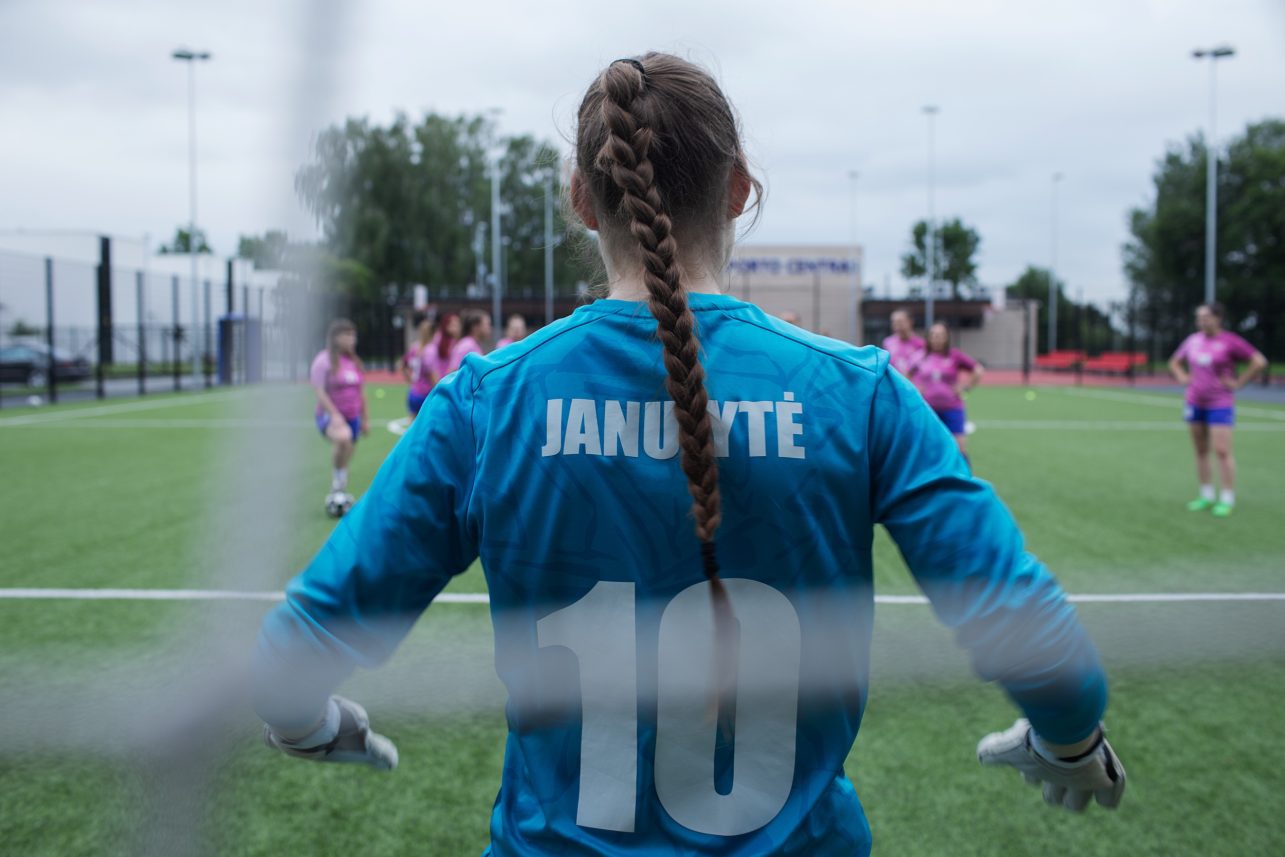
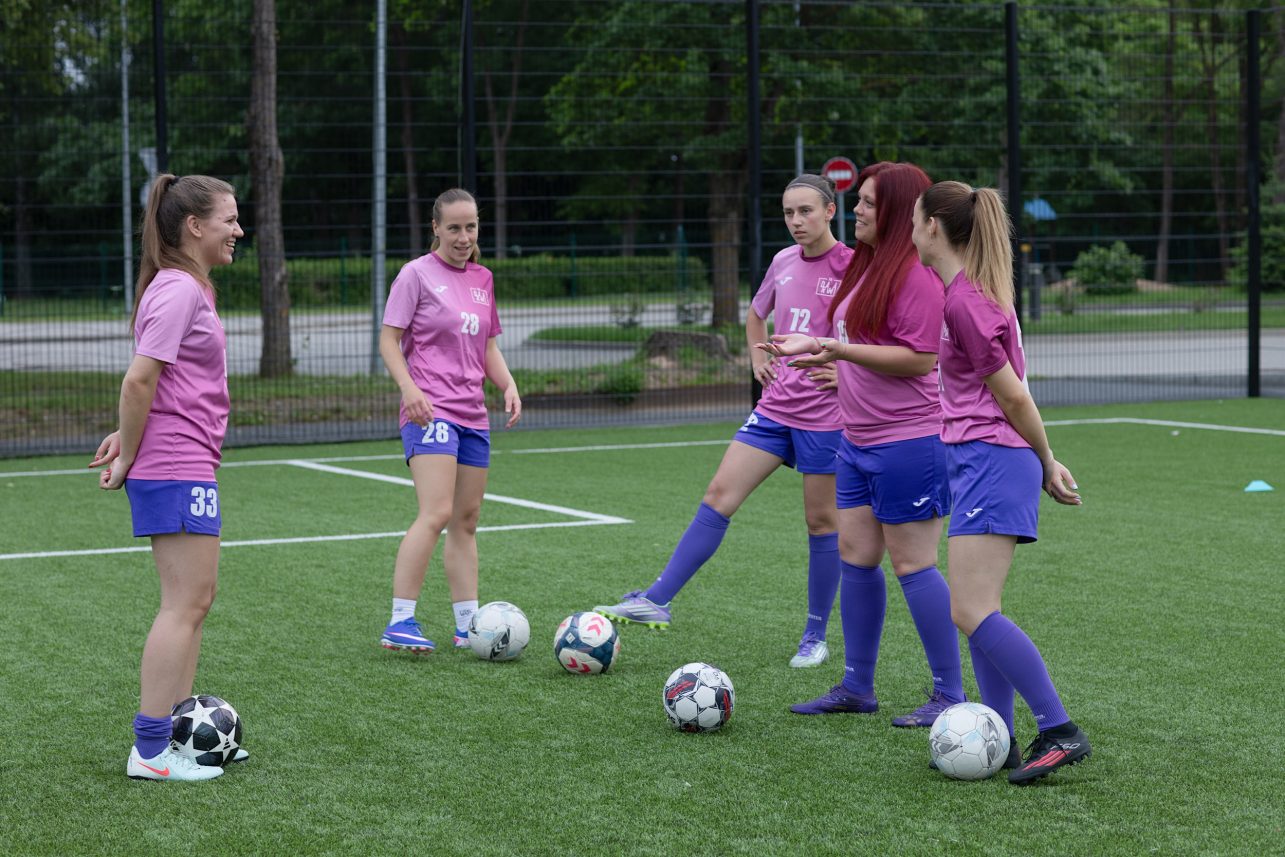
Our expectation as a team is to exist and grow. We want every girl who comes here to find her safe corner where she can simply “reset” after her routine, work, or family matters. Sometimes you come in angry after a bad day, spend time with the girls, do some sports, vent, and return home with a smile. We don’t need everyone to want to go to competitions or reach professional heights; the desire to be part of the community is enough.
Ingrida: This year we have already been to Mallorca and Poland; this weekend we are going to Latvia, and we have invitations to Greece and Portugal. We travel a lot, and we cover everything from our own pockets: hall rent, kit, travel, equipment, all just from the training fees. Therefore, the biggest dream would be to find a permanent sponsor.
Ugnė: That would be wonderful, but finding a sponsor for women’s amateur football is extremely difficult. We are a small niche; all the big finances in Kaunas are directed toward basketball, Žalgiris, or Hegelmann. This is a bit sad, but we hope the attitude will change in the future.
Ingrida: But I also want to celebrate: every year we organize the “Drama Cup,” and we do find sponsors for the tournament. We are very grateful to those who contribute prizes year after year, such as “Maistas sportui” or “Fantazijos.lt.”
We have a board in the team, and people can allocate 1.2% of their income tax to us. But of course, we dream of a general sponsor who would come and say: “We want to kit you out, put our logo on your shirts.”
What should those wanting to join the Dramas do?
Ingrida: Drama has active Facebook and Instagram pages. If you feel like it, just write a message. We accept everyone from the age of 18. We are an amateur team; we have players up to 50 years old. No specific or expensive gear is needed. The first training session is free: come, try it out, and see if you like it.
Who are you rooting for in the World Cup?
Ugnė: My heart breaks every year because I can’t choose one team. This year I’m participating in two sweepstakes in which I chose different favorites (laughs). Normally I root for the English and the French, but when I choose them, they never win, despite all the talent. And emotionally, I really want Portugal with Ronaldo to finally take this trophy before he retires: this man has given an incredible amount of energy to football.
Deimantė: My heart belongs to Argentina, but I always support Spain in championships.
Ingrida: My situation is similar to Deimantė’s. We both support Spain, although in daily life we support different clubs (Real and Barca). But in national team tournaments, Spain is always number one for me. To be sure, there is also room in my heart for Portugal and Ronaldo.