Kaunas Artists’ House (KAH), which organises numerous events and welcomes visitors to its villa, brings out the trading tables twice a year. For the sixth September in a row, they gather the city’s organisations in a single square for the Kaunas Culture Fair, and in December, we will meet again – perhaps dressed a little too warmly – in the corridors of the organisers’ home for the annual Christmas Art Fair.
I spoke with long-time participants of both events about whether it is difficult to sell one’s creations and meet buyers face-to-face – buyers who sometimes… lick your products.
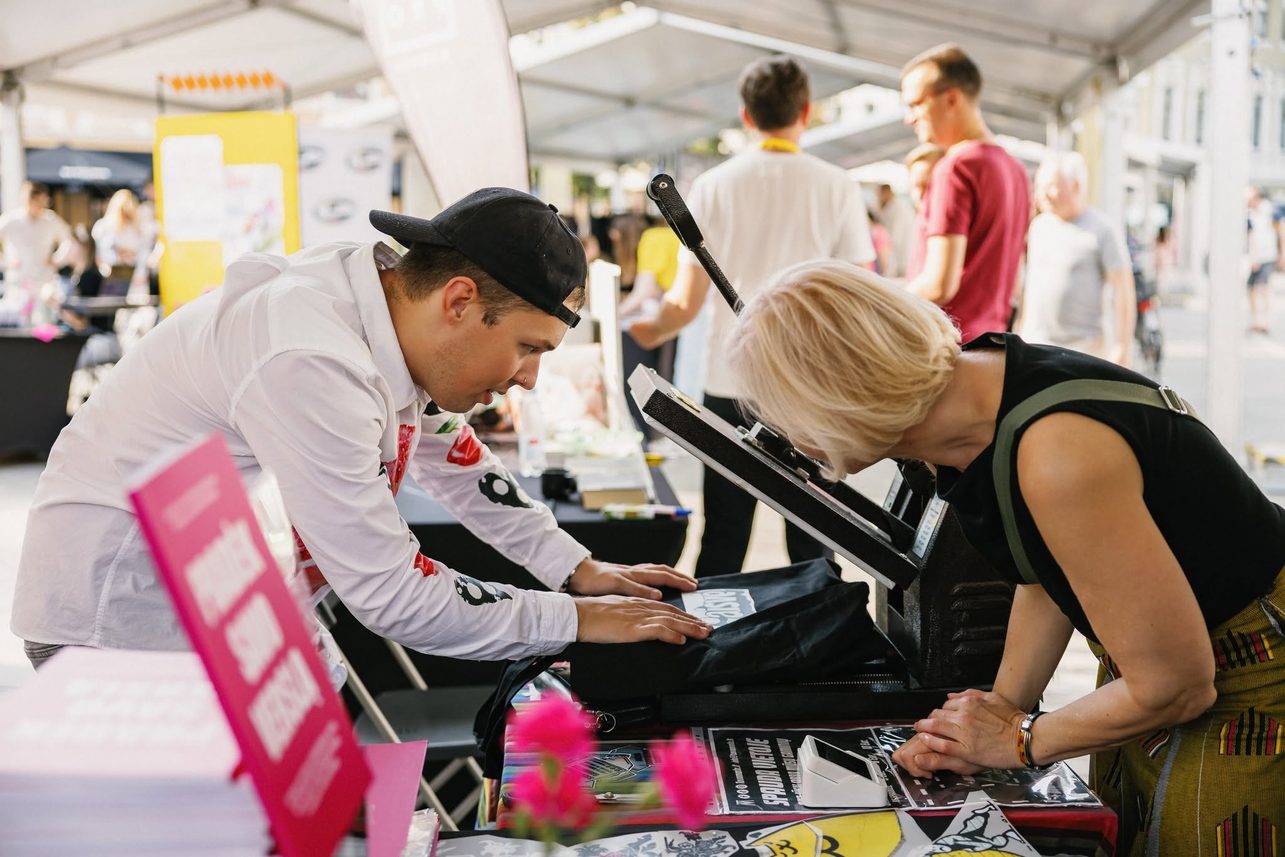
I discuss experiences at the Kaunas Culture Fair with Erika Venclovaitienė, a cultural events organiser at the Kaunas Ninth Fort Museum, and Deividas Borodulinas, the artistic director of the improvisation theatre “IMPRO Kaunas”.
(This text was published in the September 2026 issue of the magazine “Kaunas Full of Culture”, titled “Marketplace”)
Stepping Outside The Museum
According to Erika Venclovaitienė, the Kaunas Ninth Fort Museum focuses on cultivating historical memory when participating in the fair, encouraging passers-by to reflect on known facts from new perspectives.
“The museum preserves a complex but very important part of our country’s history, spanning the Kaunas Fortress, the Kaunas Hard Labour Prison that operated during the interwar period, and the Soviet and Nazi occupations. Therefore, it is important for us to find various ways to present these topics in a modern and understandable way to different audiences,” she says.
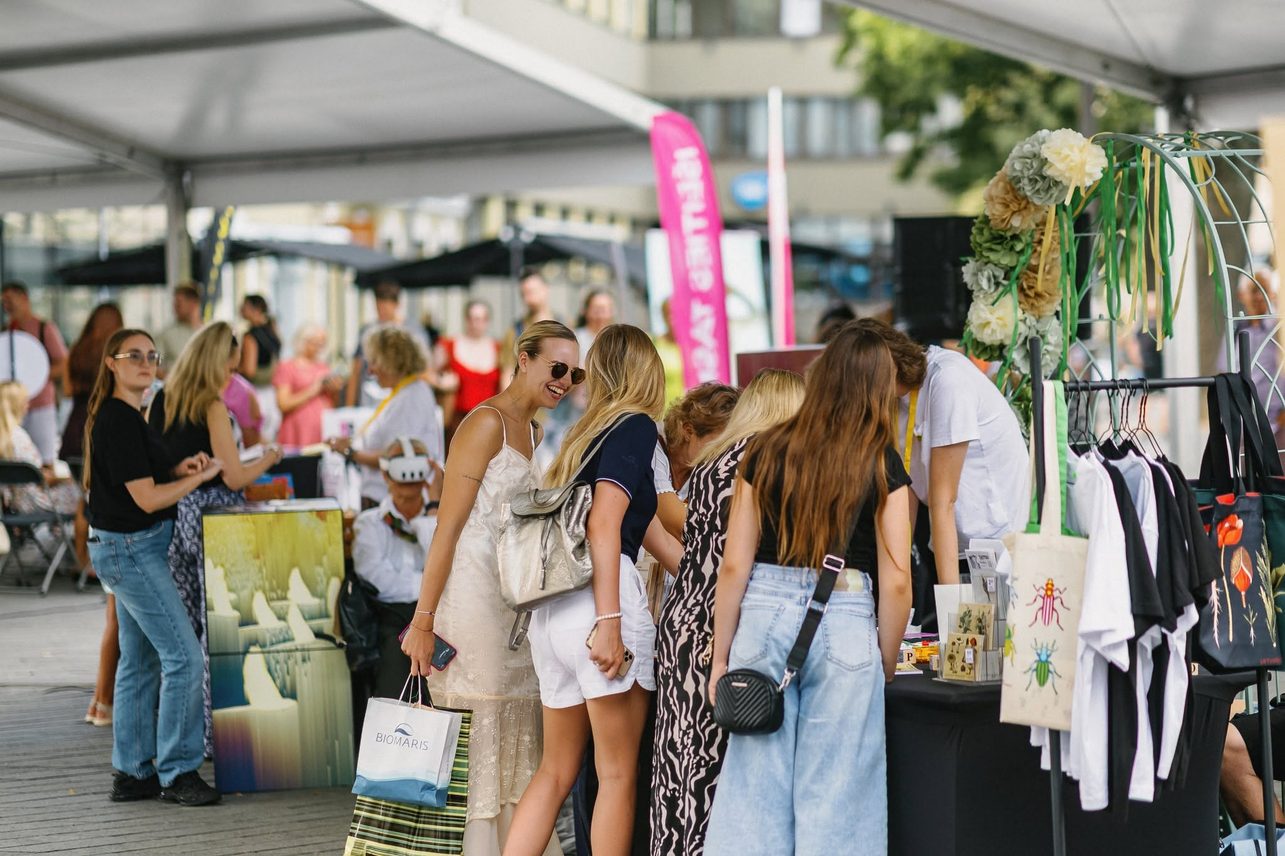
Engagement helps improve understanding – Erika emphasises that verbal storytelling must be supplemented by interactive activities at the stall. “Every encounter with visitors is a kind of test,” states the museum professional. “People’s questions and reactions help us understand what we need to explain more precisely, what is worth emphasising, and which topics are of the most interest.”
However, it is not just an exchange of ideas – there are also people who, after getting acquainted at the fair, offer to donate their family relics, documents, or photographs to the exhibitions.
I ask what participating in the fair has taught them. “For us, it is a very good opportunity to step outside the museum space and meet people in their own environment. We have conducted visitor surveys regarding the services we provide. This helps us not only to check if we are heading in the right direction but also to look at ourselves through the visitor’s eyes,” says the museum representative.
But is participation worthwhile? “It certainly is. It is an opportunity to reach people who have never been to our museum or haven’t visited for a long time. After chatting with us, they often decide to visit our displays and exhibitions or take part in educational activities. The fair gives us a chance to show that the museum is alive and open to dialogue.”
Thus, it is valuable for the museum to step out into the street so that the street might come to the museum.
What Do Theatre And Markets Have In Common?
Meanwhile, according to Deividas Borodulinas, artistic director of “IMPRO Kaunas”, it is difficult to calculate if it “pays off”. The theatre team participates in the culture fair more to maintain a tradition and to meet like-minded people from other institutions.
IMPRO teaches people how to improvise, organises team-building workshops for companies, stages audience-engaging performances and improvised talk shows, and can even turn up at your birthday party. So, talking to passers-by is presumably nothing new?
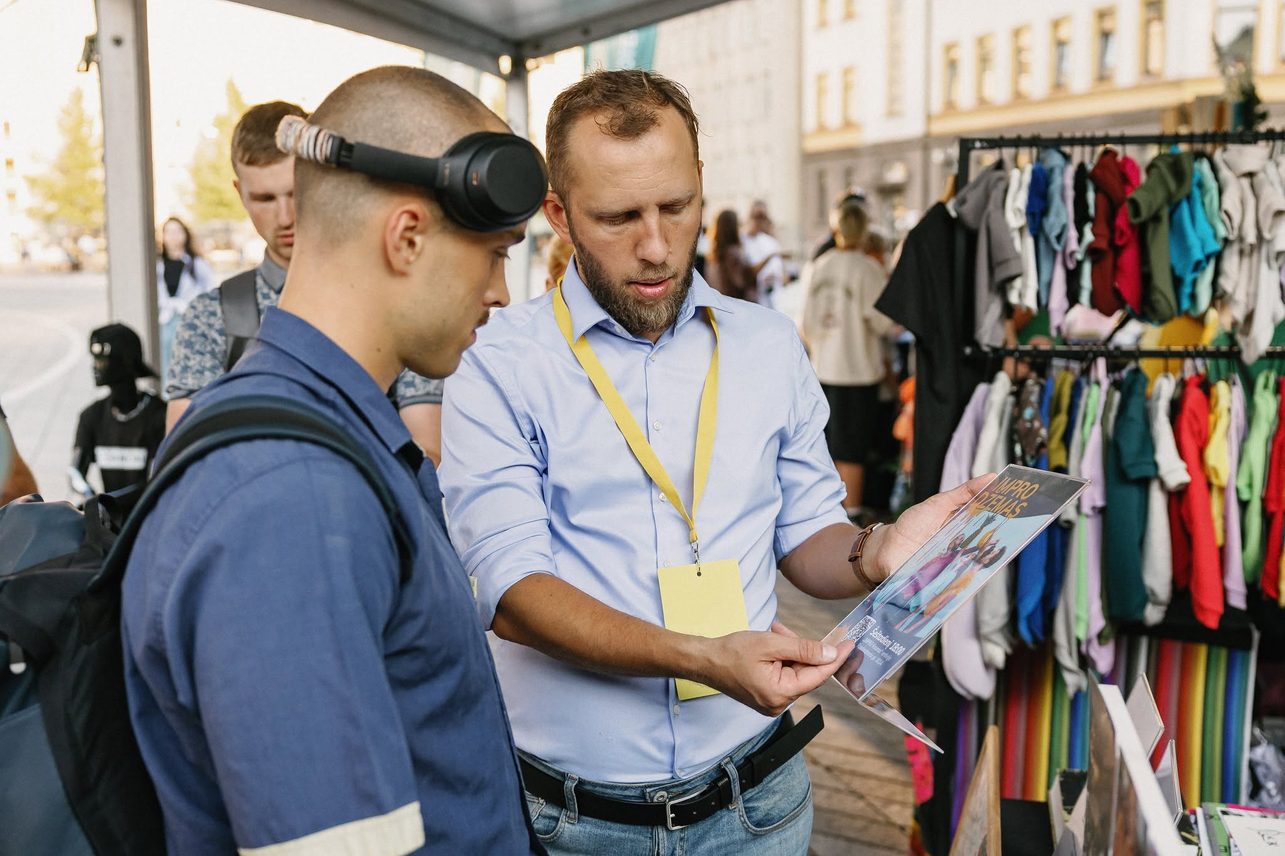
“We are the slightly more cheerful ones: we strike up conversations, make jokes, and sometimes give out tasks. We know how to approach people because we have been doing it in the theatre for many years. If you see that someone isn’t interested, you don’t push. The stage requires a similar kind of analysis; improvisation is also a form of communication with another person,” says the interviewee.
However, you cannot always plan the scenography of a city square – the actor shares memories of decorations being blown down by the wind and a screen where you can’t see a thing on a sunny day. And the assigned location for the stall, he says, is like a lottery.
I ask what could improve the experience for participants. The artistic director mentions the possibility of creating a general map of fair participants with all the information, as small leaflets often get lost. Admit it – where does the content of your tote bags end up after you return from a fair?
According to Deividas, the greater value of participating in the culture fair is intangible. “It’s just nice to chat with neighbours; those connections help a lot in the future. We’ve made friends with the Ąžuolynas Library, ‘Panemunės kinas’, the Aviation Museum, and the Puppet Theatre. In some years, talks were organised between the participants themselves – this made it possible to discover who was looking for what entertainment or partners, or to consult on spaces for performances. Even if joint projects don’t happen later, the fair becomes an opportunity simply to stay in touch. If we need each other in the future, we already know one another.”
Meeting One’s Own
We discussed the frenzy of Christmas fairs and the rhythms and anxieties of small business with Indraja Raudonikytė, the creator of textiles, ceramics, and herbal products under the brand “Pelkių žolė”, and Justina Česnauskaitė, an illustrator who immortalises Lithuanian flavours. Both interviewees value similar things about the KAH fair: good preparation by the organisers, coffee and snacks for participants, and the inspiring aura of the historic location.
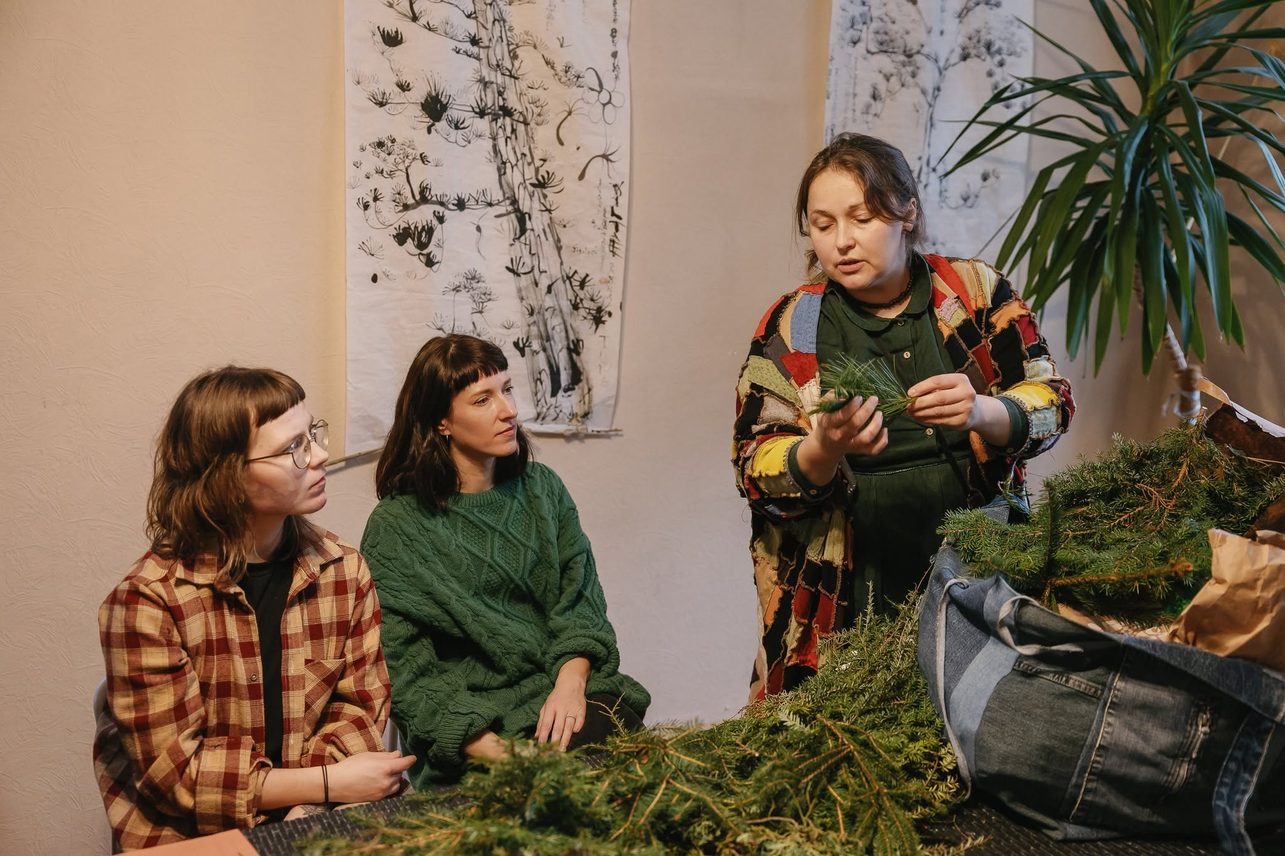
Indraja Raudonikytė’s connection with the venue is based on sentiment. A fifth-generation Kaunas resident, she explains: “It’s very intriguing to trade in the spaces I visited with my mother as a child. Back then, it was such a luxurious, specific place; you needed a permit to enter: you could get in if you belonged to the Artists’, Writers’, or Composers’ Union. My mother took me there a few times. During the first years of the fair, I was accompanied by memories: a piano stood in this spot, there was a bar over here…”
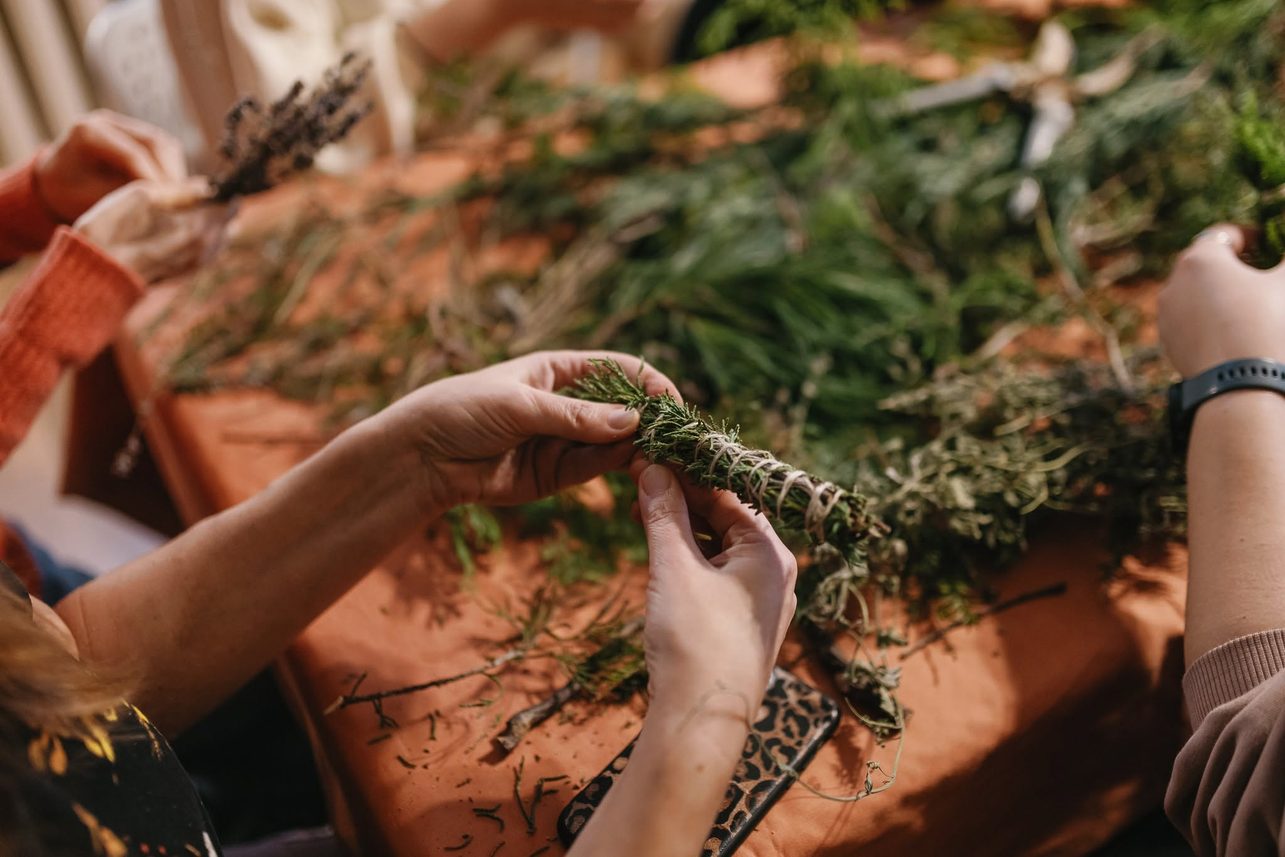
Today, on the “Pelkių žolė” table, you will find aromatic herbal teas, natural soaps, tied and moulded incense, and clay incense burners for them to rest on.
You will meet the artist not only in the trading hall – she has already led incense-tying workshops twice. “There was even a funny incident: I left my teenage daughter at the stall and went to lead an educational session. Half-seriously, half-joking, I said: ‘You can keep all the earnings for yourself.’ I thought, well, what can one sell in those 40 minutes? When I returned, I couldn’t find a single packet – she had sold them all,” Indraja laughs.
However, she admits she had doubts about joining the fair: “In the first year, I approached it very carefully – I had been burned by unpleasant experiences at other fairs. For me, as a creator and craftsperson, it was also market research – would I find my people there? Today I realise that this is probably the most comfortable Christmas fair; I am in my element there.”
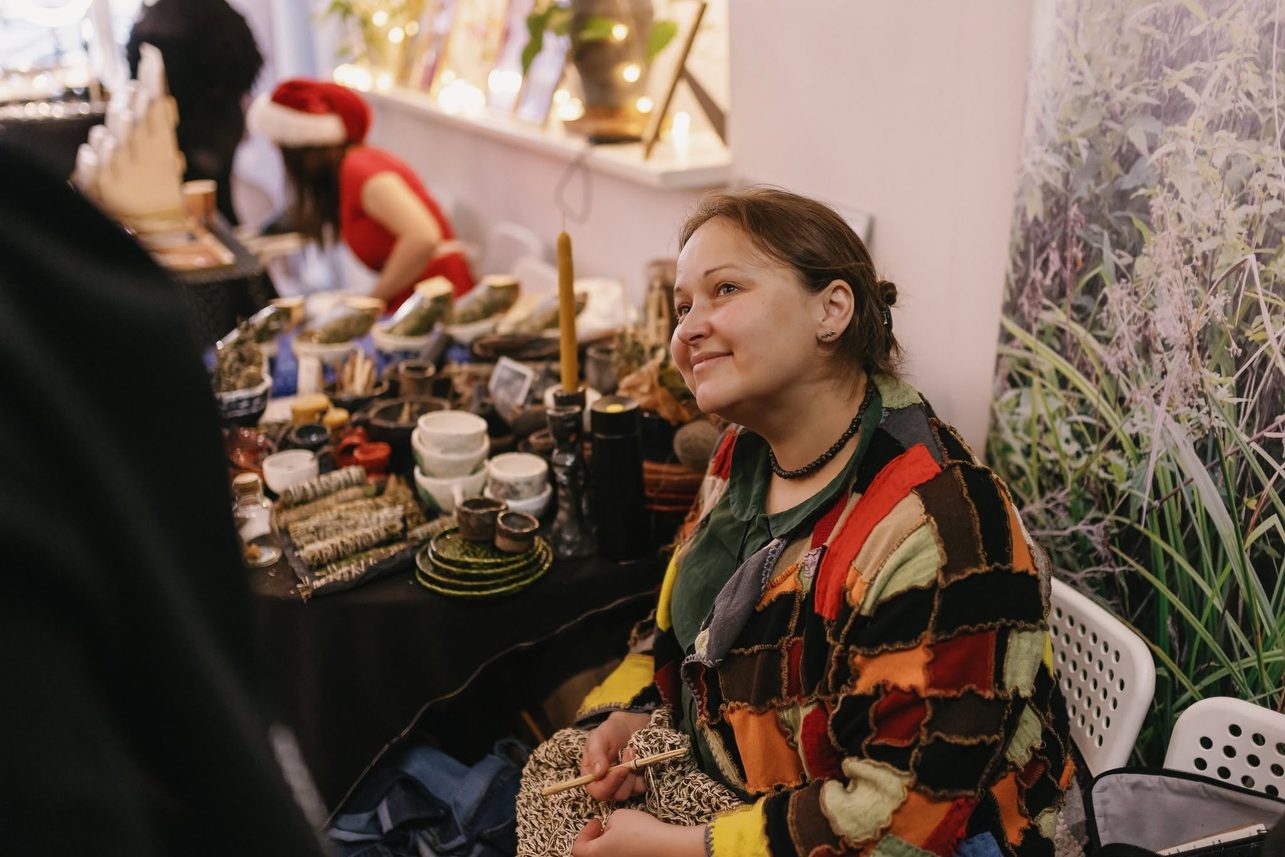
There are painful cases, the interviewee confesses, when you are invited to a craft fair only to find yourself surrounded by Chinese toys and candyfloss. “You feel like an astronaut – standing there with your ceramics and herbs, while people around you are almost pointing fingers: ‘Look, a witch!’ But at the Artists’ House, when you come with your creations, you feel safe. Among your own.”
At the end of the second day, she says, there is even an exchange of products between the creators!
We discuss the increased number of Christmas fairs with the creator. Every weekend in December, one can certainly run through at least two or three. Is this beneficial for small creators?
“All organisers anticipate what kind of customers they will attract. Perhaps the most important thing is to choose the fair where you will meet your target audience. And, of course, you have to put in a bit of effort yourself regarding publicity, reminding your followers through social media,” she says.
The pace of visitors, however, affects the more distant tables. According to the participant, creators who are given spots on the second floor often feel sad because they don’t receive such a large flow of visitors. So, until December, don’t forget – during your visit, make sure to head up the narrow interwar stairs. You’ll be warm anyway.”
Buyers Of Nostalgia
Illustrator Justina Česnauskaitė describes her work vividly: “I sell emotion and nostalgia.” On the creator’s counter are postcards and pictures depicting sentiments of Lithuanian culinary heritage: šakotis, cabbage rolls, and a recipe for fried bread.
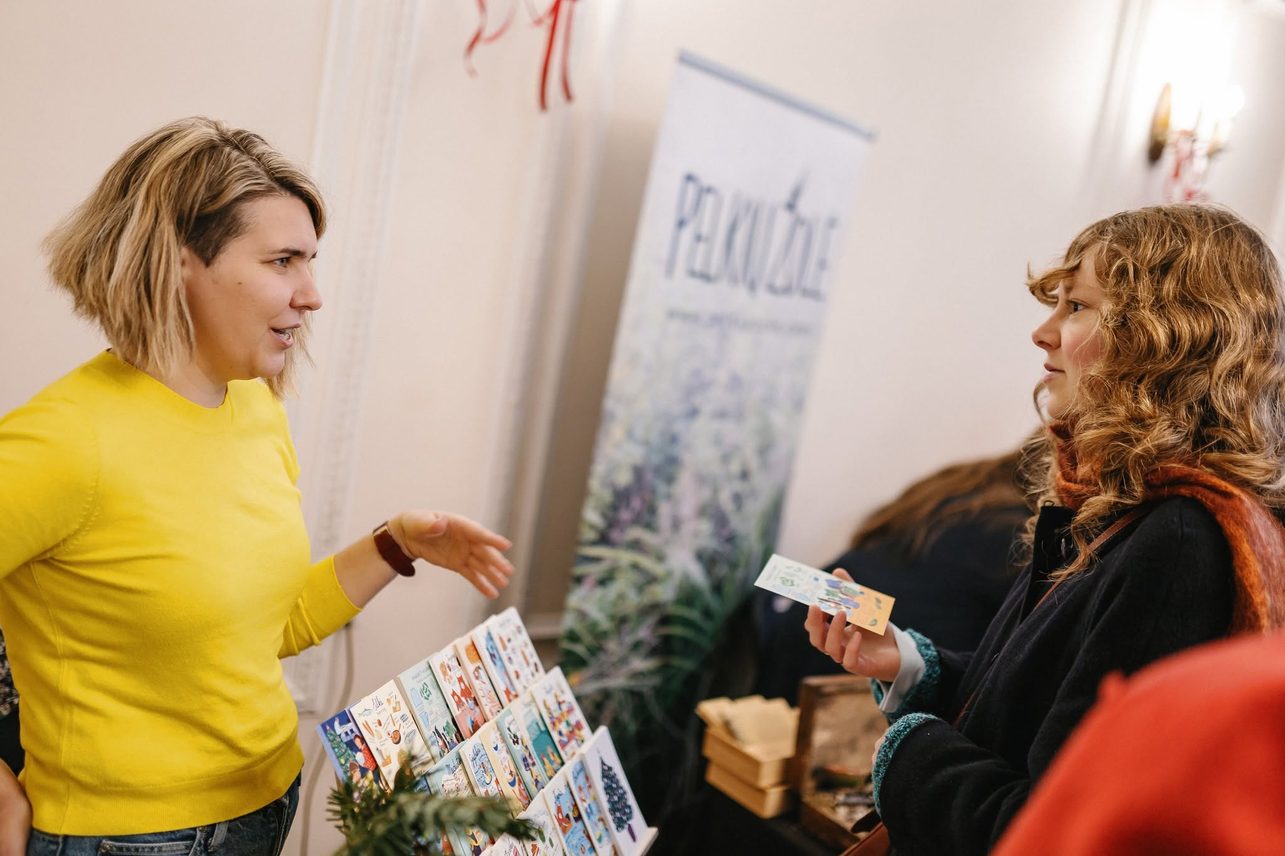
The artist states that food illustrations have expanded her audience. “People come up, we start talking about those recipes: how they cook, what I put in. There isn’t just one age group – both seniors and young people come to buy. Also foreigners, as I write the recipes in both Lithuanian and English.”
But speaking up wasn’t always easy – she says that the first time she took a position behind the counter alone, her legs were shaking. “But the most important thing is to interact with your table neighbours. At the first fair, the artists I met seemed so timid. But when you participate for the umpteenth time, you already feel like a dignified artist in the artists’ house.”
I ask Justina if any ideas for changes arose at the fair. “I always used to think people knew that I created everything here. But sometimes they still ask: ‘Did you draw this?’ The layout on the table is also important – if something is covered up, no one reaches for it or looks for it; people want something very quickly. I’m also thinking more about packaging – the postcards are in plastic, which started to make my heart ache because of how much I use.”
Though, we laugh, sometimes plastic sleeves do save the day – Justina recalls an incident when a little girl came up and licked a “strawberries with milk” postcard.
“Interacting with people brings a lot of ideas; their stories are inspiring. Many people already follow me and know my work, but here I can meet them in person, and I really like that. Since I work alone at my computer, I miss the social interaction.”
The illustrator mentions participating in portfolio reviews during the culture fair: “I liked that they attract very different artists. I found out what is happening in the city myself and made contacts with the Lithuanian Education Museum. I am very grateful to Kaunas Artists’ House for creating a community.”
Justina Česnauskaitė has already recommended participating in the KAH bustles to her colleagues. It only remains for me to add my own recommendation.