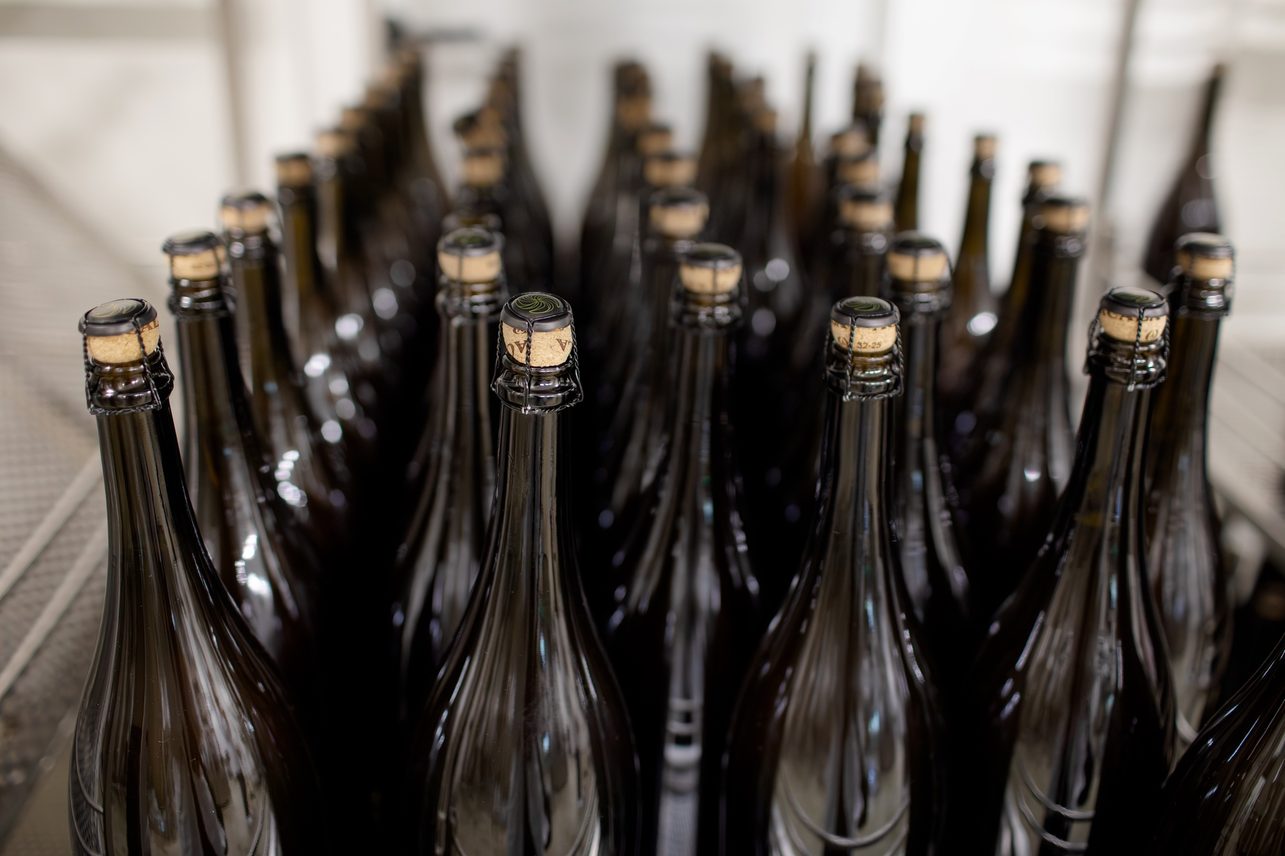
Somewhat removed from the city bustle, a small factory appeared in 2019 where rather big things are born. To be more precise, it is the birthplace of “Acala”, a wine-style sparkling tea that has spread to more than 30 countries and is valued in prestigious restaurants. It is born in harmony with nature. The ingredients are natural, organic, and carefully selected, while the taste is refined and worthy of a festive toast. And… there is zero alcohol.
(This text was published in the August 2026 issue of the magazine “Kaunas Full of Culture”, titled “Refresh”)
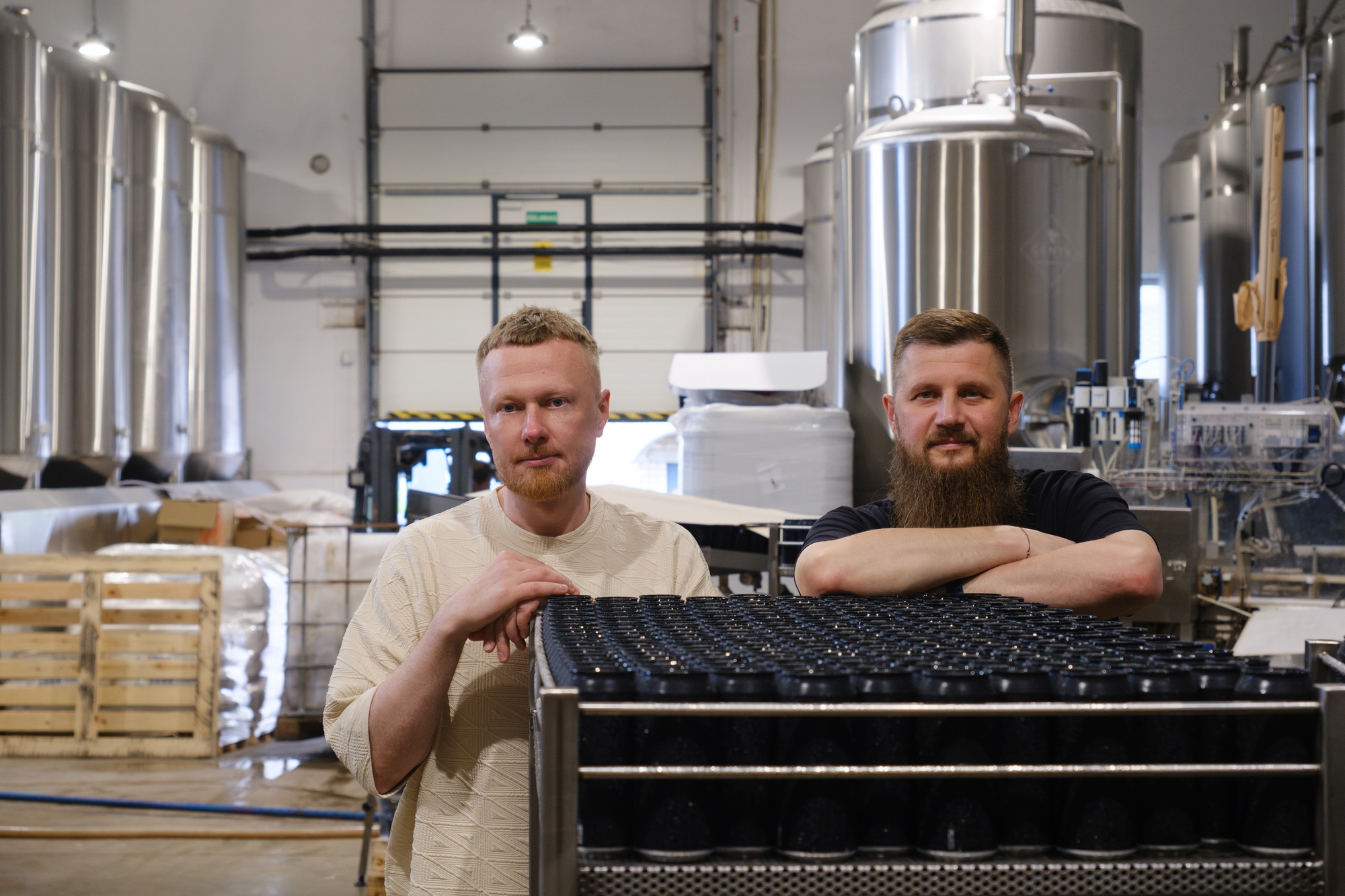
At the door, we were met by Gintaras Jonas Aleknavičius, the co-owner of “Acala”, who welcomed us with a broad smile alongside photographer Svetlana. As he invited us inside, he introduced us to the colleagues we met along the way. “I am a Kaunas native by birth – I grew up 200 metres from the Soboras. We traced our family back through church books and found that our grandfather married a noblewoman and was referred to as a Kaunas citizen. This means I am also a true Kaunas citizen,” Gintaras said.
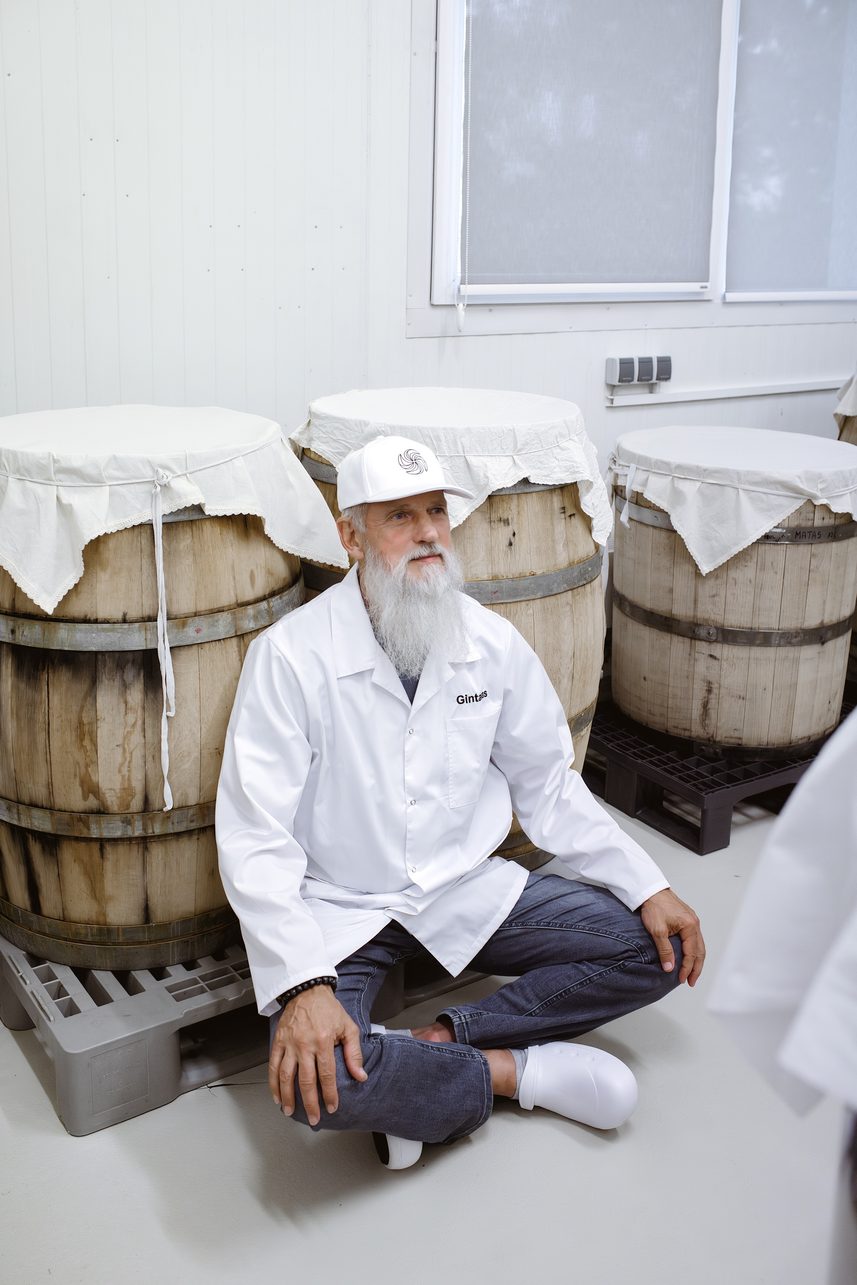
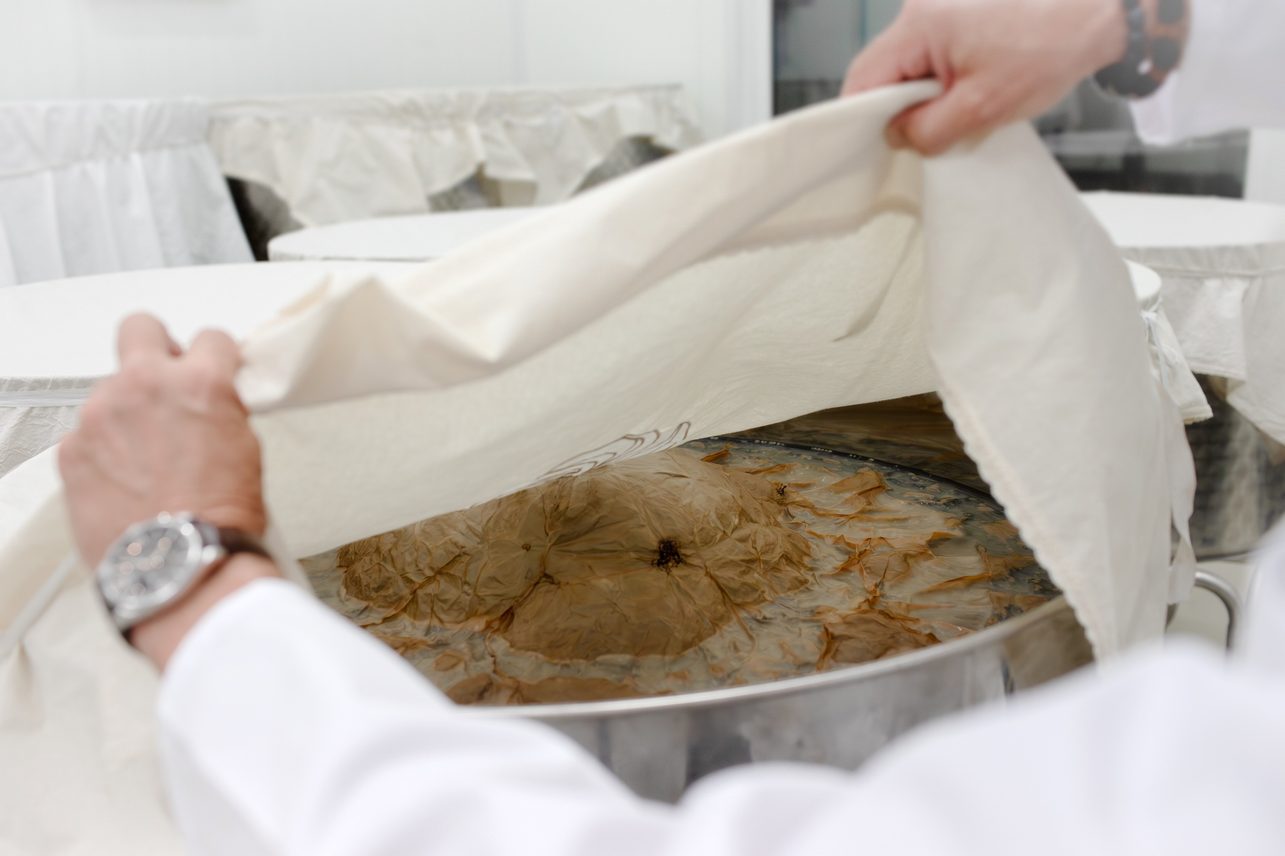
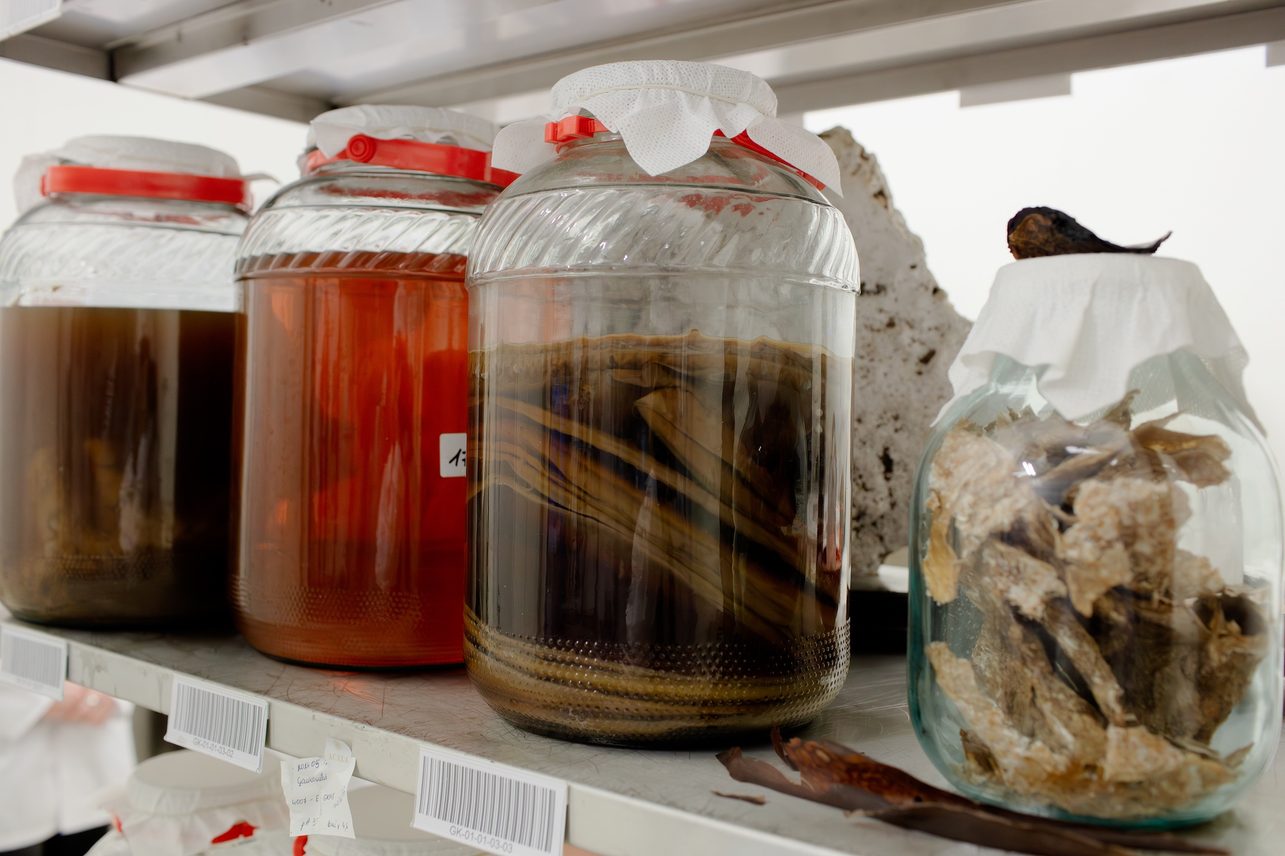
Today, Gintaras’s connection to Kaunas is professional – over a decade ago, he moved to live in a village in Dzūkija. “Much has changed since then – for instance, alcohol disappeared from my life. However, the gastronomic social culture was not foreign to me or my circle, so I had to actively search for alternatives,” the founder of “Acala” shared. Inspired by his colleague Mantas Bernotavičius, he gradually began to work his own magic – fermenting “mushrooms” (kombucha cultures).
At first, it was impossible to achieve a stable flavour, and bottles were simply exploding, but he didn’t want to give up. “After a while, another person joined our team – Martynas Žemavičius, who has experience as a sommelier in the wine field. Step by step, we all arrived together at what ‘Acala’ is today. Based on expert evaluations, it seems we are offering one of the best sparkling tea drinks in the entire world,” Gintaras said.
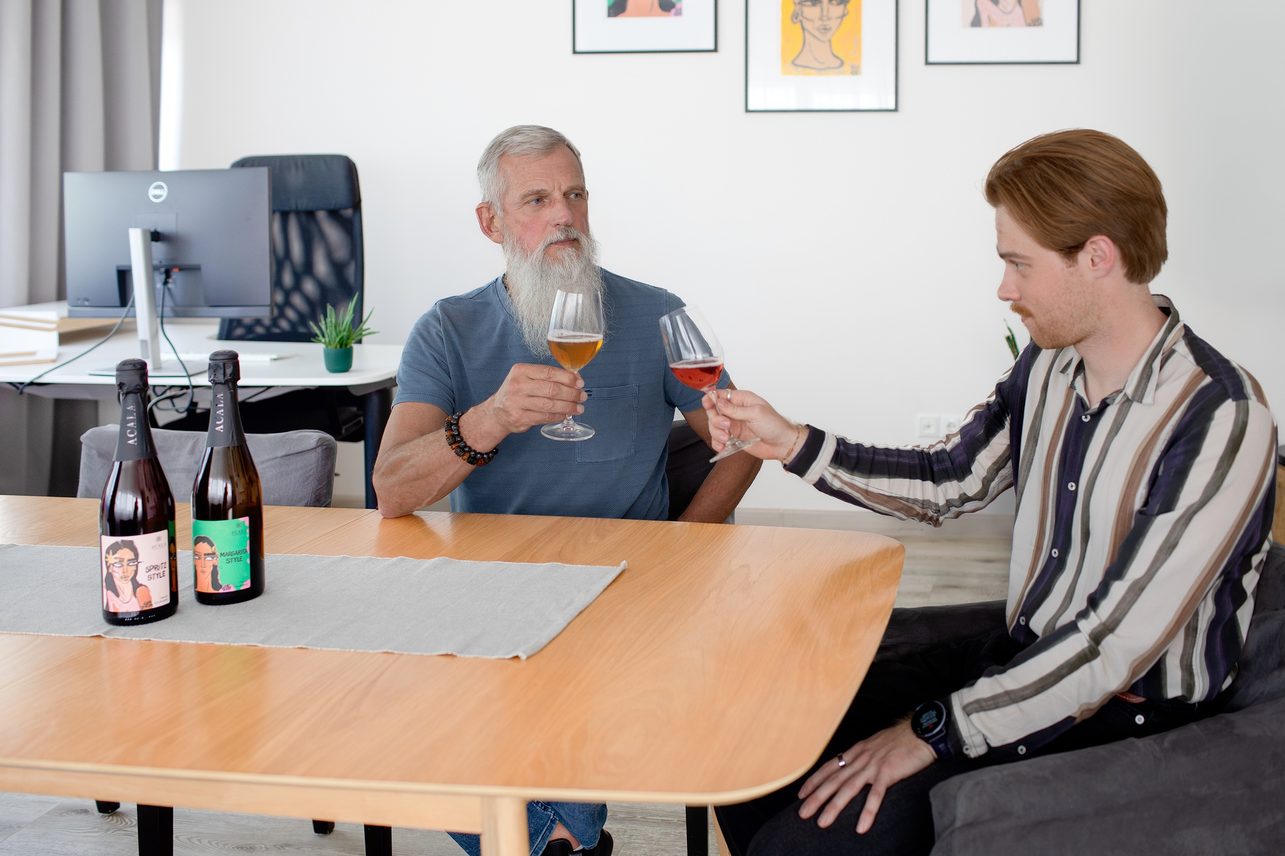
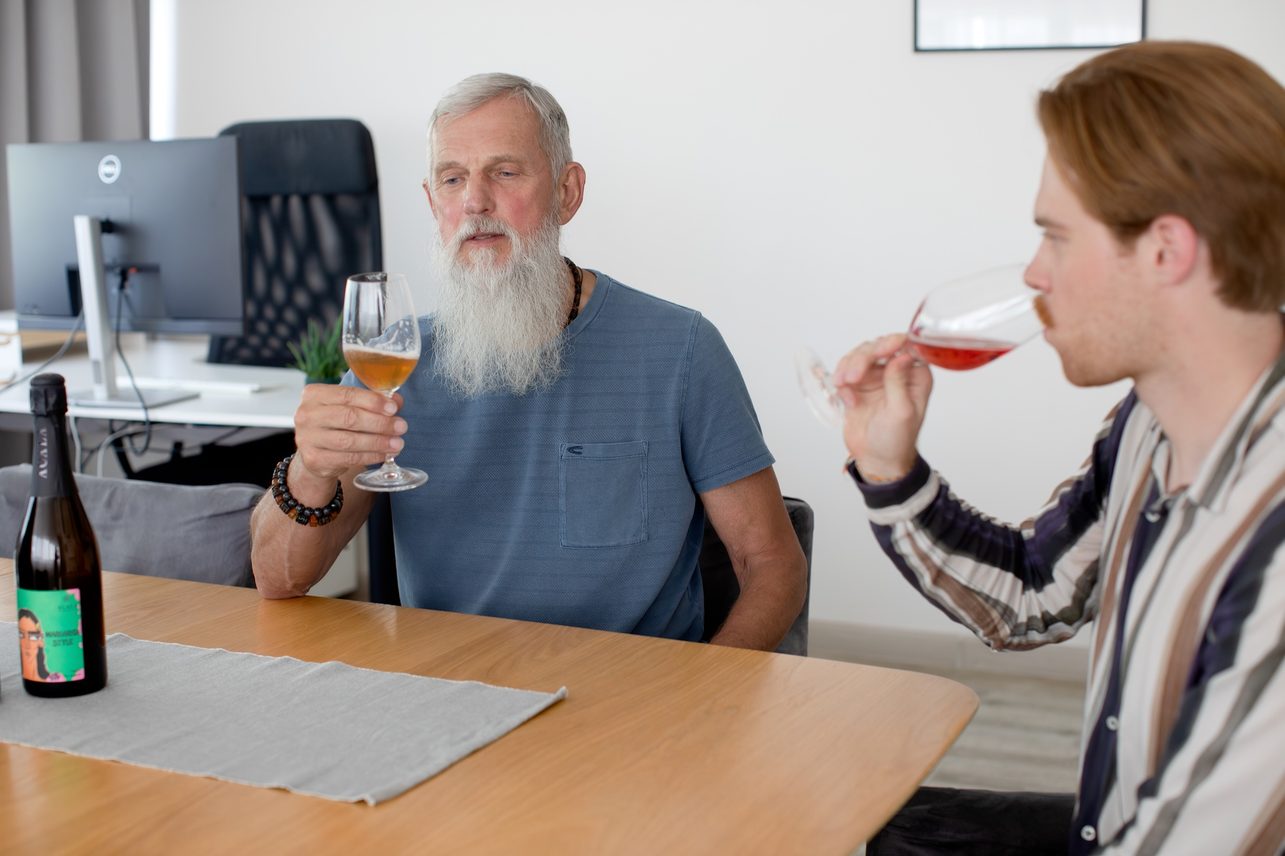
“Visiting various exhibitions – both in Lithuania and abroad – we realised that experience is everything. You can talk and talk, but the best thing is to pour a glass and let someone taste it, and only then discuss which flavours or aftertastes are gradually revealing themselves,” said Rokas Bernotavičius, a member of the “Acala” team and an apprentice sommelier, as he filled the glasses.
To begin – Rose Wine Style
The first aftertaste I felt as soon as I swallowed a sip of the rosé-style sparkling tea was raspberry (the composition also includes flowers, peaches, and rhubarb). This flavour immediately became my favourite. Rokas added that this drink is an appetiser, recommended to be enjoyed before dinner or on its own, chilled: “It pairs easily with oysters, fish, or tuna. Refreshing, light, and casual – a perfect welcome drink.” One of the essential ingredients providing the pleasant aftertaste is fireweed, which grows in Lithuania. It helps strengthen the immune system. Another important element is Druskininkai spring water.
While tasting the first of the four “Acala” flavours, we couldn’t stop discussing the rapidly growing non-alcoholic drinks market. But back in 2019, when Gintaras and his colleagues were working intensively on the brand we see today, there were practically no alternatives.
“In the beginning, we didn’t even know there was such a thing as sparkling tea. I say this sincerely – we didn’t compare ourselves to anyone, we experimented, and only after some time did we realise we had competition – such as ‘Copenhagen Sparkling Tea’. I remember meeting the owner of that drink at an exhibition – after tasting ‘Acala’, he wasn’t very happy,” Gintaras laughed.
Encounters with competitors in various contexts did not allow the “Acala” team to rest on their laurels – they are constantly creating, refining existing flavours, and searching for new ones: “Classics are classics, but we believe there are no limits to improvement,” Rokas added, gradually preparing us for the tasting of the second flavour.
To get going – White Wine Style
In our glasses is a white-wine-style drink born from a combination of two teas. Having swirled the glass a few times like a tasting expert, I caught the scent of hazelnuts, but it turned out there were also hints of almonds, accompanied by an aroma of calendula and elderflower, finishing with earthy notes.
“This flavour is one of our customers’ favourites. Compared to the first one, it is much more expressive and intense. Svetlana mentioned the aftertaste reminded her of something, but she couldn’t quite place it – it’s hemp,” Rokas explained.
“Acala” has already found its fans abroad too – in more than 30 countries worldwide. “Lithuania is the home of our brand, we have our wonderful team here and we continue to expand, but we want to make the name known abroad as well. Our export manager, Kristina Petravičiūtė, lives in Spain – she married into an old winemaking family that produces biodynamic wines,” Gintaras said.
The “Acala” philosophy is “Gastronomical (the sensation of taste buds), Natural (everything from natural products), Social (reaching as far and as close to the person as possible)”. As Gintaras said, the product’s community is united by one essential thing – a love for life: “Life is about the body, experiences, gastronomy, naturalness, sociality and, I dare say, a general synergy. Here we are, Rokas and I – different generations, yet we work together, complement each other, and I don’t feel the age gap; I communicate with him as an equal. And we have the same goal – to create the best, most interesting, and valuable experience through the product.”
For the heat of the conversation – Red Wine Style
Next on the programme is a red-wine-style drink in which I detected a rich blueberry flavour. In total, the drink contains as many as 22 carefully selected, rare, and valuable ingredients, such as Damask rose extract. The recipe was refined in collaboration with a famous Catalan winemaker.
“This is the only drink we serve unchilled – this way, both the aroma and flavour reveal themselves better. If you take your time, you will notice that with every sip, a whole parade of berries gradually unfolds – first one flavour stands out, then another,” Rokas shared.
We also discussed the minimalist, eye-catching label design. The company collaborates with the artist Malvina Stankutė – she has had a hand in many of the long-remembered labels: “We love working with artists – especially with Lithuanians. We also believe that the packaging shouldn’t scream too much. We want the appearance to symbolise peace and quality. From the cap or foil to the bottle itself or the label. Every detail matters.”
To finish – Margarita Style
You heard correctly – this is a “Margarita” cocktail style sparkling tea. I tasted it and can confirm: a great non-alcoholic cocktail alternative with a subtle sense of saltiness.
“In a Margarita cocktail, the lime, citrus fruits, and salt are very prominent. And everything is pleasantly enhanced by agave syrup, providing a light sweetness. We recently visited seaside restaurants to present this new flavour – eventually, the thought occurred that this drink is indeed very nautical, probably due to that slight saltiness,” Rokas considered as he poured the last glasses.
While tasting this summery novelty, we also discussed a curiosity-piquing rumour. We had heard that the “Acala” team plays classical music to the “mushrooms” they grow. Gintaras not only confirmed this fact but also revealed another secret – it turns out that special crystals, each in its designated place, help create harmony in the production premises. Although it may sound mystical, the creators are convinced that such rituals are an inseparable part of production, helping to manage the drink’s energy.
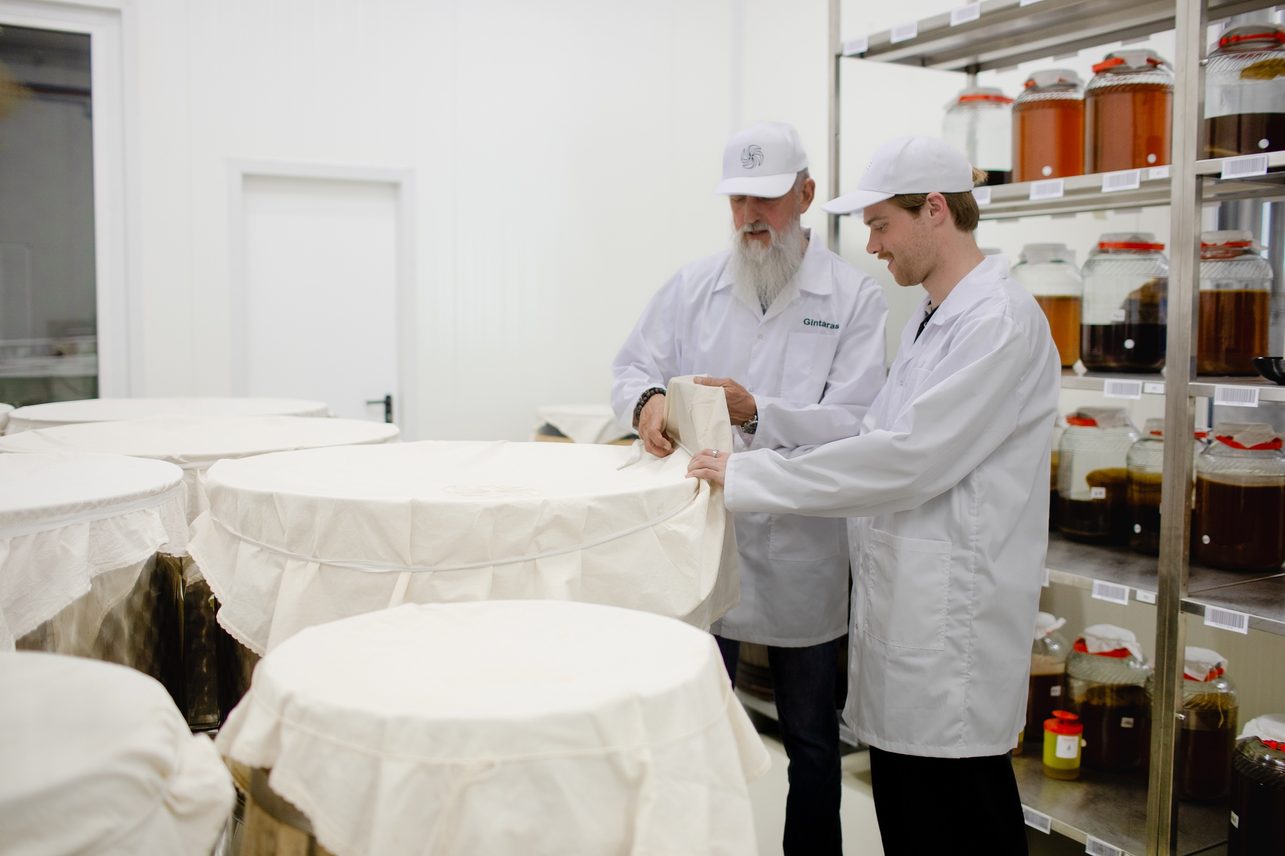
On this magical note, we soon rose and headed to the part of the factory where the sparkling tea ferments. An interesting fact is that “Acala” was previously called “Vilko Kombucha”, but the name didn’t stick. “Kombucha technology came from the East – Japan, Korea. In their hierarchy, there is one significant god who could correspond to our Perkūnas – that is Acala. His name means the Immovable King of Wisdom,” Gintaras said as he led us through the small factory.
As the photographer and I left the factory, we realised one thing: whether it is classical music or divine wisdom in the name, the secret of success here is simple. It is a belief in what you do, and not the slightest compromise on quality.