The current world is a rather strange and paradoxical place: the easier it is to access everything, the harder it is to access everything. The information age has changed it all. The way we consume music has also changed drastically, yet I still managed to experience its transition into the digital realm, having been born at the dawn of Independence.
This month’s interviewee is a perfect example of a musical era that has passed and will never return, yet one we will remember with nostalgia, a touch of envy, and admiration.
(Text published in the December 2025 issue of the magazine “Kaunas Full of Culture”, “Letters”)
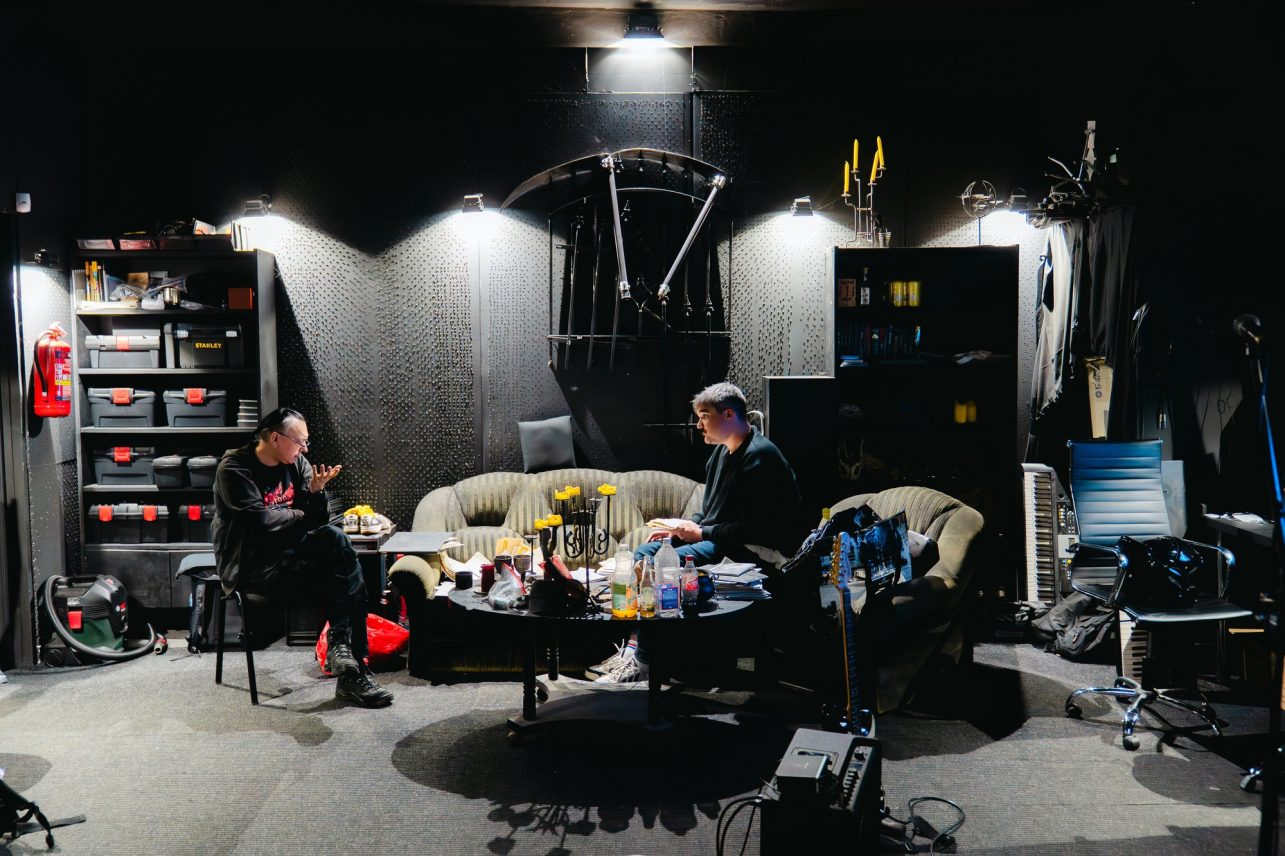
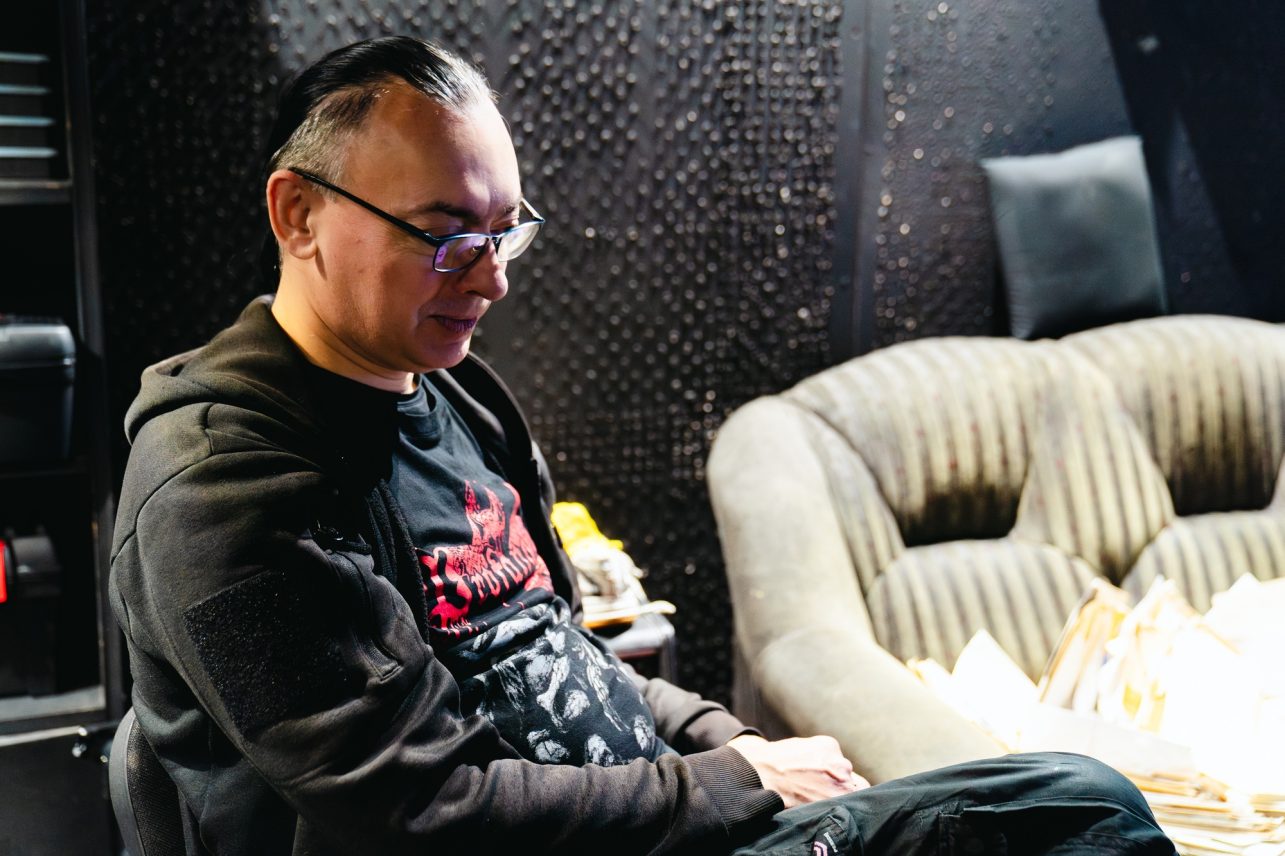
At a time when I was still crawling on the floor, right after the Soviet army withdrew from Lithuania, creators of alternative music were already building connections all over the world. About all this – an interview with an astrophysicist and metal music ideologue, Vytautas Stankus.
Echoes of the Underground
I won’t delve deeply into the global history of metal music or the community that has been thoroughly documented, boasts millions of fans, and sustains a large industry that remains strong to this day. Instead, let’s turn to the 1980s. Metal is evolving, splitting into genres with distinct musical as well as philosophical ideas.
Lithuania at that time was gradually thawing, and more freedom was emerging. Not only the freedom to buy and listen to records, but also to have long hair without excessively painful consequences and to play scandalous Western music – often anti-systemic – that embodied everything the occupiers opposed: resistance, energy, originality, and often national ideas and traditions.
“There were these recording studios – at least several in Kaunas. You make a list, leave some money, and empty cassette tapes, and the next day you have everything ready. There was this one in the Old Town between Laisvės Avenue and Vilnius St. named ‘Našlaitė’. Another similar place operated near the Officers’ Club. They duplicated everything, including the pop music of the time. You just had to choose from their catalogs, which meant you had to know the band to order their music,” Vytautas recalls.
And there was plenty to follow and know. He says that every year, a new metal subgenre would emerge. It was a very dynamic and vibrant, new, and exciting time. During the thaw, you could already hear some of it on the radio or read a metal album review in the then-newspaper “Komjaunimo tiesa”.
The formative stage
As the interviewee, who has been in the scene for over 30 years and is also known by the Latin pseudonym Xe Xe Chax Heyatha Zhaiyrhous, says, that in his hometown of Palanga, there were initially three metalheads. Later, he was the only one left. Then, Rock Marches started, and heavier music gained momentum. He got his hands on Sex Pistols and Motörhead. Ultimately, everything changed when a friend showed him a Metallica recording, which he played nonstop for a whole month.
“The creative work started as it usually does – I enrolled in university, found a simple summer job in Palanga, and saved up for a guitar. Then, metalhead friends, community, rehearsal studios, and rehearsals followed. That’s how the first band – Nemesis – was born; it lasted for about a year. In 1993, it split up and became the foundation for Nahash and Poccolus – the early Lithuanian black metal bands,” Vytas recalls.
Nahash formed under the influence of the first wave of black metal bands such as Bathory, Darkthrone, and others. Coincidentally, in the same year, the future physicist managed to visit what was becoming the center of the black metal world: Norway. Once the borders opened, after four days on a train through Russia, the guys reached Scandinavia.

“I took a notebook with me and copied the mailing addresses of record labels from CD covers in local metal record shops. At the time, that information was extremely valuable. When we returned to Kaunas, as the first nucleus of the black metal community, we began active communication with foreign scenes,” the interviewee explains.
According to him, Audrius Šimkūnas from the band Poccolus was already corresponding with foreign scenes at that time, so he shared his best practices. Incidentally, Audrius, who later, like many creators from this scene, moved toward experimental music, is still an active musician. He is perhaps the best-known field recording artist in Lithuania, and in 2023, a documentary about him, “Dažnių žvejyba” (Frequency Fishing), was released.
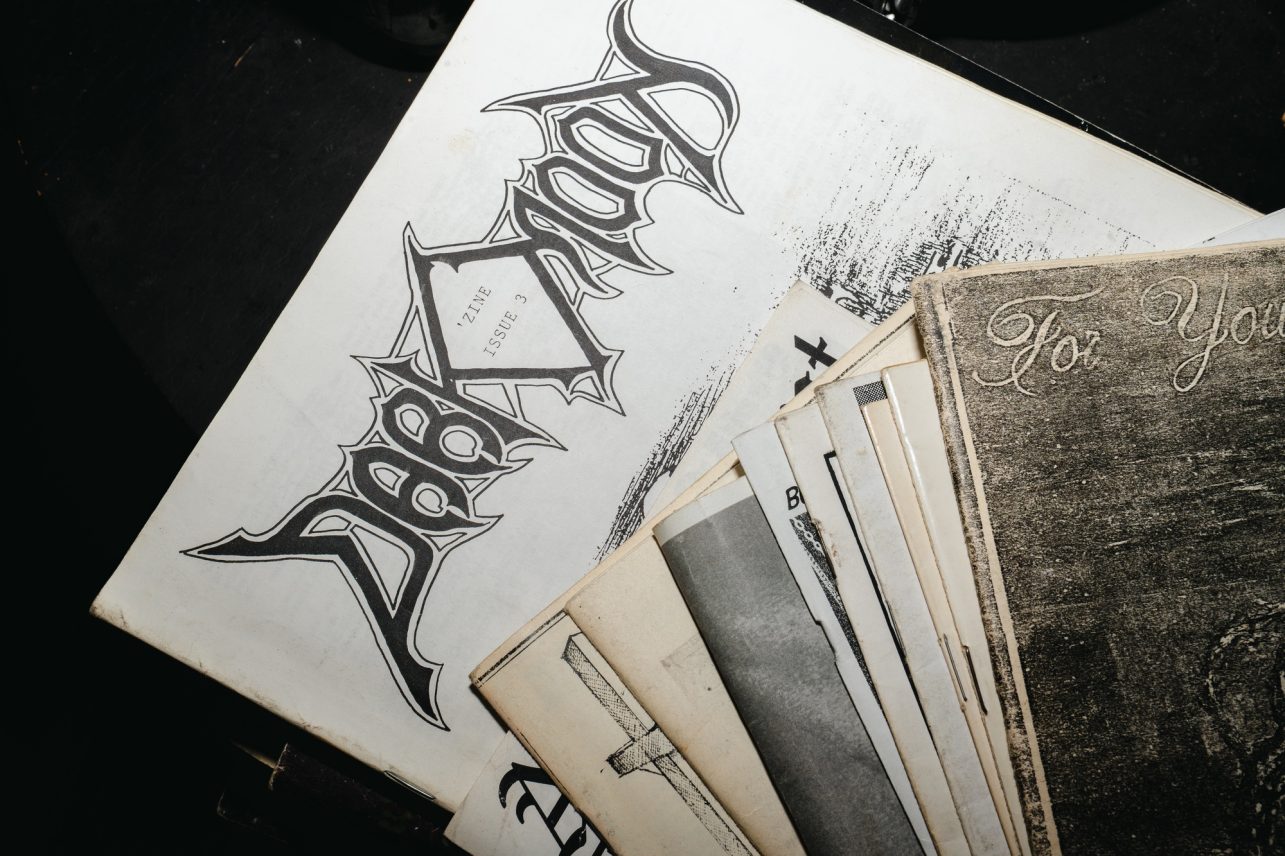
And what were those practices? They had the addresses – but what were they supposed to send? Making recordings in a studio still cost impossible amounts of money. So bands chose the DIY route, distributing demo recordings made with a simple tape recorder. But even cassettes were expensive at the time, and no one sent them out blindly. Therefore, a completely unique underground mail ecosystem developed, built on fanzines and flyers.
Thousands of letters
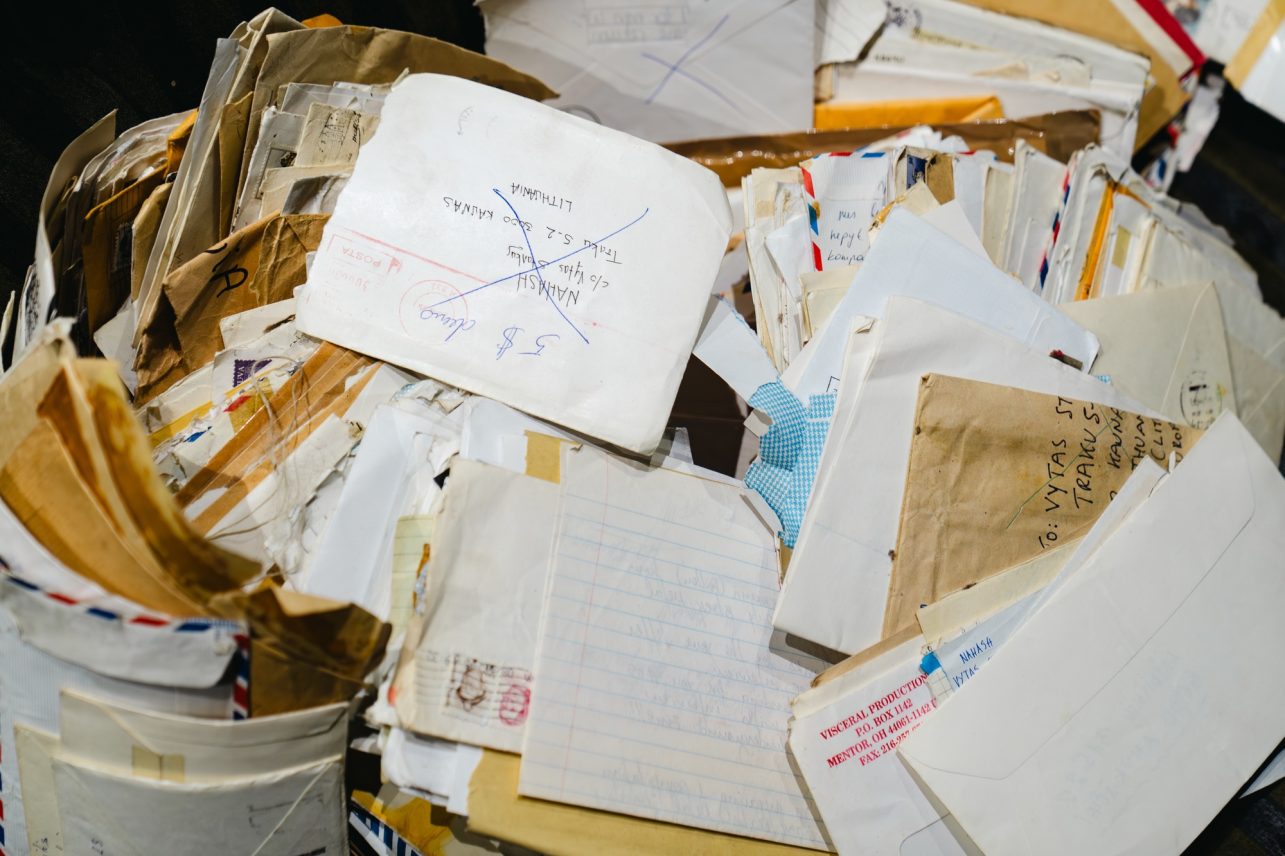
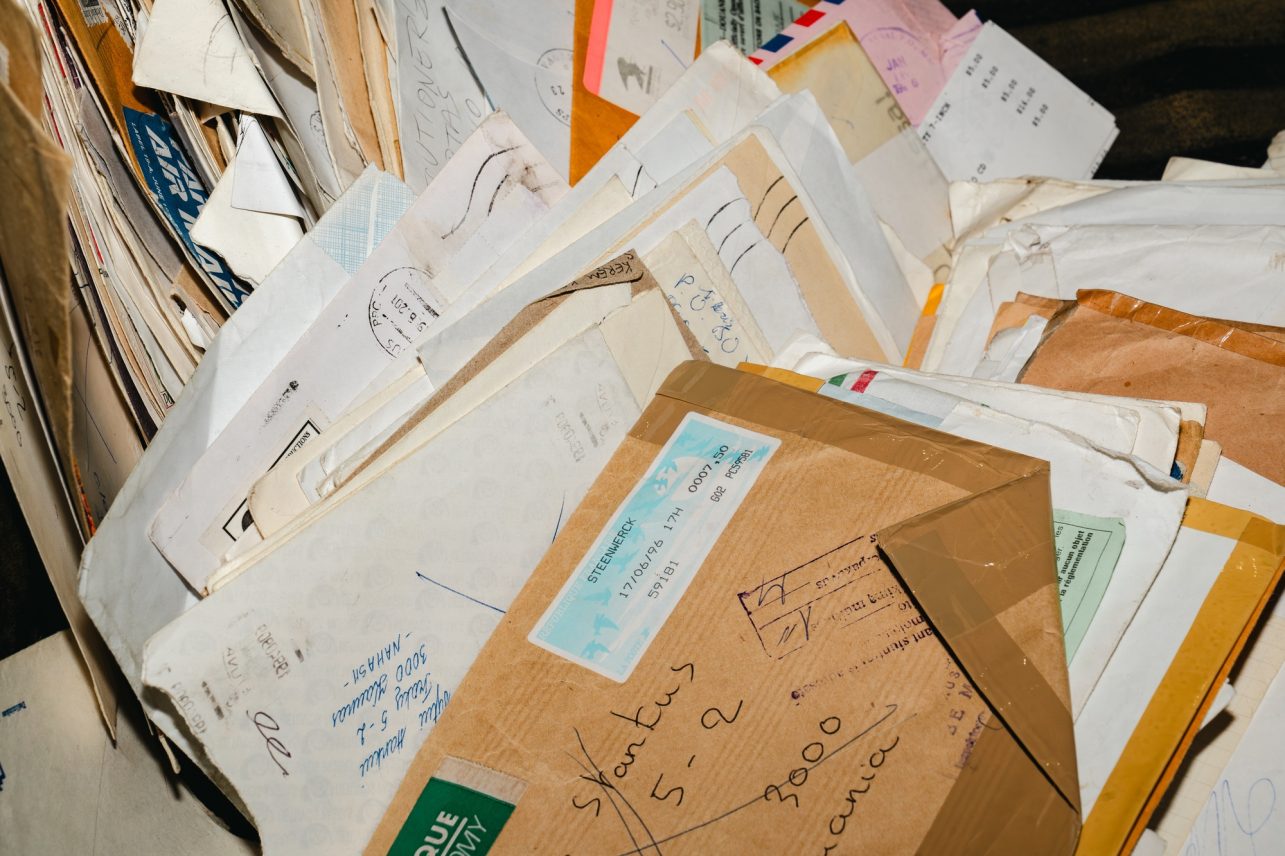
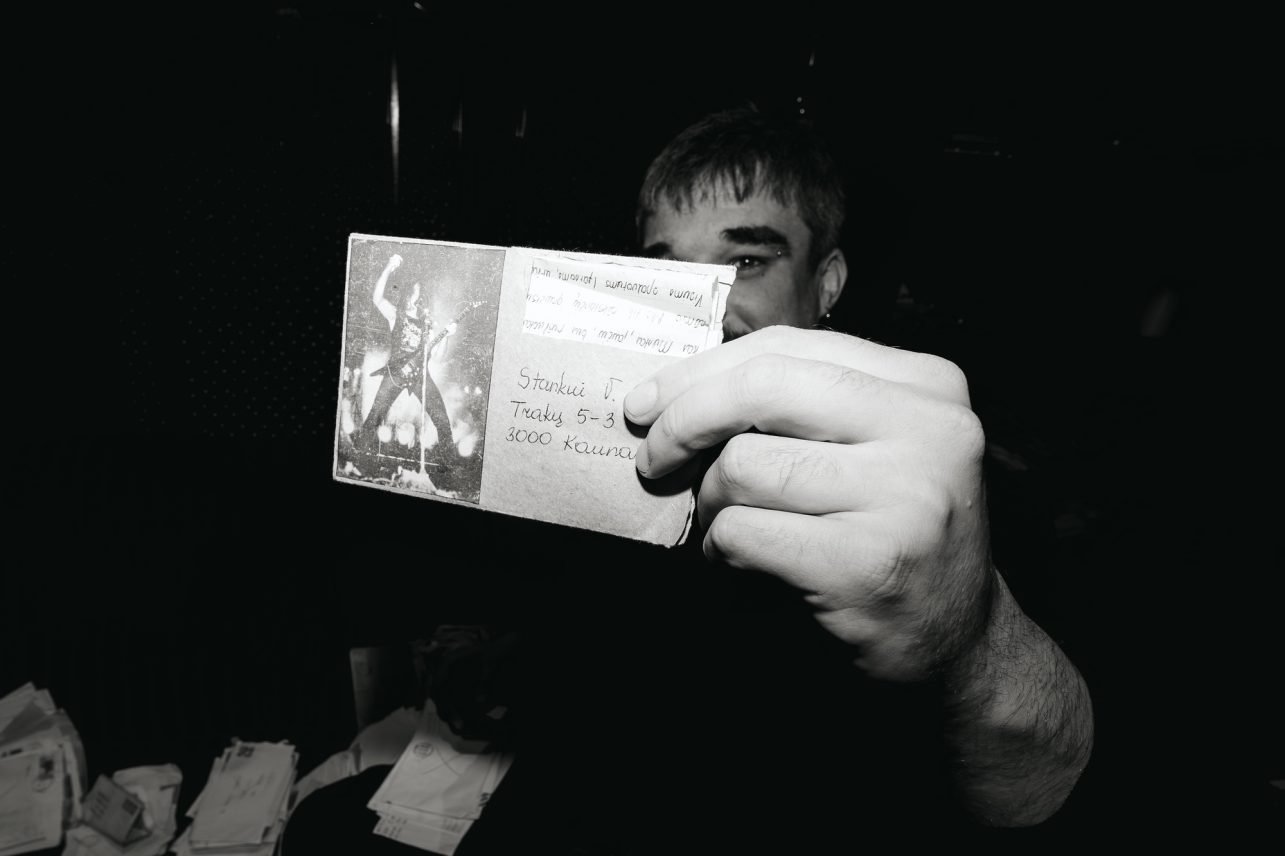
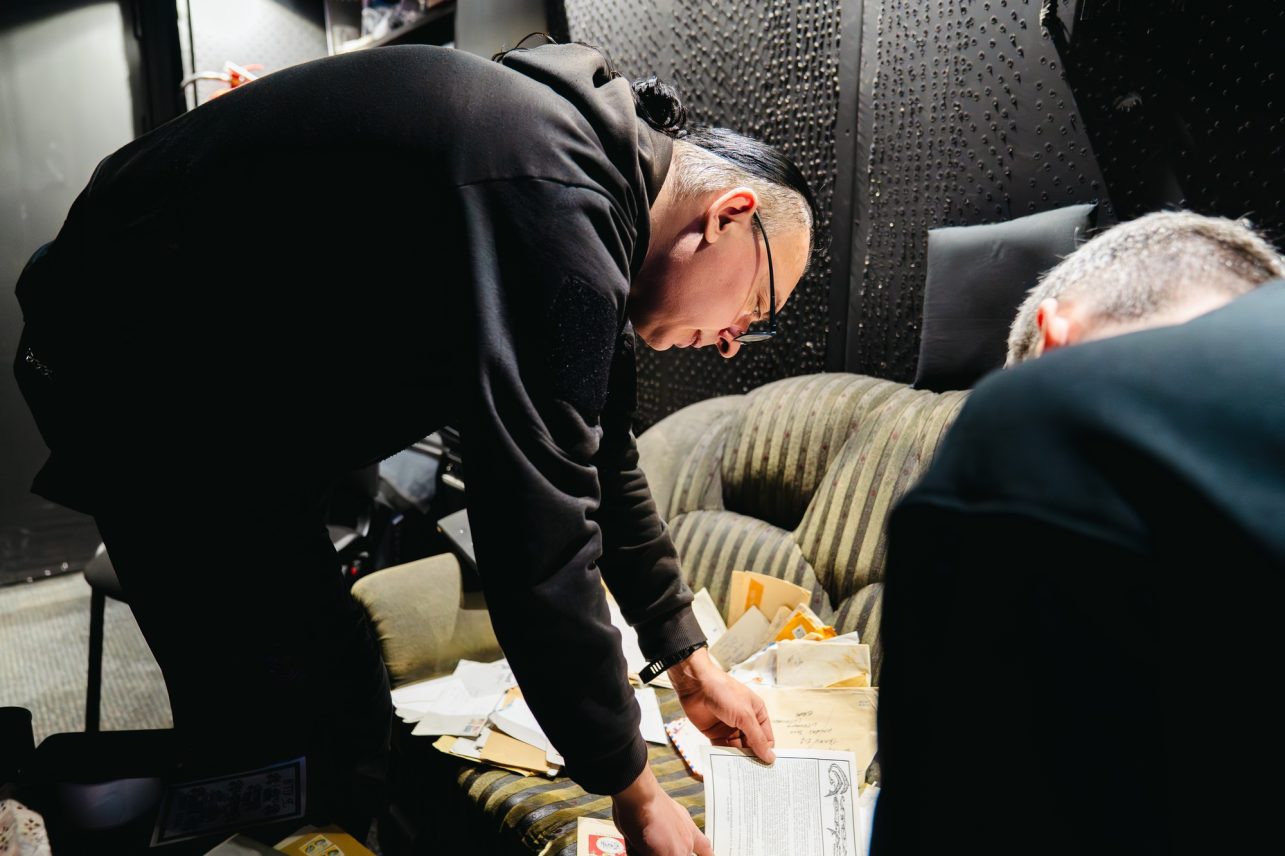
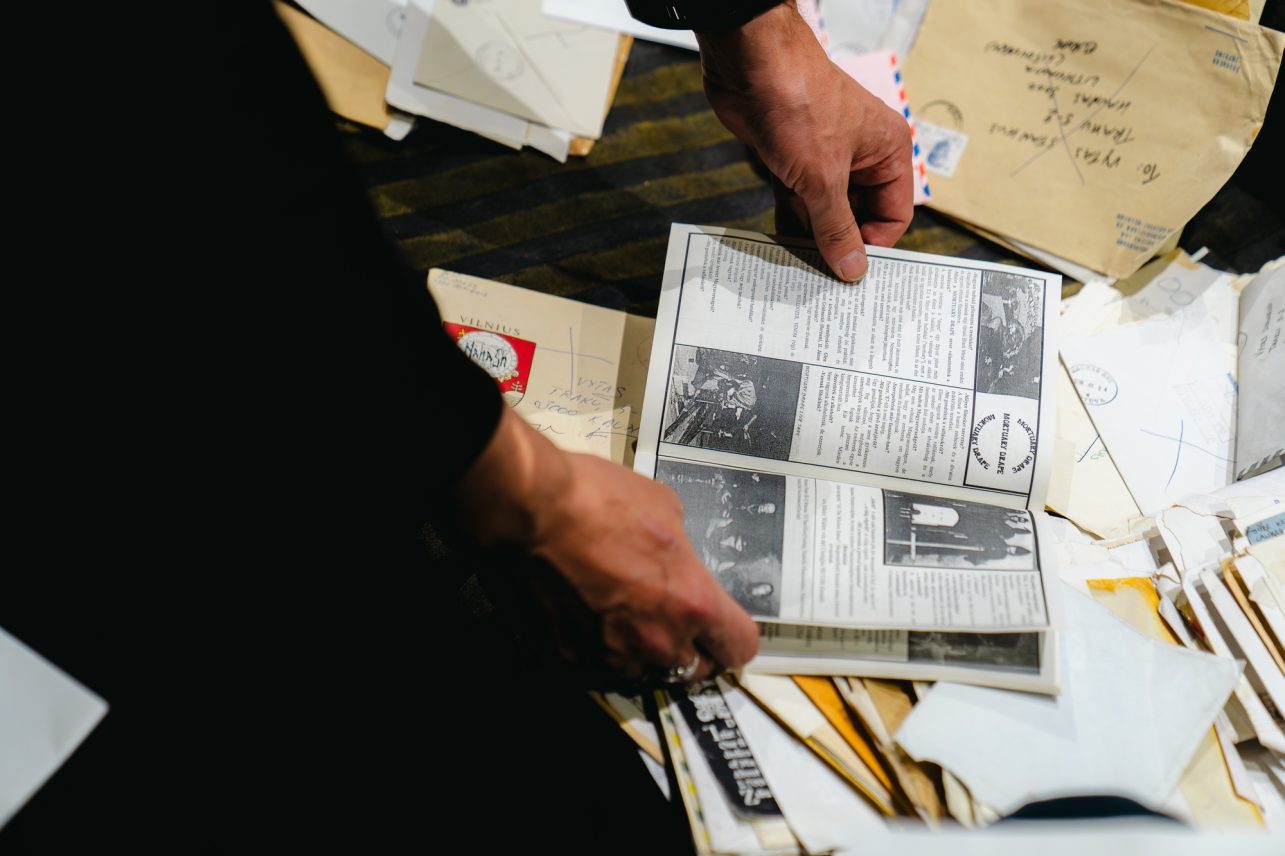
Vytas came to the meeting at the Nahash studio with a large bag, which probably does not reflect the entire scope of the correspondence. Inside there were hundreds of letters from all over the world. And in this case, truly all over the world, because, having flipped through a large portion of letters during our conversation, I saw a vast geographical picture: all European countries, the United States of America, Peru, Argentina, Chile, and even Cuba. I may have even glimpsed South Korea.
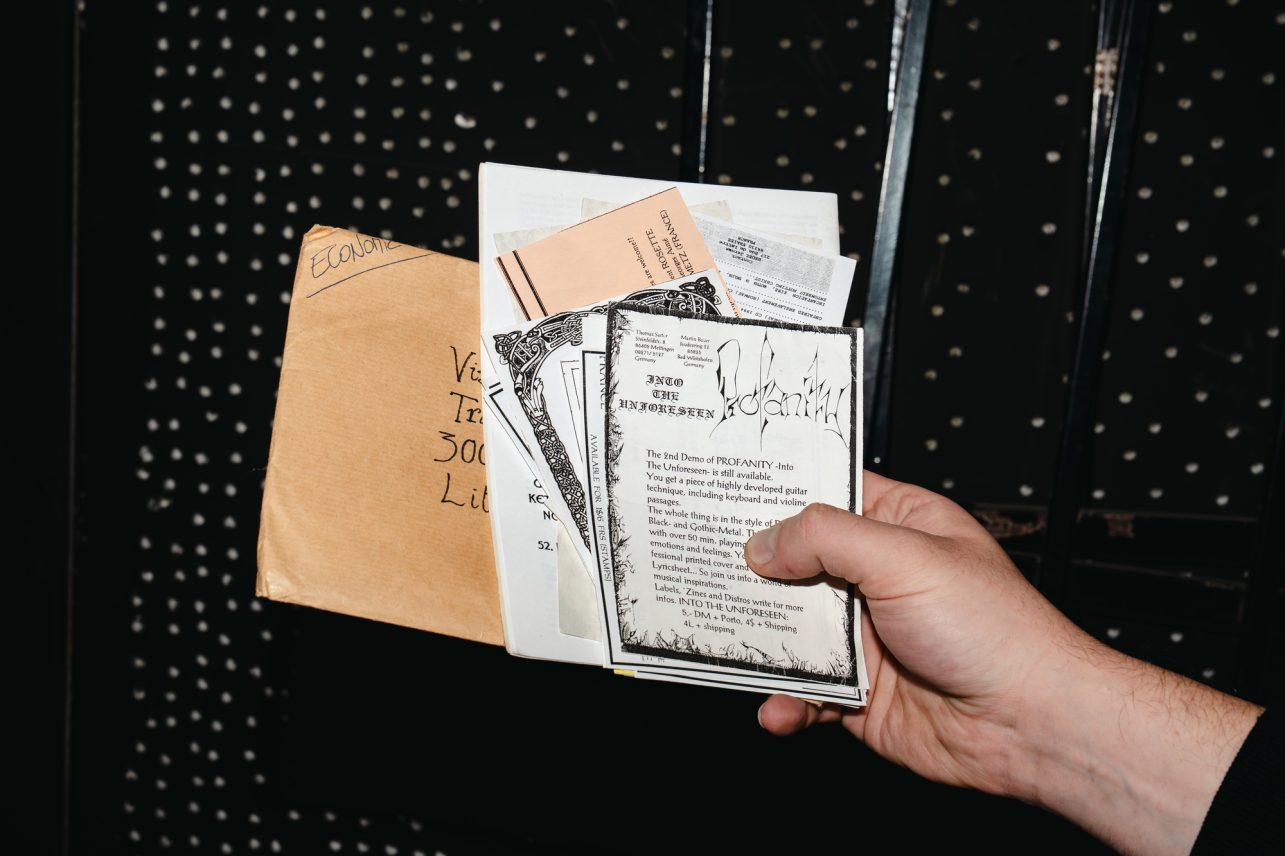
“The most important things were the flyers. You make a recording, then use a copier to produce promotional flyers for it, cut them up, and put several dozen into an envelope. You send such letters to, for example, fanzine authors, who later distribute those flyers together with their magazine orders. That way, your flyer reaches people abroad and, if they get interested, they write you a letter with a request to order the recording,” V. Stankus explains the system to me.
Photos by Vytis Mantrimas
This is how a real communication machine started. Vytas would go to the post office every morning and try to reply to everyone. As the recordings and word about the band spread, interview requests began to pour in. And there were hundreds of them – every major Lithuanian city had its own zine makers churning out issues with photocopiers, not to mention those abroad. During our conversation, we happened to flip through a Slovak interview with Nahash from the mid-90s.
Or you could agree on a review. The second halves of most zines were filled with discussions of new albums, which helped bands promote their work. After reading the writers’ emotions and conclusions following an album listen-through, people could order your demo either directly from the creators, if it was a small band, or from the record label.
“Many such zines also functioned for economic purposes. It was convenient to get recordings from publishers that cost insane amounts of money at the time. For example, one CD could cost around 25 dollars, which would roughly feel like 200 euros today. Later, zine editors would sell those CDs or even make illegal copies and thus have a source of income alongside their not-very-profitable journalistic activity,” the interviewee explains.
Everyone had their own role in this ecosystem. Either you play in a band, or you are a fan and publish a zine, or you have a record distribution network, or you are a record company, or a concert organizer. It was the network of these engaged and dedicated people that provided the freshest news about the latest bands, emerging genres, etc.
The unreachable connections
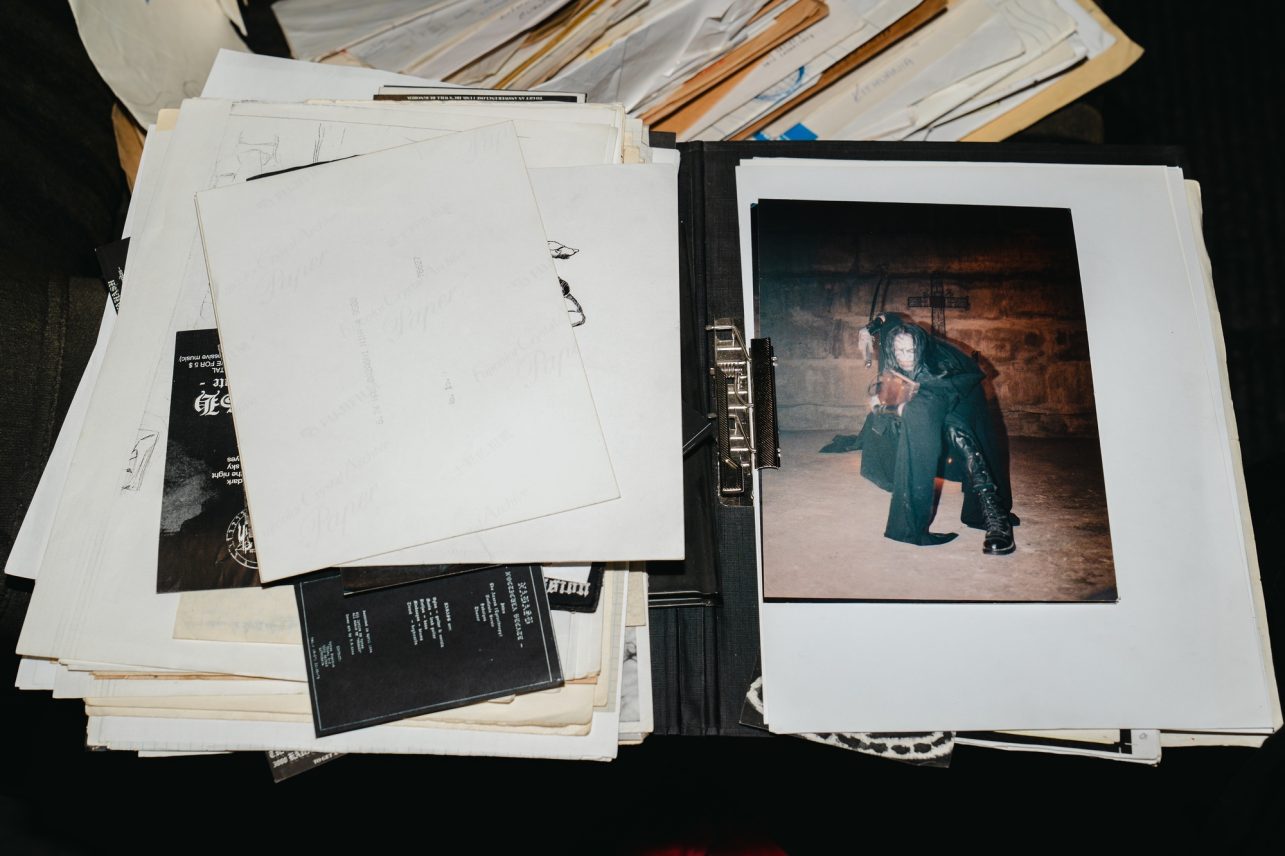
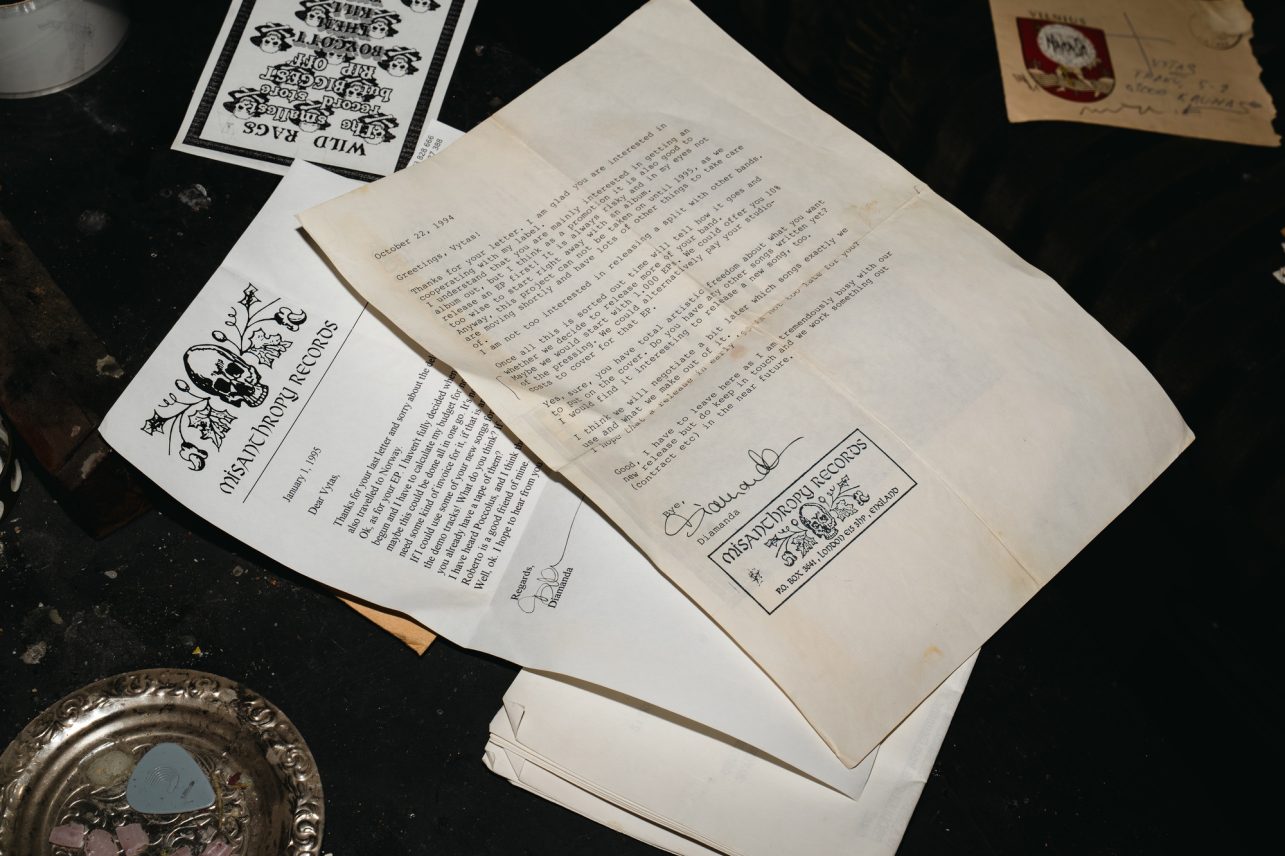
The idea for this meeting came about after remembering Vytas’ story in another interview about corresponding with quite well-known record companies at the time. This becomes clear as I hold in my hands letters, flyers, and original artifacts from that era sent by the founder of Misanthropy Records, featuring logos of two of the (arguably most famous) genre-defining bands – Burzum and Mayhem.
It’s a pity that Nahash did not release anything through the same label as those prominent black metal bands, but that isn’t the most important point. The paradox lies in the fact that when we look back at the history of what was perhaps the very first such band, we see that at the time, Lithuanian bands – even those creating niche music – were integrating into the global subcultural community. They were establishing connections, distributing music, and seeking record deals.
Nowadays, not only is it easier than ever before to record music, but also to find contacts. However, I’m almost certain that we have fewer connections, fewer ambitions, and, most importantly, less networking. Even the major rock bands, like “ba.”, essentially operate within a Lithuanian bubble.
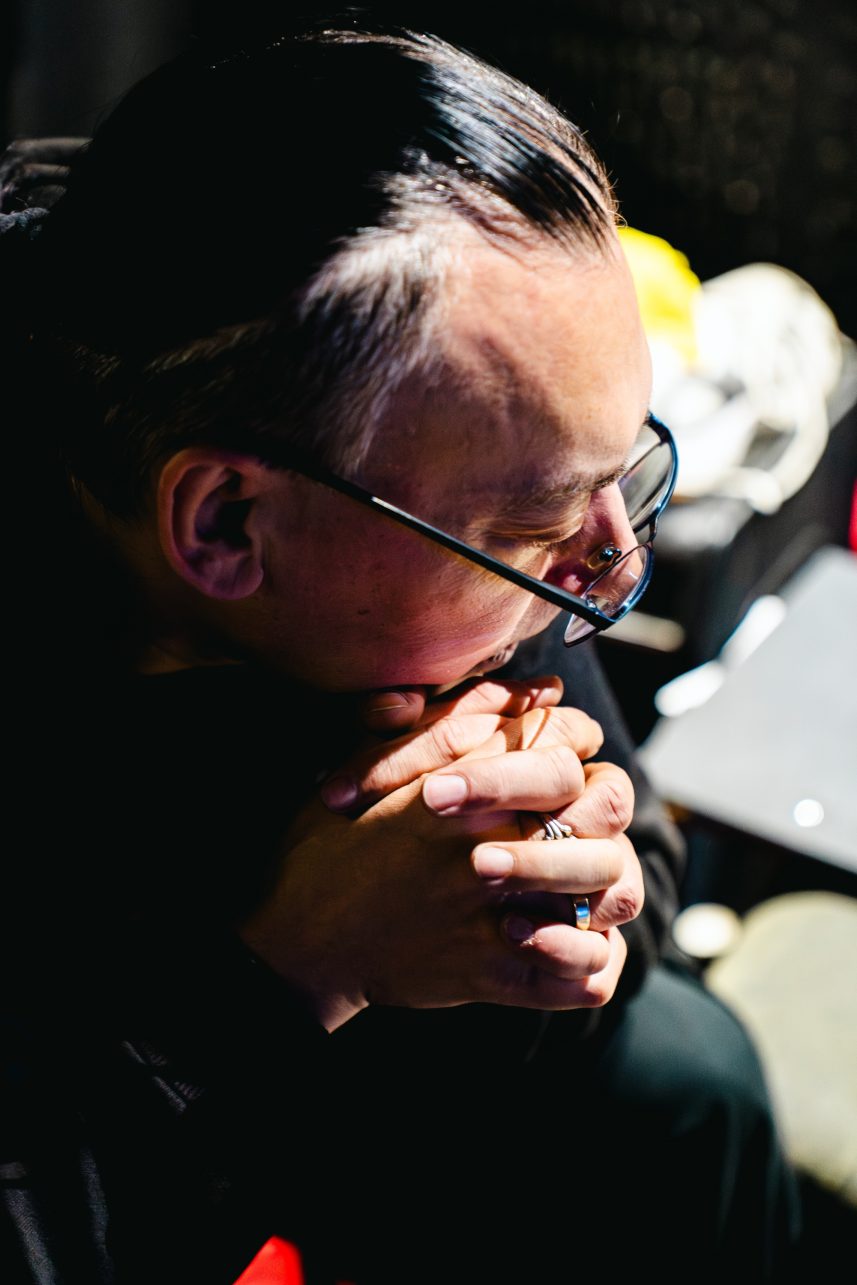
“You open a letter, and it says ‘Dear Vytas’, your name. It’s from one of the most famous labels in our genre in the world at that time. Your breathing quickens, your pulse races, your heart sinks to your stomach. That was intense,” V. Stankus recalls. And all this is happening a couple of years after the departure of Russian soldiers from Lithuania. And they left Kaunas last. It sounds incredible.
Those times are gone
The end of the 20th century was a time of incredible global changes, and the most significant aspect of it was the onset of mass computerization. Naturally, the emergence of computers, the internet, and easily accessible information destroyed the culture of writing physical letters, promising a technological breakthrough, a world within reach of your hand, and faster communication. In Lithuania, this period began just before the turn of the millennium.
“Every morning, I would receive up to five letters addressed to me. Each day felt like an adventure – you never knew what you’d get or where it would come from. So much love, everything was handwritten, stamps were attached and sending them wasn’t cheap. Then you start building a relationship, communication, and personal connections follow. It had a huge impact; we felt a strong sense of togetherness and community,” Xe Xe Chax Heyatha Zhaiyrhous remembers.
The level of formality was definitely different. Nowadays, when organizing concerts, I usually just send a quick message via Messenger with an inquiry. Within an hour, I usually have a response. But during our conversation, I was holding letters from the well-known organizer Ugnius Liogė, written in cursive, with invitations to perform or record a track for a new release.
Some treated letters the way you might now look at a product’s packaging design. To create an impression, some letters were specially decorated, for example, written with a quill and sealed with wax. Vytas also recalls a fellow metal fan who, jokingly and trying to scare someone, wrote a letter in blood. He says the sender got scared himself when he received the letter back, even though he hadn’t indicated who sent it. His handwriting was identified.
“Everything changed with digital technology. First, cassettes disappeared due to poor quality and high cost. They were replaced by pirated CDs. My interest waned more quickly, while others kept up that type of correspondence out of inertia for several more years. This coincided with changes in the scene: black metal diluted, more bands emerged, and the genre became heavily commercialized. There may even have been more letters, but their quality and content deteriorated drastically.”
Thus, the correspondence stopped. As Vytas says, at first, he still collected letters to reply to later, but his enthusiasm decreased. It was 1996, and he already had his first computer and internet through a modem connection. And that destroyed one of the fundamental elements of this whole ecosystem: the zines. They had functioned as a distribution method, as advertising, and as an economic tool for the subculture.

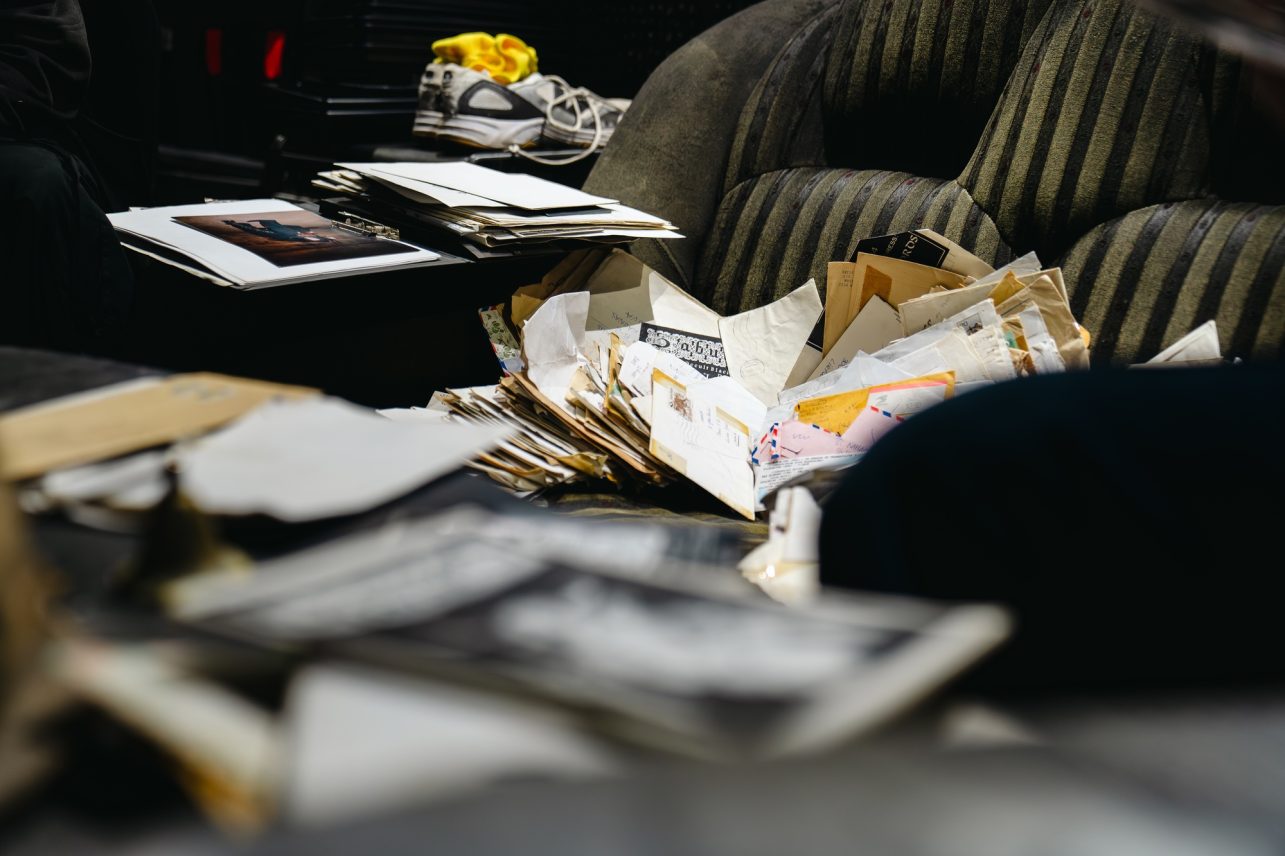
Since then, the music industry has changed beyond recognition. I have also managed to witness how pirated CDs were replaced by pirated MP3s from eMule and Soulseek. Back then, when a friend said, “Listen to that album,” we would wait until we got home to download it. Eventually, piracy was replaced by Spotify, YouTube Music, and SoundCloud. Consuming and accessing music has never been so easy. But does that make it any easier to choose, discover, or remember it?
Times change, and there’s no point in crying over it. The most important thing is that artifacts like Vytas’ will one day make it to a museum.