We meet with the band Extravaganza on Friday the 13th. Talking to metalheads isn’t scary and quickly becomes clear that the hardships weighing on the world: war, sadness, anger, and the dark, all-encompassing underground music are deeply important to the band members Tomas Valentinaitis, Mantas Vaškelis, Artūras Možeiko, and Karolis Urbanavičius, but not the only themes they care about.
“We create sad music about the beauty of reality,” they say, and we talk about creativity, inspirations, music, and Kaunas.
(The text was published in the April 2026 issue of the magazine “Kaunas pilnas kultūros”, titled “Metal”)
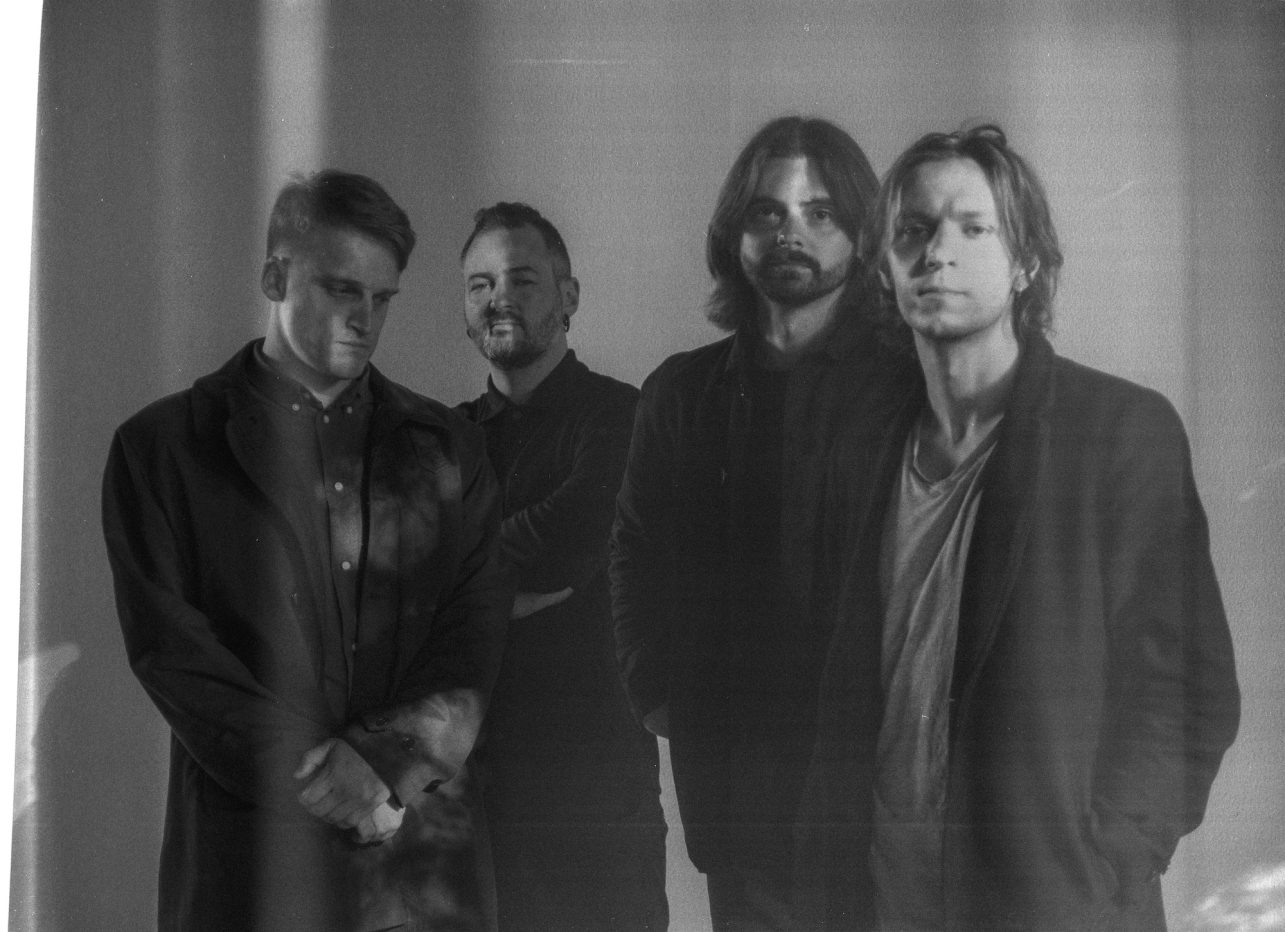
How did Extravaganza start?
Mantas: Officially, it all started at the end of August 2012. Although some creative attempts occurred much earlier, it was then that we first appeared as Extravaganza. We held our first concert exactly nine months later – we simply gave birth to it.
Tomas: As for that initial connection, the former drummer and I figured out in his garage that we wanted to experiment. We both liked harsh, shocking music. We were searching for motives of “unlistenable,” extreme music not only in black metal, but also in the noise and techno scenes. We were thinking about how to combine that sense of horror with dance music. We had a kind of doom jazz ensemble and played a couple of concerts, but we couldn’t maintain a connection with people.
Extravaganza did not even start with playing music, but with a joint trip. We came up with this concept for ourselves – we went to Palanga with very little money (maybe 50 litas) and a pack of Marlboro. We said that if we could survive a whole weekend in Palanga, then we’d be able to keep a band together too. We had a great weekend. On the way back, while hitchhiking, I ended up in a car with Petras Gražulis. It was completely surreal: we drove for five hours, it was September 1st, and he kept stopping in villages to hand out red roses to grandmothers whose birthdays were that week. It was a very strange, a bit scary, but also in its own way romantic beginning.
How did your initial genre and style change over time?
Mantas: At first, we didn’t play pure black metal – we experimented with dance music, black rock, and at one point, we even had a synthesizer. What mattered to us wasn’t so much technical complexity, but the emotion and the rhythm itself.
Tomas: We navigated between the heavy underground music and electronics. We were never in just one camp. Today we have fewer of those dance elements, but more poetry, big contrasts between something very beautiful and very brutal, negative. Our goal is to create pleasant experiences through unpleasant means, or vice versa. We don’t want to be confined to one genre.
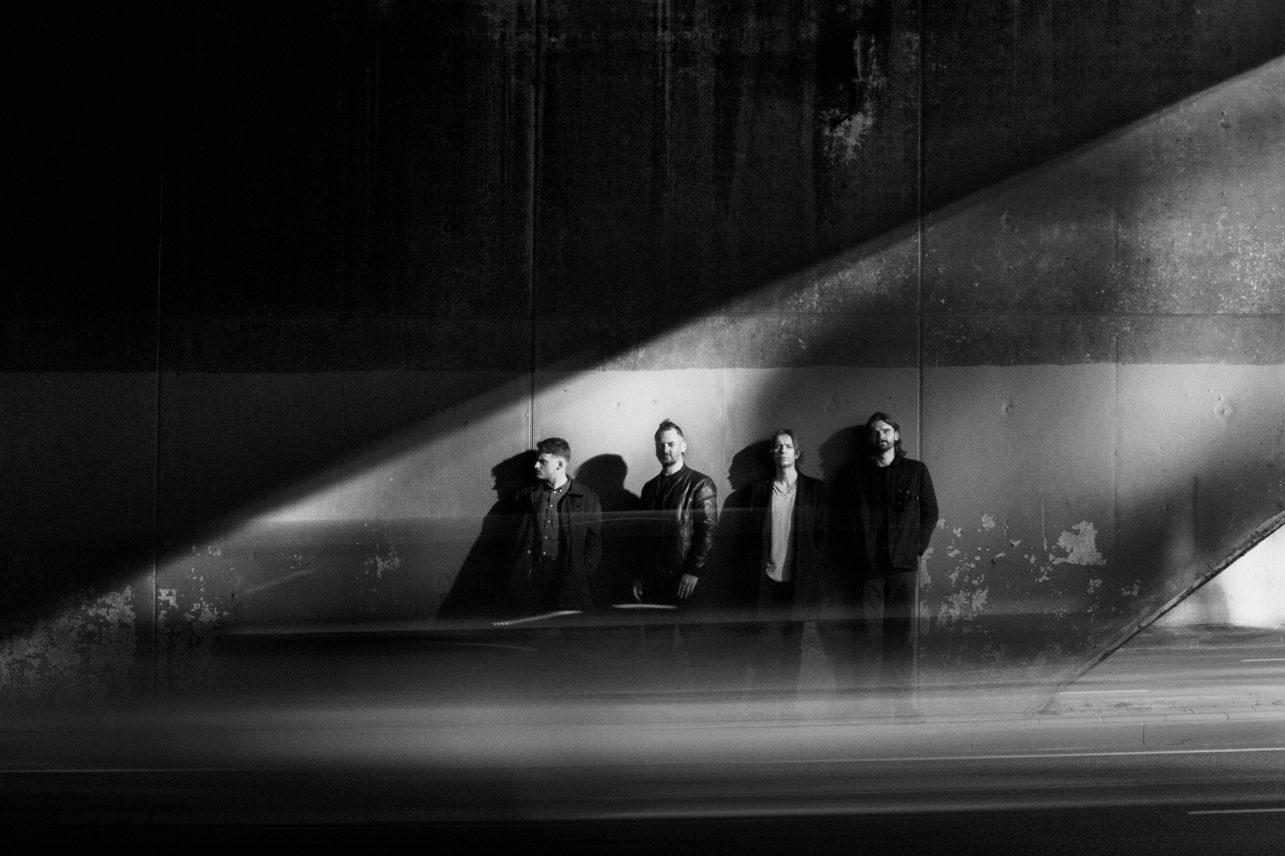
What role does Kaunas play in your identity? Where did you rehearse and perform?
Tomas: We started on Jonavos Street, in the premises of Varžtų pasaulis. The father of the flutist who played with us at the time allowed us to use that space. We basically lived in the attic of Varžtų pasaulis: we discussed, rehearsed, organized massive but very cultured parties, private concerts, and guests would come from all over Lithuania. That went on for more than one season.
Mantas: After that, we moved near Akropolis, to the Carmelite Monastery, to the basement of the Underground Pub (formerly Antipop). The owner really liked us, so we got a true underground space. Most of our early rehearsals and concerts took place there. Later, an escape room was set up there – they say that after we moved out, nothing in that basement had to be changed [laughs].
We also played quite a lot on the street. If in Vilnius people were more into playing Tsoi, we were more into Foje. We played whatever people liked. Of course, marozai (rowdy guys) would come up and request their own songs. Playing on the street felt like a big stage. That’s why I wasn’t afraid to play our first concert; it felt like I had already played for all of Kaunas on the street, and now I’ll just go on stage and play for a smaller Kaunas: our friends.
How does the underground audience change?
Artūras: Comparing our album presentation in Vilnius and Kaunas, there are more young people in Kaunas. Most likely, they’ve only recently discovered this music, but they come dressed up, with merch. I saw someone wearing a T-shirt of the cult Lithuanian metal band Anubi. In general, nonconformist subcultures are kind of dying out. Everything is becoming more about fast fashion, image, and style. But nonconformists are still around, and most definitely in Kaunas.
Tomas: Another positive observation – there is less alcohol consumption during concerts.
Was/is there enough space for the underground in Kaunas?
Artūras: As someone from Vilnius, I have an outsider’s perspective. Kaunas and some smaller Lithuanian cities have always had a stronger underground culture, both in electronic music and heavy rock. Kaunas has always seemed to me like a bastion of love for industrial sound and aesthetics.
Tomas: The underground infrastructure of Kaunas, when we lived there, was well developed. There were these “Bermuda Triangles” in the city center: Boškė’s yard, Šūdkiemis, the Galera yard, Santaka, Budkė, Satankiemis. You could spend the whole day there and meet everyone: punks, metalheads, skinheads, artists, even criminals or future stars. These were free spaces: the Jewish hospital, a Gothic abandoned house opposite Riešutas shop, the Castle, Vytautas Bridge… That’s actually where Mantas and I met, sometime at night, during a snowfall, by the dark riverside under the bridge. Those ugly places brought together very creative people.
Do people dance at your concerts?
Karolis: Dance can take many forms. At our last concert in Kaunas, at Lemmy, one guy stood by the side of the stage the whole time without moving at all. If I hadn’t known that he had specifically come from Vilnius for the second time to hear the same album presentation (and later said so many kind words), it would have seemed like he didn’t like it. But that was simply his preferred way of listening.
Arūnas: I find those listeners the most interesting. It looks like they’re deliberately not moving and judging you, but after the concert, they come up to thank you and seem really happy.
Tomas: Some people dance and know all the lyrics by heart, while others choose to observe and analyse. It seems to me that the underground scene has overall changed – if before the concerts were full of drunk middle-aged men who wanted to dance on stage, now our audience is very polite, cultured, and empathetic people.
Tykiai ir slaptingai pakampėm belangės is the name of your latest album. The lyrics are extremely dark, rich, and archaic. How are they born?
Tomas: I usually write the lyrics, but the band edits them. Sometimes they hold me back and say, “Tomas, you’re swearing too much here” [laughs]. The melodies often come first, and the words stick to them. You start mumbling syllables until they materialize. Another part comes from a terrifying reality, for example, the lyrics for the song “Dog” came to me after I read Ukrainian sociologists’ accounts of Bucha at the Thomas Mann conference.
Sometimes I am inspired by details from books, for example, the album opens with a song based on Sorokin’s Day of the Oprichnik, and Anisimov’s Russian History. “Dvasna” was written while reading Sinclair’s Jungle, and “Tikras Perkaitas” was written consciously and purposefully, knowing exactly what I wanted to say. Other songs are real stories that simply needed to be put on paper.
Underground bands often have their own idols that inspire them – Satanism, alcohol, society, or space. We chose what I would call an anti-idol: the phenomenon of Russian evil. I grew up as a Russophobe; my family, like many others, suffered greatly because of Russians. To see how that culture is still accepted, how Russkoye Radio is still playing, or how business is done without morals – to us, this is the great evil of our times.
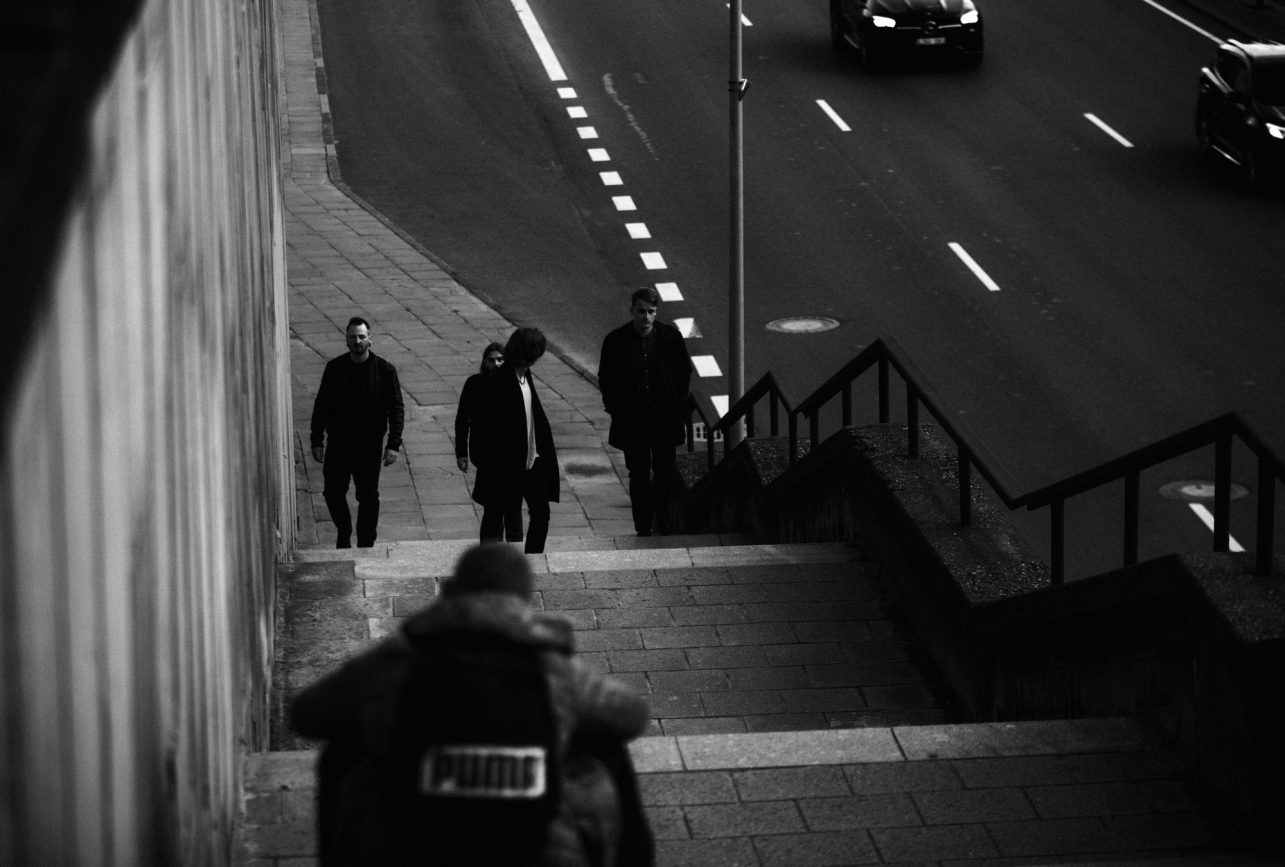
As Mantas delved deeper into Russian occultism, the working titles of our songs revolved around this topic even before the war. There is an oprichnik on the album cover, an FSB agent of Ivan the Terrible. The symbols of the oprichniks were a dog’s head tied to the saddle and a broom. Their motto was, “We’ll sniff them out like dogs, and sweep them away with a broom.” Seeing that even after several hundred years, this remains relevant, we speak about it in our music. It is an attempt to get into that unconscious, evil, murderous mind and deconstruct it through music.
At the same time, we decided that all of our profits earned from concerts, albums, and merchandise would be donated to Ukraine’s fight against Russia. In this way, we are trying to turn Russian culture and history against itself.
Mantas: It wasn’t a preconceived notion – we’ve all been conceptually and creatively working through that evil coming from the east for a long time, for more than ten years. Black metal is often associated with Satanism, but for us, it is precisely this kind of evil that feels familiar. If you want, you can see it right there on the street, in everyday life, in alcoholism, in anger toward yourself or someone close to you.
There is a prevailing view that black metal is aggressive, angry and hateful. What do you yourselves find in it?
Mantas: There is a lot of sadness in our music. Some people say it is depressive, but I see its beautiful, melancholic side.
Tomas: It seems to me that there is always a lot of oppressive, all-encompassing sadness around us. When we play, that fog disperses. And when the music falls silent, the fog slowly returns.
Artūras: To me, this music feels very Lithuanian, almost folklike; it contains a lot of poetry, a familiar gloom, but also beauty and a search for comfort. At one point, I was a fan of the band, and later I became a member, so I feel a constant contrast between what this music is and the emotions it evokes.
Concerts, of course, are about connecting with the audience – when the audience is happy, you are happy too. And our rehearsals are always a draining, emotional experience. After them, I always leave exhausted, I can’t listen to any other music – only to the sound of a car engine.
At concerts, you meet and spend time with people who also perceive the world, current events, and problems as sensitively as you do; you see that it resonates with many. That, too, is a kind of light. And although our music is about darkness, I don’t think we, as people, are like that. On the contrary, it helps us appreciate good people and their beautiful qualities. When you think a lot about bad things, it becomes easier to notice just how much good there is as well.