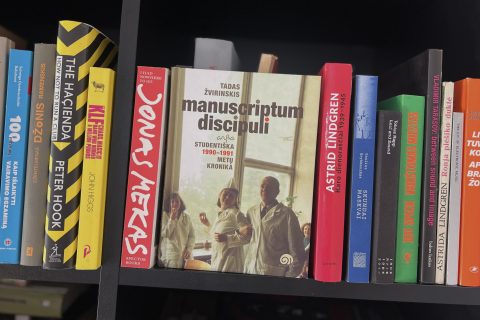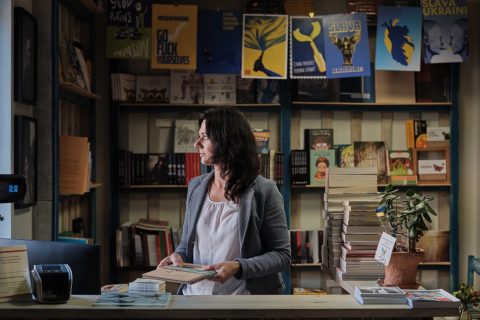
As the Day of the Restoration of the Press, Language, and Books approaches, we keep returning to the question of what freedom of speech means today; not only in a historical context but also in everyday life. In an age of information overload, a book remains one of the few spaces where one can pause, take a breath, and hear another voice
Guided by these thoughts, I stop by Kaunas’s “blue wooden house” – the bookstore Kolibris, where I am greeted by its soul and co-owner, Jolanta Malakauskienė. Surrounded by books, we begin a conversation about her relationship with books, the bookstore itself, and its sense of freedom, the discerning reader, and the Kaunas Literature Festival.
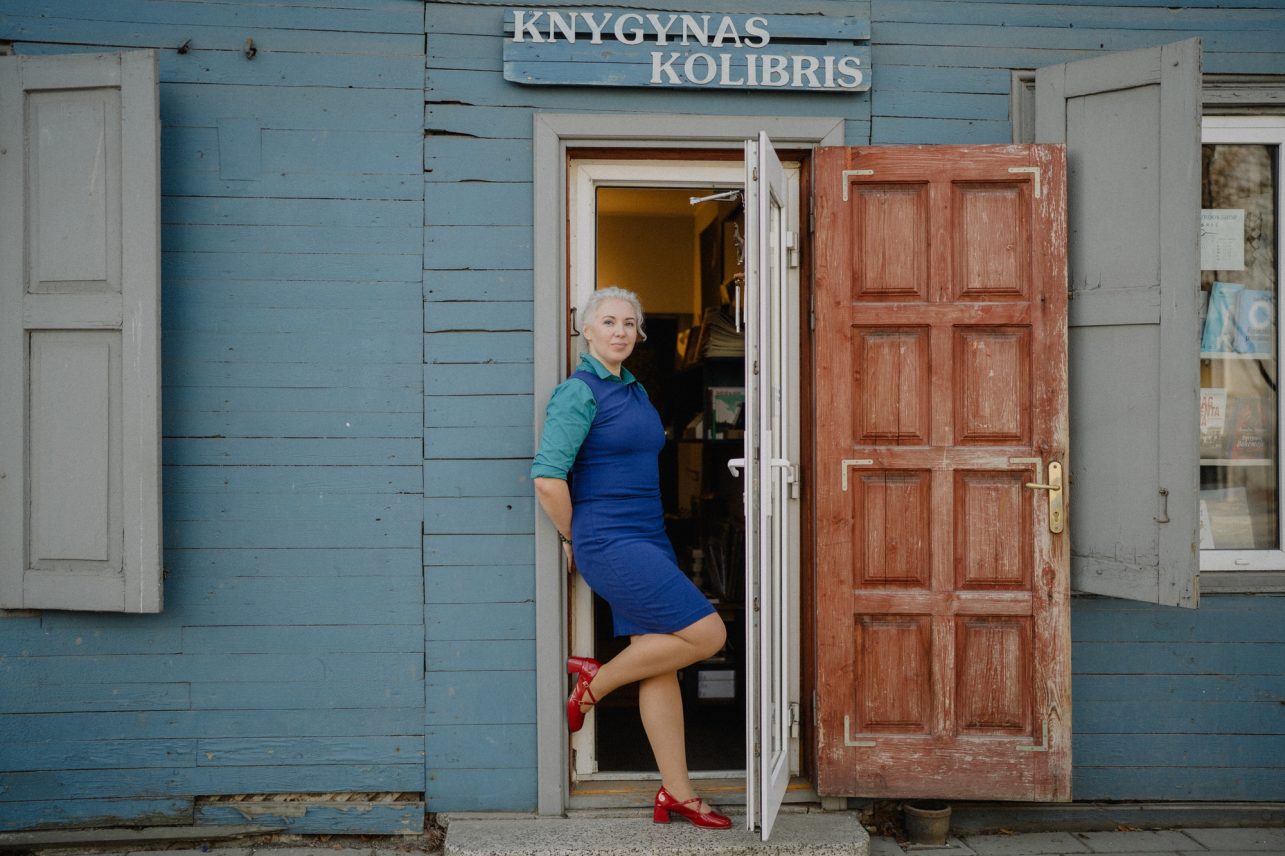
Jolanta, today you are the co-owner of Kolibris bookstore, but every journey has its beginning. Have books always been a part of your life? How did you find your way to Kolibris?
If books had entered my life only with the “little blue house”, they probably would never have entered it at all. Books have been with me for as long as I can remember. They were my pastime and my friends; I would even trade games in the yard for reading. It feels as though books raised me.
I first started thinking about opening a bookstore around five or six years ago, before Kolibris even existed. I became increasingly frustrated by what I was finding in Kaunas bookstores – more and more space was being taken up by so-called complementary goods: toys, stationery, water bottles, candle holders, while the selection of books, especially quality literature, seemed to be shrinking.
At that time, other things took priority in my life: I was raising small children. Finally, I decided to create a small online bookstore, which I considered my hobby. Almost at the same time, a physical Kolibris bookstore opened in Kaunas. At the time, I was actually quite pleased – it seemed that what had been missing had finally appeared, but at the same time, I realized that this was a niche market, a place that wouldn’t attract a mass influx of customers, so there was no longer a need for yet another independent brick-and-mortar bookstore.
Eventually, after assessing the situation, I closed my online bookstore, and in July 2022, I enrolled in a master’s degree in philosophy, during which I met my professor Viktor Bachmetyev, the founder of Kolibris. I graduated in 2024, and around that time, news began to spread that the future of Kolibris was hanging in the balance. Viktoras returned behind the counter with the idea that he would work the final few months and then close the bookstore, but in the end, he simply could not bring himself to let Kolibris go. That was when he contacted me and offered me the chance to take over.
So books did not enter my life through Kolibris – quite the opposite happened: Kolibris entered my life through books.
You mentioned that books have been with you since childhood. What shaped you as a reader?
I had never really thought about it, but I suppose I was never satisfied with what was being offered by the mainstream market or the large bookstores. I had already had my fill of popular literature as a teenager. Over time, the need to get more out of books arose; not just to close the last page and immediately grab a new book, but to pause, to ponder, and take a question away with me. I want to read literature that would slow me down, allow me to pause and think about things that don’t even cross my mind in the rush of everyday life.
Books became a way for me to better understand people and the world around me, to expand not only my literary vocabulary, but my vocabulary for life itself. And ultimately, to cultivate taste, to become more selective not only in literature, but in life in general.
Do you remember the first book that slowed you down like that, made you pause and reflect?
It happened when I was still in primary school. I remember that book very clearly – “Ronja, the Robber’s Daughter” by Astrid Lindgren. I realized that the image of a “good girl” does not necessarily reflect reality, and that a “bad” girl is not necessarily malicious or cruel-hearted. Ronja was rebellious, almost wild, yet inwardly she was full of light. For the first time, I began to think that the behavioural norms girls were taught in the 1970s and 1980s did not necessarily reflect a person’s true self.
That book marked the beginning of my conscious reading life. And stories about rebellious girls who refuse to conform to uniform standards have stayed with me ever since. Now I buy books like that for my own children too, especially for my daughters.
Kolibris is also often singled out as a different kind of bookstore – both because of its space and its book selection. How much of the bookstore’s original vision comes from your own personal experience as a reader? How would you describe it?
To be honest, it’s very selfish – it is about responding to the needs of readers like me. Readers who seek more from books, who are more discerning. As for my vision for the bookstore’s future, it is very important to me that it remains exactly as it is, regardless of who carries its banner. I see it as a small, stubbornly different bookstore; a selective bookstore for a selective reader.
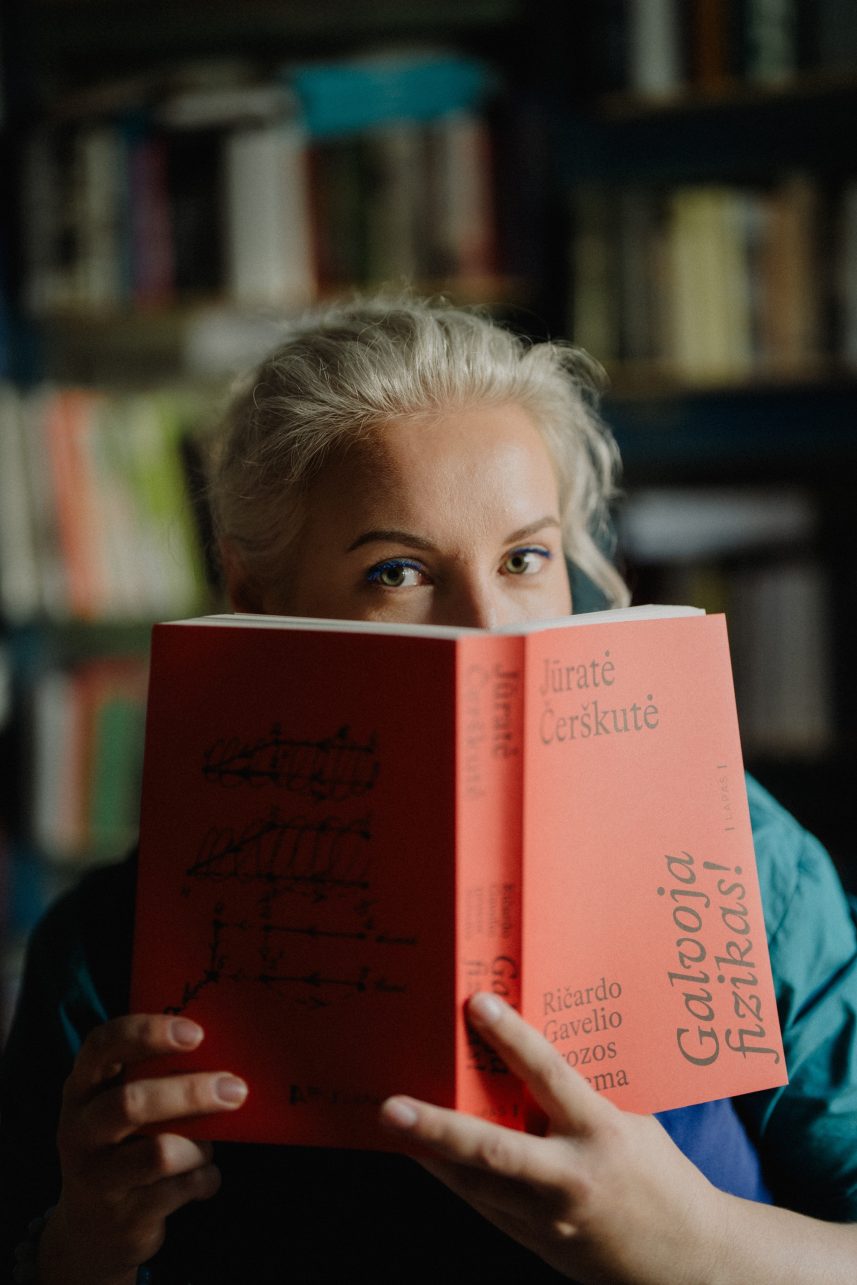
“Independent” is also a term that today sounds like a value position in itself. Is it more about freedom or responsibility to you?
I would say it’s both. Freedom is always responsibility, no matter the context. When you have the freedom to choose and make decisions, you also always carry the consequences of those decisions. When you are not free, you do not make decisions, which means you do not take responsibility either. For people who find responsibility frightening, freedom itself is often unnecessary; they choose clear instructions, they know what they are supposed to do, and they simply perform a function.
Speaking about the bookstore, independence to me means that there is no network, no chain, no higher authority making decisions. I decide myself which books to order, how many to order, and at what price to sell them. In a chain bookstore I would not have that kind of freedom, but then I also would not have to think about pricing or marketing. If Kolibris became part of a chain, perhaps the name or the location would survive for a while, but the bookstore itself would quickly lose its identity.
In one interview, you mentioned that a bookseller is the best influencer. Does a bookseller shape a reader’s taste, or do they more often reflect it?
Some people come in knowing very clearly what they are looking for – sometimes even with specific lists. But some come in and say, “I want to read, but I don’t know what.” And that is when the role of the bookseller becomes especially important. In such cases, my task is to find out what the person has enjoyed before: I ask them to name a few of the last books they read that left an impression on them, and from that, I try to understand the direction and what I could recommend.
I have the freedom to recommend what I genuinely believe in, I do not have to follow sales targets or push “mandatory” books. But at the same time, that is also a great responsibility, because I need to truly know what I am recommending.
Sometimes the readers “bring” books themselves and show what’s missing. On the other hand, authors often approach me as well, especially lesser-known ones, offering their books. I cannot say yes to everyone. Not out of arrogance, but because I always ask myself whether a particular book truly belongs in Kolibris.
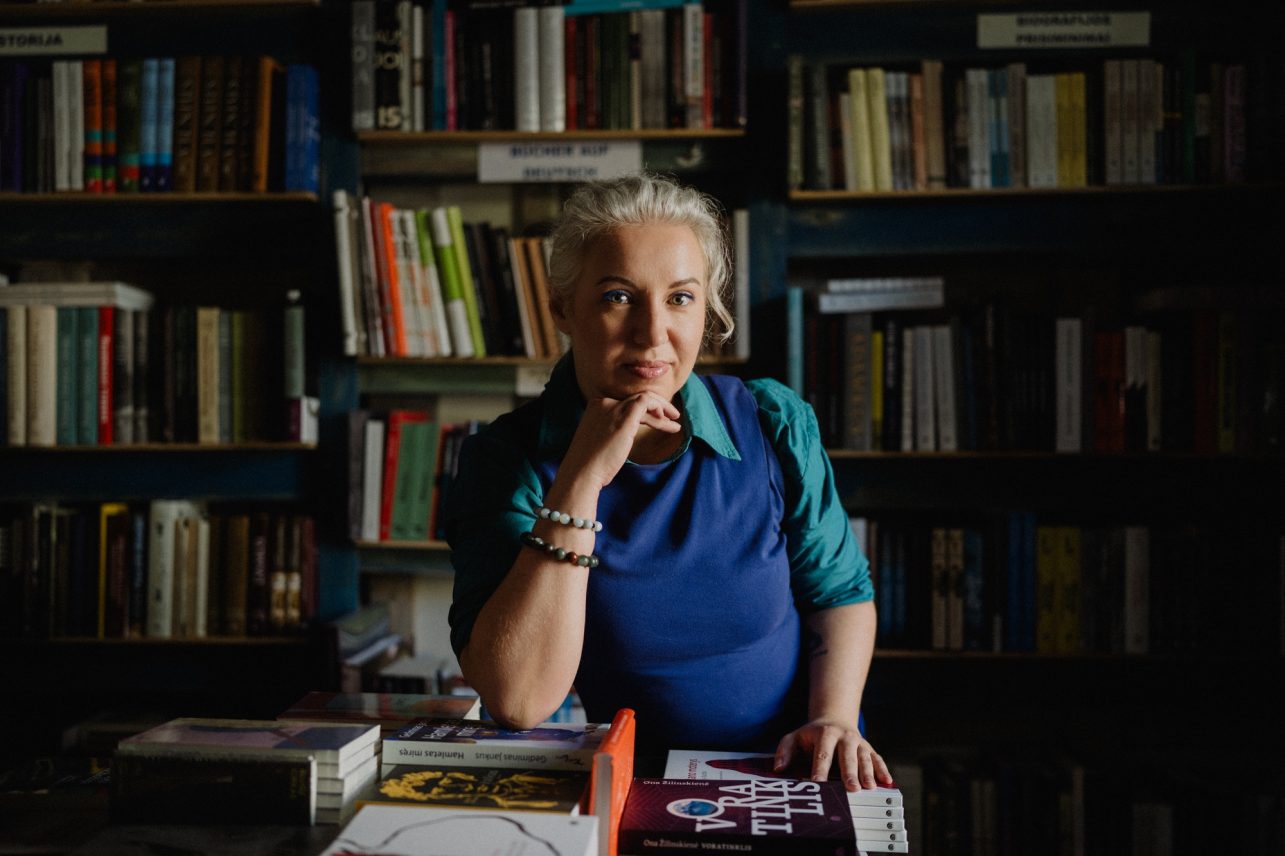
From the freedom of Kolibris, let us move on to Kaunas Literature Week. This literary festival has been taking place for six years now, and you are an active participant, and not only on the day of Liberty of Books.
I often think about those days when real second-hand booksellers still operated on Laisvės Avenue, and I miss them greatly. To me, Liberty of Books is a brief return to that time when books, once again, return to the streets, and with them, a spark of life appears in people’s eyes. Both in those who sell the books and in those who read them.
Events like these create a rare opportunity for the entire book community to come together – readers, writers, publishers, booksellers. And it is not just about commerce. These are people who truly know what they are offering, who read themselves, who are curious, who understand books. I think it is precisely these kinds of encounters that create a living literary culture in the city.
And when we think about what the festival gives to the city, we naturally arrive at the reader as well. In your opinion, what do events like these give to the reader?
I think it’s an excuse to get out of your little cage where you read alone; to meet like-minded people, writers, translators, publishers. It is an opportunity to discover each other. New acquaintances and friendships are formed, informal conversations take place, and sometimes they even grow into very concrete collaborative projects. This is where the real cultural dynamics are born. Sometimes I wonder, if this were everyday life, would these events maintain their festive nature? It is precisely the rarity of these encounters that creates the sense of celebration. At least now we have something to look forward to every year.
Do you think Kaunas needs more literary festivals like this?
This festival has long since expanded beyond the boundaries of a single week. Those who are interested know this very well; for example, the Maironis Lithuanian Literature Museum hosts monthly meetings of the Kaunas Literature Week club, and readings are also organized in Šeteniai. Perhaps there is no constant fair-like atmosphere or an intense rhythm of events, but the activities are spread throughout the calendar. Do we need more festivals? Perhaps what already exists is enough. What we need more of is greater engagement and a desire to participate. If we start multiplying festivals simply for the sake of multiplying them, we will very quickly become oversaturated ourselves and oversaturate the reader as well.
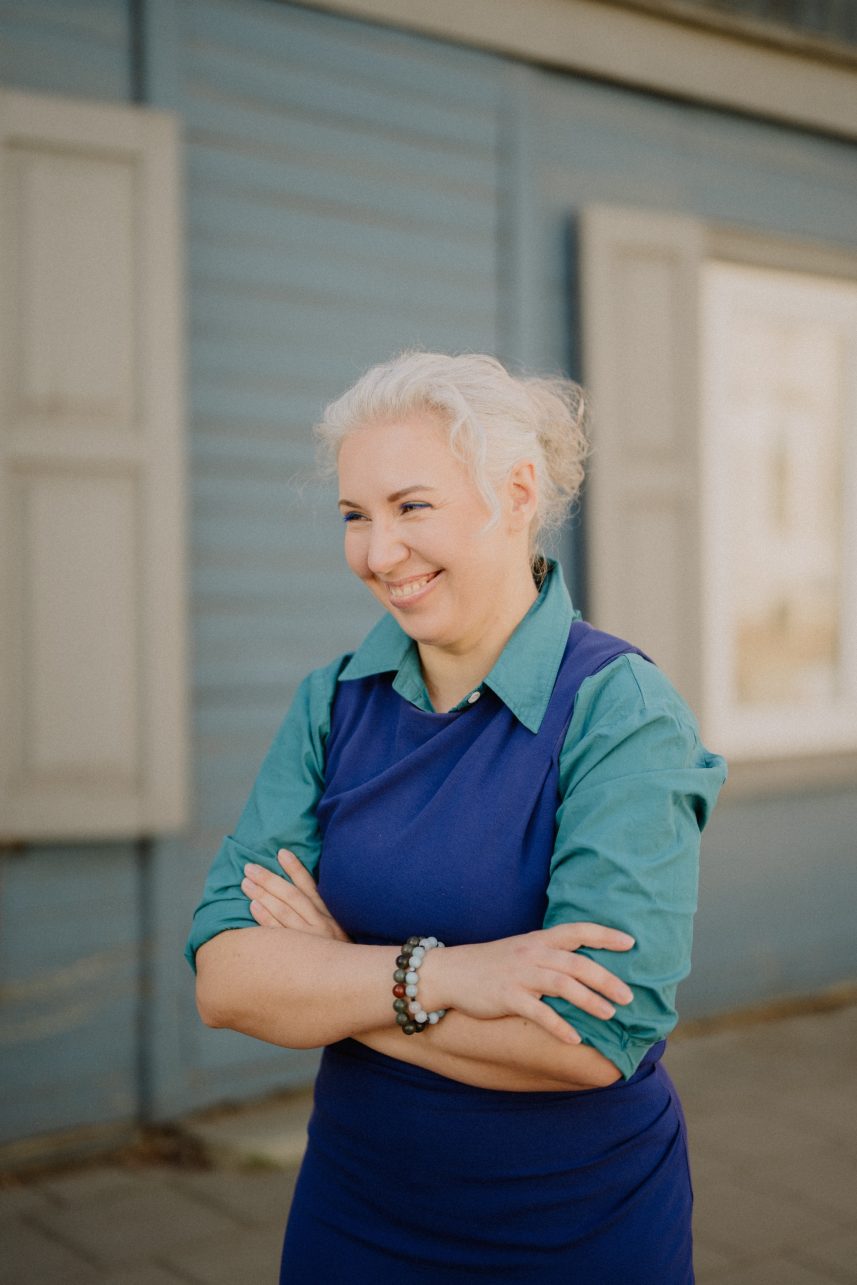
Let us return to your personal relationship with Kaunas Literature Week. What are you personally looking forward to most in this year’s program, both as a partner and as a reader?
As a reader, I am mostly looking forward to the arrival of the Italian writer Viola Ardone. Although we do not sell her books at Kolibris, I find her very interesting. And here I would like to thank her translator, who knows how to present the author in a truly intriguing way. As a festival partner, however, what I look forward to most is the Liberty of Books. I very much hope the weather will be kind to us this year. But even if the weather conditions do not allow us to set up outside and sell books, I will still come: to see people, to meet them, to say hello. Perhaps even to invite those who are cold into Kolibris for a cup of tea. I also plan to attend other events; I would like to sell books by the festival’s guest authors, although physically being everywhere at once is, of course, impossible.