Why did we decide to begin the Kaunas Full of Culture “Tribes” issue with this text? I ask myself, watching the cursor blink insistently on the white page. And I remind myself that everything I will write here will only be my interpretation, imagination, formed from conversations with these very different people, all driven by a single goal: by watching their community in the Žalgiris Arena or marching down the street together, surrounded by green and white smoke, or alone, silently, when only a tattoo or a scarf sticking out from under the jacket reveal their belonging to the brotherhood.
Indeed, looking at the Tribes issue’s content, it is obvious that the theme is a rather masculine one, and there are likely scientific or philosophical explanations for that. Today, we will do without the latter. We will talk with the Green White Boys, who celebrated their 18th birthday in the fall, about what drives them forward, pushes them out of warm homes, crams them onto buses, and lifts them off their seats; about what is more than sport, stronger than a club, and much more real than a brand, and about the term “ultra” that irritates some and inspires others. It is, indeed, difficult to remain indifferent.
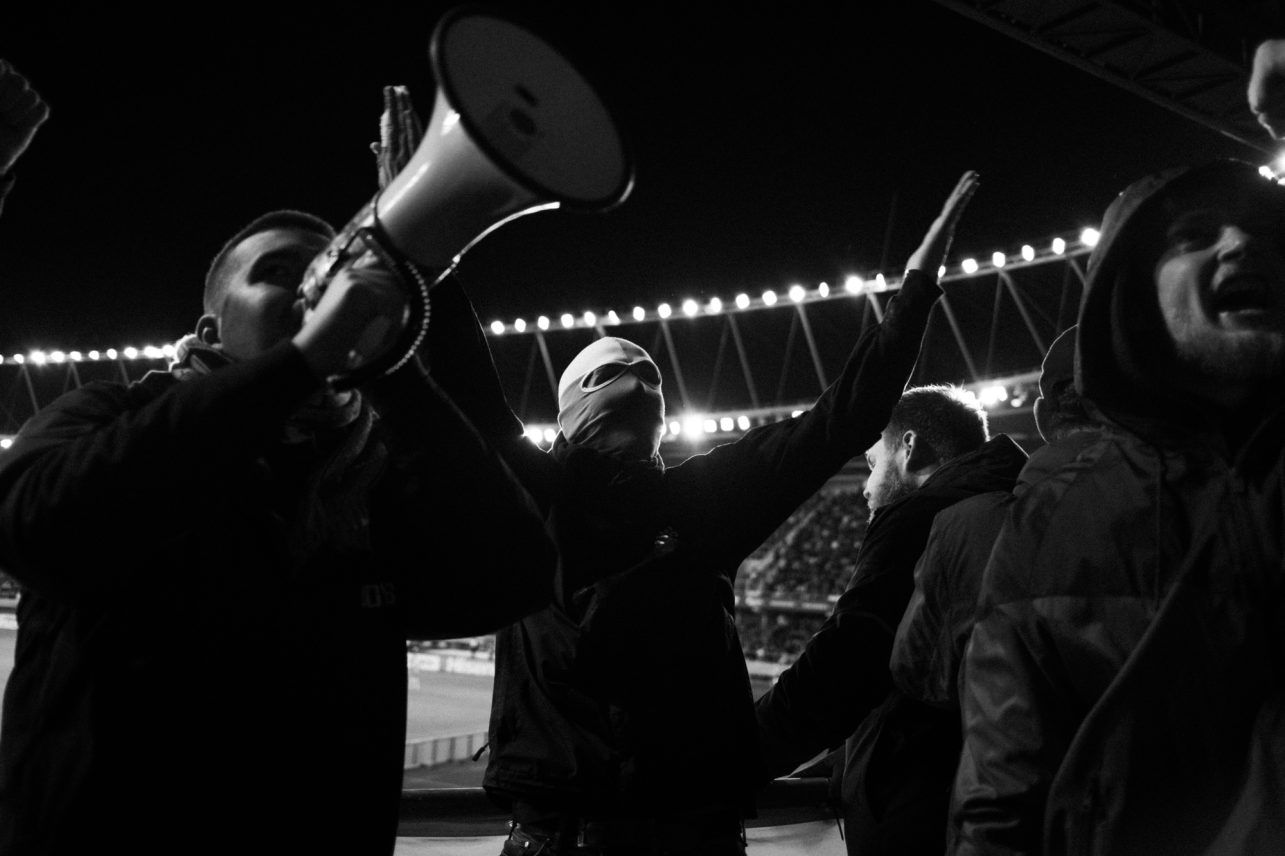
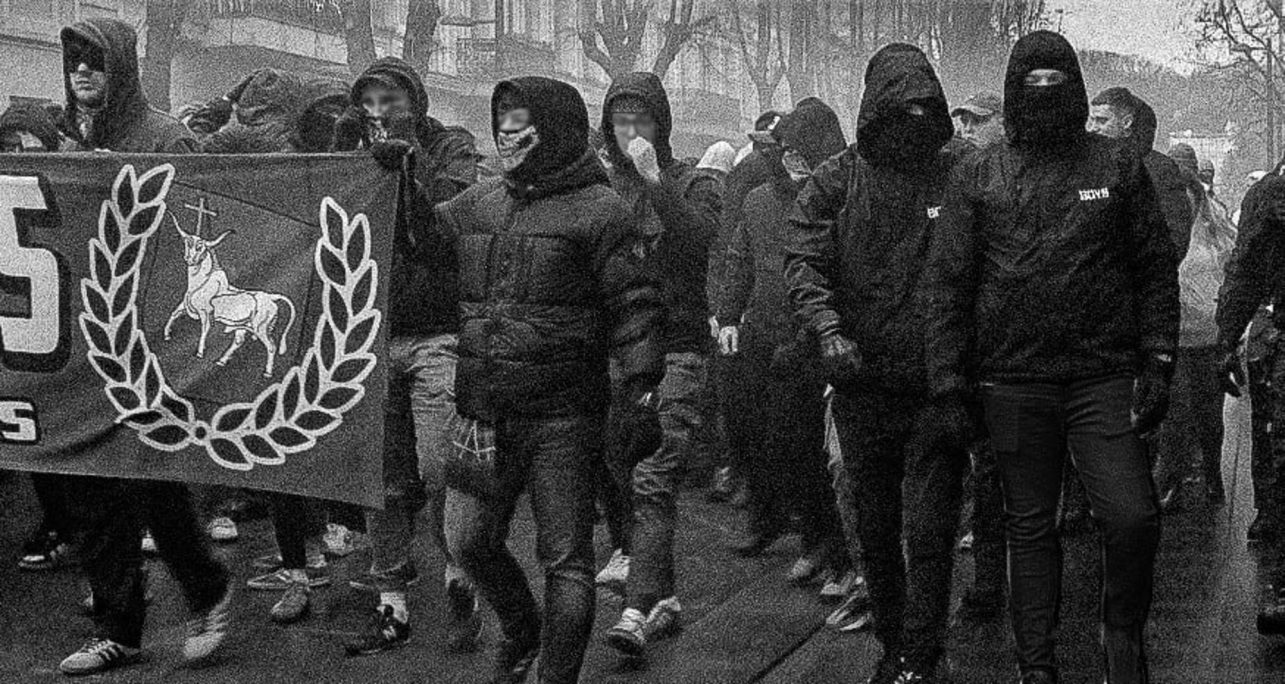
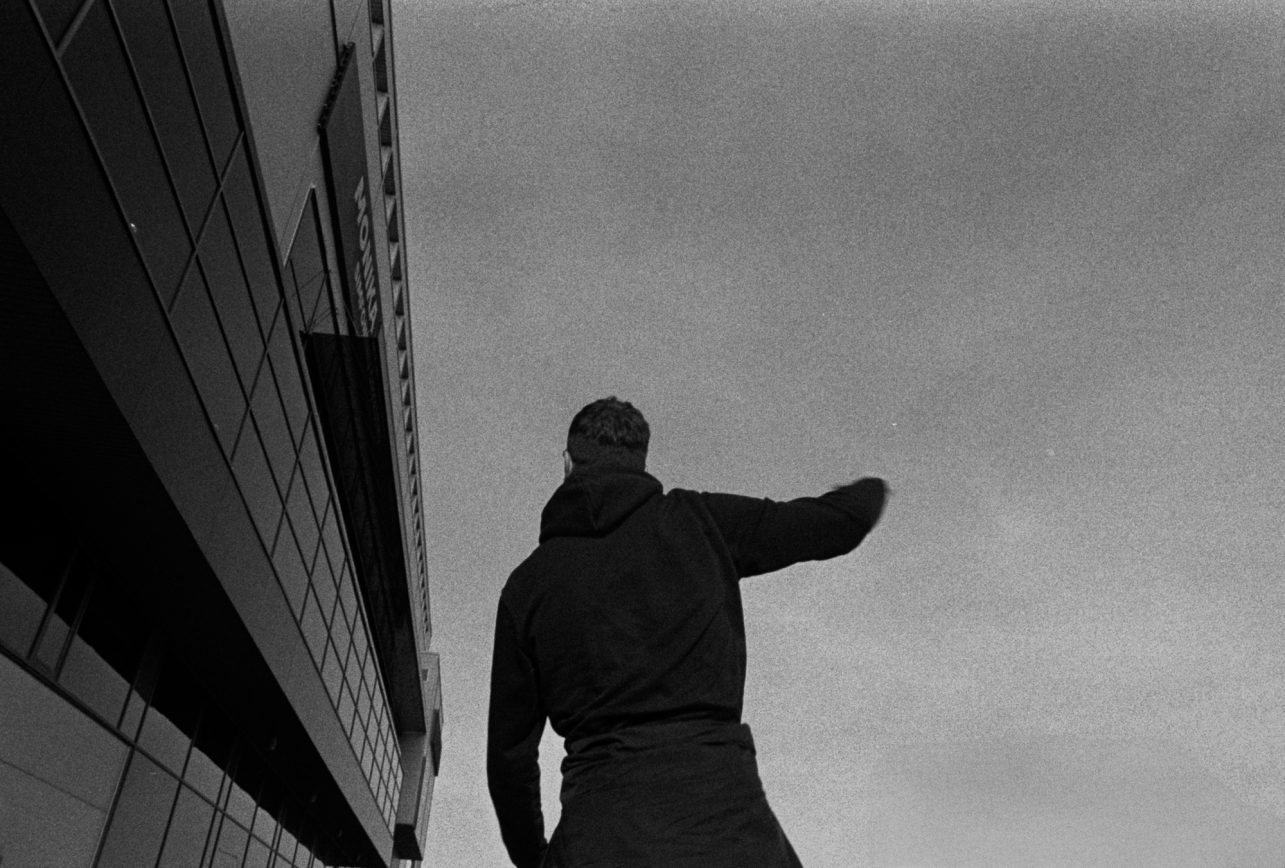
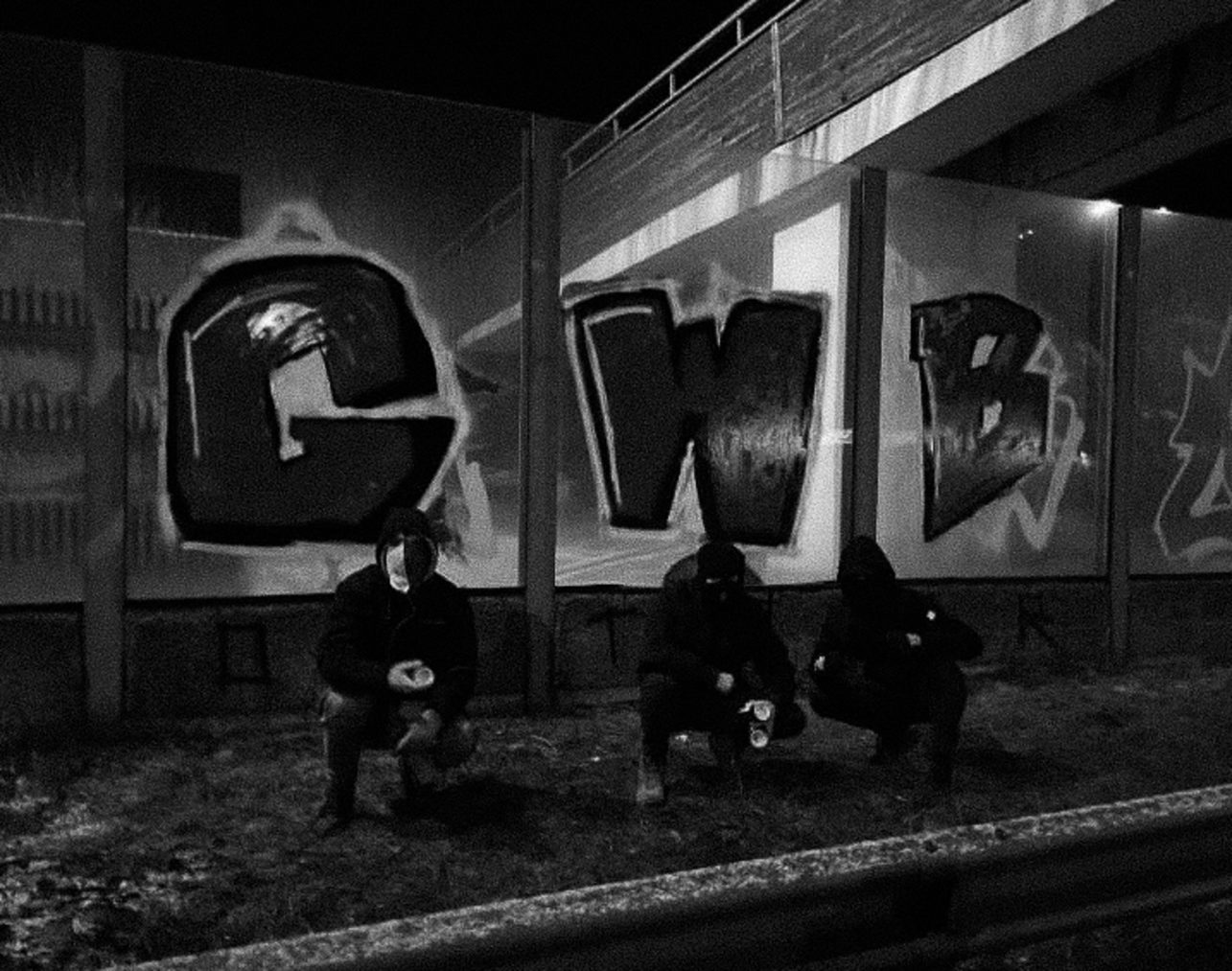
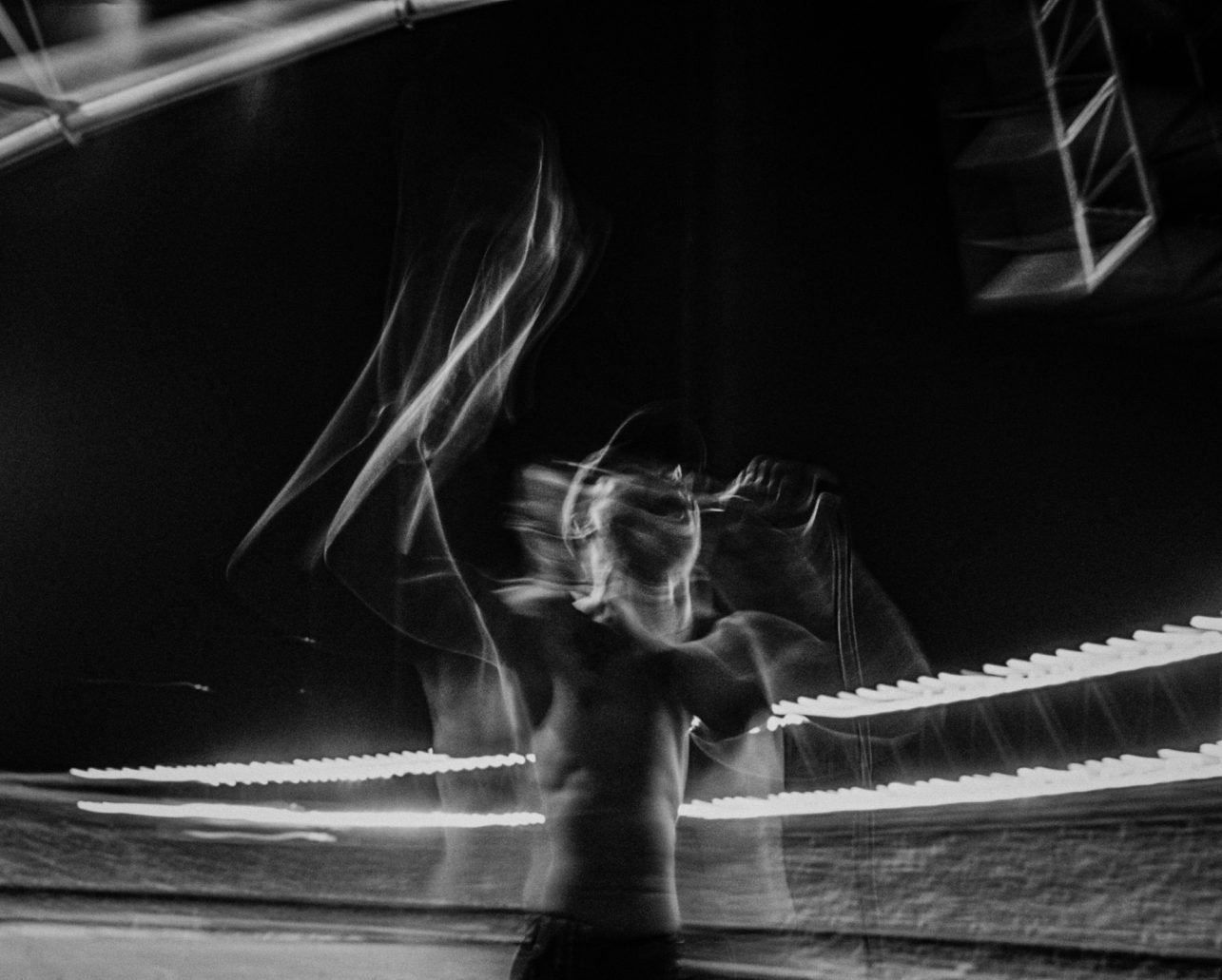
“I’ve been here for more than half of my life,” Ignas, who recently celebrated his 30th birthday, says, recalling his first time at the stands. He is from Kaunas, and Lukas, who joins the conversation, came here from Kėdainiai when he was sixteen and, almost immediately, to the stands. Hugo is close to GWB. He comes from the seaside and has inherited the title of ultra from his father, who had his own tribe supporting the port city’s sports club. That club, unfortunately, disappeared, but the passion remained. The young man studying at the Vilnius Academy of Arts became interested in watching GWB, and it is no coincidence that this article is illustrated with photographs taken by Hugo, which have already been exhibited to the academy’s community and received positive feedback. There will also be a film. You can read more about it at the end of the text.
Ignas does not doubt that being a sports fan and belonging to a tribe are practically synonymous: “Being an ultra is liberation, not complying with imposed rules and having one’s own instead. We have our own norms and structure; they weren’t handed down from above; they formed naturally when a few dozen guys came together. Ultras worldwide are also quite tribal: larger or smaller formations fight each other, both domestic and foreign policy is considered, we can unite into larger units or go into confrontation. There is something primal in being an ultra.” Lukas adds that fellowship is also very important.
To mark their anniversary, GWB watched the documentary “Ultras” by Swedish director Ragnhild Ekner at the Romuva cinema, which reveals the colorful lives of football ultras in various countries. Sacrifice, resilience, blood ties, finances – these are the kinds of stories that move people. Clearly, basketball occupies a unique place on the map of this otherwise football-dominated world. Greece, Serbia, Lithuania… “When I show GWB photos to the Dutch, they’re amazed – how can anyone even support basketball?” Hugo says.
According to the interviewees, ultra as a phenomenon has only recently come into focus in Lithuanian society: “Maybe it’s because subcultures have disappeared, yet young people still want both to stand out and to belong to something – there aren’t many alternatives.” Even social media plays a role – TikTok has contributed to ultra street fashion and the rise in popularity of certain brands. They say it wasn’t like this before: supporting sports was a matter for old people.
In Lithuania, the tradition of ultras was started by fans of Vilnius Žalgiris football club, who gathered in section South 4 of the stadium. But the support culture of our closest neighbors, the Poles, whose ultras visited Kaunas not so long ago and left plenty of traces in and around the city, surpasses Lithuania by light-years. “We are still very young.” Of course, eighteen-year-olds!
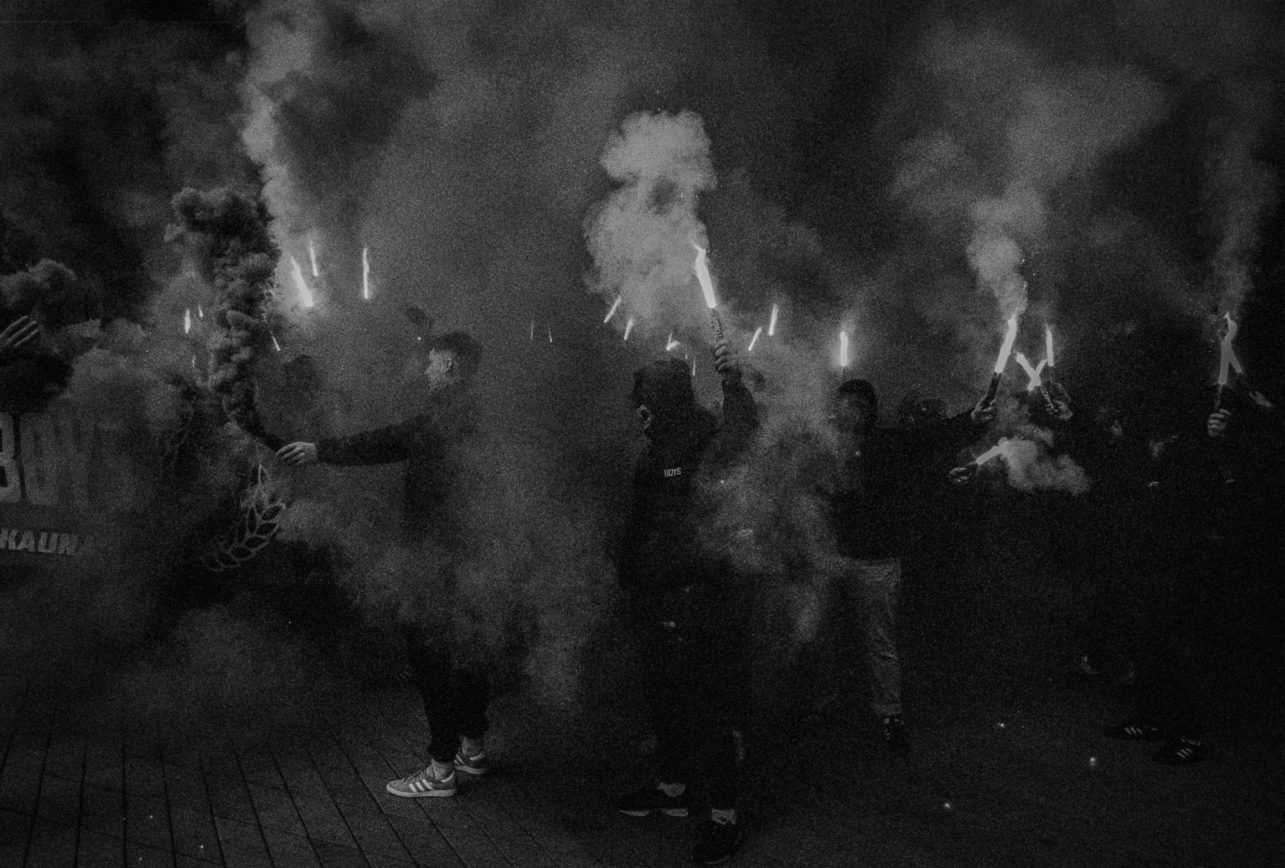
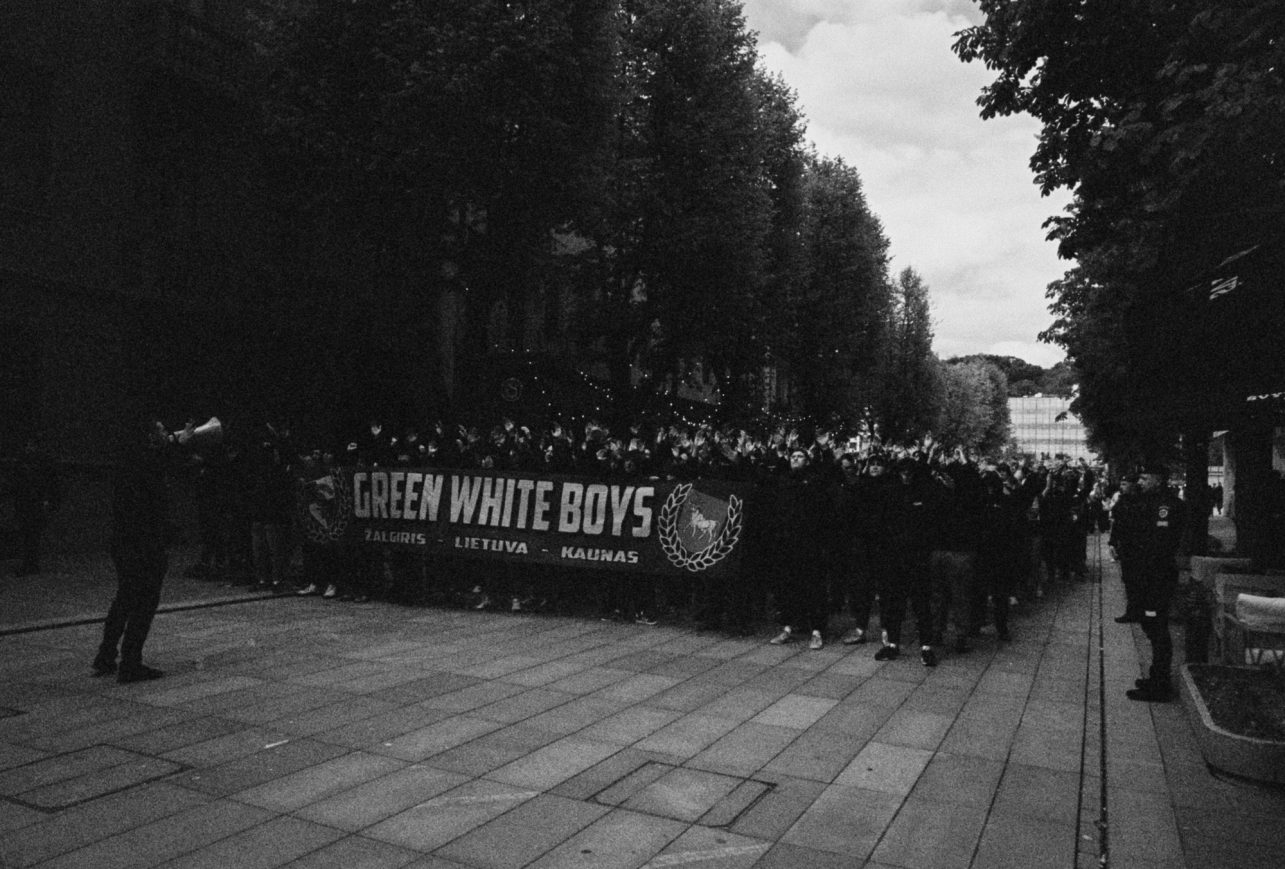
Ignas, who speaks the most today, though his friends frequently jump in to add to his thoughts, recalls that during the first few years, they constantly had to explain to those around them why this kind of always-energetic, sometimes brazen, and simply much bolder support than before was necessary – the kind that GWB first brought into the then Kaunas Sports Hall and later established in the new arena. Incidentally, space is very important: in a football stadium, you are much freer in terms of both sound and show elements.
It’s interesting to follow GWB on Facebook and, after more serious Žalgiris games or other significant events, to dive into their well-crafted “longreads”. They, when necessary, contain criticism of both the cold arena and the decisions made by the club outside the court, for example, regarding one or another commercial partner or player. That’s quite curious: so even though Žalgiris motivates and unites them, their viewpoints don’t always align?
“Yes, opinions do differ, but you can also understand the club: people working there strive for the best results, and they want to achieve them as quickly as possible and justify their decisions accordingly. But that isn’t necessarily acceptable to us, for instance, signing an opposing team’s player who had previously insulted the club. We, on the other hand, support the club regardless of results. Our goal is not to lose the true name of Žalgiris while moving toward those results, and that’s where the conflict arises,” the interviewees explain. According to them, what ultimately unites everyone is a shared value: the eternally living Žalgiris, a legendary club, the oldest in Lithuania, whose name is associated with patriotism and the fight against oppression. “Today, Žalgiris continues along the same line (for example, providing support to Ukraine) and that’s very important to us as well. We’re not just going to watch a basketball game; it goes a bit deeper than that.”
So how do you grasp that “deeper”? GWB begin preparing for game day long before it dawns. You wake up in the middle of the night, so that with a dozen like-minded people you could draw choreographies – giant banners with sharp imagery and slogans meant to honor or put someone in their place. The “choreos”, by the way, are worthy of museum collections, but… there’s nowhere to store them. After dealing with home games, there’s no rest: you travel, or even fly, to away games. Time and its value are difficult to quantify in monetary terms. Love for Žalgiris is obvious, but what about love for the city?
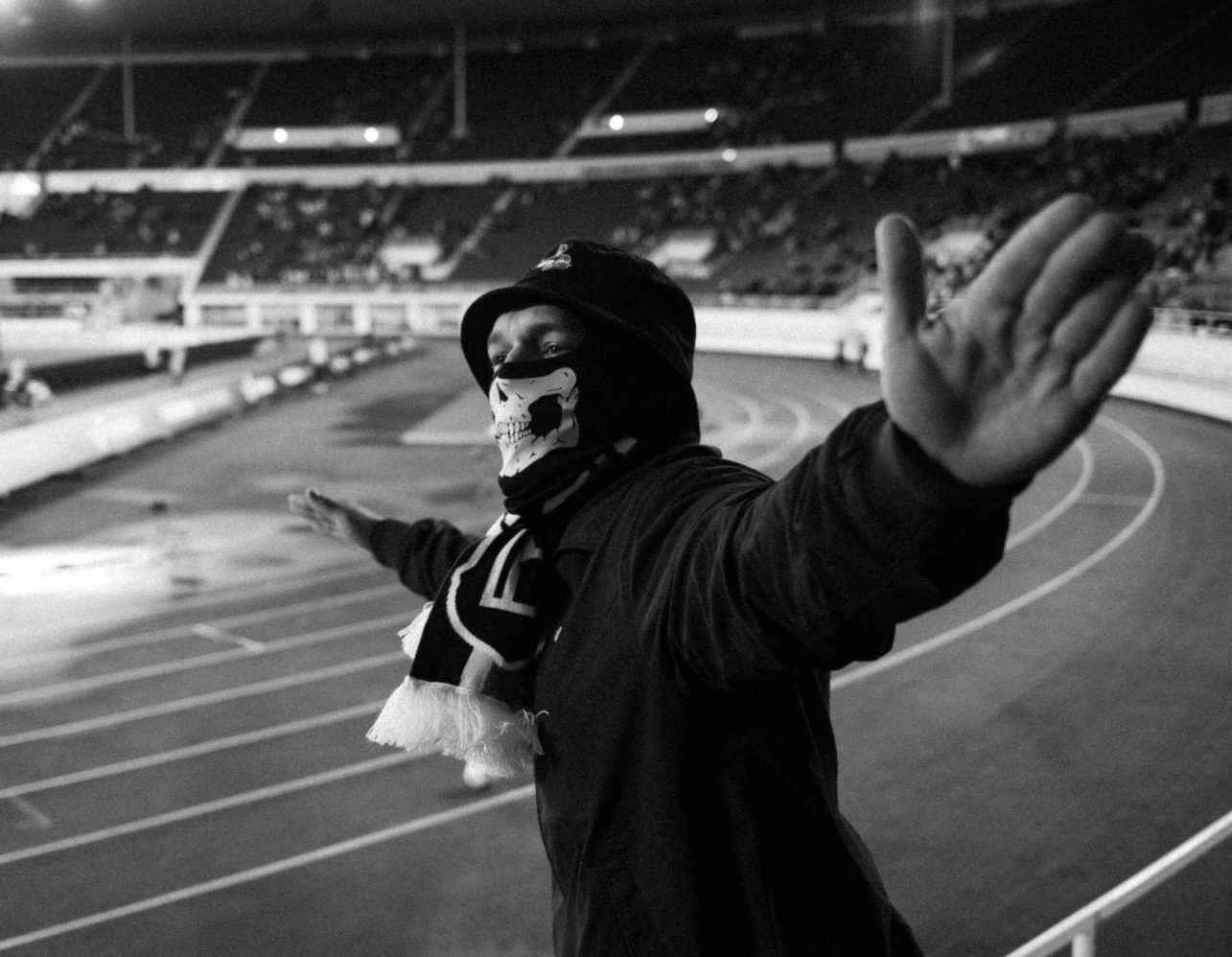
Some members of GWB come from other cities, while others still live there and regularly travel to home games. But do people who join the stands begin to love Kaunas more? Lukas, who is from Kėdainiai, believes that love for the city is very important here: “After moving here, Kaunas became my city completely.” And Hugo, before starting to work on the documentary, had only visited the arena: “But then I rediscovered Kaunas and changed my opinion about its people – yes, I held the stereotype that it’s full of guys in tracksuits, but now this city feels closer to me than Vilnius, where I live.”
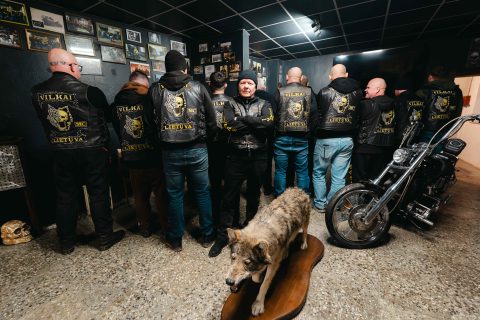
Another question that interests me is what unites them, apart from Žalgiris? I recently read the memoirs of one of the leaders of the Hells Angels, who talked about searching for a company that wouldn’t leave you stranded when your motorcycle broke down. “There are definitely parallels with bikers,” Ignas says. According to him, GWB members are brothers for life. Some express this visually – with tattoos. Others – simply by being there when you need them most. “Ultras are brotherhood. If I had any important life questions, I would first look for help here,” Hugo adds.
Often, the “choreo” unfolded in the stands before a game carries a political message. No one here believes in the slogan “let’s not mix sports and politics”, and even Donatas Motiejūnas, who plays for a Serbian team, receives some biting remarks. Last December, GWB joined Kaunas students who had gathered at the Vytautas the Great War Museum to show support for the “Hands Off Free Speech” protest in the capital; those present also raised a banner expressing opposition to a ministerial appointment. Is there a code that determines which initiatives to support and when it is better to refrain?
According to the interviewees, people around them often imagine they have the right to decide what GWB should support and how they should behave: “But those who do not belong to GWB have no right to criticize our activities outside the stands.” Any member can propose ideas, which are then discussed to see whether they align with GWB’s direction. “We don’t want to be associated with any single political party; we will never be a political force, but we do have our own values that we communicate. Everything operates on democratic principles. Patriotism is number one. The issue of Ukraine will always be raised. After all, in 2014, during Maidan, it was the ultras who were the first to go out to defend the country, and they are fighting even now. If Lithuania had to be defended, the ultras would also be standing on the front lines.”
And why does a peaceful city need ultras? What does GWB give to Kaunas? “It is the biggest support. It provides identity, a subculture for the city: stickers, graffiti. It shapes a person and their values. A young person who joins this movement gains more good than bad in a practical sense. Besides, sometimes it is the ultras that make the city more famous than the team itself (for example, the fans of Warsaw’s Legia are known all over Europe),” Hugo, Lukas, and Ignas argue all at once. Hugo adds that although in Lithuania, ultras are still associated with skinheads or white power ideology, an association coming from the 1990s, these stereotypes are fading, and the public image of such communities is improving precisely because of the aspect of patriotism.
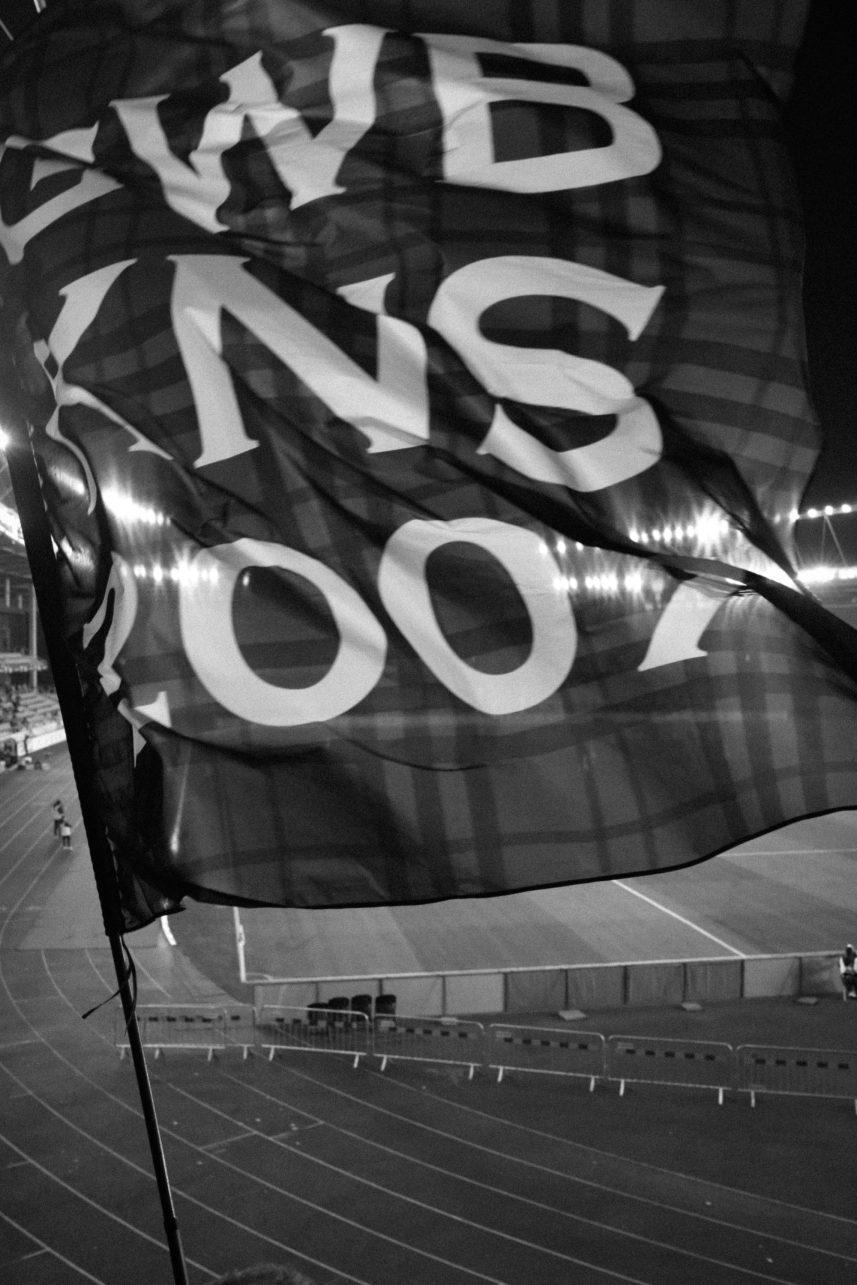
You don’t become a GWB member just because you want to – this motif, incidentally, appears in almost all texts in the Tribes issue of the magazine. But what if you really want to? “Everything begins from the stands. We’ve set a rule: at least three years of active involvement, then the members vote on whether to accept you. Bikers have similar rules. The idea of GWB is to create the best possible support for Žalgiris. You can stand under the flag without being a member; we have people like that who don’t even aspire to become members.”
The brotherhood’s name includes the word “boys.” That is also the title of Hugo’s nearly finished film: “Boys from Kaunas”. Some members’ jackets are decorated with this inscription as well. It seems to me that this aptly chosen word allows them to remain boys a little longer, even after work and other responsibilities. “With age, the name feels more and more relevant,” Ignas agrees. For him, it represents freedom, youthfulness, energy: “That light chaos is liberating. Life with the crew in the stands becomes much brighter and more interesting.” “Sometimes you feel like you’re in a movie. On Friday, it’s the EuroLeague, and on Sunday, an LKL away game in another city. Lots of action and movement,” Lukas nods.
Only after saying goodbye do I realize that this time we didn’t get around to discussing, for example, the art of chants, where musicality, poetic flair, irony, and freedom of expression intertwine. Or those same graffiti. But that already goes beyond a tribe. So I say, “Until next time.”