During this conversation, I drank three glasses of sweet mint tea and tasted amlou for the first time in my life. If you, like me, have never been to Morocco, try to imagine the flavour of a mixture of toasted almonds, orange blossom honey, and argan oil.
Before inviting you on a tour of a Moroccan market (souk), I must mention the place where we met Sidati Habbad and Anouar Elmouttalibi. It is Sidati’s workplace, located in a pink manor built in the “collective-farm baroque” style. It is a warehouse from which Moroccan-made dishes, furniture, carpets, and minerals travel to shops in Lithuania and Scandinavia.
(This text was published in the September 2026 issue of the magazine “Kaunas Full of Culture”, titled “Marketplace”)
Sidati is the head of the Moroccan-Lithuanian association “Al Maghrib”, and Anouar is an active member and a graduate of architecture studies at Kaunas University of Technology. Although his studies were in English, Anouar understands almost everything in Lithuanian, and Sidati even speaks it fluently. Can you guess where he learned the subtleties of the Lithuanian language?
At the market, of course, while haggling with the sellers.
Sidati names Zanavykų market as his favourite in Kaunas, but he also visits Šilainiai and the Central Kaunas Market located in the “Urmas” shopping town. He also appreciates the migrating farmers’ markets near shopping centres; he says that sometimes, if you miss your favourite trader, you have to look for them the next day on the other side of town. Both interviewees claim to have fallen in love with Lithuanian dairy products, but they mostly miss fresh Moroccan fruits and vegetables. Another fundamental difference: in Morocco, no one would buy bread baked in the morning if it is already afternoon. Bread must be “within an hour of leaving the oven.”
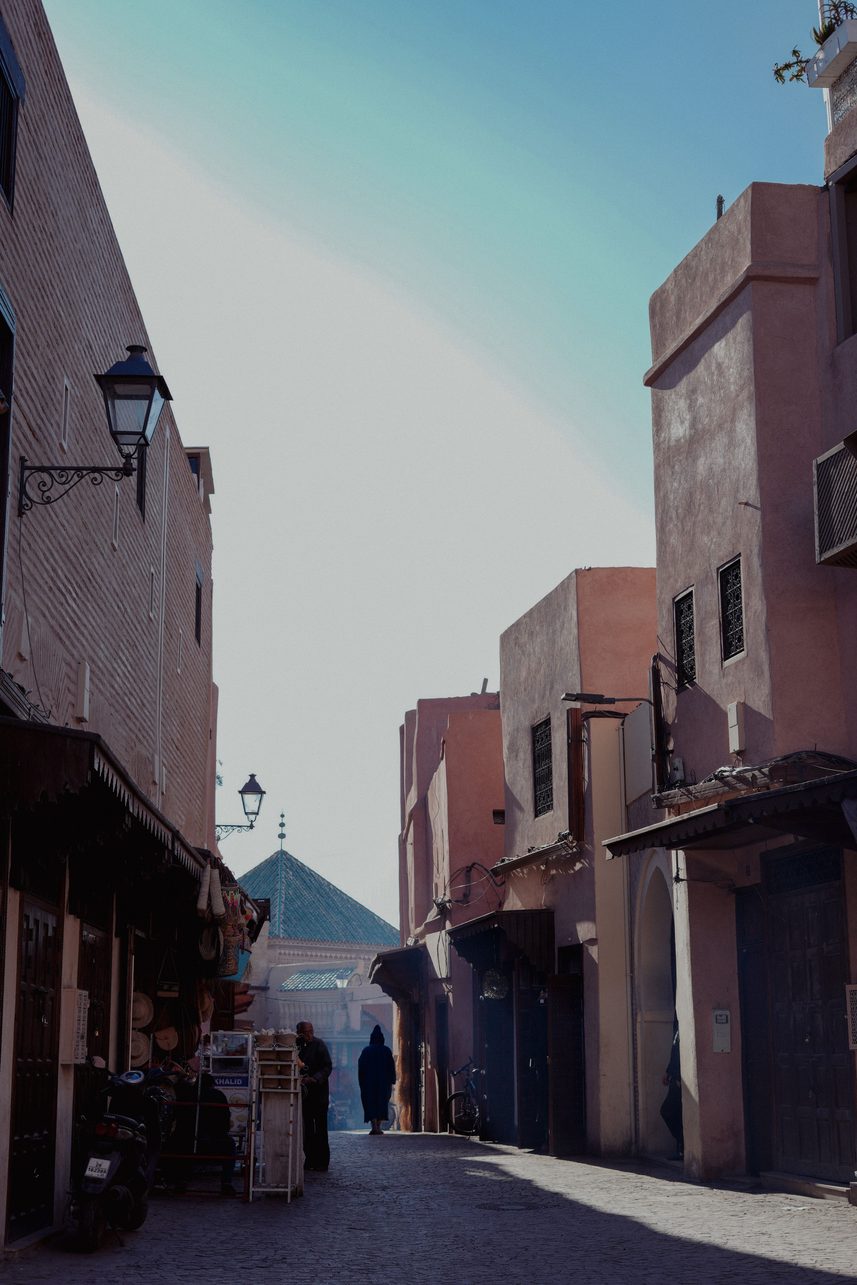
The Heart Of The City
“I come from a family of entrepreneurs, so trade has been a part of my life since I was seven years old. Buying and selling: it is simply in our blood,” smiles Sidati when asked about his relationship with the market. He comes from the city of Guelmim, known as the “Gateway to the Desert”, through which a trade route once stretched to Timbuktu. It is a place on the edge of the Sahara, where the heat and sun squeeze the maximum sweetness out of the fruit. Perhaps that is why Sidati still remembers his disappointment when he first bought a large, beautiful, red pomegranate in a Lithuanian supermarket. “That was the first and last time I bought a pomegranate here. It was so bitter, not at all the fruit I grew up with,” he says.
As a child, Sidati made a living selling dates; it was at the market where he learned mathematics, the art of negotiation, and psychology. The story of Anouar, who grew up in the Moroccan capital Rabat, is slightly different: his parents adamantly held the view that education was paramount. “My parents wouldn’t hear of me working. They would say, ‘focus on your studies; we don’t need your help or your money’,” he recalls. Nevertheless, when he was small, his mother would entrust him with a shopping list, so he learned to navigate the labyrinth of stalls quite early. “It wasn’t about the money, it was about the experience: learning how to communicate and building a foundation for the future,” Anouar adds.
The interviewees identify the biggest difference between our region and Morocco as the fact that in Europe, we buy everything in supermarkets. “In Morocco, life is different. You step out of your door and find a wealth of small businesses; the nearest shop is rarely more than 200 metres away,” Anouar explains. “In Lithuania, you almost always need a car to reach a supermarket. In Morocco, you just walk.” This urban insight defines the Moroccan concept of a city: the market is its heart. Just like the mosque. Once these two elements are in place, life revolves and grows around them.
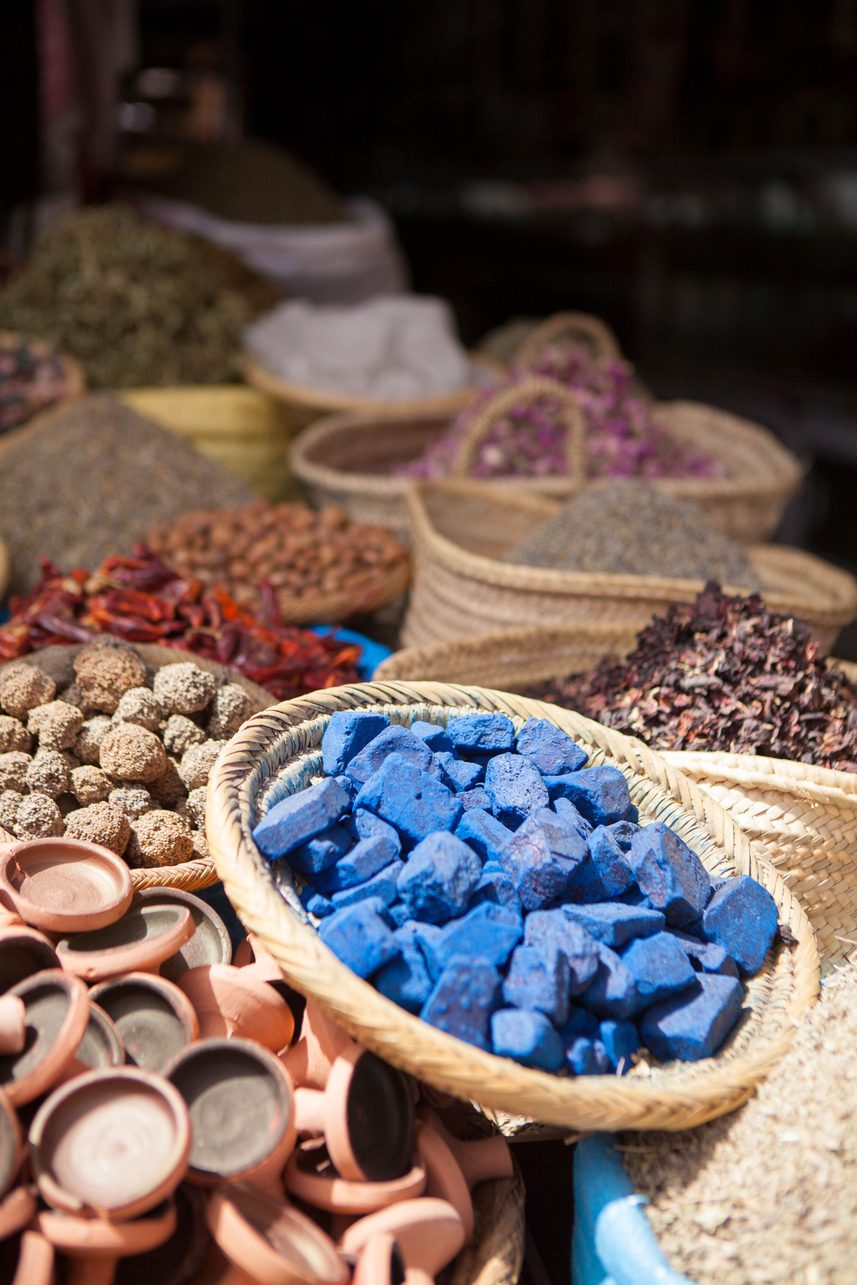
Upon entering any Moroccan market, you are first greeted not by sight, but by smell. My interviewees list the main staples of their cuisine: cumin, paprika, ginger, turmeric, and black pepper. “Spices are not just an ingredient; in our culture, the spices are the food,” they both say. It is the mixture of pungent cumin and sweet cinnamon that reminds Moroccans of home.
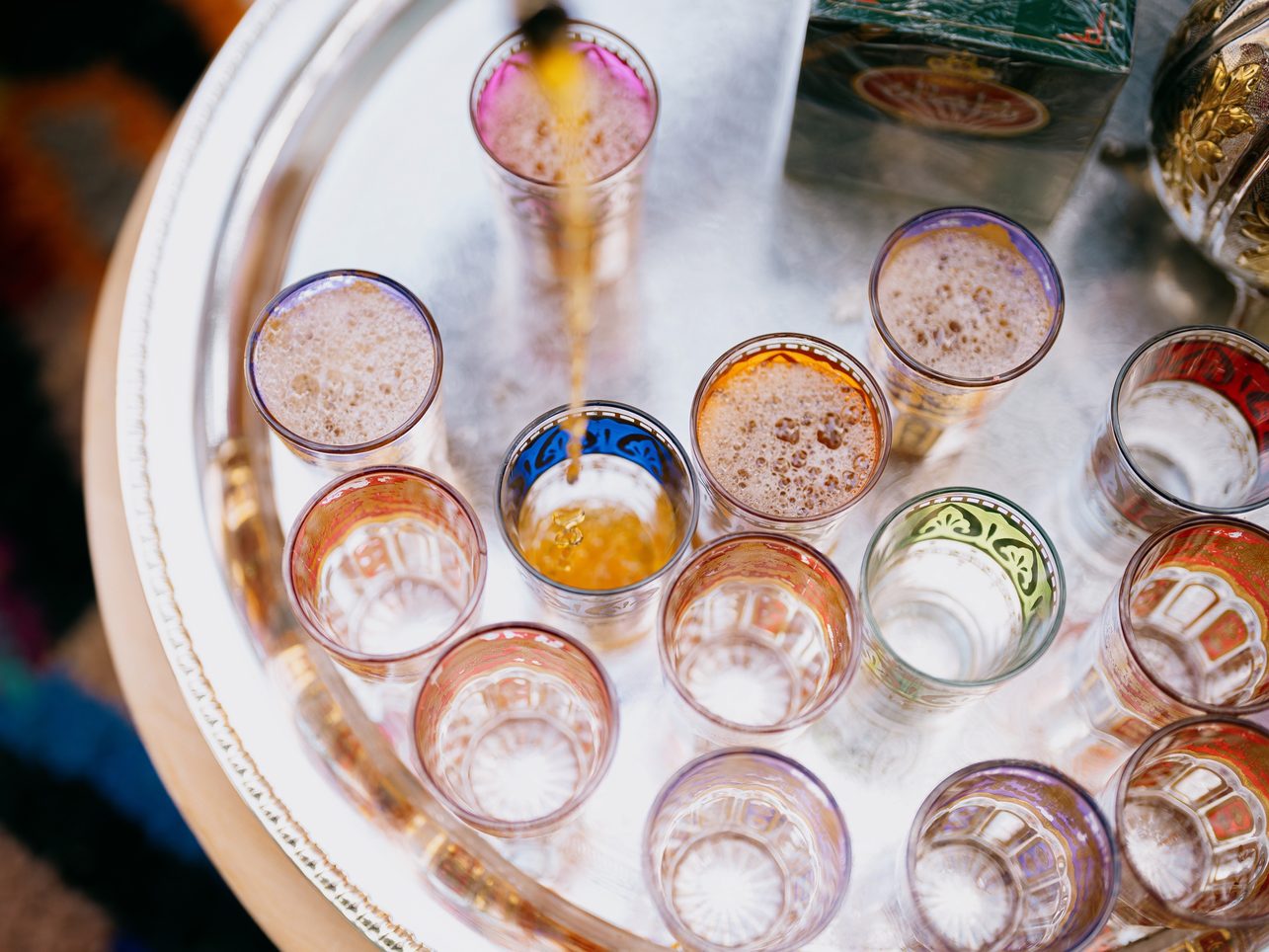
Yet, a market in Morocco is not just a mundane place to buy goods. Sidati emphasises that it is the axis of social life, serving as a substitute for a cinema or a park. “The market is what creates our social life. You don’t go there just to shop; you go specifically to meet people and hear their stories,” Sidati explains. It is like a living university where one learns empathy and patience. And the art of tea drinking, of course. The tea must be very sweet, with plenty of fresh mint, and poured from high up so that a head of foam forms in the glass. My guides laugh, saying that you can drink dozens of such glasses a day at the market; every time you meet a business partner or a friend, tea is mandatory.
Morocco In Lithuania
I learned about the Moroccan-Lithuanian association from the Kaunas Cultural Centre of Various Nations. Every September, the “Garden of Cultures” festival takes place here, where communities living in Lithuania present their traditions. There are over a thousand Moroccans in Lithuania, but the majority are students, whom Sidati compares to tourists.
“Students are like tourists. We shouldn’t expect someone who is here temporarily, paying to study in English, to master Lithuanian. If they choose to stay and build a career here, then it becomes a different matter,” the head of the association comments. Anouar adds that many students would happily learn the language if universities provided the right conditions, but currently, even dormitories for foreigners and locals are often separate, which does not help integration. “We need to integrate them into our programmes. If we welcome these people properly, they will become a great asset to the country.”
There are over a hundred Moroccans living permanently in Lithuania. There are several dozen active members of “Al Maghrib”, mostly based in Kaunas and Vilnius. When I ask how they represent their homeland in the “Garden of Cultures”, I open a Pandora’s box; everything is much more interesting than that black diamond-shaped sticker on a mandarin that I remember from childhood.
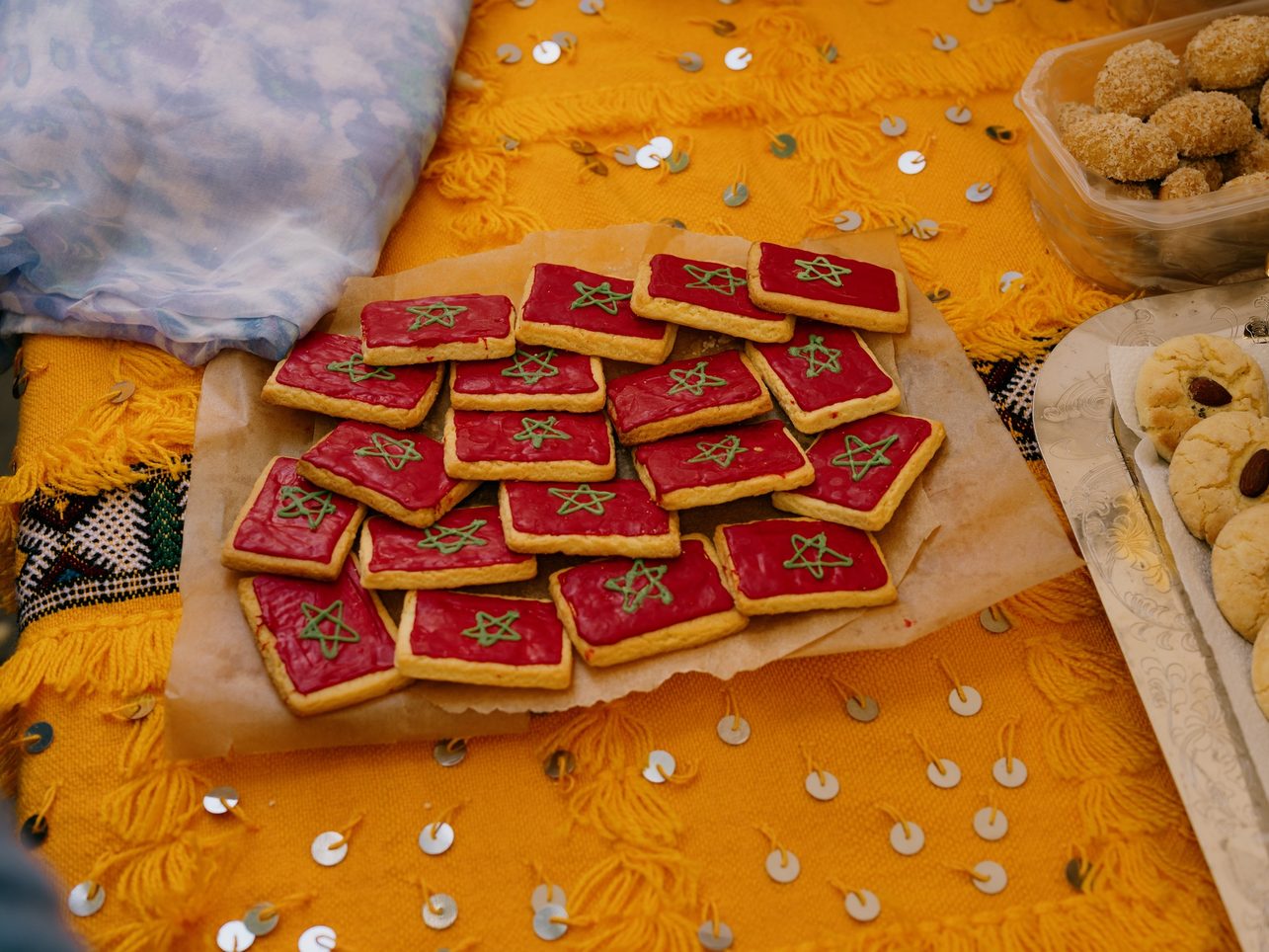
“For example, did you know that the first person to include Kaunas on a map was a Moroccan cartographer, Al-Idrisi, in the 12th century? In fact, the word ‘address’ itself stems from his name, as he was the one who invented a system for locating streets,” Sidati says. He wants to talk about these things: about the deep-rooted connections that unite us. He mentions that Morocco should be known for more than just fruit or the crises reported in the media, but also for its intellectual heritage, such as having the world’s oldest university in Fes.
On the 12th of September, in the garden of the Historical Presidential Palace of the Republic of Lithuania, there will certainly be a lot of Moroccan culture. A musician representing the Gnawa “soul music” genre is coming specifically for the “Garden of Cultures”, and henna tattoo designs will tell stories of Moroccan traditions in the language of symbols. And then: a feast. Just like the one you would find in Morocco itself.
Negotiation Is Life
To taste everything and not be afraid to haggle: these are the main tips for any traveller planning to explore Moroccan markets. Anouar laughs about how, as a child, he and his friends would always feast for free: they would ask sellers for a sample “to taste it before buying,” then say they would think about it and dash to the next stall. Sidati assures us that this is perfectly normal; you even have the right to try a watermelon, otherwise, you won’t know the quality of what you’re buying.
Negotiation is essential for Moroccans; it is in their blood. And it has a philosophical subtext: by not accepting the initial price, you remind yourself that you do not have to accept all life events as constants. “It is about the art of negotiation. It teaches you never to simply accept things as they are, but to always strive for a better deal,” Sidati notes.
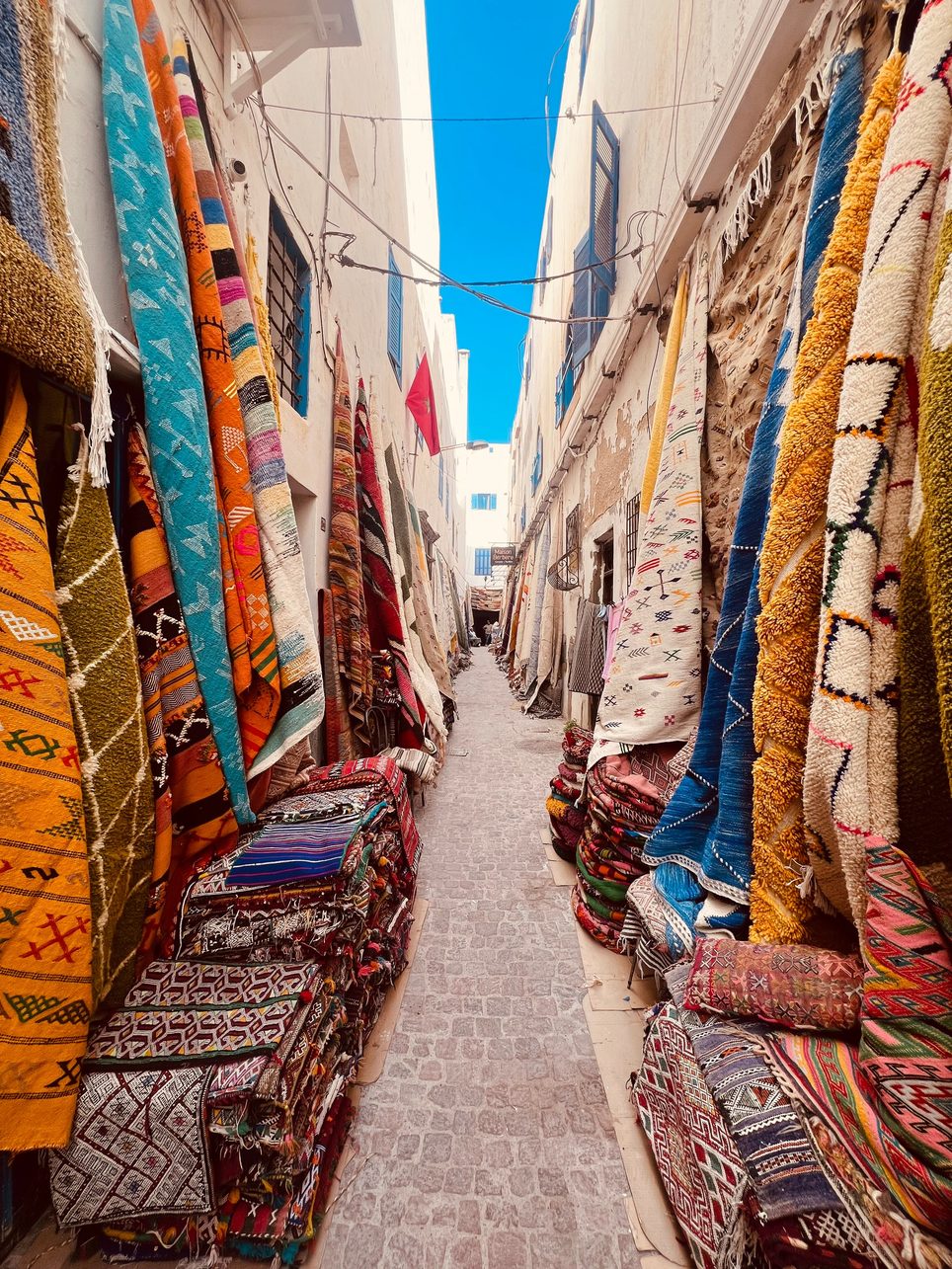
If you have more space in your luggage, perhaps you’d like to bring back not just a jar of amlou or olives, but a carpet? The women of the Moroccan mountains weave them not just for beauty; it is their language. “Every weave is a story. They use symbols to express exactly what the weaver was feeling at that moment,” Sidati explains. He has such “memory stores” in his warehouse. It is important for him to buy products directly from the mountain dwellers, helping them maintain this craft and feed their families. He