If, after reading Tauro Bernotas’s article (which you can find here), you have already opened the map of drinking water stations, I invite you to imagine your dream water bottle along the way.
I’ll start: I see a comically large Stanley cup, dressed in a North Face jacket, decorated with a name bracelet and a lid shaped like a scoop of ice cream. No, I am not in a TikTok hallucination, but at Kaunas University of Technology, where a team of designers has turned children’s visions into solutions for patients with Type 1 diabetes. We talk about the educational water bottle, the diagnosis of thirst, and the importance of social design with the partners of the creative project: Justina Klėjūtė, a postgraduate design student at KTU; Olesė Kekienė, a member of the Performative Design Association; and Assoc. Prof. Dr Auksė Domeikienė, Head of the Department of Preventive Medicine at the Lithuanian University of Health Sciences (LSMU).
(This text was published in the August 2026 issue of the magazine “Kaunas Full of Culture”, titled “Refresh”)
At an international hackathon held at the “Herojus” school in Kaunas, students created innovations to ease the daily lives of children with Type 1 diabetes. One of these – “Dia Bottle” – is a water bottle designed as a portable first-aid kit. The KTU Design Centre team had to turn a child’s sketch into a functioning product prototype. The team was consulted by the relatives of patients – they, too, face the consequences of the disease every day.
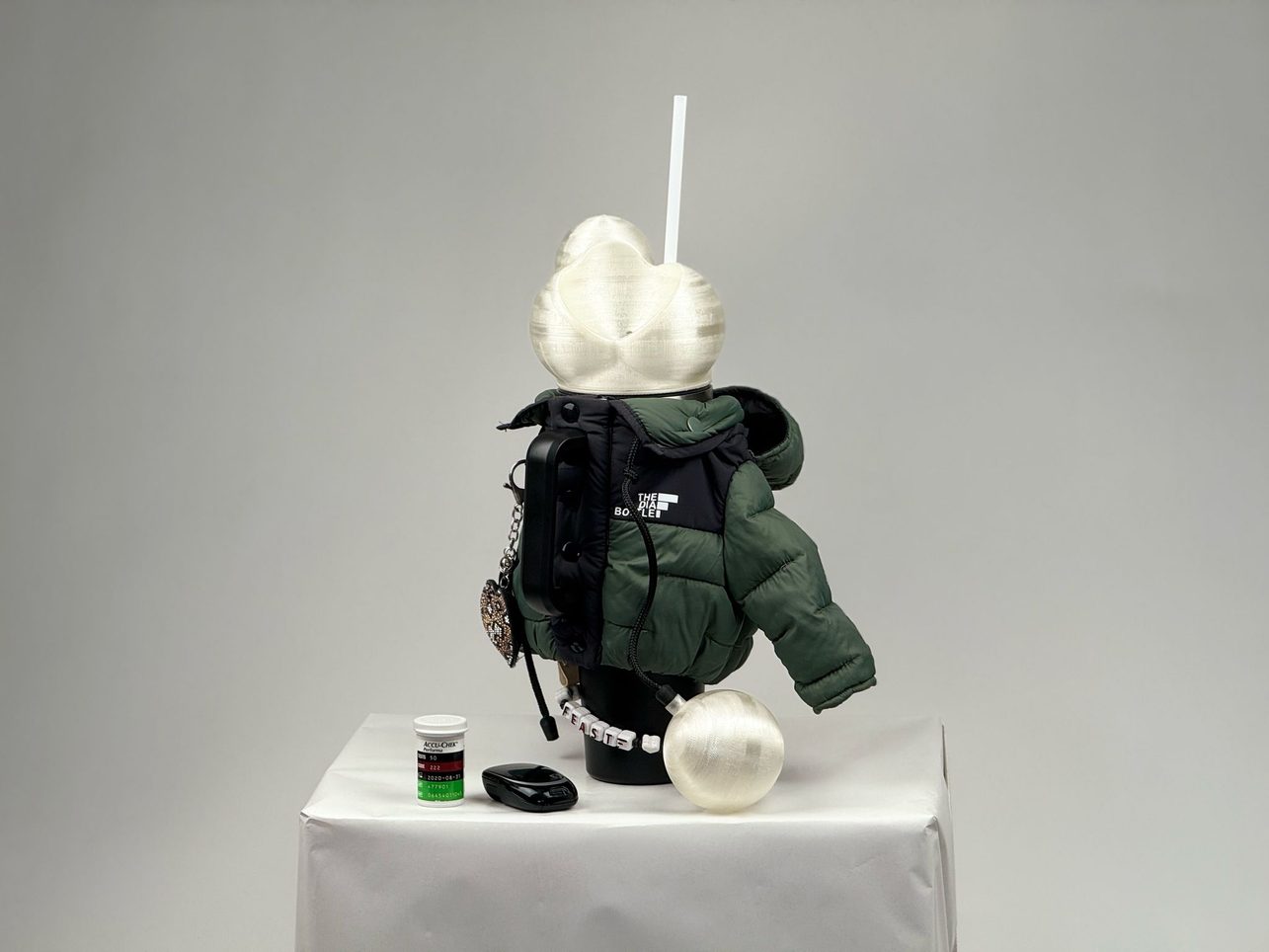
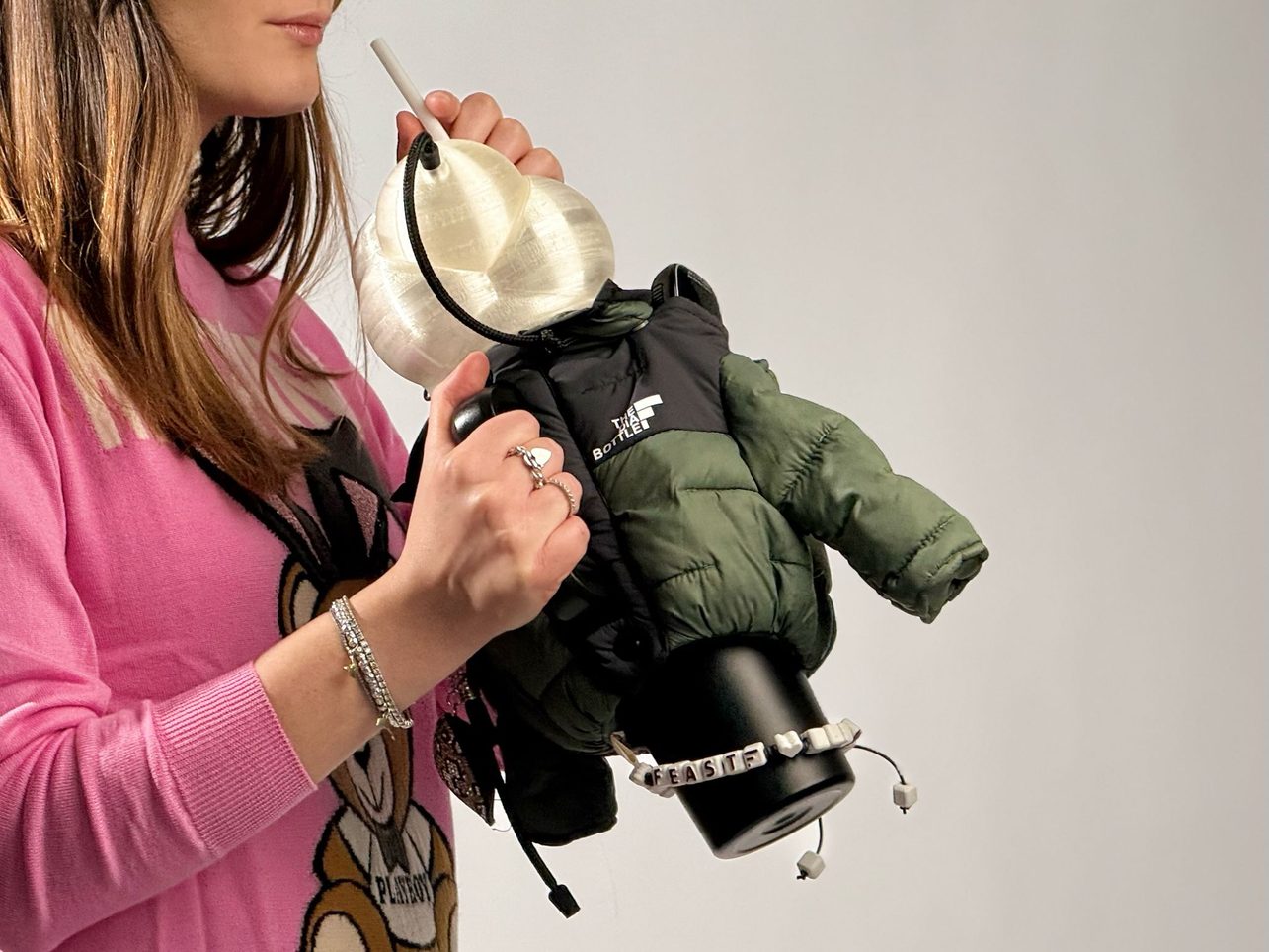
The result is a modified version of the popular Stanley bottle – with a larger capacity, capable of holding both water and a liquid glucose drink at the same time; one simply needs to move the straw to the desired compartment. The ice-cream-shaped sections and jacket pockets are for the patients’ daily ammunition: a glucose meter, test strips, batteries, and glucose tablets.
Reducing Shame
One of the main goals of the project is to reduce the social tension that patients experience in public spaces, to help young people overcome feelings of discomfort, shame, and fear, and to educate society about this very common health condition.
But why a water bottle? For children with Type 1 diabetes, drinking water is very important. “When blood glucose levels increase, the kidneys are unable to reabsorb it and return it to the blood – an unquenchable thirst arises, and a lot of fluid is lost,” states A. Domeikienė.
“Treatment today is quite modern: there are glycaemic sensors, and regular finger-pricks are no longer necessary. But managing thirst is still very important – if a child does not consume enough fluids, it can worsen the condition. However, children play and get carried away, sometimes failing to notice or feel their own needs, so the bottle is a good reminder,” says the LSMU associate professor.
“One mother of a child with the condition also mentioned the psychological benefit of the bottle. Some children experience a lot of anxiety at school, so having a drink also has a calming effect,” recalls J. Klėjūtė, co-author of the bottle’s design, referring to consultations with children and their families.
Following Gen Z Trends
The aesthetics of the bottle created in the project are a blend of familiar brands. I ask Justina why this visual direction was chosen. “Our audience was students aged 13 to 18, so we delved into the trends of this age group. The craze for Stanley cups was one of last year’s social media waves. Rounded Starbucks drink lids and shakes never disappear from internet culture.”
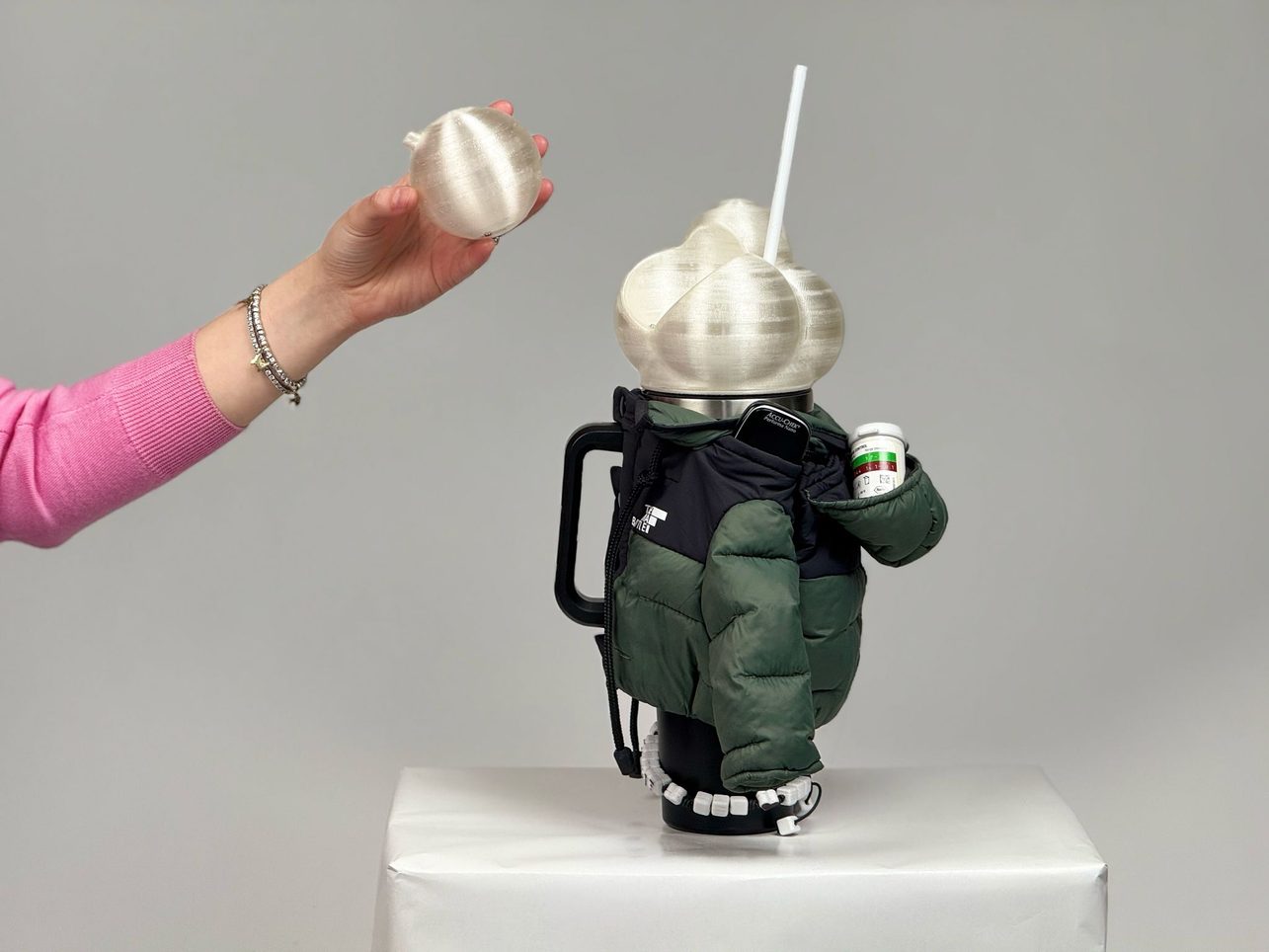
The idea to attach a North Face puffer jacket – one of the most popular symbols of Gen Z fashion today – came from experimenting with materials. “We started with the idea of a bottle sleeve – additional pockets to hold various accessories. However, many fabrics failed to meet the technical requirements: they let through heat, which harms the medical devices, or they weren’t sufficiently sealed. Eventually, we tried waterproof jacket fabric and padding – the combination met the requirements perfectly,” J. Klėjūtė explains the design decisions.
The team aims for the essential daily water bottle to become a favourite, personal, and distinctive accessory rather than a medical object, encouraging conversations among children. However, when talking about the younger generation and health disorders, one often hears the opinion: young people just want attention, so they make up illnesses. Is it really worth creating a fashionable accessory for a disease?
“My brother has diabetes, so I saw it up close – previously, when he was younger, he would measure his sugar in the school toilets just to avoid children’s questions,” the student recalls. Another mother shared that her teenage daughter would have panic attacks before going to school. Thus, reducing the stigma is essential.
For children who feel ashamed, the bottle will help them blend into the crowd among those who carry such bottles every day. And those who do not feel shame or discomfort become ambassadors of sorts, telling their peers about processes that were completely unknown to them.
Design Responsibility
The product prototype was presented at a design event in Copenhagen and to children in Kaunas. “To be honest, I resisted those trendy things for quite a while,” J. Klėjūtė laughs. “However, the design community reacted very positively. We certainly fulfilled the goal of encouraging discussion.”
“But I was much more afraid of presenting the results to the children – after all, this was their own idea, and I felt a responsibility not to distort it too much, so that it would be their work as much as ours. The children liked it – they said they would carry such a bottle.”
This is not the first drink-related project in Justina’s portfolio – for her bachelor’s thesis in industrial engineering design, she created a portable coffee maker. I ask how these two processes differed.
“The bachelor’s project was less emotional – it was focused on higher sales, a more affordable price, and an advantage over competitors. Of course, you always think about user comfort – designers create for people. But when creating ordinary objects, you realise that people can certainly live without them. In this project, however, the thought that I will actually help at least one person provides immense emotional and spiritual value,” emphasises one of the creators.
Physical And Emotional Thirst
According to A. Domeikienė, thirst is a very important indicator in diagnosing Type 1 diabetes: “It is usually accompanied by frequent, heavy urination, extreme hunger, and weight loss. These are clinical symptoms; they are the ones noticed at the onset of the disease,” the LSMU associate professor warns.
The clinical symptoms of Type 2 diabetes are not as obvious, but thirst can also be an indicator – so if this condition is bothersome, it is recommended to consult a family doctor. However, prevention is particularly important for Type 2 diabetes: a healthy diet, physical activity, and fluid intake.
Participatory design practitioner and artist Olesė Kekienė has had Type 1 diabetes for over 30 years. According to her, thirst in the context of diabetes is not only physical – it is also the frustration created by complex daily circumstances. “In one of the design projects we carried out during the pandemic, we highlighted the states that unite diabetes patients: thirst, guilt, fatigue, and a constant emotional swing between high control and self-neglect – eating sweets, not monitoring blood sugar levels – were dominant,” says O. Kekienė.
“Doctors have said many times: often all the medication is provided, but the person’s health still declines. The most common obstacle is precisely psychological and emotional: fears, disappointment, sadness, exclusion, and loneliness. Because there are many variables to manage and many unknowns, you often simply fail. Eventually, indifference sets in – you no longer want to take care of yourself, even though you have all the opportunities,” she shares her experience.
Creative Medicine And Health Culture
So how can creating funny water bottles, role-playing, or “yet another creative workshop” quench the spiritual thirst caused by diabetes? Although the word “inclusive” might make one want to roll their eyes, the participation of all parties in the search for well-being solutions is essential.
“Family members of the patient certainly want their loved one to be healthy, but perhaps they do not follow the same lifestyle themselves. Without meaning any harm, they often become judges, and mutual tension arises,” O. Kekienė observes. “Artistic interventions can softly connect these different groups, allowing them to create entirely different relationships through play while highlighting moments of personal self-awareness: ‘What can I do?’”
Both creative experiments and including water in the daily routine are healthy for people with all health conditions. “A great deal of scientific research has confirmed the links between various chronic diseases and insufficient fluid intake, as well as the improvement of health conditions when consuming enough fluids,” asserts A. Domeikienė.
The doctor is pleased that drinking water is becoming a common cultural experience – both at home and in cafes. “When our body is thirsty, it gives the signal ‘I really want to eat’. A person feels hungry, but they are actually thirsty. If we do not quench the thirst, we can consume a very large amount of food before we finally have a drink. This affects both weight management and general well-being.”
Feeling Seen
Most of us have already become accustomed to carrying water bottles. But can community events also work preventively?
O. Kekienė admits: “When I started telling others about my condition, I felt that I could no longer, and no longer wanted to, treat my body poorly. I started looking after myself more carefully, improved my diet, and my sugar levels got better. It seems to me that it’s all connected to ‘feeling seen’. It is important for every person to be heard, understood, and accepted. Design and art certainly have the power to highlight those moments and make them relevant. The main power of creativity is to lead towards well-being.”
Thus, quenched thirst is a kind of state of peace and fulfilment for people of all health types. Well-being could almost become a synonym for a water bottle, I think.