
Back in the spring, we received a letter from Karolis Bradūnas – the historian suggested we read his final dissertation for his Bachelor’s degree in Cultural History and Anthropology at Vilnius University. It has a catchy title: ‘Wine Culture in Interwar Lithuania’. But what interested us most of all was one particular chapter, which discussed ‘non-alcoholic’ drinks…
During the first period of Lithuanian independence, wine was only beginning to find its way into people’s hearts and onto their palates; it was waiting for its chance to become part of everyday Lithuanian life. As a result, the word “wine” was understood somewhat more broadly than it is today. Browsing the interwar press, one encounters several different types of wine: imported wine, fruit wine, sacramental wine, and non-alcoholic wine. While the other terms are fairly self-explanatory to the modern reader, non-alcoholic – or alcohol-free – wine deserves a closer look.
(This text was published in the August 2026 issue of the magazine “Kaunas Full of Culture”, titled “Refresh”)
This new alternative was introduced to Lithuanian society in the 1930s. Recipes for similar beverages can be found as early as a 1919 publication issued in the United States for the Lithuanian immigrant community, but the person who did the most to popularize non-alcoholic wine in Lithuania was Jonas Valatka – a member of the Third Seimas, an agronomist, and a board member of the Lithuanian Catholic Temperance Society. Thanks to his efforts and the society’s funding, several publications promoting non-alcoholic wine (fruit juice) were issued, titled Non-Alcoholic Beverages and Fruit Juices.
In his writings, Valatka praised non-alcoholic wine enthusiastically. He encouraged people to produce it as widely as possible and to drink it every day, claiming that it improved health and cured a variety of ailments. Fruit juices were even compared to milk in an effort to demonstrate their nutritional value. Interestingly, importing this beverage was not economically viable. After customs duties were added, a bottle of imported non-alcoholic wine cost around 18 litai, whereas a bottle produced in Lithuania sold for only 2–3 litai.
In the introduction to Non-Alcoholic Beverages, the author argues that the less educated a person is, the more prone they are to excessive drinking. He points out that vodka predominates in Russia, while wine and beer are the preferred alcoholic drinks in Western Europe. However, he adds that “alcoholic wine and beer are becoming less and less suitable for them. More and more, they are turning to non-alcoholic wine.” In promoting his product, Jonas Valatka appealed to values that resonated strongly with Lithuanians at the time: a European outlook, morality, and education.
Valatka further writes that “alcoholic wine is spoiled fruit juice, whereas non-alcoholic wine is unspoiled fruit juice. Beer is nothing more than spoiled barley, and vodka is spoiled potatoes or spoiled rye.” He describes non-alcoholic wine as a pleasant, refreshing, and delicious drink that is highly beneficial to health – not only for adults, but also for children and the sick – because it retains the easily digestible and nutritious components of fruit.
The agronomist describes the production process of the drink as follows: “To prevent juice from fermenting, the causes of fermentation must be eliminated. Juice ferments because of certain bacteria. … The fruit’s skin protects the juice from these bacteria. But as soon as the skin is cut or damaged, the bacteria are already present. Fruit juice can be protected from bacteria in three ways: (1) by killing them with heat, (2) by removing them through filtration, or (3) by destroying them with chemicals, that is, certain mineral acids. … The first method is both the most common and the simplest: harmful bacteria are destroyed by heat.”
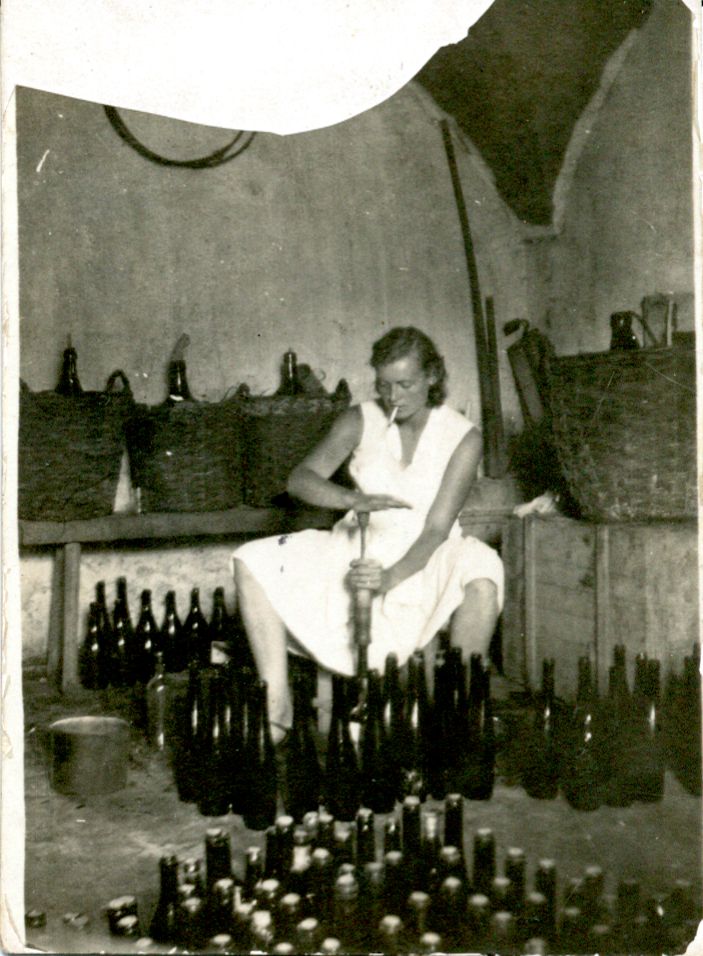
The juice-making process is illustrated as follows: a pot is tightly covered with a lid, while the fruit is covered with parchment paper (to prevent condensation collecting on the lid from cooling the juice). The washed fruit is sprinkled with sugar and placed in a nettle-cloth bag. As it is heated over moderate heat, steam causes the fruit juice to separate and drip into a separate container. The heating process takes about an hour and a half. The next step is to prepare the bottles – or, for larger quantities, barrels – which, like the bottles, must be thoroughly cleaned and disinfected.
The bottles must be warm, so they do not crack when filled with the hot juice. They have to be sealed with tapered corks that had been soaked for twenty-four hours in water mixed with vinegar essence. Once the bottles had cooled upside down and the corks had dried, the necks of the bottles were dipped in melted paraffin or sealing lacquer before being laid on their sides in a cool, dry place. It is noted that cleaning and sterilizing the bottles and corks, pasteurizing the juice, bottling the non-alcoholic wine, and sealing the bottles all required experience and skill. Beginners were therefore encouraged not to be discouraged if they did not succeed on the first attempt.
Among the equipment needed to produce the juice were a covered pot or a steamer. Such equipment, however, was not cheap, costing 60–70 litas at the time. Other useful supplies – including ordinary corks, rubber caps, and nettle-cloth bags – could be purchased from the Non-Alcoholic Wine Factory in Kaunas.
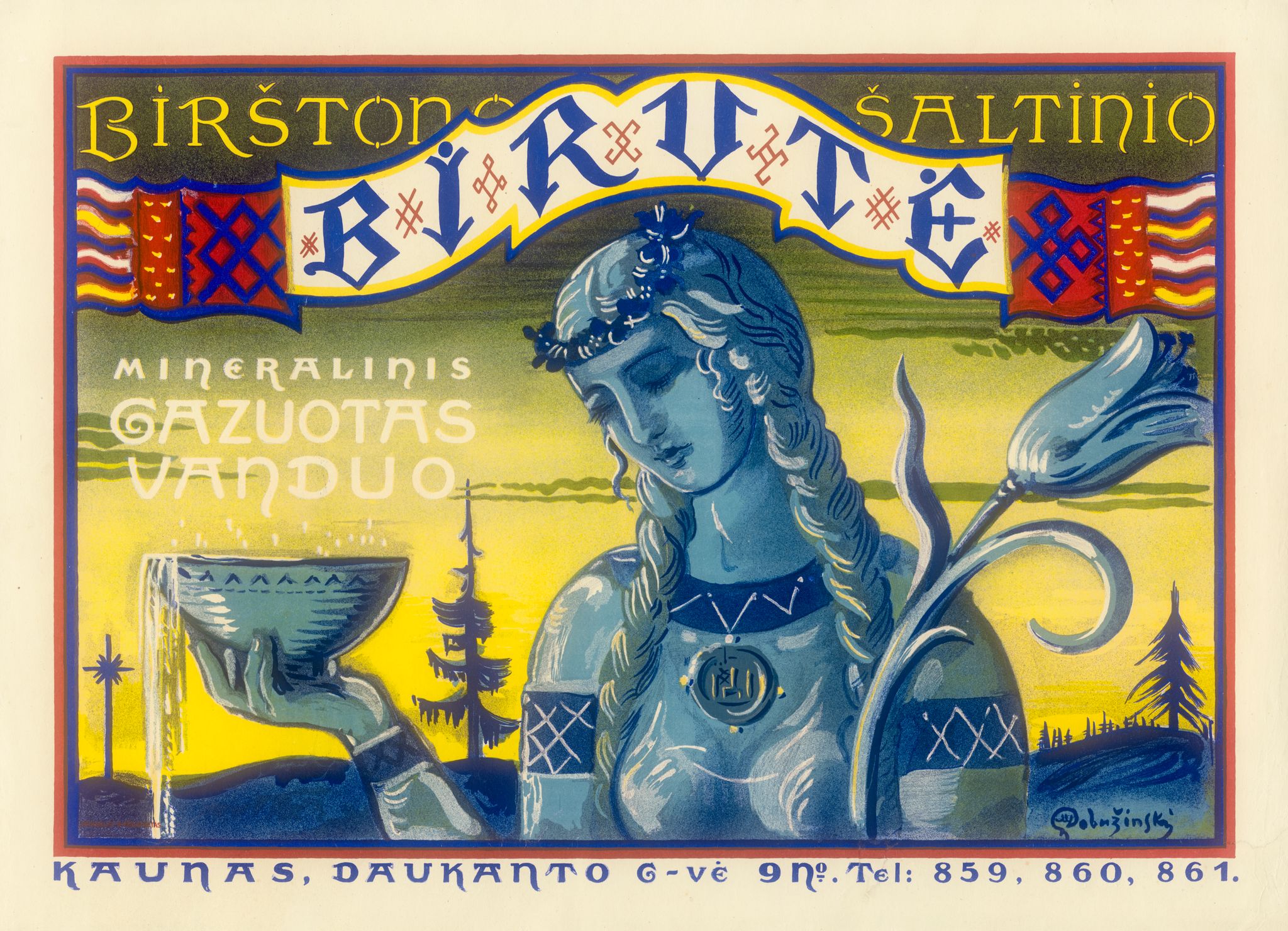
As for the raw ingredients, the best fruit juices for making non-alcoholic wine were those from apples, pears, blueberries, and currants. Three varieties of the beverage were available commercially: 1) Pure fruit juice; 2) The same juice in concentrated form; 3) Syrup, that is, fruit juice containing at least 60% sugar. Before drinking, the non-alcoholic wine was to be diluted with either still or mineral water.
The agronomist promoted his ideas not only in theory but also in practice. The previously mentioned “small factory” in Kaunas was in fact Vaisiai (Fruits), a workshop producing non-alcoholic fruit wines that he established under the auspices of the Lithuanian Catholic Temperance Society. The workshop operated in the Liaudies namai (People’s House) at what is now the intersection of A. Mapu and Šv. Gertrūdos streets. It was equipped with a sizeable hand-operated press for extracting juice from berries and fruit. In 1933, a bottle of Vaisiai non-alcoholic wine sold for 3–5 litai. The product consisted of natural fruit or berry juice, or its concentrated extract. According to the press of the time, “these beverages refresh the blood, restore strength, and increase one’s capacity for work; even a person who is severely exhausted regains their strength after drinking them. Non-alcoholic wine is equally suitable for infants and adults, for the healthy and the sick. It is especially popular in hospitals because it is easily digestible and quickly restores the strength of weakened patients.”
A similar assessment was given at the 1935 annual conference of the Lithuanian Catholic Temperance Society: “The fruit juices produced by this workshop are already widely consumed across our country, and especially in our temporary capital. They are used not only as ordinary beverages but also in medical practice.” According to the society’s annual reports, this initiative proved to be one of the most successful projects undertaken during the entire existence of the Temperance Society, generating its greatest source of income.
The press also reports that on 7 April 1933, agronomist Jonas Valatka gave a demonstration in Kaunas for members of the press, showing how non-alcoholic fruit wine was produced. The article’s author noted that housewives had not yet mastered the production technique, arguing that if non-alcoholic wine was to become widespread, it would be necessary to develop the industry producing it. These wines, together with other products made by Vaisiai, were exhibited at the Agricultural Exhibition in Kaunas, in the section devoted to small-scale industries.
Moteris (Woman) magazine also gave favourable coverage to the growing non-alcoholic wine industry: “These beverages refresh the blood, restore strength, and increase one’s capacity for work; even a person who is severely exhausted regains their strength after drinking them.” The magazine reported that women were highly pleased with the drink. Many had already learned to make non-alcoholic wine at home, delighting both their families and guests. Housewives were encouraged to master the craft themselves by purchasing Jonas Valatka’s booklet for 50 cents. The more households that adopted the practice, the greater the number of Lithuanians who could enjoy the drink’s benefits. It would also promote temperance and improve public health.
J. Mašanauskas, writing in the newspaper Jaunas ūkininkas (Young Farmer), urged readers not to leave ripe berries and other forest produce to go to waste. Instead, they should gather them, bring them home, and make non-alcoholic wine. Unlike jam-making, he noted, this process required no sugar. The author reassures his readers: “Last summer, I made it myself for the first time, and it turned out very well, even though I used no purchased equipment except for corks and paraffin.” It is worth noting that non-alcoholic wine was essentially the same product as pure fruit juice, produced using the preservation method developed by the French scientist Louis Pasteur – a process now better known as pasteurization.
In 1938, Pienocentras entered Lithuania’s fruit juice market after acquiring modern production equipment. Promotional efforts continued to cultivate a positive image of fruit juice by emphasizing its health benefits and its popularity in Western Europe.
Interestingly, Pienocentras began producing not only ordinary fruit juices but also a carbonated beverage called Vitaminai (Vitamins), which was made using bacteriological filters. This bacterial drink can be compared to today’s popular fermented beverages enriched with beneficial gut bacteria that support digestion and intestinal health. The composition of Vitaminai was essentially the same as that of other fruit juices, but it was carbonated with carbon dioxide, making it more akin to what we would now recognize as a sparkling soft drink.
Non-alcoholic wine was generally regarded as a beverage for temperance advocates and was recommended as a health tonic, believed to improve overall well-being as well as the functioning of the stomach, liver, and kidneys, and was therefore consumed as a food supplement. For example, at Lobynas, a vegetarian restaurant in Kaunas, the beverage was served in a shot glass rather than a normal glass; thus, it was consumed in small quantities rather than as part of an evening out at a restaurant. The fact that non-alcoholic wine was offered specifically at a vegetarian restaurant also suggests that interwar Lithuania already exhibited health-conscious dietary trends that are familiar to us today.