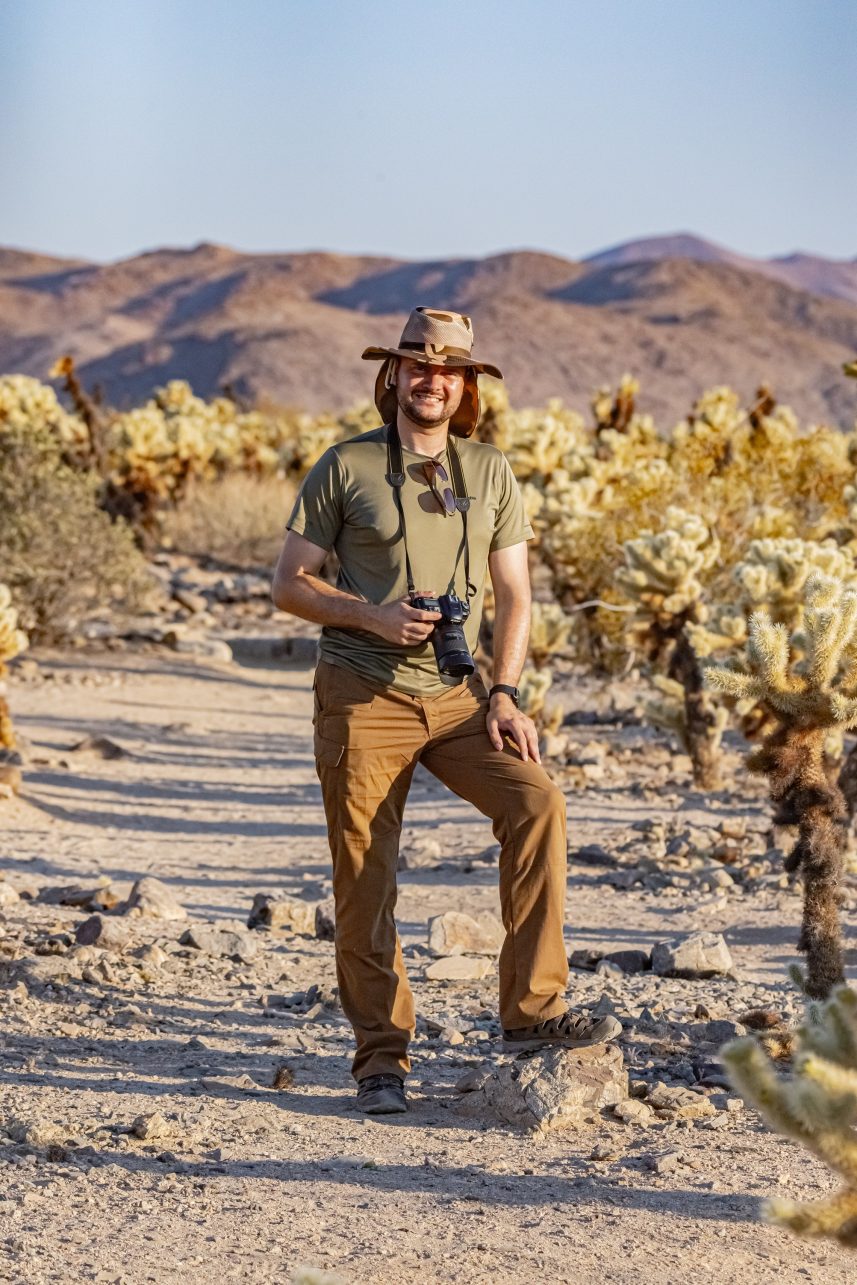
“Oh, it’s intense,” sighs Mindaugas Ilčiukas when asked at the start of the interview how his day has been. Working at the State Forest Enterprise, doctoral studies and teaching at the VMU Agriculture Academy, birdwatching tours, working with schoolchildren, nature photography, collecting feathers – you will agree that the word “boring” would certainly not fit when describing the life of this freshly minted Kaunas resident, who is actually originally from Aukštaitija.
(This text was published in the June 2026 issue of the magazine “Kaunas Full of Culture”, titled “Birds”)
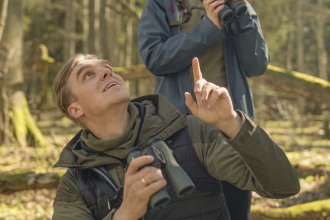
We met in Ąžuolynas – over three hours on an early Saturday morning, Mindaugas helped us hear or see over twenty species of birds. Yes, right in the middle of the city. I have met all sorts of guides and tour leaders, so I can assure you – you would have to look hard to find someone as knowledgeable and as passionate about their work as Mindaugas. Encountering a middle spotted woodpecker up close gave him more joy than it gave our entire group combined! That is what’s interesting – where does such a love for nature come from?
I read that even as a young child, you loved Tadas Ivanauskas’s books and Ričardas Kazlauskas’s programmes – was that just a childhood fascination, or were you already leaning towards science back then?
I would say I leaned towards the scientific side immediately. Even at school, I attended schools for young naturalists and ornithologists – that is where I gained the foundations of research methodology. When I was small, I started collecting feathers and butterflies – I continue these collections today; they are my hobby.
You grew up in the Utena district, right? I imagine you didn’t suffer from a lack of nature?
Yes, I spent my childhood in the village of Užpaliai, near the Šventoji River valley. Pine forests, deciduous woods, swamps, wet and dry meadows, the river and other bodies of water… This abundance of habitats encouraged me to search and explore. I only moved to Kaunas recently, after starting my doctoral studies. It was to make it easier to manage everything and travel around. But even in the city, I am constantly looking for nature.
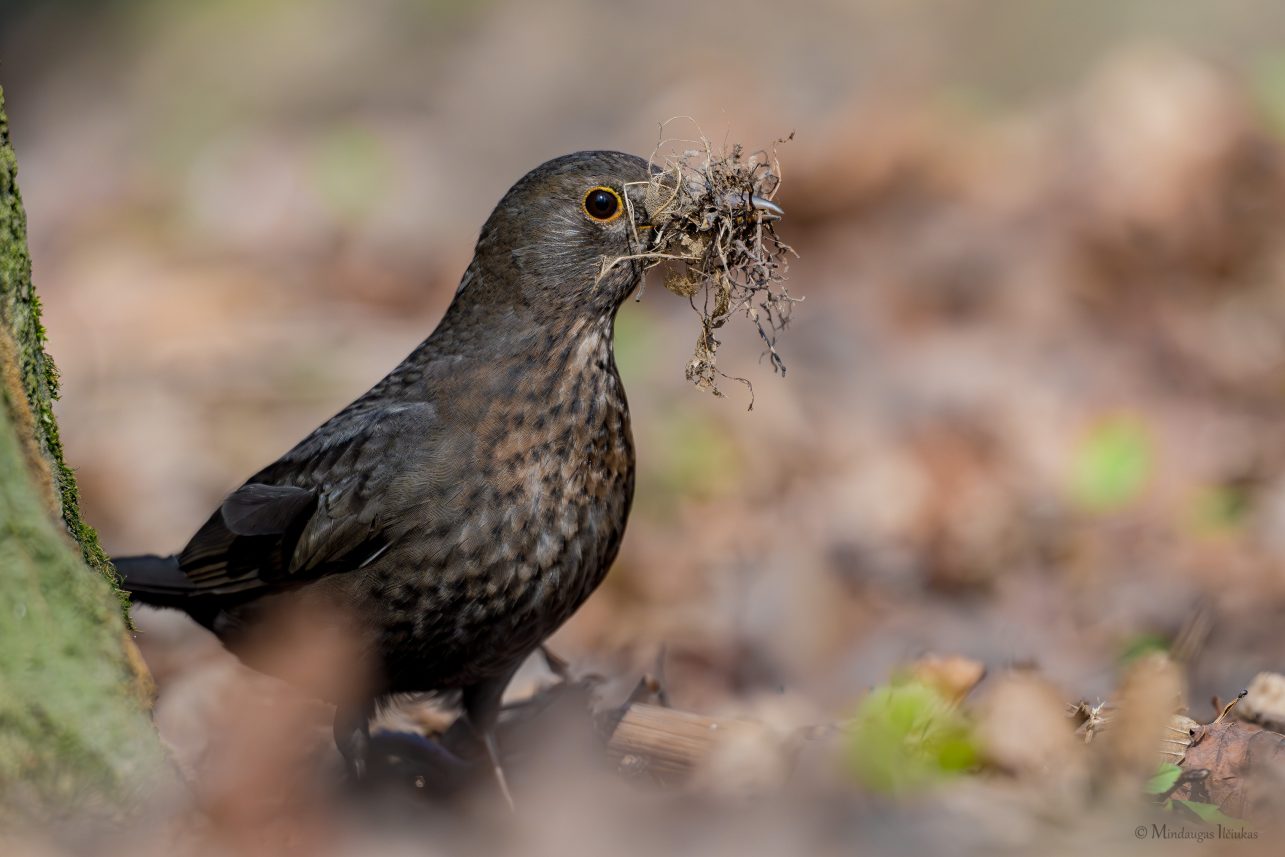
You chose to study forestry, even though your field of interest is extremely broad. What determined this choice?
I was choosing between biology and forestry, but the latter won because I wanted not just to observe, but to practically contribute to nature conservation and monitoring. Today, I am happy with this decision. My journey began as a forest ranger – I would prepare felling areas, look for nests, and record locations of rare species. As I climbed the career ladder, I realised that the profession of a forester allows for real influence: making decisions about the protection of specific areas, forming guidelines, and implementing nature management measures.
Now, I can best realise my greatest strength – bird identification. I often help colleagues determine who has moved into the birds of prey nests we monitor. On Facebook, I started a community called “Whose Feather?”. People from all over Lithuania send in their finds, ask questions, and discuss – together, we discover something interesting every time.
What riddle are you trying to solve in your doctoral thesis?
Though it may seem strange, my scientific work is completely unrelated to birds. I am researching the population genetics of the common oak and our ancient trees. To me, the oak is a phenomenal species. It is not just a tree, but a long-lived being that shelters entire life forms under its canopy: numerous mosses, lichens, and specific species grow on it. The biodiversity that a single oak tree gathers around itself is simply impressive.
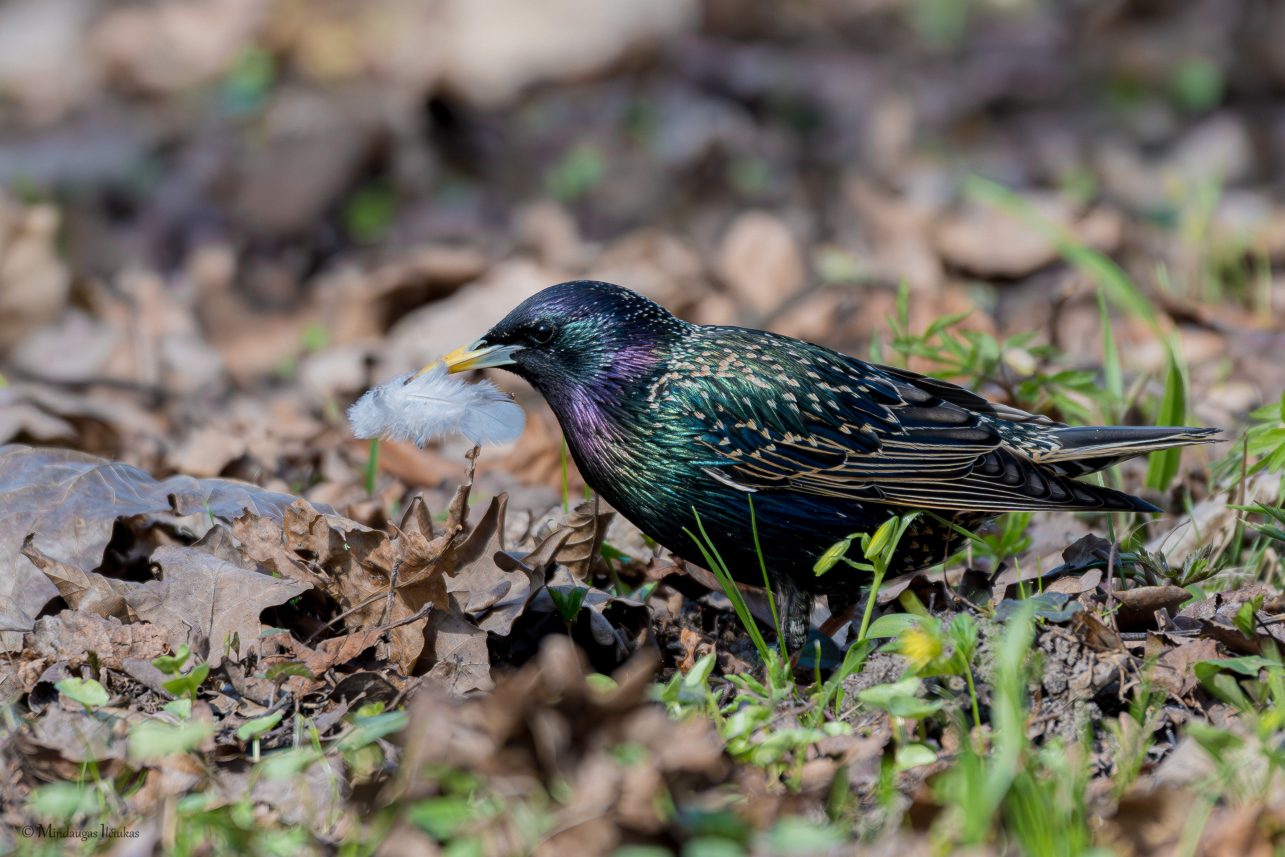
You teach at the VDU Agriculture Academy. What kind of people choose the path of a forester or conservationist today?
Since I work with Erasmus students, I see young people from all over the world. Their motives are very diverse: some come already having a strong background in conservation, others are led by curiosity and a desire to get to know birds and animals better. For me, it is interesting to observe this variety of perspectives – after all, everyone brings a unique experience and the cultural context of their country. This prevents the field from being squeezed into one specific frame.
Is there a sufficient number of young people wanting to study these fields?
There is a slight shortage of students; one would wish for more young faces. However, this is a general demographic trend in Lithuania – the number of schoolchildren and students is decreasing in all fields, so forestry is no exception.
Today, you are also a member of the “Ornitostogos” (Birding Holidays) team. How did your paths cross? What attracted you, a professional forester and scientist, to the role of a guide?
I have known the founder of “Ornitostogos”, Marius Karlonas, since our days at the school for young ornithologists. I only officially joined the team last year, although I had been following their activities for a long time. The idea behind “Ornitostogos” – nature observation, hiking, encouraging people to know their environment – is simply in my blood. Even while working in Ignalina, I used to organise walks in the woods: night-time owl-listening treks or early walks to listen to the morning bird chorus. The desire to share my experience and help people see what surrounds us, but often goes unnoticed, was the main driver. I am glad that I can contribute to that today.
Do you ever feel an internal conflict: on the one hand, you want to protect and nurture nature, but on the other – by talking about it, you open the doors to curious visitors who don’t always behave politely in the forest?
The risk always remains, especially if a person has ill intentions. However, I hold a different philosophy: the better you know nature, the less you want to harm it. When you understand how everything is connected, when you know what not to do and how to behave safely, respect for the environment appears naturally. Knowledge simply automatically teaches you to protect.
Of course, professional ethics come first here. We do not organise tours near sensitive breeding sites or the nests of rare birds. Birds are very sensitive to disturbance, so we plan our routes responsibly – in a way that allows people to see the richness of nature without harming rare species. Activity that could disrupt the peace of the birds is simply not tolerated in our community.
When we participated in your walk in Ąžuolynas, my colleague and I felt perhaps the least knowledgeable – those around us seemed extremely prepared, armed with their own binoculars and special bird identification apps. Is birdwatching an elitist hobby, or is there room for complete amateurs too?
Our audience is very colourful, so there is really nothing to be shy about. Here, you meet newcomers who perhaps just received a gift voucher and want to understand what on earth is happening in that forest, as well as those who have been travelling with us year after year. Birdwatching never becomes a routine because every trip into nature is different every time.
Even if you go to the same park ten times, you will see something different every time: a change in weather, bird behaviour, or vegetation writes a new script each time. One day we might observe birds, the next perhaps rare butterflies. Nature is constantly changing, so every walk is a new experience. We are happy to see both beginners and those for whom this hobby has become an inseparable part of life.
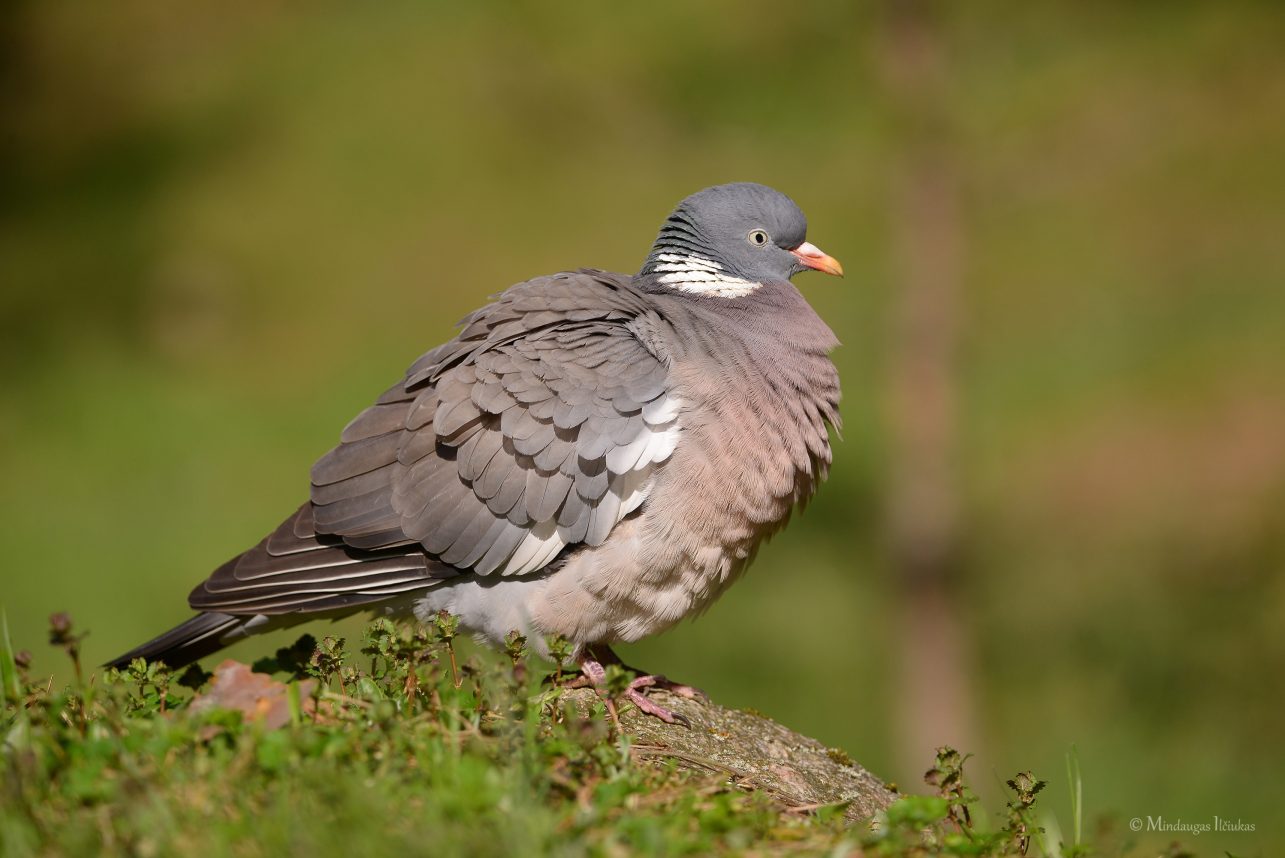
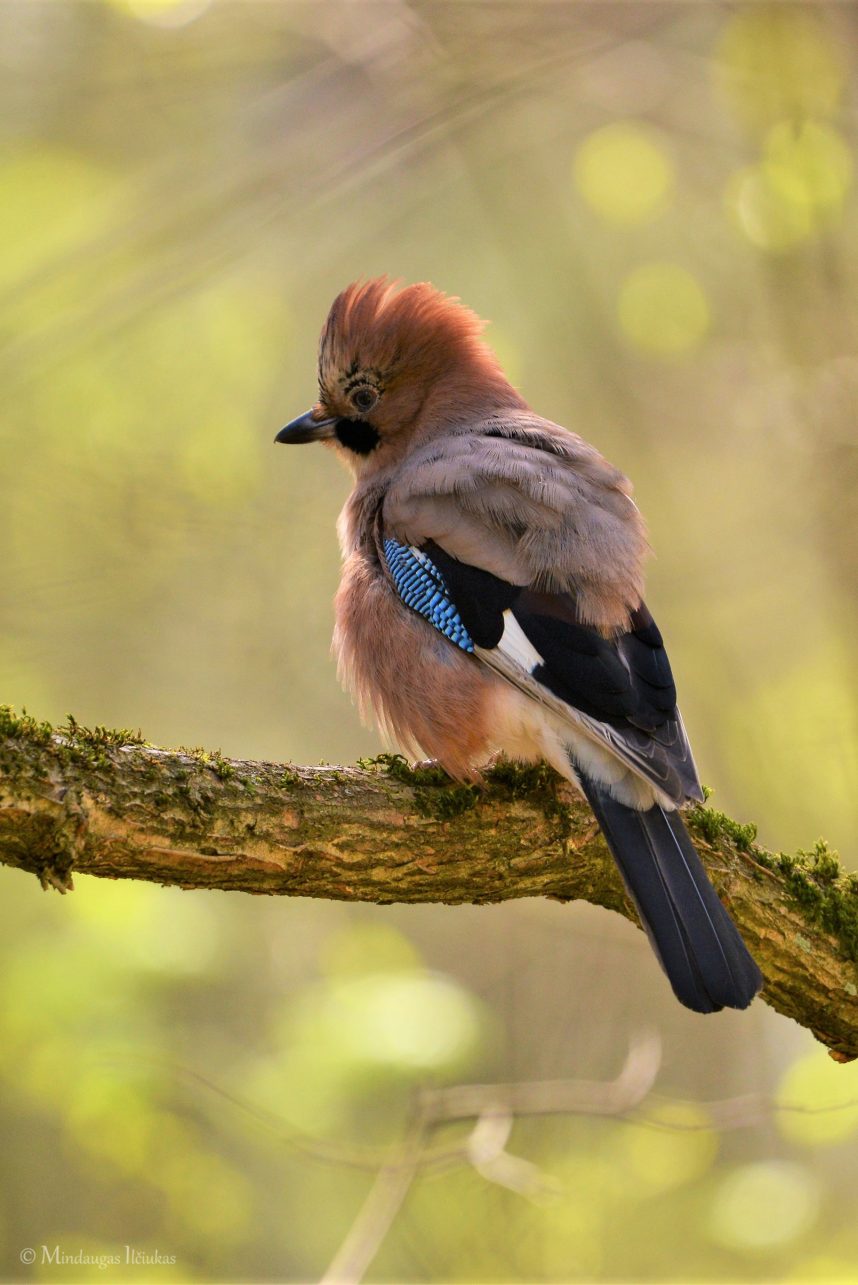
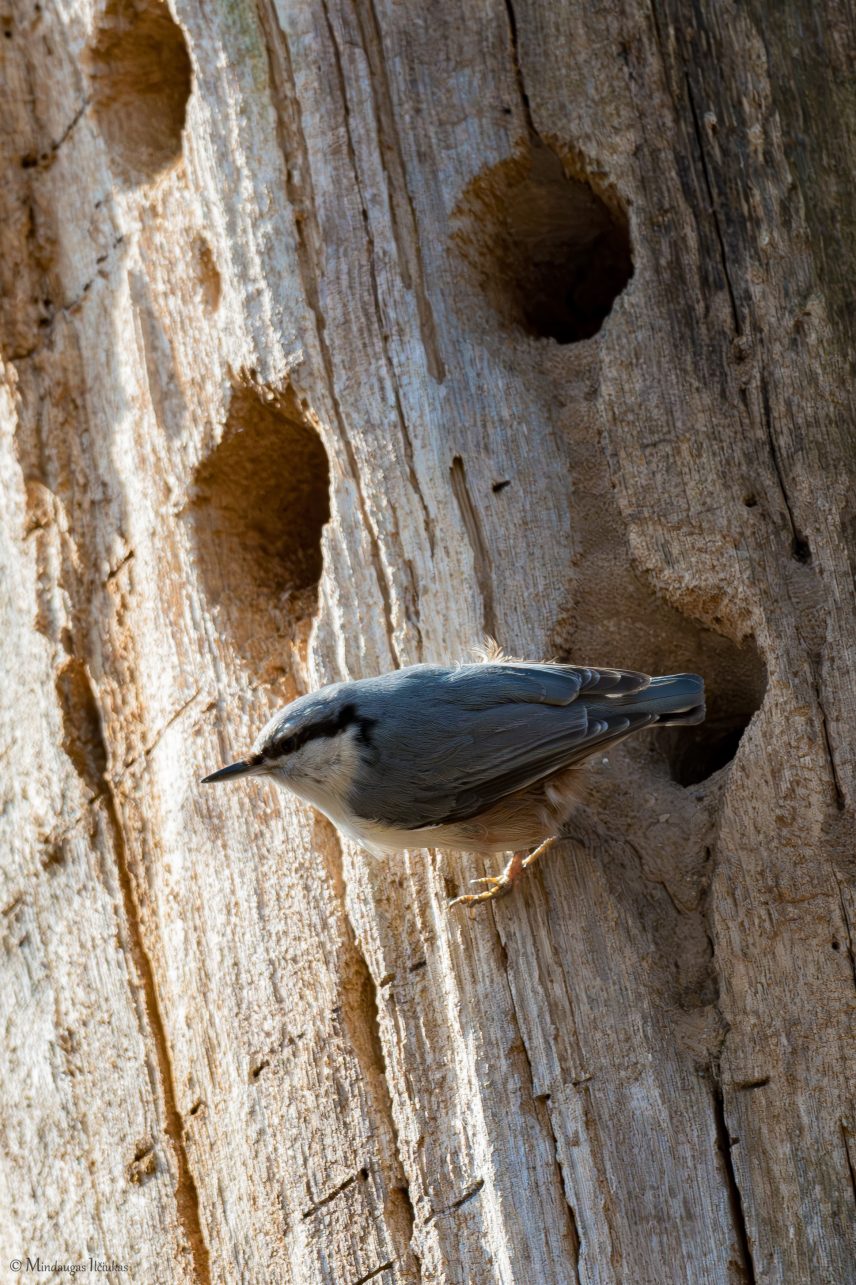
You are also an award-winning nature photographer. What is more important to you: an artistic shot or a scientific find – a rare species never seen before?
The artistic moment is very important to me. Simple documentary recording doesn’t have that value, that internal weight. To squeeze out an artistic photo, you need a lot of preparation, time, and sitting in a hide, waiting for that one unique moment.
Admittedly, bird photography is a technically difficult pursuit that requires serious equipment and appropriate preparation. If you want a high-quality result, you cannot do without specific gear. Although the luck factor here is also huge. You could just be walking around by chance, and a bird, even a rarer one, might land on a branch right in front of you.
By the way, my focus isn’t just on birds: I love photographing butterflies, insects, even the Northern Lights. I have a Facebook page – “Mindaugas Ilčiukas Photo Hunt”, where I share my nature photos.
You mentioned you also have a feather group. Tell us about your feather collection! It sounds very exotic.
The collection exceeded ten thousand in the autumn, and it grew further over the winter – I haven’t had time for a precise inventory yet. A feather is a unique thing, found only in birds, but searching for them requires attentiveness. I find them when birds are moulting, when I see traces of predators, or simply through random natural accidents. Sometimes my cat brings in a find.
Over the years, I discovered my own methodology: I glue the feathers onto a piece of cardboard, record the location and time of the find and the species, and then file them into special albums with sleeves. However, the biggest challenge is not collecting them, but preserving them. Feathers are a favourite snack for various feather-eaters or other pest insects. Therefore, I keep all the albums in airtight plastic boxes and use specific chemicals and scents to protect the collection. It is a constantly growing, living archive in my home.
Kaunas prides itself on its greenery. To you, having moved here only recently, does this title seem justified? How do you view the relationship between Kaunas residents and nature?
The city is truly beautiful, green, the parks are well-maintained, and I see less and less litter in them – this shows a good relationship between the residents and their environment. However, for me as an ornithologist, the greatest phenomenon of Kaunas is the Nemunas. Especially in winter. It is a true kingdom of water birds. Such a diversity and abundance of species right in the city is simply wonderful. The Nemunas gives Kaunas a special natural weight.
And how does a naturalist rest from nature? Is it possible to get tired of it?
Getting tired of nature is impossible – in fact, that is where I rest, and I try to do so every spare minute. I run to the forest or to the river to escape the city noise, the bustle, the traffic jams, and that constant routine of rushing that is inseparable from modern life. Once you escape into nature, the sense of time simply disappears. Walking along a riverbank with a camera in your hands, you feel your thoughts clear, and your eyes see something new and unexpected every time.