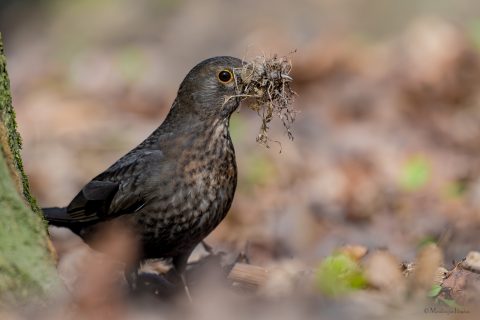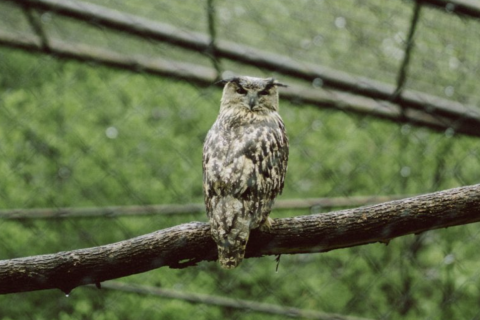
One sunny April Saturday, I was idling at the riverside bar “Upė Teka,” watching cars cross the M. K. Čiurlionis Bridge. I was brought back to reality by the voice of my colleague Kotryna; she stopped by while cycling past and told me that early that morning, she had been birdwatching in Ąžuolynas with Aistė Ptašinskaitė-Paukštė. We both thought: what a beautiful coincidence. A bird (Paukštė means “female bird” in Lithuanian) watching birds. And here I am in Aistė’s office in the Kaunas Artists’ House, interviewing her about flights across Kaunas’s cultural field, daily life among communities and creativity, and the city where culture has become a job.
(This text was published in the June 2026 issue of the magazine Kaunas Full of Culture, titled “Birds”)
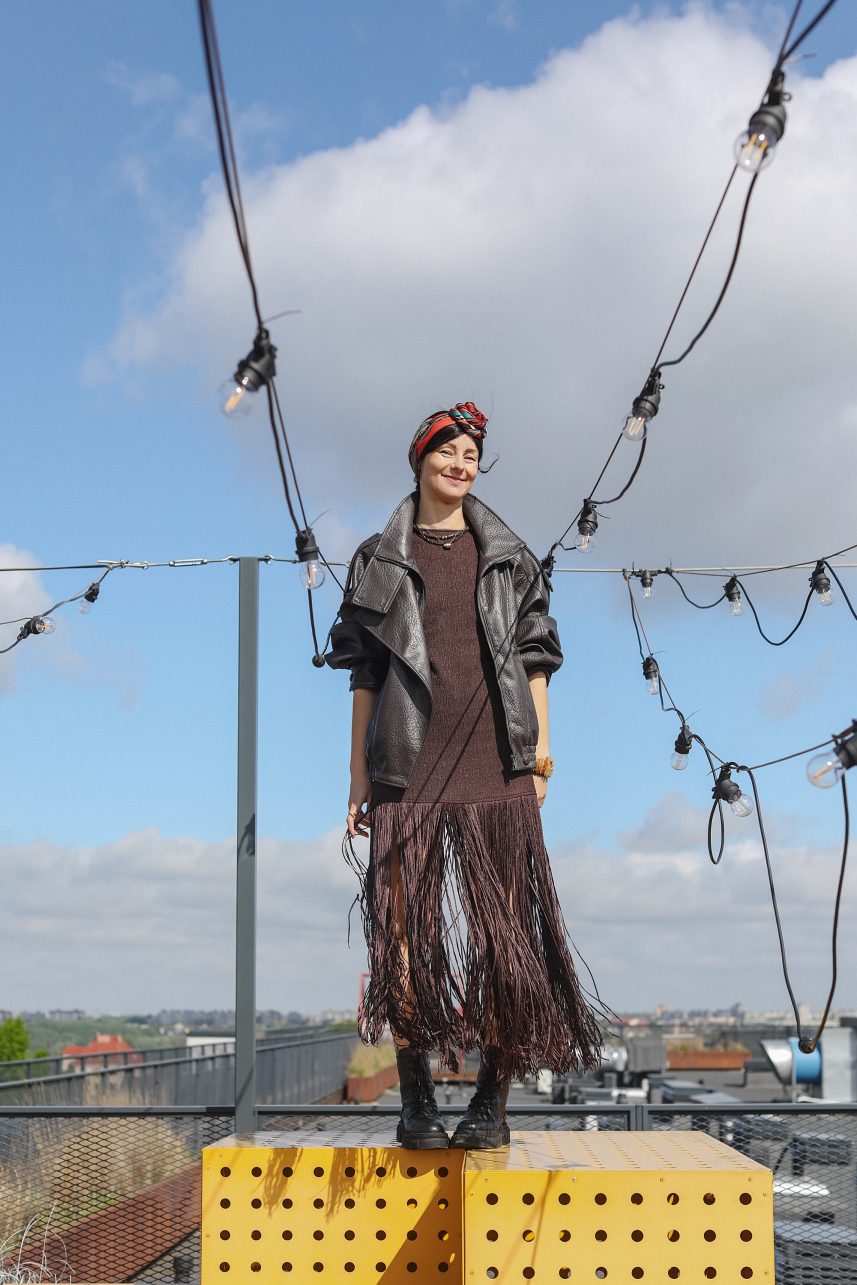
Aistė, where did you fly into Kaunas from, and what were the intermediate landings?
I am originally from Seredžius, which is in the Jurbarkas district, between the Nemunas and Dubysa rivers; it is a very beautiful town with a hillfort. I lived in Šiauliai for thirteen years, then later moved to the capital, where I studied and worked, and I came to Kaunas to start a family.
And how did you end up in the epicenter of the cultural field? Tell us about your connection to art, culture, and the city of Kaunas itself.
To be honest, I don’t fully know myself; I never even suspected that I would one day link my life with culture. I studied social work and worked for a long time with communities and various social groups. At that time, I was not active in culture, and my family has no connection to it either.
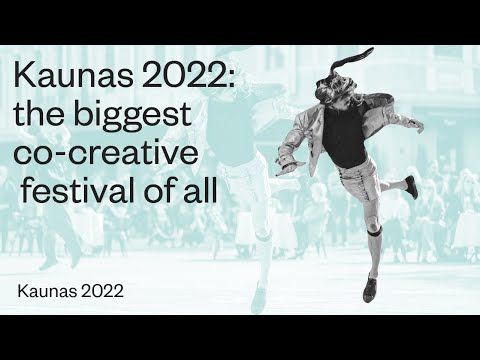
However, after moving to Kaunas and raising my children, I eventually wanted to look for new activities and… myself. By chance, I came across “Kaunas – European Capital of Culture 2022.” The project was still being prepared, and they were looking for people to work with communities, to bring neighbors together and so on. We found common ground, I got the job, and eventually, with huge wingspans, I flew all the way into culture.
Today I can boldly say that the “Kaunas 2022” project awakened my curiosity and grew my love for Kaunas. Now I probably know at least a few places in every Kaunas neighborhood that would surprise many locals and where something beautiful can be created.
After the Capital of Culture year ended, my activities did not change much; I am still actively involved in both culture and community-building initiatives.
How, in your eyes, has Kaunas’s cultural life changed in recent years: do you feel the same pulse, or is something missing?
Now everyone in Kaunas lives in a much more balanced way: the annual calendar has been refined, initiatives have stood on their own feet, and together, it seems, mutual communication and connection have strengthened. Everyone feels responsible for the other. For example, if I plan my events, I always think: okay, this weekend there is Kaunas Literature Week, then “Contempo,” and then “Audra,” so I should try not to overlap and find another date. I just want to celebrate that very beautiful new traditions have appeared in Kaunas.
Perhaps I would only wish for more informal spaces where people could gather, express themselves, and simply experiment. And these should not become “grand” things or festivals, but rather just “first times” where you can allow yourself to make mistakes. I know we have the social center “Emma” and “Parakas,” but I am speaking more about the city’s own efforts. You might say there is the Kaunas Artists’ House, but we do not have that many physical spaces and we are limited by our status as a budgetary institution.
Don’t get me wrong: it’s great that city festivals attract several thousand participants and draw tourists, but often smaller things are much more important to city residents. I really want those small communities, those small living organisms, to be understood and their importance even more appreciated.
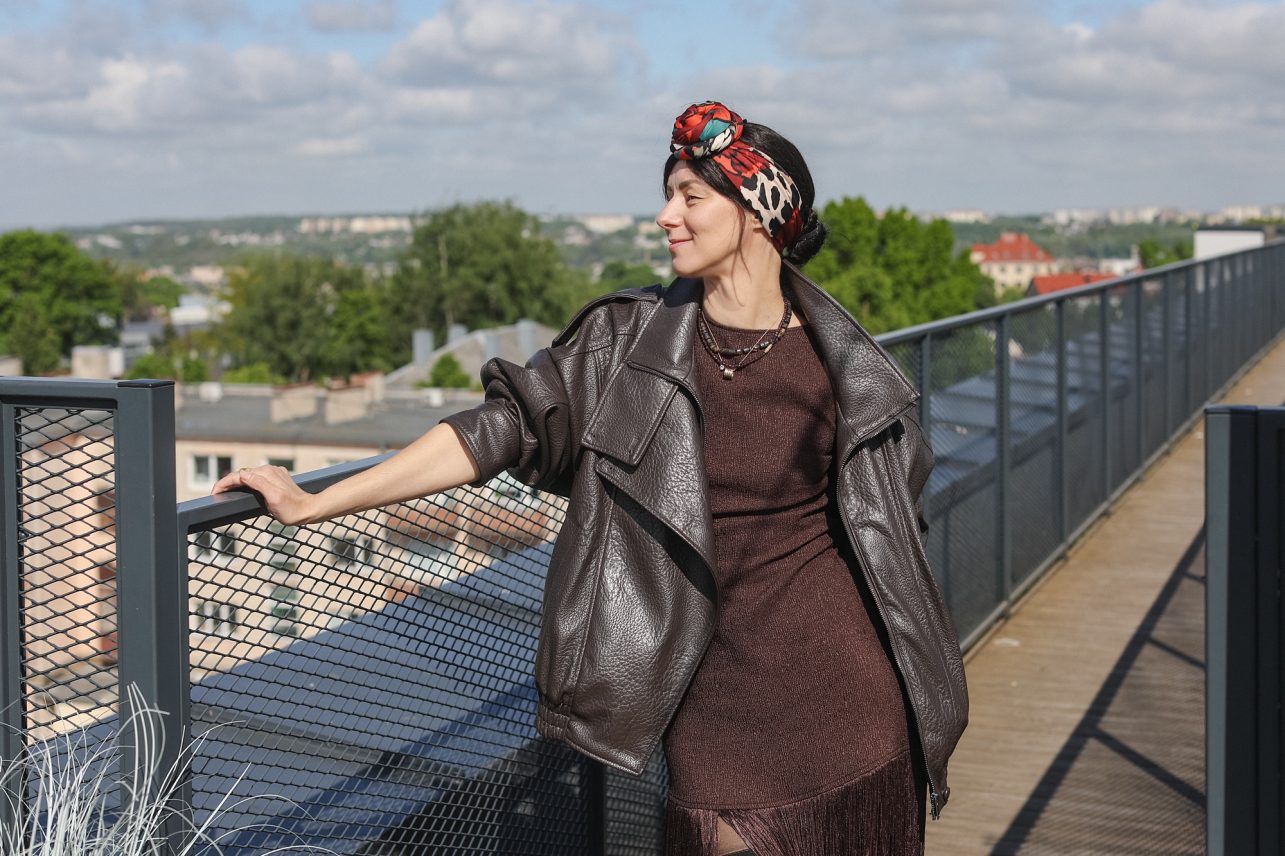
Currently, while the director Simona Savickaitė-Plepė is on maternity leave, you are leading the Kaunas Artists’ House. What does your working day look like? Is there more administration or creativity in it?
Oh, that’s a difficult question. I must admit, all my days are now quite intense, but all of this is my own choice. About 90 percent of my work should be administrative tasks, but I wouldn’t survive at such a rhythm alone, so alongside that, I voluntarily chose to curate certain favorite projects. It feels so good to go to events, meet like-minded people, and recharge my energy. Physically you might get tired, but emotionally you get a great deal. So now my workday is split into two almost equal parts: it contains both creative and administrative work.
Regarding creative work, it is important to mention that it’s not just about events. I work together with a fairly large team, so every day is a creative process: every day I need to feel the pulse and mood of the team, hear ideas or new initiatives, and together look for ways to implement everything. Sometimes such tasks are born while drinking coffee or having lunch, and I really like that. We are a budgetary institution, but we have enough freedom for creativity; we allow ourselves to dream about the future and think up all sorts of things.
The current activities of **KAH** are part of the “Kaunas 2022” legacy. Simona, whom I am now subbing for, also worked on the aforementioned project; it seems we both came with a very similar approach: we are all a team and we must feel free. The goal is the same for everyone: for as many people as possible to experience Kaunas as an interesting, original city.
And how is it going for you personally, being the leader of such an institution as the Kaunas Artists’ House, even if temporarily?
I’m not sure if I should be the one answering this question. But I really enjoy it. Sometimes I come to work and think: “Oh, what a beautiful building I work in.” Then I look at my team, listen to what everyone is doing, and think again: “Wow, what beautiful things we are doing here.” There is much to be proud of, and truly, every now and then, such an enlightenment visits me. If I had to change jobs, it would be difficult to find an alternative with the same atmosphere and opportunity to create freely.
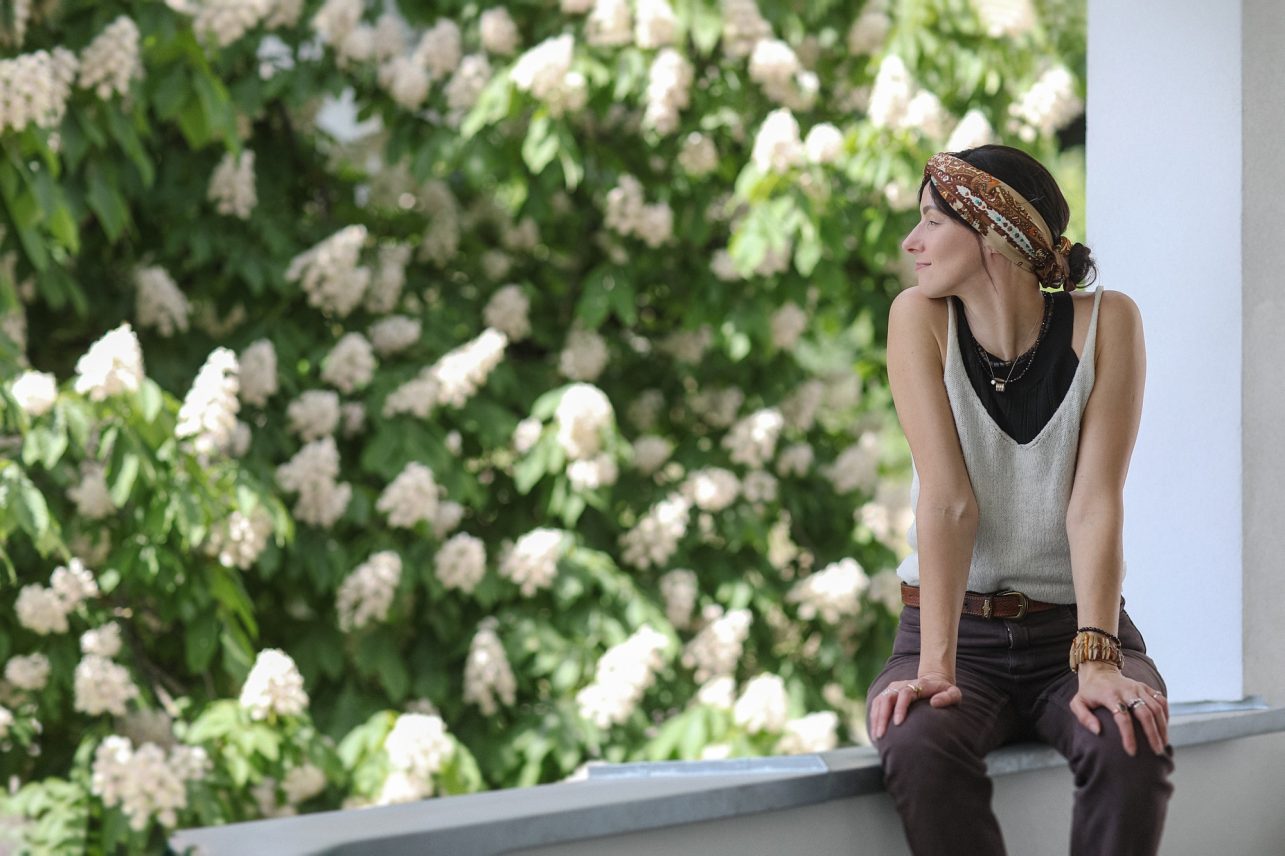
Aistė, I cannot help but ask. Does your surname – Paukštė (Bird) – give you inspiration while leading an artistic institution?
I think perhaps it gives it to others. After all, the first impression is an important thing, and my surname greets everyone when they open the contact section of the **KAH** website. I would dare to think that it gives some kind of impulse.
And speaking of life experiences, there are many more pleasant coincidences. For example, a council was being elected at my children’s school; I became the chairwoman, even though I didn’t know a single person, and it was during the quarantine. I joke that someone saw my name and said: “Unheard of, but a clear, understandable surname – she’ll be reliable.”
To be honest, I have only carried this surname with me since 2020: it is the surname of my great-great-grandparents. Until then, I lived as Aistė Ptašinskaitė, but during the quarantine, I decided that I should reclaim the old surname. I started snooping through all sorts of documents and found a family tree from 1890, then, without much hesitation, I made the decision.
When I visited Seredžius, I gave my name and both surnames, and I heard: “Oh, so you flew in like a stork.” Because Ptašinskas is a surname of Slavic origin, coming from the word also meaning “bird.” So, Aistė Paukštė-Paukštė.
I must admit, two surnames also seem a bit strange to me, but my great-grandfather’s surname was also double, while my grandfather’s and father’s was single: Ptašinskas. I could take off one surname now, but, strange as it is, I want to have both.
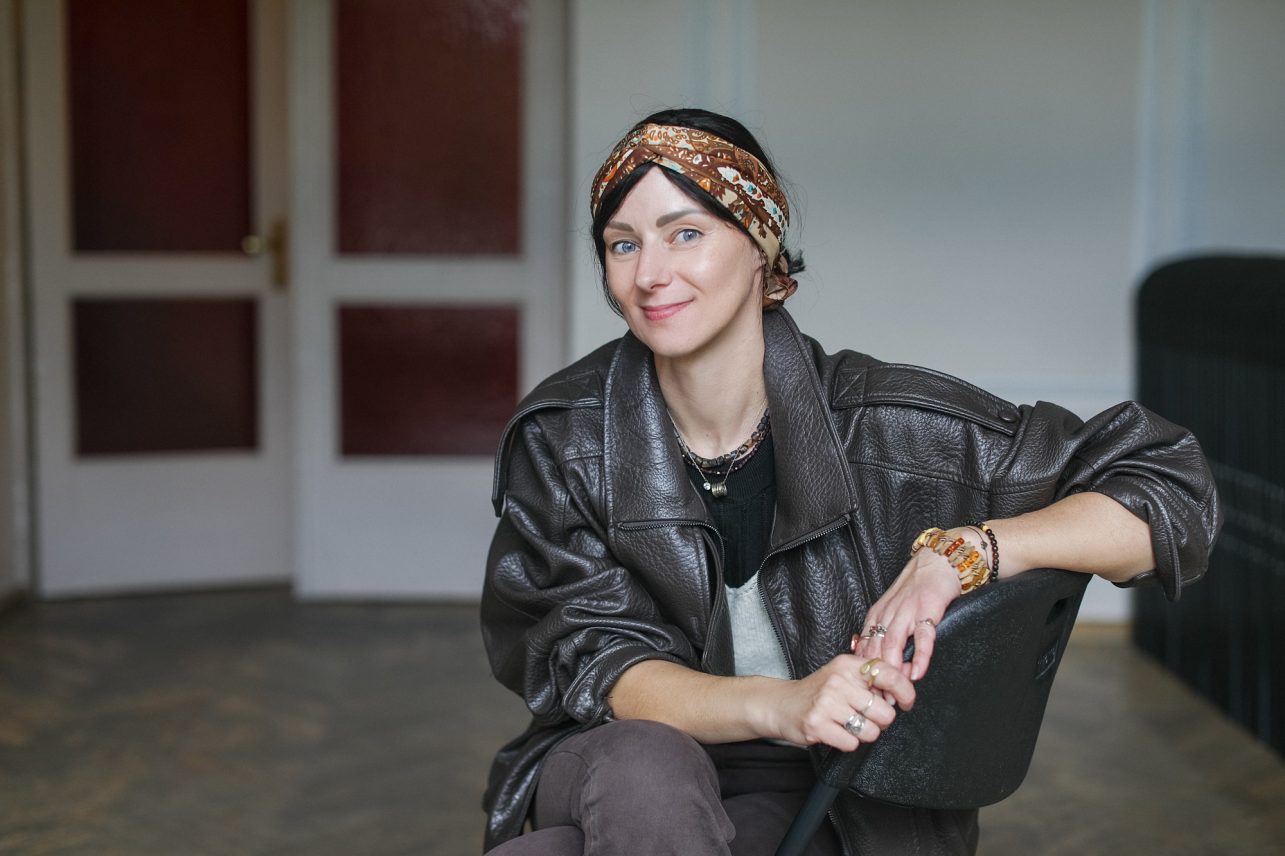
I’m curious about the mood currently at the Kaunas Artists’ House.
May is a very busy period for us, and June will bring winds that are no less colorful and interesting. But probably one of the main things this year is preparing for internal renovations and searching for a new temporary home. At this moment, that raises many questions: where we will exist, what we will do, what event formats will have a place, because I really want the content we create to remain.
Since last year, we have moved quite a few events to public places: for example, the contemporary music series “Niche” is increasingly making itself comfortable in buildings that were not previously actively used for cultural purposes.
It seems that the “Niche” series has truly stuck in Kaunas, and a curious and open community is gathering. What do you think is the reason for the success of this cycle?
“Niche,” now in its fourth year, is one of those events that will remain in our future repertoire. Having traveled beyond the walls of the Kaunas Artists’ House hall, it has shone with even brighter colors. It is a very good example of how moving to other spaces improved the quality of the event format itself and expanded the audience. Some visitors know nothing at all about contemporary experimental music, but they end up there by accident because they just wanted to see a certain building from the inside.
“Niche” probably won’t become an event for a mass audience, but that is even more beautiful to me. Of course, one always wants to sell more tickets, but the specifics of this event are quite different: we aim to show the character of Kaunas. I believe that “Niche” will continue its flight: we still have many undiscovered buildings, and the list of performers who can shine in the event is also quite long.
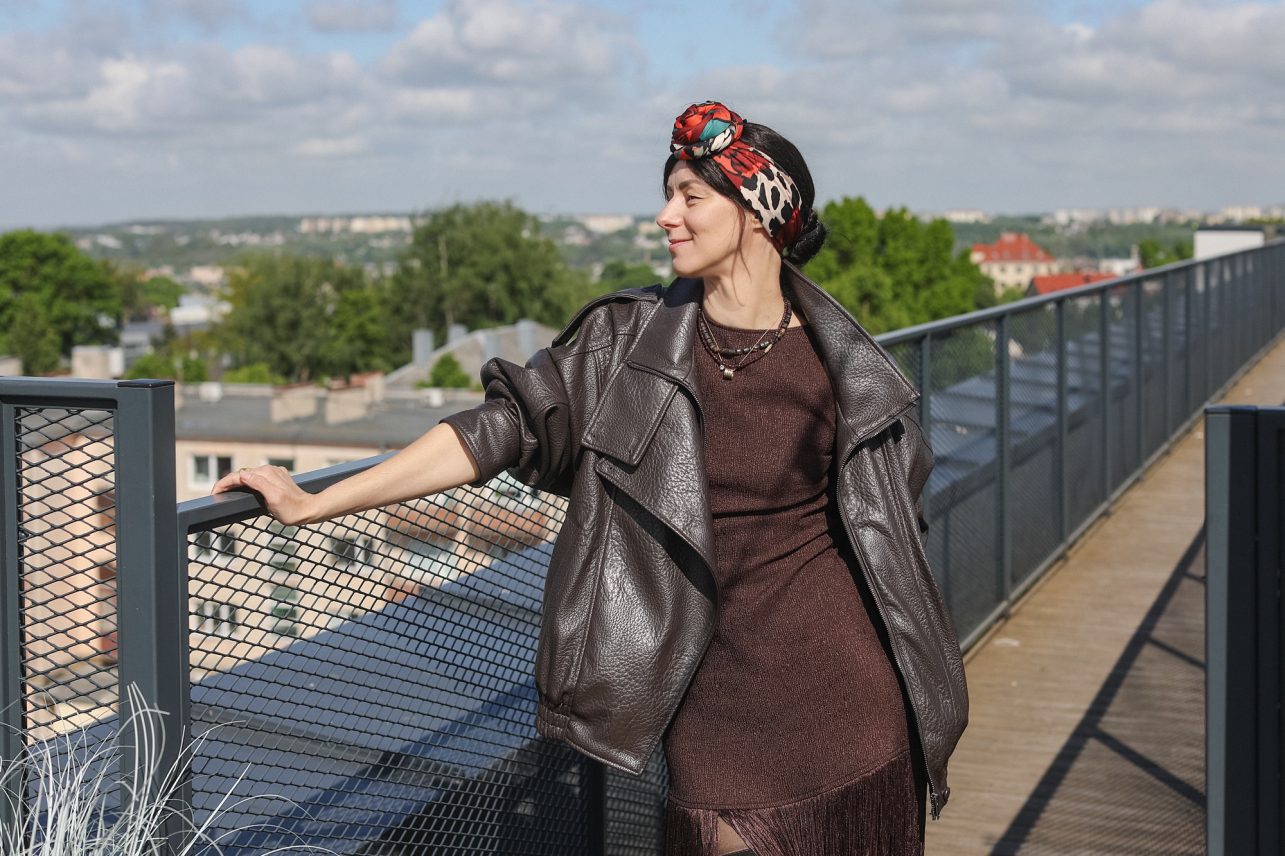
And what music usually plays in your office?
In the office, I usually work in silence. Sometimes colleagues come in, and then bursts of laughter can be heard. Especially now, during the peak season, my cheeks even hurt because the line between overwork and true creative drive is very thin.