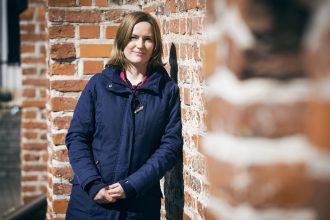
Objects, phenomena, and people open up to the curious and open gaze of storyteller Artūras Morozovas. Artūras works as a photographer and photojournalist; he is one of the co-founders of the contemporary media agency Nara.lt (formerly Nanook), the chairman of the newly established Lithuanian Photographic Art Society, a lecturer, and now, an author. Published by Lapas, his photo-essay “I Met a Person” expands through space, time, and themes, encompassing stories the author experienced and heard in Georgia, the Maidan protests, and the battlefields of Ukraine.
Later, Artūras moves us into a local context: together, we wander through Kaunas bars, both those still existing and those that have already disappeared. At the end of the book, we find ten different ways of living in various parts of Lithuania: people and families living on the edge of social exclusion. In their stories, Artūras searches for an answer as to why lives in such a small country differ so greatly, even though everywhere he meets people who are just like him, you, and me.
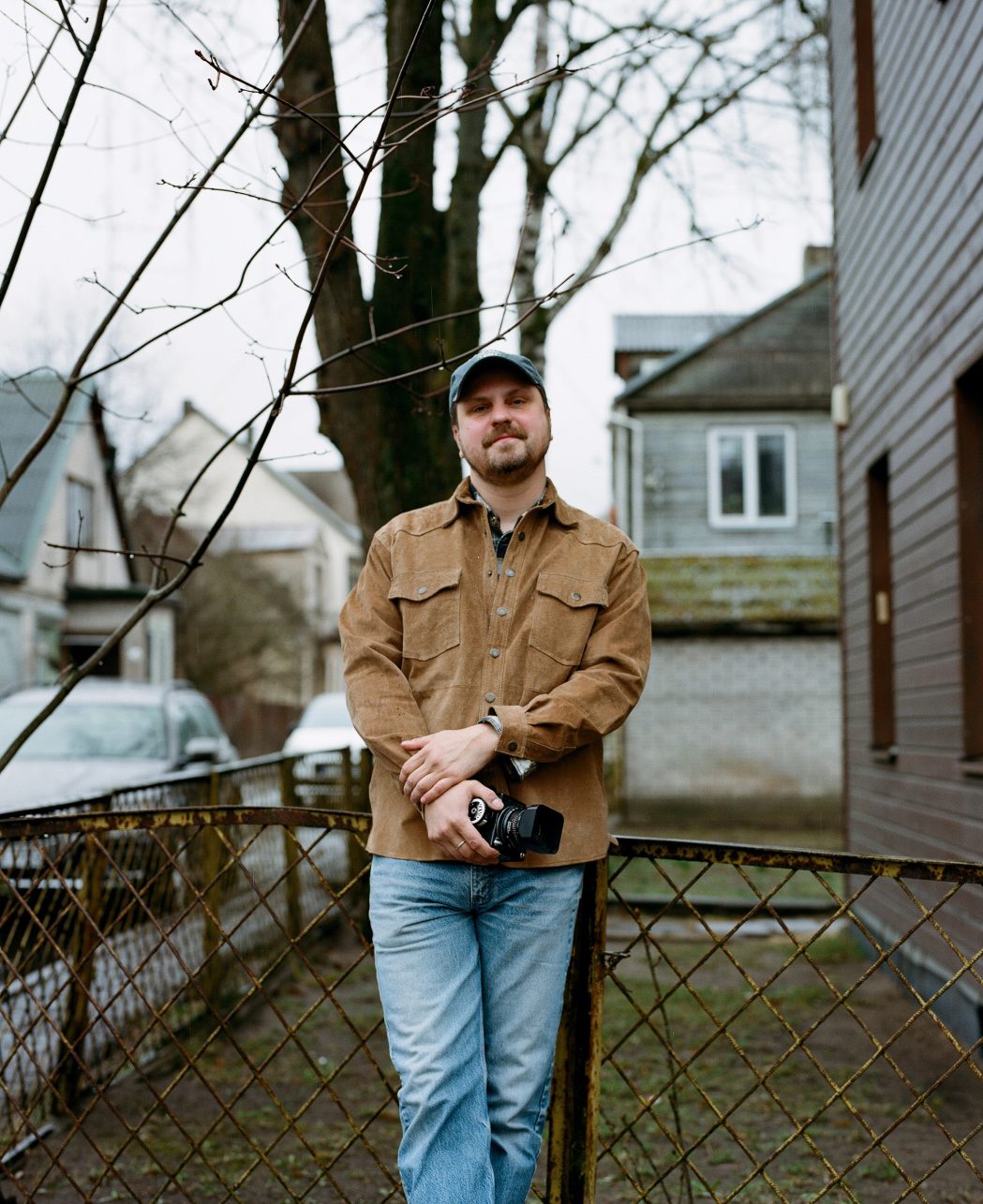
You have been working as a photojournalist since 2006, and this year you published your first book. How did this transition happen?
For a decade, I was happy to have found my calling: photojournalism. One morning, I realized I would have to rediscover myself due to the limited methods of this activity. I remember when migrants were flooding into Europe, my colleagues from other countries and I were documenting events on the island of Lesbos. In the evening, sitting in a tavern, we looked at each other’s photos. They evoked different emotions: some sparked fear, others compassion, and some were neutral. I felt that a story, a lens, or even a question can be a great danger, as it contains so much of the photographer’s and the questioner’s perspective.
The same happened during the study of social exclusion: in interviews, I received people’s answers, but after all, I was the one formulating the questions. By staying with the heroes of the stories longer, I understood and saw more: how can I ask about things I don’t even suspect? Then I started talking to a friend who is an anthropologist. He suggested a different approach: one that allows for depth and requires the luxury of staying longer, being present slowly, and returning.
It seems that this approach paid off. You mentioned that people opened up easily.
A conversation, a word, and a question are very powerful things. That is just how we are built: it feels good when we are listened to and when someone is interested in us. Although I was conducting interviews, the subjects would open up to me as if I were a friend, entrusting me with secrets. I often had to remind them that an interview was taking place. Working in the context of the war in Ukraine, there were cases where I asked a simple question: “Where are you from?” and ended up with more than an hour of conversation on the recorder. When a person is tired, when they are experiencing great stress, they want to share their experiences. For me, it was important to abandon judgment and arrive with a curious mindset and open senses, wanting to truly understand. Then it works. In the Lithuanian context, it was unusually interesting to think about why lives in a small country are so different and why we make such different life decisions. Everything is much more complicated than it seems at first.
Have you come closer to an answer?
I can humbly answer that I have understood something. The Soviet system, the sudden transition to capitalism, the lack of regional policy, a generation that raised children as best they could under difficult conditions, the unemployment of the 90s: all of this together left problems with self-awareness and self-esteem, as well as fractured relationships with one’s own country. Many of the reasons also lie in childhood.
What perspectives do you see for independent social journalism?
Our country exists at the epicenter of tectonic shifts; we have much to tell the world about ourselves. Social documentary has power. When you see a person’s face in a photograph, you can’t attach too many epithets: you see Povilas or Faustina, not a unit of poverty. Dramas are not necessary: a portrait of a stranger is a powerful, impactful metaphor. A journalist colleague criticized a media outlet’s slogan “Understand in an instant,” saying that our job is not to make the world easily understandable, but rather to reveal its complexity and multi-layered nature so that it cannot be so easily divided in an instant.
What surprised you about the book-writing process compared to creating documentary photography?
When I started creating the series, I faced what I didn’t know. I went to the first interviews excited, wondering if vulnerable people would open up and invite me into their homes, but everyone agreed. The first people set a condition: they would tell everything if the stories did not end up on the internet. That was when I realized it had to be a book.
I felt a break between journalism and writing. I started working traditionally: I collected a lot of material, more than 200 hours of interviews. Somewhere around the umpteenth hour of transcribing and a hundred pages of interviews, I realized I was on the wrong path: I was trying to explain something, to look for conclusions, but it wasn’t interesting. Then I decided to tell the story as if I were telling it to a friend, taking thoughts from my notebooks. It was so helpful that I had constantly written down the most important moments, describing my states and emotions. These are a kind of anthropological field notes. And it is not a typically journalistic documentary text; there is a lot of me in it. There is also some fear, because what I remembered does not necessarily match the recordings exactly. Still, this narrative, these conversations with people in social exclusion, was one of the most interesting moments of this decade, a significant enrichment of our country’s portrait. I didn’t expect this book to cause a great resonance, but after its release, I received a lot of feedback: the topic turned out to be relatable and relevant.
Recently, the pitting of cities against regions has become a political tool, so it seems the book is timely, capable of filling the gaps that have appeared.
I thought about that. One of the tasks I set for myself was to explain how political populism spreads. I didn’t quite manage to do that fully, but the book certainly appeared at the right time. Civil society, seeing what is happening in the Lithuanian political arena, is starting to turn toward the regions to try and understand them better. Those distances have become large and unbridgeable: a bridge is needed to overcome them. In such a small community, we know nothing at all about some of the people. When I started working on this topic, I was prepared to meet a different kind of person: unknown, with a different opinion. But I met people just like you and me.
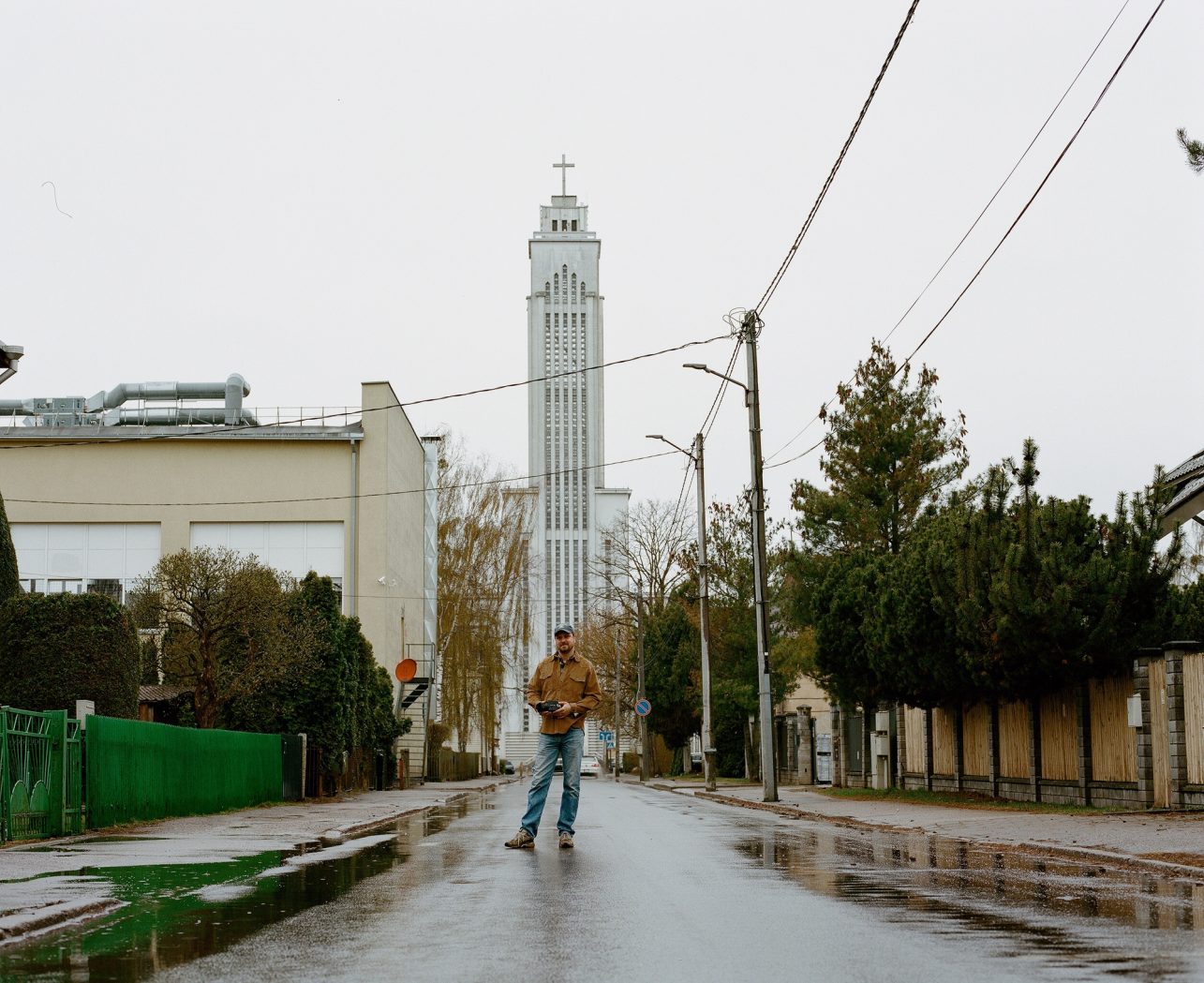
Did that surprise you?
Social networks have greatly distorted our vision. The philosopher Arvydas Šliogeris wrote about knowing two Lithuanias: one is the one he hates, met on the screen in a broad sense, which takes away faith in the state and where insulting words can be thrown around; and the other is real, where you meet a person or an acquaintance on the street, go to a neighbor, and experience a relationship in reality. That is what happened to me: many epithets fell away, and people appeared with their stories and complex lives.
This resonates with what you wrote in the book: “[…] the interviewees have a very healthy relationship with the political world. I saw that most of them do not have a TV, do not use social networks, and receive information through an unswitched-off radio receiver and by experiencing the world with their own senses, communicating with their circle. The situation begins to change with the appearance of a smartphone.” Tell us more about this shift.
Many of those I interviewed do not have a TV or social networks and experience the world through the people they meet. A couple of people later created social media accounts, and their perception of the world began to change. They started accepting the explanation that someone was exploiting them or manipulating them, and a sense of confrontation with others emerged. Older people enter the virtual world suddenly, without the necessary skills, unaware of various virtual system algorithms and disinformation. This space offers them a different understanding of the world. It is dangerous, and it is used by various political technology movements.
US photographer Bruce Gilden took his most famous photos by unexpectedly lunging at passers-by with his camera and flash on the streets of New York. Your approach is completely different: you seek to establish a connection with the heroes of the stories and become part of their daily lives. You said you broke more than one established journalistic rule: helping with household chores, bringing treats, even participating in christenings. How do you look at journalism now?
I remember a child from one family called me at night, asking to borrow three euros for a bus ticket because the mother had no way to get back to the village from the hospital. An unvoiced thought flashed through my mind that I shouldn’t involve money in relationships, but then a dilemma arises: either you are an ethical journalist, or you transfer those three euros and the mother returns home safely. I realized I had to build a human relationship with all its consequences. I talked a lot with anthropologists who study communities: they become parts of them and serve them. In my case, it was quite similar: if I could help and if it wouldn’t have a significant impact on our communication, I would do so.
In the book, you mentioned judgment several times: the critical gaze with which the world observes the subjects of your book. I saw that gaze in myself a few times too. To meet a person: what is the best way to do it?
Turn off self-righteousness. The world becomes much more interesting when you curiously open your senses: this helps you hear the other person better and prevents you from closing yourself off in a superficial conception of life. These stories taught me that there are a hundred different ways to be in this world. If you are a music lover in Šančiai, listening to jazz in private and needing nothing else, you have every right to exist without harming others.
In the book, I really liked Agnė Narušytė’s thought that although the stories are very colorful, you take the photos in black and white. You changed your mind after this comment.
Black and white photography highlights the main elements. Color film encouraged me to show more of the person, the colors of their life and environment, looking at life as if through a keyhole rather than just looking for accents. I was surprised myself: it worked.
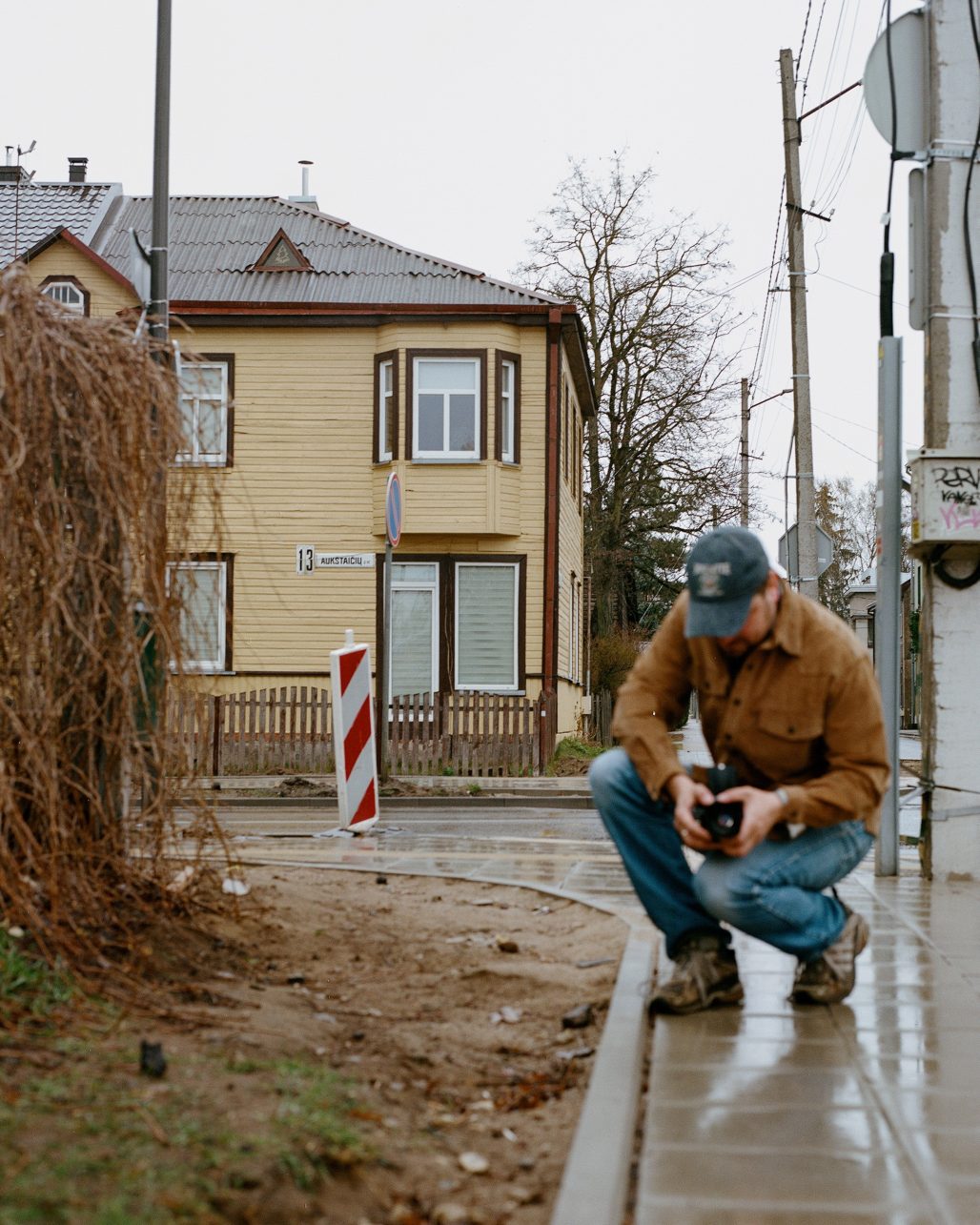
In one article, you wrote using Krzysztof Czyżewski’s term “trenktatikiai” (the crazed believers), referring to those who have found a place outside the city limits and are creating their own center of the world. One of the heroes of the book says: “Province is more of an internal phenomenon of personality, not a geographical one.” Where is the center of your world now?
In September, I returned to Kaunas. It was an old dream, as this city has always fed me spiritually. I never wanted to leave; it only happened because of dream job offers or family situations. I only truly appreciated Kaunas after I left, when I began to miss it. I realized how strongly it had shaped me; I lived as if what I experienced here was naturally given. However, moving 100 kilometers away, I began to lack many things. Here I grew up and was formed in a strong community of authorities; I have my favorite places and I feel as if they are truly mine alone.
I now live in Žaliakalnis, in a house built during the interwar period. That is where I wrote the book at night. An elderly woman lives on the first floor of our house; the yard is her universe. On a bleak winter day, I noticed she had chopped a path in the ice leading from the house door to the yard wall. I couldn’t understand why. The next day, on March 11th, the 90-year-old woman walked along that path to the flagpole, climbed a small ladder, and hung the Tricolor flag.