I get into the SUV and head towards Kaunas city centre. I turn on a song that I might not necessarily want to hear right now, but I wait for the lyrics with a smile: ‘At night, I listen to metal loudly while all the neighbours sleep. I like living this way…’
Yes, it was specifically to listen to metal, or rather, to listen to talk about metal, that I dropped by to see my friend Tomas, a sworn devotee of not only this genre but of all music that sounds good. Encountering a person who loves metal and is also an audiophile is almost as rare as spotting a black stork in the wild.
(This text was published in the April 2026 issue of ‘Kaunas Full of Culture’, titled ‘Metal’)
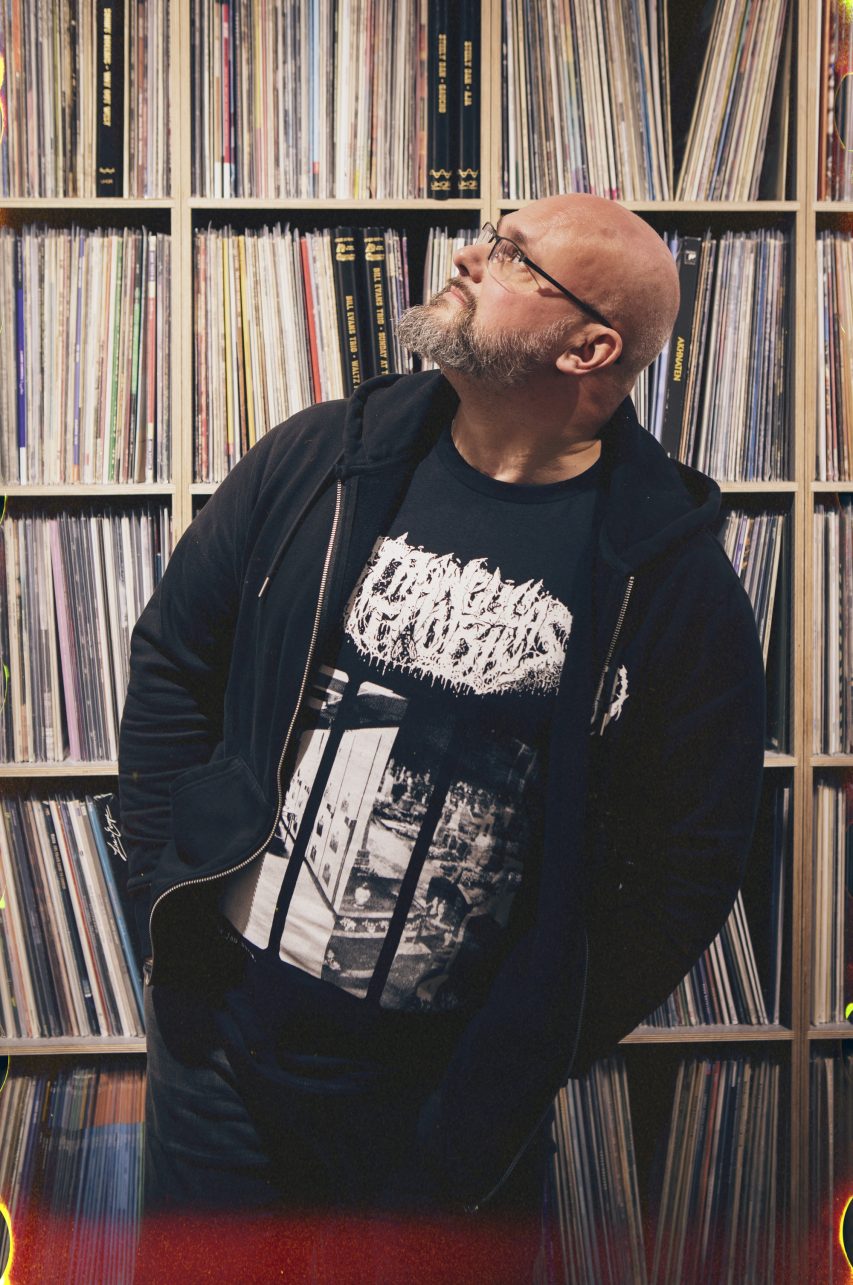
‘After school, I came to Vilnius to study. I had a sweetheart in Klaipėda. I went there to propose, but she declined. I bought two bottles of wine, intending to forget my troubles. I buried them in the wet sand by the sea, but later, when I went to pull them out, both cracked and the wine stayed there. Such was fate’s irony: no wife, sober, and no money for a ticket back to Vilnius,’ Tomas recalls.
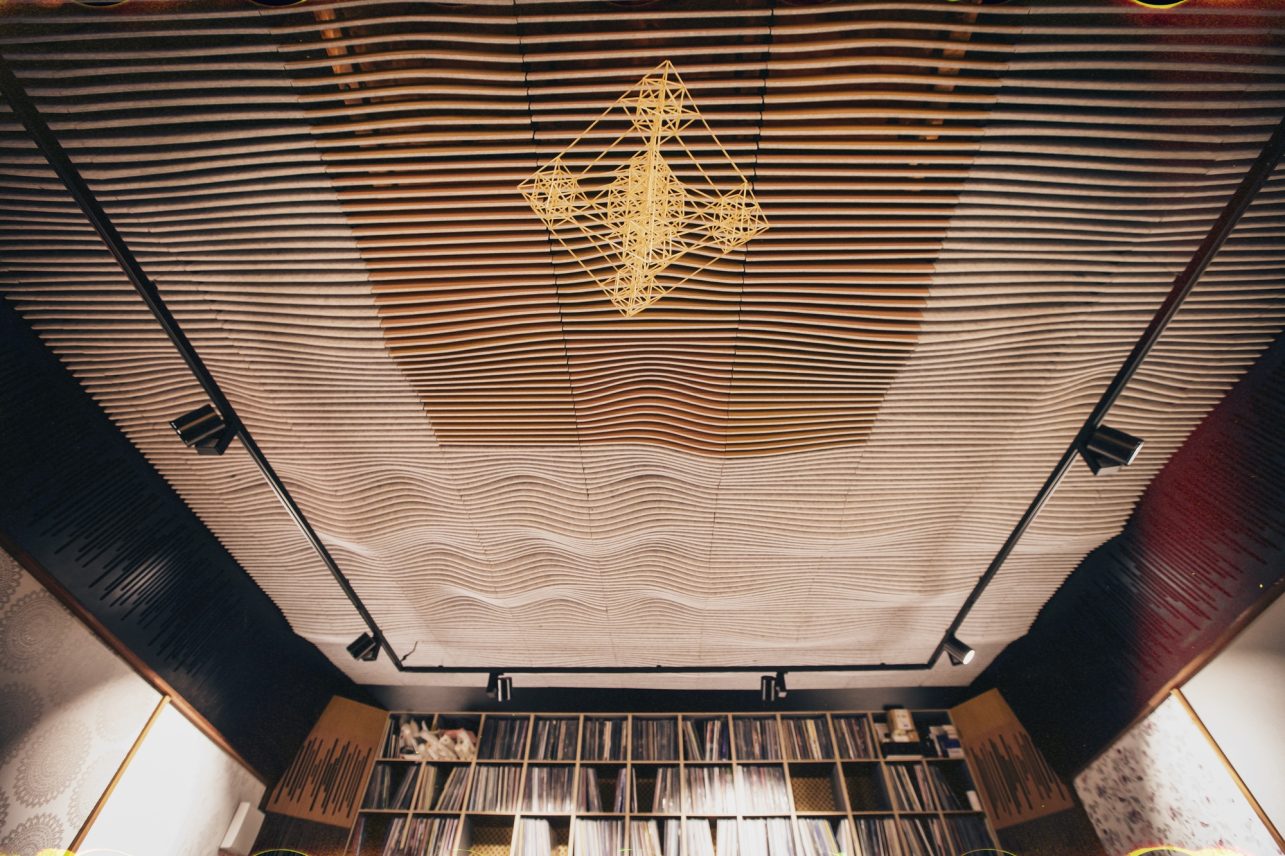
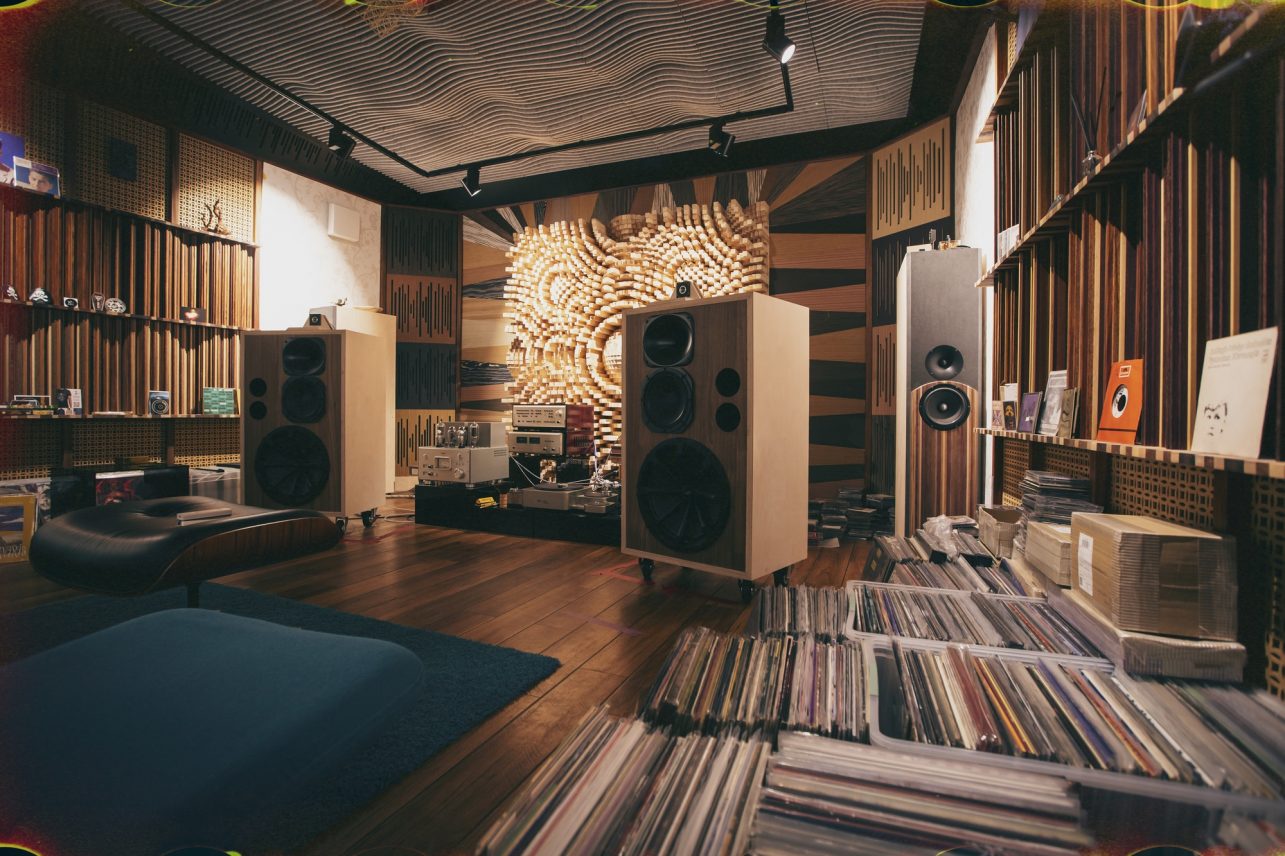
And now, our hero has been in Kaunas for many years. We are talking in a place that gives meaning to his hobby and shows just how much it matters to him. Tomas has built a separate house in his yard specifically for listening to music. In this temple for audiophiles, we shall move towards the darker side of music.
Tomas, how did metal music enter your life? Do you remember a specific moment or an album?
I remember a class trip to Vilnius and a detour to the Zarazza recording studio, which was operating at the time and recording these beautiful cassettes somewhat illegally (laughs). I bought my first one there. It was the Paradise Lost album, Gothic. To this day, they remain my favourite band; I have collected every recording of theirs that can be found. Of course, Zarazza was an interesting character: if there was space left on the tape, he would splice in something extra purely for educational purposes. In my case, one side had a demo of a couple of Burzum tracks, and the other had Black Sabbath. A serious start indeed (laughs).
As for the moment itself… In Telšiai, where I was born and raised, there was, and still is, the College of Applied Arts. Now, I believe, it is a branch of the Vilnius Academy of Arts. They used to train metalheads there.
In the literal sense of the word…
Yes, metalwork specialists. People who carve stone and metal. Creative, proactive individuals from Samogitia and the whole region would gather there, and a good number of them listened to the local band Meressin. We, the youngsters, were drawn to them like bees to honey. Though we were quite small, we felt we knew something. We helped organise concerts, which were partly arranged by our older friends. I remember a massive concert in Plungė. Meressin played, then the now-legendary Anubi from Kaunas, and I saw Nahash for the first time. They were fierce events. Then there were the fanzines, the underground newsletters about metal bands. I used to draw a bit, so they would sometimes print my poems, sometimes my drawings. A fanzine called Samogitija was published in Telšiai, covering local and foreign metal bands.
There was a lot of correspondence via real letters. I used to write a fair amount to people who are now quite well-known: to Ugnius from Ragainė and several members of Obtest. It was a kind of community; we had never met in person, yet we wrote these sophisticated, philosophical letters about virtually nothing. I still remember Ugnius’s handwriting: he used to write the letter T as an inverted cross. I was 13 or 14 years old then. This continued until I was 18, when I left for my studies and things calmed down a bit.
When we were arranging this interview, you mentioned that metal returns to your life in cycles, roughly every five to seven years. How do you explain that?
Generally, everything in life happens in cycles. Five to seven years is the realistic time it takes to earn enough for a house and build it. Once it is built, you start thinking about something else. Within that domestic routine, other spirals appear. For me, one of those is metal music. When the domestic side of life is settled and you relax, you start thinking more about yourself, and nostalgic things return. You remember what once drove you. Those first memories are very important. The sounds you heard first are etched into your memory for life and never let go. I believe in that. Much like the desire to collect the albums you had on cassette as a child. Now, led by sentiment, you grab that music in the form of a vinyl record or a CD. You listen to it, of course, no longer with a child’s wide-eyed wonder, but it remains significant.
What made metal music most memorable to you then: the sound itself, the energy, or the subculture?
The sound. Due to my limited English at the time, I could not understand all the ideological aspects of the lyrics, but the music left an impression. The aforementioned Paradise Lost album Gothic (1991) is a classic of doom metal. At that time, there were a few other bands trying to play slowly and heavily, creating an oppressive atmosphere, but this band, in my opinion, is the pinnacle of doom. All around were Kreator and Slayer, thrash was really rising. Black metal was also starting to rear its head, but that came to me a bit later. In thrash, you have the chopping and that beautiful ‘chug-chug-chug’ rhythm, but in doom, you have heavy, dreamy, atmospheric stretches. That is precisely what drew me in.
What did the metal subculture look like when you were a teenager?
It is interesting to note that I attended the first Catholic secondary school in Lithuania. I was pressured to be good, beautiful, and to pray sincerely. This often gives birth to resistance. Externally, this was further strengthened by the subcultural conflicts of the 90s. The ‘forsai’ (thugs), seeing my long hair, would pull out scissors and shout: ‘We’re cutting it!’ and similar nonsense.
Everyone wanted to beat up metalheads. But that did not act as a deterrent; rather the opposite. I did not want to look or act like the majority. You felt as though you were in the same world, just in its darker part. Now, everything is somewhat assimilated. Representatives of different subcultures communicate, even attending each other’s concerts. Society also accepts metal music more easily; you can hear the occasional metallic sound on the radio. There is no longer such a divide. There is no longer an underground. Music is everywhere, not just on cassettes but on other media. You no longer have to hunt for it so intensely.
Do you still have your first cassette?
No, I don’t.
What was its fate?
I am ashamed to say.
Did you trade it for a rap cassette?
No. During that fanzine era, which lasted about four or five years, I had collected almost the entire Lithuanian metal discography on cassette up until 1995. Then a stage came when, for some reason, I took those two boxes to the Ragainė shop and traded them for two festival tickets. I believe it was the ninth or tenth Mėnuo Juodaragis. At that time, it was quite a metal-leaning event.
But it’s incredible: it seems like a very unequal trade in terms of value.
At that time, compact discs were fully flourishing, and cassettes were being forgotten.
Poorly timed… and someone walked away with a treasure.
And I know who took them. Greetings to Audrius Skabardas (laughs). There were demos from Meressin, Ruination, Dissonance, Ghostorm, and Pessimus from Marijampolė. I used to take everything that anyone released at the time.
Let’s jump to your time in Kaunas. You mentioned that when you first arrived in the city, there was no time to see what metal fans were up to. You hardly even listened to music. But, as you said, the cycle turned…
Yes, and I grew my hair long again, though this time with a bit of a bald patch. I started attending metal events again. It so happened that I once gave Nerijus, the current manager of the Lemmy club, a lift to a festival. He invited me to drop by. The club had only just opened. I have been visiting it ever since.
You are more than just a visitor; you support the place in other ways too.
Those are too minor to be publicised. It is simply whatever my company’s resources allow: sanding the floors, organising tables, or whatever else. I don’t think it is a significant contribution. I simply try to help however I can.
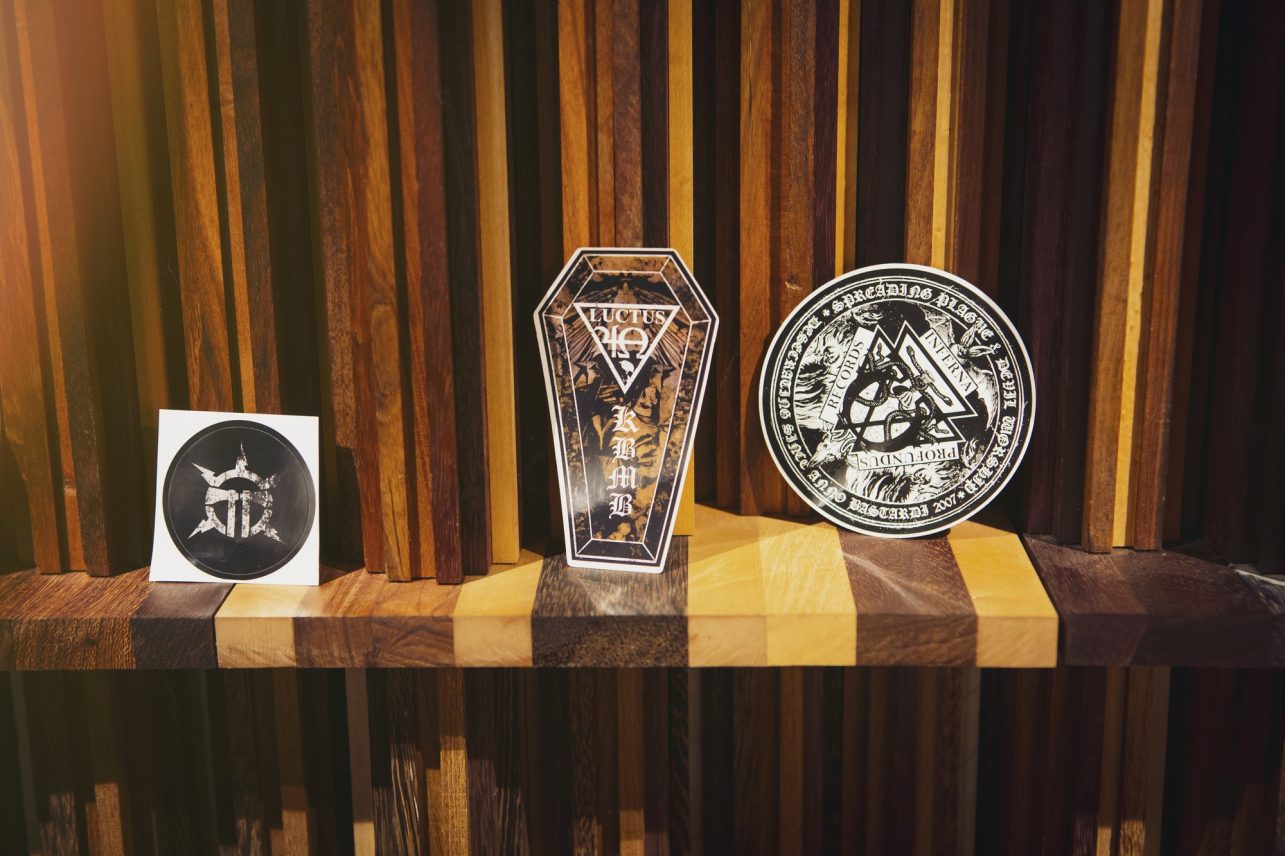
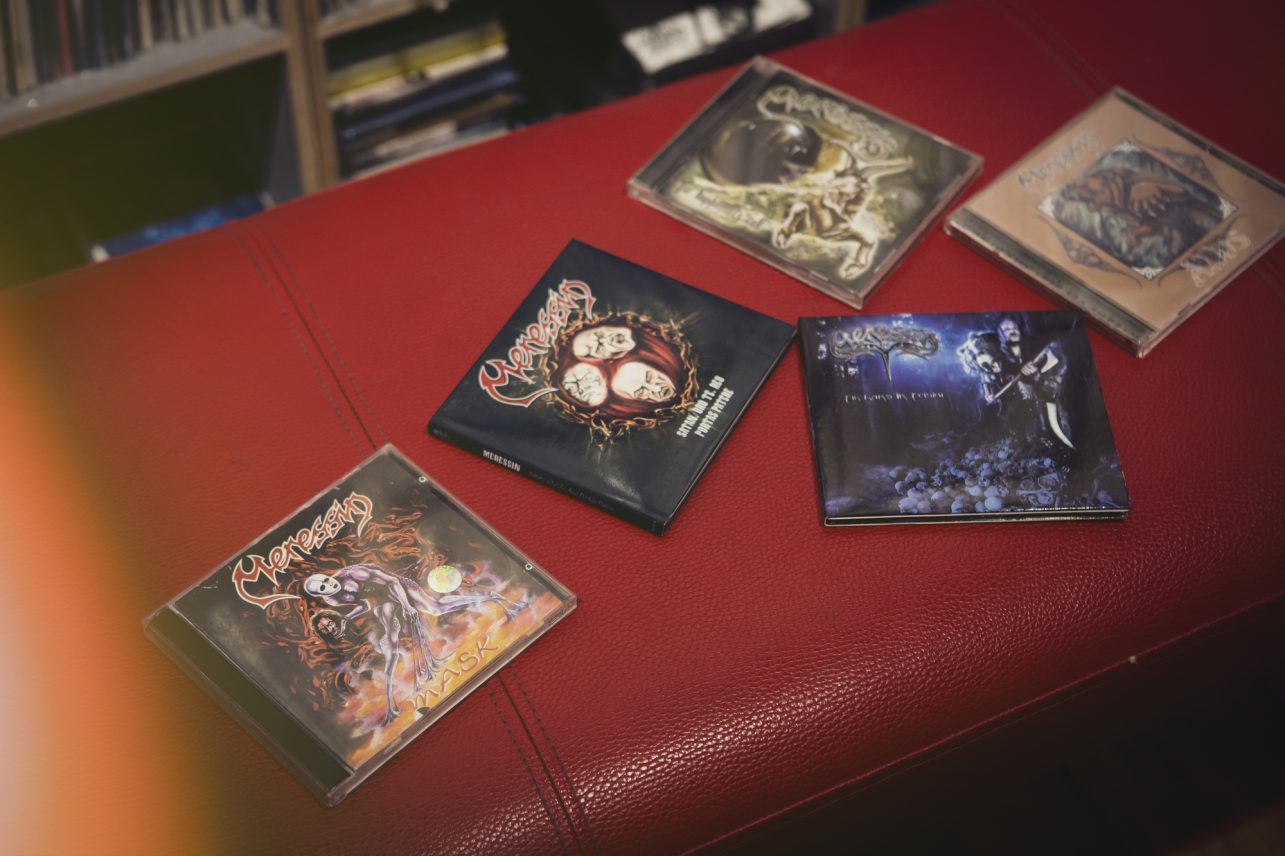
Although you aren’t a musician yourself, you take listening to music very seriously. Do you agree with the term ‘audiophile’, or would you describe yourself differently?
Audiophiles listen to their equipment playing, while melomaniacs listen to the music playing. I am somewhere in the middle. Both aspects are important to me. If I hear that it sounds bad, I simply cannot listen.
You have set up a special space for listening to music: a space, to put it mildly. There is a separate house in your yard. How did that come about?
At home, I couldn’t listen to metal, or any other music for that matter, a bit louder. My family wouldn’t tolerate it. That was the primary reason. The second was that I participated in various audiophile forums. In Lithuanian ones, the equipment itself is usually emphasised, but in foreign forums, more attention is paid to where that equipment is placed. The space has a massive influence on the overall sound. Therefore, even before I had very good and expensive gear, I built this cabin. Partly, it was also an attempt to show our audiophile community that even budget equipment can sound very good in a prepared space. I can even take a bit of credit for encouraging such a movement. Now, there is another cabin in Lithuania, almost a copy of this one, and several other private spaces that people have specially equipped for listening to music.
What proportion of your library is metal, and what proportion is other genres?
Metal and its various offshoots, in other words heavier music, make up about 20 per cent of my collection. Two shelves are dedicated to it: just over a thousand vinyl records and a fair amount of CDs. I try to support the Lithuanian scene as well, buying almost everything heavier that is released.
Can metal generally be considered an audiophile genre?
Audiophilia and metal music usually run parallel and rarely intersect. One reason is that there aren’t many truly audiophile recordings in this genre. For metalheads, creating a recording where you can hear all the fine nuances, instrument positioning, depth, width, and resolution is often not a priority. There, the most important things are energy, heft, sound, and power.
Does metal reveal itself differently when listening through a high-end system compared to standard equipment?
Audiophile equipment is usually domestic, often with valve amplifiers that add softness to the sound. And metal doesn’t really need that at all. Reproducing this music through domestic systems is quite difficult. It sounds best through blunt and insensitive speakers, driven by powerful amplifiers in some large hall or stadium. Although, as I mentioned, there are exceptions.
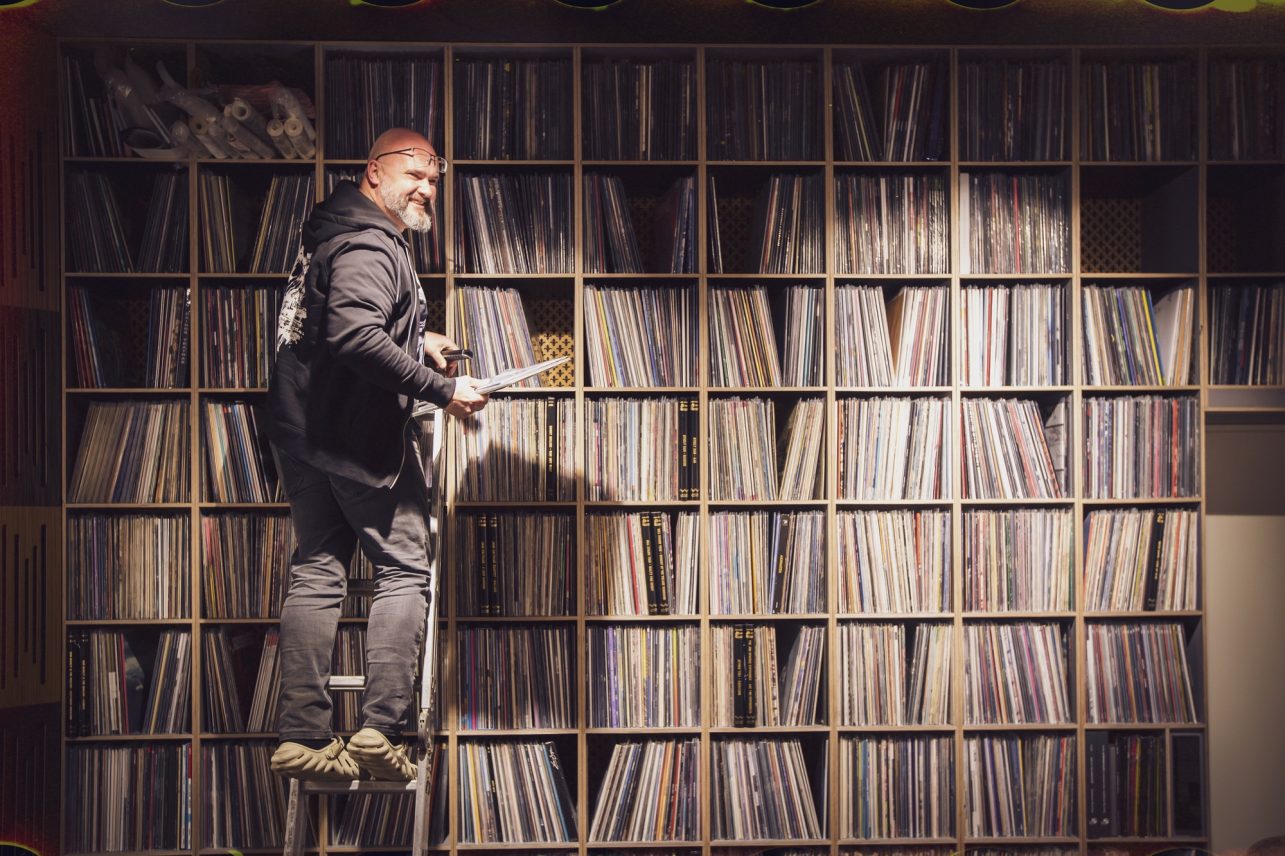
Listening sessions and equipment testing take place in these ‘prayer houses’ of yours. Does metal ever feature in these sessions?
Yes. I keep those recordings separately, not on the shelves we discussed. Rarely does anyone ask to listen to them, but sometimes I show them myself how a particular recording can sound.
Listening sessions go like this: in the beginning, we listen to quiet things related to micro-dynamics, which gradually get louder. If you start with a high volume immediately, neither the mind nor the ear will register all the audiophile nuances. I have a certain standard set. I start with subtle recordings and move towards higher volumes. At the end, if people want, I always turn on something heavier so they understand that it’s not just bells or a couple of jazz instruments that can play well.
If you were fourteen again today, is it likely you would discover metal all over again?
I think so. Because even today, there is plenty to resist. That desire to oppose would inevitably lead to the alternative side one way or another. With my current experience, there wouldn’t even be a question; I would know what to listen to, what to skip, and where it is worth delving deeper. Especially since everything is much more accessible for today’s youth. The number of concerts is astronomical compared to my day.
What, in your opinion, is it about this music that makes it keep returning to your life?
In other genres, I find less of what I call the otherworldly. Things that force you to think and feel deeply, darkly, sadly. The music awakens an emotional and philosophical core; it draws out what you have hidden away. Not necessarily good things, but it helps you experience them. Of course, one can experience that with other music too, but here it is probably due to a certain attachment.
Is metal more about nostalgia for you today, or is it still a living field of discovery?
There are discoveries, and each of them brings joy. But one must admit that the feeling cannot be compared to what you experienced for the first time in your youth. Those first listening moments are etched very deeply. New talents emerge and you rejoice in them, but it is still a different emotional reception than back then. Although you still experience joy and a thrill; you discover new bands, new styles, new harmonies. Everything is alive, nothing stops. And, I believe, it won’t stop for a long time to come.