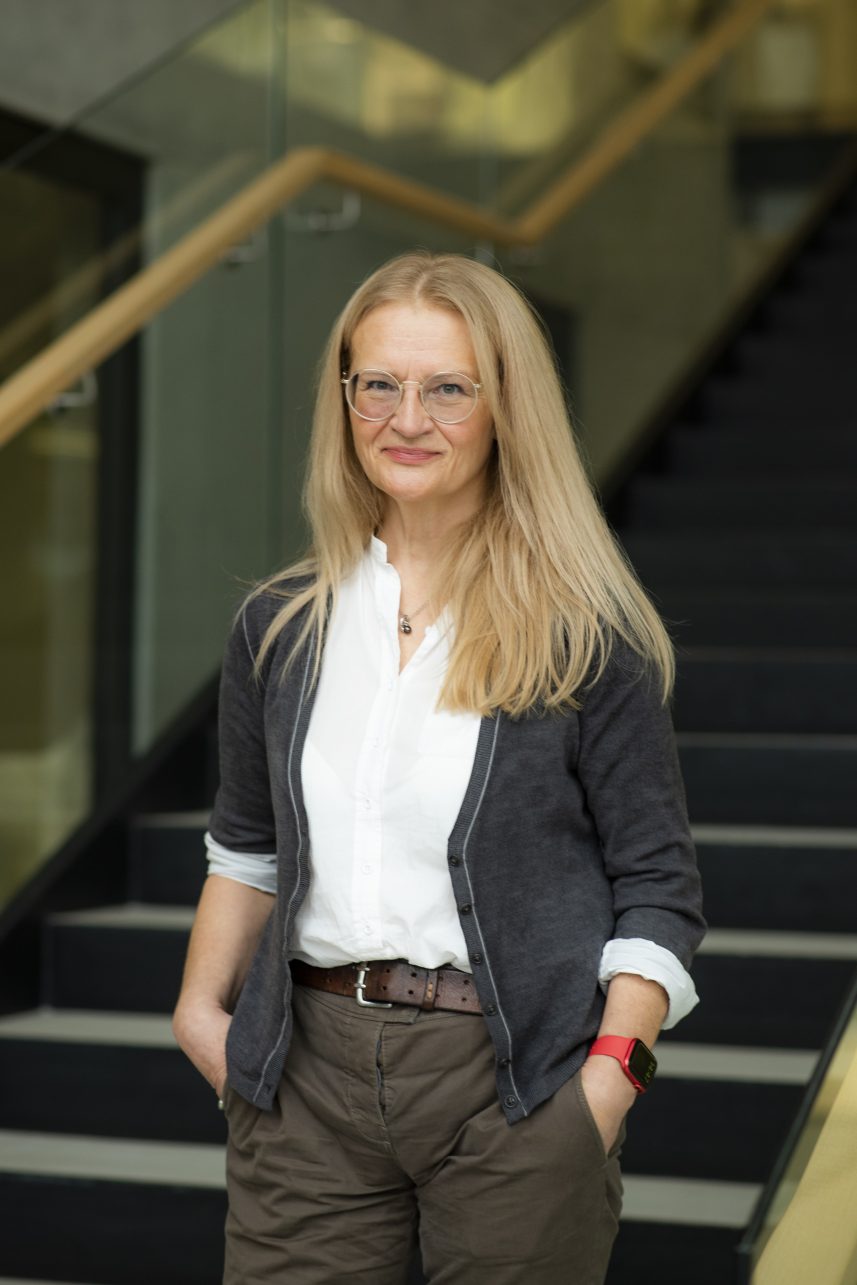
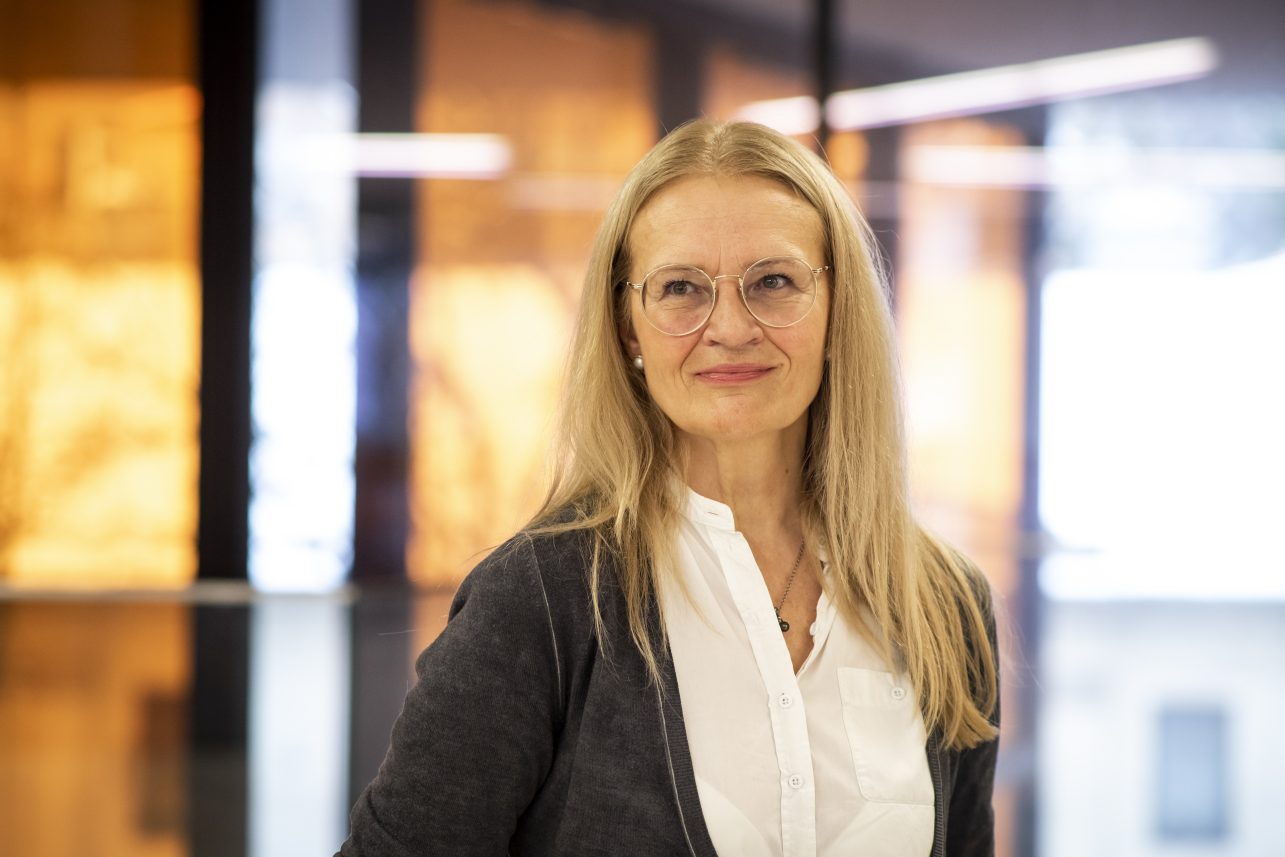
As we sent this issue of ‘Kaunas Full of Culture’ to print, those of us who care for the defence of free speech once again gathered in Vilnius, this time in Cathedral Square. We have not forgotten, we have not been distracted, and we seek no excuses: the free word is vital, and its importance only grows. On the eve of the Lithuanian Press Restoration, Language and Book Day, we discuss the dangers of losing that free word with Vytautas Magnus University professor, researcher, and media critic Auksė Balčytienė. Throughout our conversation, three words recur like a guiding wish: transparency, courage, and openness.
This issue of ‘Kaunas Full of Culture’ is dedicated to the free word: today, we are taking to the streets for it once again. Why, after three decades of liberty, have we returned to a point where society must defend independent media?
Democracy is a project with no final end point. It is a process in which freedom of speech allows an individual to feel valued. By being able to express our thoughts, we discover our identity, find the courage to verify reality, and grow by hearing others. This is of vital importance to education, the media, and politics alike.
Why is this happening now? Such processes can recur at any time. Observing the discourse surrounding the Lithuanian National Radio and Television (LRT) amendments, we see root causes that essentially remain unresolved. One of these is the desire of those with greater power to conceal their true intentions. When something is withheld, conflict arises because society senses a lack of truth. Political authorities always have an interest in controlling the public service broadcaster, but we are currently seeing a particularly blatant desire to control its content.
This poses a danger to the public interest. LRT should be a mirror reflecting the maturity of the citizen, not a tool of political power. Content is the responsibility of journalists, and when politicians attempt to invade this territory, the gaps in our democratic culture become apparent. Many parties are involved in this process: politicians, the public, scientists, and commercial media. All of them should declare their interests transparently.
Civil society and journalists do so, yet large-scale media businesses remains less transparent. In the age of technology, it is difficult for commercial media to survive, and support is necessary. However, democracy requires both: a strong public service broadcaster and a strong commercial media sector. By proposing amendments that would direct LRT to serve the Government or ministries, business managers only divert attention from fundamental problems. The function of a public service broadcaster is not government communication. It must remain an independent enabler of the culture of the word and a leader in this sphere.
What does freedom of speech mean to a person who never thinks about it? Is it an individual value, or a specific safeguard ensuring that a person receives the facts about their city and country?
Looking from the outside, this situation may seem overly specific, but we are all participants in it. We delegate our right to know to journalists and legislators because we cannot all gather and debate at once. Thus, we must trust them.
Nevertheless, when events become too technical or trivial, the average person begins to wonder: ‘Is this about me?’ Many dismiss political peripeteia because trust in politics is low. Here, we encounter our political culture and our ability to take an interest in our surroundings.
One reason is the lack of interest in state governance, which begins as early as school. Young people often do not even know what a public service broadcaster is. In their families, the television is no longer turned on, and news is sought on social networks, meaning the close connection with media processes is fading. For the older generation, watching the news remains a ritual, yet few stop to think how the public service broadcaster differs from commercial channels. LRT is not just another channel; it is a system of national informational resilience, guided by specific ethics and a mission. If this system weakens, we all become vulnerable.
Society still lacks this understanding. There is too little comparison of what constitutes quality journalism, and furthermore, we have yet to solve the issue of building trust. Trust in institutions, from schools to the media, has been shaken. We lack the ability to admit mistakes, correct them, or resign on principle; such actions have not yet become the norm.
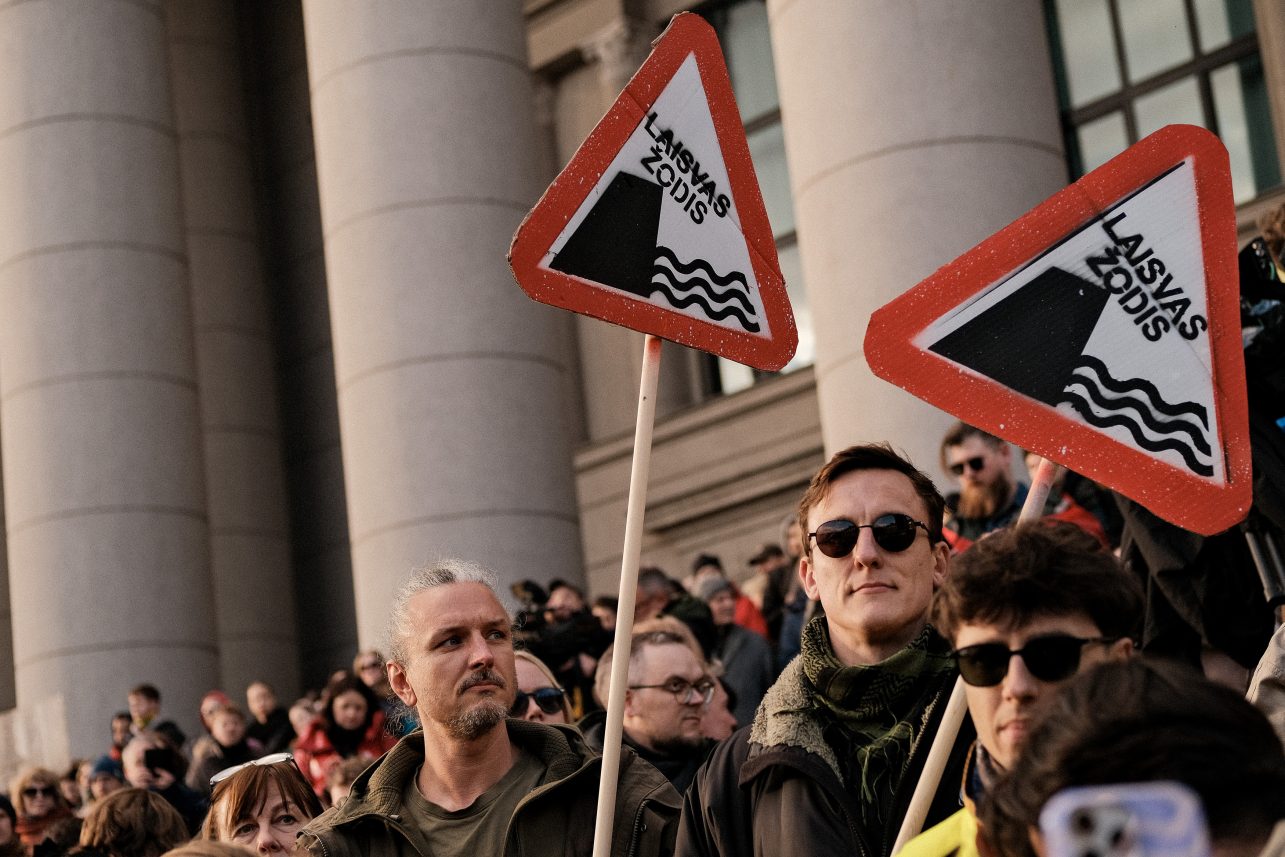
We are still learning democracy: how to communicate transparently, discover our identity, and not fear the free word. Life is a process of self-correction; everything can be mended by admitting that you were wrong. In our culture, there is still too little courage to be open. A free word means that a person is not afraid to express a thought, believing that others will respect it rather than ridicule it. These are communicating vessels. The cultural protests showed that change is possible when people stop being afraid. I believe that as knowledge increases, a positive breakthrough will also occur in the field of media.
We see that even warnings from the Venice Commission, the highest arbiter of democracy in Europe, do not serve as a benchmark for those in power. Does this mean that protests are the only remaining solution?
That is a very good question. Perhaps protest is not the only way to react to this situation, but I believe we first need to learn to hear one another. For that, openness is essential.
A protest is, in itself, an open and transparent form. Through it, we can act, change the situation, and reach an agreement. Similar upheavals are taking place in other European countries. It is always necessary to state openly where dissatisfaction arises, as it signals unmet needs. Why are the cultural community, journalists, and the public protesting? Because they feel unheard.
In the case of Finland, commercial media broadcasters felt a threat to their business survival. Technological change, difficulties in attracting advertising, or earning from subscriptions created great tension. The essence of the conflict is simple: historically, public broadcasters grew in the spheres of radio and television, but with the advent of the internet, social networks, and platforms, they became ‘universal media’. Today, a public service broadcaster is simultaneously a cinema, an educational project developer, a research centre, and a news portal. Such a scope did not exist a few decades ago.
Naturally, the public broadcaster becomes a direct competitor to commercial portals. In Finland, after difficult negotiations, an agreement was reached: the public broadcaster limited its written activity online. It transcribes radio programmes, but no longer creates entirely original textual content. This created more space for media working in the press sphere, which is also developing online. The agreement happened only because the parties were able to openly express their needs and understand each other. When you understand another’s needs, it becomes easier to concede or withdraw.
In Lithuania, I do not see this transparency. I see only proposals that mask the essential core of the conflict. The narrative that the public broadcaster is expanding at the expense of commercial media is distorted, yet very convenient for politicians. When media business power and political power wishing to have its own ‘voice’ meet, this alliance becomes impenetrable.
In today’s information flow, commercial media fights for ratings, while public media fights against politicisation. If the LRT amendments were adopted, would there be any space left for the free word in Lithuania, and what would it look like?
It would be a very difficult scenario. From the perspective of commercial media, the individual becomes merely a pure consumer whose attention is paramount. And attention is best captured by things that sow fear, but do not solve problems or explain the situation. They simply aim to maintain high ratings, and once involved in such a race, the desire is to raise the bar ever higher. This is indeed a dangerous area.
If the bleak scenario were to materialise and the LRT amendments were adopted (though I still hope that common sense will prevail, as I see certain signs of rational withdrawal), the situation for the average person would become lamentable. If the public broadcaster were to turn into a mouthpiece for political power, it would be a massive mistake.
We often talk about the case of Hungary. It all started with the public broadcaster, and later political control expanded to universities: someone did not like the study programmes or the people working there. Later, it reached the theatres: directors who were previously elected began to be appointed. Institutions were created to monitor, report, and demand constant accounts and documents.
In Hungary, over sixteen years, a system has been created where non-governmental organisations only function if they receive government funding (so-called GONGOs: government NGOs). This is a direct extension of government and political influence in all areas: business, media, academia, and the NGO sector. Is this what we want? We must take an interest in this and understand that such processes are happening right next to us. The Hungarian example shows that resistance to such a system begins with citizen activity. Activism has great power, because the individual and the free word are a force capable of changing processes.
The example of the USA shows that when the media is ruled only by the market, society splits into warring camps where little common truth remains. The concept prepared by you and a group of experts suggests including a Citizens’ Assembly in the management of LRT. Is this your answer to increasing polarisation?
A Citizens’ Assembly would serve as an advisory voice to the Council, allowing people to feel that the broadcaster represents their interests. This format is successfully employed by the European Commission when addressing complex issues. The most important aspect here is the lottery principle: participants are selected by lot from various regions and age groups, and the process is moderated by professionals. This is not a chaotic gathering, but rather a structured way to involve the public in decision-making. It would help people understand how quality journalism operates and would encourage citizenship throughout Lithuania.
When I discussed this idea with fellow academics from Finland, they appraised it highly, viewing it as a novel and unheard-of solution. This thought was raised in discussions by our colleague, the legal scholar Donatas Murauskas. It also confirms that taking to the streets with posters is not the only way to act. If we are able to identify the essential problem, we can also find a solution.
I always say: when you understand where the problem lies, you can already celebrate, because you know what to do next. The hardest part is the period when you feel that something is being withheld or the narrative has been constructed incorrectly, but you cannot name why. The involvement of citizens would help to regain that transparency.