While the pages of “Kaunas Full of Culture” may not often feature cultural phenomena from other countries, this story begins precisely in Wacken, a small German town that hosts the largest metal music festival in the world. From there, it travels to Girstupio Street in Kaunas, to the club Lemmy, arguably the city’s most consistently heavy-music-oriented venue, and then builds a bridge back to Germany.
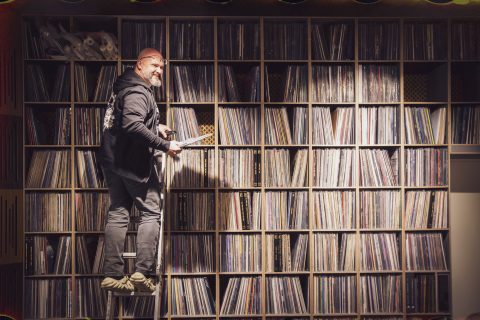
This April, our magazine takes the unique step of featuring the same person in two different articles: Darius Laurinavičius, also known as Šatras. He has been a part of the metal scene since 1988 and is known not only as the organiser of Wacken Metal Battle Lithuania and the guitarist for Luctus but also as the co-founder of the music space Lemmy. He has also been a member of the bands Smolder, Liūnuosna, XESS, Angis, Anapilis, IKA-e, Atvejis, Dreamland Poetry, and K.A.N.G.
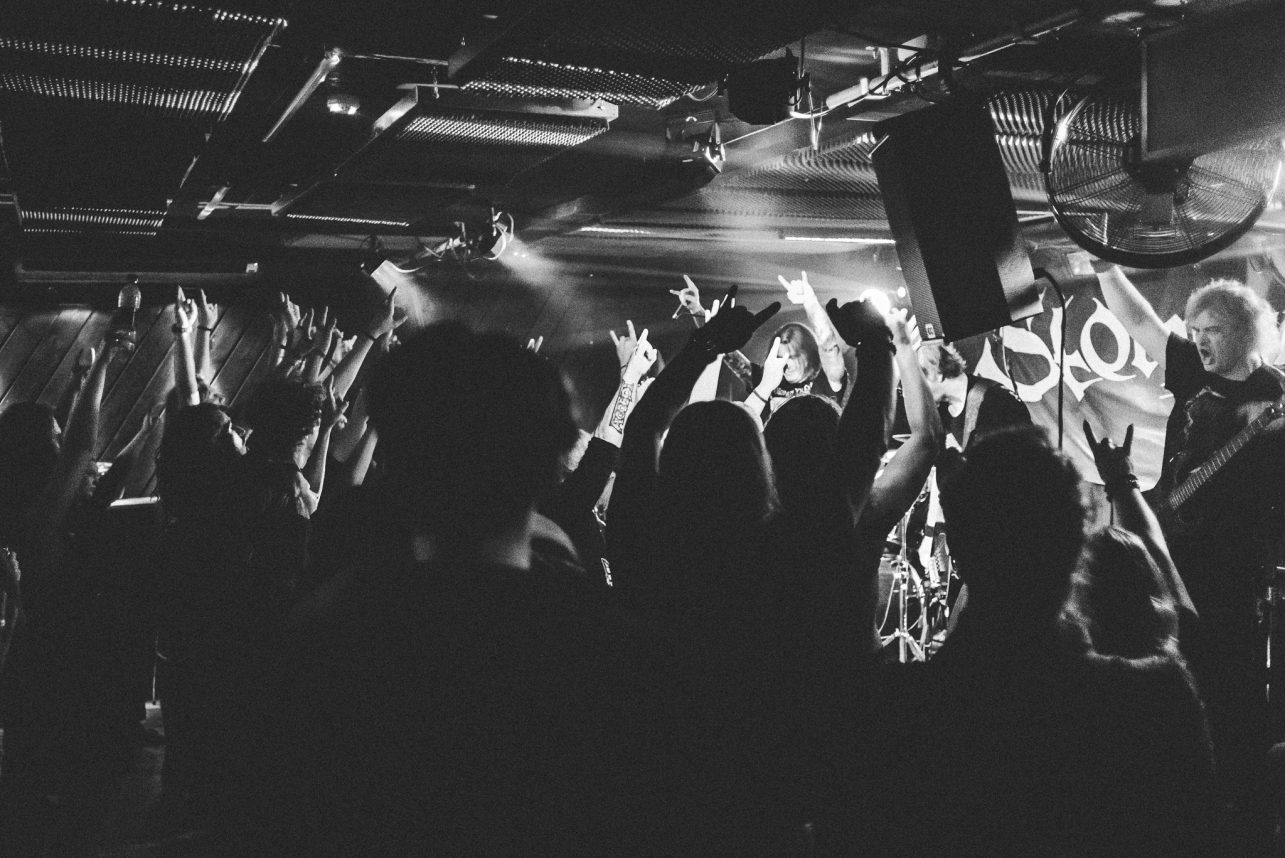
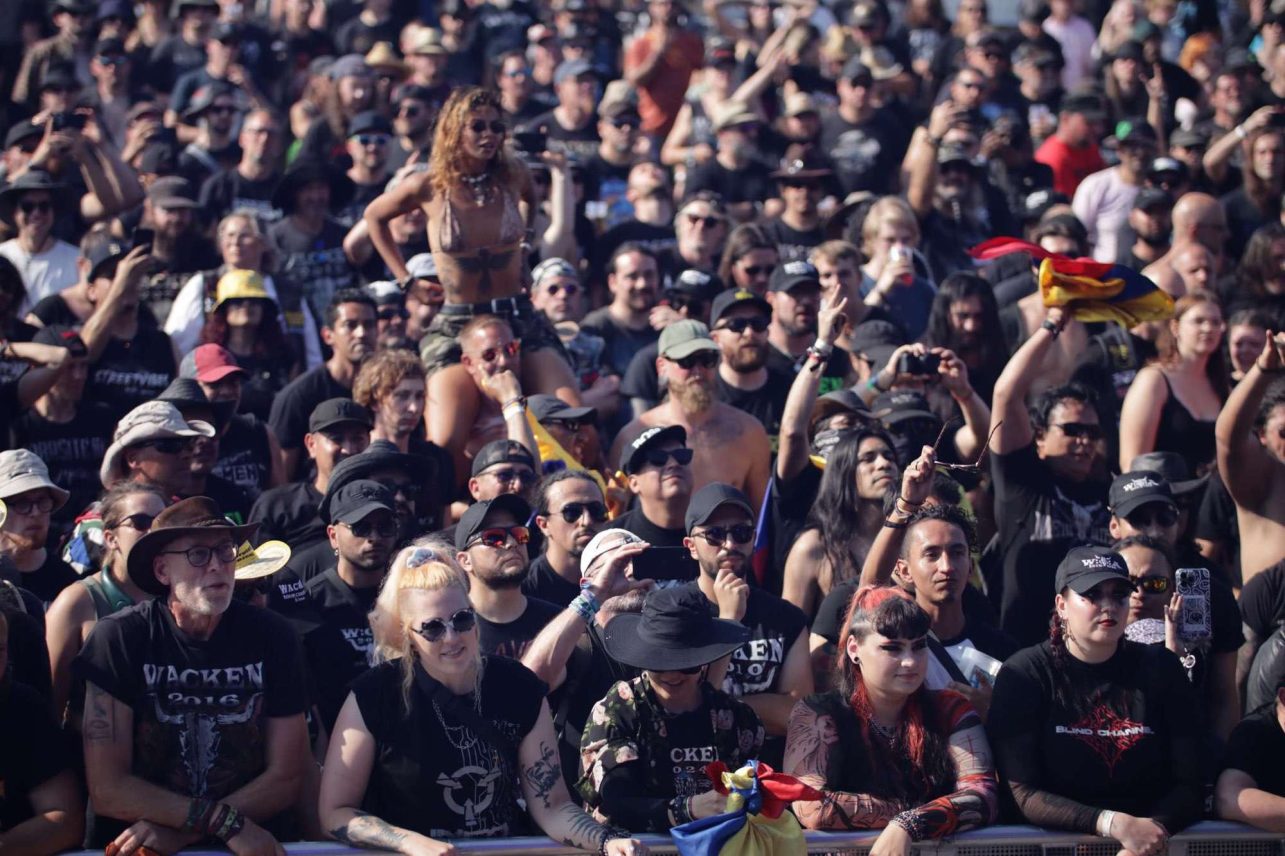
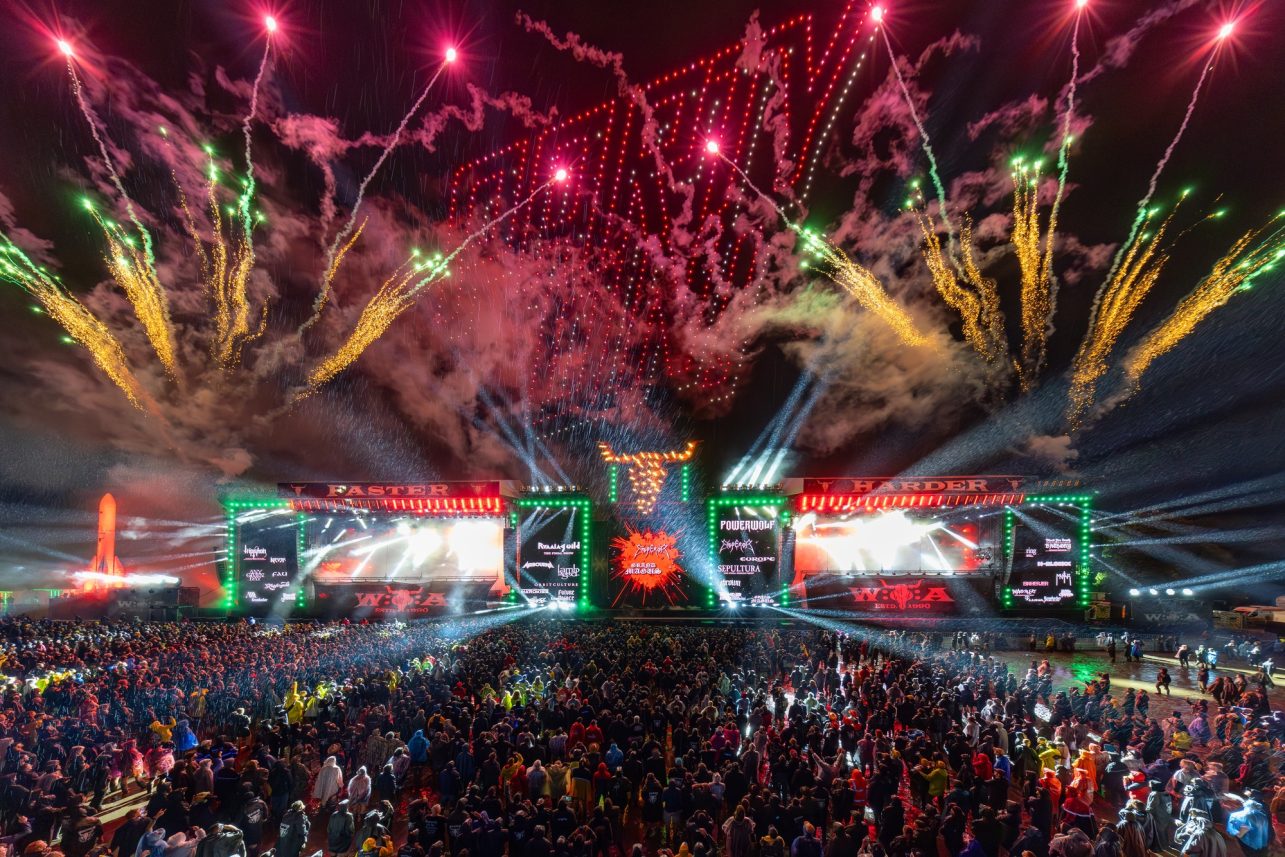
Wacken Open Air is not just a festival. It takes place in the Schleswig-Holstein region, in a village that normally has a population of 2,000 but swells to accommodate over 100,000 people during the event. Darius describes it simply: it is the world’s largest metal festival, not only in terms of attendance but also in the sheer scale of its self-contained, week-long ecosystem. People start gathering on Sunday, and the main concerts kick off on Wednesday. There are about ten stages, five of which are of a size that has no equivalent in Lithuania.
The main stages are reserved for the names a large part of the audience grew up with, from Iron Maiden to newer but already established bands. Alongside these, there is a “Viking” zone focused on the folk and pagan scene, and “Wasteland”, a territory with post-apocalyptic aesthetics where people live among scrap metal structures. At the same time, the “Metal Battle” stages feature contemporary bands, from alternative acts to the latest names just breaking into the main halls.
For Lithuanian bands, Wacken Open Air is not a festival you can simply “sign up” for. The only way for our musicians to perform on this stage is through the “Metal Battle”. It is a kind of metal “Eurovision”, not in terms of aesthetics, but in its operating principle: each country selects a representative, and they all meet in the final in Wacken. Around 100 countries participate, with about 30 bands playing in the final, so there is a rotation system: some countries one year, others the next.
Lithuania on the Metal Map
The first whispers about the festival in Lithuania were heard even before Darius visited. The portal “Ferrum” used to write about it; people would go and produce reports. Darius remembers reading about a crowd of 12,000, which seemed like a lot at the time. Today, the scale is different. Wacken started in 1990 and remained a local event for a long time, especially after the first wave of major European festivals subsided. The turning point came around the year 2000, when the event began to expand not only in size but also geographically.
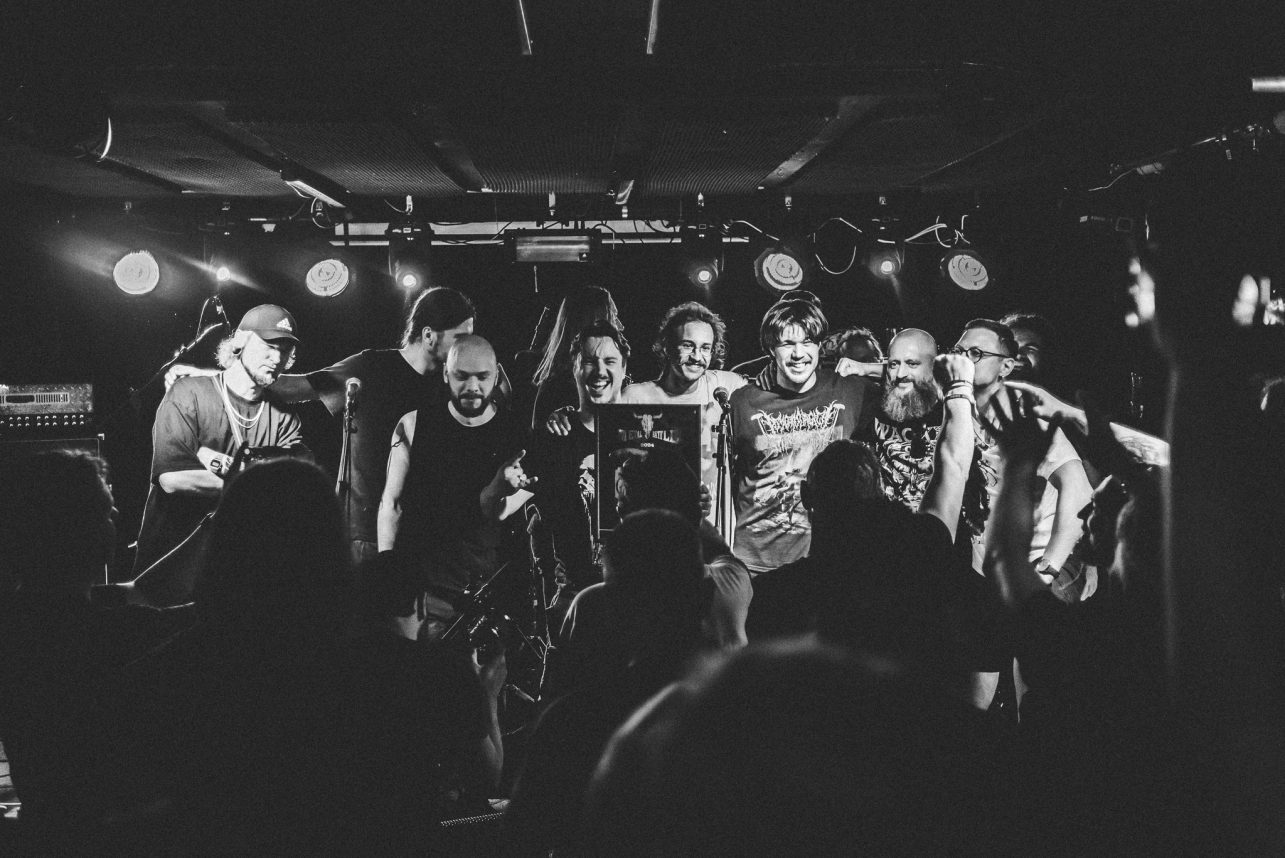
Darius first went to Wacken in 2008. His first impression was overwhelming; his “eyes were this big”. In 2009, he got involved from the inside, becoming a member of the Lithuanian “Metal Battle” jury. Everything evolved organically: from Romanas, one of the initial driving forces, the organisation was taken over by ALT Events (the organisers of the “Velnio akmuo” festival). However, over time, their enthusiasm began to wane. Darius, together with the club Lemmy, decided to take the helm, realising a simple truth: the metal scene in Lithuania is small, there is only one platform to enter the global context, and if it disappears, so will the opportunity.
Preparing for Battle, All Year Round
The “Metal Battle” takes place almost all year round. In larger countries like the US and Canada, regional tours are organised across states. In Lithuania, every year we are in the rotation, about twenty applications are collected, which accurately reflects the size of our scene. In Indonesia, there can be as many as a thousand applicants.
The first step is the music itself. If a band sends only a description without any recordings, there is nothing to evaluate. Darius notes that if a band cannot handle deadlines or a basic introduction, it is unlikely to cope on a larger scale. The jury is composed of people who have been active in the scene for decades: Daividas Kurlis (“Kilkim Žaibu”), Gedas (from the radio show “Audronaša”), and Ugnius Liogė (“Mėnuo Juodaragis”). Each year, they are joined by new voices from the younger generation.
Four bands are selected for the national final, where it is no longer about what is on paper, but what happens live. The audience’s vote is also important, now equivalent to the vote of one jury member. Bands such as Mandragora, Kielwater, Paralytic, Inquisitor, LaChudra, Juodvarnis, Phrenetix, Awakening Sun, Death in Taiga, and Griefgod have all passed this selection. The rule is simple: you can participate until you win, but many give up after their first unsuccessful attempt, unable to cope with the disappointment.
20 Minutes of Truth
At the international final in Wacken, a band gets just 20 minutes. There is no “just a little more”; if you do not finish your set on time, the sound is simply cut off. The same applies to setting up. If you waste time showing off, you cut into your own playing time. The judges see everything: how you get on stage, how you communicate with the sound engineer, how you handle your equipment.
The pressure is immense. In Lithuania, you might play to hundreds; here, you stand before thousands with a live broadcast to the whole world. Any technical failure must be solved on the spot. Although no Lithuanian band has ever completely fallen apart, the tension is palpable long before they step onto the stage. The environment adds to this. The legendary motto “Rain or Shine” is not a metaphor here. The schedule can change due to rain and mud, entry can be restricted, and sometimes bands play at night just to get on stage at all.
What’s the Point of It All?
Darius is blunt: performing at the “Wacken Metal Battle” does not automatically guarantee anything. It all depends on what you make of it. It is not just crowds that gather there, but the entire industry: managers, record labels, and festival promoters. The opportunities are on the table, but no one will discover you just for showing up. You can play your set, have a beer, and leave with a new entry on your CV, or you can be proactive, have promo material ready, and network.
The difference between bands that use this platform and those that just come to play becomes clear very quickly. The results usually do not come immediately and arrive through different channels. For example, after Wacken, Phrenetix played concerts in Israel and Spain, places where Lithuanian bands do not usually get to go. There are also official prizes: cash awards for the top places, and opportunities to perform on the organisers’ cruises or at winter festivals, but the competition is merciless.
The Festival Market
Today, Wacken Open Air is on a different level than most festivals. Smaller ones are now struggling or closing down, while the big ones like Hellfest and Summer Breeze are holding on, but changes are visible even there. There was a time when Wacken would sell out in a matter of hours; now, that process has slowed down. People have started to count their money and be more selective.
Wacken is a fully grown organism with incredible infrastructure. You will see beer pipelines running underground from the village to the festival grounds and other logistical solutions of staggering scale. When things start to get stuck due to rain or mud, the true face of the system is revealed. The weather is not an exception; it is part of the festival.
There is always a friction between commerce and the underground. Some say the festival has become too mainstream, but an event of this magnitude simply would not work without commerce. Nevertheless, beneath the main stages, another layer is always moving: the bands that are constantly changing and keeping the scene alive. For Darius, Wacken has become a home, and the massive crowds do not bother him; they are part of the experience.
This year, the festival celebrates its 35th anniversary. The occasion will be marked by 35 concerts in different countries around the world at the same time, and Lithuania is part of this global movement. If you want to see what the fight for a chance to get to this metal mecca looks like, you are invited to the Wacken Metal Battle national final on 18 April at the club Lemmy (more information).