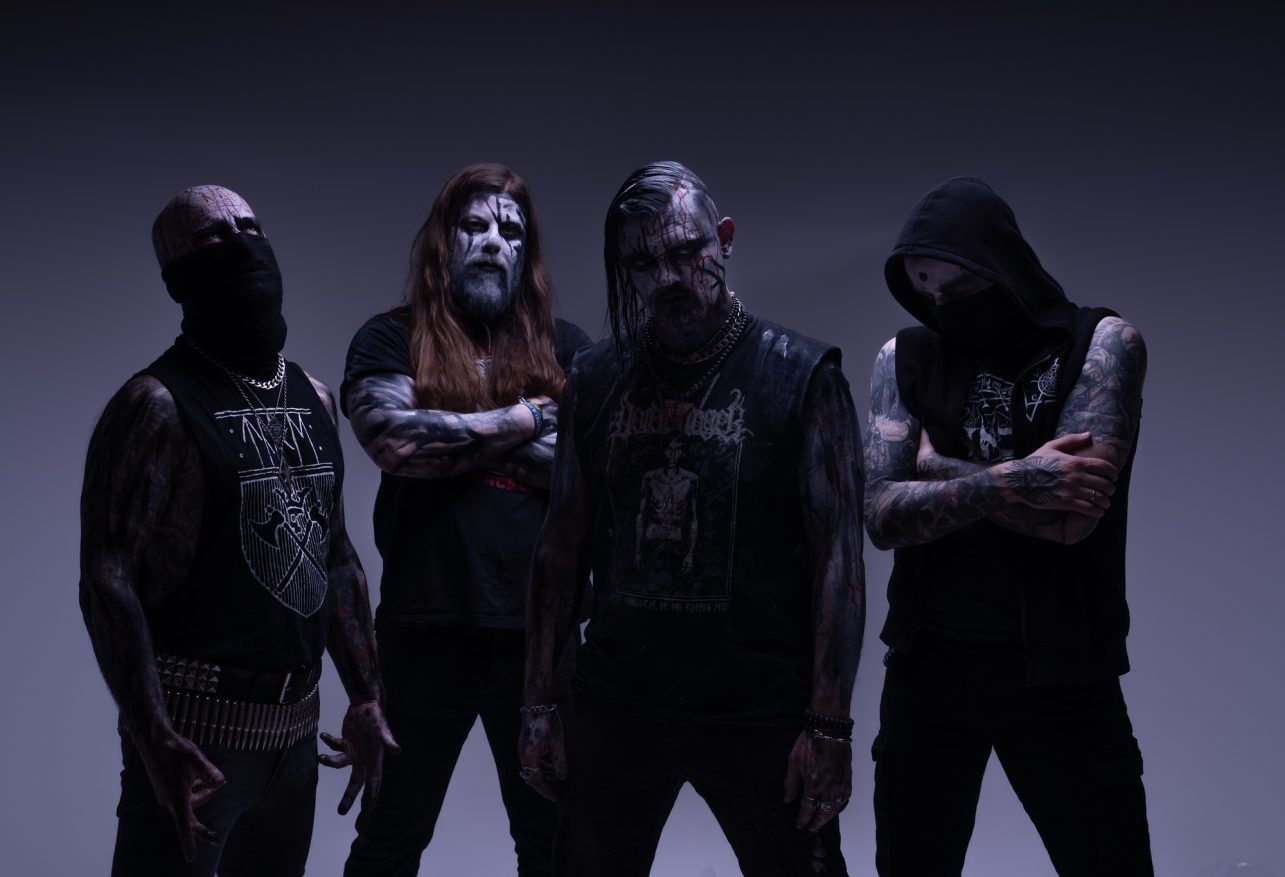
When I interviewed Simonas Jurkevičius about being a guide a few years ago, I knew that the time would eventually come for a conversation about his band Luctus. Some time had to pass, but I swear that even before the M.A.M.A. awards, my colleagues and I had already decided that this April issue would be dedicated to metal.
On a late March evening at the “Vingiu Dubingiu” pub, three of us sat down: Simonas, Darius Laurinavičius (whom everyone calls Šatras), and myself. Before reading further, turn on some of Luctus’ music. We didn’t talk deeply about the black metal sound itself, but it’s best to hear it for yourself. I would start with the track “Audra slenka virš miesto” (The Storm Approaches the City) from the album “Stotis” (Station).
Although Luctus call themselves a Kaunas black metal brigade, exactly half of the band members, Dovydas Auglys and Milein B. Schulze, live in the capital, where everyone rehearses. The relationship with the urban environment is one of the axes of this conversation. Another is loyalty to one’s ideals. But I know many are curious: why go to a music awards ceremony if, after winning a statuette, you raise your middle finger to the “dressed-up corpses”? And is being mentioned on news portals actually a goal for Luctus?
(Text published in the April 2026 issue of the magazine “Kaunas Full of Culture”, theme “Metal”)
Darius believes everything about that event and the attention following it is fine: “When the M.A.M.A. association announced there would be a metal category, it felt natural for us to be part of that world. We would feel bad if we, as representatives of the scene, added nothing of our own, leaving us only to feel secondhand embarrassment that everything is wrong again.” Simonas clarifies that it would have been even worse to allow a false stereotype to take hold: the idea that today’s Lithuanian metal is “correct”, convenient, and accessible. Such an image would have been a true defeat.
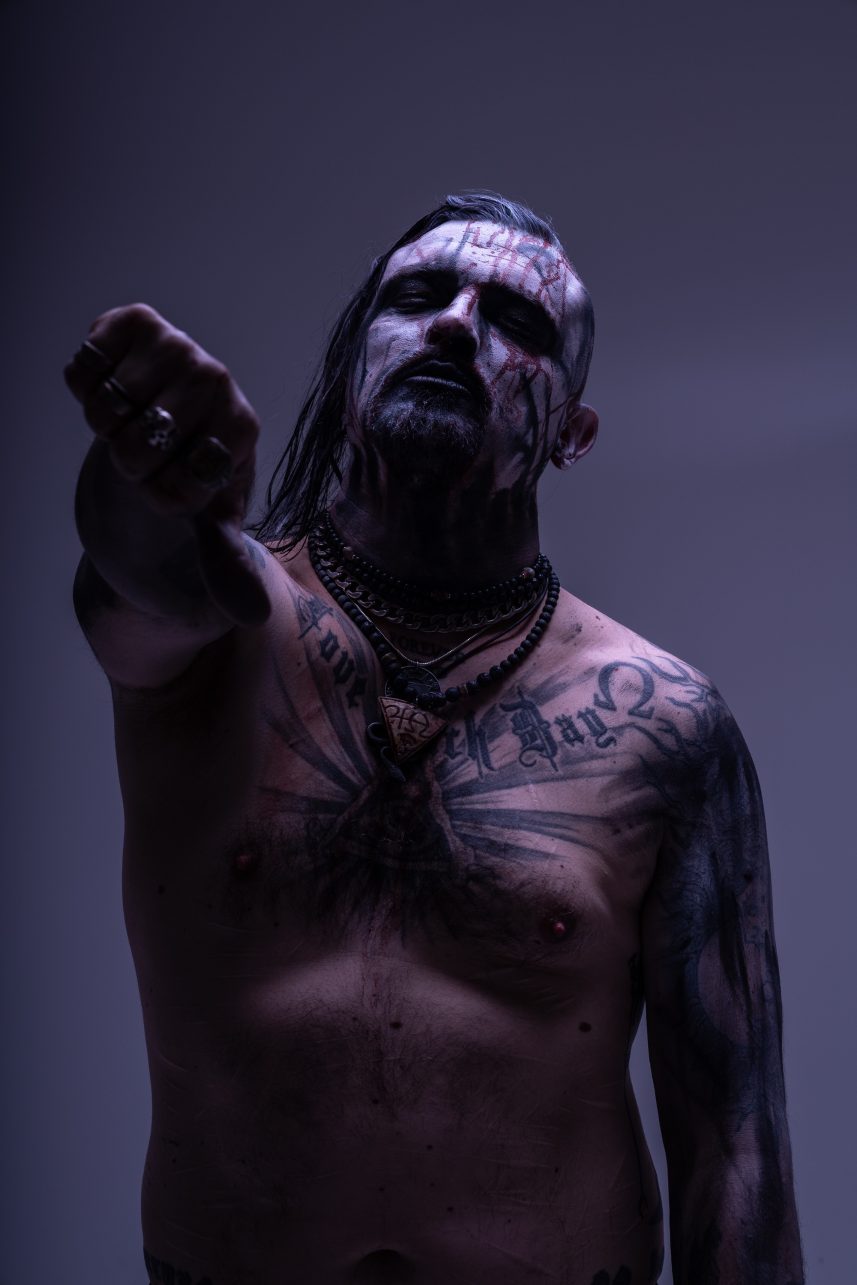
“We often talk with some bitterness about how in neighboring countries, metal music is a cultural and artistic phenomenon. Before it becomes heritage in Lithuania, we’ll need to show a couple more middle fingers on live television. If we don’t go, someone else will; if we stay silent, others will speak for us. So we chose to go and stand our ground, but we didn’t expect to actually walk onto the stage,” they admit.
We agree that black metal probably won’t be played as background music for the evening news, but there are other examples of recognition. For instance, did you know that Norwegian diplomats study black metal as part of the country’s identity before going abroad? It’s an important part of Norwegian culture that foreigners are interested in. And Lithuanians want to be like Scandinavians, right?
Next is a discussion of metal as a gathering force. We often speak of rave and rap subcultures as relics of the past, worthy of museums. Meanwhile, metal seems, and sounds, alive, fleshy, and pulsating. Where does this vitality come from?
Darius agrees that metal has survived the rise and fall of many other subcultures, but each generation produces enough active, gathering people. He recalls the first wave, which didn’t yet have a clear format but produced bands, events, and radio or TV airtime. Then came the 90s era, the magical fanzine culture: there was a “metalhead” or two in every small town.
True black metal shouldn’t even be spoken to be real.
Another “boom” moment, when, in Darius’ words, one could have slipped on a banana peel, was around the year 2000. Pillars of the scene remained, such as the “Kilkim Žaibu” festival started by Daividas Kurlis in Joniškis, or the initiatives of Ugnius Liogė, which are supported by the new generation. This proves the scene isn’t living in the past. “In my view, every generation brings those who just look around and disappear, but the core gets sieved out. I often hear the question: ‘So do you make money from music?’ But I don’t live to make money from music. I am what I do; it’s in me, like bones, skin, muscle, and blood. It can be hard for people on the outside to grasp that.”
Simonas adds that subcultures are doomed to disappear because individuals no longer need to search for something to identify with, cultures come to the consumers themselves. “A young person sees a huge supply; they don’t have to search, they reach it easily, but they also let it go easily because they didn’t fight for anything. That identification is short-lived. But the advantage of metal is that as a genre, it has very strong canons that operate on the fact that this music isn’t created as a supply for a demand. Demand could non-exist, yet metal would still remain. You can’t say that about pop music, which is a job. It doesn’t matter if Lordi won Eurovision or if rock is back in style, waves always wave, but metal exists within itself, not because of external stimuli.”
Luctus turns 25 this year. Initially, it was Simonas’ solo project, which began while he was living in Italy. Current band members have their own responsibilities. Simonas is in charge of the idea, Darius handles the management, Dovydas looks after the technical side, and the Australian drummer Milein provides the good vibes. How has the band’s sound changed? Is it purer today than it was at the turn of the century?
“We were never the kind of band whose goal was to constantly surprise the listener, but we strive to improve technically,” Simonas says. Their latest album, “Tamsošviesa” (Chiaroscuro), proves the band is evolving while staying on its own path and maintaining its style. According to Darius, they’ve passed all the stages: from the euphoria of parties to the burden of everyday life. Respect for each other remains: “If everyone started pulling in their own direction, nothing would happen. We are a pack.” A Kaunas pack, right?
“Personally, Kaunas is like music to me. I am a part of Kaunas; I don’t feel that way anywhere else. It has rejected me and hardened me, and I found my place in it. I like, say, the seaside or Klaipėda, but Kaunas is in me,” says Šatras.
Meanwhile, Simonas’ life is full of Italy. He believes urban identity in creativity is inevitable: “As Bukowski said, the city is a poem, and the poem is a city. If Solo Ansambli sounds like Vilnius, then we sound like Kaunas, only a bit filtered through Italy, the Vatican, and Rome. Working as a guide, I see that most cities are just anthills, but Kaunas has a unique concentration of culture and history. Returning here after 18 years was like a night with an old lover: I understood what was real again.” The musicians note that in their album “Stotis” (Station), the city became the direct background and the band its characters: “Identity provides the strongest creative impulses.”
The challenge begins when you leave, where no one knows your name or status. There, the music is stripped naked.
Simonas is also an author, skilled with a pen and not afraid of long, engaging texts on social media. For instance, there was the great story about Luctus being deported from the United States. That tour didn’t happen, but essentially, Luctus can be called a well-traveled band. I wonder what that gives them.
“After the first tour, I joked: we left with milk moustaches and returned with beards,” Darius giggles. According to him, on tour, you test your friends in various situations, character traits emerge, and real opinions come out. It can strengthen a bond, but it can also break it. “By the third concert, we become like a single mechanism: we play automatically, but a deeper connection appears.” As the musician says, it doesn’t matter if 15 or 200 people show up, they come for you. However, Darius specifies that they travel less now because they don’t want to tour at the same level: “In my mind, that would be a step toward the band’s collapse because you’re not progressing.”
Simonas emphasizes that touring is like a dark room for a creator, where the music’s true face is revealed: “Playing in your own yard, like at “Lemmy”, is safe: everyone knows you here. The challenge begins when you leave, where no one knows your name or status. There, the music is stripped naked; only then do you see if your idea truly connects souls, if it works without the help of local context.” The artist talks about a baptism by fire: if your message is sincere, it will resonate anywhere; if not, the metal community will tell you directly, without plastic politeness or filters: “Unlike local stars who fill arenas at home but don’t risk being misunderstood abroad, metal doesn’t seek artificial validation. Such unpredictable external experience is a healthy shock for a creator, allowing them to finally clarify and understand what their music is saying to the world.”
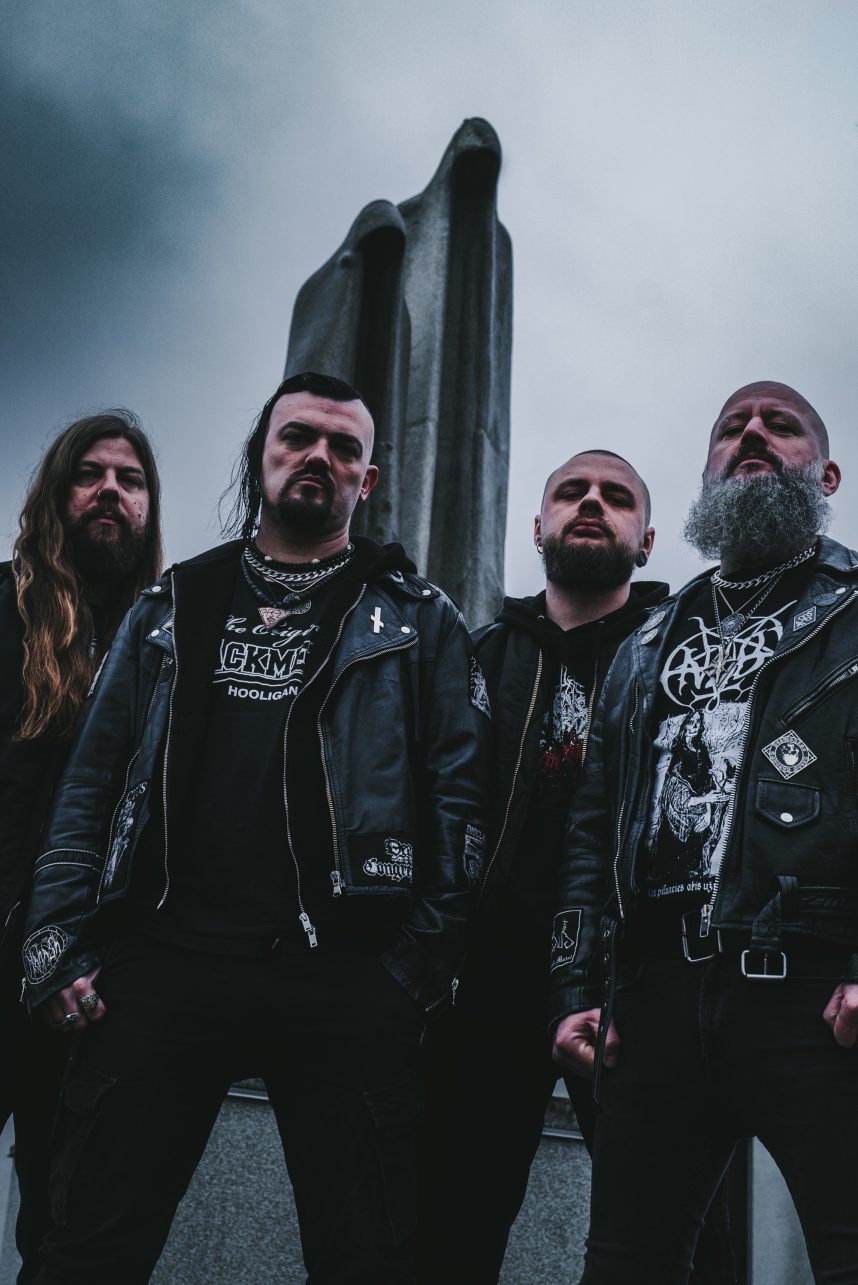
Now about home. On April 11, the band has a festival performance at “Daina” in Kaunas, and on June 12, a solo evening on the main stage of Lukiškės Prison. And here I must ask: who are Luctus’ fans today?
The musicians say it would be hard to paint a single portrait. Among those listening to Luctus are people of all ages, including those who don’t outwardly look like blackers. They mention a recent incident in Latvia, when they went to a bar after a concert in Riga: “We were greeted by a choir chanting ‘Thank you for nothing, f***! Thank you for nothing!’” Simonas also points out an elderly woman who discovered metal through her daughter and thanked him after a book presentation for making her favourite poetry sound new. “This is a medium where music is no longer just music, but an exchange of energy.”
Darius recalls another interesting case: “Once we met Džordana Butkutė (a Lithuanian pop legend), and she said: ‘You’re such nice, simple, warm people, and everyone thinks metalheads are beasts.’ In reality, it’s the opposite: pop stars sing about love but curse everyone out backstage. We have no need to turn our skins inside out. What we do in life, we pass on to the music.” Simonas agrees: “The power of metal is the courage to say what you feel, even if it’s the worst thing. You vomit it out. This creates a mechanism through which you cleanse yourself and become more conscious of yourself and your environment.”
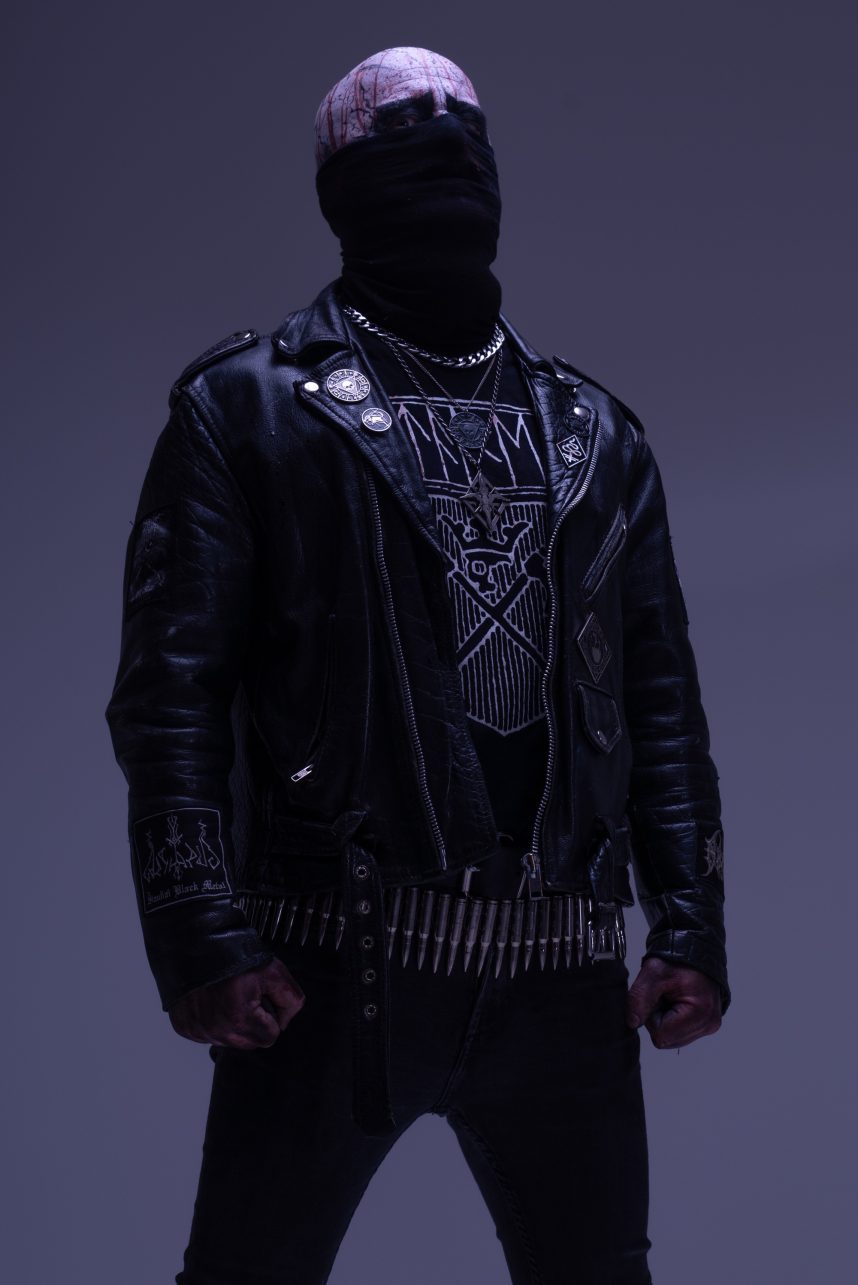
The planned 40 minutes melted away long ago, the crowds at the tables nearby change and get louder, and I realize we could meet the morning talking. We also discuss the image, which inspires admiration in some (and is therefore replicated in fast-fashion sweatshops) and fear in others. Both Luctus members arrived at the pub wearing bombers. Where are the leather jackets? How many are hiding in closets?
“Personally, I can’t have more than one leather jacket. It’s your skin, part of the code, a sacred object. You decorate it with symbolism you respect. It’s a manifesto you wear not to look a certain way, but to be,” says Darius. Simonas goes even further: “In 25 years, I haven’t thrown away a single one of my band shirts with my own hands. Of course, now it’s become accessible: you walk into H&M and see a Slayer or Metallica shirt. But if you don’t know their value, you just look like a form without content. True black metal shouldn’t even be spoken to be real.”