Tuita, tuita,
I was sent, I was sent
Tuita, tuita,
By my mother, by my mother
Tuita, tuita,
Is there a better way to begin your acquaintance with the sutartinės ensemble than with a sutartinė itself? The lines above come from Ilona’s favorite sutartinė and Ilona is a member of Kaunas Culture Center’s sutartinės ensemble named Sasutalas. Choosing a favorite was a difficult task for the singers because there are well over one and a half thousand sutartinės published.
Sasutalas is one of the longest running sutartinės ensembles in Lithuania. I came to meet this group at the Kaunas Culture Centre, their home, where the members and their leader gather to rehearse at the beginning of each week. I was welcomed by the group’s leader Andrius Morkūnas, singers Elena, Ilona, Daiva, and the youngest member of the ensemble, Daiva’s daughter, who is only just learning to walk.
Sasutalas was founded in 2008 by Andrius Morkūnas. “It wasn’t that we suddenly came up with the idea and immediately a new ensemble appeared. Earlier we had a folk music ensemble Gadula and Sasutalas actually grew out of it. Before the general Gadula rehearsal, we would gather for half an hour to sing sutartinės. There wasn’t much time, so if someone was late, we simply did not get to do it. Eventually we had an idea that we needed a separate sutartinės group with its own rehearsals and in the autumn of 2008, that’s exactly what we did,” Andrius recounts.
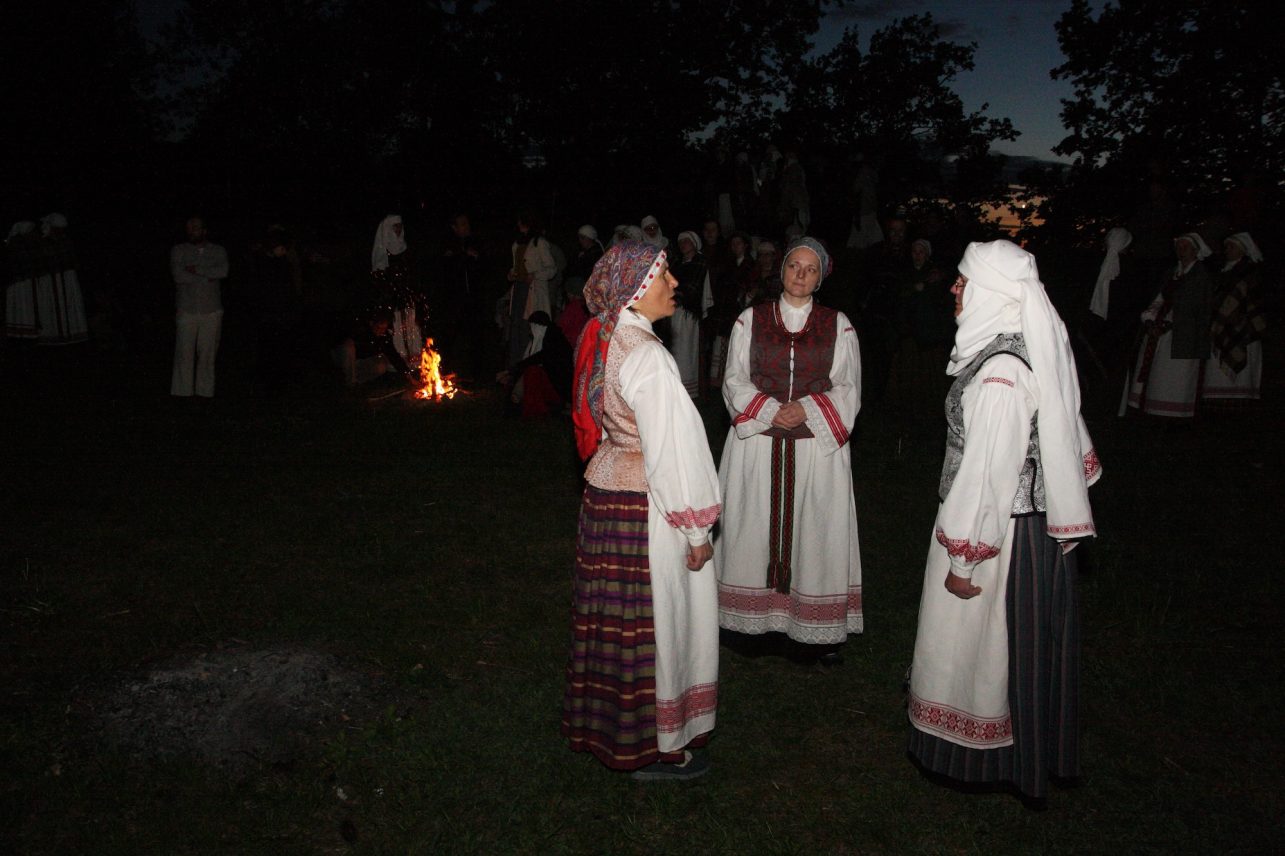
The core of the ensemble was formed by the sutartinės group from Gadula, later slightly expanded by other singers. The composition changed little throughout its existence – only a few members were no longer able to continue due to changing life circumstances. Currently, as Andrius jokes, “five and a half” members sing. One of them, being the leader of folklore groups herself, usually joins during concerts. Thus, the core of Sasutalas consists of six women and their leader. Folklore plays an important role in the lives of all the members. The singers each have more than twenty years of singing experience, and in addition to Sasutalas, Andrius Morkūnas also leads the folklore ensembles Gadula and Griežlė, the traditional country band of Vandžiogala, and works as an educational specialist of ethnic music at Kaunas Vyturys Gymnasium.
The Sasutalas singers’ group was formed before the Lithuanian multipart songs were included int he UNESCO’s Representative List of the Intangible Cultural Heritage of Humanity in 2010. It is believed that sutartinės (Lithuanian multipart songs) have originated even before the Christianization of Lithuania. Traditionally, sutartinės are most often performed by women, so the name Sasutalas (meaning “little sisters” in the Aukštaitian dialect) reflects old traditions, when they were sung by closely related women – members of the same family or neighbors who lived nearby and got along well with one another. The Aukštaitian name is also not random since nearly all surviving sutartinės were recorded in the Aukštaitija region. In music theory, sutartinės are considered a paradox, because combinations of dissonant intervals create harmony. Yet we can also speak about the magical effect of sutartinės. Andrius says that if a person with a headache is seated in the center among the singers, the headache often quickly subsides.
However, sutartinės can not only heal headaches but also make heads spin – often for life. What fascinates the members of the ensemble most is the authentic, old manner of singing sutartinės. Sasutalas deliberately does not seek to modernize the sound or adapt it to contemporary taste. According to the singer Elena, the most important thing is to continue the tradition and not to synthesize what is unique or wash out the essence of a still-living heritage.
When asked whether they ever feel the desire to create new sutartinės, the singers unanimously reply that these sources contain so many treasures that simply discovering and learning them all would already be a great gift. Elena shares that it is like touching what their grandmothers once created – the grandmothers themselves are gone, but their voices can still be heard. Daiva adds that sutartinės qiute often “show up” in everyday life situations, “You’re doing something and suddenly realize that everything is happening exactly like in the sutartinė you learned yesterday.” Although they do not create their own sutartinės, the ensemble admits that there is still some room for improvisation. “In one sutartinė there are the words: No one will sing like the girls of Plundakas. We adapted it so that we sing about the girls of Kaunas,” Andrius recalls.
The head of the ensemble notices that some of the notes in published collections of sutartinės were transcribed inaccurately; recordings often reveal that different singers performed slightly different melodies. For this reason, he encourages the women in his ensemble not to be afraid to improvise. While speaking about improvisation, Andrius pulls from the cupboard the “scripture” of sutartinės – Zenonas Slaviūnas’s three-volume collection Sutartinės. It contains nearly all known sutartinės. The surviving interwar period recordings of sutartinės have been digitized. They are stored at the Institute of Lithuanian Literature and Folklore and are publicly accessible on its website.
Sasutalas doesn’t accept new members, and for a reason. Andrius says that traditionally, sutartinės groups were small and fairly closed. It was difficult to join such groups, and because of their exclusivity, the singers were sometimes even called fairies. “We follow this tradition and do not accept new members. There is also a practical reason. If the group becomes too large, rehearsals suffer. In three-part sutartinės, for example, one woman starts to sing, then a second joins, and then a third. If six women are singing, the sutartinė doubles in length, rehearsal time stretches out, and the singers and their voices become tired. Moreover, all the current members are very experienced. When we do have to look for new people, I try to invite only those whose dedication and abilities I am certain of,” he says.
Several things are important when singing sutartinės: voice, hearing, and the ability to listen to others. Elena adds that timbre is also crucial, as it determines the harmonies and responding parts. Ilona admits that learning the lyrics of new sutartinės takes the most time, while for Daiva the greatest challenge is singing outside her own small group. “At events, people want to join in, to sing along, to learn. That’s very beautiful and communal, but the true state of a sutartinė emerges when you sing with your own, close-knit circle of women.”
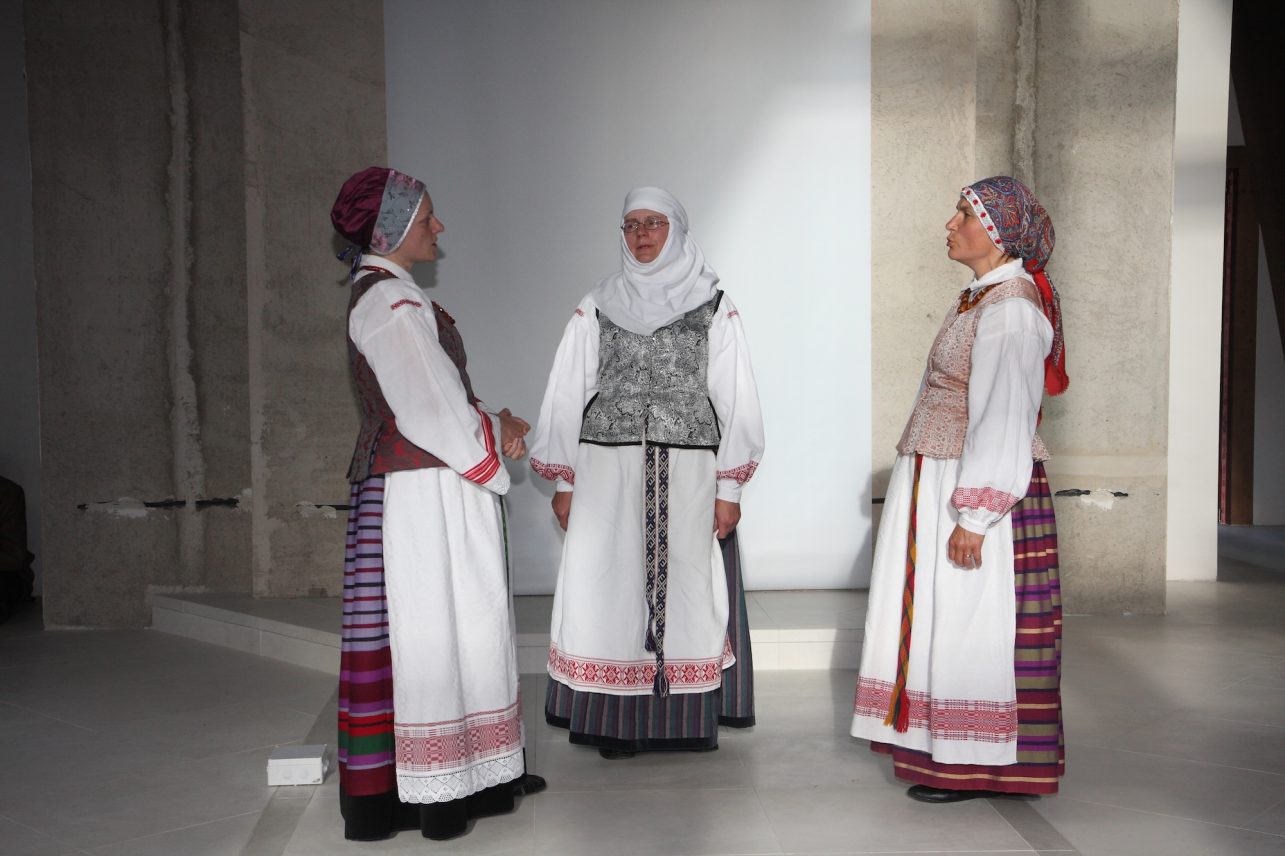
A significant portion of Sasutalas’ activities involves concerts. Some have become traditional – Sutartinių takas and Sutartinių ratas at the festival Skamba skamba kankliai. Sasutalas has taken part in it every year since 2013. Since 2011, the group has been participating in the Aukštaitija sutartinės festival Sutarjėla, which is held annually in a different town of the region.
The Kaunas Culture Center’s group of sutartinė singers, Sasutalas, participates in the Lithuanian Song and Dance Festival, various international, national, and regional traditional folklore events and festivals: Baltica, Lauksnos, Atataria lamzdžiai, the sutartinės’ marathon Suburtynė taking place in Kaunas, where sutartinės are sung around the clock. The ensemble can also be heard in interdisciplinary installations such as Skambantys raštai and SutARTinai, as well as in various collaborative projects. One of them, Ant sidabro tilto, together with Ilona Klusaitė and Petras Vyšniauskas, combines Lithuanian polyphony, Bach’s music, and jazz. I am not surprised to see an intricate statuette of a bird on the table. Sasutalas is the only sutartinės group to have been awarded the Golden Bird, given to individuals and groups who have contributed to national culture.
The friendship between the members of the group is long-standing and mature, lasting for over 18 years. Rehearsals, concerts, and festivals require a lot of time and energy, and each member and the leader have their own lives, families, and jobs. So, what keeps them coming back every Monday for so many years? Ilona and Elena smile and agree – it’s the leader.
“Andrius is the person who supports, connects, keeps us from straying, and constantly encourages us to strive,” Ilona says. But the singing experience is just as important. “There is structure, there is commitment,” Daiva explains. “You know the others will come, so you come too. I’ve loved singing since childhood, and the folklore ensemble became the space where I could do that. Through it, I discovered tradition and wisdom. Concerts and festivals are inspiring as well – we get to visit villages where sutartinės were once recorded and hear stories from living memory. Even if there were no concerts, it would still be good to come and sing within our own circle. When we do, everything else fades and disappears, and only the sutartinė remains.”
After this thought, I ponder that Daiva is passing on the tradition to her daughter in the most beautiful form – directly through songs, bringing her to rehearsals. I wonder whether the youngest member of the ensemble has heard more sutartinės or taken more steps while learning to walk. I tend to think it’s the former.
The women are already rising from their chairs and gathering in the middle of the studio – the rehearsal is about to begin. Each Sasutalas singer has “her own” sutartinė. As Andrius explains, a singer begins to lead “her” sutartinė, and the others join in, sometimes even without knowing the words. With a bit of practice and familiarity with the melody, it is possible to sing even without knowing the lyrics. In four-part sutartinės, two pairs sing: one singer from the first pair sings the main lyrics, the other sustains a constant accompanying refrain, and the second pair repeats everything.
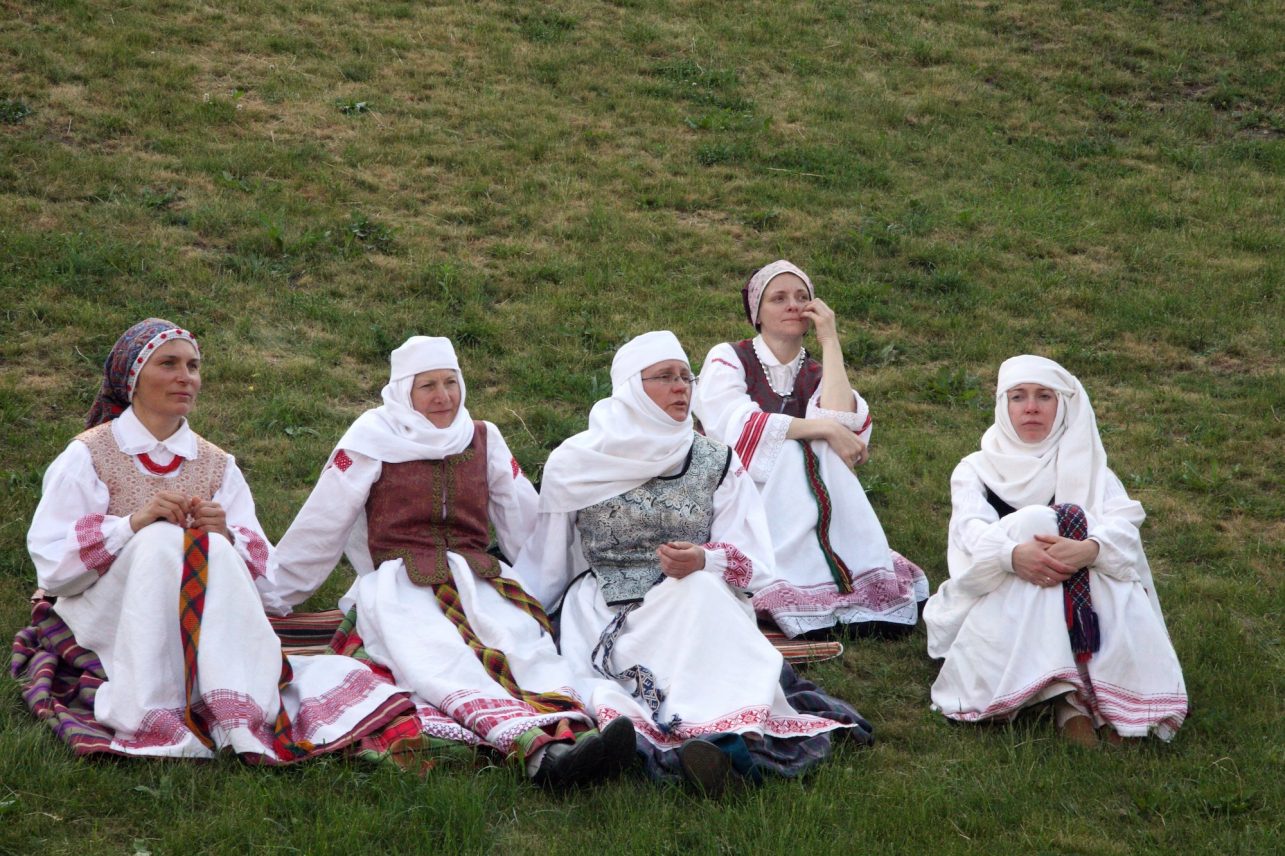
How do you discover your “own” sutartinė? “We start learning them, and at some point one of them catches on with someone – I never assign it; the singer herself feels that it is her sutartinė,” Andrius says.
Little wreath, little wreath,
Tuita, tuita,
A delight, a delight,
Tuita, tuita,
I hum as I walk down the stairs, accompanied by the deep, sensitive voices still resonating in the background. Sutartinės remain alive not in archives, but in evening gatherings, in small studios, sometimes on hillforts or under a gallery roof where voices meet, having learned to listen to one another. Sasutalas gathers not to reconstruct the past, but to dwell within it and allow it to ring out.