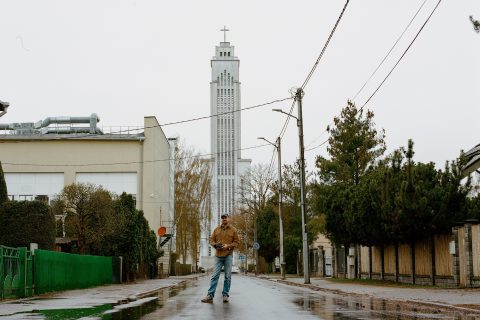
This winter, I will be attending a house of prayer for work for the second time. Not long ago, I wrote my intentions on a prayer sheet and lit a candle in the Candle Sanctuary of St. Gertrude’s Church. If the intention conceived at that time had been fulfilled, there would have been no need to write this article. But as long as the war in Ukraine continues, Christ’s Resurrection Basilica will continue to collect support for soldiers fighting on the front lines. This house of prayer hosts a charity and aid foundation Visi išvien, which provides humanitarian aid to Ukraine.
This foundation found its way to the church not by chance, but by prayer. At the onset of the large-scale invasion, the future volunteers of the foundation gathered here as a prayer group. The foundation was founded by Tatjana Narkevičienė, who has been involved in charitable activities since the beginning of the war in 2014. At that time, she worked at the Lithuanian Human Rights Association, of which she is still a member. Tatjana recalls that even then, support was being collected on the church grounds until it was finally decided to establish their own foundation.
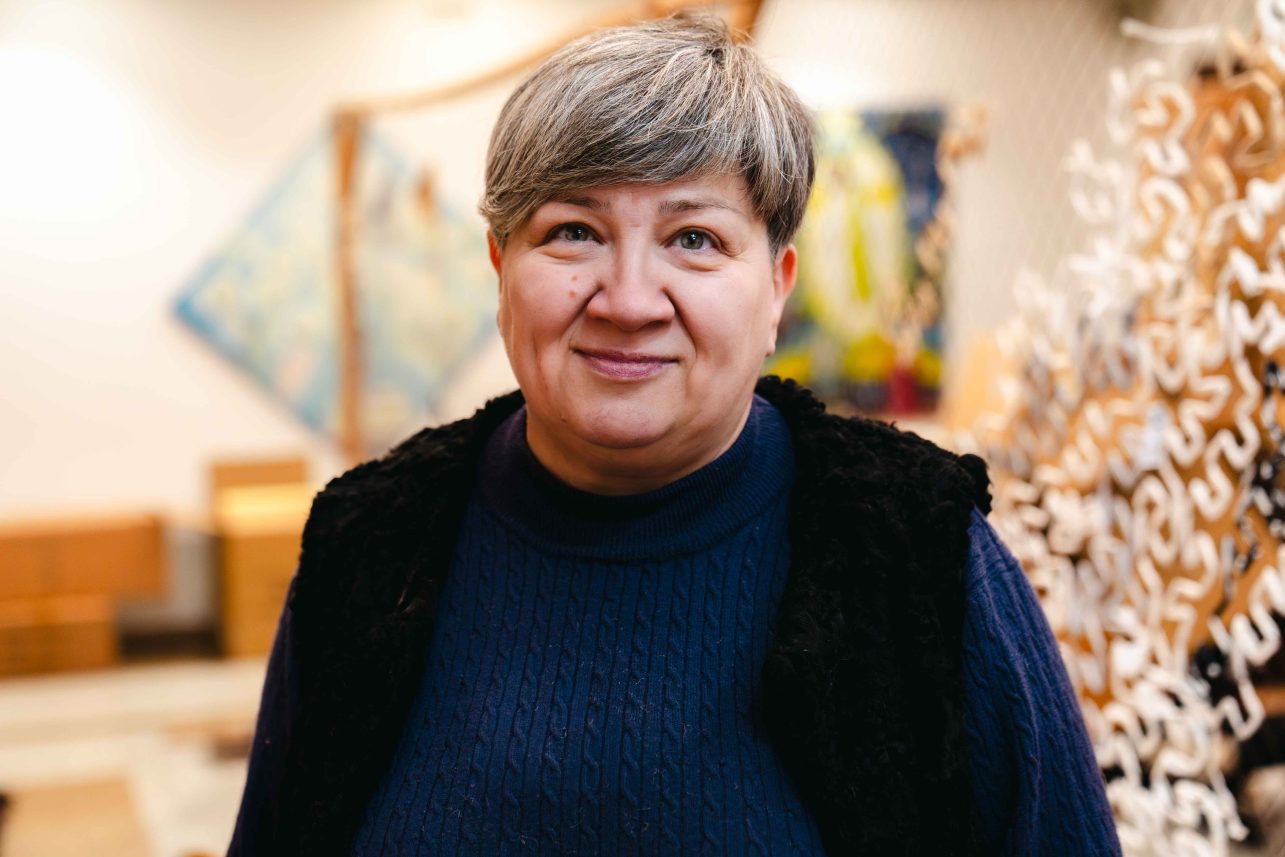
Its name – Visi išvien – is not accidental and comes from Josaphat, a Lithuanian saint. He was a representative of the Eastern Catholic church, who joined the Holy Trinity Monastery in Vilnius and called on everyone to unite and be together. In 2022, when the large-scale invasion began, the support foundation expanded both in terms of activities and the number of volunteers. The first aid collected by the foundation was stored in the church’s basement stairwell. When Tatjana started organizing trench candle-making workshops, people no longer fit in the stairwell and expanded into the adjacent chapel, and from the chapel into the exhibition hall. This space is now used for meetings, workshops, and storage. Tatjana says that the parish priest, Kęstutis Rugevičius, is welcoming and allows them to work and use the premises. “Of course, in rare cases there are some inconveniences, for example, when organizing a convoy, 70 vehicles champ up in front of the church to transport aid to Ukraine.” Still, these are only temporary inconveniences.
I arrive at the foundation’s “home” on Friday evening, and I am immediately swept into a whirlwind of activity that gradually pulls me in as well. This was not a typical interview, where you sit in a quiet corner of a café, sipping coffee and talking slowly with your interviewee. As soon as I walked in, I literally bumped into the foundation’s founder, Tatjana, who was carrying boxes to a van. I spoke with volunteers by the clothes rack as they were getting ready to leave after their shift; I listened to stories in front of the altar while folding and packing bags of coffee beans; I followed Tatjana, who was simultaneously answering not only my questions, but also those of volunteers and those reaching out on the Internet. During this hour, I saw how many different things the volunteers do, how close-knit, coordinated, and intense the work of this community is.
If we’ve saved even one life, all this work has been worth it.
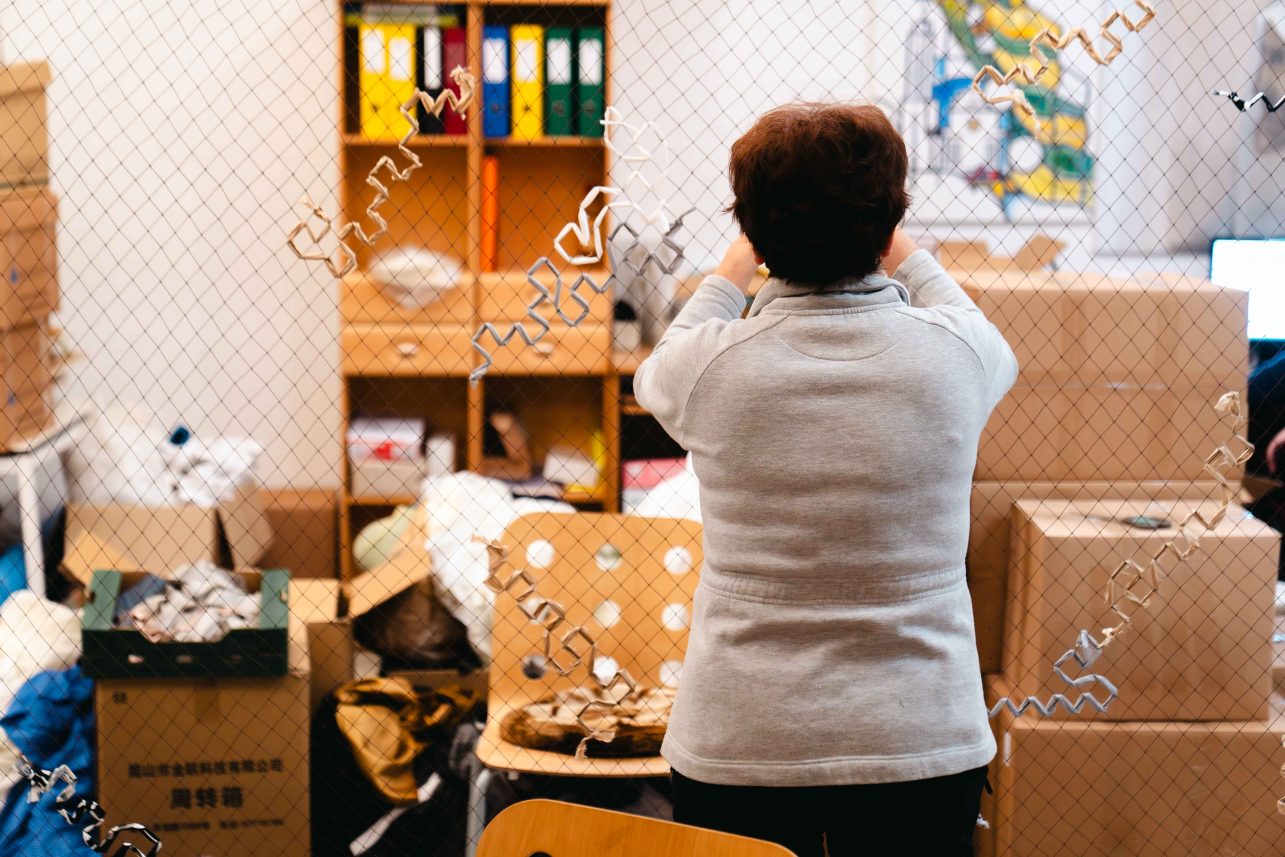
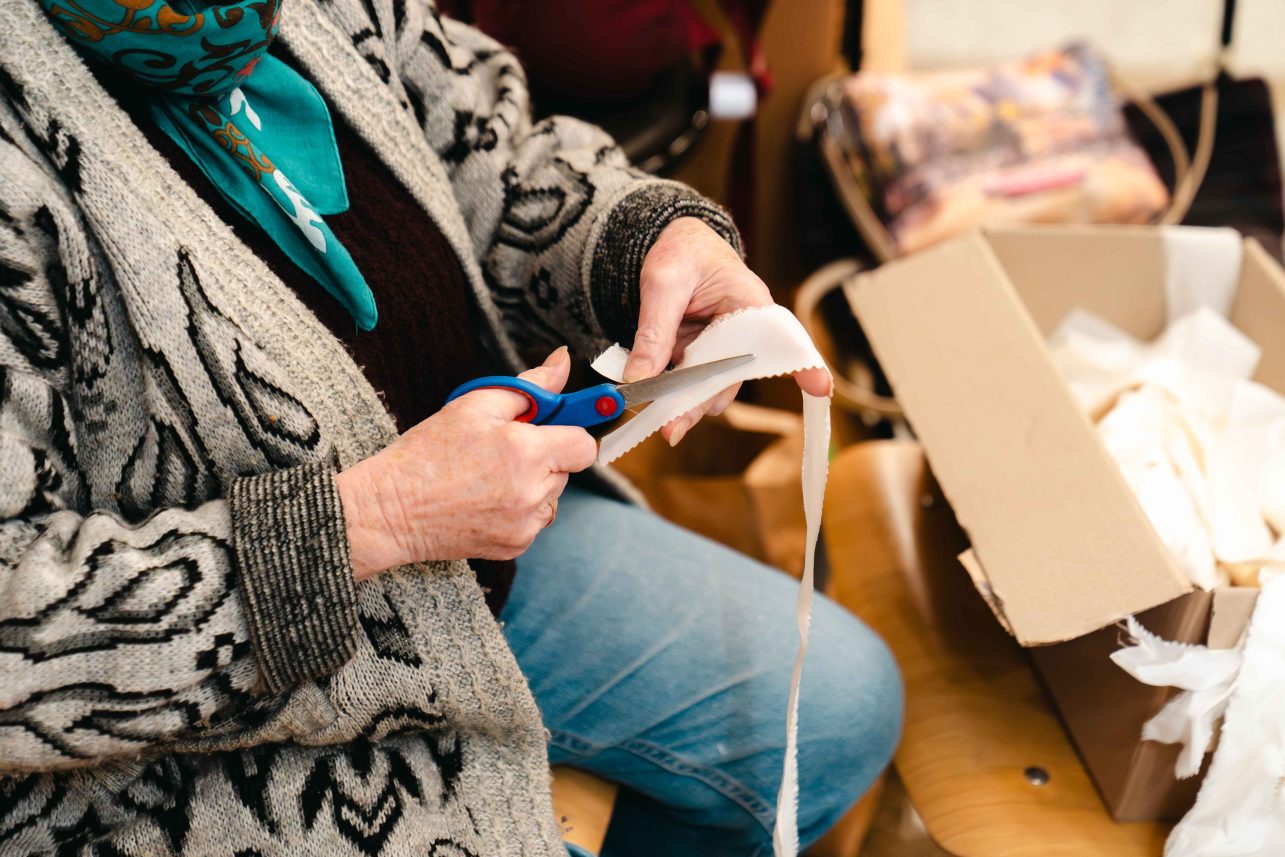
The topic that brought me here is nets, real ones that have just started being woven, hanging on long wooden frames right before my eyes in what used to be the exhibition hall of the Resurrection Church. Three Ukrainian female volunteers have already started winding a white cotton thread that twists like a little snake. Beside them, another woman sits cutting strips of fabric into a large bag, which will soon become an imitation of snow. As she is getting ready to go home, I speak with Natalija Danielienė, who has been volunteering here since 2022. She explains that the nets are woven in three different locations, but that at the Resurrection Church, the foundation has the largest frame. The nets are usually woven by senior citizens, Ukrainian refugees, and in the evenings, others join in as well. In a month, volunteers make about 15–16 nets. The smallest are 7.5 meters long, and the largest reach 12 meters. The foundation receives specific orders from military units, and if there is no order, they weave the standard 7.5-meter nets. They vary depending on the time of year and geographical location. Some are designed for steppes, others for meadows, forest environments, imitating an autumn trail, hay, and a winter palette. This is exactly what the volunteers were weaving in the evening.
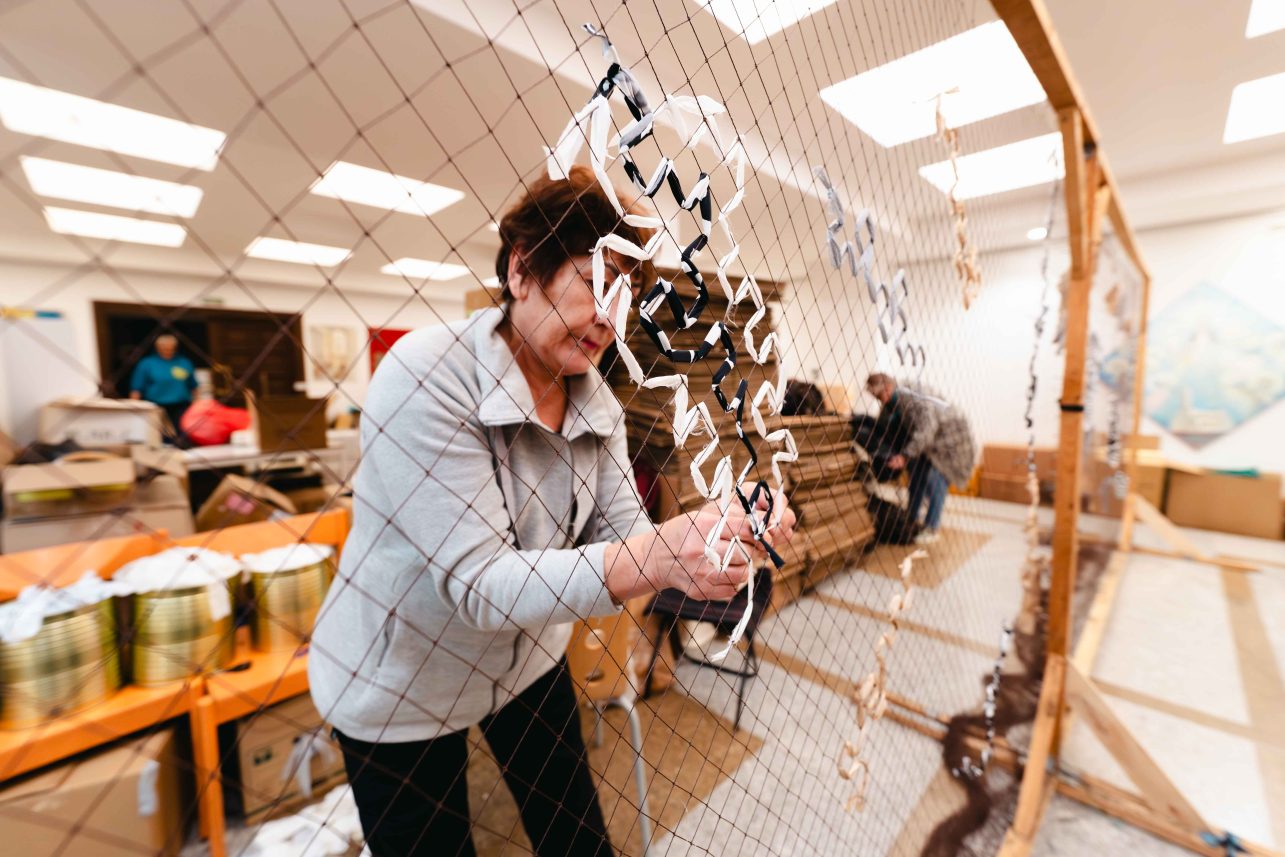
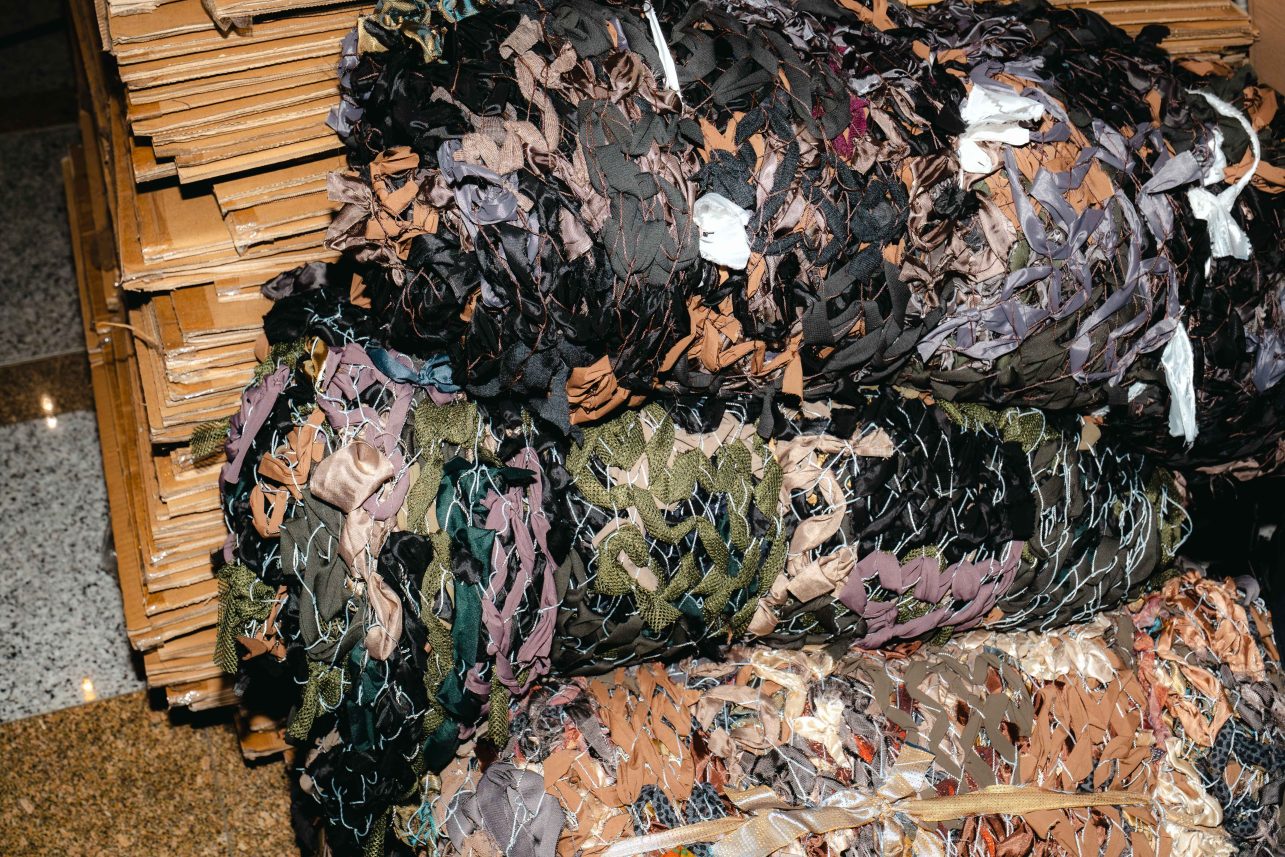
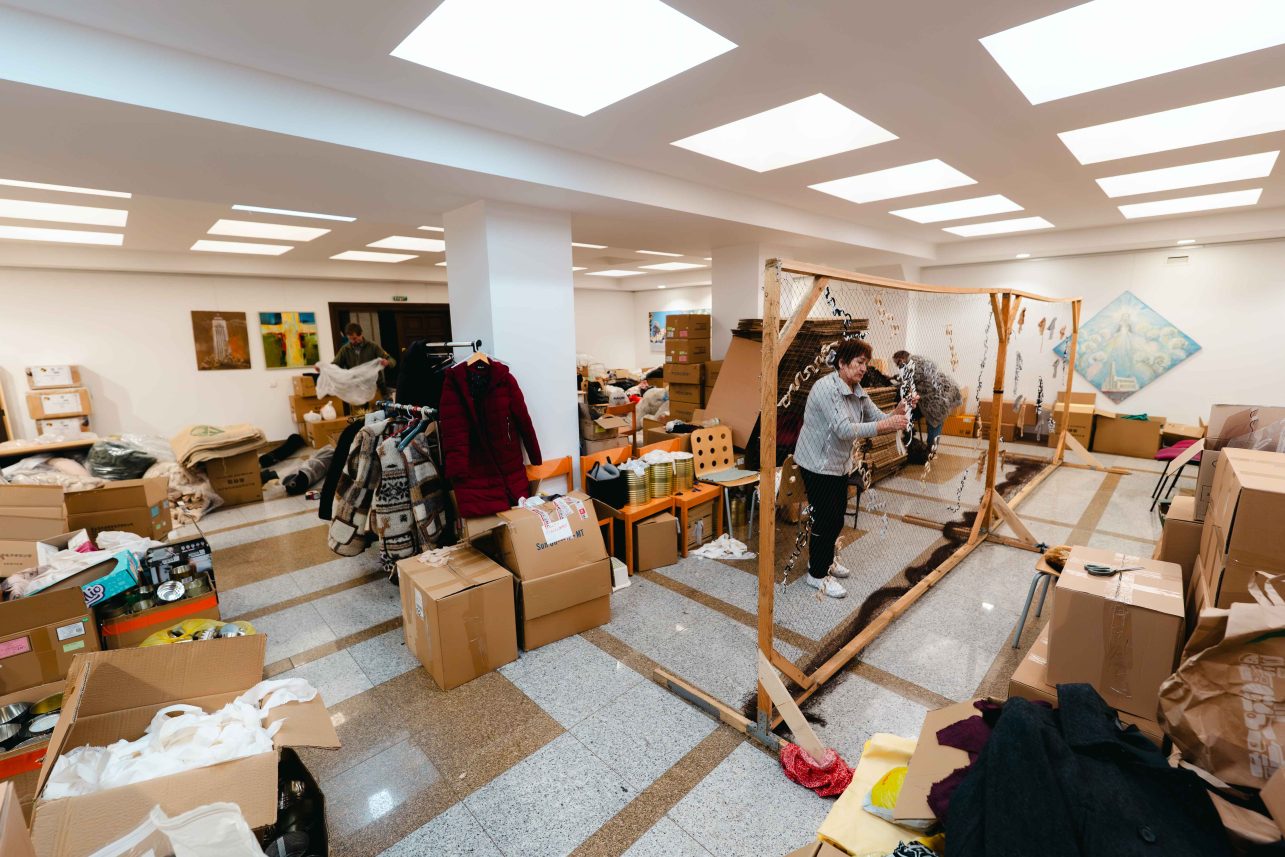
“We need to weave mixed-color nets; we do it in spots, not balls or clouds. These nets are an imitation of nature, designed to hide positions and equipment from drone attacks. We’ve heard that one soldier was wounded in the trenches, saw a drone flying toward him, and by covering himself with a net managed to save himself: the drone didn’t notice him. If we’ve saved even one life, all this work has been worth it. These stories reach us through volunteers who visit Ukraine, and earlier we also received photos from the soldiers themselves, including photos of the nets, so that we could assess their quality in real battlefield conditions and learn how to do things better,” Natalija says. She adds that while weaving the nets, everyone relaxes, cooperates, and chats; no one works beyond their limits, but everyone tries to do as much as possible. For example, volunteers preparing a small convoy worked through Christmas and on New Year’s Eve, driven purely by internal motivation. “We need to remember that we didn’t gather here just to stand under a tree, but to help Ukraine,” the volunteer emphasizes.
Looking at the intricate band precisely woven into the net, I ask Natalija if it is a difficult task. The volunteer explains that some learn in a day, while others need several. New volunteers are trained by experienced weavers, and there are a few rules that must be followed to ensure that the net is elastic, and the strips do not cross each other. However, if you cannot master the craft of net weaving, you can prepare the material for the nets or contribute to any other activity.
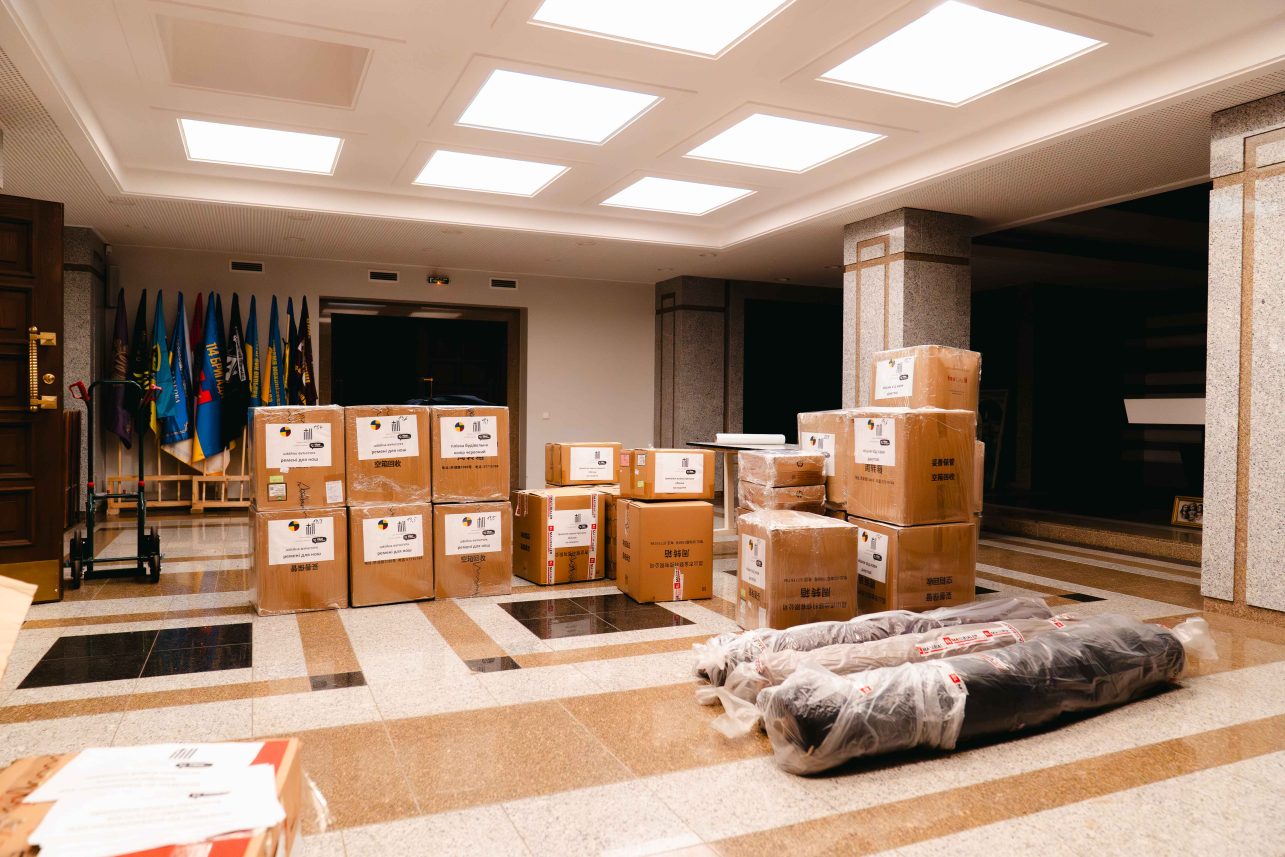
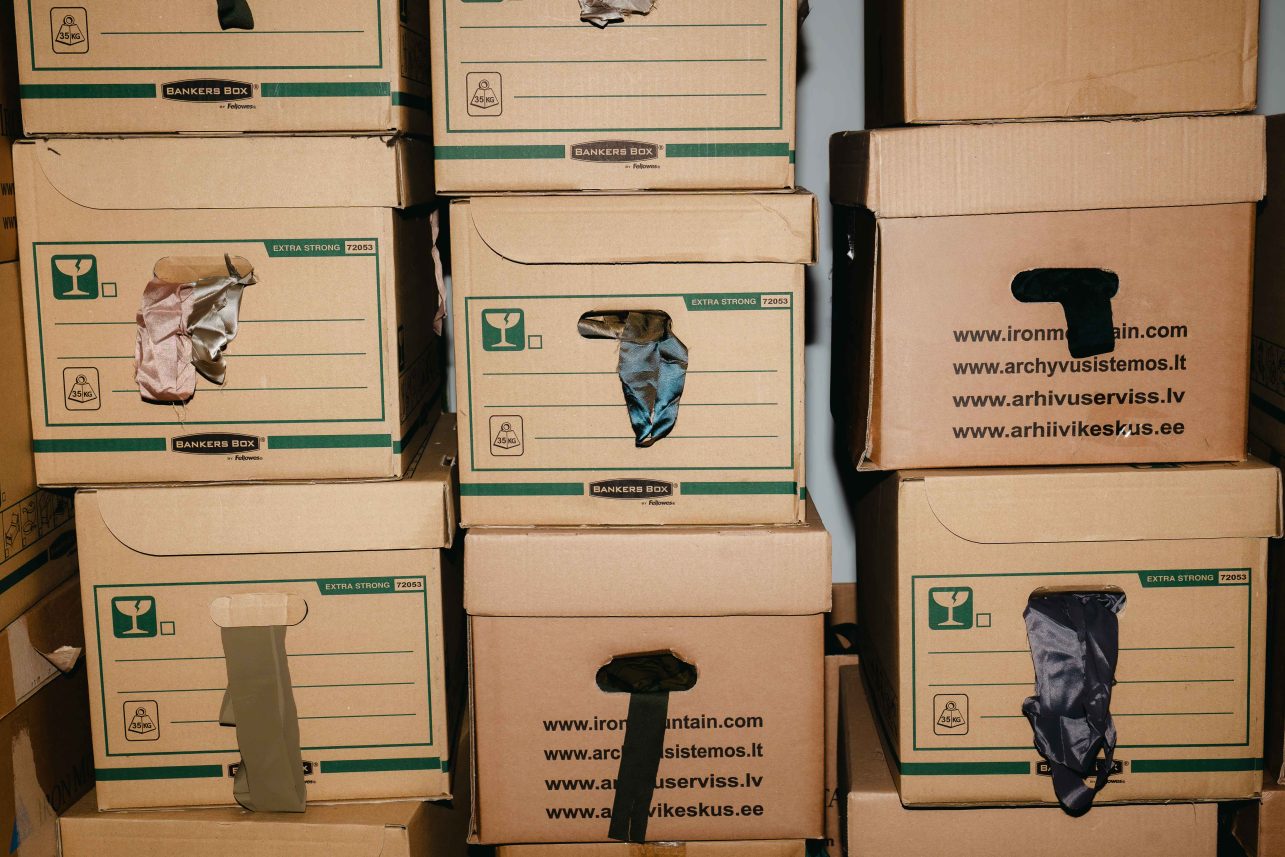
The foundation collects aid and donations, handles their transportation, and distributes them. At the moment, bread is being collected and dried so that soldiers will have a quick snack at the front. Bakeries donate edible but unsold food products, which are then distributed to Ukrainians in need. The coffee bean sacks that we were packing into boxes as we talked are taken apart into threads, dyed, and used to weave camouflage gear. From jute fabric, the volunteers also plan to make helmet covers that will resemble a tuft of grass.
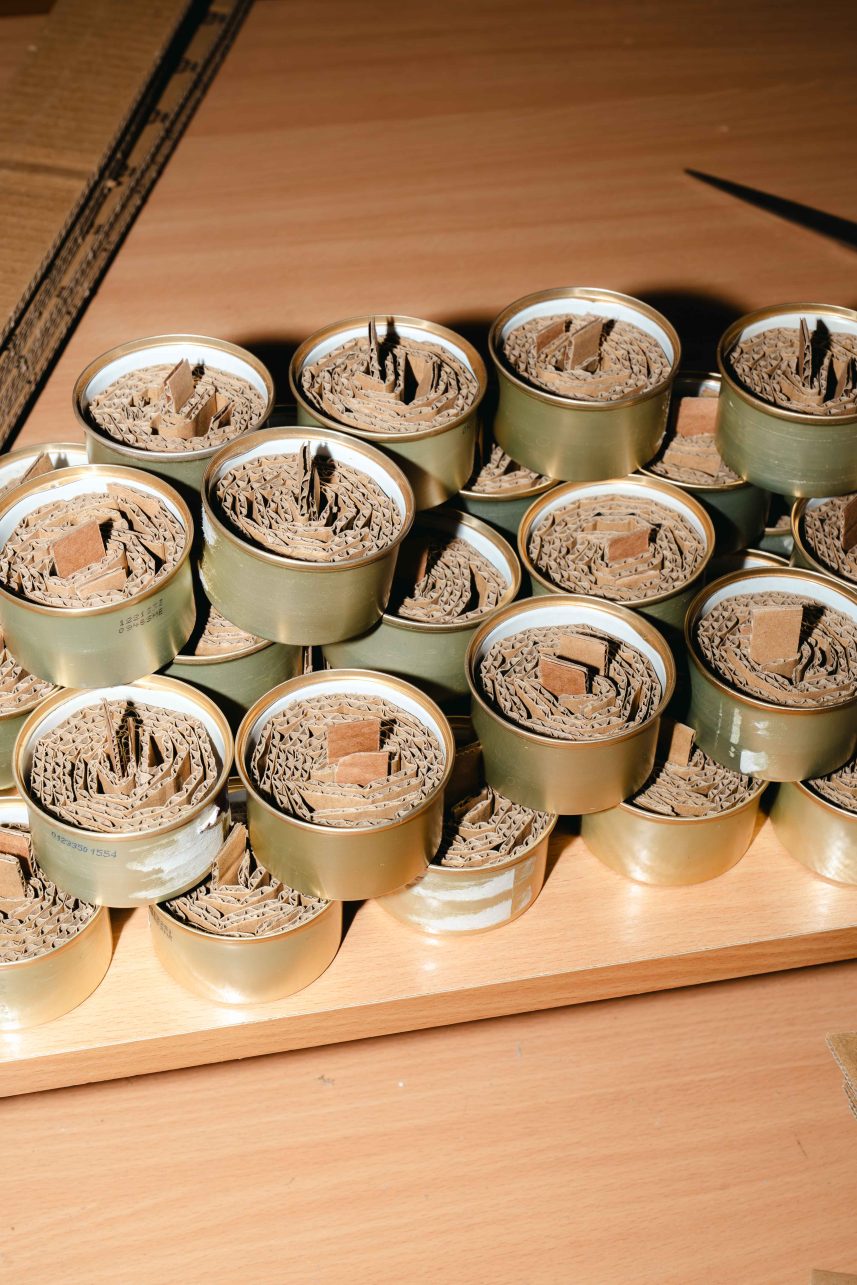
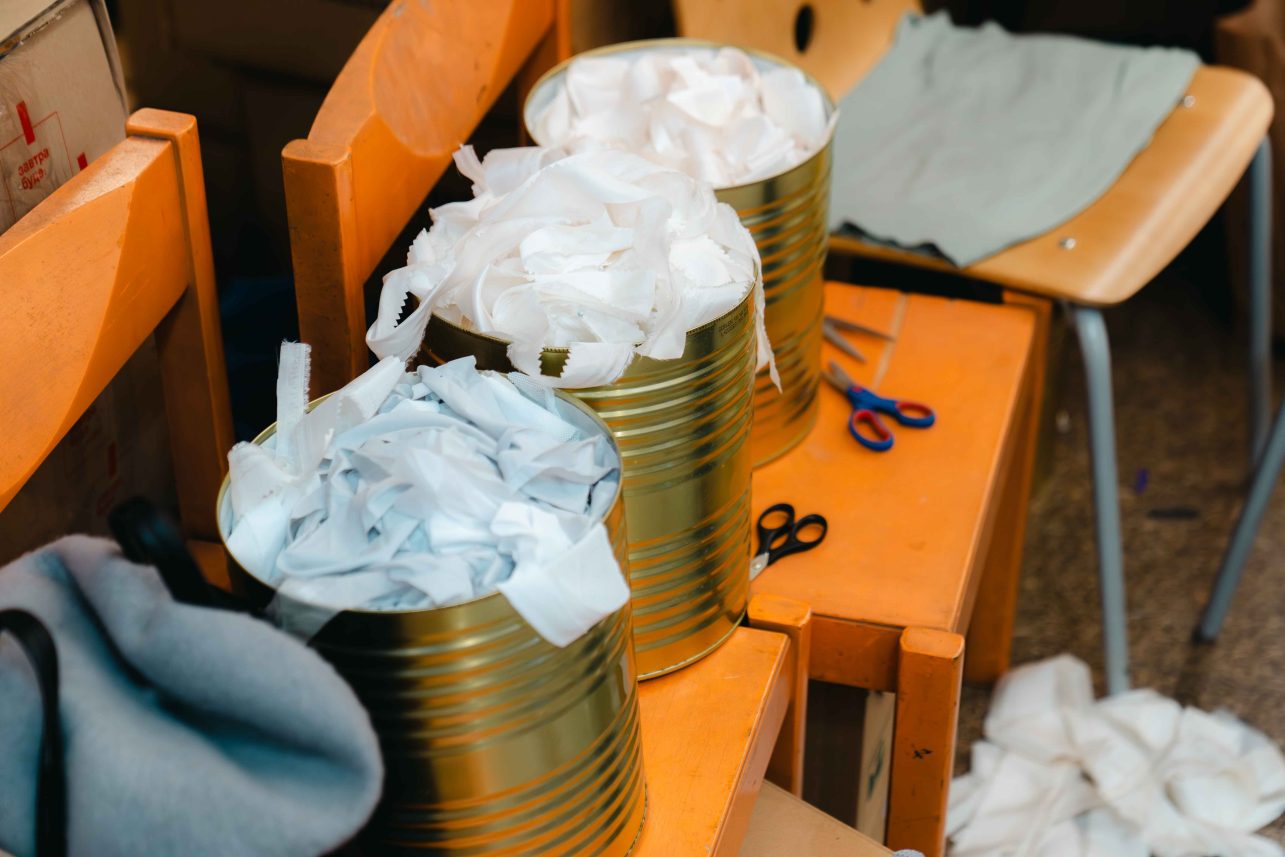
Some volunteers make trench candles. These are metal tins of various sizes with a cardboard insert, filled with paraffin. Volunteers sort and wash the tins, take them to another location to be cut, and then to the 4th Fort to be filled with paraffin. According to Tatjana, “Trench candles are better than regular ones in several ways. A candle made in the smallest tin, like a cat-food can, burns for two hours. I’ve tried it myself at home – in ten minutes it boiled a kettle of water, and there was still enough heat left to cook pasta. These candles are especially useful in the steppes, where there is nothing to burn for heat.”
Of course, there is disappointment, but over the past four years, we have come to realize that God saves our souls, not our backsides.
Listening to Tatjana, I think that the foundation also teaches a kind of environmental awareness: every leftover item is given new meaning in a different form. Trench candles, for example, are made from used tins and cardboard waste, and some of the paraffin is recovered from burned-down candles. Of course, most of this work requires the time and effort of volunteers. Volunteer Rasa says that sometimes she is saddened by people’s donation culture, when items are brought not to help others but simply to get rid of them. “We are collecting things for the front, and instead we receive bags of wedding dresses,” Rasa says, adding that dirty clothes and even underwear also arrive. Still, after washing, some of it can be used. Clothes are cut up to make nets or sewn into other items. The unusable items must be taken to the textile recycling containers.
As Tatjana leads me through this cozy chaos, I ask where she learned how to sew, weave, and recycle. “I’m a seamstress myself, working with upholstery fabrics, so I know materials and their properties very well. Besides, the Ukrainians themselves pass on their knowledge and needs; we stay in touch with sewing workshops and look for what is most needed.” Tatjana not only has practical knowledge, but she also understands many other nuances. Born and raised in Russia, she was in Ukraine during the Maidan events and saw how the war began. “Knowing what kind of country Russia is, I’m not surprised by the current situation, but I want to act. This team means a lot to me; they always support and contribute to my ideas. When I drive by, I often see the Church of the Resurrection and think, ‘Am I really the one doing all this?’ I remember what the late Nijolė Sadūnaitė used to say, ‘God takes a weak person and shows how powerful they are.’”
I ask whether the determination to act remains strong as the war continues. “Of course, there is disappointment, but over the past four years, we have come to realize that God saves our souls, not our backsides. God doesn’t think about whether we’re well-fed or warm, but about whether we become better. If a person doesn’t know how to grow spiritually on their own, they are given very difficult trials. We have so much, yet we don’t understand how well we live.” The head of the foundation adds that it’s important to deliver radars and drones, but someone also has to hand a soldier a wet wipe or a bar of laundry soap to take care of basic needs.
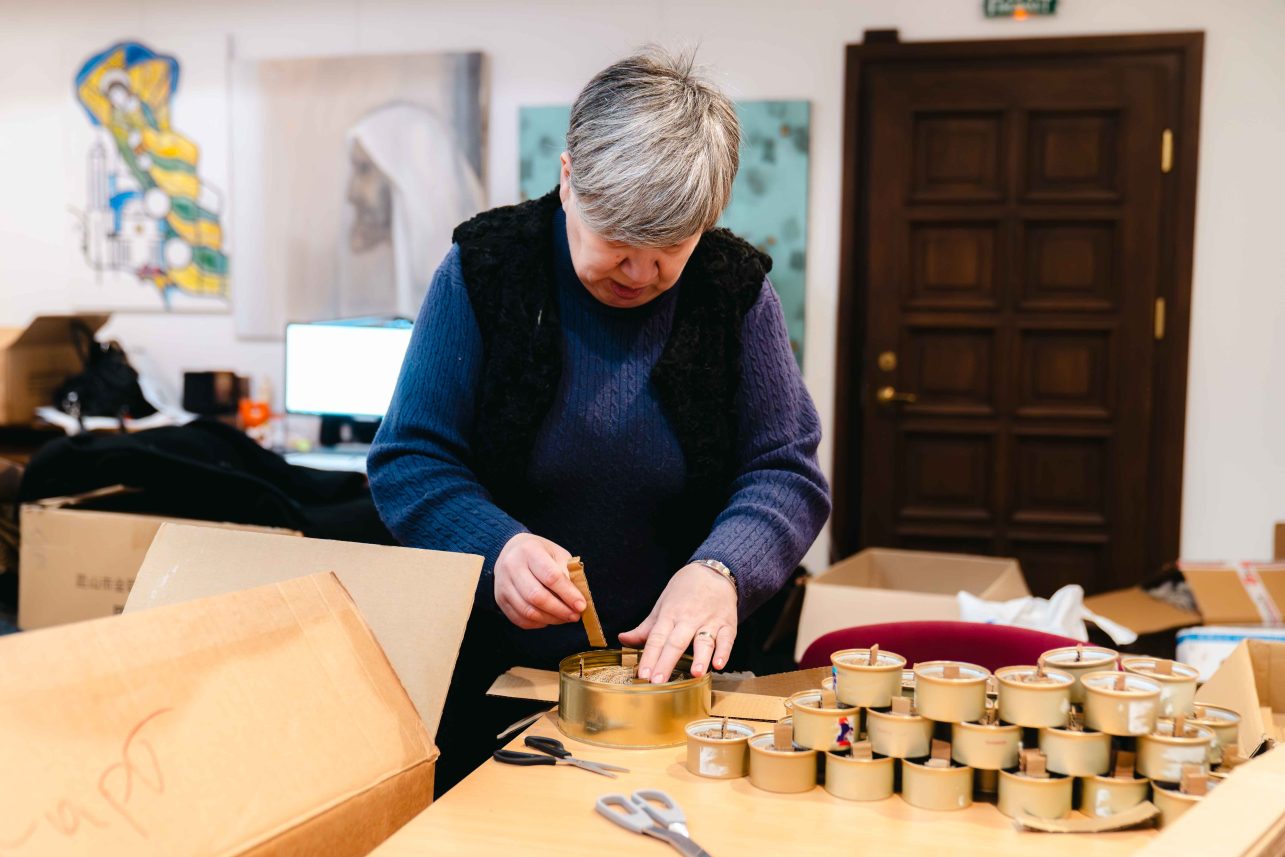
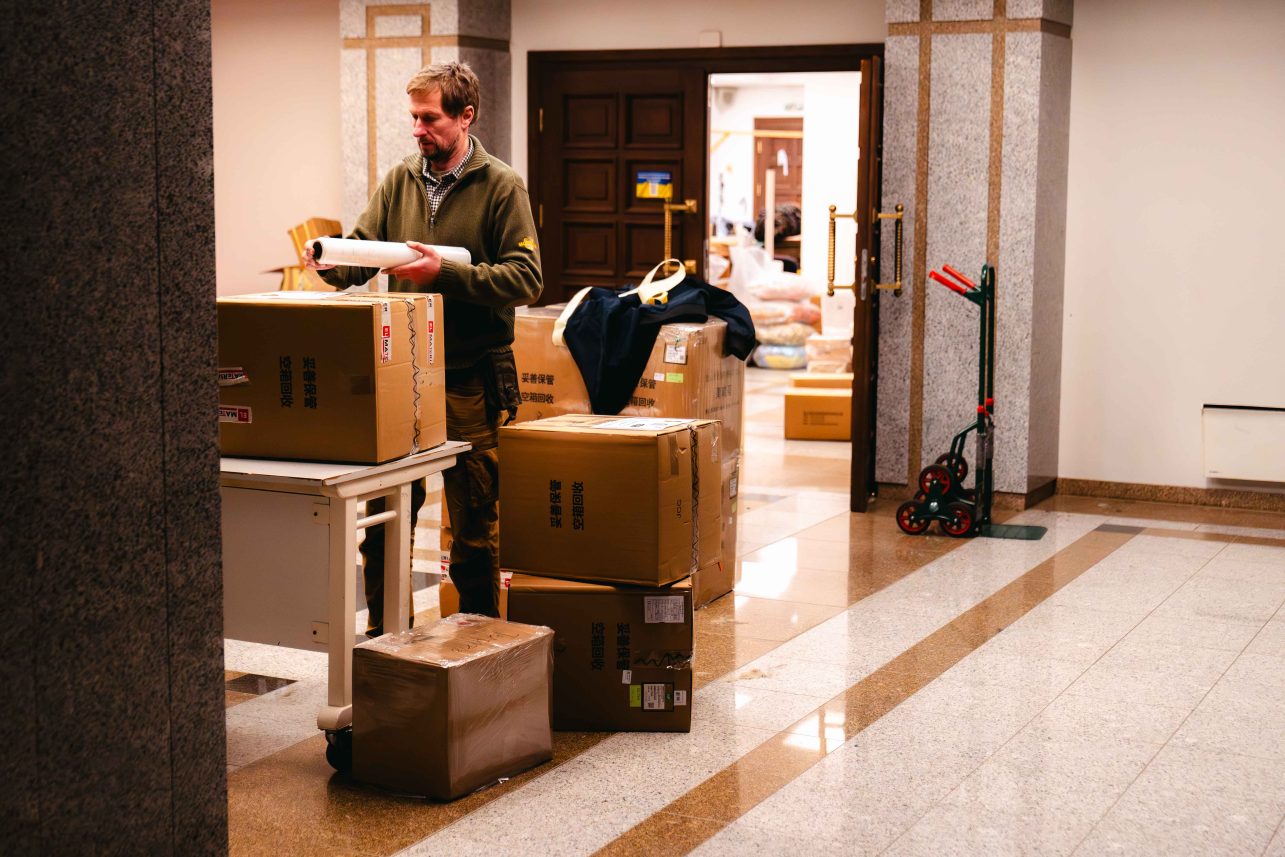
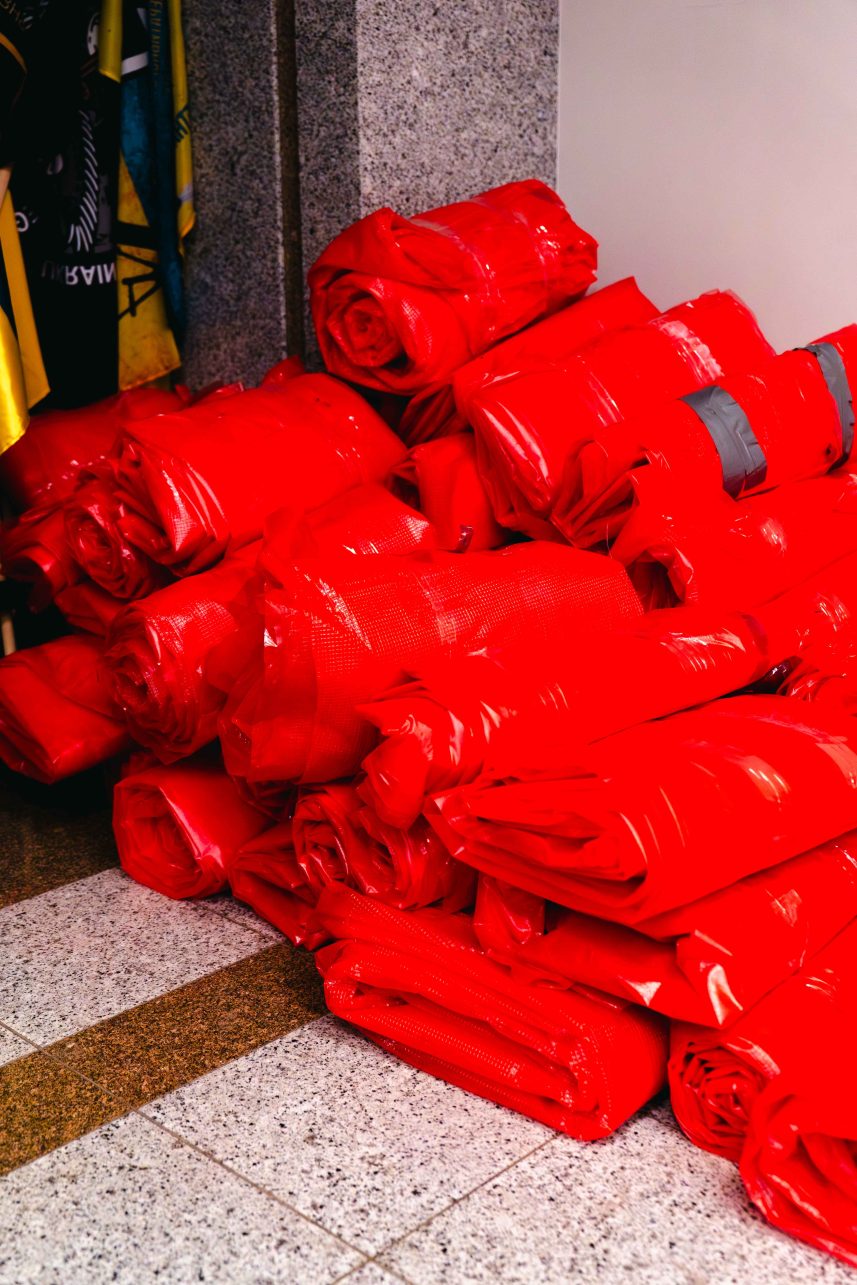
About 30 volunteers are currently actively involved in the foundation’s work, the youngest of them, a sixth grader, patiently rolling cardboard strips into tins. Tatjana admits that volunteer hands are still in short supply. Those who want to join can come on weekdays from 5 p.m. to 8 p.m., on Saturdays from 10 a.m. to 8 p.m., and larger groups can arrange a visit in advance. At the moment, the most useful things are those we can often find at home: medicines and bandages, hygiene and nursing supplies, bedding, towels, men’s clothing, mobility aids, sleeping bags, blankets, flashlights, batteries, work tools, and long-shelf-life food for people and animals. Donations can be brought directly to the foundation’s premises or left in the basket at the Church of the Resurrection.
I don’t want to admit it, but I leave feeling somewhat irritated. I was touched by Tatjana’s words about how we are straying from the essence, how we no longer know how to appreciate the abundance we have, and how we have strayed from faith. I heard what I would like to wish for myself. That same evening, I’m collecting and washing cans, checking my thread supply, and counting out euros to buy some laundry soap. One small action after another, one knot after another, can do more than we imagine.