
What do we know about the history of Lithuanian aviation besides “Lituanica” and the “ANBO”? Why is it important today, and what can people in the sky teach us? In the newly upgraded exhibition of the Lithuanian Aviation Museum, we spoke with the master of aerobatic flying, instructor Eugenijus Raubickas. I will not attempt to recount the full history of Lithuanian aviation here; you can hear about it in detail when you visit the museum. During the conversation, amid aircraft models, metal wreckage, and technological achievements, I was searching for the qualities of a “human bird.”
What do gliders have to do with organs?
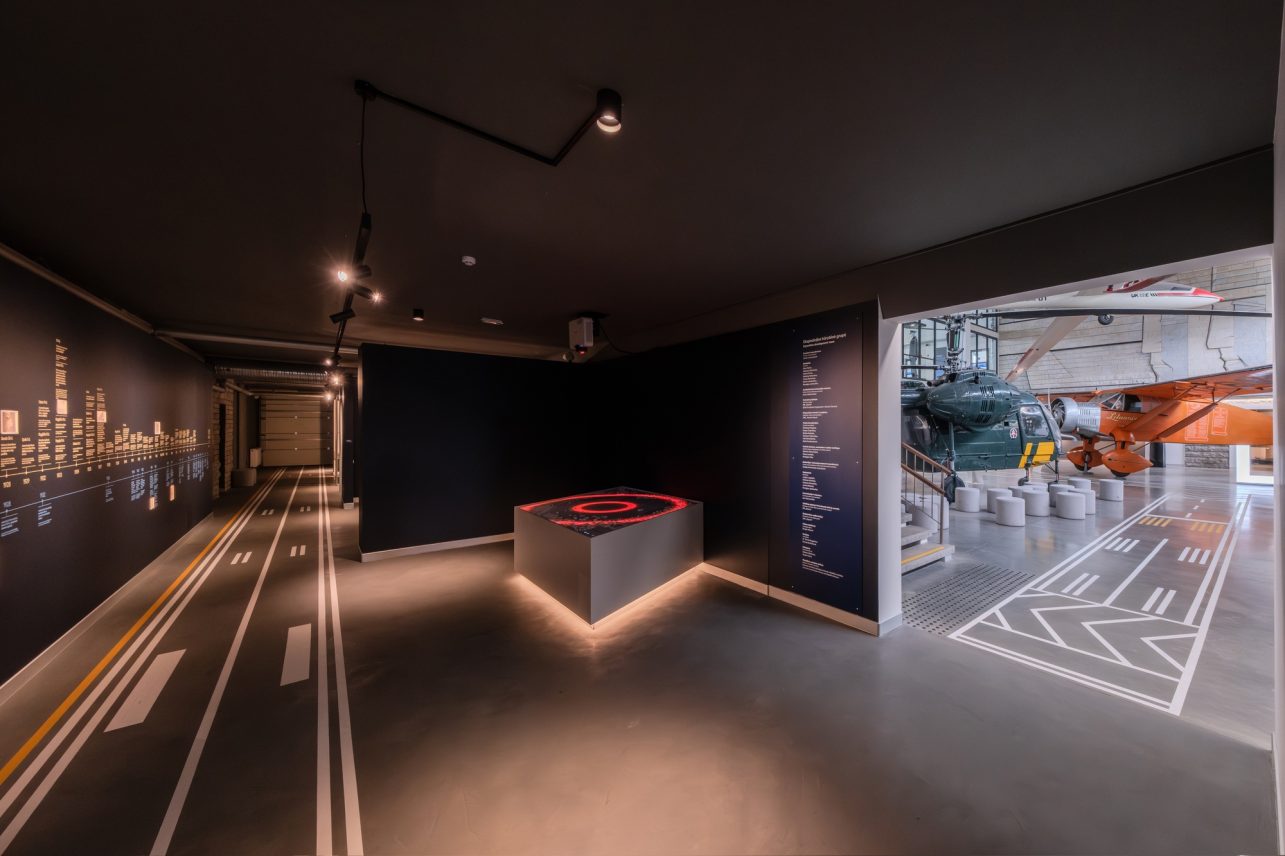
The museum exhibition, reopened after renovation in April, greets visitors with a timeline featuring the most important events in Lithuanian and world aviation history.
(This text was published in the June 2026 issue of the magazine Kaunas Full of Culture, titled Birds)
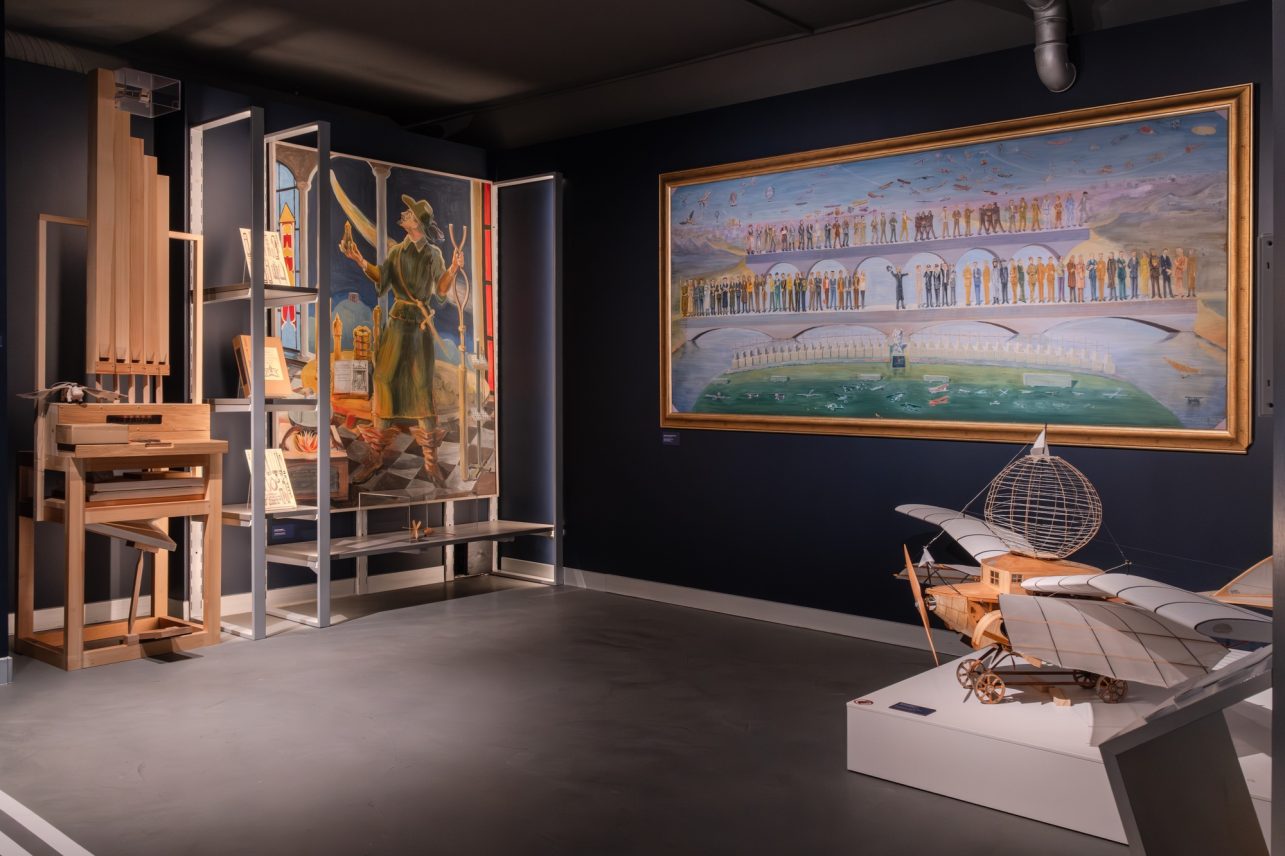
People wanted to fly even during the era of the Grand Duchy of Lithuania. One of the exhibits is a wooden spinning toy discovered near the Palace of the Grand Dukes in Vilnius, a domestic example of a structure capable of rising into the air. “In the Soviet Union, Russian scientists, who supposedly were the first to create multistage rockets in the 19th century, were praised. But Kazimieras Semenavičius, an engineer, nobleman, and military officer of the Grand Duchy of Lithuania, wrote about them as early as 1650 in his famous treatise ‘The Great Art of Artillery’,” says E. Raubickas proudly.
When thinking about aviation technology, it is common to draw parallels with the military industry. Yet the first prominent names on the museum’s timeline are far from military commanders.
Jonas Garalevičius, who developed a Lithuanian glider in 1911 (and, incidentally, was from Kaunas), was an organist and an instrument maker. Petras Aleksandras Napoleonas Griškevičius, who designed the “Žemaičių Garlėkys” (Samogitian Airship) in 1851, was a philosopher and inventor in the broadest sense of the word, even writing about the possibility of attaching wings to the human body.
It seems, then, that these “human birds” juggle both engineering and artistic knowledge. To be in the air is, in essence, to rethink and reconstruct the very limits of human possibility.
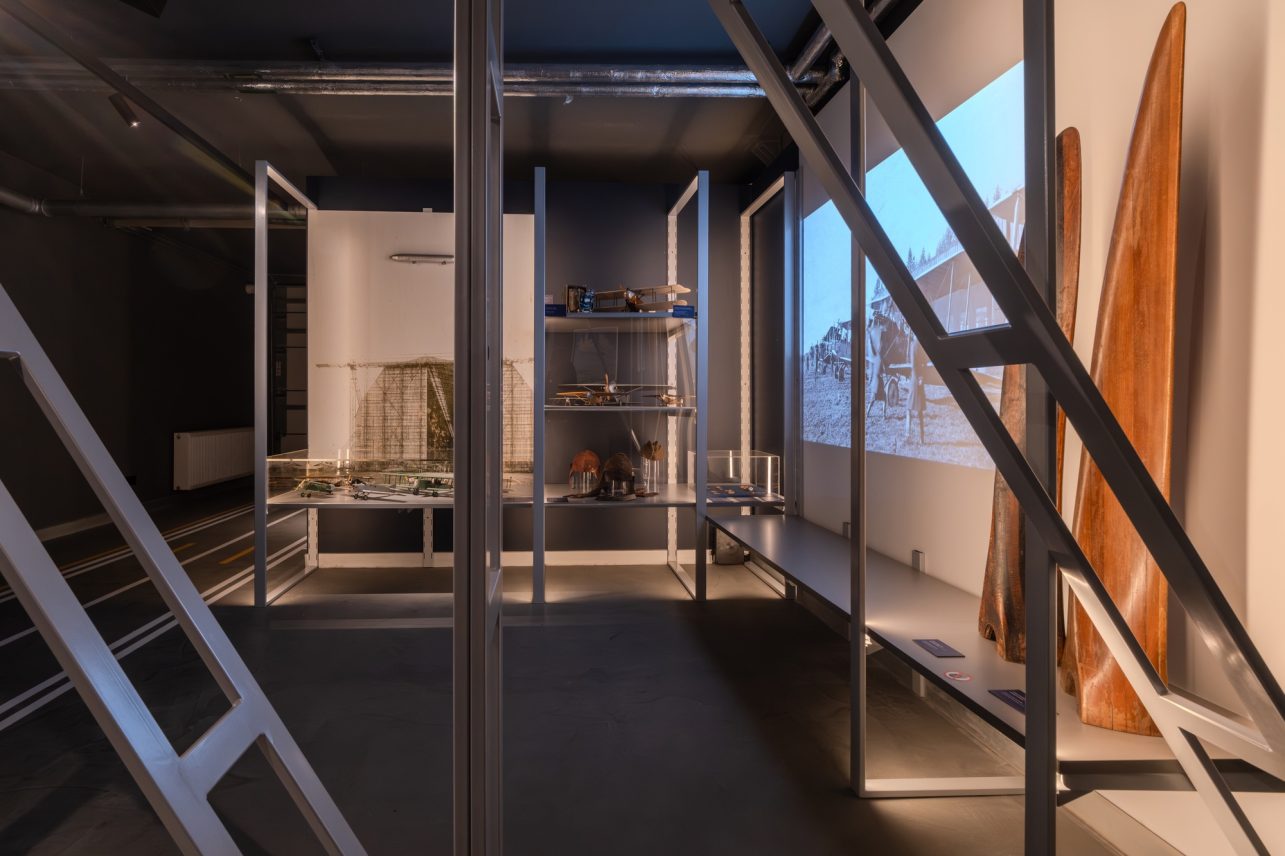
Lithuanian aeroclub: education and politics
In many countries around the world, aero clubs were established before aviation schools. In Lithuania, however, military aviation came first because there was a need to defend the country’s independence, but the pilots realized that the club was also needed. Steponas Darius personally delivered the founding documents to the municipality, and the Lithuanian Aero Club was established on April 27, 1927.
According to E. Raubickas, in addition to its sporting and community-oriented interests, the Lithuanian Aero Club also engaged in strategic activities. Through aviation, it taught people skills essential for survival: it organized civil defense exhibitions, taught people how to build shelters, and provided guidance on protecting themselves from chemical hazards.
To educate the public, the club began publishing the magazine “Lietuvos sparnai” (Lithuanian Wings) in 1935. Visitors can read it in the museum. The magazine showcased developments in aviation, reported on military action across Europe, and covered major celebrations and competitions. It was also important to reveal the inner workings of the club itself: political developments and public attitudes toward its activities.
Among its pages, I found a passage expressing disappointment with those who failed to see aviation’s importance to the nation as a whole: “The sound of the litas… resonates in citizens’ souls, but this is true only for a soul that has become hardened.”
According to E. Raubickas, the situation is not entirely different today. He does not hide his frustration over the transfer of aero clubs to municipal control. “In other countries, the president of an aero club holds a high-ranking government position. Clubs are managed at least at the ministerial level.” Thus, human birds are not merely a beautiful image for those standing on the ground. They are also an important part of the country’s strategic education, defense, and orientation networks.
Secrets behind the Iron Curtain
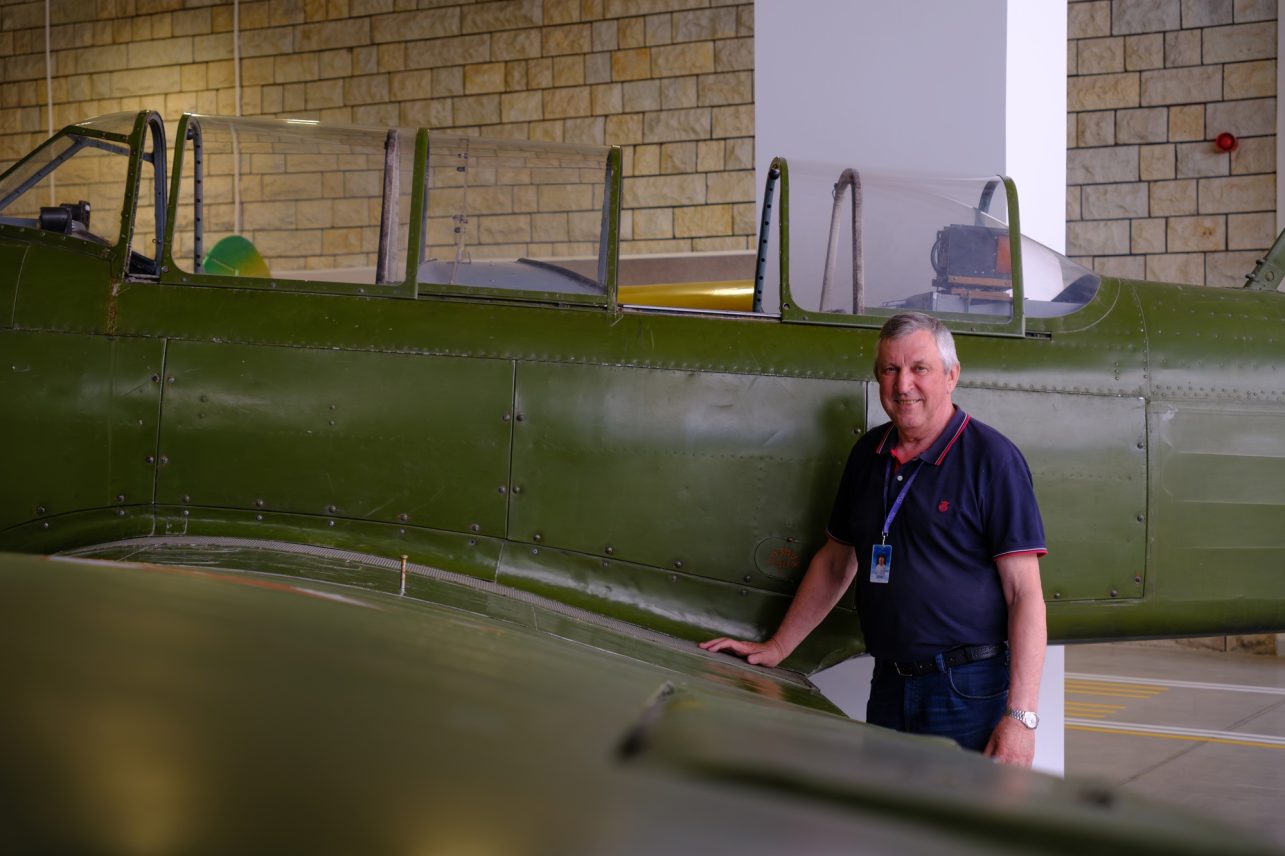
The imagery ceased to delight with the onset of World War II. In 1941, the entire Aleksotas airfield was enclosed by a two-meter-high fence; no one could see what was happening inside. E. Raubickas points to wartime exhibits: bomber engines, cooling radiators, rocket-propelled grenades. At first glance, it seems impossible that such objects could be found on Lithuanian territory, yet the facts reveal both deliberate and accidental gaps in historical memory. “No one knew that in December 1940, a trainload of the newest Mikoyan-Gurevich MiG-1 aircraft arrived in Kaunas, followed later by the Mikoyan-Gurevich MiG-3. Kaunas was also home to the first combat training grounds where military rearmament took place,” the museum guide explains.
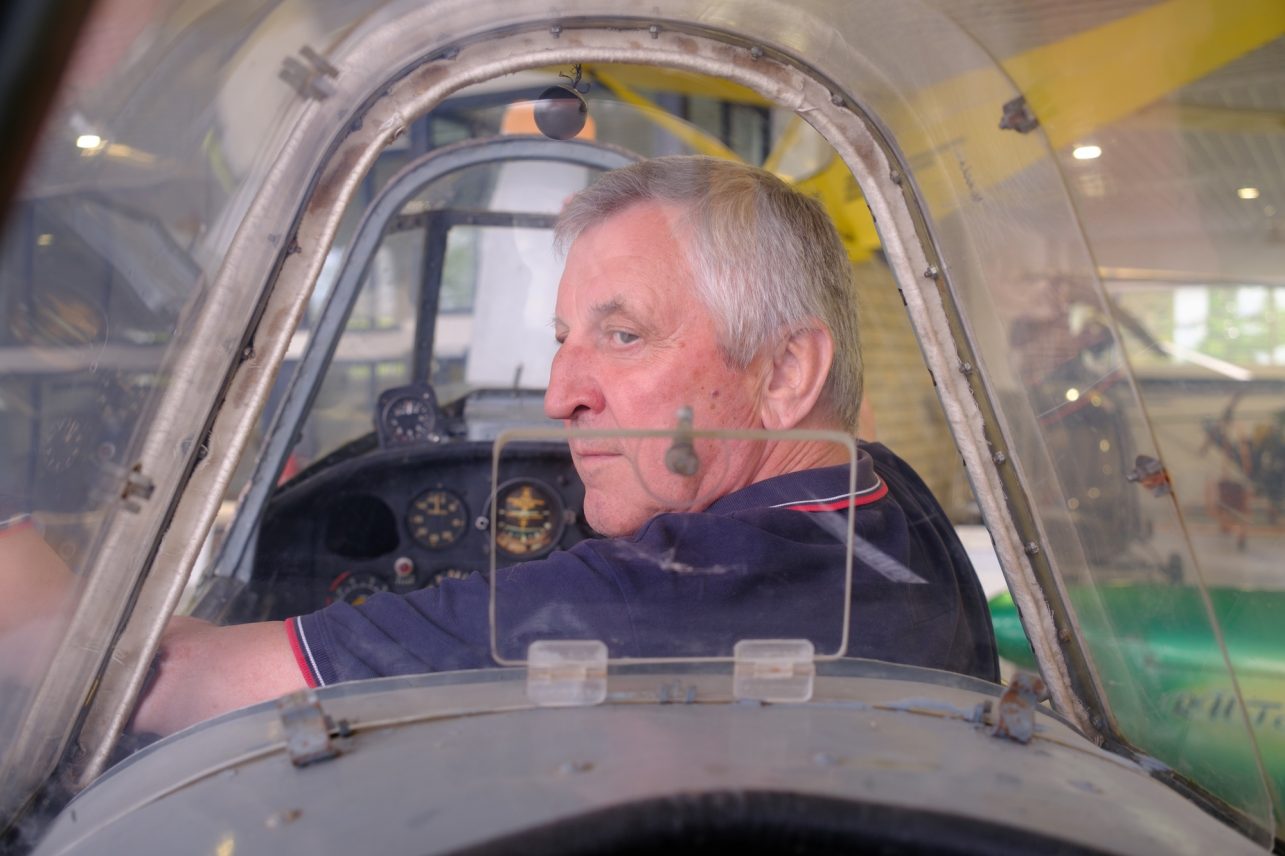
Although there are plenty of numbers and objects here, I find myself drawn to the human side of history. After all, all of these machines were flown by pilots, repaired by mechanics, and maintained by engineers. What do we know today about their lives?
Kaunas aviators, among the first in the Soviet Union to be equipped with Mil Mi-4 helicopters, took part both in the suppression of the Hungarian Revolution of 1956 and in nuclear weapons tests. Some pilots were exposed to radiation; some lost their lives. “These are not the kinds of things people talk about very loudly,” E. Raubickas admits. How to preserve the memory and experiences of these people remains a complicated question. The marks left by occupying institutions in their biographies have, under close scrutiny, unfairly cast a shadow over an entire generation of Lithuanians.
The psychology of those who fly
From mathematical formulas to firefighting, from physical endurance to commanding a crew – the psychological profile of people who work in the air seems increasingly complex to me as I walk through the museum. What do they need to know, remember, and forget?
“Not all pilots are the same,” says E. Raubickas. “It is like school. You arrive not knowing how to write, they teach you letters, then words, then sentences, dictation, summaries, and essays. Aero clubs do the same thing: they teach you how to ‘write.’ For some, it is enough to fly from point A to point B. Others need to perform flips and maneuvers in the air; those can already ‘write a dictation,’ so to speak. And then there are people like Jurgis Kairys and others who are true ‘writers,’ with interpretations of their own. No instructor can teach that. They teach you enough not to get yourself killed and to know the rules. After that, you learn and improve on your own. When flying a large aircraft, psychology and decision-making are just as important,” the veteran pilot says.
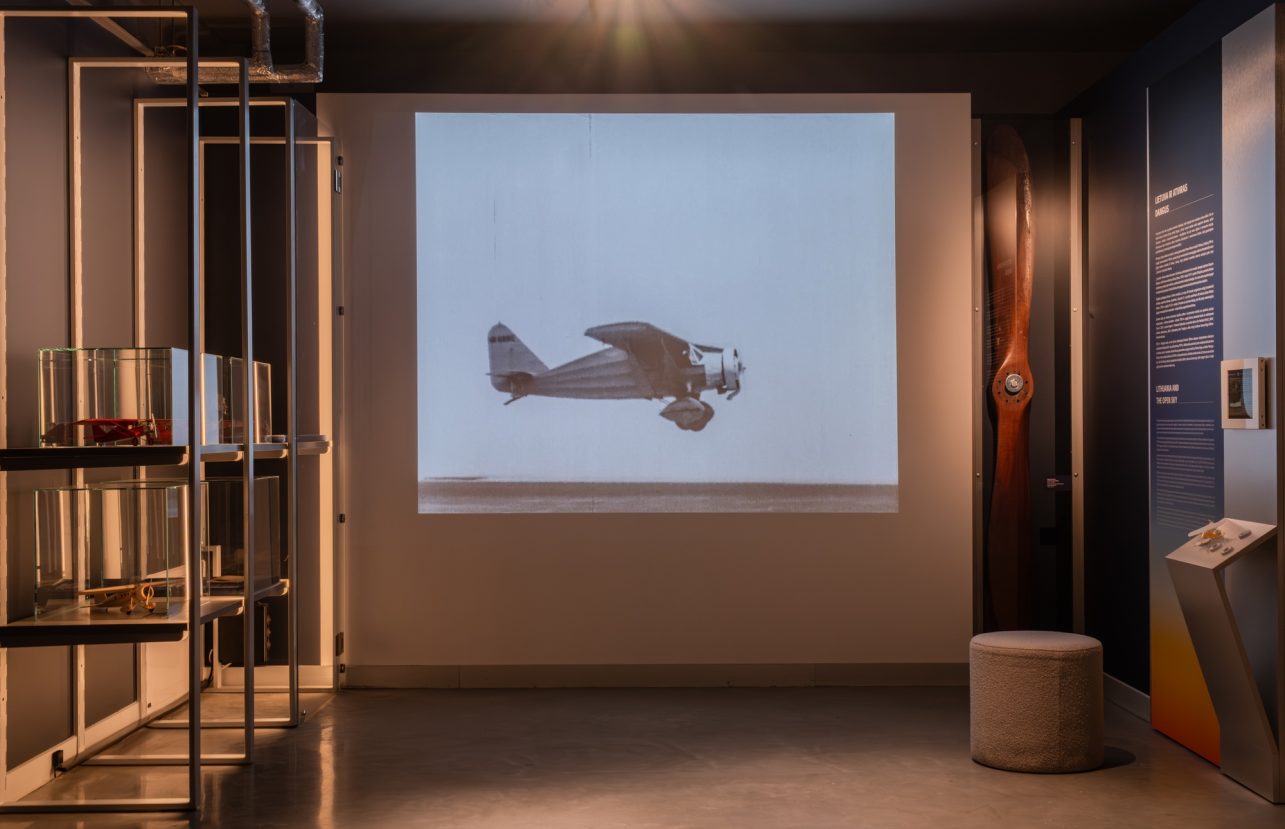
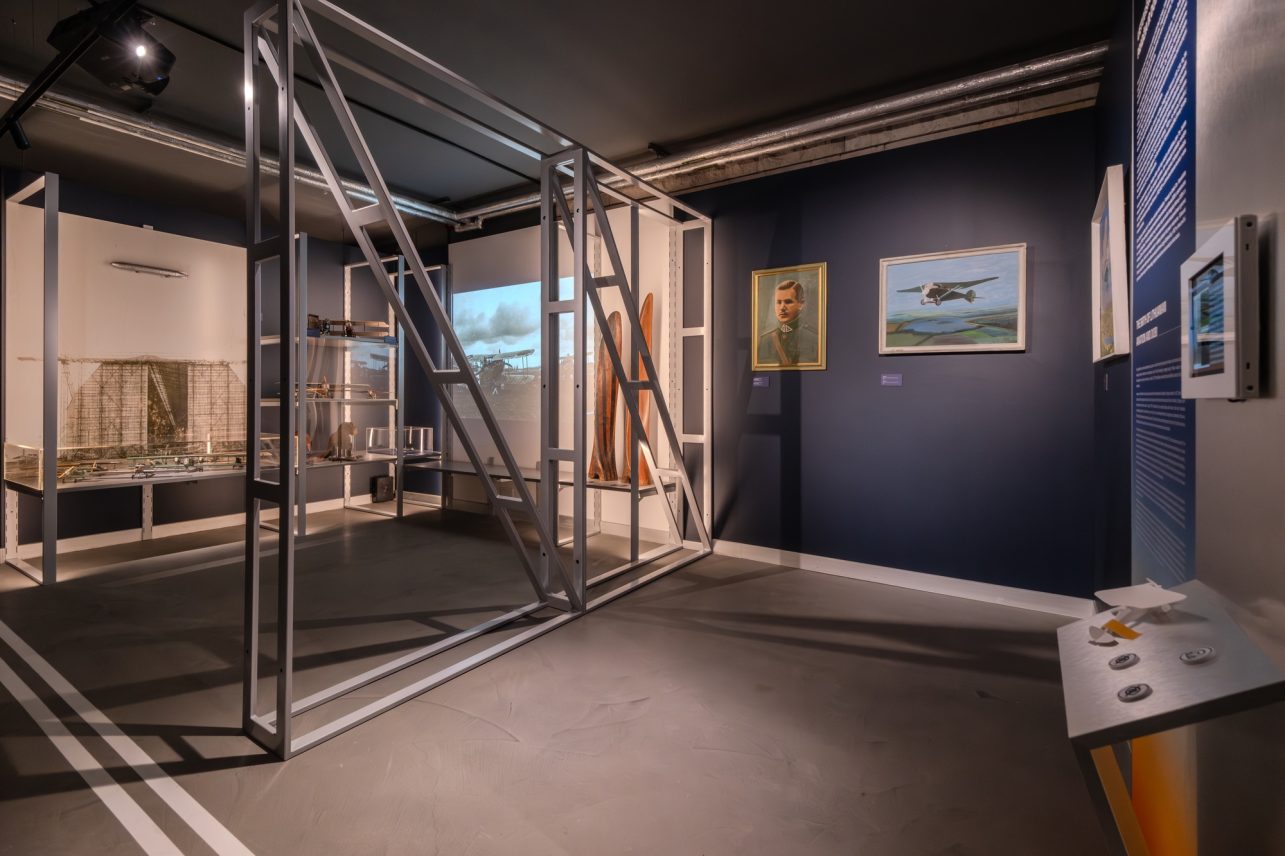
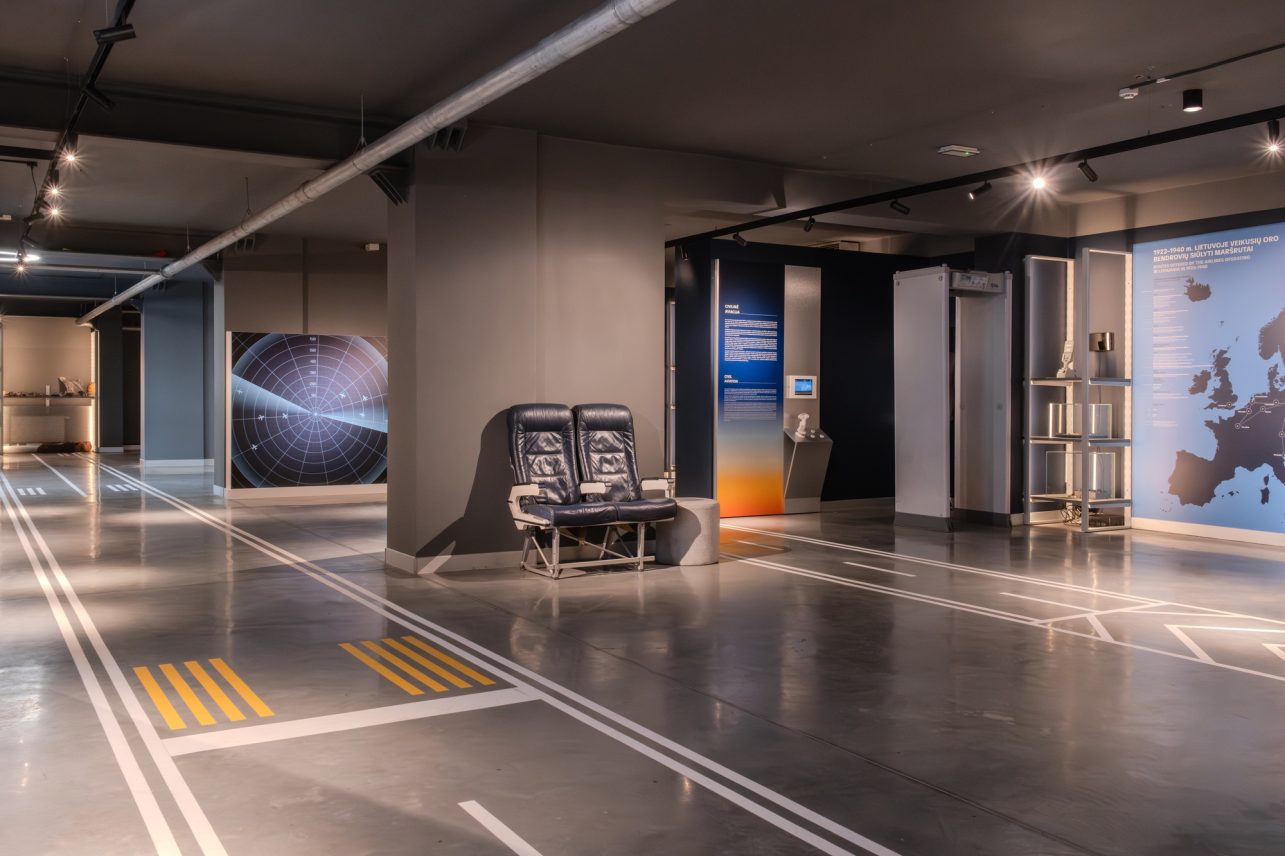
What goes on inside pilots’ minds during flight is also revealed – unfortunately, often only after unsuccessful journeys – by aircraft black boxes. Although the equipment records technical parameters, such as when a pilot advanced the throttle, at what moment the control stick was pulled back, or how the crew followed instructions, the ability to communicate clearly remains one of the most important qualities of a human birds.
In tragic cases, lessons are learned from the mistakes of others. Yet from our conversation, I come to understand that one of the most essential skills in both the science and art of aviation is self-reflection. When asked what working as an instructor has taught him about people, Eugenijus replies:
“You notice that some people seem to be waiting for something, as if for the new knowledge to be installed in them like a computer. But something entirely different is the ability to analyze your own flying. Why, when learning to pilot an aircraft, no more than one hour a day is devoted to flying itself? We joke that longer training would be a waste of fuel. Three hours are devoted to analysis: Why was I slipping during a turn? Why did I choose the wrong landmarks for navigation? If a student spends a break dozing or telling jokes to colleagues, there will be no improvement.”
To see from above
Our tour, too, moves upward: we finish the conversation on the museum roof. “When you fly, you can see many things,” my interviewee says. From here, it seems as though we can see the past, present, and future of Aleksotas, Kaunas, and Lithuania.
Eugenijus points into the distance, “One of the largest buildings in twentieth-century Lithuania once stood here. After the Germans occupied Kaunas, a zeppelin hangar was built at the airfield; 40 meters high, 55 meters wide, and 240 meters long. Imagine a twelve-story building stretching all the way to that fence.” Since February 1916, the airship “LZ 86” was stationed there, used as a reconnaissance aircraft, bombing the railway lines between Latvia and Belarus. The airship dropped 18,000 kilograms of bombs on the Eastern Front. The hangar was demolished in 1929 because it obstructed aircraft takeoffs.
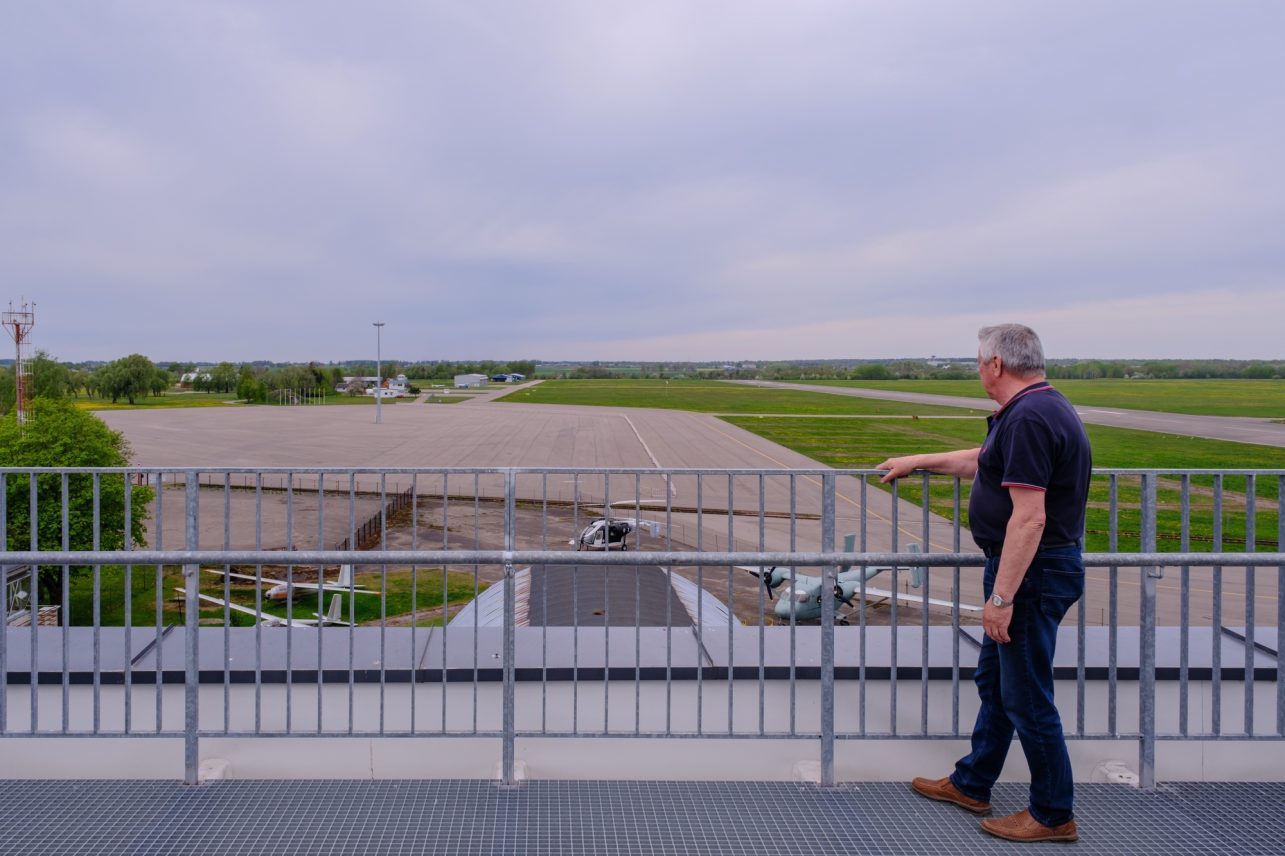
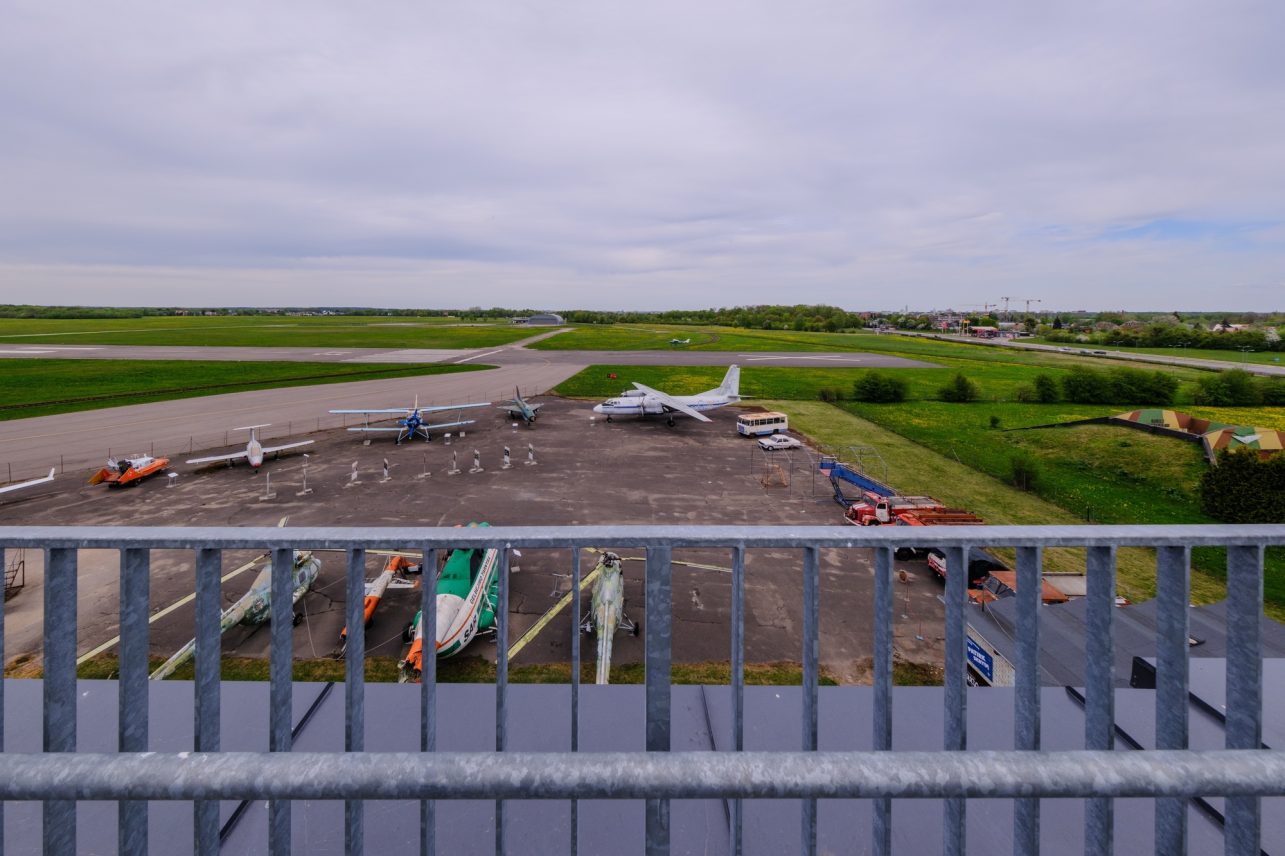
A training aircraft flies overhead, and E. Raubickas comments, “Now the pilot is on the glide path, coming in to land, approaching the runway, now leveling, finished at about half a meter altitude, now touching down with the wheels, there it is, landing.”
On the other side, we can see the former helicopter repair factory. Today, it houses an innovation park.
As we talk about the future, we touch on a trend that has become increasingly popular in recent years: earning a private pilot’s license simply for personal fulfillment. Even though many people, after achieving that goal, are confronted with the reality of aircraft ownership and maintenance costs, the pilot is pleased to see it happen. “If someone manages to fulfill that dream, it warms my heart. I think to myself: there, they did it.”
When we arrive at the highly relevant topic of drones and drone-piloting courses being taught as early as primary school, we return to the importance of broad qualifications mentioned at the beginning of our conversation. It would be beneficial, E. Raubickas argues, if the younger generation learned not only how to operate drones, but also how to repair them and to understand how they work.
The courage to be an idealist
Although the museum does feature birds of a sort – the gliders “Žvirblis” (Sparrow) and “Zylė” (Tit) – it was ultimately people who lifted other people into the sky over the course of more than a century of aviation history: everyone from politicians to art teachers. Why did they all want to be up there? Why did you? I ask E. Raubickas. “I wanted to learn more,” he replies.
Alongside the desire to prove something to oneself, I also hear the pull of adrenaline. E. Raubickas recalls that he was drawn to the Kaunas Aero Club by the example of his friends. “I thought to myself: why can’t I do that too?” The competition tasks are based on calculations, exact repetitions of figures, and attempts to improve one’s own and colleagues’ achievements. Hence the excitement – if others managed to hit it accurately, I must succeed too. Incidentally, restored aerobatic flying celebrates its sixtieth anniversary this year! And in another conversation, Eugenijus invited me to try the dead loop.
So, can we briefly summarize what unites all these “bird people”? Can we cultivate the perfect example of one? E. Raubickas writes about the idealistic upbringing of young aviators: gymnastics training, a well-developed vestibular system. The portraits printed in history textbooks point to the importance of patriotism. But the answer that convinces me comes from the April 30, 1939, issue of “Lietuvos sparnai” (Lithuania’s Wings):
“Flying and air sports cultivate, alongside other athletic virtues, the finest human quality: courage. They foster strength of will and determination up to the very limits of self-sacrifice. Cowards cannot be idealists.”