90 percent dead. No one who hasn’t experienced such a state will understand what it means. As the 35th anniversary of the January events approaches, we found it more meaningful to talk to a simple, so-called, ordinary person – whose story and experience are, of course, not ordinary at all – rather than to politicians who repeatedly reinvent themselves and historical truths on such occasions.
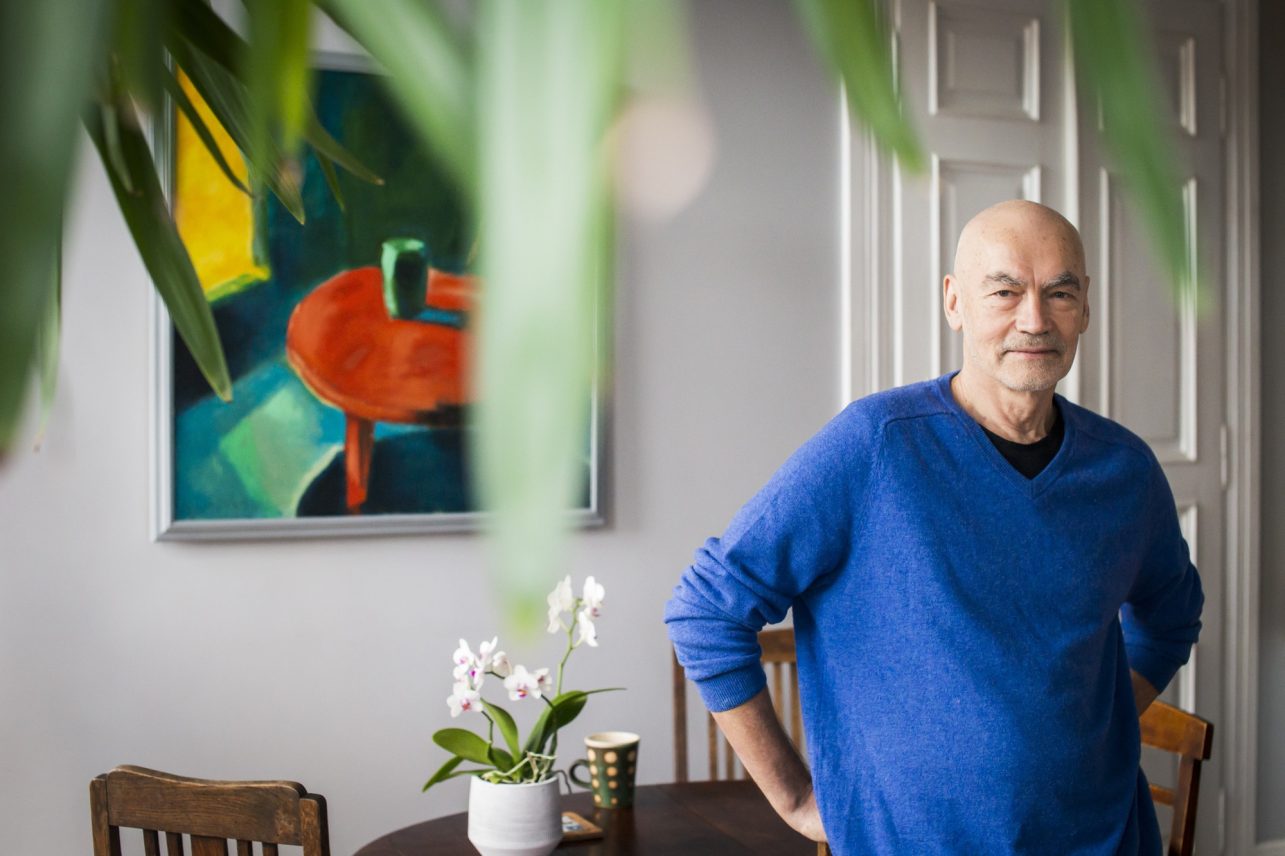
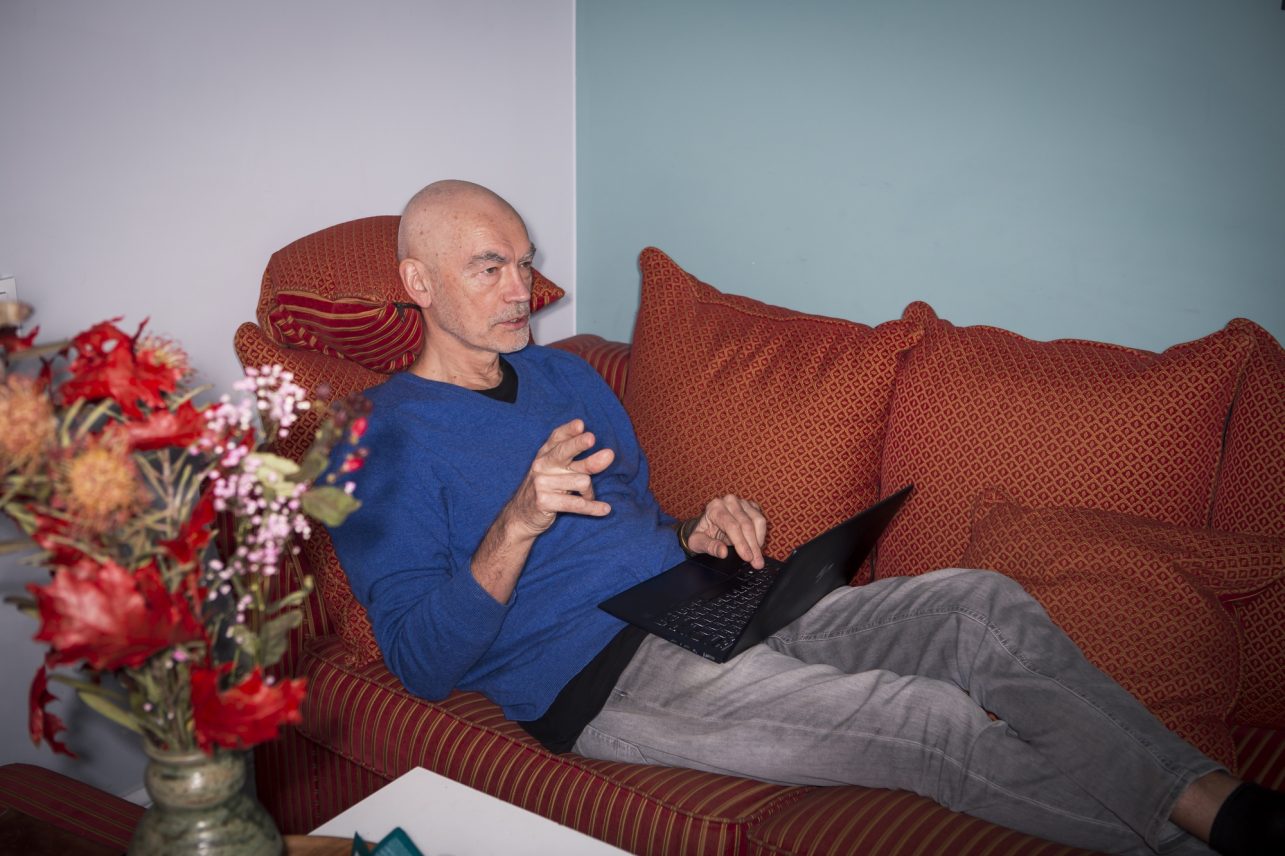
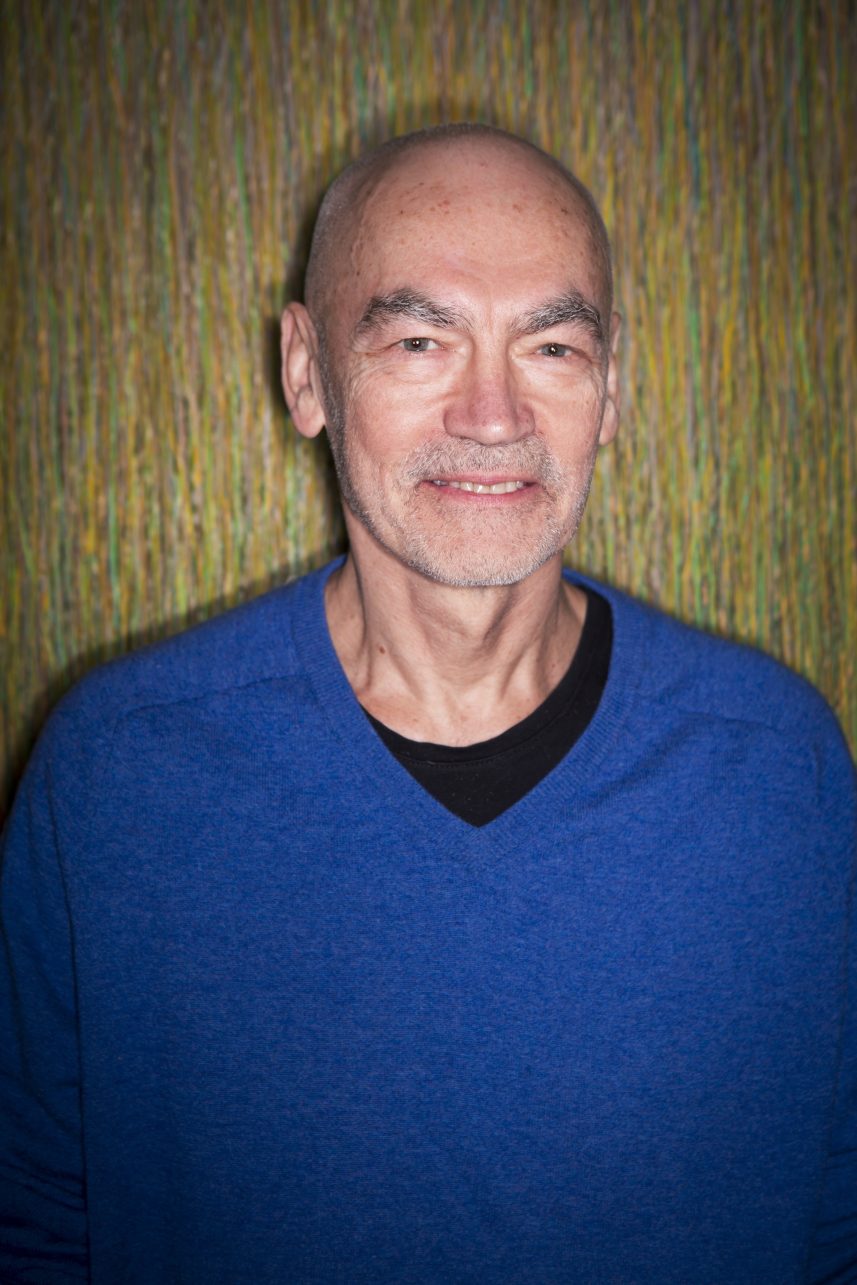
Gintaras Sabaliauskas, a third-generation Kaunas resident, is well known to both already gray-haired bohemians and the young nightlife connoisseurs. With him, you can easily discuss events that took place several decades ago or a recent party at the club Auditorija. “You have to live life. Carpe diem – seize the day – live and enjoy here and now and be responsible; that’s my way of life.”
When asked to tell us about his family, Gintaras laughs and says that his maternal grandmother, begged by her grandchildren and great-grandchildren to recall what it was like during the war, would start talking about… the First World War, when a zeppelin flew over Kaunas, the Kaiser’s soldiers fired at it and bullets fell onto the market pavement (where the Steigiamojo Seimo Square is now, which there are plans to build over). This woman from Kaunas lived to be 110 years old, and as a child, she attended one of only two Lithuanian primary schools in the multicultural city that still belonged to Tsarist Russia at the time.
Our interviewee’s paternal grandfather was also from Kaunas, but during the Second World War, he retreated to the countryside. “I myself felt many temptations to go to Vilnius or somewhere else, but I remained faithful to Kaunas,” says Gintaras, who graduated with a degree in mathematics from the then Kaunas Polytechnic Institute and found work there as well. While studying in postgraduate school (today’s doctoral program), Gintaras realized that once the Lithuanian Reform Movement (Sąjūdis) started, defending an academic degree was no longer worth it.
I tried to fall asleep, but on television I saw that the assault on the TV tower was beginning, and it became clear that there were fatalities.
During the Reform Movement era, the mathematician was already a grown man, with a family and connections that enabled him to be closely involved in crucial decisions. The Reform Movement councils of Kaunas and Vilnius were quite different. Vilnius was more representative, containing people from the art world and culture. The Kaunas one was more radical. In those days, Rolandas Paulauskas seemed almost like a god; he was one of those who shouted: no sovereignty, only full independence. The members in Kaunas were very intellectual, real erudites, and patriots. Supporters of Saudargas and Landsbergis comprised the majority of the Kaunas council, and in part, it was this council that declared independence. Vilnius was more complicated; there were also quite a few communists, who were patriotic but hindered the idea of independence, because they thought that everything would fail,” the Kaunas resident says.
When asked about that fateful January of 1991, the interviewee recalls his friend Saulius Rudžionis, who worked as Vytautas Landsbergis’s personal bodyguard and was also a member of the Kaunas Reform Movement Council. It was he who invited Gintaras to go together to defend the Supreme Council; this was already on January 11.
“The five of us arrived, we entered the building and had to defend it from within. One of our group had a rifle; the other four had nothing. I pried metal radiator grates out of the floor. Someone was preparing Molotov cocktails; others were carrying sandbags… After our shift, on the evening of the 12th, we got into my little Moskvich and returned to Kaunas to rest. I tried to fall asleep, but on television I saw that the assault on the TV tower was beginning, and it became clear that there were fatalities.”
If in the evening it still seemed that Gorbachev was heeding the world’s opinion that there would be no bloodshed, it suddenly became clear that things looked grim. “At two or three in the morning, we jumped into my car and drove back to Vilnius. When we entered the Seimas, they said: anyone who wants to leave – leave now, because everything will be barricaded. No one was afraid of death; very few people left. We barricaded the passages with sandbags and waited for the assault. We understood that they would definitely attack, so we agreed that we would all call our families at home. There were these cheap coin-operated telephones in the Seimas, and a long line of men formed at them. We agreed to speak briefly – one or two minutes – to say goodbye to our families. I felt 90 percent dead,” Gintaras recalls.
Before nightfall, the group from Kaunas was assigned to guard a corridor on the lower floor of the building. “We came up with the idea of pushing cabinets out of the offices and blocking the windows with them. We left one window open: if the Russians attacked, we would knock out the first Russian and grab his automatic rifle. Now it sounds funny; back then, it wasn’t funny. But we were ready: we had planned who would stand where… And yet, morality in politics and diplomatic measures saved us. American and global pressure were enough for us to survive.”
Who did Gintaras look up to? Who inspired him on that cold January night not to stay at home with his family, but to risk his life? “My role model, for example, was Algirdas Saudargas, although at the time he seemed like an ordinary citizen. When you visited him, you could talk about religious and philosophical topics. At that time, I was not yet deeply religious; only later did I become a practicing Catholic and work at the Catholic Television Studio. And he was a Christian Democrat. I remember once he said, perhaps you shouldn’t come to my place anymore, because there’s a Volga parked in the yard and they’re following me. That was in 1989. I myself was never arrested, never sat in basements,” Gintaras says, without trying to embellish the story.
When asked to describe the mood of ordinary society, including the Polytechnic Institute community, as the restoration of Independence approached, the Kaunas native recalls that the desire for freedom and justice was universal. “That united us very strongly. The Reform Movement groups were also formed in the KPI, in each faculty. There were pro-communist figures, but only a few. The KGB published its own newspapers, in which it mocked the Reform Movement figures.” According to the interviewee, at the time, it seemed that the collapse of the Soviet bloc would be a great victory for democracy, freedom, and moral politics, and that the world would move only in a positive direction. But… “I was disappointed by the election of Brazauskas as president. I thought, my God, are there really so many foolish people? It turns out that there are.”
“In 1989, it seemed to me that the Baltic Way was a somewhat overdone affair, more of a show, because the substance was elsewhere. Later, when I started working in advertising, I understood that this too is very important. Now we can clearly see the impact of propaganda and advertising on people, which manifests itself through elections. Back then, it somehow seemed: we’re doing serious things, why show off… But of course, we took part in the common cause of freedom,” Gintaras Sabaliauskas says candidly.
The interviewee, having already become acquainted with computers at KPI, turned toward communication: together with set designer Sergejus Bocullo and cameraman Laisvis Karvelis, he founded one of the first video advertising companies. He recalls that everything was almost like in Beigbeder’s novel, €14.99, especially when, while creating video commercials, they completely let their hair down. “And then came diapers and laundry detergents, so I dropped those things; it stopped being interesting.” Later, at the invitation of Archbishop Sigitas Tamkevičius, he joined the Catholic Television Studio, and after that, the Kaunas Television Service, or KTS, a company that films the biggest television events from sports to music awards to this day.
I know that freedom is harder to bear than a cage.
When talking about the media, we return to the values instilled by his family. “My grandfather, the husband of that hundred-year-old grandmother, used to read just one column in Kauno tiesa: the obituaries and expressions of condolence. “Those never lie, after all, a person has died and then, maybe cinemas’ film schedules.” Gintaras, like his grandmother, also finds the Tsarist Church of St. Michael the Archangel (Soboras) to be out of place, even though it has long since been re-consecrated to the Catholic Church. “There used to be a huge obelisk in Town Hall Square celebrating the tsar’s victory over Napoleon, and they tore that down, but for some reason they didn’t tear down the Soboras. I said they should paint it, say, in rainbow colors, then the people of Kaunas themselves would quickly demolish it,” he laughs.
“Everyone longed for freedom and justice. For people who did not live in those times, it is hard to imagine, for example, that everyone was lying all the time,” Gintaras recalls, returning to the January events from which it was simply impossible to distance oneself. Does he see parallels between those days and the end of 2025, when a sense of injustice brought thousands to the Seimas, and sizable crowds gathered to express their views on free speech in Kaunas and other cities as well?
“There are quite a few similarities. It’s good that people from the cultural sphere are showing initiative; that was the case then, too. I immediately said that it’s important not to stop at the issue of the minister of culture, we need to go further because morality must return to politics. I spoke with people from the Cultural Assembly, shared insights about what could be dangerous, how agents might infiltrate, discredit, try to mock, or diminish the movement. But one must not stop; it’s necessary to constantly look for ways to communicate. Many politicians are incapable of this. Even though they do good work, they don’t know how to present it, they become arrogant, and that has sad consequences.”
Does Gintaras know the answer to why people of his generation fought for freedom, obtained that freedom, and now no longer make use of it? “Freedom is not safe. Even at work, I feel that I need to draw boundaries for people: this is good, and this is bad. I call it stupidity. A person doesn’t want to think, so they watch reels or poor-quality shows. I’ve worked in television for a very long time. We have created very serious, profound productions, and I always tried to include an educational element in them. I remember that TV3 received a license as an educational channel. But in the end, I was told, “Forget those moral things, only entertainment works.” And that’s where commercial television went. To be honest, I don’t really watch it myself; I don’t even have a TV set, unless I see it online, but it’s not very interesting. What I do know is that freedom is harder to bear than a cage.