Predators who rejected canons
By Tomas Pabedinskas
Four decades ago, creative possibilities for photographers in Lithuania seemed to have fairly clear boundaries, defined both by the dominant humanist photography tradition in the country and by the ideological requirements and state control of the Soviet era. Yet it was precisely in such circumstances that an informal photographers’ group, “Plėšriųjų sekcija” (the Predators’ Section), formed in Kaunas. Its members disregarded creative canons and ideological rules, shaping what was then the avant-garde direction of photography in Lithuania.
(Text published in the February 2026 issue of the magazine “Kaunas Full of Culture”, theme “Tribes”)

The Predators’ Section (the group of such like-minded people as Gintautas Stulgaitis, Saulius Paukštys, Visvaldas Dragūnas, Giedrius Liagas, and the occasional participants Gintaras Jaronis and Robertas Kanys) was brought together by Arūnas Kulikauskas and gained that name because one of their meeting places was Stulgaitis’ laboratory in Kaunas Zoo, next to the predatory animals’ quarantine room. However, the name “predators” chosen by Dragūnas aptly described the creative principles of these uncompromising photographers, who helped form an alternative to the direction of photography established by the then Lithuanian Photographic Art Society (now Lithuanian Photographers Association).
The Lithuanian Photographic Art Society, as well as its Kaunas branch led by the renowned Lithuanian photographer Aleksandras Macijauskas, promoted the so-called Lithuanian school of photography: a distinctive, “Lithuanian” branch of international humanist photography that emerged in Lithuania in the 1960s and remained influential for several decades. The works of its representatives emphasized universal human values alongside national ones, often expressed through moments of everyday life of “ordinary” people, which in the photographs became easily understandable visual metaphors. This worldview was reflected in the aesthetics of works by authors now considered classics of Lithuanian photography: expressive, sometimes dramatic, sometimes poetic, but always compelling images. Moreover, the impact of their work was amplified by large-format, high-quality prints.
Just as MTV once included Nirvana into the category of popular culture, today’s art history has incorporated the Predators’ Section into the official history of Lithuanian art.
The Predators’ Section rejected these creative principles that had earned Lithuanian photography international recognition and, over several decades, had become canonical. They were not concerned with grand themes of humanity or the nation, but with personal and subjective experiences in everyday life, which, by the late Soviet period, had seemingly lost that generalized, universal meaning. The photographers’ changed perspective, combined with a historical context different from that of the 1960s, shaped a distinct creative style of the “predators”. They chose to capture seemingly insignificant moments and objects of daily life, reflecting meaninglessness in their work, while discovering meaning in private spaces and among people closest to them. The visual language of the “predators” photographs was also not easily decipherable, as traditional methods of interpreting or evaluating images did not apply. The compositions could appear amateurish or even accidental, and the prints often exhibited low technical quality. The photographers did not always choose exhibition formats for their photographs, and their subjective perception of the world was frequently conveyed in small, toned, unique silver prints.
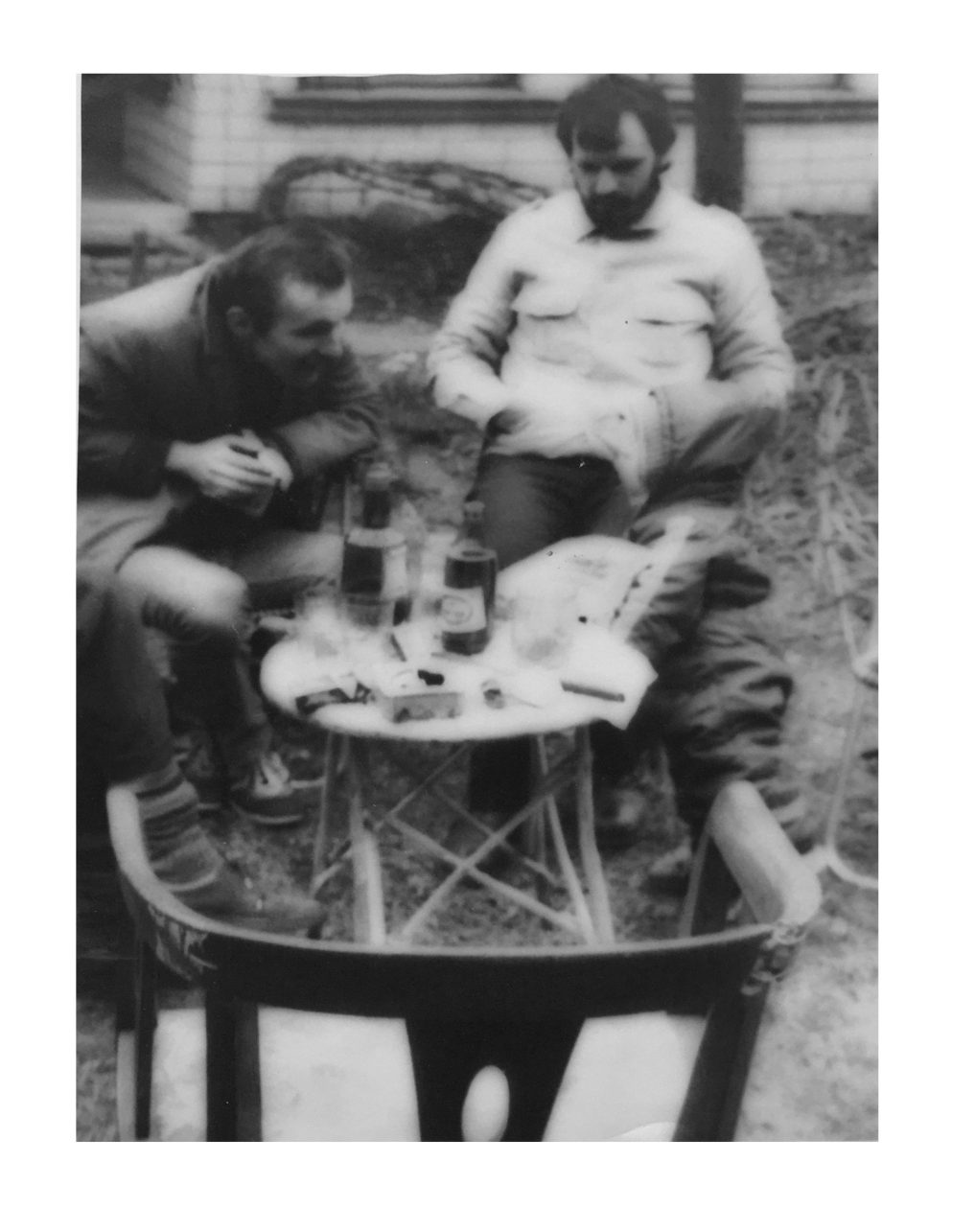
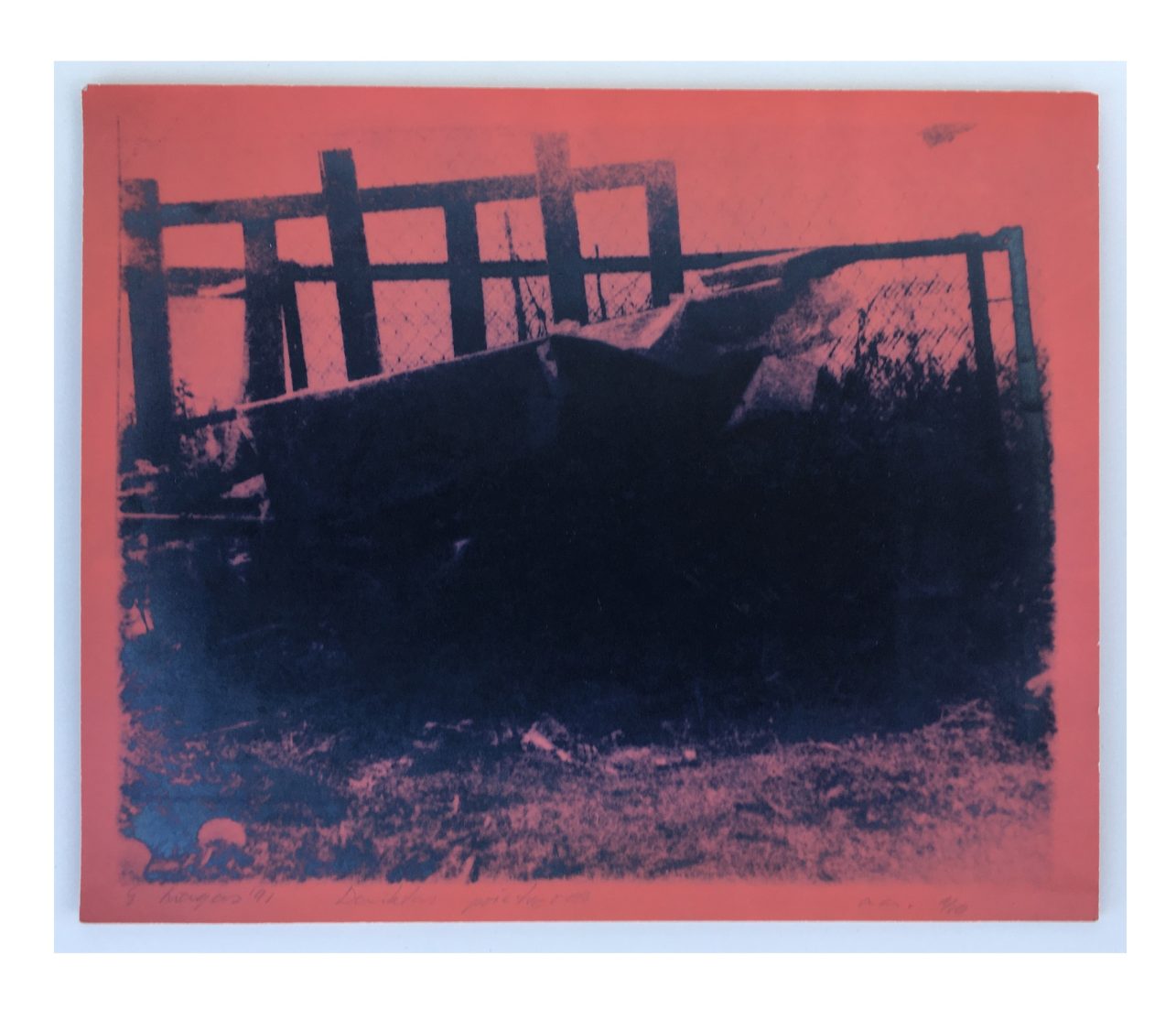
Although united by their detachment from previous Lithuanian photography traditions and their critical attitude towards the political, social, and cultural circumstances of the time, the members of the Predators’ Section were creatively individual and distinct photographers. Kulikauskas began using techniques unusual in photography (hand-colouring, incorporating X-ray images into montages, burning photographs, stitching them with a sewing machine, and introducing textures that were later adopted by other members of the group). Kanys created meticulously composed and technically refined photographs. Dragūnas printed his works in exceptionally large formats for that time; particularly significant is his “Butas” (Apartment) series about the construction flaws left behind by builders in his home. Meanwhile, Stulgaitis shaped the avant-garde Kaunas photography of that period by paradoxically turning back to pictorialism, a late 19th and early 20th century photography movement that imitated painting.
The works of the other group members were equally unique: Liagas experimented with various textures, Paukštys distinguished himself with photomontages and unique hand-colored reflections of student life and the surrounding world, and Kulikauskas created a conceptual photography series “Ūkanotos praeities dvelksmas” (Breath of a Misty Past) in 1989, printing photographs from negatives by an unknown author found in the attics of Kaunas Old Town, which captured vacationers in Palanga in 1939.
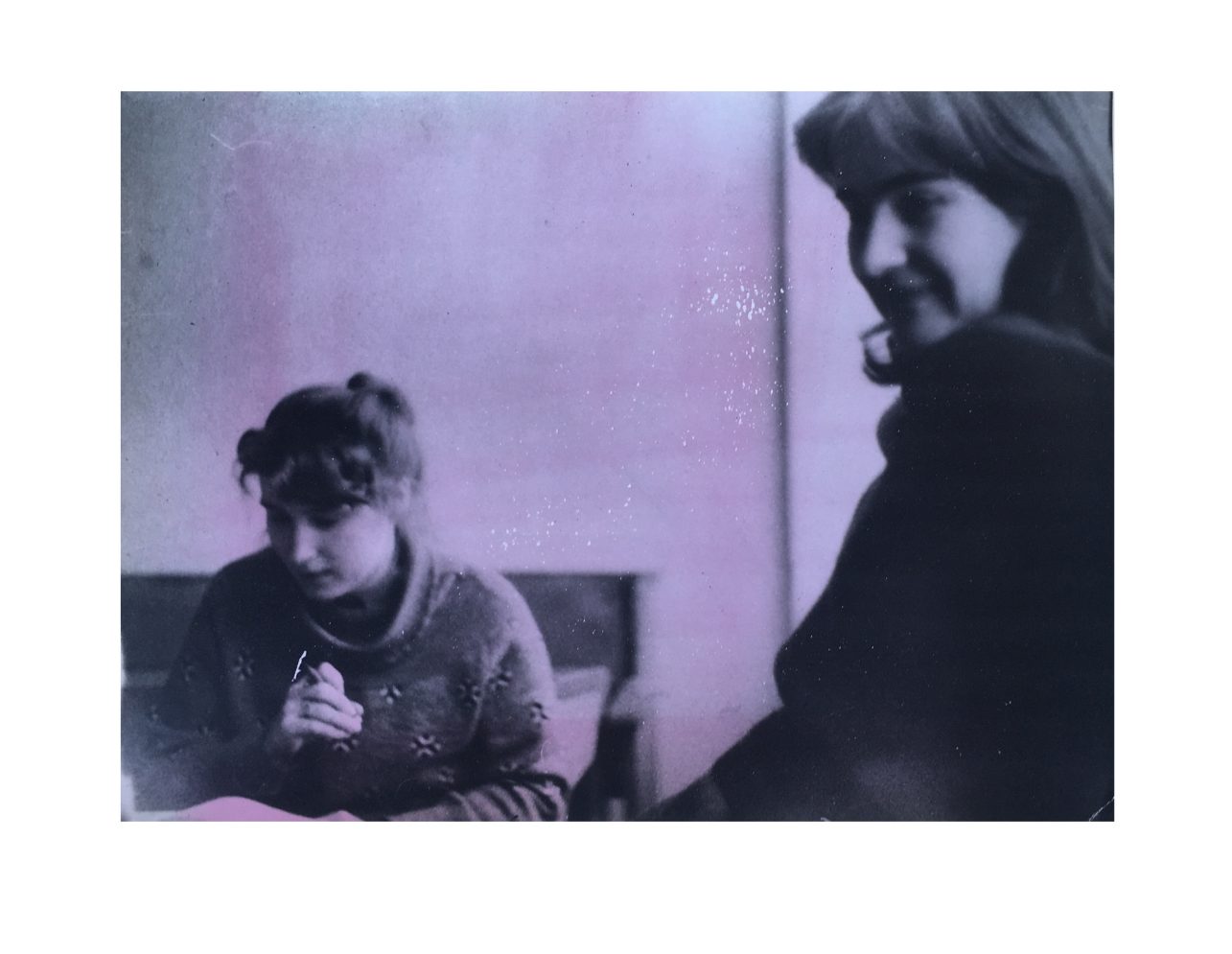
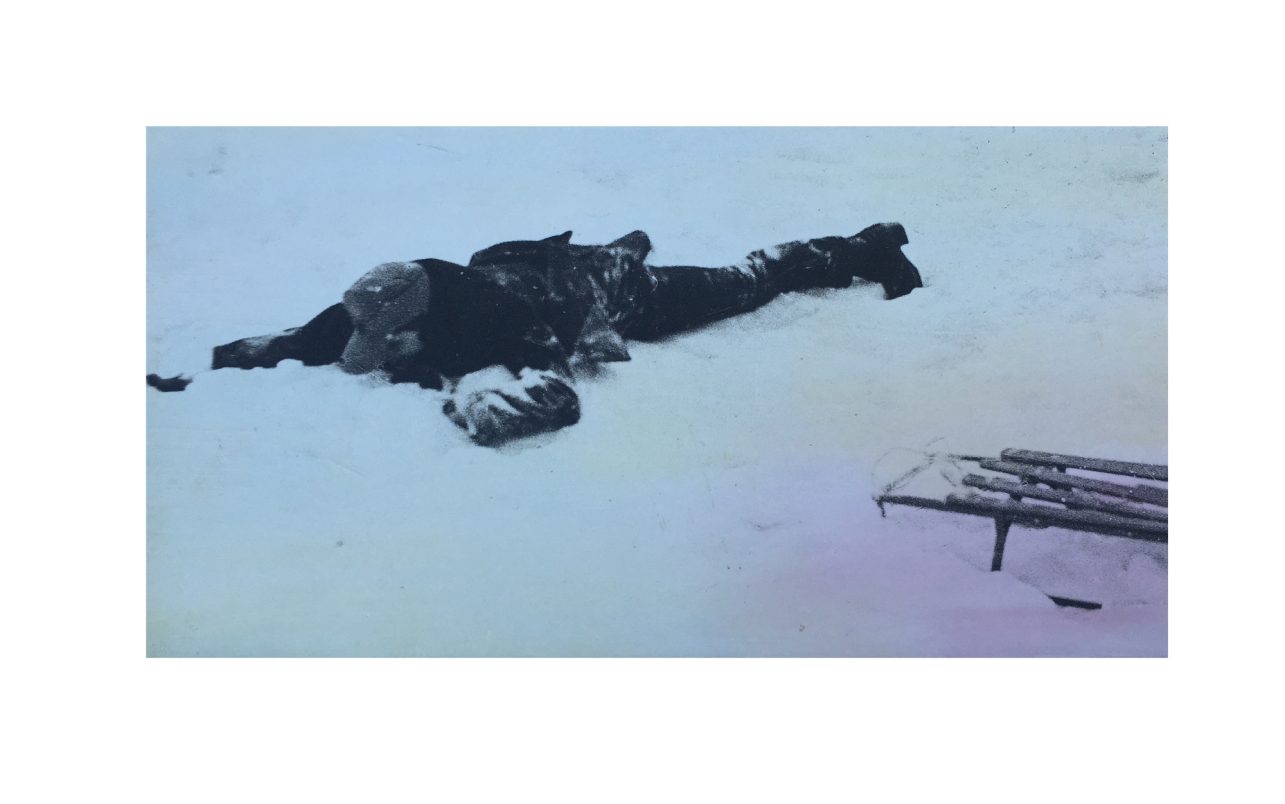
Nevertheless, despite their individual differences, the work of the Predators’ Section as an informal collective of photographers at first received no positive response, or more precisely, no response at all.
“Unable to show our work through the society, we looked for other ways. When the director of the Santaka cinema in Kaunas began screening alternative art films, we came up with the idea of holding our exhibition there since that place was frequented by a more suitable audience. It turned out that Gintas’s mother knew the director. Great, we got the ball rolling. We put on the exhibition, and no one punished us. Yet it was met with complete silence,” –
That is how Kulikauskas remembers the debut exhibition of the “predators” in 1985, titled “Autoportretas ir natiurmortas” (Self-portrait and Still life) in the book “Kauno avangardinė fotografija: paskutinis sovietmečio dešimtmetis”.
In the same book, one can also read an interview Kulikauskas gave in 1988 to the newspaper “Komjaunimo tiesa”, in which he recounts how he was arrested after photographing a suicide victim who had jumped from a viaduct; how he was detained for photographing railway tracks; and how he had to explain himself to officers after pointing his camera at a beggar collecting sugar cubes in the “Laumė” café.
Both the photography establishment of the time and the political authorities, who guarded the image of an ideal Soviet society, pushed the “predators” to the creative and ideological margins. Of course, for the sake of accuracy, it should be noted that an exhibition by the Predators’ Section was also held at the Kaunas Photography Gallery of the Lithuanian Photographic Art Society, and in 1986 works by Kulikauskas and Stulgaitis were shown in the same gallery in an important exhibition of young photographers from the Baltic republics. However, this does not essentially change today’s understanding of the Predators’ Section: without consciously seeking it, its members became a sign of avant-garde creativity and an alternative worldview of that period. Similarly, about a decade earlier, the regime hostile to Western culture and the repressions of the Soviet government turned Kaunas hippies into a symbol of political resistance, even though they only longed for personal and cultural freedom.
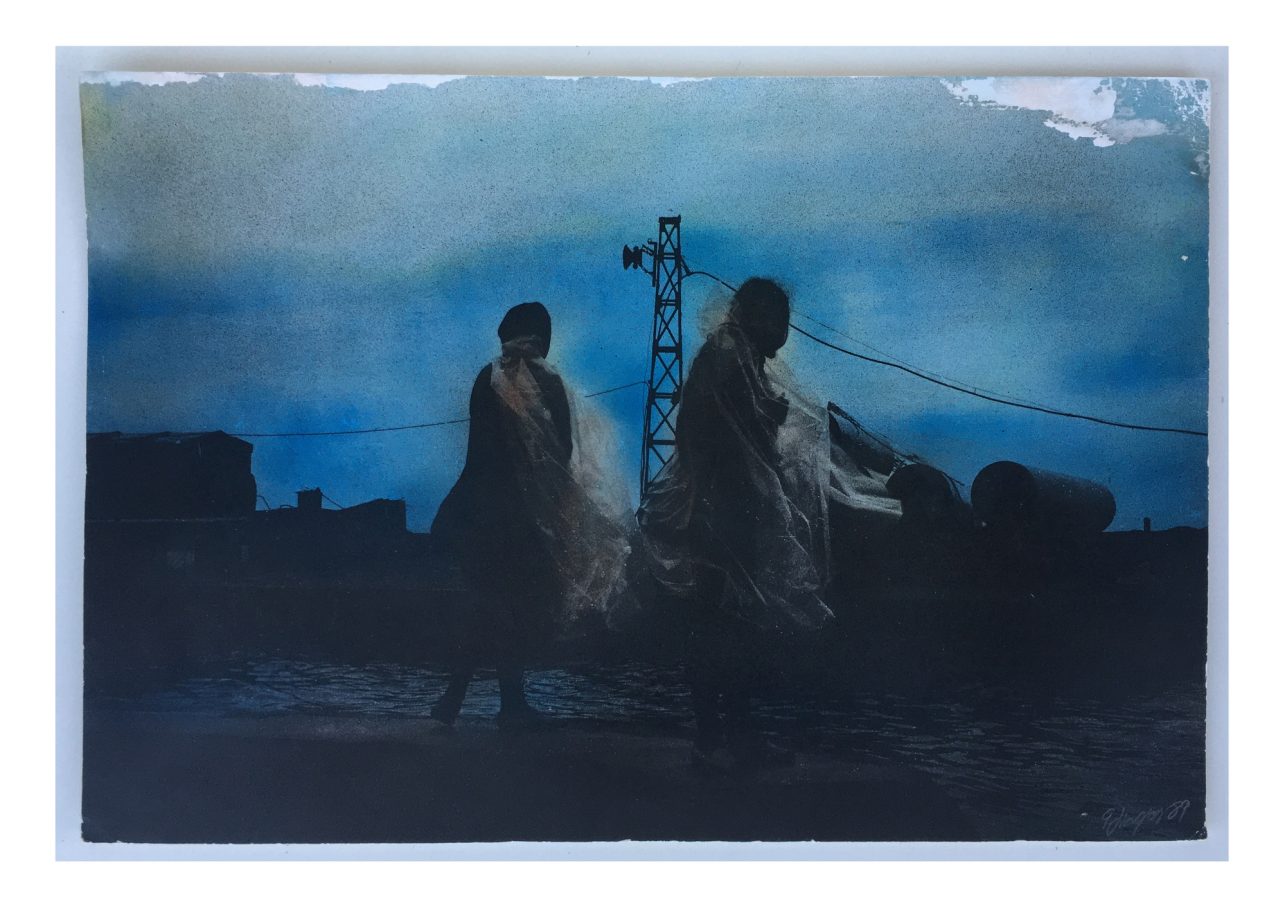
Thus, it is no surprise that photography historian Dr. Margarita Matulytė, in her book on Kaunas avant-garde photography, analyses not only the significance of the Predators’ Section for the development of Lithuanian photography, but also points out its connections with a broader international cultural context:
“The ‘predators’ were a product of subculture and photography was one of the possibilities for original expression for them. They were something like grungers, culturally and socially resembling the alternative rock performers who emerged in the West in the early 1980s. Their heavy, ‘dirty,’ apathetic, melancholic, depressive sound became an element of a new image that was stylistically transferred into various forms of self-expression. Motifs of social alienation, discomfort, and apathy, intertwined with themes of liberation from the ideology imposed by the Soviets, also expressed the worldview of Kaunas’s young artists.”
The Predators’ Section indeed had all the features of a subculture: a unique worldview and values, different from those that then prevailed in the field of Lithuanian photography and were publicly promoted in society, and they embodied their symbolic world in artistic creation. However, just as MTV once included Nirvana into the category of popular culture, today’s art history has incorporated the Predators’ Section into the official history of Lithuanian art. The ultimate confirmation of this was the exhibition presenting the work of the “predators,” “ZOO Photography. Kaunas. The Last Decade of the Soviet Era”, held in 2011 at the National Gallery of Art in Vilnius.