Metal lace from Garliava
By Kotryna Lingienė
“Hello, you might find it interesting,” last year, a brief message with an attached photograph dropped into the editorial mailbox. The photo depicted something that looked like metal lace, like a Gothic church or perhaps… a tractor? Interesting. After some clarification, a film industry professional who had previously appeared on our pages dictated his phone number. I dial. He answers, “Yes, I was informed. OK, Tuesday is good. See you then.”
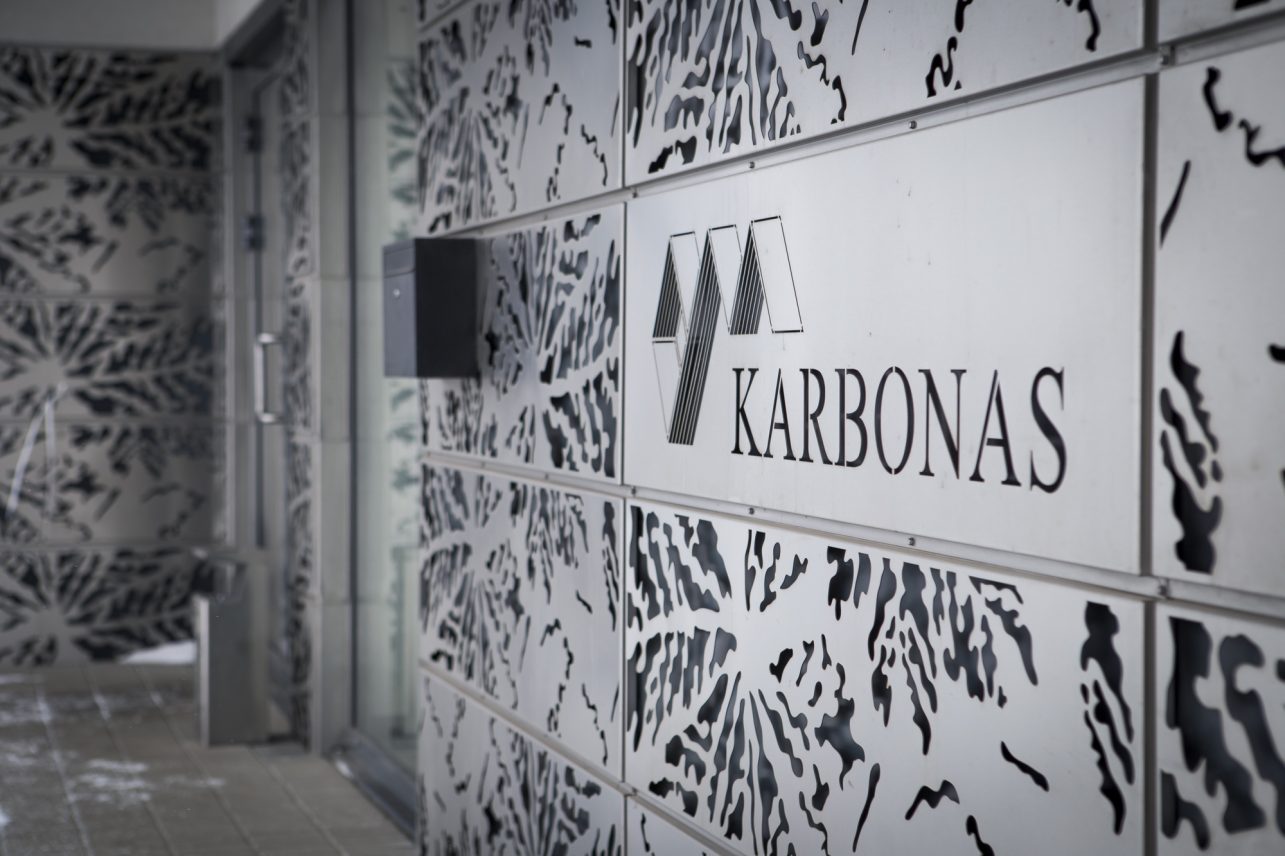
On Tuesday, as we leave Kaunas in the heavy snow, photographer Donatas and I joke that stories lurk in the most unexpected places, though in this case, they could have waited a little closer to the city center. We debate why we’re heading to a metal company whose name sounds more like coal: Karbonas. Here’s Garliava! We enter an industrial district and can already see our destination from a distance, a building with a metal facade. Soon, we meet one of the company’s owners, Gintautas Jatulis, in person. Throughout the visit, he remains consistently modest and doesn’t shy away from irony.
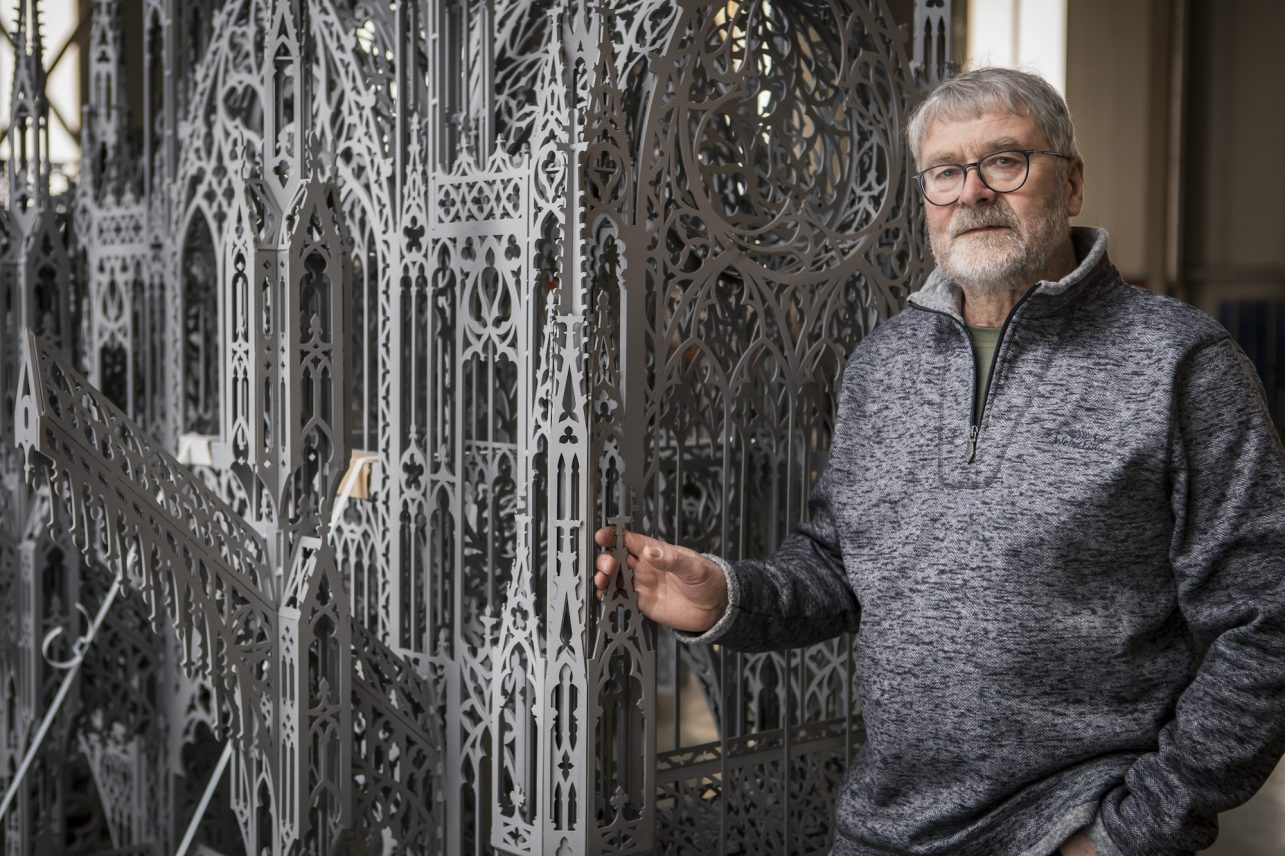
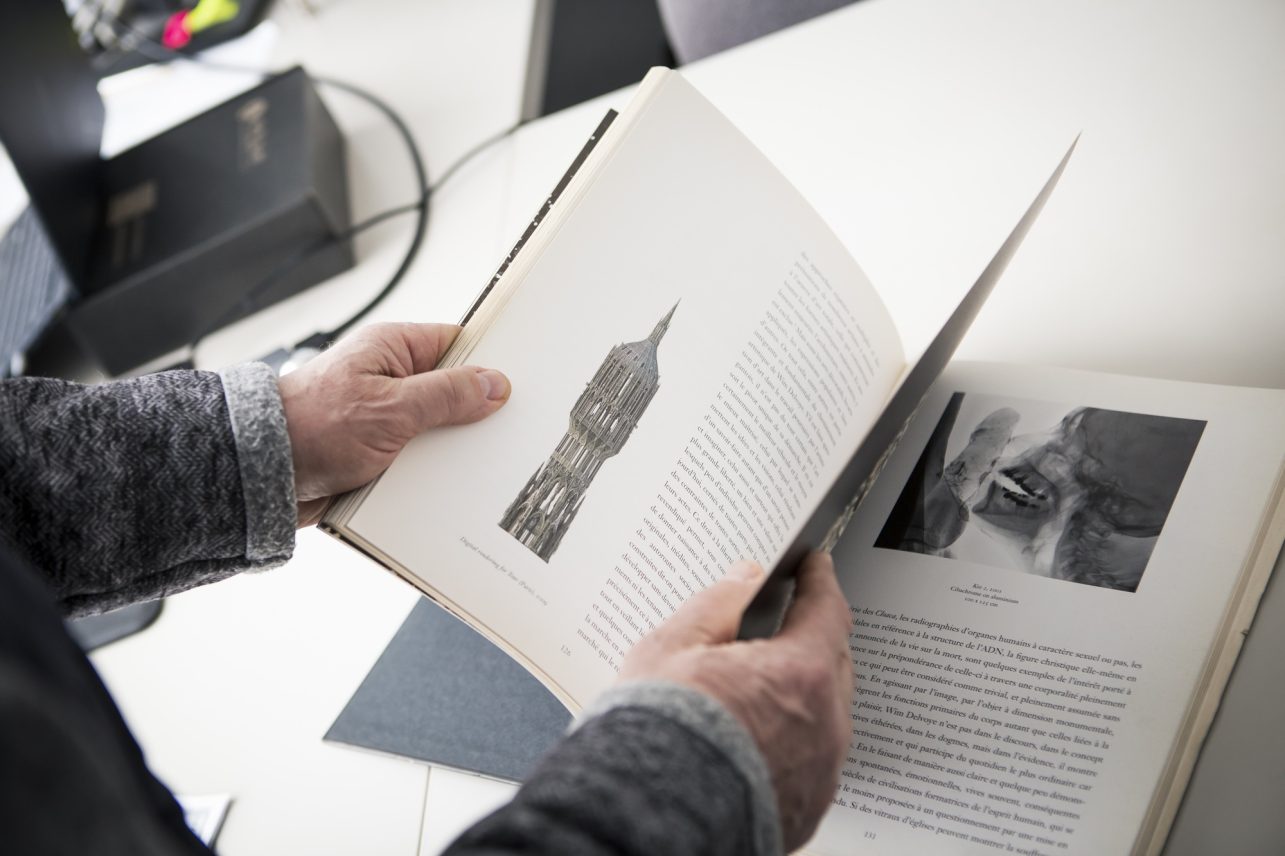
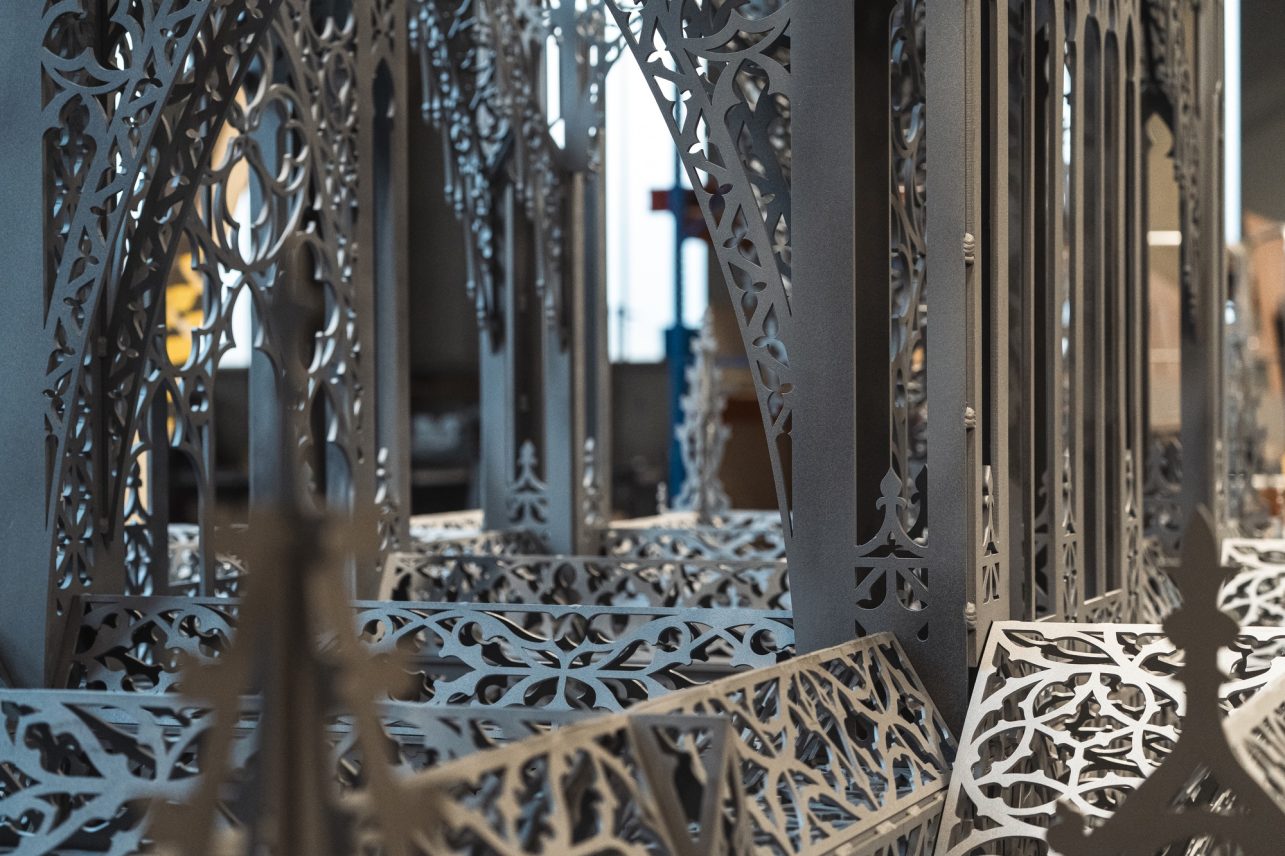
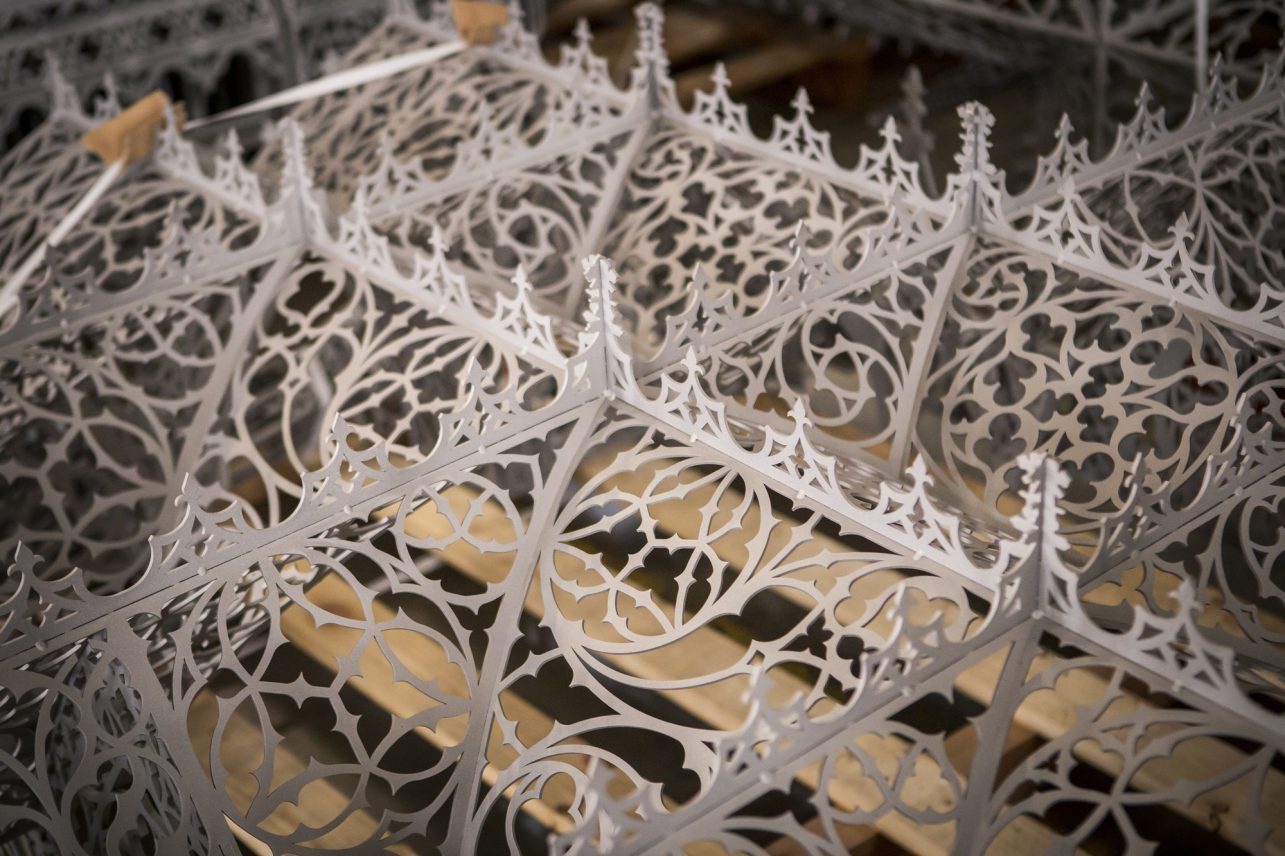
Once our ears get used to the monotonous hum of the factory equipment, it’s time for the eyes to experience the shock. In front of us, we see a concrete mixer truck’s drum, or rather, a sculpture shaped like one, made from the same steel “lace” as seen in the photographs. This is the reason for our visit. Here, on the outskirts of Kaunas, works are created based on the drawings of contemporary artist Wim Delvoye, who became famous worldwide for tattooing pig skin. These artworks later travel to places such as the Louvre Museum in Paris or to Dubai, full of wealthy people who seem to have seen everything.
A business started by specialists
Gintautas, who came to Kaunas for the first time in 1977 on New Year’s Day, saw the dirty slush and mud and said to himself, “I won’t set foot in this city.” The following year, he was already studying there, and soon after, he started a family and later founded a factory with his colleagues in Garliava. Now he lives in the Kaunas district, where his wife is originally from. He is a bit like the steel: hard and unyielding at first, but life bends it in its own way.
Our interviewee, originally from Northern Lithuania, studied machine manufacturing at the then Kaunas Polytechnic Institute (now Kaunas University of Technology). First, we ask him to settle our debate about coal and steel.
Metal is a material that requires strength, but allows you to create very delicate things.
In 1995, when the business started, the company was called Triasas because there were three founders, three “aces”, but also a geological period. A few years later, the stainless steel business of Kaunas residents was acquired by the Swedes along with the name. A new name had to be found. “Since we were moving into manufacturing, and the foundation there is black carbon steel, we called ourselves Karbonas. By the way, Carboniferous is also the name of a geological period, only it came a little before the Triassic.”
The way to the Belgian’s heart
The artisans from Kaunas have been working with Wim Delvoye for 15 years. For most of that time, they were bound by confidentiality agreements, which is why you are only reading about it now. The Belgian discovered Karbonas through another line of his work: tire carvings. A Lithuanian woman worked on his team and, when steel craftsmen were needed, she recommended her compatriots. “The first job was that concrete mixer. He came, asked if we could do it, and since we had a laser cutter and skilled cutters, we decided to try.” Since that first attempt, they have created about a hundred artworks.
“Wim is a true artist, a little bit crazy,” Gintautas smiles, recalling how he once visited the client in Belgium to discuss technical requirements. “I brought a box of chocolate as a gift. He was sitting with some ladies, talking, and didn’t even turn around. I put the chocolate down and said, “Try the Lithuanian chocolate and compare it to the Belgian one.” He turned around and said, “Oh, yeah, indeed!” And then we started taking. His works are in the Louvre; his 29-meter-tall tower stood under the glass pyramid… Not every Lithuanian can boast that their works (or part of them) are displayed in the Louvre,” our interviewee tries to be ironic, but he is right, not everyone indeed!
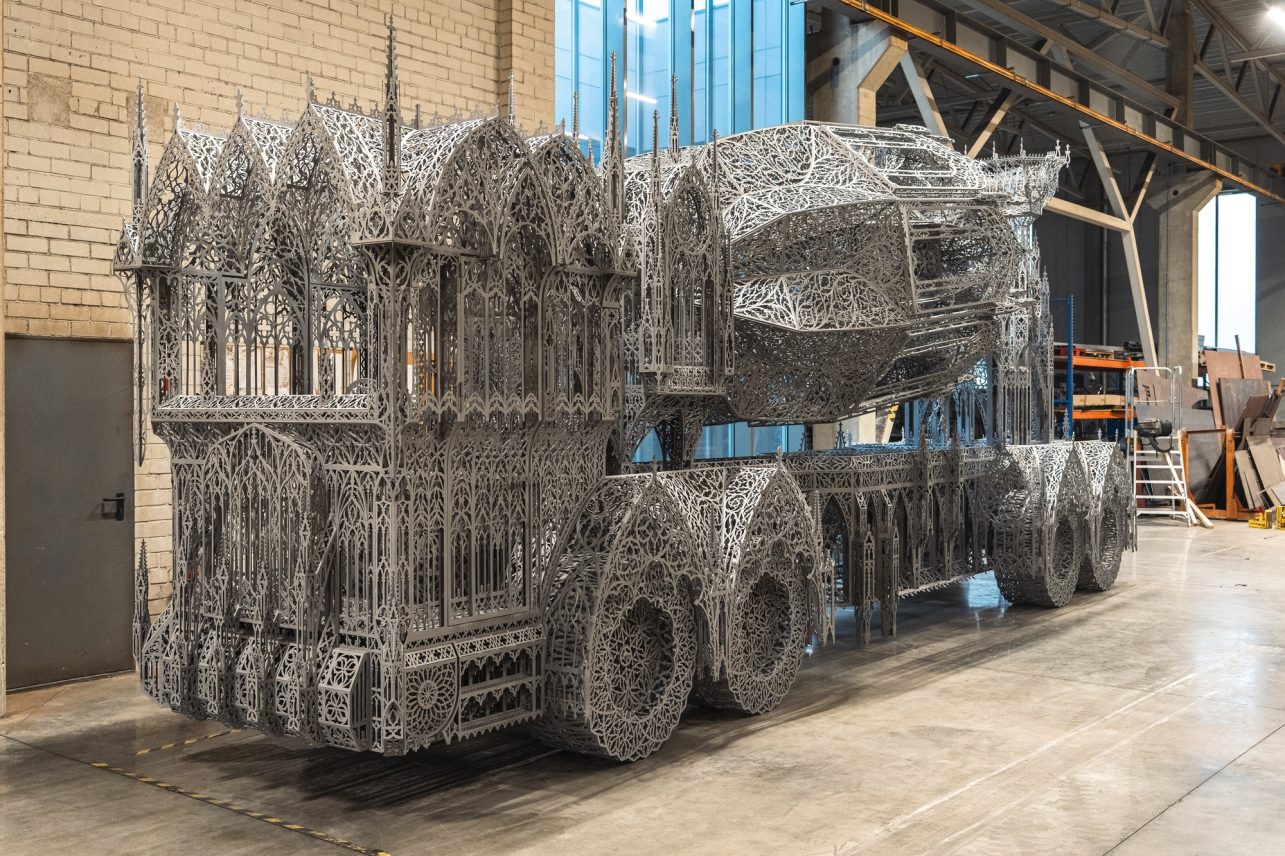
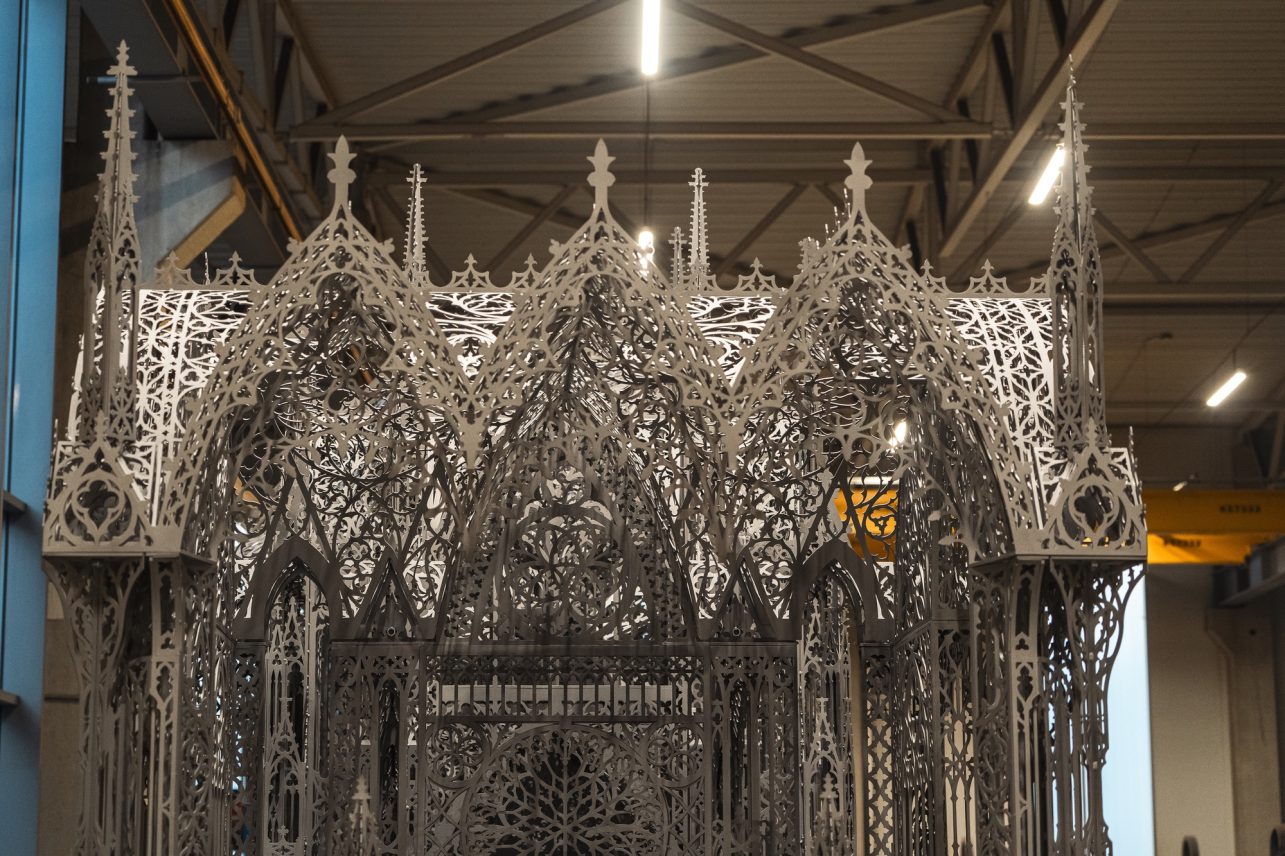
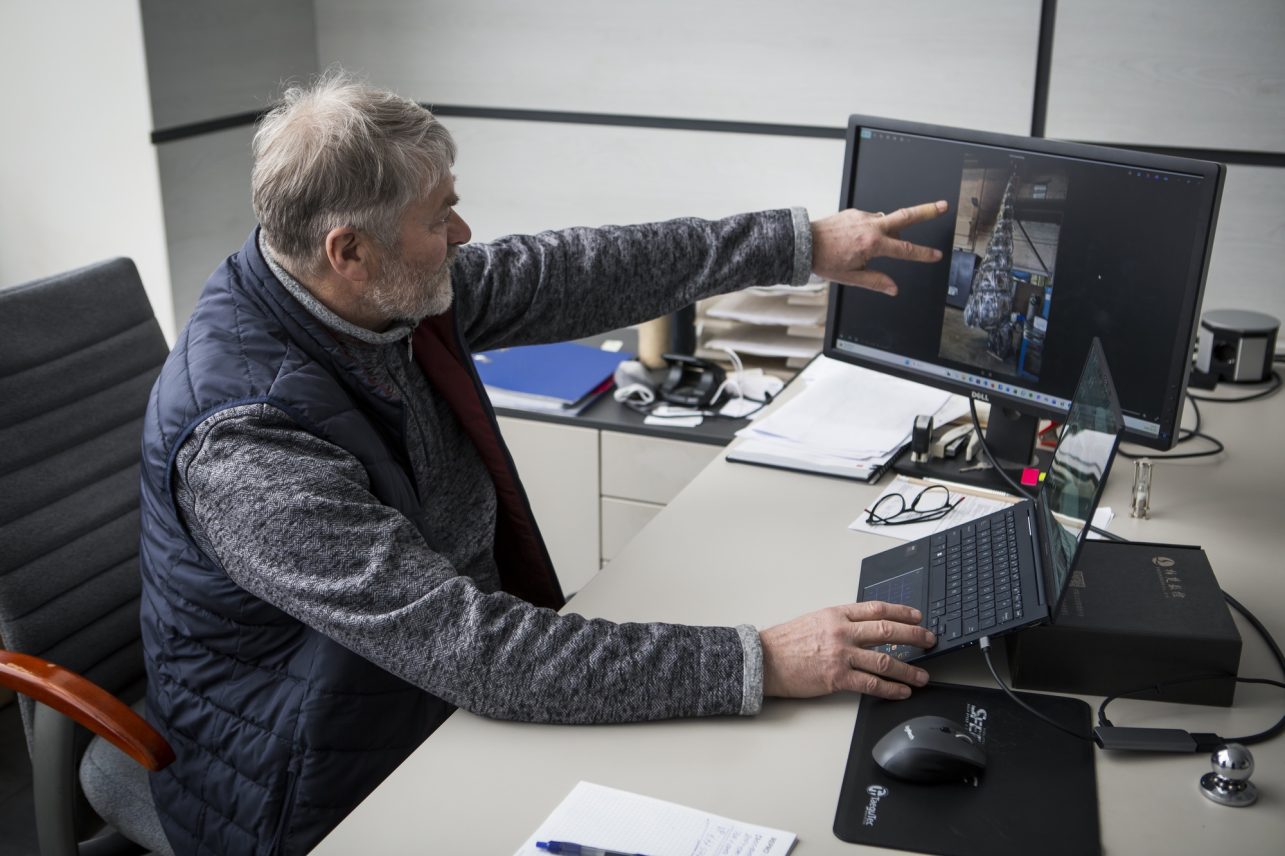
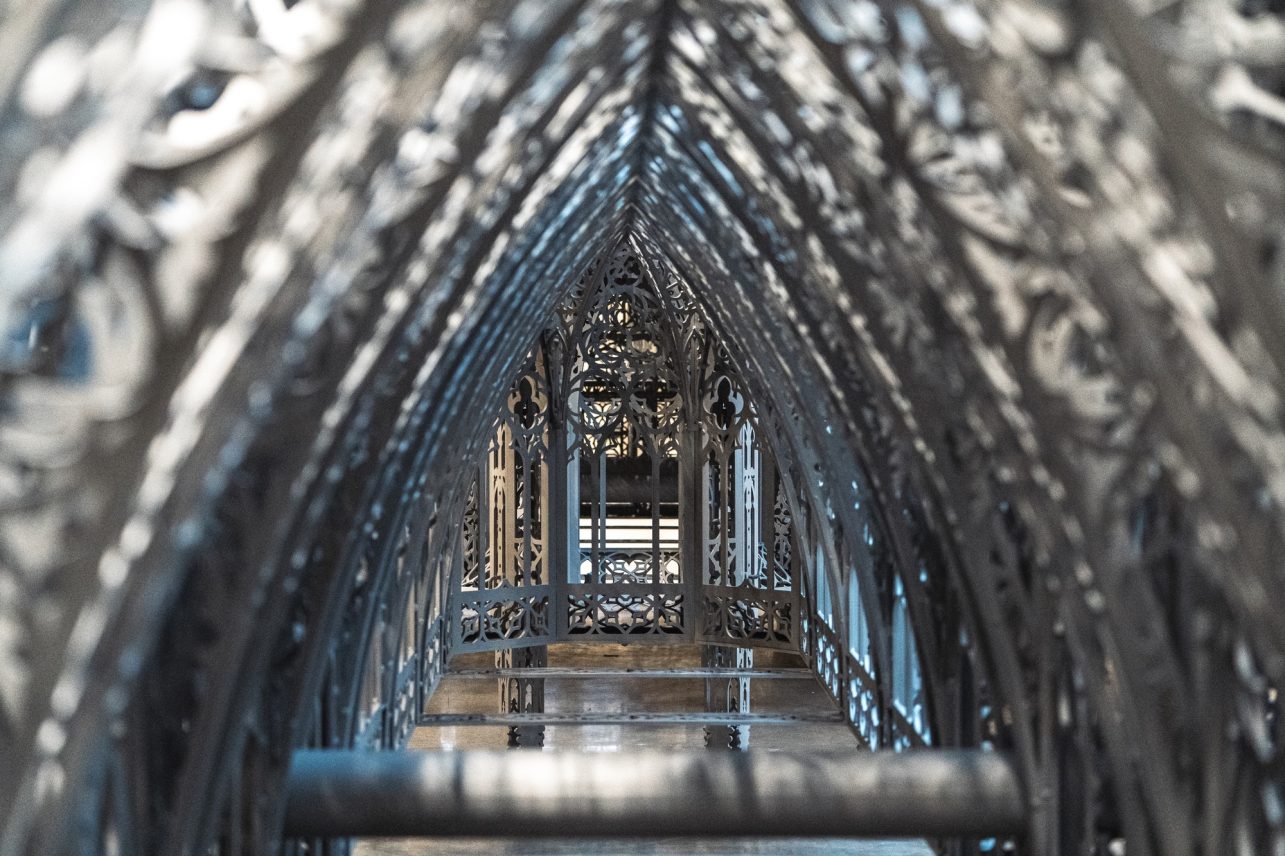
When looking closely at the lace-like steel sculpture, I find I have many questions about the process. Gintautas patiently explains, “The artist sends the drawings and a 3D model. We don’t design it ourselves; we only adapt everything for our production. This concrete mixer consists of about 3,000 parts. And last spring we made a large shell, over 10,000 parts. And all of them are different! Sometimes the difference is minimal. If you pick the wrong one, you won’t be able to assemble it anymore. That’s where the complexity lies,” the interviewee describes the scale of the challenge.
We even have a team that traveled to Romania to save the situation when representatives of a new company there were unable to assemble a pergola designed by Wim.
Until quite recently, Karbonas employed about 70 people, though now there are somewhat fewer employees. Some specialists first came for internships and ended up staying to work for more than a decade. It would be unfair to underestimate their work. For me personally, everything related to operating machines seems complicated and dangerous. But do all of them willingly take on challenges that require such jewel-like precision, such as bringing a contemporary artist’s ideas to life?
Some immediately say, “No, I am not touching this; you can do whatever you want.” And others take it on with pleasure. “We even have a team that traveled to Romania to save the situation when representatives of a new company there were unable to assemble a pergola designed by Wim,” the metalhead, as Gintautas refers to himself, recalled the comical situation.
Water cuts through everything
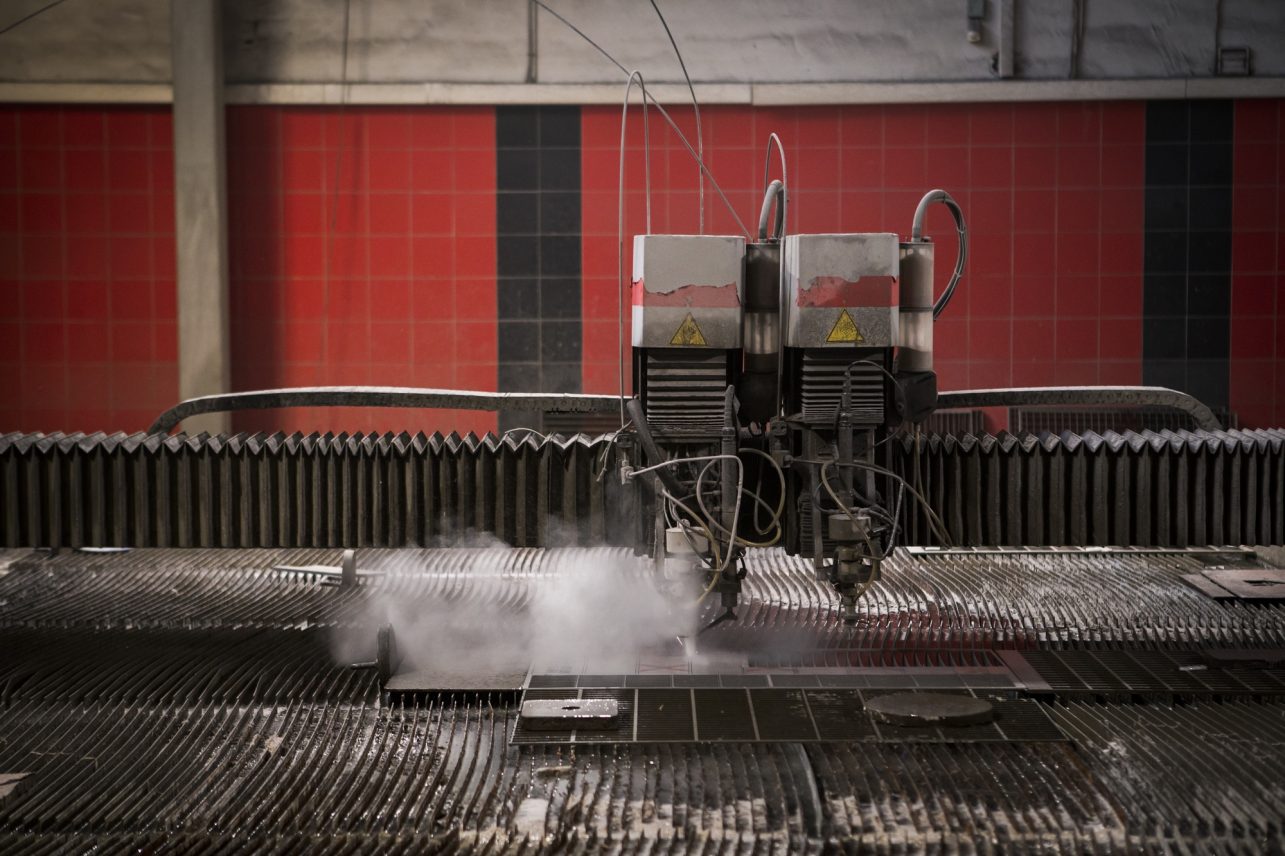
Garliava appeared on the radar of the Kaunas entrepreneurs who started their business a couple of decades ago, quite by accident. They simply found suitable premises there and later expanded them. During the tour, we inspect the largest water jet cutting machine. I am shocked, it turns out that water can cut almost anything, except perhaps tempered glass, because that simply shatters. The required water pressure is 4,000 atmospheres. The speed of the jet is like a bullet. To cut metal, a special sand (abrasive) is mixed into the water, which the company even imports from Australia, Bangladesh, and other exotic places. We learn that it is an expensive pleasure.
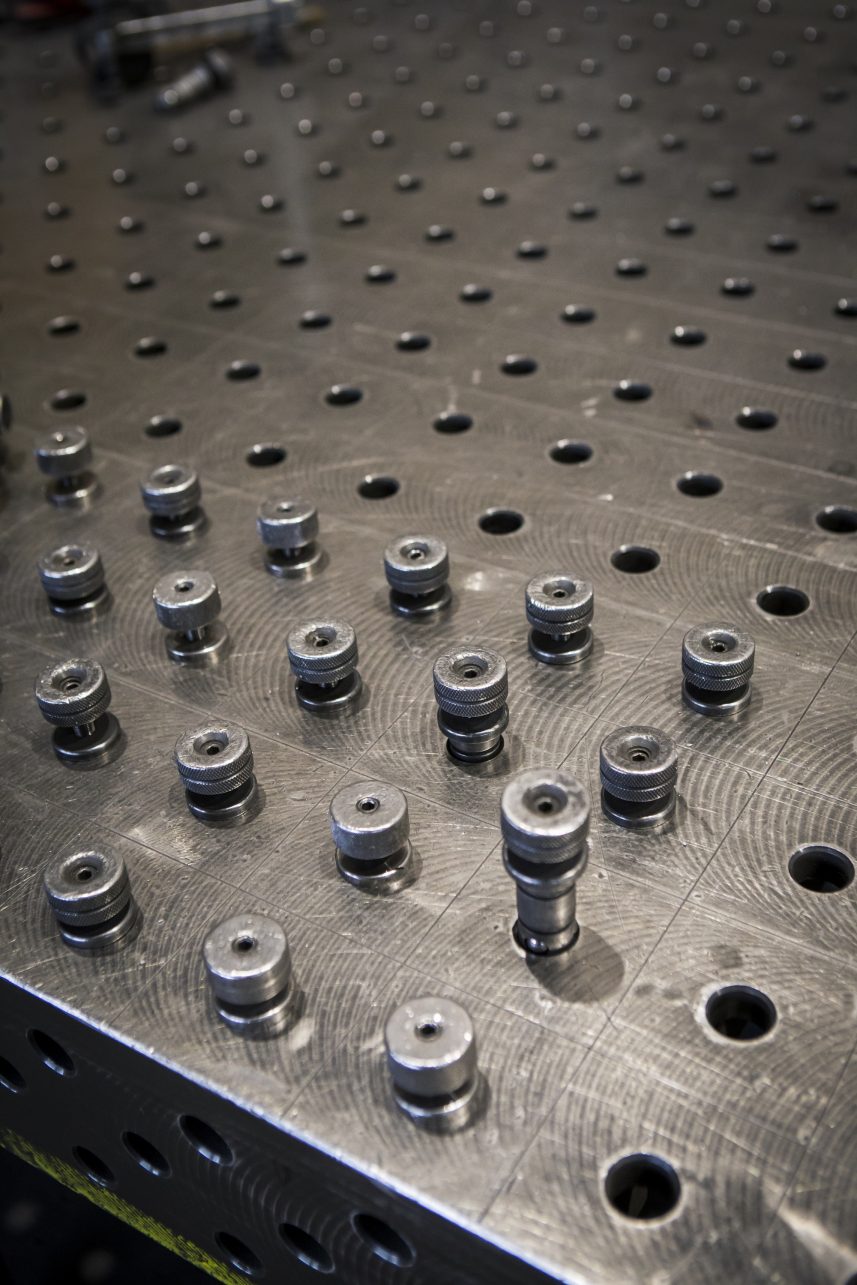
And where does the steel come from? “Before the war, a significant portion of high-quality carbon steel came from Ukraine, from the famous Azovstal factory, which has now been destroyed. We avoided buying from Russia because the quality was often questionable. Laser cutting requires perfectly flat, high-quality steel,” Gintautas explains, adding that now the necessary raw material is brought from Scandinavia and other European countries.
Rust Aesthetic
Belgian sculpture is an important part of Karbonas’ agenda, but, of course, the company also has other jobs: from such vitally important things as garbage cans to various construction elements. And now is the perfect time to consider the trendy but not universally acceptable rust aesthetic, which my colleague Monika discusses in this issue in a conversation with architect Gintautas Natkevičius.
Surely you have seen new but rusty-looking buildings, for example, on V. Putvinskio Street or in Žaliakalnis. Now you will know that it is a corten steel finish. The steel is shot-blasted so it can rust evenly. “Personally, I find it beautiful if it’s used in the right place. For example, the columbarium in the Petrašiūnai cemetery looks very good; rust visually blends with nature,” Gintautas observes.
But still, why metal rather than something like concrete or wood? “Metal is controllable and precise. In manufacturing, we are used to millimeter accuracy. It’s a material that requires strength, but allows you to create very delicate things,” the interviewee explains.
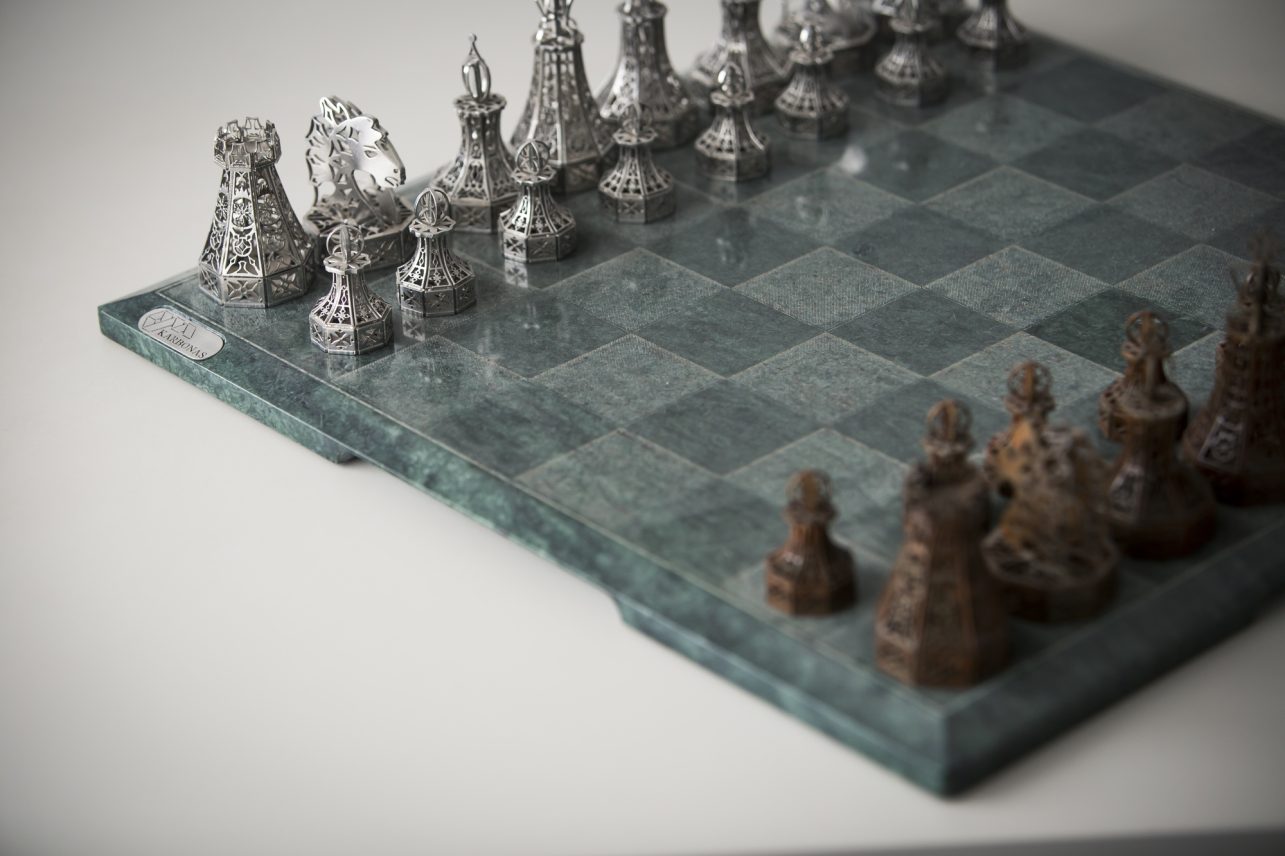
We also go up to the office, where Gintautas shows steel chess pieces, apparently inspired by a client of Karbonas from Belgium. Perhaps a business gift? “No, it would be too expensive. But after seeing so many of Wim’s works, we made them for ourselves,” the metalhead, who is already preparing for retirement, concludes. And then what? Time will tell, maybe some traveling. To go look at the Garliava-made sculptures scattered around the world? “Maybe,” he laughs.