Anelė and her dream
By Algirdas Šapoka
Photos by Donatas Stankevičius
Urban tribes are usually recognized by their district, music, or favorite bar. At least that’s how it probably used to be – I say this based on personal experience – back when the world was full of the ever more expressive subcultures. But times change. On a Friday evening, we head to Jonavos Street, to century-old factory warehouses long since given over to various small businesses.
(Text published in the February 2026 issue of the magazine “Kaunas Full of Culture”, theme “Tribes”)
One of them is the “Galios akademija” gym, located in a historic, but tired red brick beauty, the facade of which still bears uncut lift structures testifying to its former storage function. Now, however, waiting here for her tribe is the bearer of one of my favorite Lithuanian names, Anelė Jablonskytė: an eloquent conversationalist and inspiring coach who brings together women who are learning Muay Thai – Thai boxing.
We meet an hour before group training. And although we sit down in a cold room on aerobic steppers next to the smallest heater in the world, it is immediately clear that the conversation will be just the opposite – warm and cozy – because that is exactly how our interviewee is.
Self-searching in this world
Anelė grew up in Kaunas, near KTU campus. She attended the Kaunas Art Gymnasium and later tried to enter the Vilnius Academy of Arts, choosing the field of glass art. Creativity was a natural path for her, but, as she says while laughing, directions changed: she wanted to move, see the world.
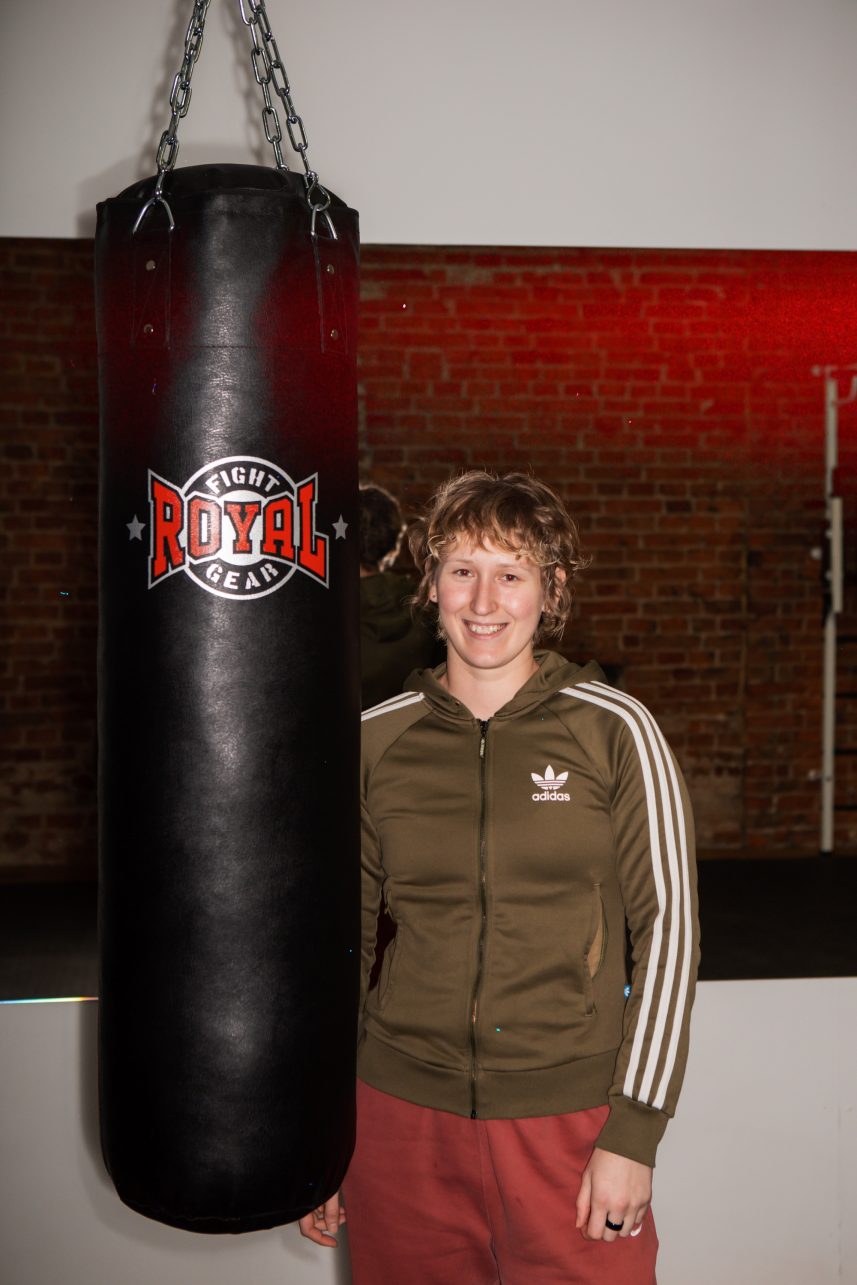
One of the turning points was the Erasmus program in Turkey. There, she “collected litter from the beach for two months” and taught local children how to recycle. After returning, Lithuania felt too small, so she left to join her sister in the United Kingdom. Anelė spent three years there: working various jobs and trying out studies, including product design and sports coaching. Although emigration was not a success, one essential thing happened: in England, Anelė discovered kickboxing.
Safety, peace, and control
“It felt very unsafe there,” the Kaunas native recalls. In London, you can witness violence not only on a screen but in real life; not only at night but during the day; not only on the street but in a McDonald’s restaurant; not only from adults but from children and teenagers as well.
According to Anelė, sport helped her feel safer not only in the city but within herself. I understand her perfectly, because sport also helped me manage anxiety and panic attacks.
In London, the beauty of martial arts, hiding behind fists, began to unfold for her. It contained concentration, mutual support, and emotional development. Training quickly became a discipline, and discipline became a calling. Anelė recalls that after a year of training, her coach began suggesting that she assist and lead women’s classes. She didn’t rush into it, but she felt that she knew how to teach and enjoyed working with people.
Then came the decision to return to Lithuania, “I couldn’t live in England anymore; the lockdown began, and other factors came into play.” After returning, she did not give up martial arts.
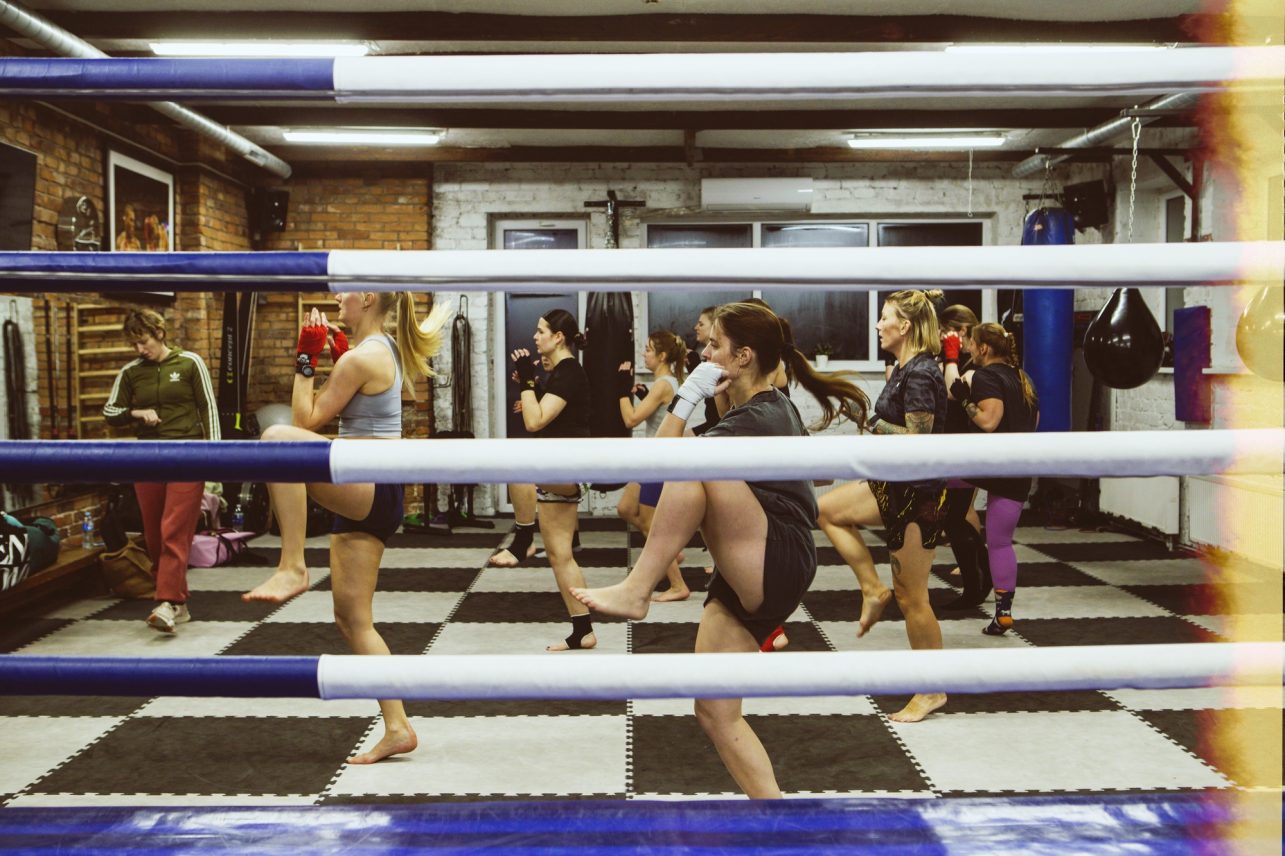
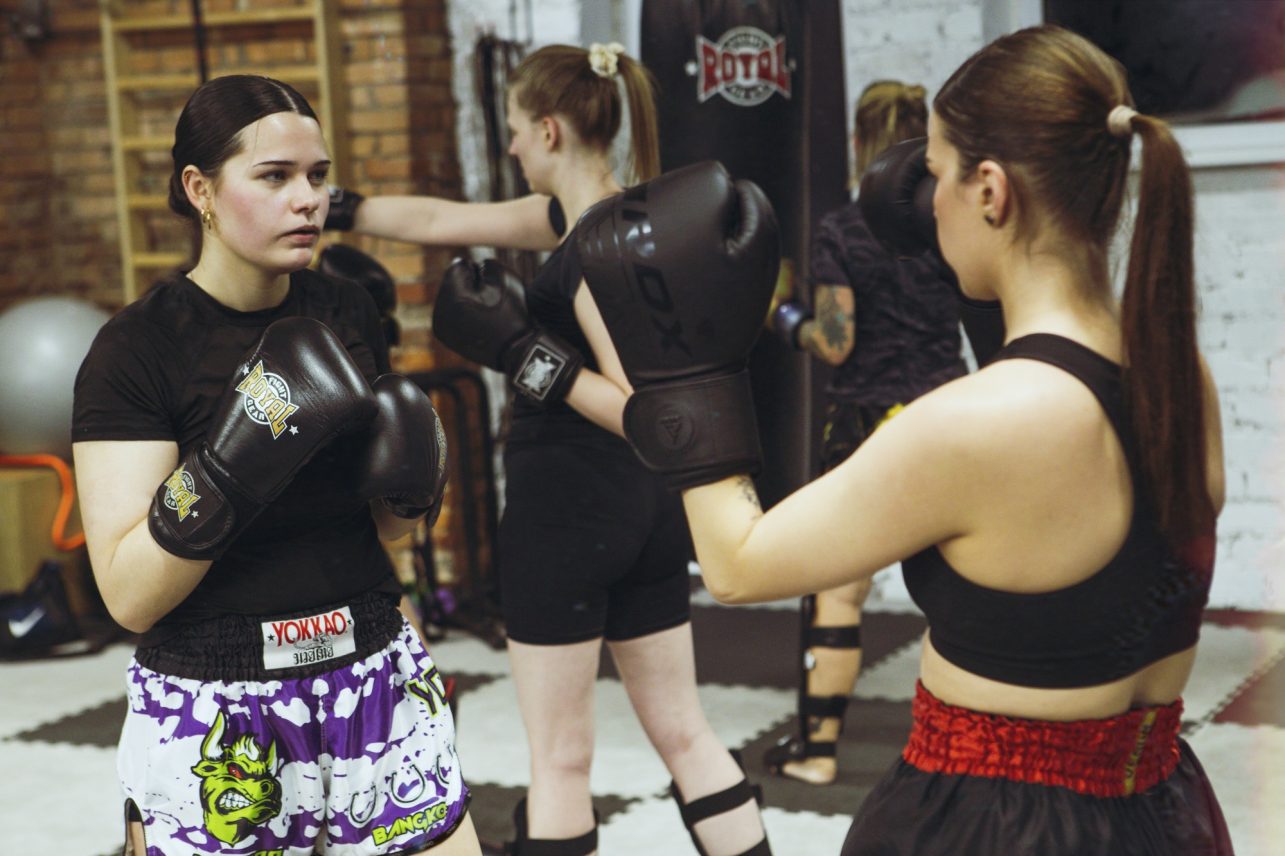
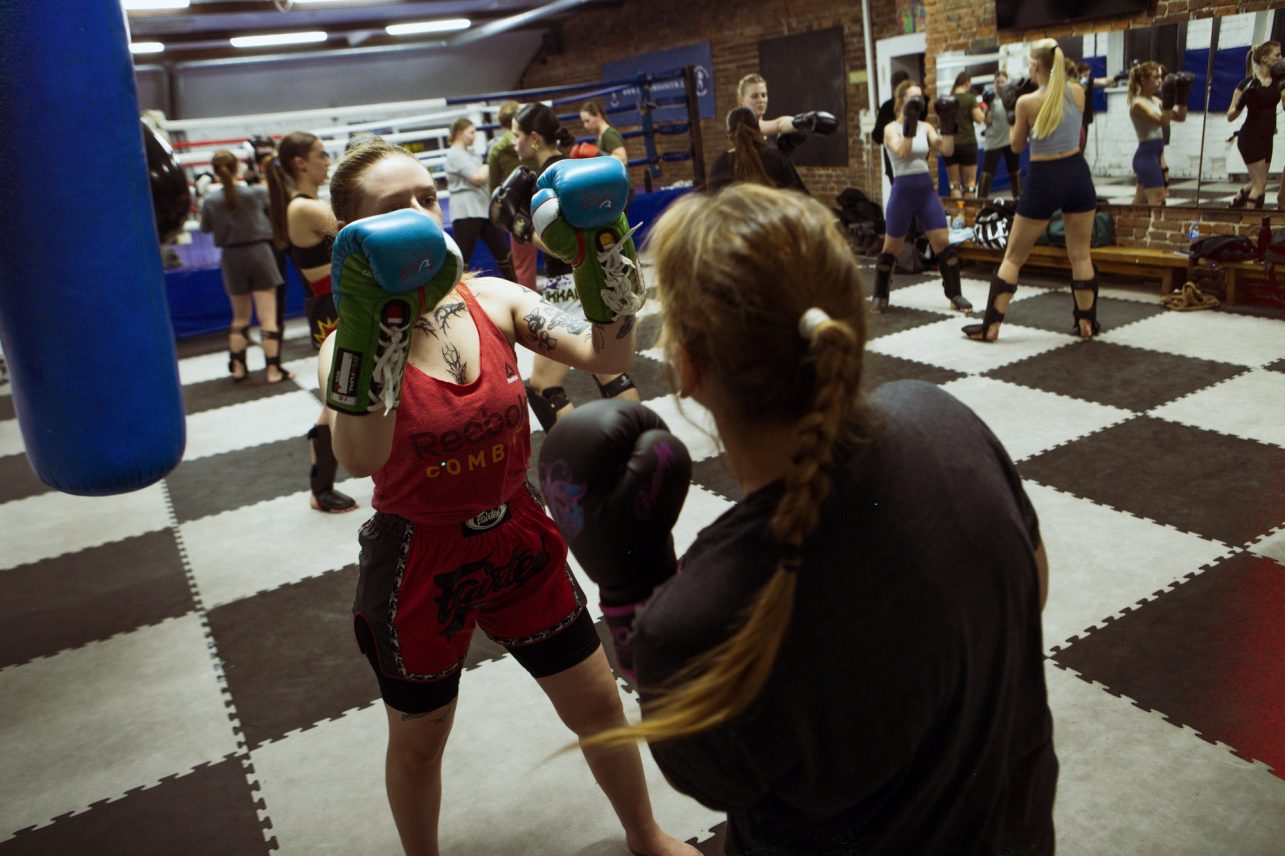
Where does so much inspiration come from? Does that mean that her talent is innate if the coach allowed her to teach others just a year after her own training? Sport and active movement were nothing new to Anelė. Before that, she had tried herself in several different fields. “If you don’t feel your body, if you don’t have that control, of course, the beginning will be slower and more difficult. If you’ve done sports, if you know yourself and your muscles, it’s easier. As a child, I tried many different sports, but for body control, especially, years of dance practice helped a lot.”
That’s when the thoughts go quiet
Anticipating what might be assumed, Anelė emphasizes: this is not an elite club. Some girls come in completely “green.” “We help each other,” the coach says. Here, the community becomes perhaps the most important learning mechanism.
Why did she stick to this particular sport? According to Anelė, it is impossible to be only halfway involved. “You have to focus and think about what you’re doing, how you’re moving. And not just so you don’t get hit in the head.” Muay Thai, kickboxing, and other martial arts require being present in the moment and the ability to read what’s coming next. That, she says, is why many women come to train with her: for at least an hour, their thoughts stop spinning and racing.
Titanas, the first group, and the decision to grow
After returning to Kaunas, Anelė was looking for a place to settle down. “I see there is a Muay Thai club called Titanas ten minutes away from my home. A month later, I approached the coach with a specific proposal: I want to lead a group of girls. And, to my surprise, he agreed.”
For two years, the Kaunas native coached in Titanas, but she launched the third season with her own project. Since last April, she has been renting the facilities and managing everything herself. She says it’s not just a job with a schedule; it’s a responsibility for the space and its culture. “For me, it means respect above all else,” Anelė says. In combat sports, respect is not just a nice idea, it’s a set of rules that allows you to train seriously and for a long time. And, judging by the results, it works because the number of people who want to train with this coach is only growing.
What does a “girl tribe” mean?
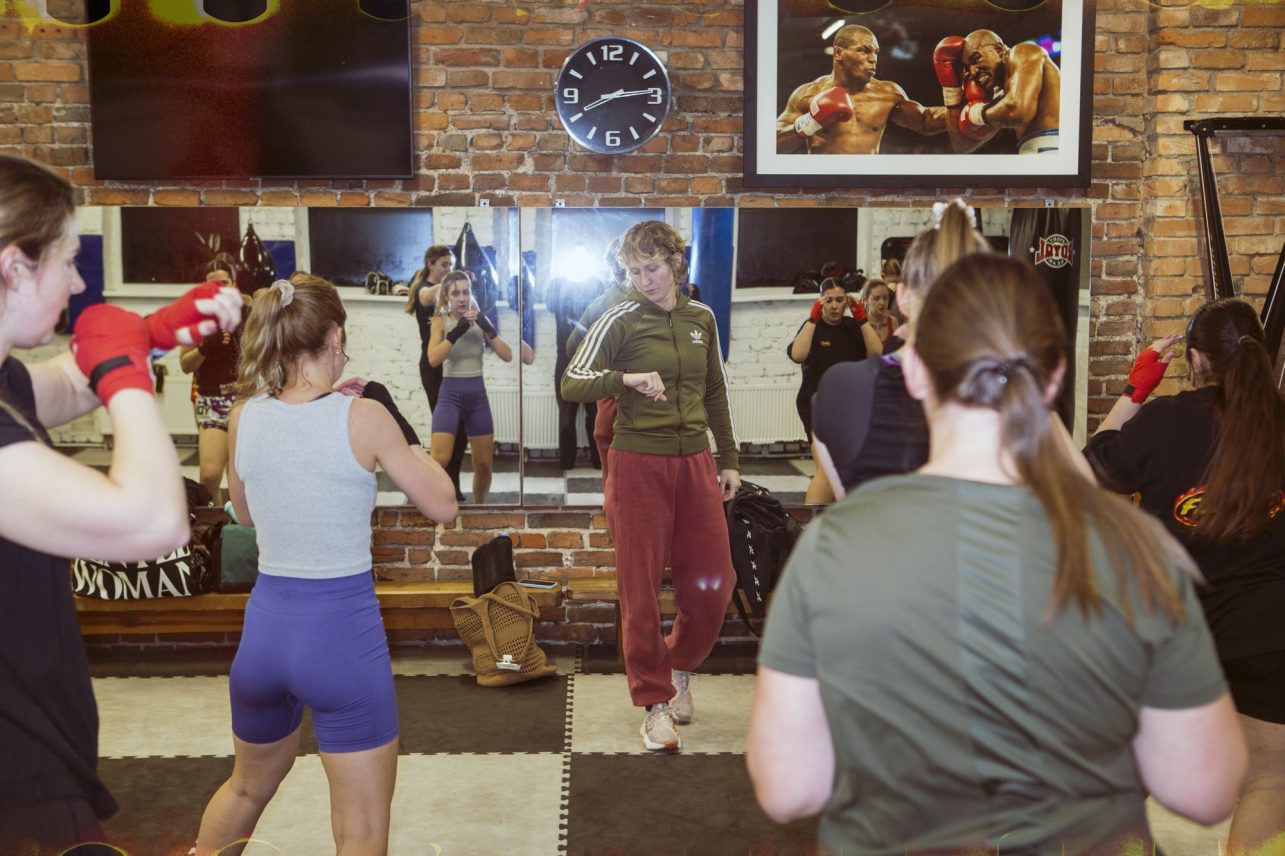
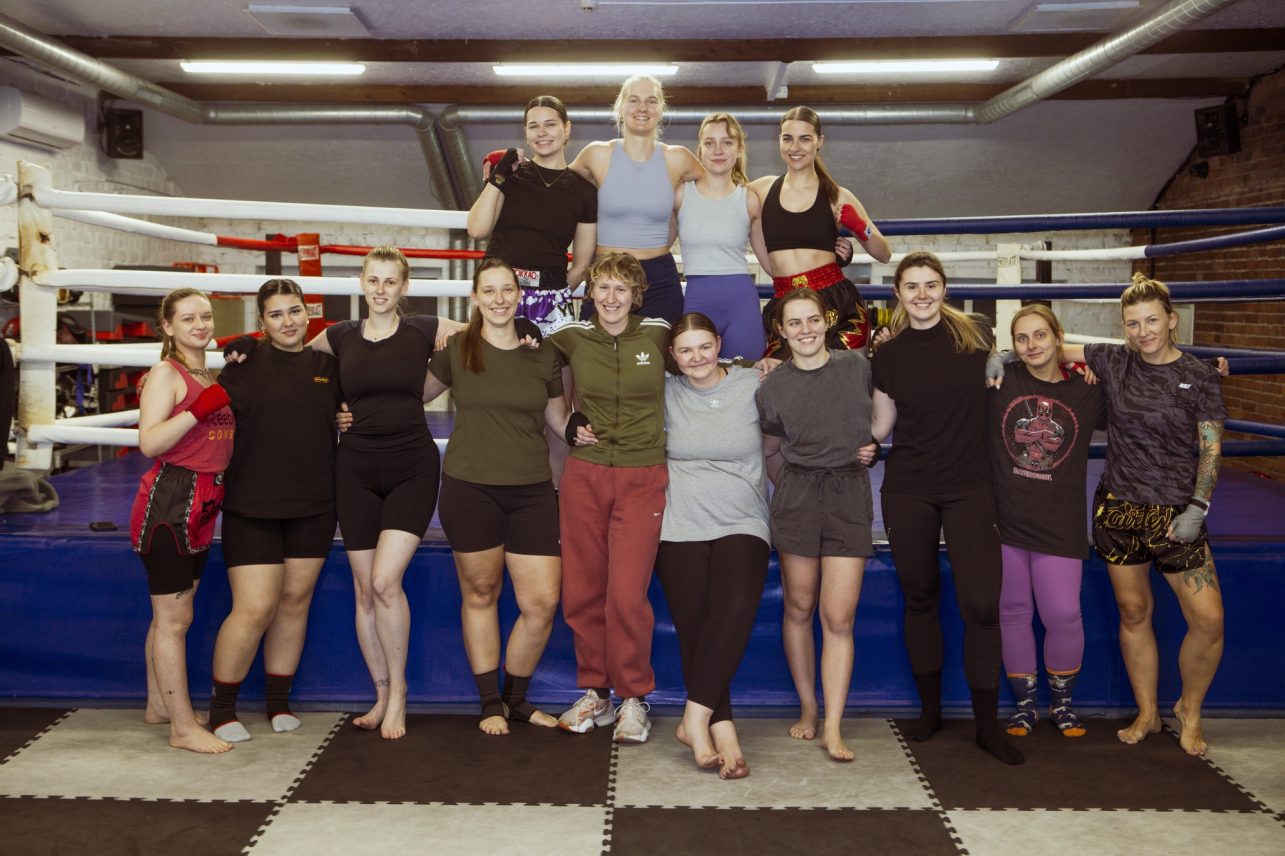
Anelė Jablonskytė says that the group at Galios akademija currently has around 30 women. Not all of them attend equally regularly, but the core is clear: usually ten or more show up to a training session. They come for different reasons. Some have athletic goals – they want to travel to competitions and fight. Others come to relax, to release tension after work, to spend time in their own circle. Then there are also those who immediately draw their boundaries, “I won’t do sparring.” And that is accepted without ridicule.
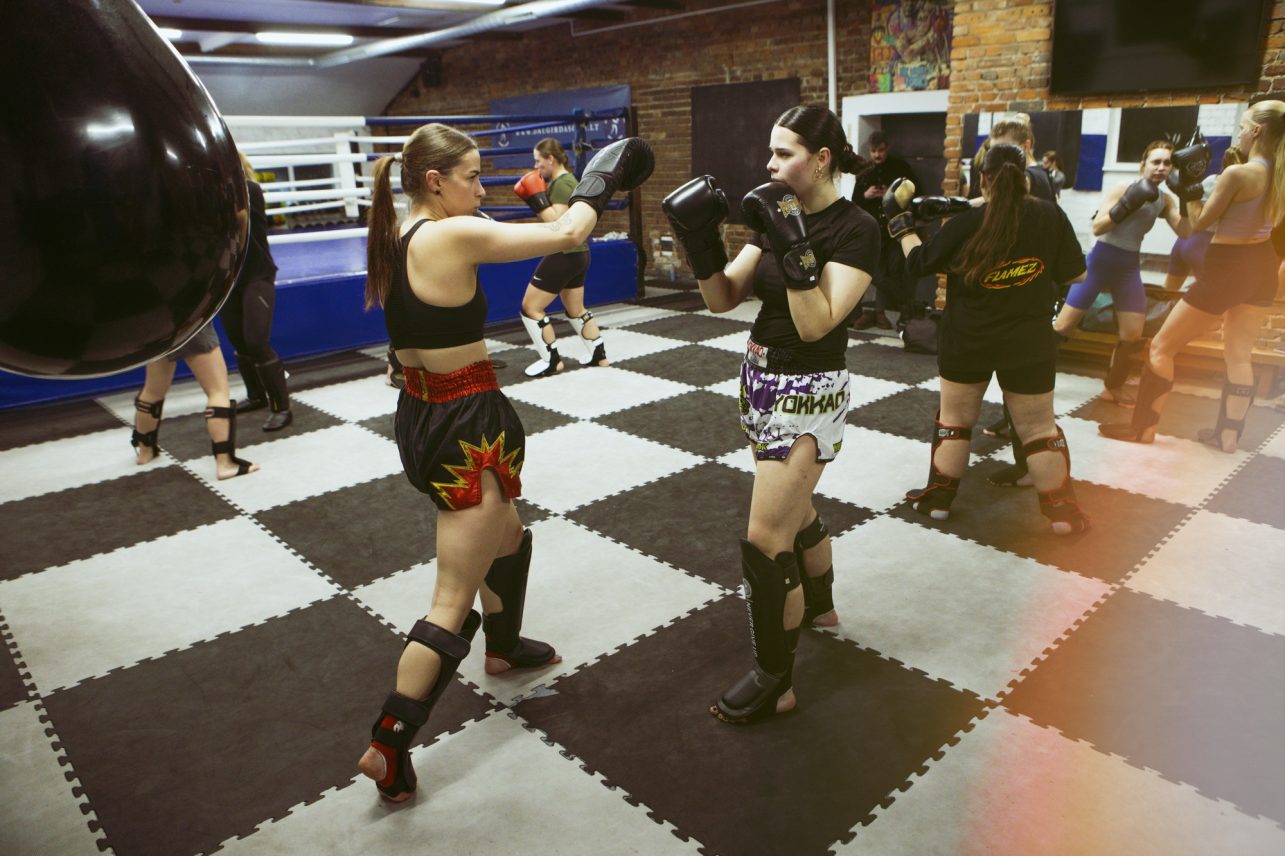
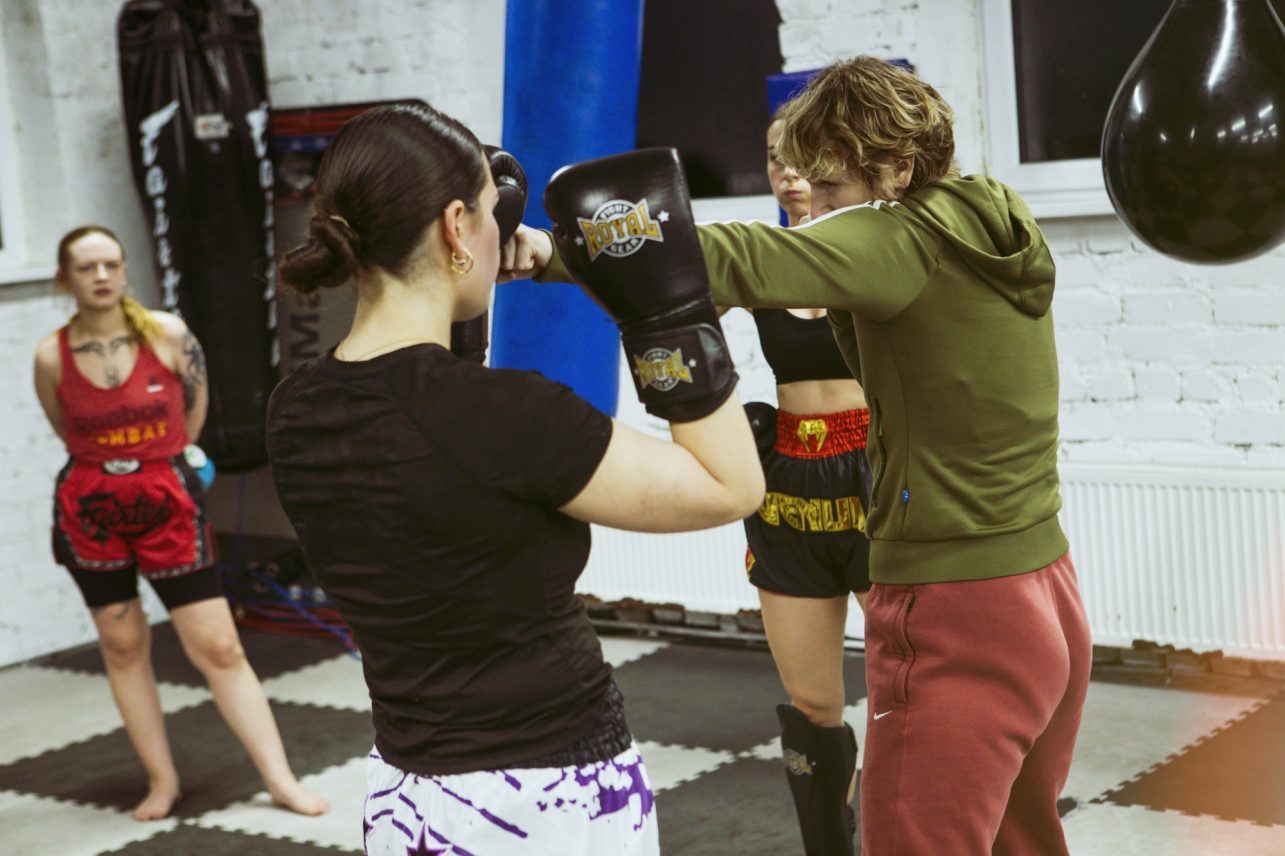
We often imagine a tribe as something homogeneous. Yet in this one, there is no demand for uniformity. It is, first and foremost, an agreement and clearly defined boundaries – pursuing different things but using the same tool.
The training structure is clear: three times a week. One day is devoted to technique, the next to applying technique in pairs, the third to more clinching and physical training, and the fourth to endurance and cardio. This is based on a clear structure that Anelė has learned through many years of practice. Newcomers are first offered personal training sessions to familiarize themselves with punches, kicks, elbows, and movement. After that, it is easier to join the group.
It is important to talk. Anelė constantly emphasizes basic communication: to say if it’s too much and stop if something is wrong. Everyone here has the right to draw their own line, which everyone must adhere to.
According to her, the girls protect, watch over, and take care of one another – sometimes even too much: when she asks them to work harder, she occasionally hears, “I feel bad.” That’s when Anelė reminds them that no one will protect them in competition. “Learning to be both gentle and firm, depending on the situation, is one of the most important tasks. Here we develop in a well-rounded way, without stereotypes and with strong community support to help each other grow and change.”
What does it feel like to fight someone else?
She had her first fight fairly soon after returning to Kaunas, only after a few months of training. The fight took place in Šančiai. And the feeling? “Wow, it blew me away,” Anelė says, comparing it to jumping off a bridge. “I remember absolutely nothing…” she admits. The adrenaline there is so intense that your mind, instead of recording a story, records only the experience.
Her seventh fight is now approaching. In February, the Kaunas native will travel to Poland for a competition. She emphasizes that she is an amateur, not a professional, but clearly states why she steps into the ring: “I’m curious how far I can go in a critical situation, and I want to test myself.”
Even more importantly, that boundary is not only physical. “It’s much more than ‘I want to go and hit someone.’ There’s a lot of technique and a lot of psychological work. Competing in the ring is 50% technique and physical effort, and just as much emotional preparation.”
That is why collaboration with a sports psychologist is so important in this sport: together they work on pre-competition mindset, rituals, music, and managing thoughts. Sometimes she even avoids listening to the same songs after competitions: music brings the memories back too quickly.
When preparing for a fight, Anelė structures her day around a simple principle: “Right now it’s the pre-competition period, I train twice a day. In the morning, it’s more physical work – running, endurance, strength. In the evening – technique, combinations, partner drills, pace.”
According to her, in the girls’ group, it looks gentler, but the logic is the same: the basics are constantly repeated, and complex elements come only when the body is no longer confused, when the girls learn control and self-mastery.
The growing popularity of martial arts
When asked why girls need this, Anelė answers without abstractions: “Mostly for self-confidence.” She sees how girls who have never thrown a punch in their lives feel strength in their bodies for the first time, “Their eyes widen.”
Of course, we also touch on self-defense, carefully, without heroism. “I hope none of them will ever have to defend themselves on the street,” the coach says, but she also emphasizes something we often forget: the freezing response caused by paralyzing fear.
Galios akademija cannot be summed up in a single word: it’s sports, friendship, discipline, and above all, therapy without any flashy therapeutic phrases.
Some people who are attacked simply “freeze” and do nothing. That’s why she repeats the basics: shout, run, don’t be afraid to make noise. In this sense, combat sports function like a “program” for the body – you learn to react, to make decisions, to keep a clear head.
Anelė’s work with women transcends the gym. Working with girls has also led her to civic initiatives. One of them is the organization “Lygiosios”, founded by other women from Kaunas, which aims to draw attention to women’s safety in the city and in nightlife.
Together with her colleagues, Anelė leads practical workshops aimed at breaking stereotypes, helping girls and women feel their inner and physical strength, release it, and use it for self-defense purposes. And in case of an emergency, to be able to assess their own strength and not freeze.
A tribe that grows and has a dream
Anelė says she envies today’s teenagers: when she was young, she thought about combat sports but didn’t dare join; what would a girl throwing punches look like? Now she is creating a space where you can show up, make mistakes, learn, and no one humiliates you. And she is not alone. In Kaunas, the women’s combat sports community is already connecting across clubs: joint training sessions are held with coaches from other gyms, and different groups come together. Thus, a new rhythm appears in the community, with more adrenaline. And still, the principle remains that the most important things are safety and mutual support: beginners train with beginners, and experienced athletes with other experienced athletes.
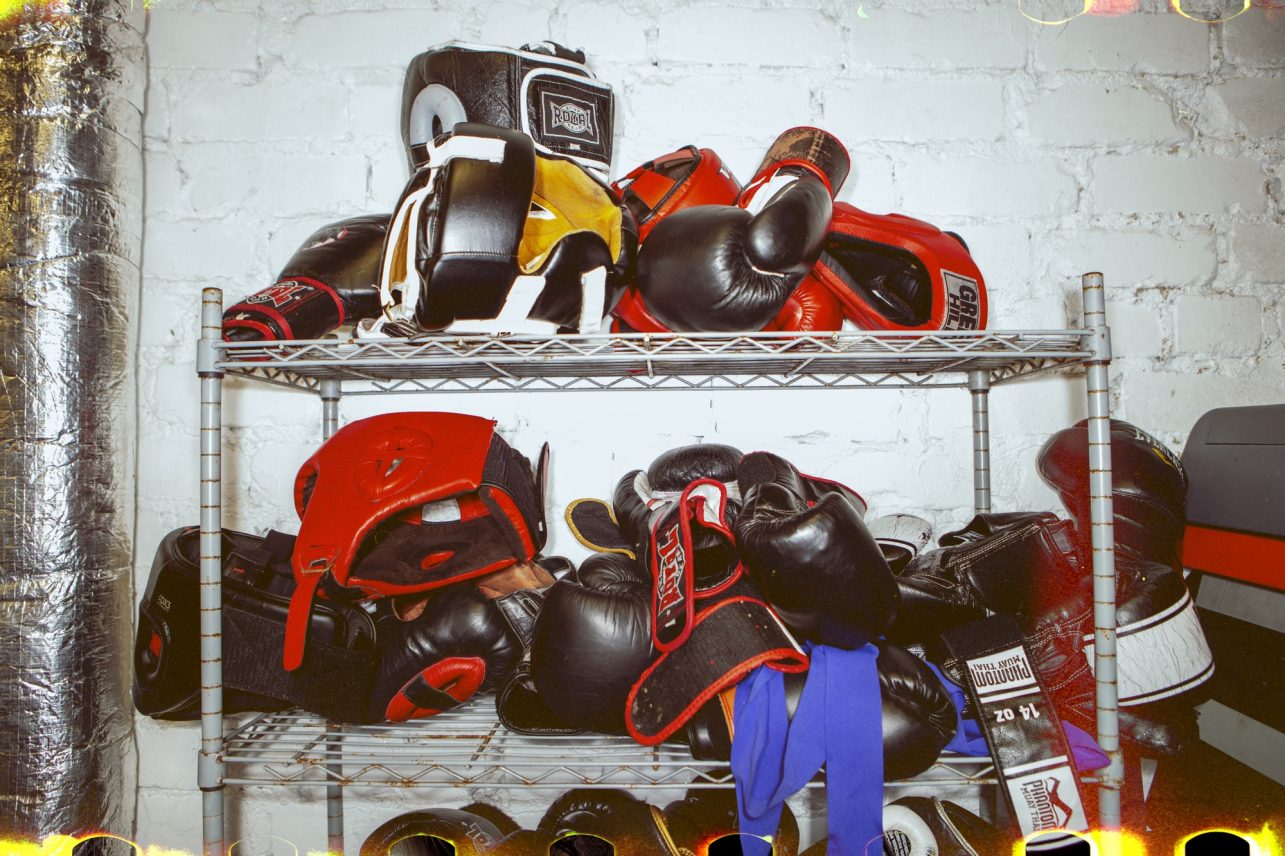
And beyond that, Anelė Jablonskytė and her 30 trainees are thinking bigger. Their big dream is to have a dedicated space for women: a larger center that would provide room for sports, safety, community, and mutual support. According to her, some women come to women-only classes not because it’s trendy, but because they feel uncomfortable in mixed groups or have experienced violence. Such a space requires not only an idea but also funding. Still, this tribe already has the most important part: people. And a leader whom they can trust and learn from without fear.
“Galios akademija” cannot be summed up in a single word: it’s sports, friendship, discipline, and above all, therapy without any flashy therapeutic phrases. Anelė trains, studies physical education, and creates a space where women can grow stronger without needing to prove anything or justify themselves.
Kaunas today is full of tribes that are born organically – from natural community spirit and the desire to grow together. And this one is exactly that. Not loud, but persistent. Very necessary. And very much a part of the city, Kaunas.