Every spring and autumn, Laisvės Avenue undergoes a transformation – it is lined with white tents, the scent of smoke fills the air, and the sounds of violins and accordions ring out. It is a sign for everyone: the fair has begun. Darius Straigis, who has been organising fairs in the city’s main pedestrian artery since 2016, says that his events stand out from ordinary markets due to their cultural programme, allowing visitors a brief escape from the mundane. Culture is no stranger to Darius – he is also a concert organiser who, under the “Sukurta LT” brand, presents high-quality musical events every winter. Traditionally, he invites people to the “Romuva” cinema for “Retro Kalėdos”, and this year, the “Daina” cinema joins the list. For now, however, let us turn our attention to the Kaunas Fair, the autumn edition of which will take place on 25–27 September.
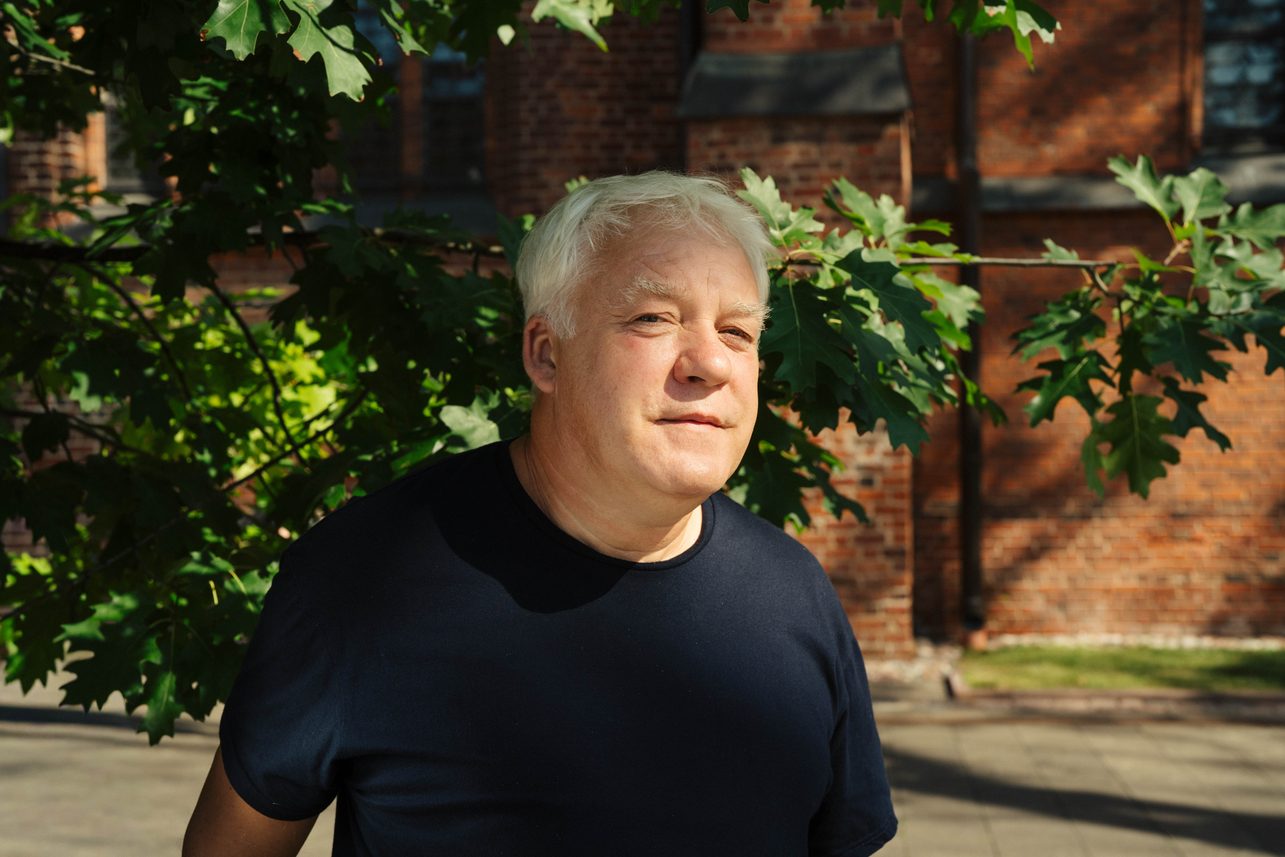
Darius, how many professions did you go through before becoming a fair organiser?
I am a Kaunas native; I was born and raised here. However, I studied by the coast – I completed a degree in cultural management at Klaipėda University. I had initially enrolled in theatre directing, but due to military service, I had to change my speciality as my previous course no longer existed. So, I have been organising things my whole life. I have been doing the Kaunas fairs since 2016, when Sigitas Šliažas, the then deputy director of the Kaunas City Municipal Administration, suggested I enter a competition. My colleagues and I brainstormed ideas, prepared a programme, and won. We held the event, people liked it, and we got hooked ourselves – we participate in those competitions every year. Fundamentally, I wanted the fair to be more than just a market or mere trade; I wanted people to experience cultural events too. Thus, we included jazz, fashion, a photography gallery, and other partners.
What was the new concept you brought to Laisvės Avenue? After all, fairs had been held here before.
Yes, fairs have been held in Kaunas for a long time, but they used to be much simpler – more “folksy”, I would say. We wanted to do everything differently: we started with new visual solutions, visions, and ideas, and over the course of a decade, we polished everything until the fair became like a self-sustaining urban organism. Today, we no longer have to persuade traders – they themselves look forward to this event and are eager to participate. Therefore, our main work now is the cultural programme and technical matters. For example, infrastructure – electricity supply or toilet logistics. We can’t avoid “workplace folklore” here – we’ve seen it all over the years. I remember once receiving a complaint that a toilet was placed in an unsuitable location, so we rushed to move it elsewhere, only to find that there was someone inside at the time…
We also pay a lot of attention to security. We hire a professional service to supervise order and guard the tents left on Laisvės Avenue overnight. Generally, I understand well that the trade itself – folk art, food products, or culinary heritage – is universal across Lithuania and the world. Therefore, the essence of our concept is how to manage this entire process technically and supplement it with cultural accents.
How does the Kaunas Fair stand out from similar large events in Vilnius or Klaipėda?
Vilnius’s Kaziukas fair has deep, centuries-old traditions, while the Kaunas Fair grows along with the city. We have another huge advantage – unique spaces. Laisvės Avenue and Vilniaus Street form one long, convenient path where it is very easy for traders to set up and for visitors to walk through everything. I would say that the Kaunas and Vilnius fairs are the most aesthetic in Lithuania. Although the Sea Festival in Klaipėda is a massive, city-organised event with numerous concerts, in Kaunas we pay particularly close attention to the appearance and convenience of the fair itself. We have excellent venues for events near the City Garden and the Municipality, so our fair looks truly representative.
Nevertheless, the traders presumably migrate across the whole of Lithuania – from the Sea Festival to Kaziukas. How do you select them?
Those who do high-quality work have almost no rest: they spend the whole week producing and the weekends selling. In Lithuania, fairs take place nearly every weekend, so if you have the desire to participate, you will find work all year round. We, of course, carry out a selection process. Sometimes we say “no” if someone wants to sell products that completely do not fit the fair’s concept – for example, cosmetics from catalogues. The main condition set by us as organisers and the municipality is authorship and authenticity: hand-made products created using traditional materials, raw materials, and technologies must dominate the fair.
In the spring, we had about 600 tents; the autumn fair is slightly smaller. We divide the entire space into zones based on the nature of the activity. For example, we group folk artists together so they can better represent their associations and national heritage. There is also the “Creators’ Master Republic” – a group of about 50–60 artists with a distinctive creative style. Separate spaces are designated for food producers representing culinary heritage and small local brewers, especially from Northern Lithuania. However, our highest priority is the demonstration of crafts. We want visitors to see the process itself: how jewellery is born, how sashes are woven, or how blacksmiths work, so we give them the most visible spots.
Do you notice changes within the community of craftspeople themselves? Are their numbers decreasing, or are new talents appearing?
New faces do appear, but not as many as we would like. We are constantly looking for that “new wind”, inviting masters from Latvia and Poland to bring variety and something unseen. Nevertheless, the core of the fair consists of the same loyal, traditional masters we meet at almost every major Lithuanian event. I notice that alongside the old masters, young designers and recent graduates are appearing to try their hand. We have 10–15 such new faces at every fair. I also see one strange trend – some interesting producers who happily participate in, for example, the Vilnius Kaziukas fair, categorically refuse to come to Kaunas. They don’t specify the exact reasons, so one can only guess – perhaps it is an old fear that Kaunas residents won’t buy, or simply an old prejudice.
And who looks after the cultural programme? Do you arrange it yourself as well?
There are six of us organising the fair. My colleagues look after the team’s work, programme coordination, and design, while I handle the technical arrangements and documentation. Ona Peičiūtė, the head of the Kaunas Old Town Society, is responsible for the content. Together with her, we write projects, plan whom to invite, and arrange the highlights. My favourite moment is when the city fills with the bustle of music. I want Laisvės Avenue to simply hum: street musicians playing here, jazz performers there, an orchestra or choir appearing elsewhere. This year, for example, Rokas Kašėta will be a guest at the fair.
We arrange the programme strategically: we designate the City Garden for more modern, contemporary performances, while creating a retro stage near the fountain. This is where folk ensembles and folklorists gather – those groups for whom it is very important to perform publicly and feel the audience’s attention. As soon as it’s announced that the contract is won, the phones don’t stop ringing – artistic groups themselves are eager to participate. We nurture an old tradition: historically, it was at fairs and markets where people shared news, where the first theatres were established, and where musicians performed. If we invite more popular performers, we negotiate a fee, but we try to find a mutually acceptable solution. Usually, we cover the groups’ travel expenses and provide all the necessary equipment.
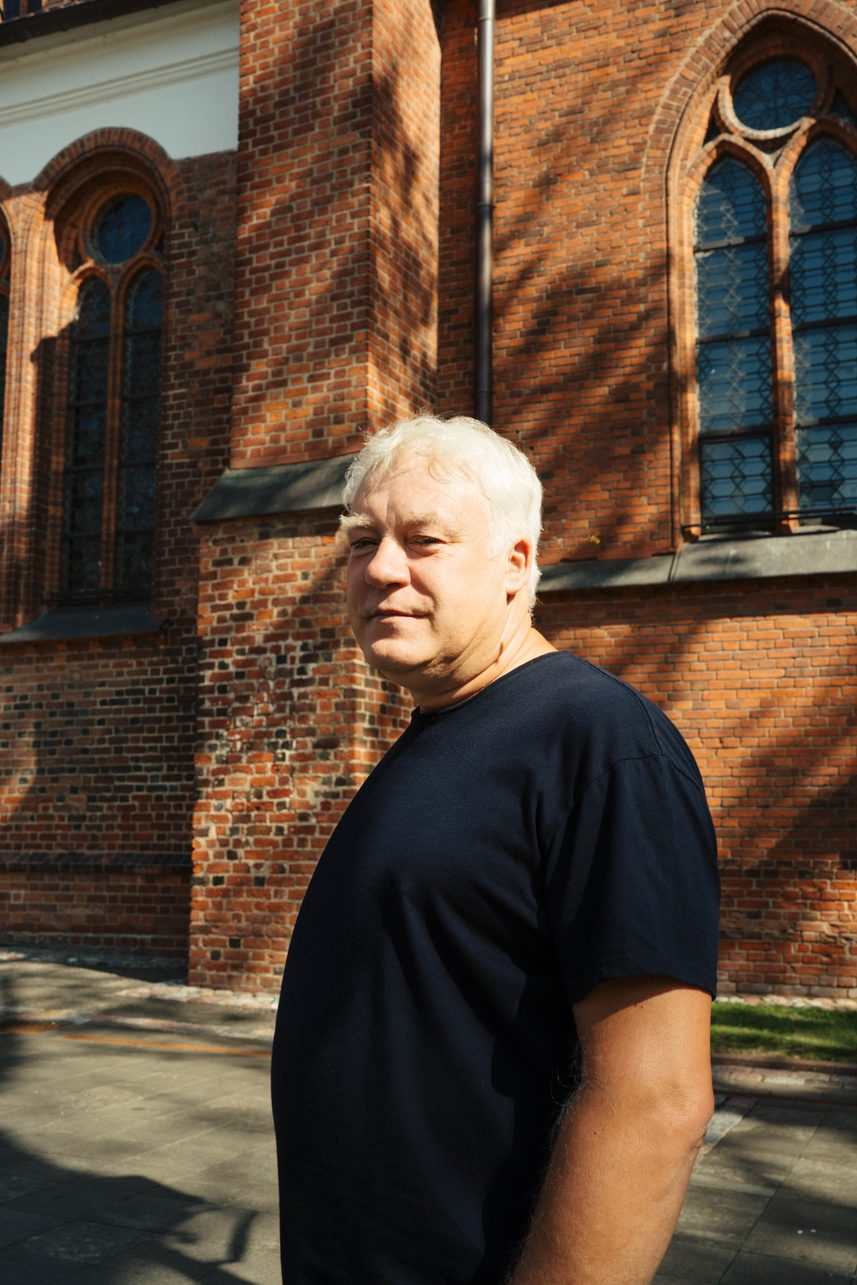
Do Kaunas musicians and artists view the fair favourably?
We have gradually accustomed them to it. Initially, there was certainly some scepticism – many thought it was just an ordinary marketplace. However, opinions began to change when joint projects with “Kaunas Jazz”, the “Kaunas Photo” festival organised by Mindaugas Kavaliauskas, and other solid cultural events appeared in the fair’s programme. Creators saw that this is a serious platform with a massive audience. I always say: participate, because there simply won’t be a better opportunity to perform for so many people. And it is not at all necessary to focus only on folk music – the programme can be very modern. For example, this year at Unity Square, together with the “Junda” dance club, we are organising a huge line dance festival where we will attempt to set a record. We also have ambitions to implement an idea popular in Europe – a roller disco. We want to end the final evening of the fair with roller dancing and a communal skate through the city. This is a major logistical challenge, requiring coordination with the police and the public order department, but the large scale of the event allows us not only to dream about such innovations but also to implement them.
Who is the average visitor to your fair?
The majority, of course, are Kaunas residents, although we receive people from other cities and surrounding districts. It is estimated that about 100,000–120,000 people visit the fair over three days. This is an impressive figure – essentially half of Kaunas. Thus, the economic scale of the fair is also massive. We have about 600 participants, each of whom invests a significant amount of money: just for a spot for the weekend, they pay over a hundred euros, and on top of that, there are fuel costs and logistics. For it to pay off and still make a profit, you really have to sell a lot. Although some are more successful than others, the traders return every year, which means the buyers find them.
People are lured here by the chance to buy something they won’t find in any shop – the most unusual, unique hand-made products. Curiosity often turns into a purchase. Furthermore, the fair is entertainment for families: children look forward to sweets, games, and other activities. Admittedly, not all entertainment is received the same way in the city. Previously, we would set up a mini farm with poultry and rabbits on the green lawn near the municipality building. However, one morning we received an official complaint because… a rooster was crowing under the windows. Regrettably, we had to give up those “living corners”.
Laisvės Avenue is full of cafes and other businesses. What is their relationship with the fair?
Most businesspeople are very understanding and happy with the influx of visitors – after all, it’s natural that thousands of people will eventually stop by the same cafes to rest or have a coffee. Of course, there are always sceptics who claim they see no benefit or profit in the fair, but I always emphasise: the city certainly does not attract this many visitors at once every day, so the benefit to the city’s general ecosystem is obvious. Initially, there was quite a bit of anger and misunderstanding, but now we basically get along with everyone.
The scale of the fair directly depends on the length of the pedestrian zone. Now that the renovations of Laisvės Avenue and Vilniaus Street are finished, are you considering action in Town Hall Square?
We now cover the entire space from the underpass right up to the Soboras. In 2017, the fair stretched from the Soboras to the Town Hall; both squares were full of traders. However, we later realised that such a scale does not necessarily pay off. Visitors are simply physically unable to walk such a distance, so the traders on the outskirts of the fair no longer make any money. Every city has its potential and limits regarding how many visitors it can attract. We understand that without additional investment in advertising, we won’t generate another 100,000 tourists. Since we do everything entirely with our own resources – we win the contract, we invest, and we take the financial risk ourselves – we have to calculate very responsibly what size of fair is optimal for both the traders and the city.
You probably don’t miss an opportunity to look at fairs in other countries. Do you manage to find inspiration there?
A good decade ago, I used to actively travel to trade ceramics and other items at the large fairs in Berlin or Hanover. I can say that German Christmas fairs are simply wonderful – bright, creating an unforgettable atmosphere, even if their content is very traditional. I admire their ability to maintain local quirks and turn them into a business. For example, you can see decorated mobile toilets with trailers that look like a separate piece of entertainment.
However, regarding the quality and authenticity of the goods themselves, I can responsibly state: we are among the best in Europe. In many Western countries, fairs have taken a commercial route: mass-produced baskets or the same wooden bears that can be found in any shop dominate there; they are just presented a bit more interestingly at the fair. We have painful examples from Scandinavian countries. They used to have excellent fairs, but at one point, the organisers stopped carrying out strict selection and allowed in cheap mass-produced products from China. The events lost their identity and became cheapened. Now they are slowly trying to recover and regain the spirit of craftsmanship. This only proves once again that without clear quality criteria, a fair loses its meaning.
And what do you usually buy yourself at the Kaunas fair? Do the traders perhaps favour you with gifts?
I have received home-made cakes, ham, and drinks from traders. However, my own personal weakness is wooden cutting boards. Although I have quite a few at home, each time I look for some previously unseen shapes or more interesting designs. Admittedly, I can’t devote much time to it, as it is our peak working period.
How would you invite a sceptical person who consciously avoids the city centre that weekend to the Kaunas fair?
First, I would say that it is an opportunity to see things you truly won’t find on any shop shelves. These are unique products and curiosities that only come to the centre of Kaunas twice a year. I understand that the hustle and bustle or the large crowds might put some off, but it is precisely within that flow that that unique, never-before-seen item might be hidden. Perhaps you will taste something you have never tried before, or perhaps you will meet someone on Laisvės Avenue whom you haven’t seen for twenty years. A fair is about discoveries – of things, tastes, and people – so it is certainly worth experiencing at least once.