There are names in Kaunas that have long since faded from the spotlight, yet they haven’t disappeared. They no longer take the stage, but they still make appearances – on T-shirts, in conversations, in the sounds of other bands, on reissued records, and in retrospective exhibitions. One of such names is Anubi. The legacy of its creator, Martynas Meškauskas, continues to this day not as an archive, but as a living influence.
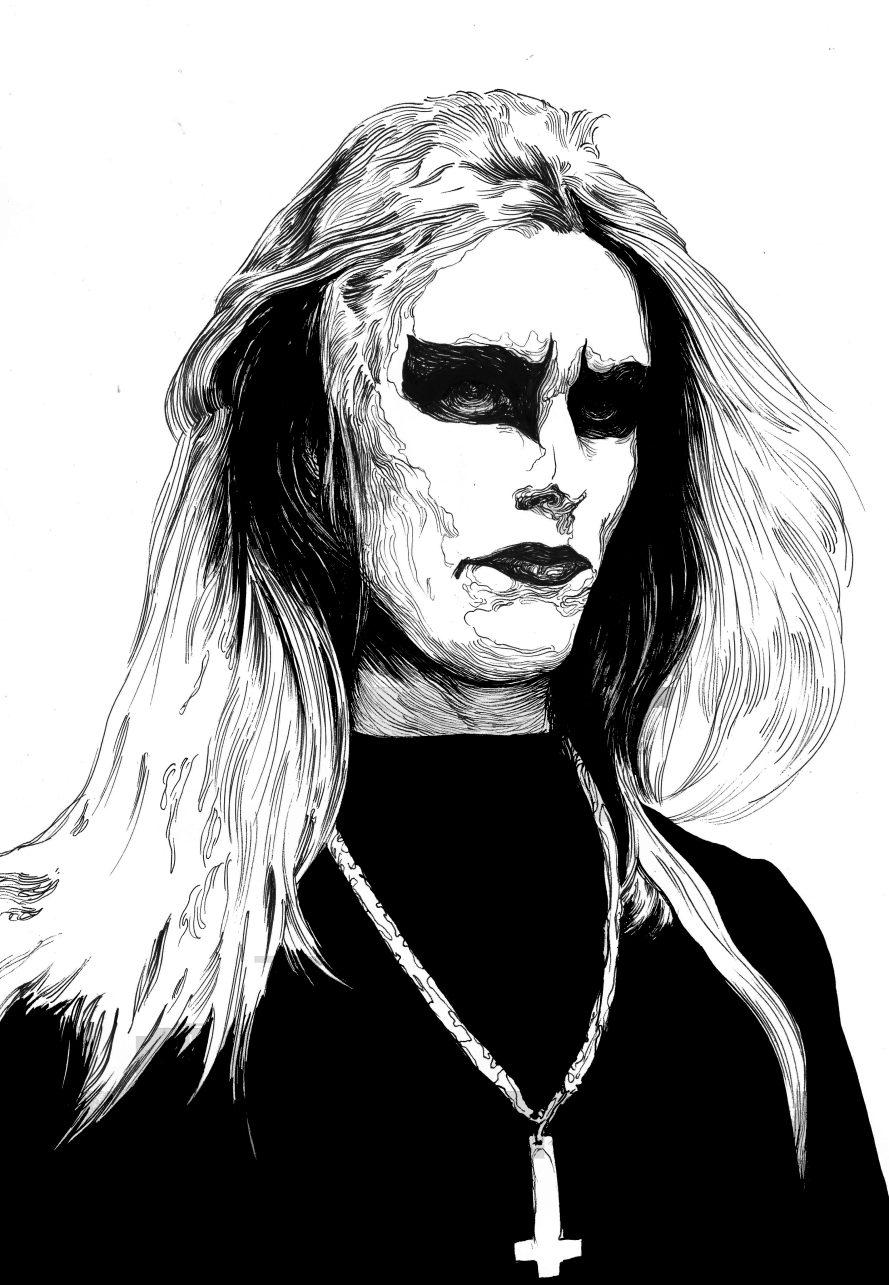
Portrait of Martynas Meškauskas. Photo by Iza Carlucci.
The man, the myth
He lived on Rimvydo Street, at the junction of the Gričiupis and Žaliakalnis districts. We even knew which building it was, because we grew up nearby, and at that time, Martynas was already a legend. And although for many in the metal scene – especially the black metal scene – he is one of the most important figures, Anubi and his other music were not his only creative outlets. They weren’t even his main focus, even though he was best known for it in the underground.
(The text was published in the April 2026 issue of the magazine “Kaunas pilnas kultūros”, titled “Metal”)
The artist grew up in a creative environment – the family of painter and textile artist Rūta Meškauskienė and architect Juozas Meškauskas. While writing this text, I visited their home to better understand how this legendary figure of the Lithuanian metal scene grew up and what shaped him. It’s enough to look around: the walls of the carefully maintained house are covered with paintings, graphic artworks, and glass art. And I am greeted by a couple of sincere, sensitive, and modest people who carefully preserve their son’s creative legacy and openly share their memories with a stranger.
Martynas’s mother is a graduate of the National M. K. Čiurlionis School of Art. She was born and raised in the capital, but was later assigned to work in Kaunas, at the Liteks textile factory in the Carmelite district. She found love there and decided to stay. His father worked at the Institute of Urban Construction Design. Among the works he himself mentioned are the current Rukla military town, a famous block of flats in Aukštutiniai Kaniūkai, and the police station in Marijampolė. Both parents charm me with their erudition, calm, excellent taste, and well-kept home.
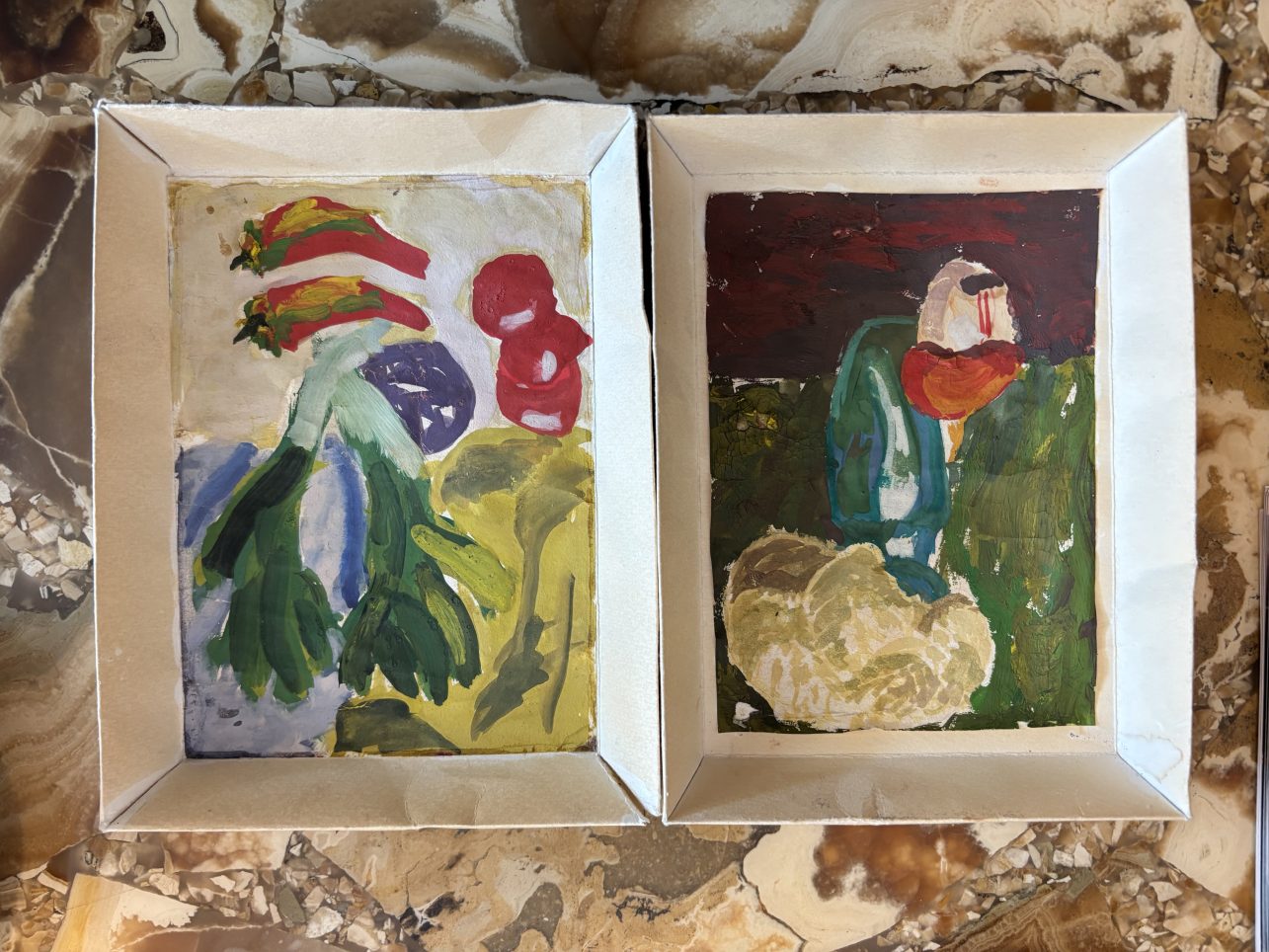
After graduating from elementary school in the center of Kaunas, now the Aušros gymnasium, with a focus on arts, Martynas entered the J. Naujalis Art School. It was here that his creative talent began to emerge: his parents showed some of the earliest preserved works of Martynas created at the age of eleven for an exhibition of children of Miestprojektas employees. Later, as was typical, he went to study in Vilnius. There, he completed both his bachelor’s and master’s degrees in graphic design at the Vilnius Academy of Arts.
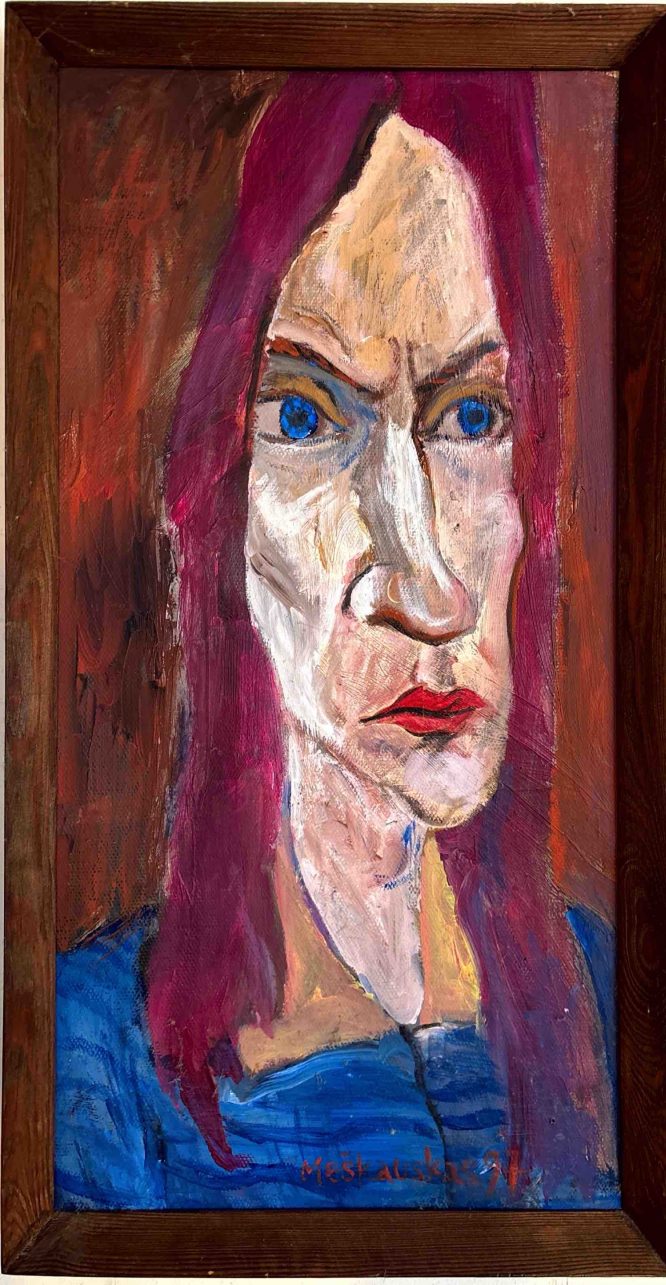
Thus, Martynas was primarily a visual artist. The Kaunas native’s biography includes dozens, if not hundreds, of graphic art and painting works. In just 28 years of life, he participated in as many as 26 exhibitions, showcasing his work in Belgium, the Czech Republic, the United Kingdom, Japan, Germany, Spain, Latvia, and the United States. In addition, he created logos and illustrations for foreign bands, magazines, and albums. He also curated the entire conceptual direction of Anubi: the logo, album covers, booklets, posters, texts, and other materials.
A beautiful and unsettling microcosm
Before his tragic death, Martynas Meškauskas left behind more work than many create in a lifetime. As his relatives recall, they often had to pull him away from his desk, as he would spend all his time there. Many of his works have survived and still decorate the walls of his parents’ house and his friends’ houses. 20 years ago, a comprehensive catalog of works was published, compiled by a well-known art critic, Dr. Ramutė Rachlevičiūtė.
The most striking and memorable phase of his oeuvre, at least for me, distinguished by its unique style and technique, is the series of woodcut prints, recognizable on Anubi album covers. To be honest, until this text, I mostly associated M. Meškauskas’s work with them, not realizing – and not having seen – that alongside them there is also a large number of paintings, perhaps even outnumbering his graphic works.
According to art historians, Martynas Meškauskas’s iconography and visual world were largely shaped by the Belle Époque, art nouveau, and the artistic ideas of the late 19th and early 20th centuries. I would also point out the inevitable influence of Lithuanian folk art, as well as elements reminiscent of Lithuanian book illustrations created using relief printmaking techniques.
Simply put, Martynas’s work is dark. This was not a façade, but the entire creative structure, not decoration, but a way of thinking. He created a microcosm in which beauty and unease functioned together, and where the symbol was more important than explanation. He was drawn not to a single theme, but to an entire field: rituals, death, symbols, ancient cults. He explored the meaning of mastaba, spoke about Set, Anubis, the pull of the moon, twilight, and the full moon – not as random, adolescent, pretentious metaphors, but as a true source of creative energy.
When asked where Martynas drew his ideas for visual art, his parents shrugged, “Probably from music.” As those who knew him say, he was deeply interested in the theme of death. Metal music encyclopedist Martynas Vaškevičius-Odium adds that metal music and its ideological side are inseparable from the topic of death. Most subgenres and styles, directly or indirectly, deal with death, the transience of life, and related phenomena. Black metal in particular focuses on the spiritual aspects of life and death, the afterlife.
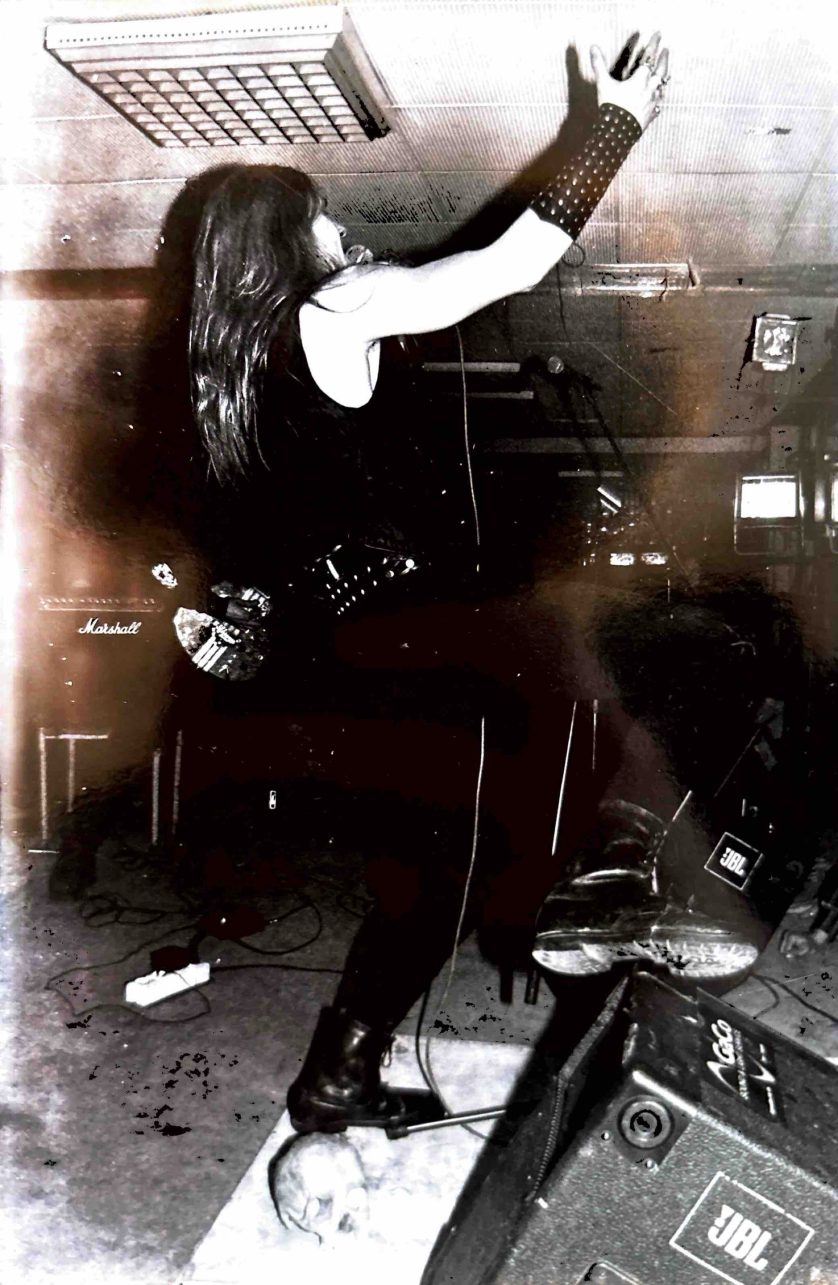
His parents recall that Martynas was deeply interested in Lithuanian history. It’s no coincidence that his early work reflects elements of Lithuanian folk art. This was also evident in his music: almost all Anubi’s lyrics were in Lithuanian. He did not cater to foreign audiences, maintaining distinctiveness and identity. In the end, it paid off – the Kaunas (and Vilnius) band secured the best record deal with a foreign label in the underground scene at the time. Perhaps even in today’s scene. And not just in the underground, but across the entire Lithuanian music scene.
The parents also mention another source of influence – philosophy. The young man from Kaunas became interested in it as a teenager, and this is clearly reflected in his work. It is known that he read Nietzsche; others will notice ideas from Heidegger or Sartre. Architect J. Meškauskas notes that his son’s bachelor’s thesis was titled “Anxiety That Permeates Beings”. I’d bet there’s more than one book behind that.
Radical language and a sense of strangeness
When looking for Martynas Meškauskas’s thoughts and a photo of him without stage makeup, it is not the neatly written, repetitive biographies that say the most, but rather old interviews. Nearly all the zines that contain interviews with the graphic artist and a musician have been digitized by his friends, so we managed to get copies. However, they must be read with caution. The language of the metal underground at the time was deliberately radical. Still, it is precisely in that theatrical language that several consistent traits stand out most clearly – intolerance of banality, high demands on oneself, and an aversion to superficiality.
As the creator himself has said, he did not seek direct influences because too much influence leads one astray, and the most important thing is to find one’s own path. Yet even when his language is exaggerated and harsh, it doesn’t feel like a pose but rather reflects the creator’s fundamental values and confidence – art must be intense, dense, and consistent. Creation is the whole.
In interviews, Martynas also keeps returning to the idea that music should affect more than just the ear. He speaks about “special music” that the listener could not only hear but also feel. Anubi indeed laid the foundations for a new phenomenon – avant-garde black metal. Its aim is not merely straightforward energy, anger, or resistance, but also a spiritual journey, expressed both through lyrics and through an experimental, warped sonic aesthetic.
That would not have been possible for a closed-off fundamentalist. Among the creators Martynas recommended were not the classics of black metal, but Diamanda Galás and Skyclad. This detail serves as a reminder that Martynas was not a prisoner of the genre. He was not searching for textbook truths, but for atmosphere and, above all, for strangeness. That is why his own work is not an obedient imitation, but a search for a unique art world.
The zines also provide insight into his creative temperament. In several interviews, he expressed the idea that works take shape gradually – through searching in the studio, reworking, and rising above. At the same time, there is a clear intolerance for the superficiality of the scene and for those who understand neither the roots nor the essence. Martynas was very demanding of himself – a maximalist for whom the creative process had to be lived, not performed.
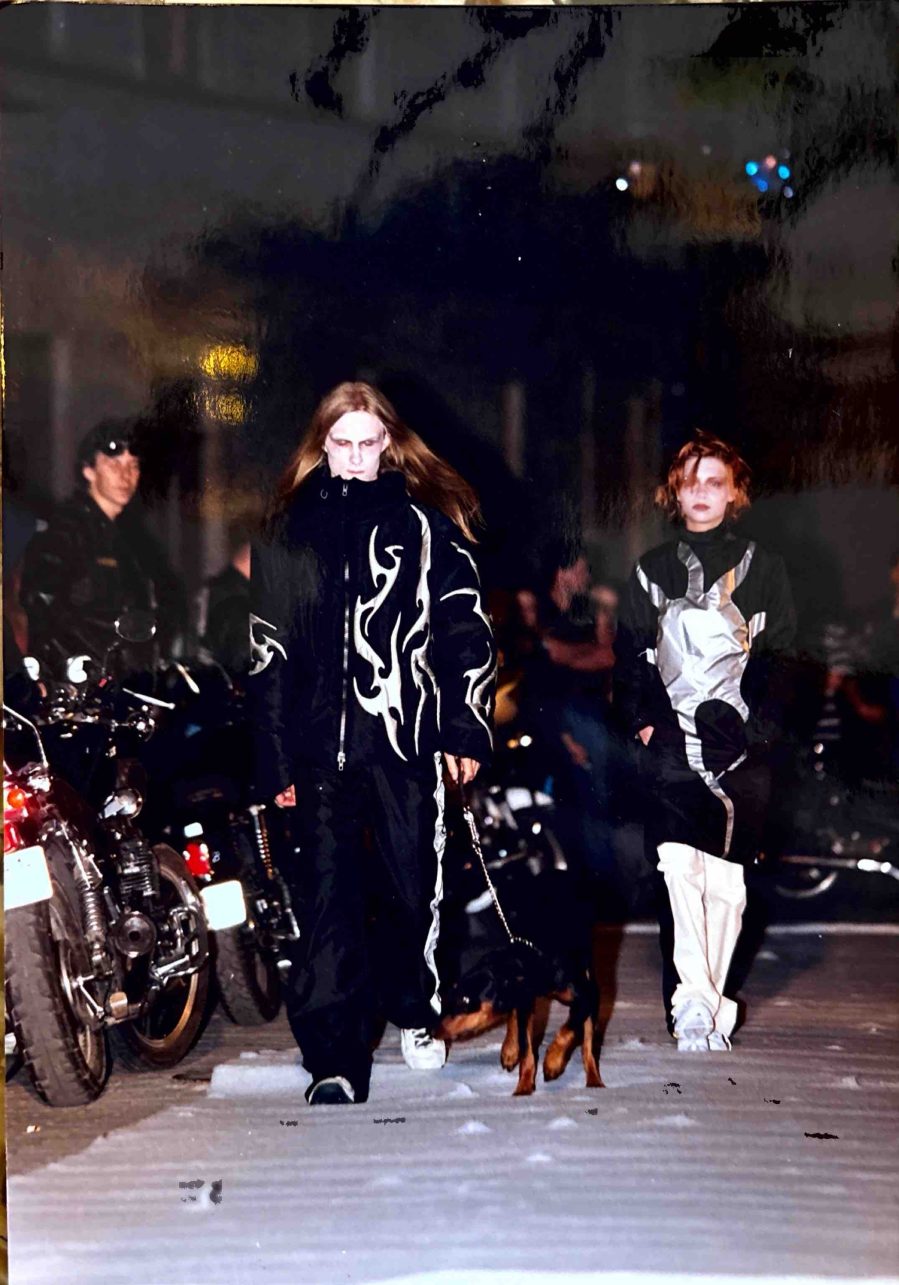
However, you can’t simply describe him as a gloomy or introverted person. Looking through the photo albums preserved by his parents, a completely different image emerges. For many metal fans, it would probably be hard to imagine that Martynas even walked the runway – he modeled in a fashion show presenting a collection by his close friend Raimundas Pečiulis, who to this day actively preserves the memory of his late friend. Alongside the runway, M. Meškauskas’s graphic works were also exhibited as a conceptual extension.
Interrupted works and a leather jacket in a golden frame
On March 30, 2002, Martynas went salmon fishing on Lake Michigan with his cousins and never returned. The U.S. Coast Guard searched for more than two days, but later called it off, stating that there was no longer any reason to believe the three men had survived. What exactly happened – no one knows, and no one ever will.
As mentioned by relatives, the boat they were on had been inspected, used by the family for more than a decade, and had never caused any problems. The second day, when the weather conditions worsened, and a storm broke out, could have been fatal – the boat capsized, and the men drowned in the icy water. The bodies were later washed ashore by the waves. Martynas was eventually buried in Kaunas, at Romainiai cemetery.
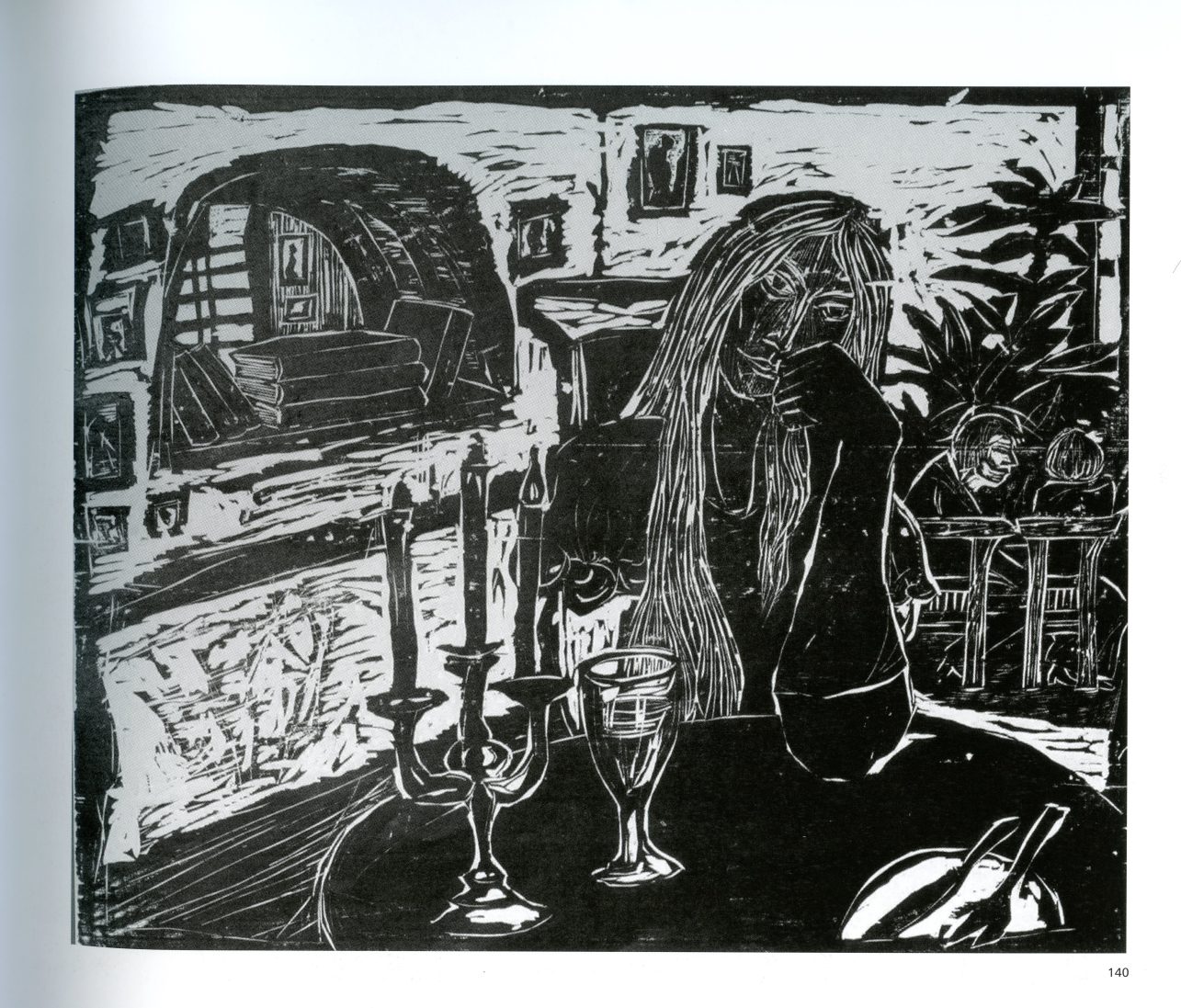
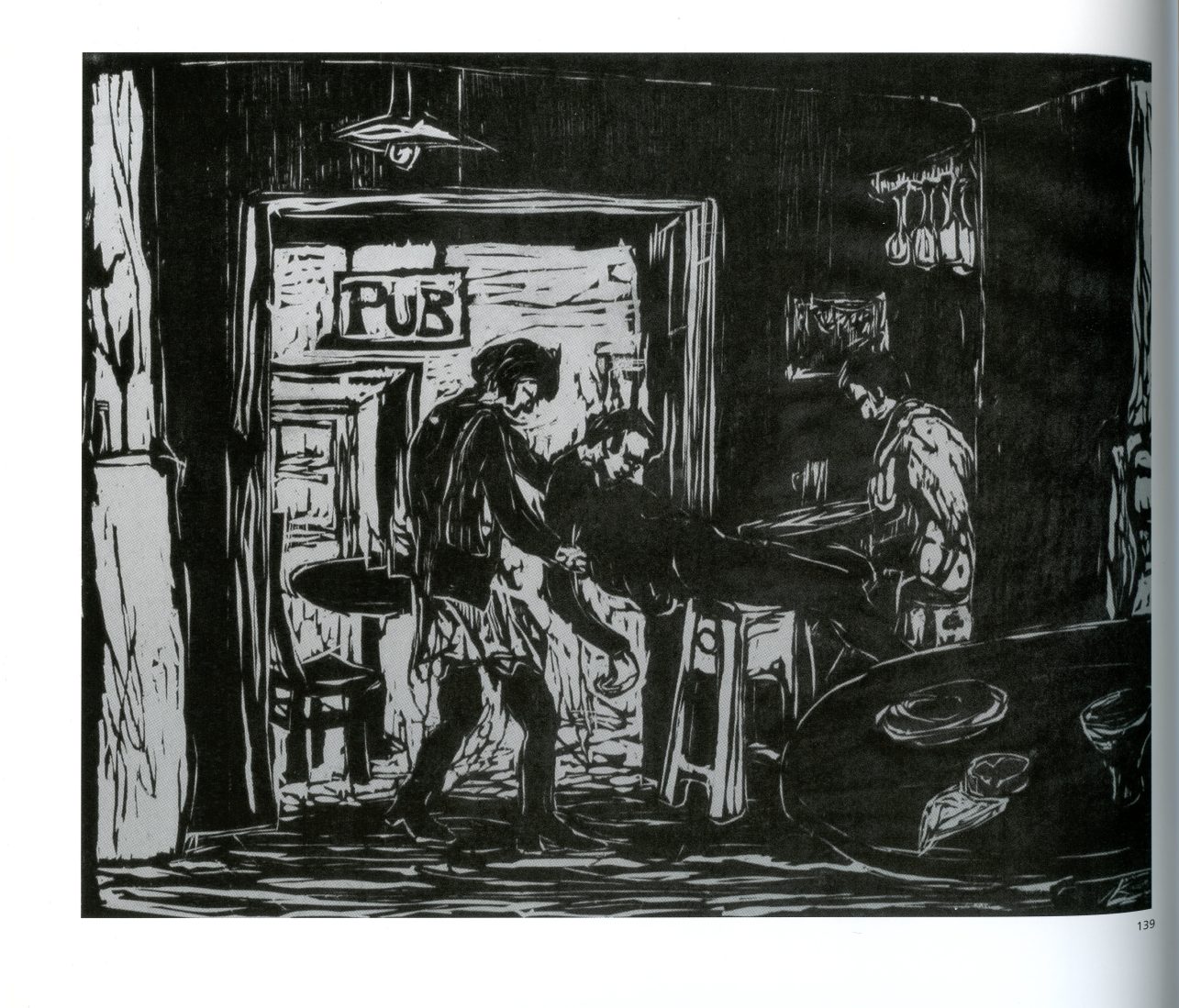
Works published in Martynas Meškauskas’s creative catalog (comp. Ramutė Rachlevičiūtė, Vilnius, 2006)
Martynas Meškauskas had much to be proud of – Anubi became one of the first Lithuanian bands to break onto the international scene. A four-album contract had been signed with the Italian avant-garde metal stronghold Code666 Records, which would have firmly established the Kaunas-born project in Europe.
Shortly before his death, Lord Ominous – the stage name of M. Meškauskas – informed the record label that the composition for the album “Vienaakio senio apžavai” (The Enchantments of the One-Eyed Old Man) had been completed and that the band would record the album in the studio after the summer. Martynas also managed to paint two album covers, which he presented at an exhibition in Chicago.
Before that, they had also managed to record part of the mini-album “Sielų pirklys” (Soul Merchant). Martynas managed to hear the demo version over the phone just before the fateful day. Ultimately, this work – using the surviving recordings of Martynas’s vocals – was completed more than 20 years later and recently presented at the Vilnius Book Fair. This is yet another testament to the enduring relevance of the Kaunas-born artist’s work. The album was completed by Martynas’s creative partners at the time: Evaldas Babenskas-Sadlave, Dovilė Staniulionienė-Lady Sleep, and others.
The most recent exhibition of Martynas Meškauskas’s visual art took place a decade ago at the legendary Vilnius venue Kablys, during the Armageddon Descends festival. At that time, I had the chance to witness the artist’s talent firsthand. Now, a retrospective exhibition is being organized again – only this time in New York. I hope that a catalog of his graphic artworks will also be republished.
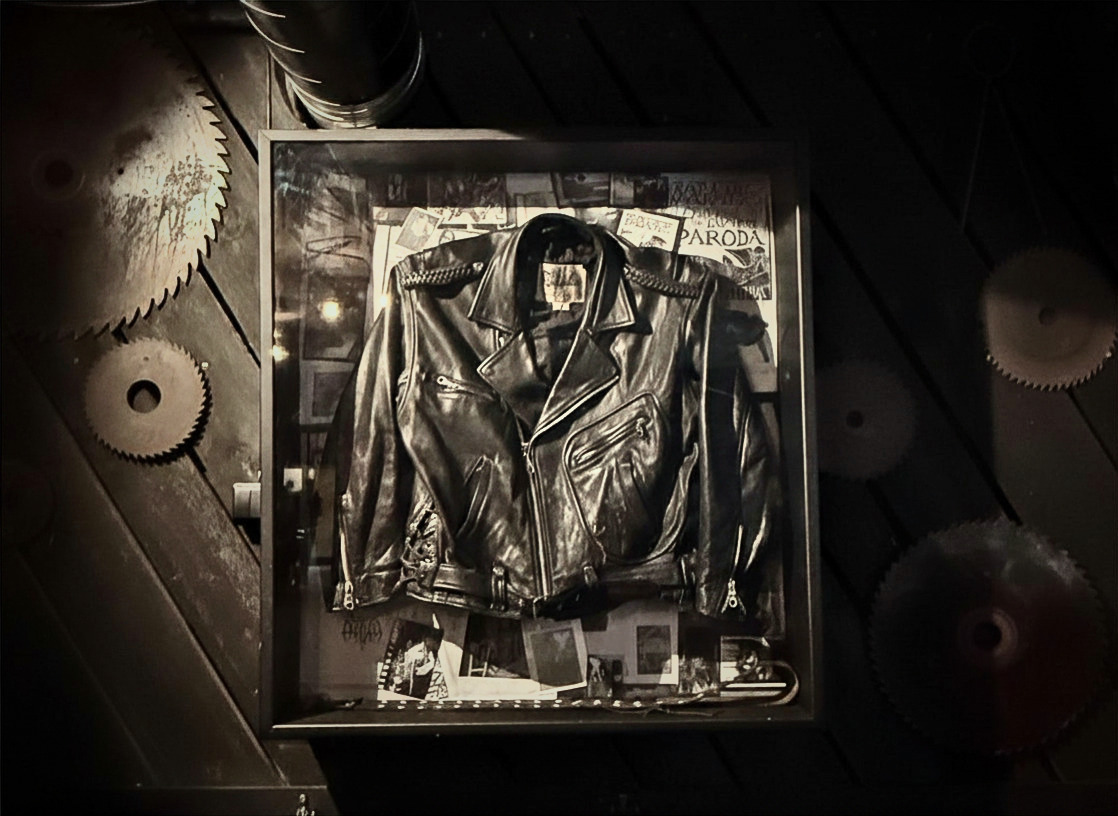
And for anyone who wants to get at least a little closer to this personality, pay attention to the walls of the Lemmy club in Kaunas. There, in a place of honor, hangs Martynas Meškauskas’s leather jacket in a golden frame – a kind of Holy Grail of Lithuanian metal. Do we have more of these? I truly cannot recall any other figure from the metal scene whose clothing has become a historical artifact preserved in the mecca of Lithuanian metal music, Kaunas.