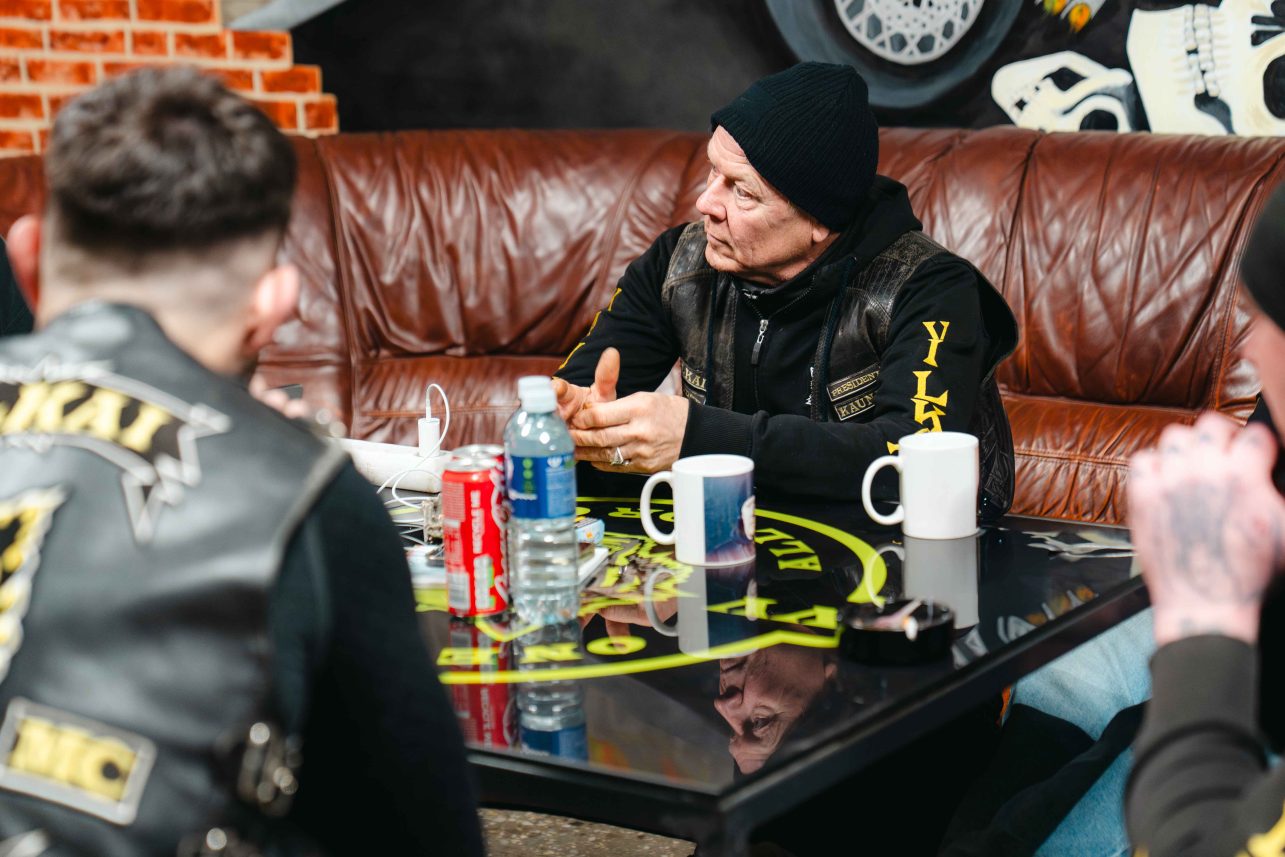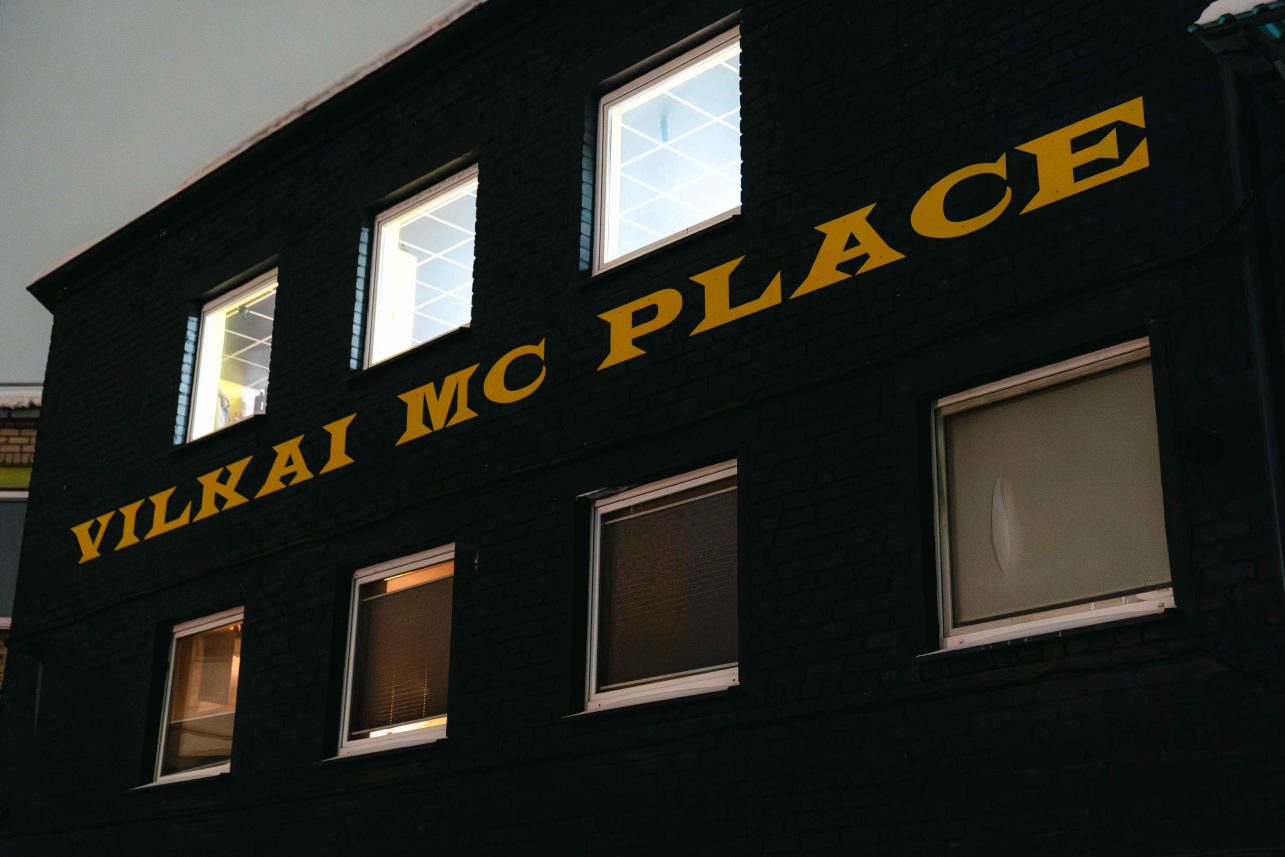
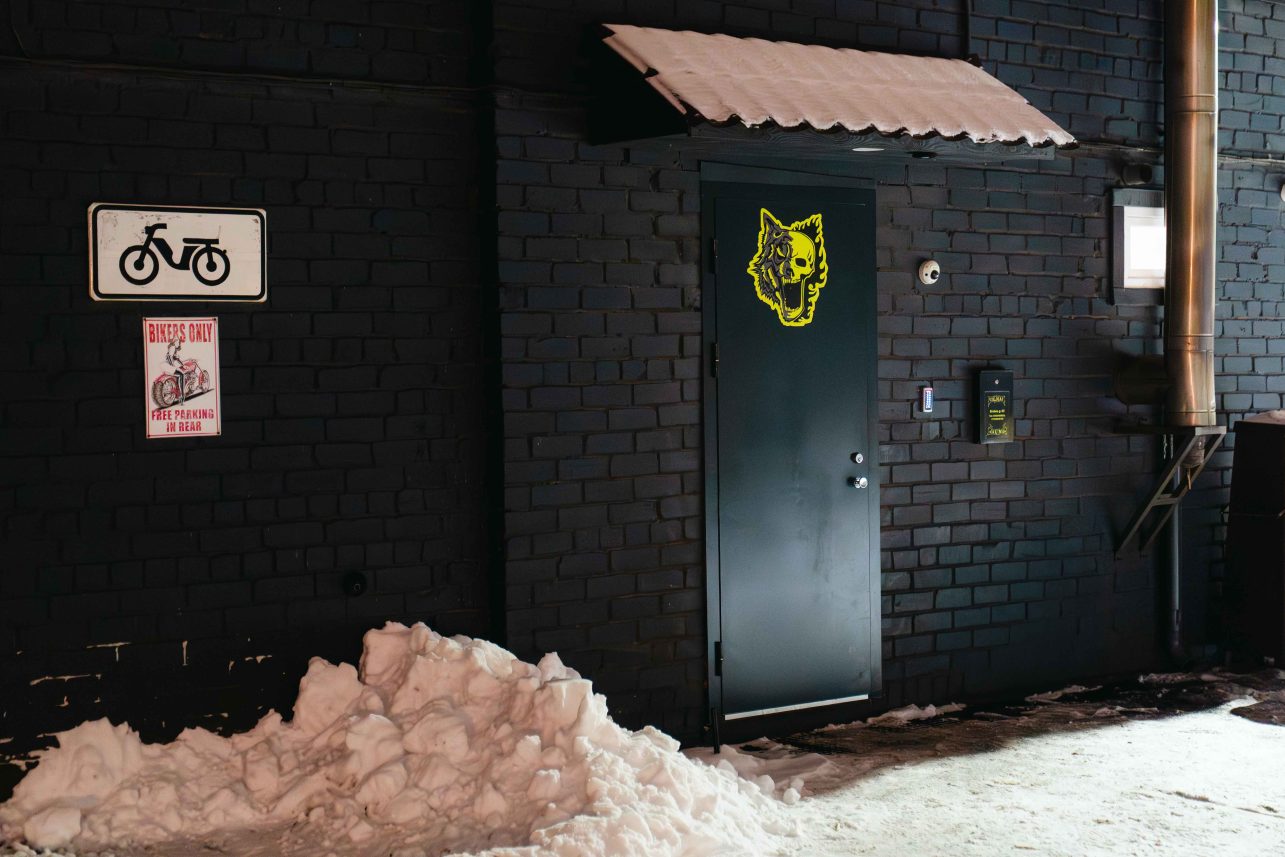
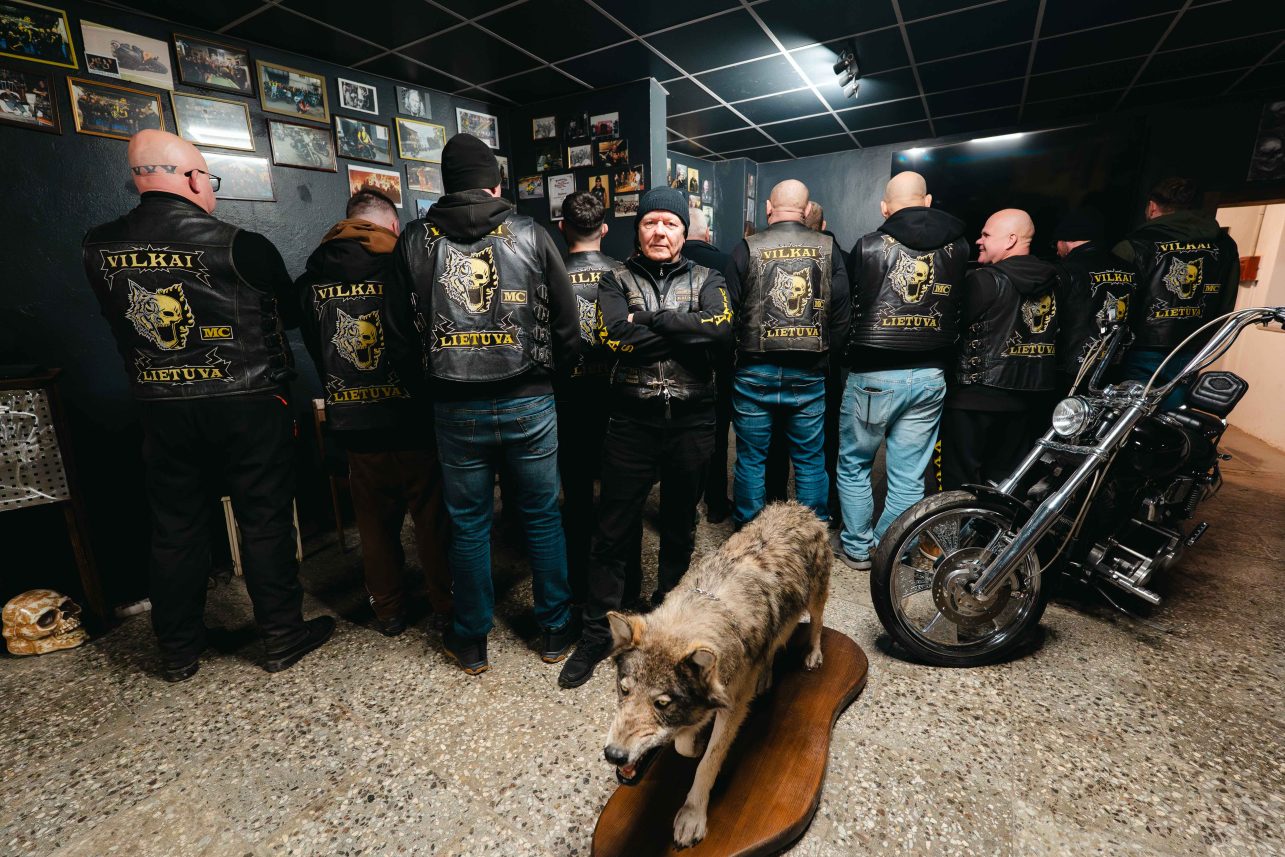
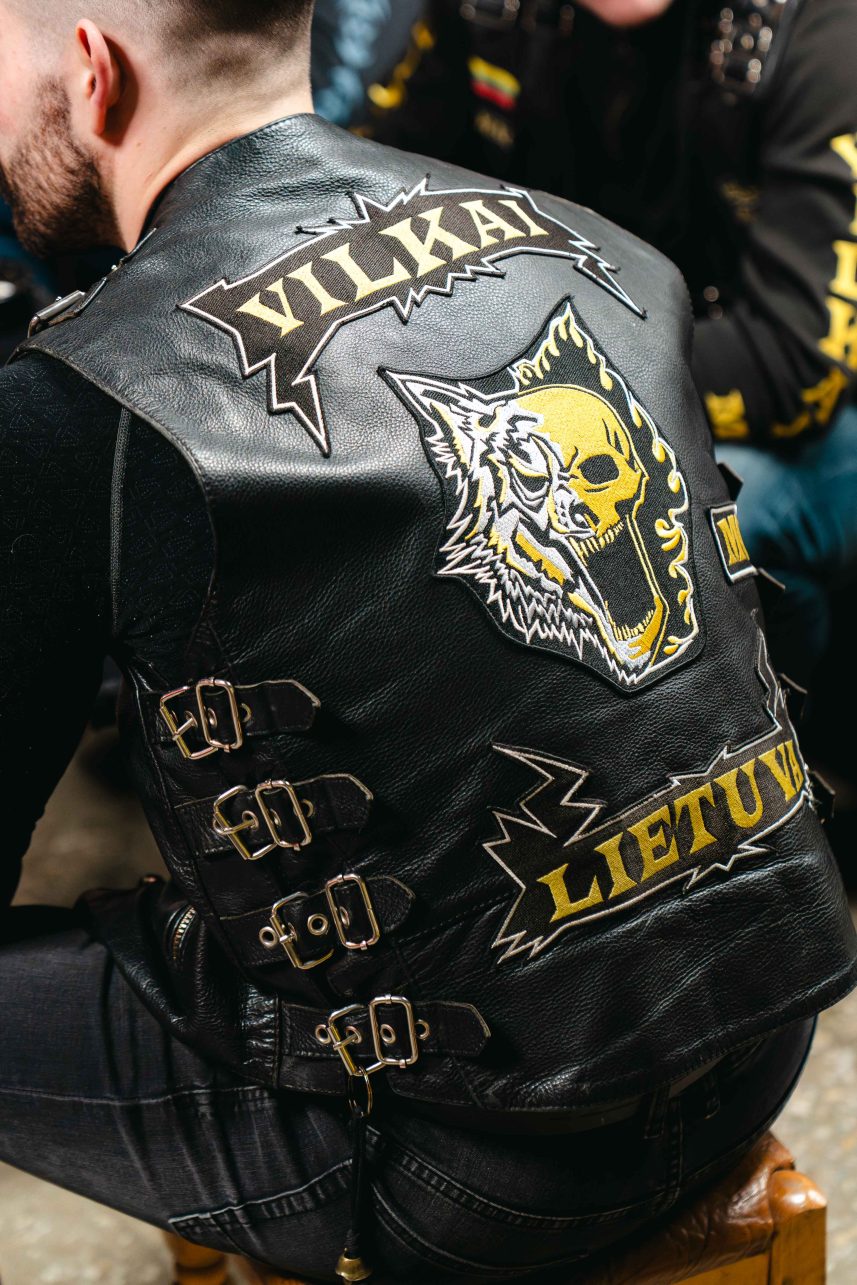
It is just me and them, maybe fifteen men in vests. We are sitting inside a three-story building that is black on the outside: a clubhouse you won’t find in any tourist guides. Šančiai. The Vilkai MC (Wolves MC) biker club unites about thirty members.
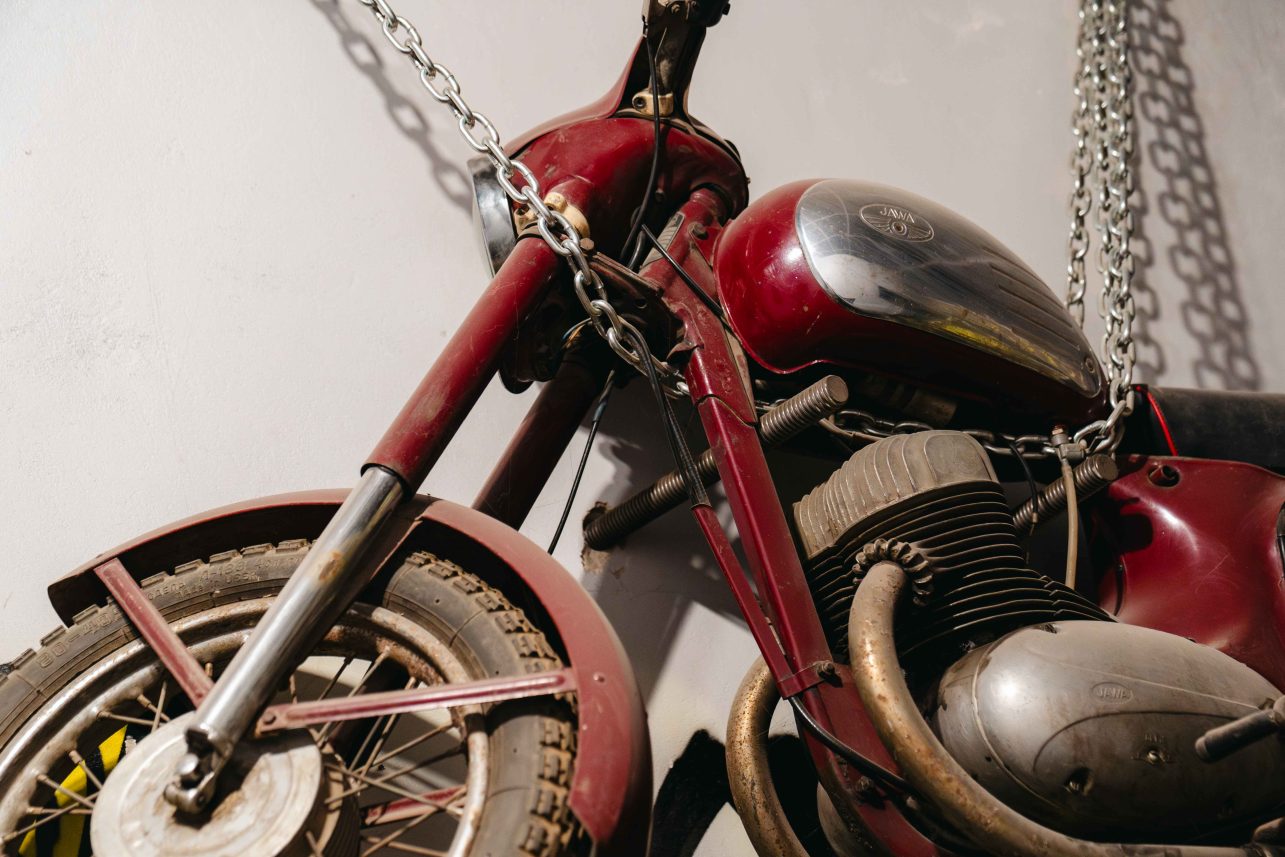
A sense of peace and order fills the clubhouse, along with the feeling that this is not just a decorated club, but their territory, their church. The first thing you see when entering the room on the third floor makes you stop. Right in the center, there is a motorcycle. It is not just tossed into a corner or covered like an exhibit: it is positioned so that you cannot pass it, even if you wanted to.
“What model is this?” I ask.
“A Dyna. From 1996 (Harley-Davidson Dyna, author’s note), I think,” one of the men replies.
Then comes a sentence that makes the atmosphere even more serious: “This is our late brother’s bike. It was his wish for it to stay here. So, the young members hauled his soul up those stairs to the third floor.”
After such a start, it is clear that this will not be a story about a hobby or weekend rides. The club members speak plainly: freedom is found within the group. The paradox, in their own words, is simple: one wolf is vulnerable, but in a pack, he is stronger. This idea is not even about physical protection, but about psychological security and a space where you can exist without a role. They say that in broader society, people are not committed to one another, which leads to more caution and acting. But here, inside the club, you can speak the truth and you won’t be written off immediately. If needed, you’ll bring your last cent to replace a window.
Now they have a bar, tidy premises, and respect, but the road to this environment was not paved with support funds or magical sponsors. In the beginning, meetings were held in other people’s bars: “At first we would gather in one place, then another. Eventually, the bar owners would start grumbling about us coming there every Thursday… well, you know, things would get uncomfortable.”
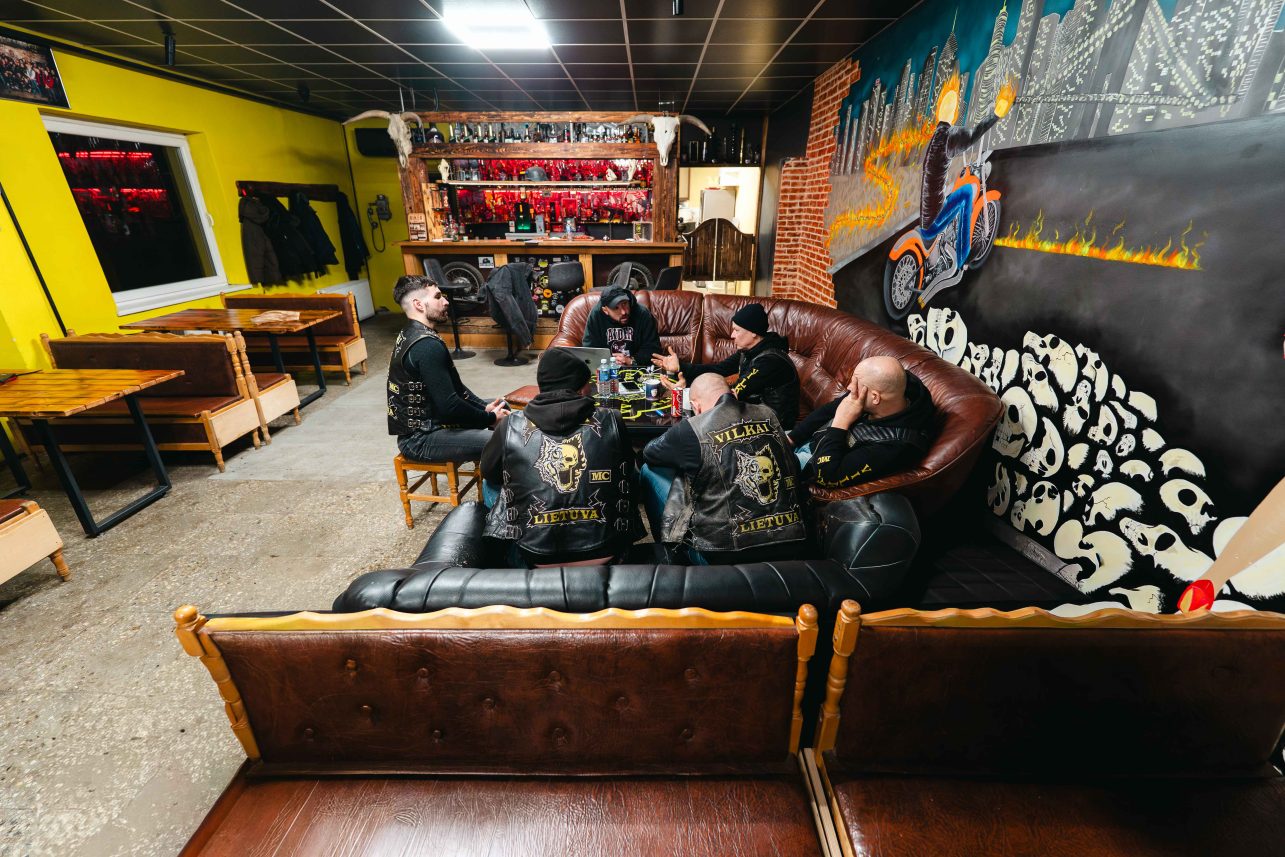
Either there was too much noise, too many motorcycles, or too much attention. They needed a space that was their own. Then came 2012. The era of the litas. Shadows of the crisis were still in the air. The club rented a garage, but they soon realized they didn’t fit.
“These used to be auxiliary rooms for a factory. We tore down walls. A toilet stood right where we are sitting now. There was a metal stove on top of it, with a chimney going through the wall and upwards… And that’s where the test began. It wasn’t about ‘do you have a bike’ or ‘do you have a leather jacket,’ but whether you would be here when things got tough. The renovation wasn’t pretty. It was 2012, wages were small, and you had to bring less home because we had to chip in for windows. The guys would say: ‘I can’t take it anymore…’ Do you understand? It was hard then, but we did it. We beat our heads against the walls, but we did it. Those who didn’t burn with the idea dropped out. They left. Only those for whom the club was more important than comfort remained.”
There is no top-down heroism here, just the basics. If you don’t burn with the idea from the inside, you won’t last. If you don’t last, you’ll leave. That is how the selection mechanism works. Not through pretty talks, but through real actions where you have to choose: money for a window or a new thing for the house, time for repairs or time on the sofa. And for the Vilkai, this happens not once a year, but constantly. That’s why they say: this isn’t just a ‘meet up, hang out, and leave’ kind of thing. This is a network.
That network becomes even tighter when discussing the internal ecosystem. One is a plumber, another a painter, a third a baker, a fourth a mechanic. Everyone contributes their part. “If a pipe bursts at home, you don’t open Skelbiu.lt. You call a brother. And he comes not for the bill, but because you are a member of his tribe.” In the biker world, the currency is trust: without it, nothing else exists.
Trust also explains the hierarchy. The club doesn’t want to accept someone they would later have to kick out: they say that is the most unpleasant part. Therefore, everything happens slowly. A person comes in and stays as a friend of the club. Later, if they fit each other, they become a hang-around. At least three years pass from being a hang-around to becoming a full member. They describe this time as a scanning process: you go to parties, you participate in the work, they observe you in stressful situations. While you are a hang-around, you know ‘only as much as is allowed’ about the club’s internal rules. Everything is instilled gradually. There is no such thing as ‘you performed well once and that’s it.’
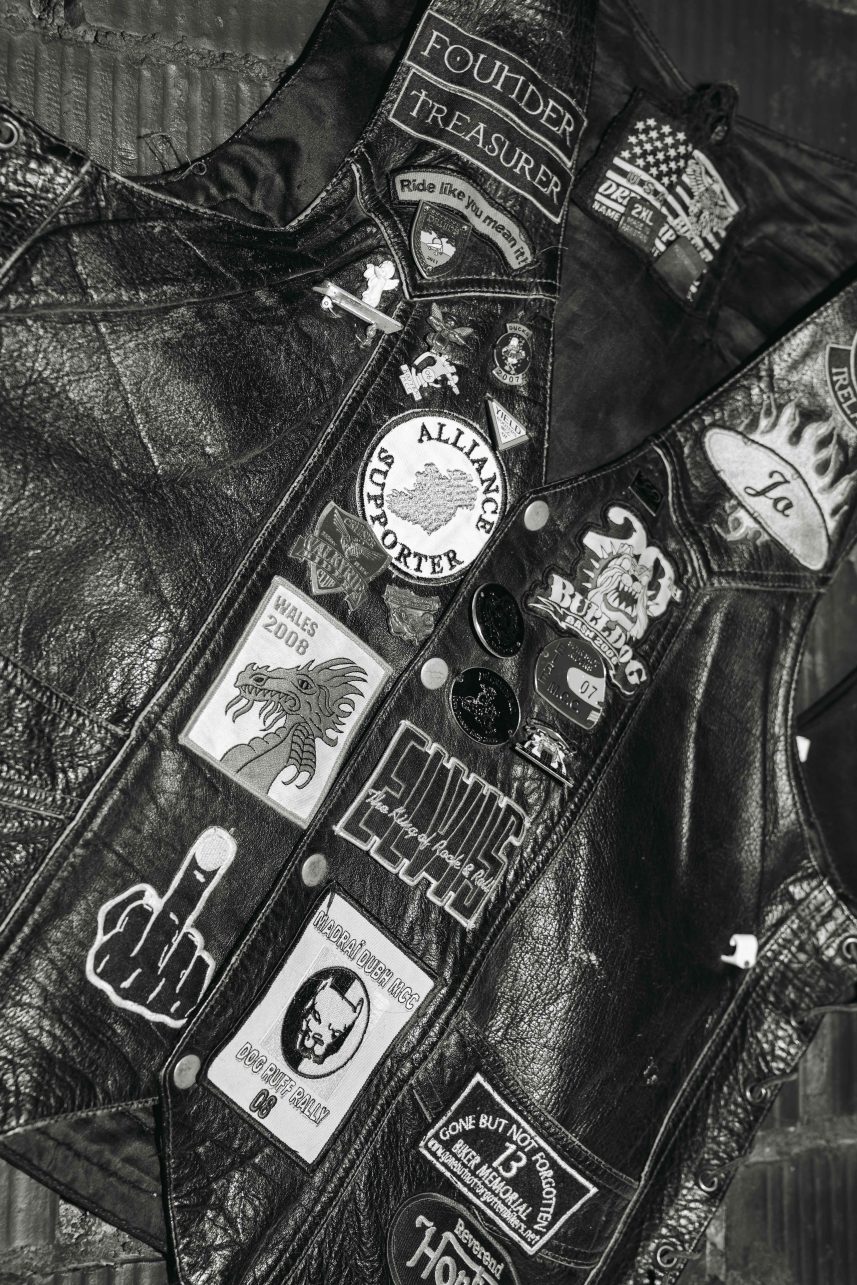
They mention the steps: club friend, support, prospect, member. The essence remains the same: you can’t just put on a vest. A shiny bike is not a ticket. The ticket is time and reliability. Furthermore, status is not just internal. It must be recognized by other clubs in Lithuania and the international system. They say it took eight years to reach MC status, which was officially granted in 2014.
Reputation is more important than public image. That is why the rules here are tough and universal worldwide. For example, a police officer cannot be a biker. “If a club doesn’t follow those fundamental rules, how will it earn the respect of other clubs?”
The relationship with society is also ‘Kaunas-style’ dualistic. On one hand, they say: “We don’t care at all what society thinks of us. What matters is that we know what we’re doing. We would never bother an ordinary person for no reason. We protect our reputation, we don’t look for trouble, we just live our lives.” On the other hand, although they don’t want a bad name, they admit that the columns forming on the roads, the patches, and other external elements fuel stereotypes.
Relationship with the police? A biker in a vest is rarely stopped without a reason; mutual respect exists. However, some drivers intentionally block the road so that a motorcycle cannot pass in traffic. For the interviewees, this is not just an inconvenience, but a sign of low road culture. They say a column is not meant to demonstrate power to ordinary people. A column is order. And when order clashes with someone’s ego, tension arises.
When the conversation turns to morality and justice, the Vilkai speak briefly. “It is easier for me to shoot a human than an animal. Because humans were born in sin and live in sin. But God created animals to continue existence and survival.” Then the principle of justice is introduced: if someone robs a member’s family, the member carries out justice himself, not necessarily considering the criminal code. They present this as their internal logic, without an invitation to chaos, and the conversation moves on.
Alongside this tough structure, social help also exists, but here, too, they don’t speak in slogans. They mention foster homes. They mention safe driving lessons for youth on scooters. They mention children from difficult social backgrounds and helping the authorities so that young people don’t go down the wrong path. The logic is simple: they help when values align. They don’t say they are saving the world. They say they do what they believe is right.
“We really enjoyed being supervisors at the Parakas party, Vida, a Šančiai activist, invited us,” they mention a hero of our magazine who shared a kugel recipe in a previous issue.
The answer regarding patriotism is also direct: “We are patriots of our city and our state, not the government or politicians. We don’t get involved in politics.” When asked about war, the answer comes instantly: “We would be the first to go.” They follow up about independent preparation: “I have many weapons, if needed, let’s go.” They add that they didn’t sign up for volunteer units because they don’t have time to ‘run through the woods for twenty days,’ but when the time comes, they will be there. Their vision is community-based: small groups, such as yards, garden associations, and brotherhoods, where people truly know each other, must act as one rather than waiting for orders from above.
When discussing internal order, they emphasize discipline. I ask a question relevant to modern society: what happens if a member starts abusing substances? “We take action. It has happened before,” they say. But if a person ignores all opportunities and efforts yield no results, then they ‘give up.’
They see the evolution of their tribe. A member who has been riding for over 20 years remembers how a certain image was mandatory in the past: leather pants even in 30-degree heat. Now everything is simpler: “Sneakers, jeans, whatever is comfortable. What matters is that the vest is there.” Their emphasis is clear: it’s not the leather or the pose, but what is under the vest.
The theme of disappearing subcultures also comes up. They remember times when everything in the city was clear: punks, metalheads, rappers, ravers. Now, in the opinion of the Vilkai, subcultures have faded; young people want to be individual, but in the end, everyone becomes the same. They point to a lack of responsibility and values. It sounds more like disappointment than anger.
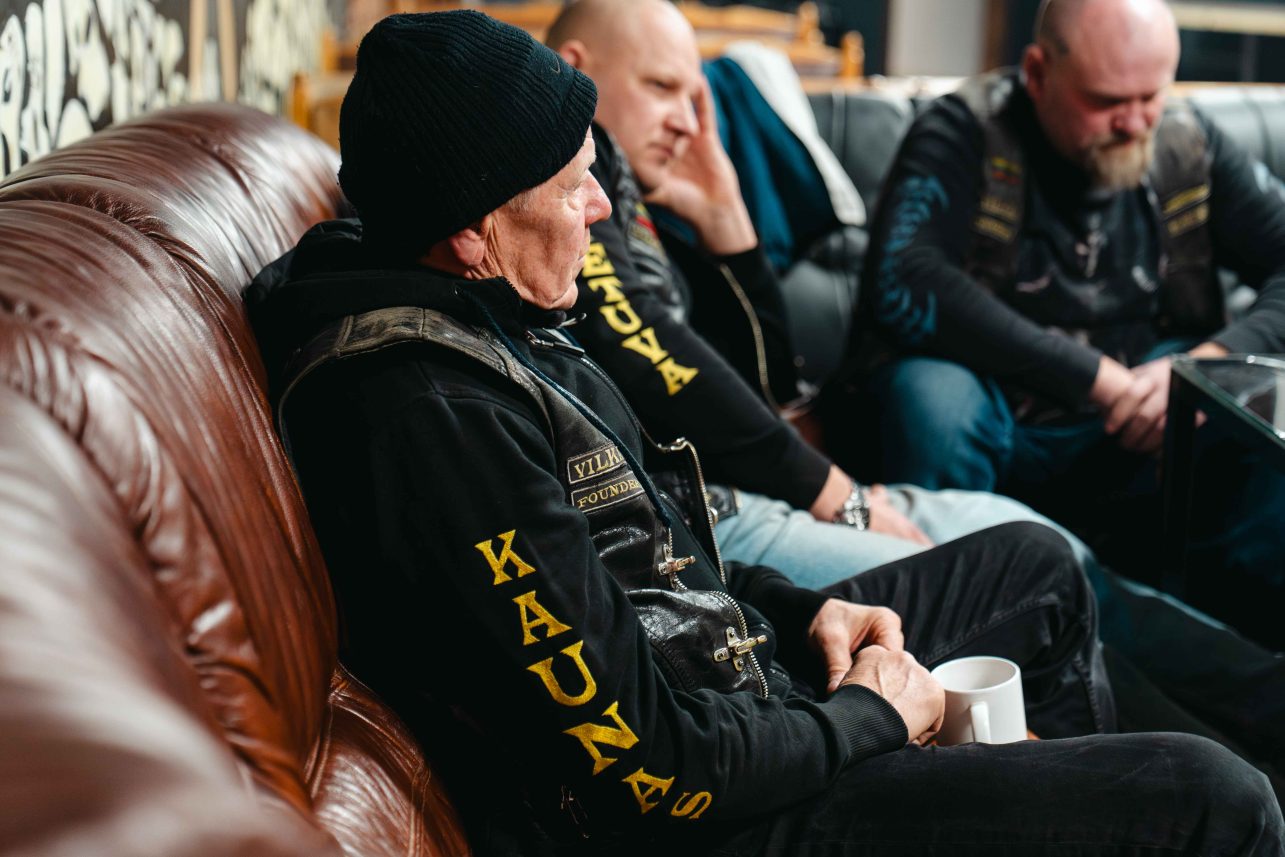
Kaunas is always in the background of the conversation. They say this city is a ‘separate republic’: conservative, self-deciding, and disliking it when Vilnius tries to explain things. They mention rules as part of the city’s DNA: “They are here and they will stay. Kaunas residents will never give up.” They are proud of the patch that says KAUNAS: they say they could choose not to wear it, but they do.
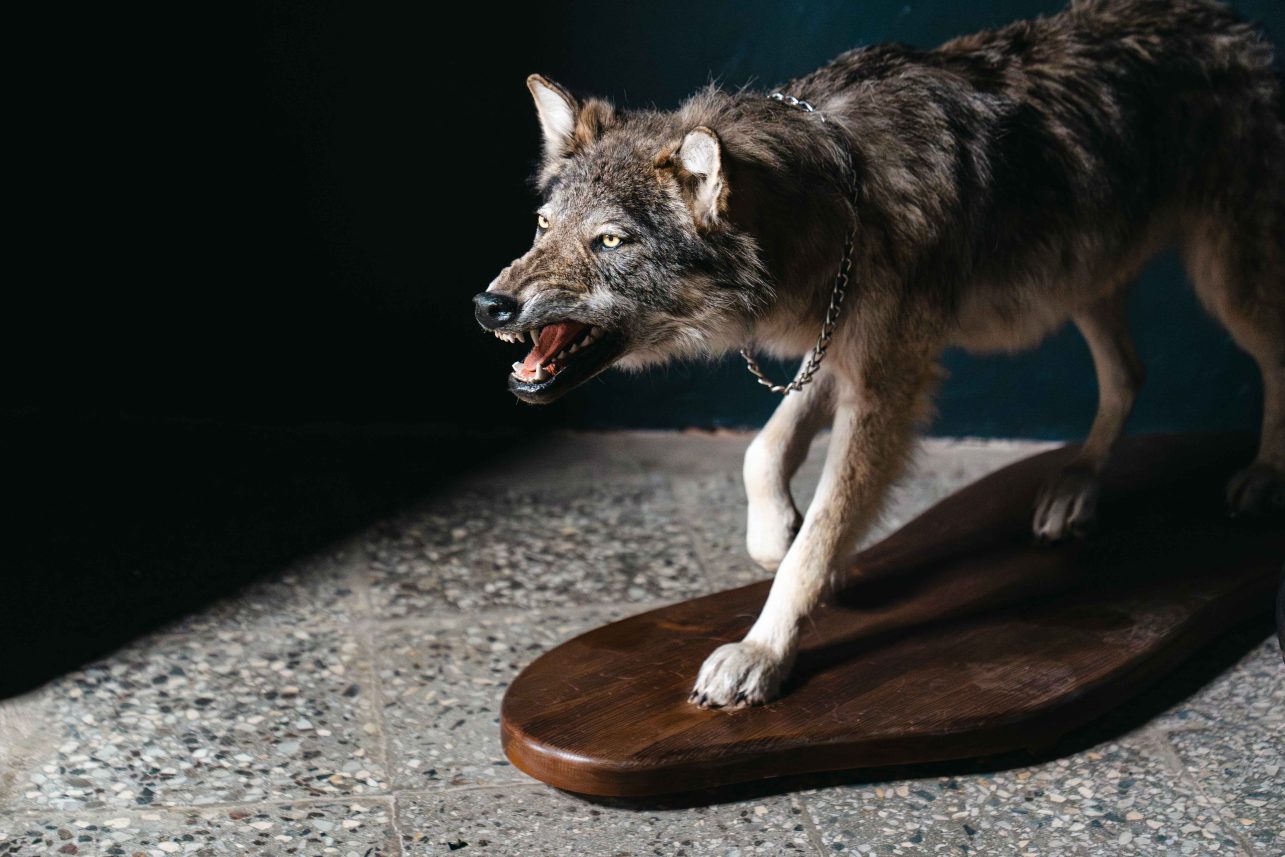
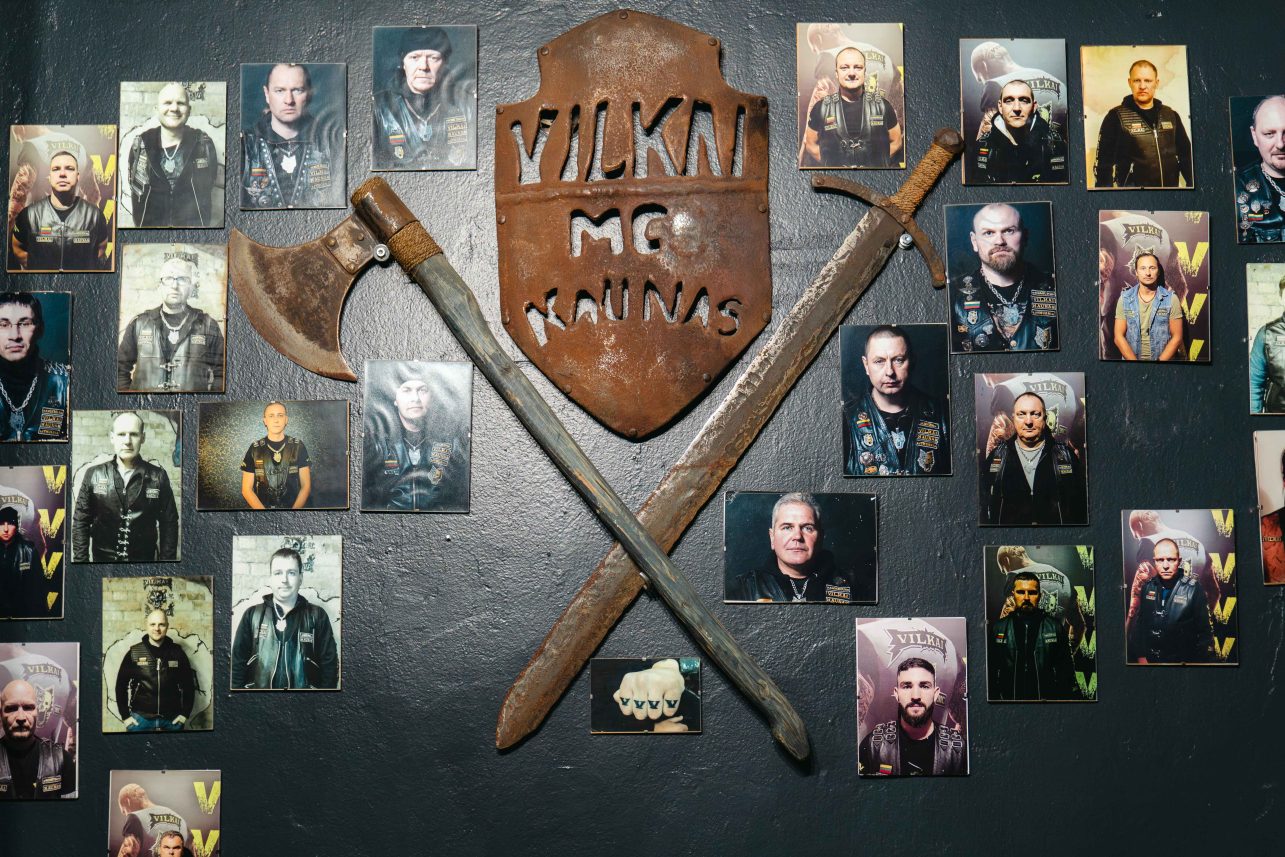
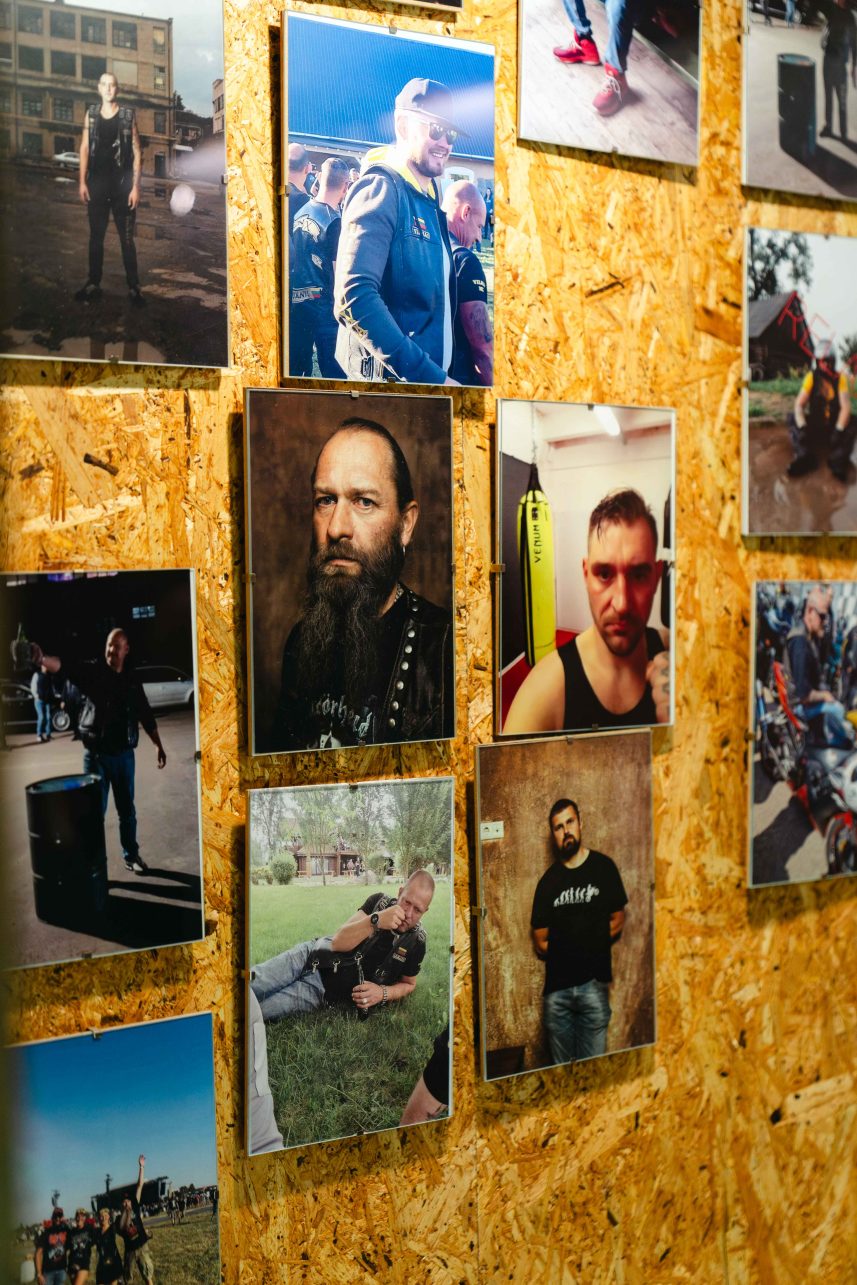
When the evening at the clubhouse ends and I turn off the recorder, the photos on the walls remain. Photos from 2012: they are still young, covered in soot from the stove smoke, but armed with the same logic. Bikerism is not a weekend hobby. It’s those thirty litas that you didn’t have but brought anyway. It’s the three years during which you are ‘rubbed in’ to be accepted. It’s the reputation you earn, not buy. And that 1996 Harley on the third floor: hauled up the stairs because a dead brother’s wish is a rule that no one will break.