If, while staring at your monitor, rubbing shoulders at the gym, or sinking into that well-worn spot on the sofa in the evening, the thought occurs to you that perhaps there is room in life for nobler, more meaningful activities – salve, you are not alone.
The Old Town Art School, which opened its doors in Kaunas just a couple of months ago, has received a real influx of interested parties, and its co-founder Justinas Krasuckas testifies that the interest in the classics is not unique to Lithuania. Worldwide, the so-called atelier movements are experiencing a rebirth.
The Atelier Movement signifies a revival of classical realism and traditional art teaching methods in the contemporary art world, aiming to bring back and preserve the academic methods of 19th-century realism. Its essential features are traditional teaching in small studios and a strict methodology: great attention to anatomy, chiaroscuro, perspective, and proportions.
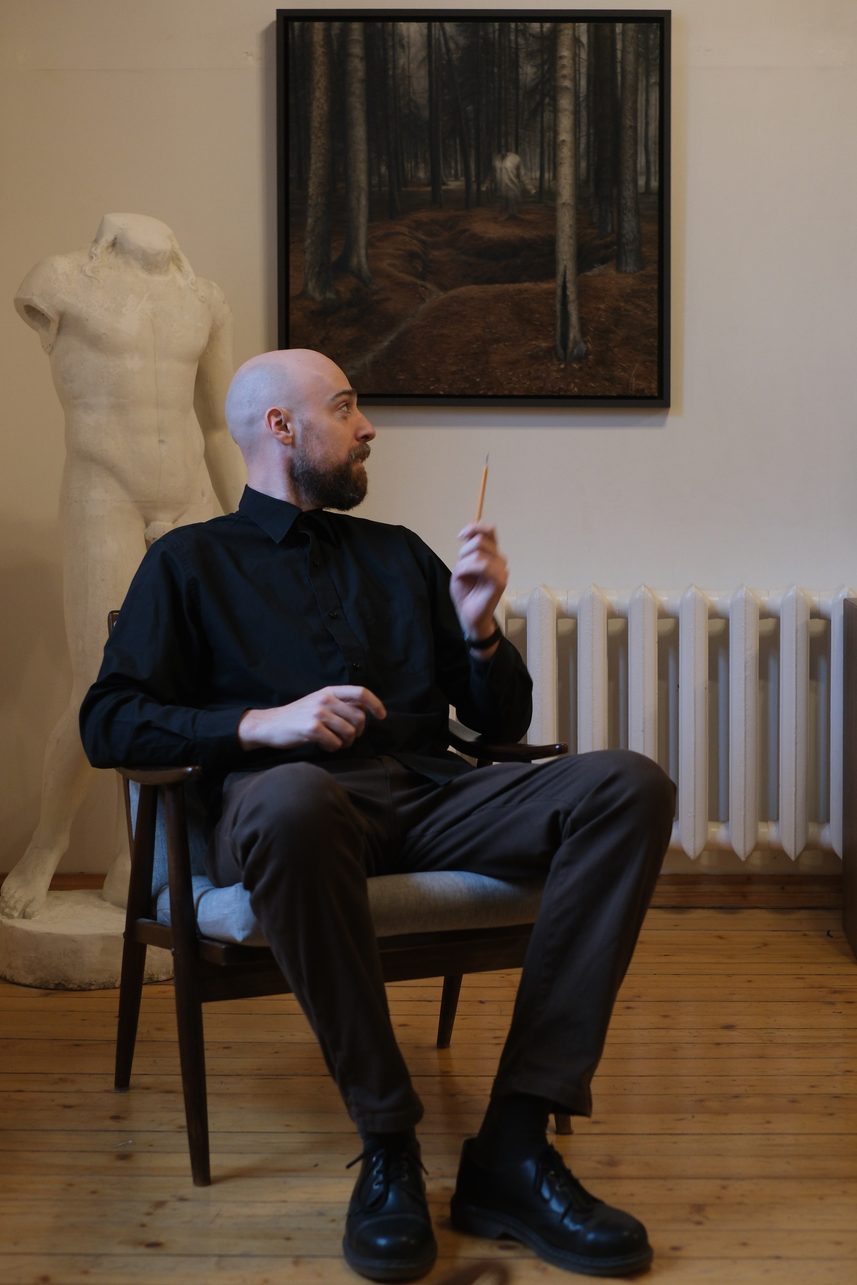
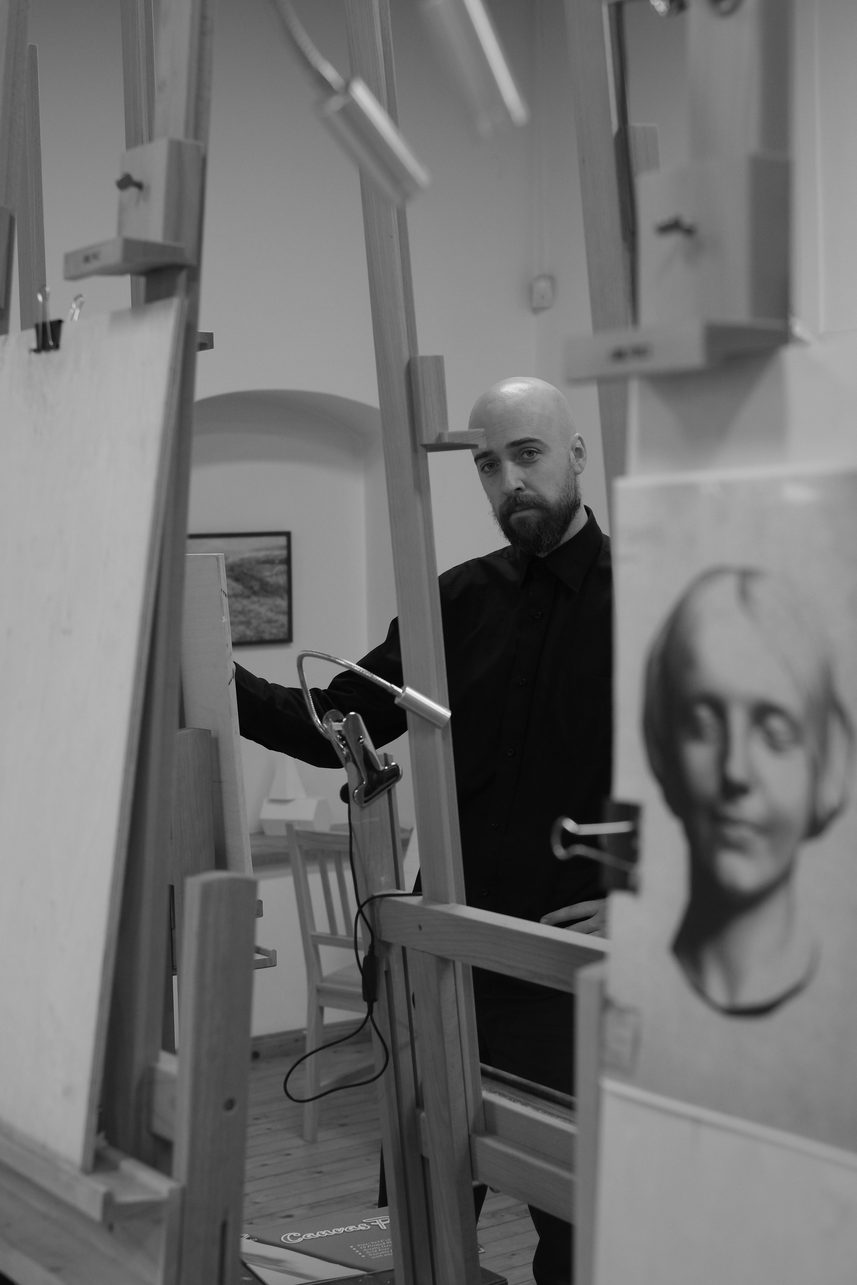
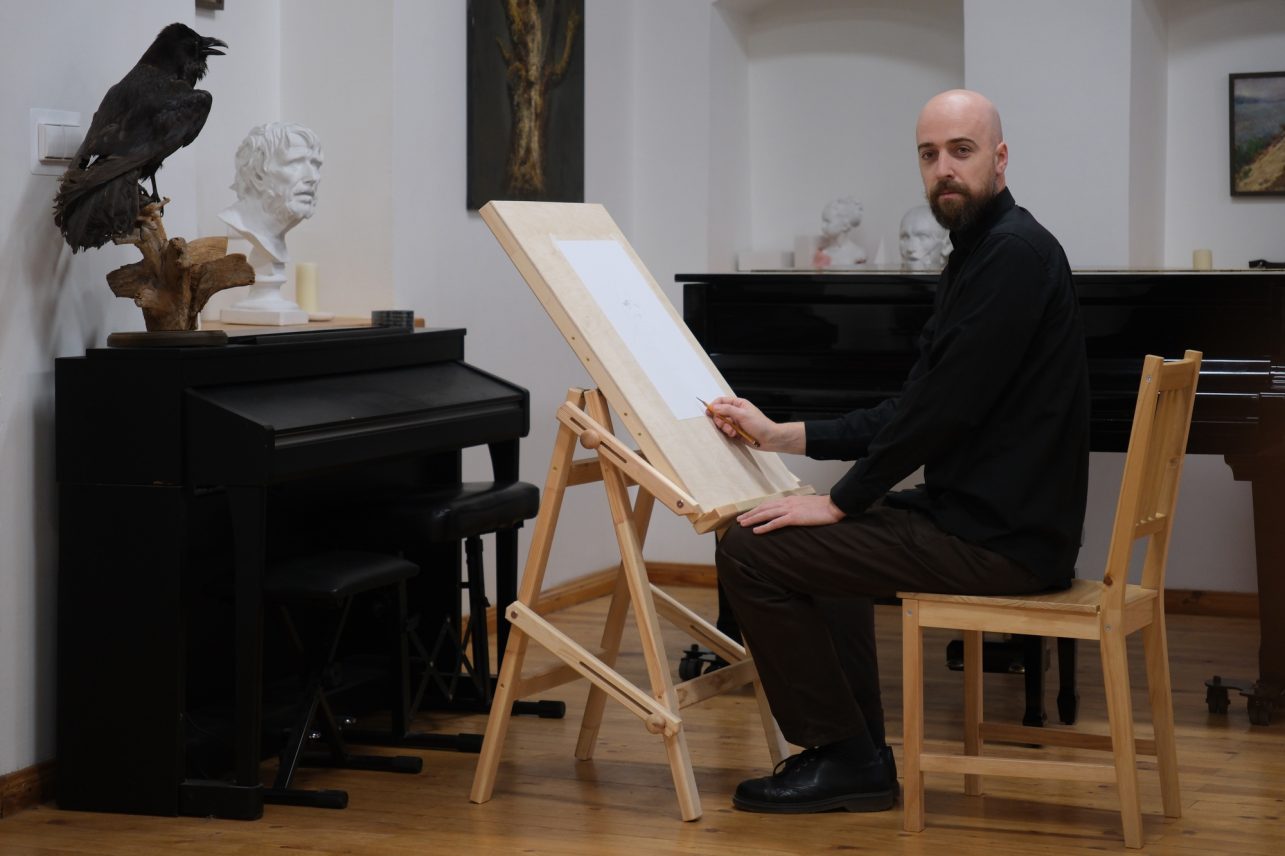
When asked about the beginnings of the Old Town Art School and how this atelier movement found an address at Vilniaus St. 7 in Kaunas, Justinas immediately begins to talk about people: “Together with my friend and long-time colleague, the painter Donatas Inys, we had a dream – to find beautiful premises and establish such a multifaceted school.”
The foundations of this methodology stem from the 19th-century classical manner of drawing and painting, and the painter became acquainted with the specific idea for the school while studying at the Florence Academy of Art: “That was the essence of founding the Old Town Art School – to introduce the classics to Lithuania. Not through experiments, but precisely through a discipline that requires a great deal of time and patience. In the new school, we teach drawing, painting, ceramics, printmaking, and sculpture; we will also have piano lessons, individual lectures, and guest lecturers,” says Justinas.
Atelier schools are not a new concept – in 1970, perhaps the first, “The Atelier”, opened in Minneapolis, USA; later came the famous “Atelier de Sèvres” in Paris. In Italy, traditions are maintained by the “Angel Academy of Art”, opened in 1997, and the Florence Academy of Art mentioned by Justinas (founded, incidentally, by the American painter Daniel Graves). In North America – in Toronto, Ottawa, and Boston – the “Academy of Realist Art” began accepting students in that same year, 1997. The vision of all these schools is similar: to protect and nurture the origins of classical excellence and craft. It is a pleasure that Kaunas joined these guardians of the classics a few months ago.
Justinas continues to talk about the teaching team – his and Donatas’s idea soon inspired others: printmaker Austė Skardžiukaitė and ceramicist Miglė Jašauskė joined the team, and following great interest from Kaunas residents, the ranks of professionals were joined by even more teachers: painter Deimantė Petkevičiūtė, children’s educator Aušrinė Civė, and piano teacher Matas Jankauskas. The school gathers both children’s and adults’ classes – the latter currently making up about 80% of the students.
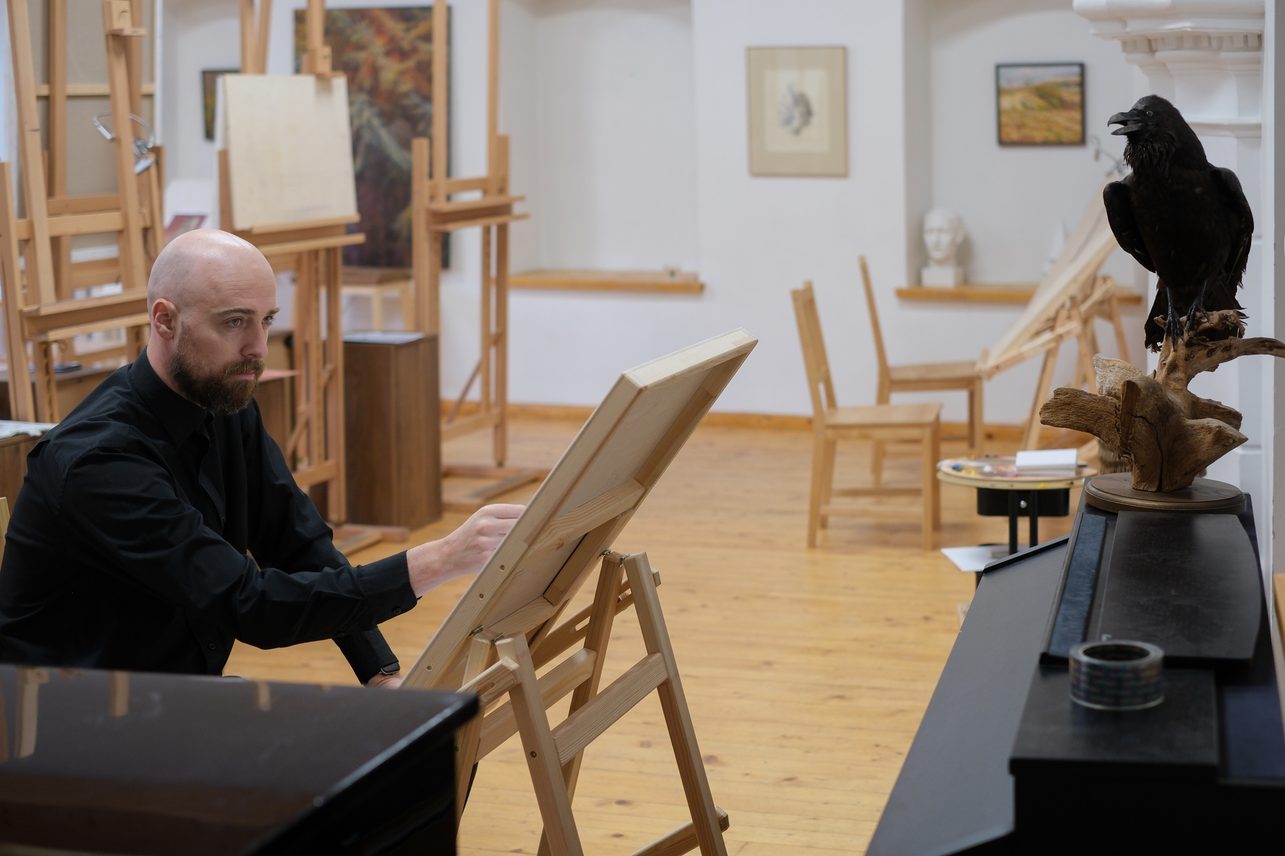
Located in the very heart of Kaunas Old Town, the school’s premises perfectly reflect the ideas being nurtured. Justinas confirms that this is no coincidence: “The main thing we wanted was for the premises to be inspiring. They even dictated the name of the school. People coming into the 16th-century Gothic building on Vilniaus Street and climbing to the first floor under those Gothic arches even put more effort into their work.” I can confirm this myself – a sense of composure, concentration, and attention to detail is palpable when looking at photos of the school’s spaces, even online.
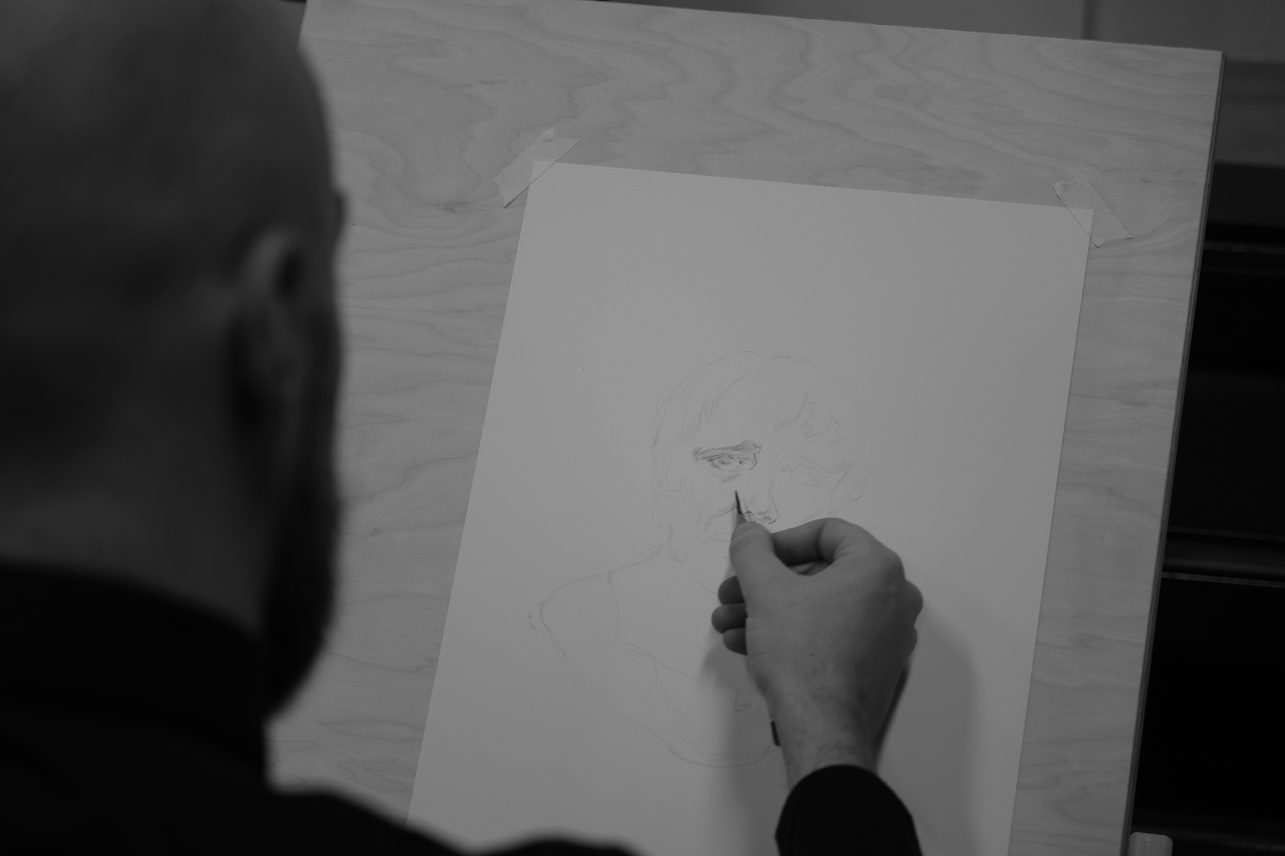
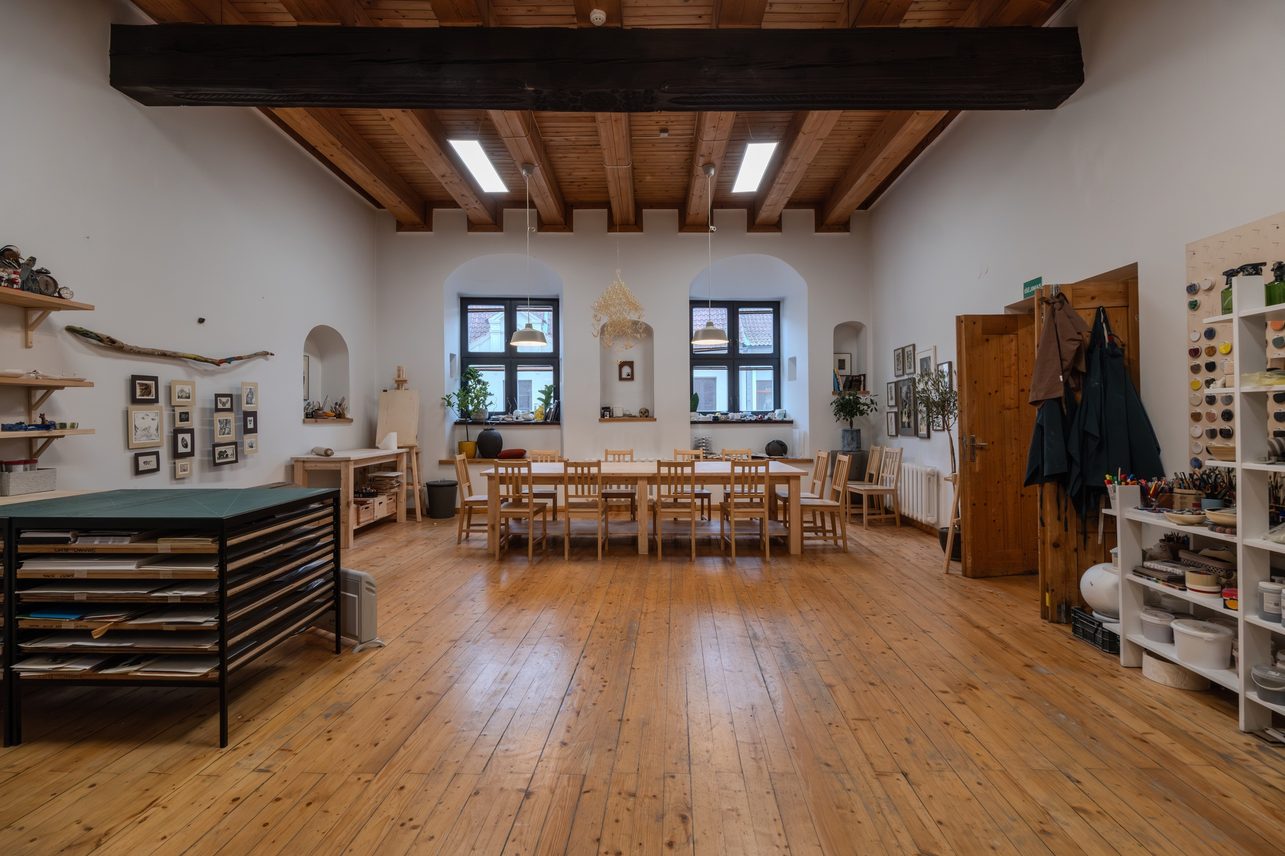
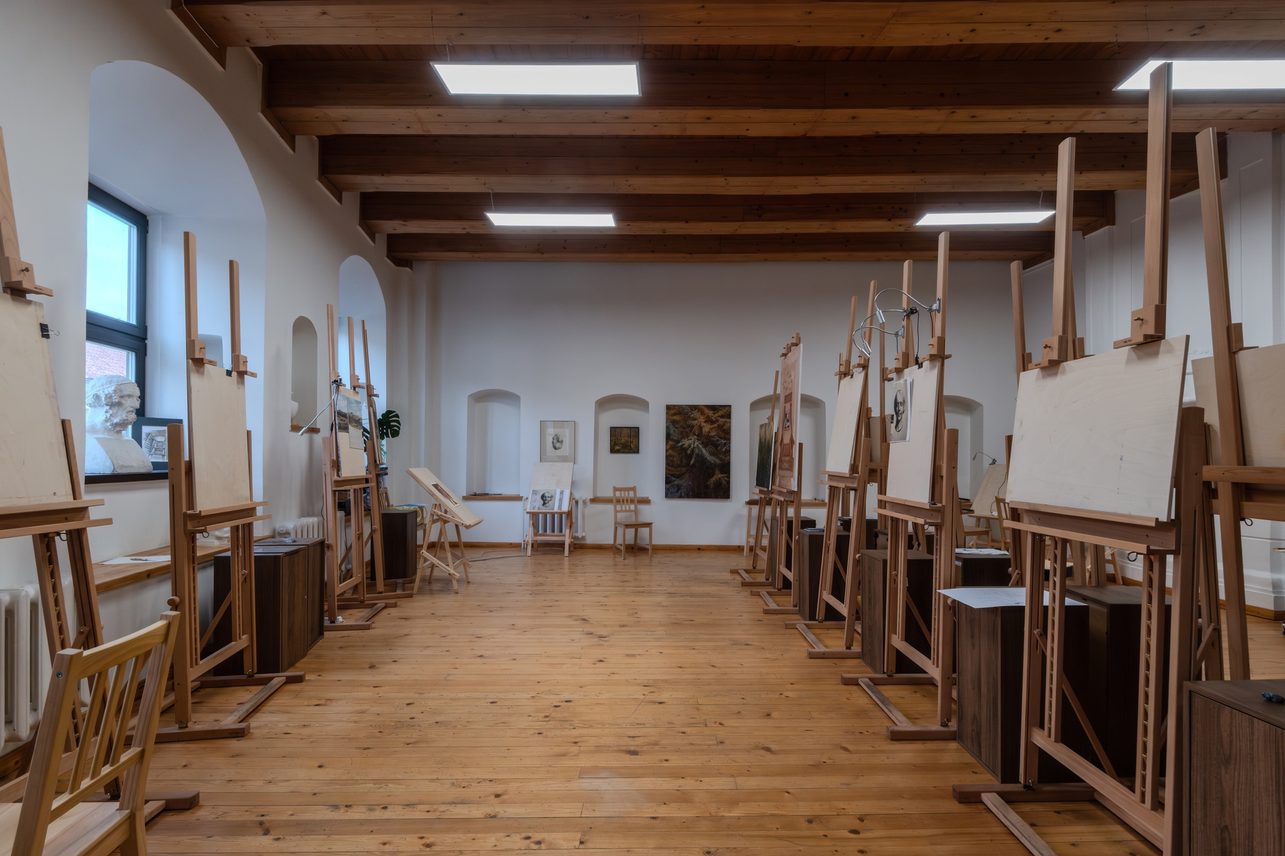
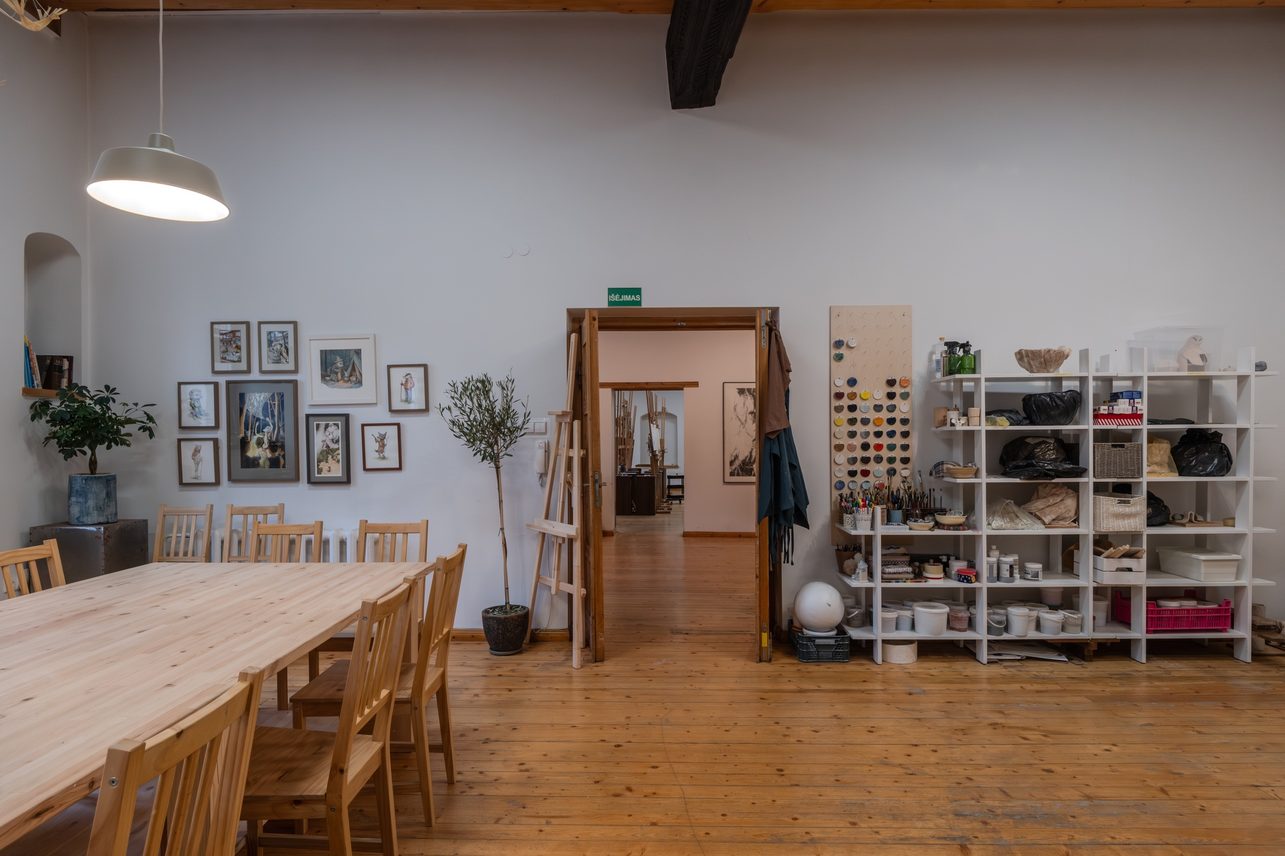
Justinas juxtaposes important ideas of the school – individuality and community: “Our goal is to work individually with everyone while creating a community. For one person comes wanting to reach great heights and become the next da Vinci or Michelangelo, while another simply comes to spend their leisure time. Some want to draw only portraits, others – landscapes. We try to arrange the programme accordingly. It would be strange to place a vase in the middle and have everyone stand in a circle and draw. Everyone receives tasks personally according to their abilities and moves forward step by step.”
One of the principles of the atelier movement is to first develop the craft and only then allow for new ideas. It is believed that artistic freedom is born only through iron discipline, and until a student learns to master the pencil or brush perfectly, they cannot create free compositions.
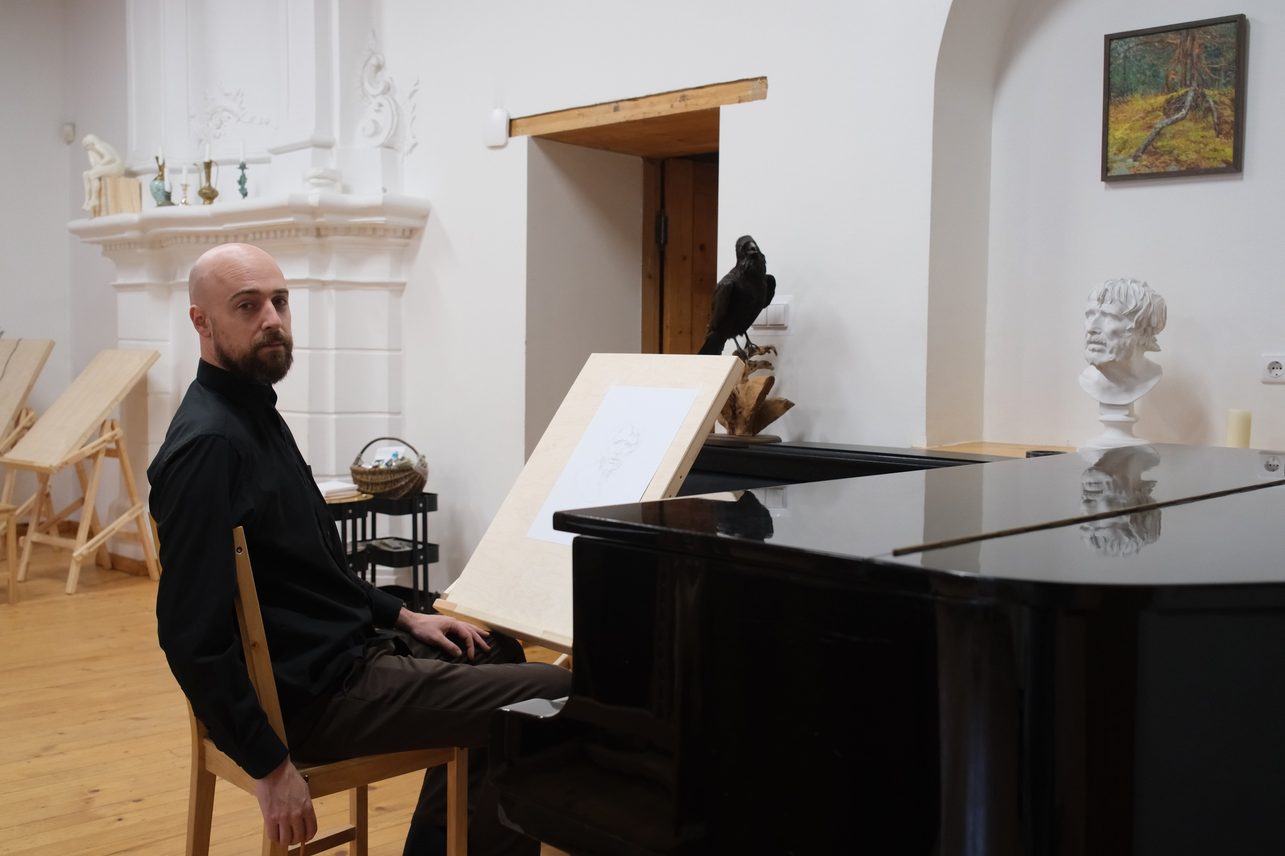
If this sounds overly academic, Justinas emphasises that while they lead preparatory courses at the Art Academy for people wishing to enrol in art specialities, the focus of the Old Town Art School is on enriched leisure. In this school, there are neither official assessments nor exams – it is a space for non-formal education; however, the teachers naturally encourage all top students to participate in exhibitions. Furthermore, they have already prepared a long schedule of lectures, including themes such as art collecting, contemporary art, and other substantial topics.
We discuss further: suppose a person incorporates drawing, painting, or piano lessons into their busy schedule a few times a week. How does this change their general worldview? How do these skills serve them in everyday life?
“It provides a community,” says Justinas. “And the conversations become more interesting.” He then elaborates: he and the students often joke that they have a “philosophers’ club”, where they not only develop artistic skills but also discuss the arts. Finding yourself in such an environment, whether you seek it or not, enriches you as a person – conversations deepen, and everyday life becomes more varied. What you see, what you talk about, and what you pay attention to while in class, you will soon begin to notice beyond its walls as well.
I speak with Justinas a couple of days after the scandal caused by an AI-generated film. I ask my interviewee: in your school, you are creating an antithesis to that – you offer slowness, meticulousness, and attention to detail, but are people consciously looking for that? After all, some come knowing that they will have to start from absolute zero and will not have a result after a minute. Perhaps they won’t even have one after a whole month.
According to Justinas, drawing, ceramics, or painting encourage a connection with a real object, and people coming to the lessons concentrate so much that they may not even step away from the canvas for three hours without a break. “We don’t force anyone: people come of their own accord, pay their money, and then work patiently on their tasks, achieving good results with the help of the lecturers,” he adds.
A direct relationship with the material slowly restores confidence in one’s own abilities – these are much harder to grasp while pressing buttons, filling in spreadsheets, and reading emails than they are while accumulating a physical archive of one’s work and witnessing how perspective, light, and composition turn from theory on a piece of paper into a real drawing requiring a signature, or how a fugue or etude polished for weeks no longer irritates the family at all.
In a time of constant questions about where art begins and ends, what craft and skill are and what they are worth today, or whether AI will take my pencil away, it is easy to concentrate and find answers at the school. Perhaps not much is needed – just once a week, from 17:00 to 20:00, to settle down in front of a canvas, an engraving, clay, or a piano instead of the hollow of the sofa.