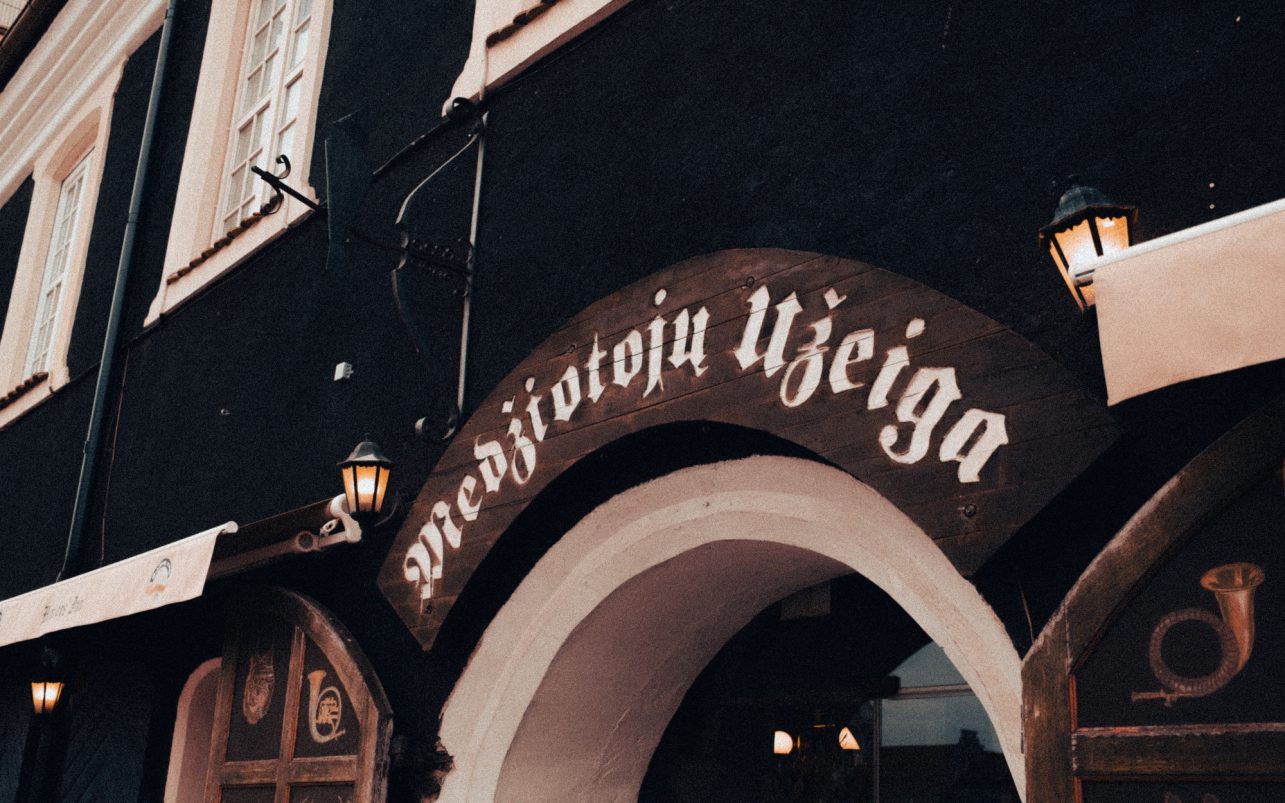
A few hundred years ago, a person’s wealth was assessed not by today’s common status symbols – clothes, a phone, or a car. The criterion was far simpler – one only had to look at the number of windows in their house.
After all, in those days, there were no bank accounts or income tax returns, so the assessors needed an obvious indicator visible from the outside – and that indicator became the windows. Assessors would simply walk down the street, count the windows, and determine the taxes accordingly. This is just one of the countless facts I was introduced to by the protagonist of this story – Ričardas Mačiulaitis, the manager of the restaurant “Medžiotojų užeiga” (The Hunters’ Inn).
Showing me the spaces of Kaunas’ oldest restaurant with pride, he shared the experience gathered within these walls, recalled the distinguished guests who have stayed here, and the historic moments that have become an inseparable part of this establishment’s success. We spoke about all this on a Monday afternoon over cups of coffee and tea.
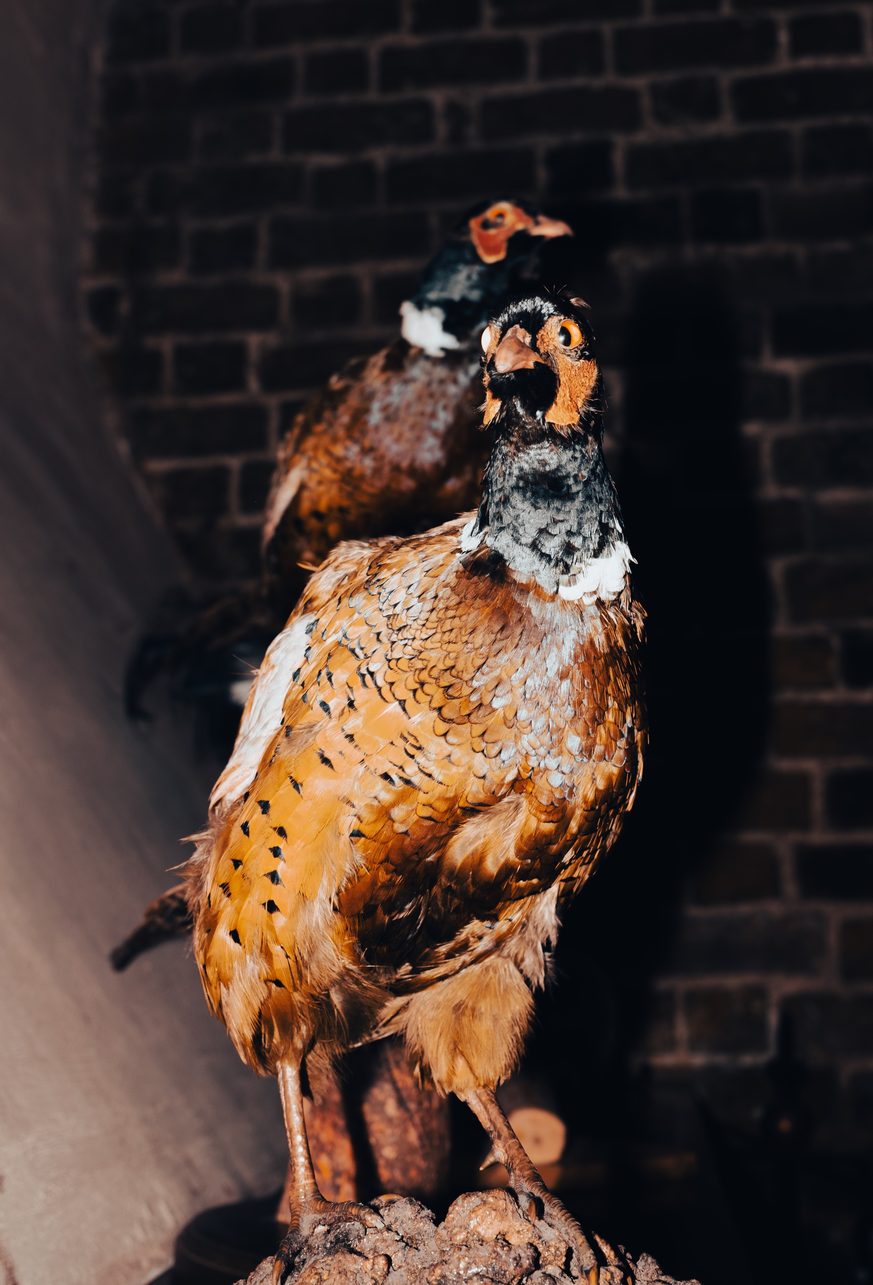
Before diving into the life of “Medžiotojų užeiga” over the past sixty years, I want to take a brief journey down the paths of history. From the 17th century to the present day, these premises in the very heart of Kaunas – Town Hall Square – have served a wide variety of purposes: once, the wealthy Zabiela burghers lived here, and later the building passed through the hands of Juozapas Kovalskis, the Fišeris family, and Antanas Baranauskas. The restaurant itself opened its doors in 1965 – during the years of occupation, it was led for a long time by Irena Bezgelienė, one of the most influential and well-known figures in Kaunas public catering. Ričardas took the helm of this institution in 1997.
“I first came here in 1984, while still studying at what was then the Lithuanian Academy of Agriculture. To be more precise, there was no room in the beer hall that evening, and a friend showed me a slightly more luxurious alternative where one could also have a shashlik. I won’t lie, at the time I would never have thought that I would end up spending my whole life here,” he recalls.
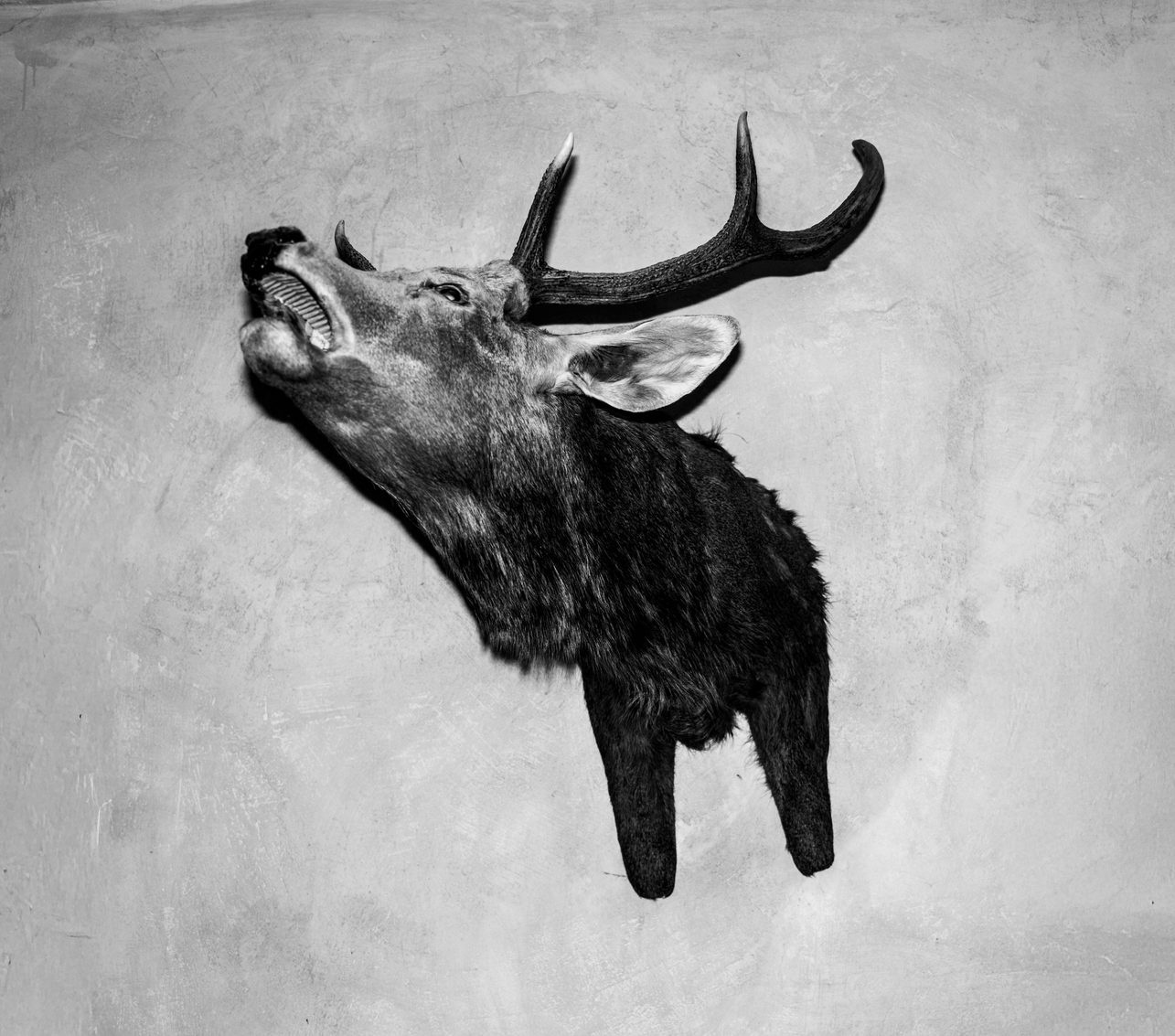
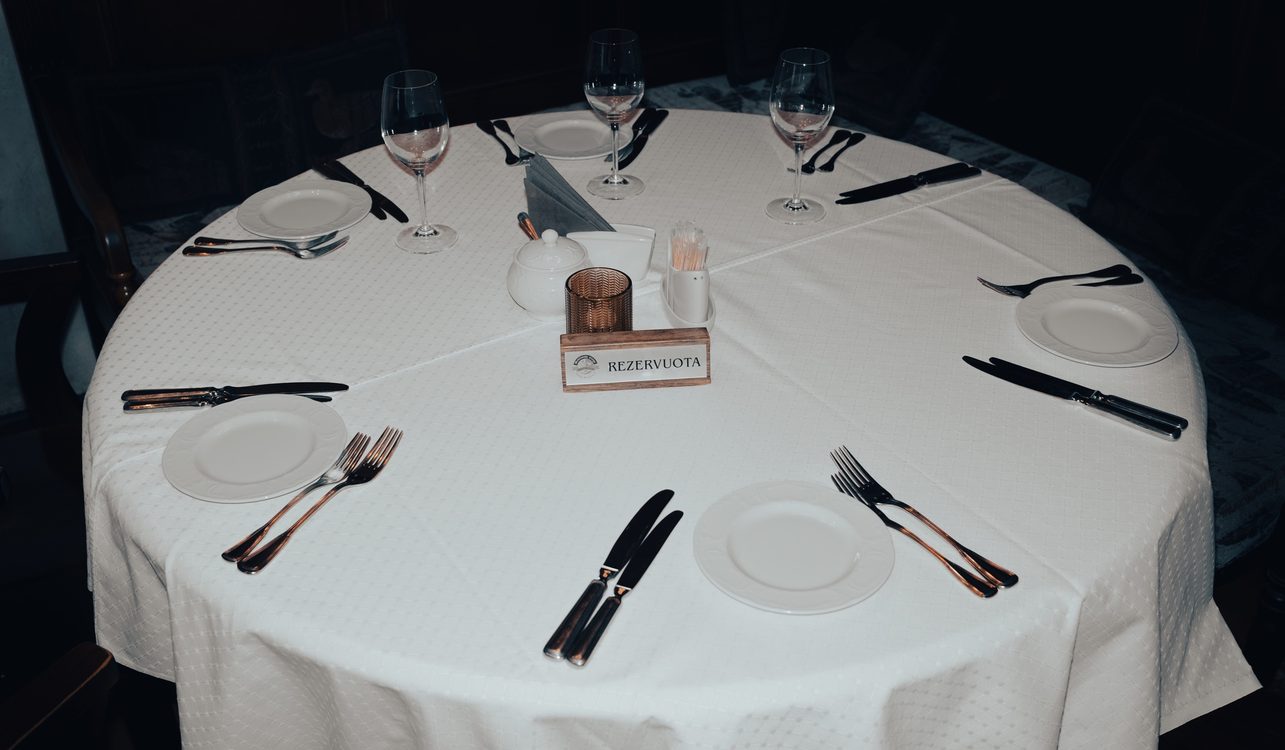
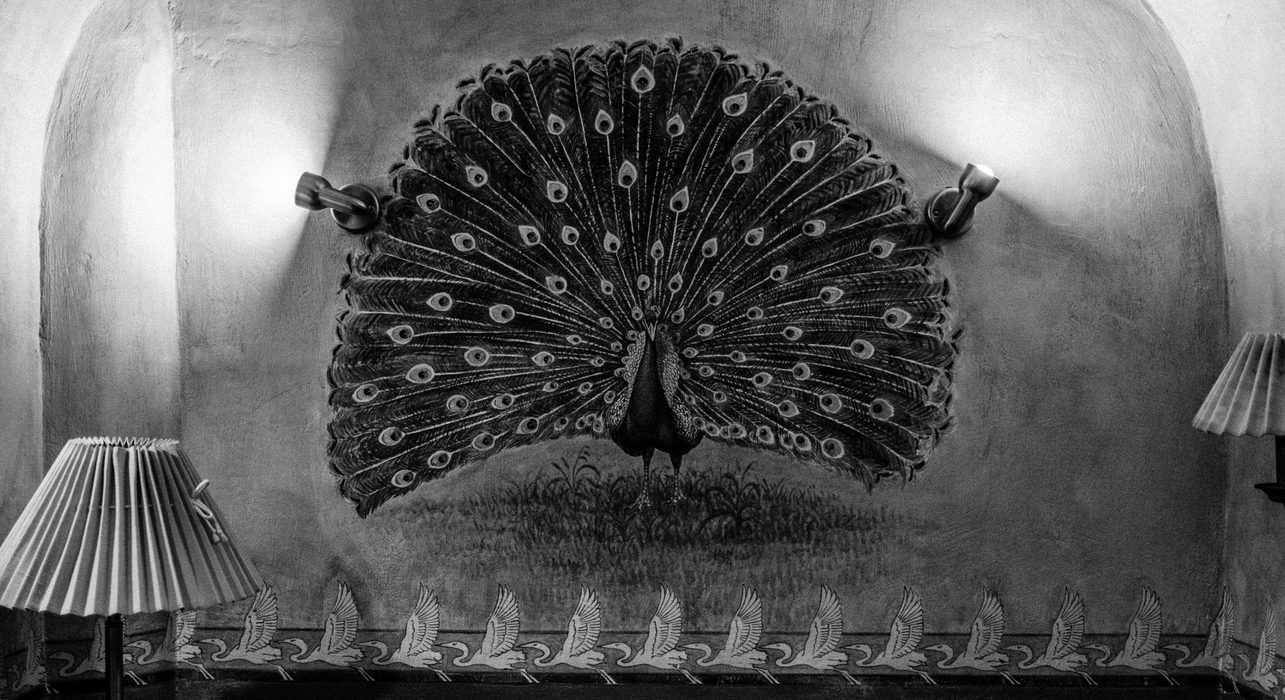
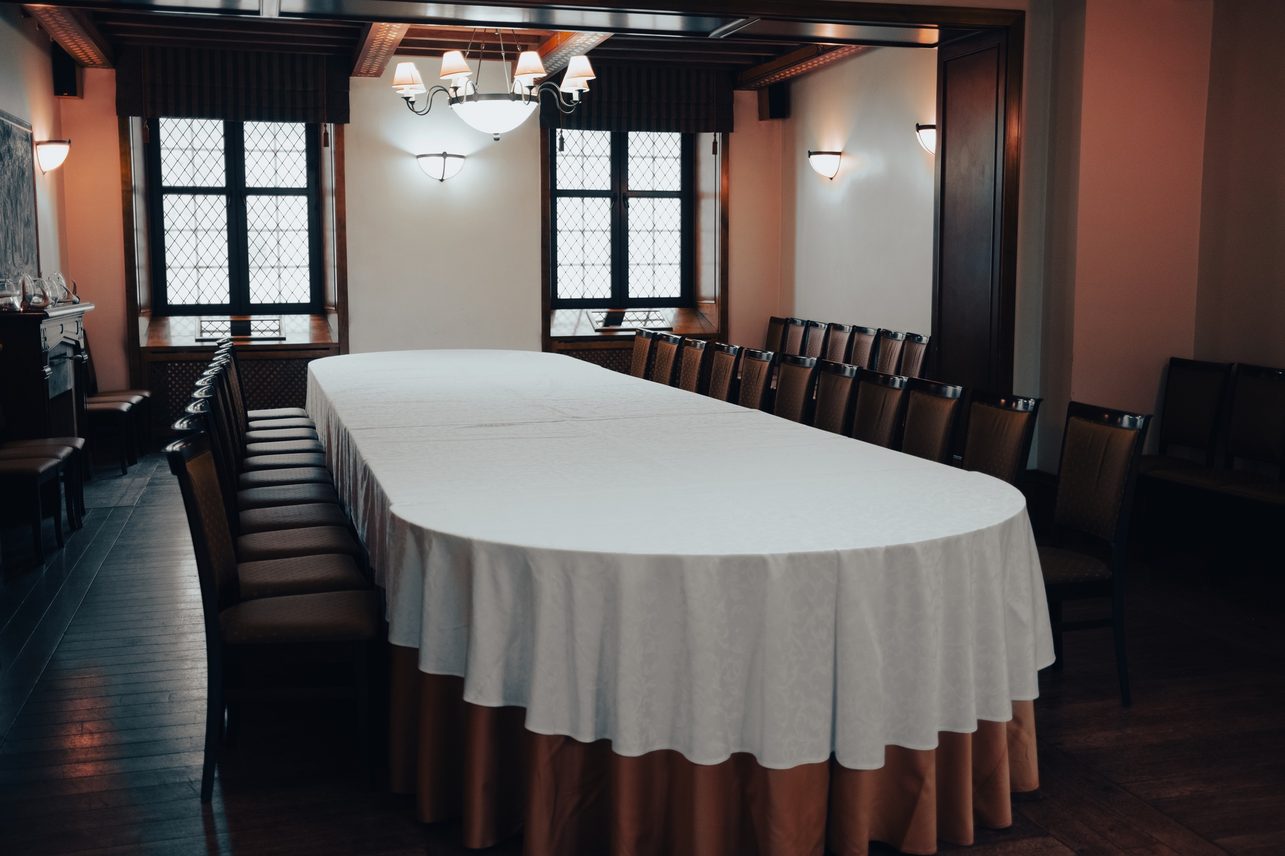
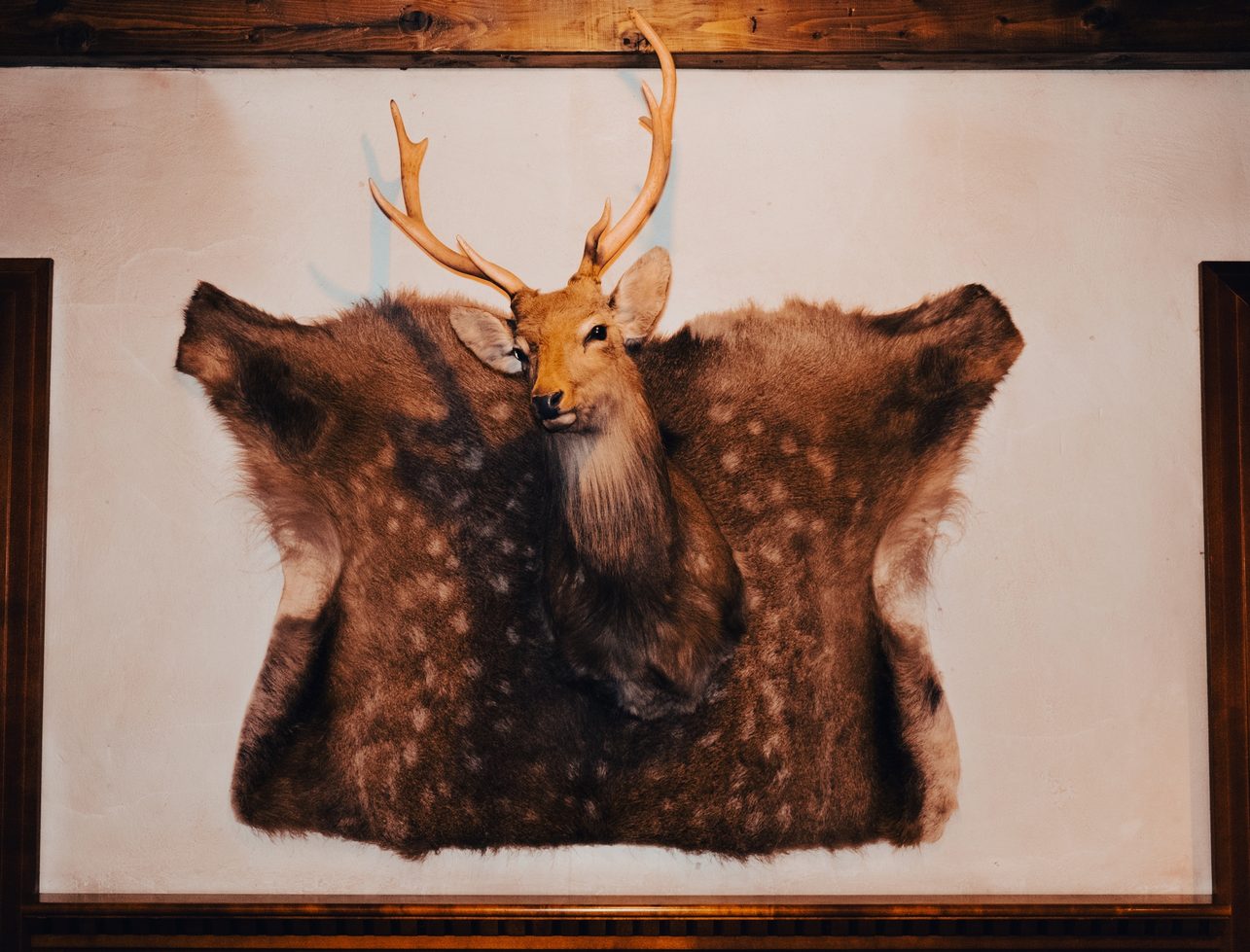
Looking into corners full of historical artefacts that have decorated the rooms for several decades, I asked the manager how “Medžiotojų užeiga” managed to withstand the wave of wild capitalism that flooded in after the restoration of Independence – after all, many famous 20th-century restaurants did not survive to our times. Ričardas says with a smile that there are many churches nearby, so perhaps it is thanks to their prayers that the restaurant survived. More seriously, he adds: when difficulties arise, they simply work even harder; furthermore, the spirit of Kaunas Old Town itself and the deep roots of gastronomy became a firm foundation.
“The school of public catering during the Soviet era was actually very strong – I believe that is precisely where the ideas for places like ‘Gildija’, ‘Bernelių užeiga’, or ‘Medžiotojų užeiga’ originated. While researching the past, I came across stories that there were once no plans to renovate Kaunas Old Town at all – just like Minsk. People must have had to bring quite a lot of sausages there to prevent that from happening. I remember very well that in 1984, when I entered the academy, Vilniaus Street was undergoing reconstruction – there were repairs everywhere. People said that the whole street would be nothing but shops, bars, and restaurants – a ‘Western-style’ street. At the time, I didn’t understand what ‘Western-style’ meant, but now it is clearer than clear. In those days, a famous magazine called ‘Public Catering’, which wrote about the entire Soviet Union, mentioned our restaurant – which means it was considered a top-level establishment. And now we try not only to maintain that direction but to improve it through our own efforts.”
When asked how they manage not to lose their way in today’s constantly changing reality, he does not hide it – longevity is provided by the ability to act in the here and now, rather than looking back: “It is important not to moan about how bad things are for us, because that certainly won’t improve the situation. It only improves from the decisions you take promptly.”
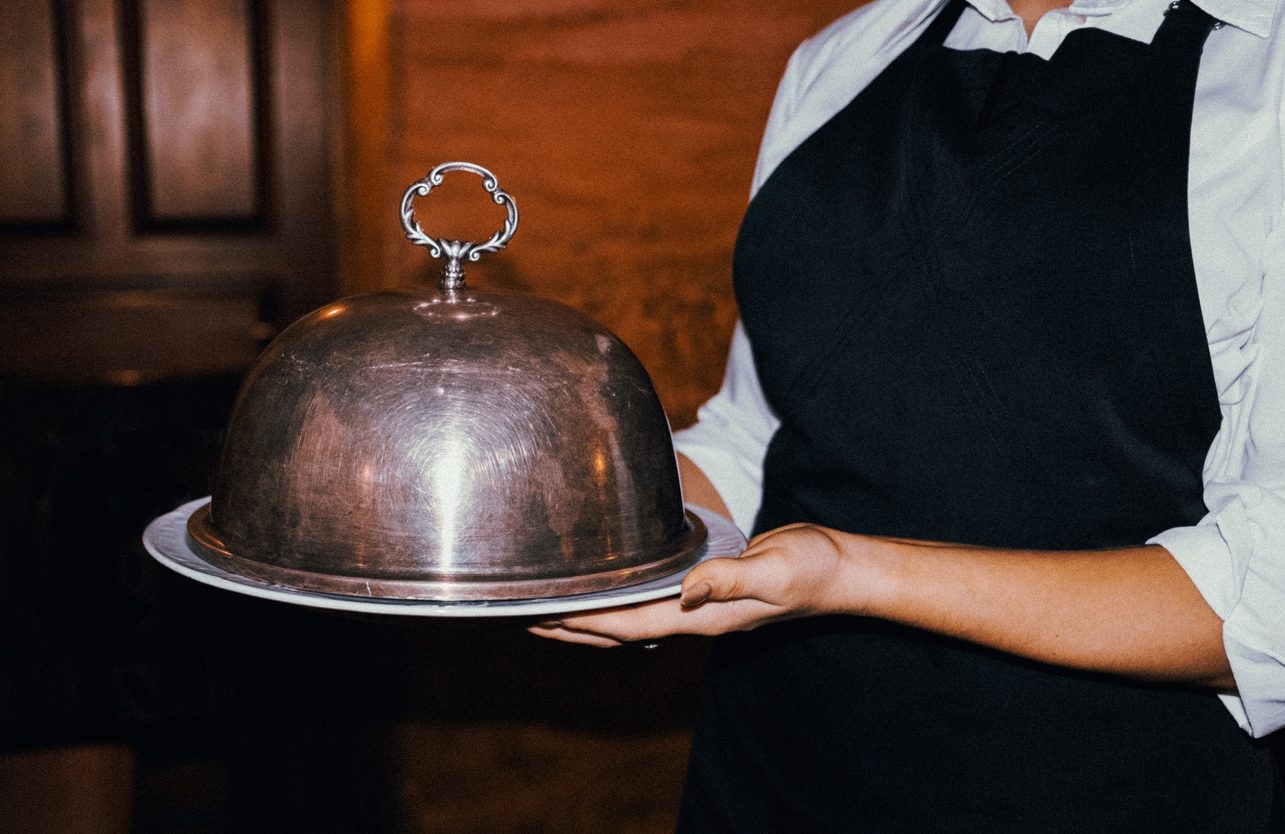
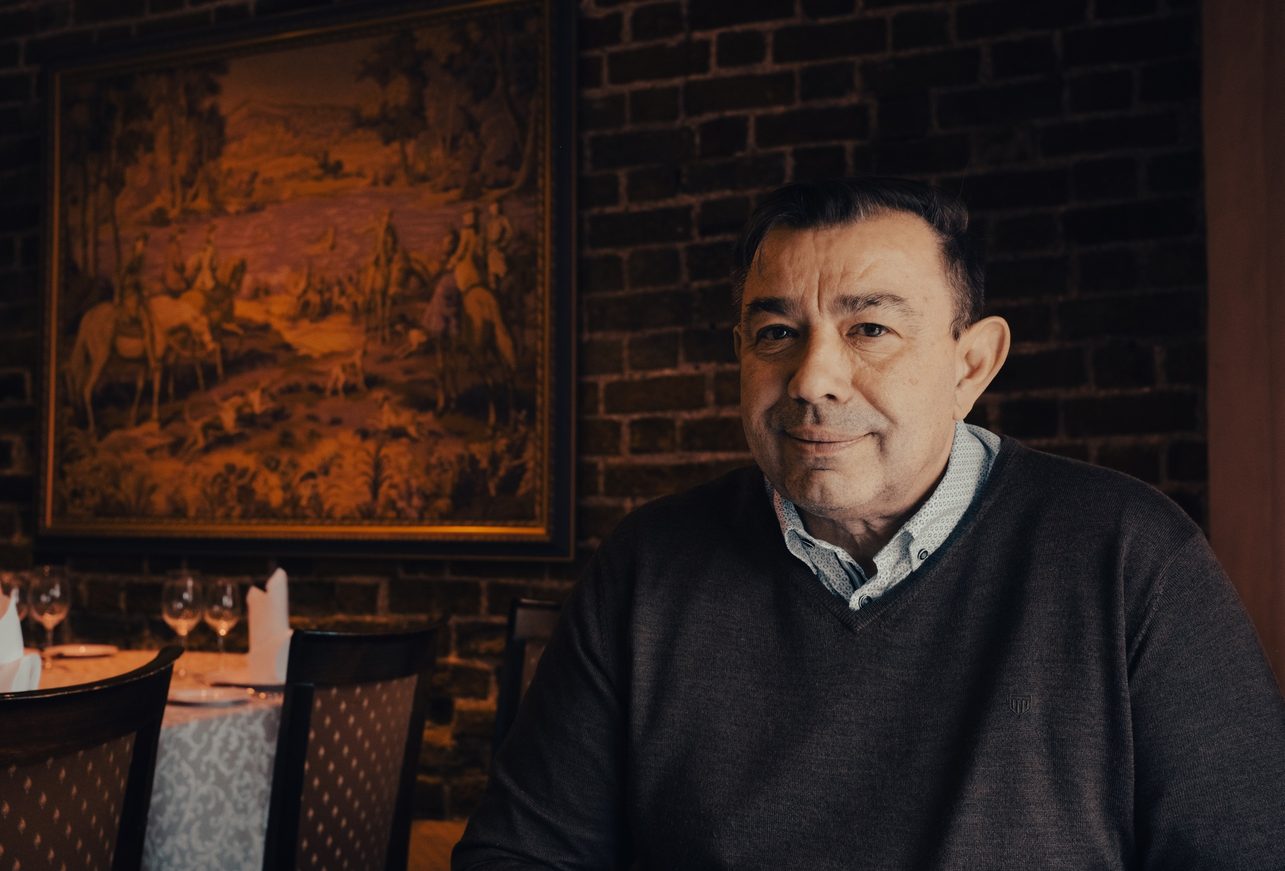
Smart decisions and flexibility are reflected not only in the management but also on the plates – after all, a restaurant’s history is told primarily through flavours. When asked which dish is the signature that would not be removed even if fashions changed drastically, Ričardas does not hesitate: “First, the legendary porcini mushroom soup. It is a very old, universal dish that is loved by everyone without exception. The other is game meat itself. It is interesting that today in the world, wild meat is becoming a new trend: even those who do not eat industrial meat value game for its naturalness.” The host smiles, noting that as customers’ habits change, the inn has found its response to trends – they have created a ‘forest gatherers’ menu, as the forest is full of mushrooms, berries, and other treasures suitable for even the strictest vegetarians.
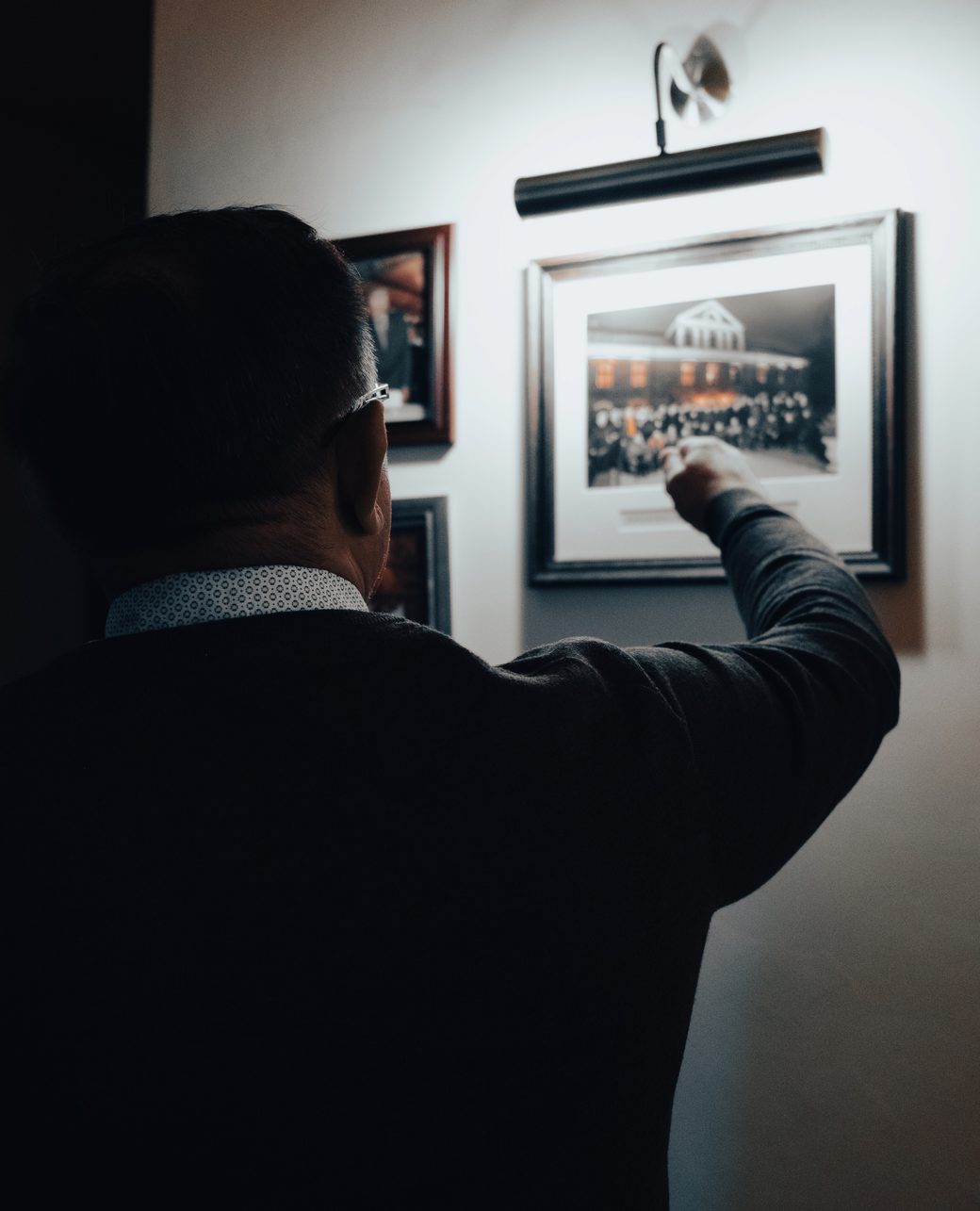
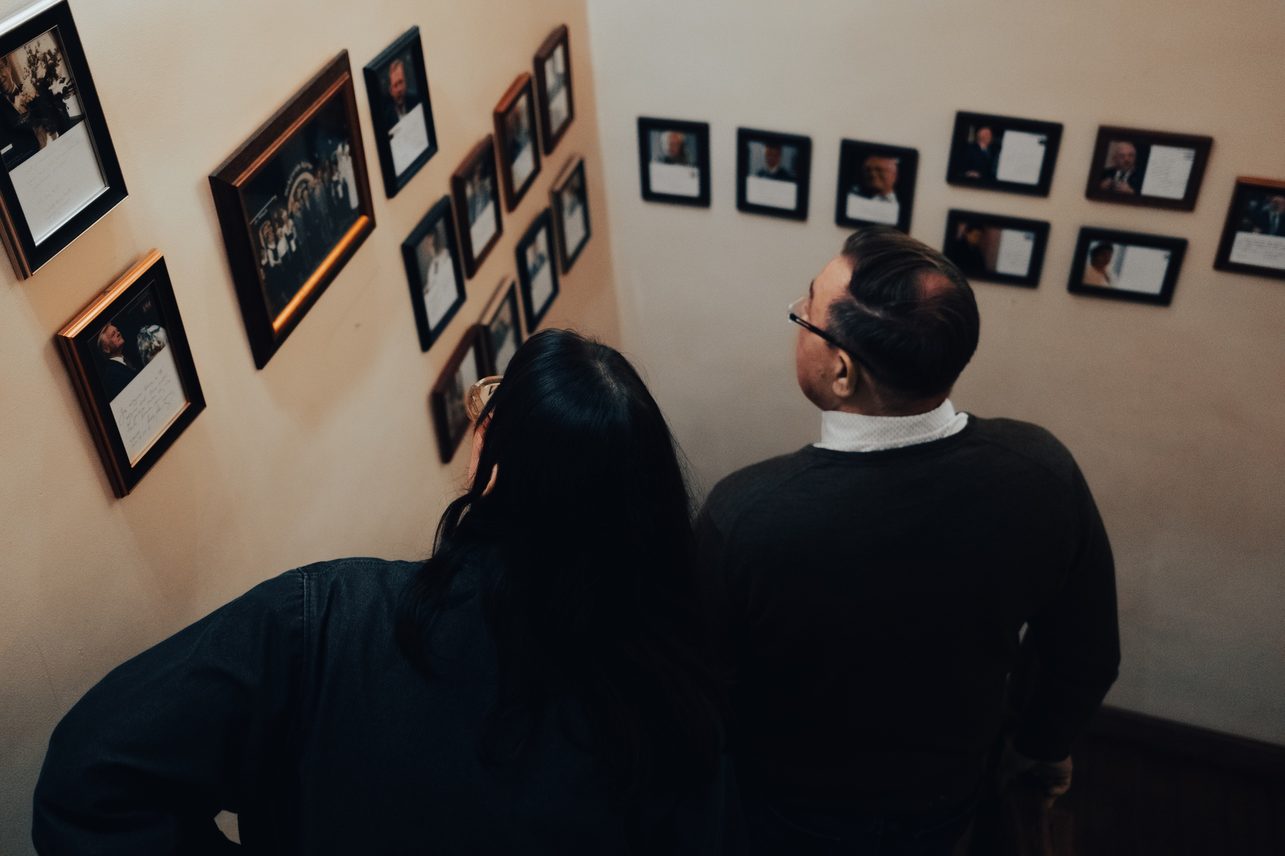
Having finished the last drops of coffee, we rose from the table – long-time manager Ričardas agreed to show me every corner of the premises and tell the stories hidden behind the historical objects. Climbing to the first floor towards the private cigar room, I paused – a wall covered in photographs caught my eye, where I saw faces familiar to almost every Lithuanian citizen: from Baltic presidents to King Albert II of Belgium with Queen Paola, and famous athletes.
“We have had truly distinguished guests. Here, for example, are the Lithuanian presidents Valdas Adamkus and Algirdas Brazauskas, who would engage in long discussions with each other when they met here. They both used to joke that journalists write about them having a poor opinion of each other, even though when they meet in the yards of Turniškės, they tell each other jokes and invite one another to talk about what the news pages were saying that day,” Ričardas explained, pointing to the photographs.
The walls of this building recall many an exceptional visit, so while looking around, I asked which guest or incident over all these decades had etched itself most into Ričardas’s own memory. The host recalled one St Valentine’s Day: he was already heading home that day, but upon receiving a call from a staff member, he immediately turned around and returned to the Old Town.
“I return to the restaurant, and there is Valdas Adamkus with Mrs Alma. They were quite frequent guests of ours, both when Valdas was president and after his term, but that day they were the people I least expected to meet. Almost every time before they arrived, they would call me and say: ‘We are walking around the city, could you reserve our favourite spot?’ I remember that evening with the biggest smile,” Ričardas confessed.
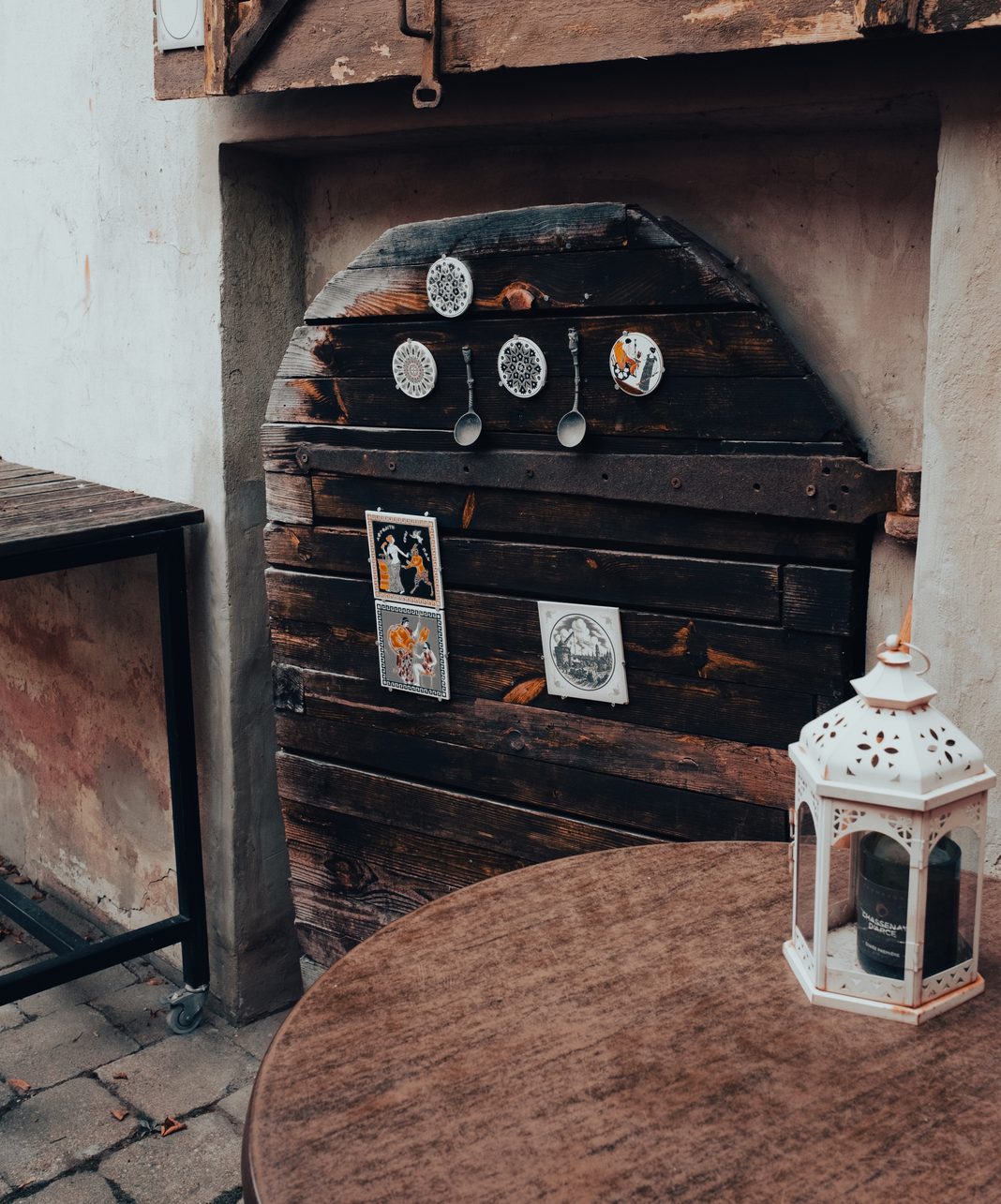
After a tour of honour through the beloved restaurant spaces, meticulously cared for by restorers’ hands, we concluded our meeting in the ‘Land Art’ courtyard, opened in 2020 – a true open-air art gallery. Ričardas said that for a long time this courtyard had been neglected, with hanging wires and forgotten walls, but florist Marijus Gvildys took over this space and renovated it by applying land art solutions and botanical compositions.
“We have our own gallery. For example, here on the wall of the building is the Zabiela coat of arms with the axe used to behead Zabiela. He was the Master of the Hunt during the times of the Grand Duchy of Lithuania, and for alleged betrayal to the Russians, he was beheaded – or so the legend goes, though no one knows exactly how it was, as the Zabielas have not been studied in detail by historians. But I like hearing all these stories. For instance, that food supplies were kept behind these doors in the courtyard during the Zabiela times. Now these doors are like a decoration to us, but behind them, a surprise awaits, which we plan to present next year. According to Marijus Gvildys’s idea, there should be a ‘Non-museum’ here. We shall see how we get on,” the host said warmly as he saw me out.
Having crossed the threshold of “Medžiotojų užeiga” and stepped directly out into the bustling Town Hall Square, I walked home with a smile on my face. It is pleasant to know that, although fashions, systems, and governments change, there are traditions that live at their own pace, immune to the fashions of the environment. Most importantly, the secrets of the past continue to be preserved in these rooms, and new stories are boldly being created.