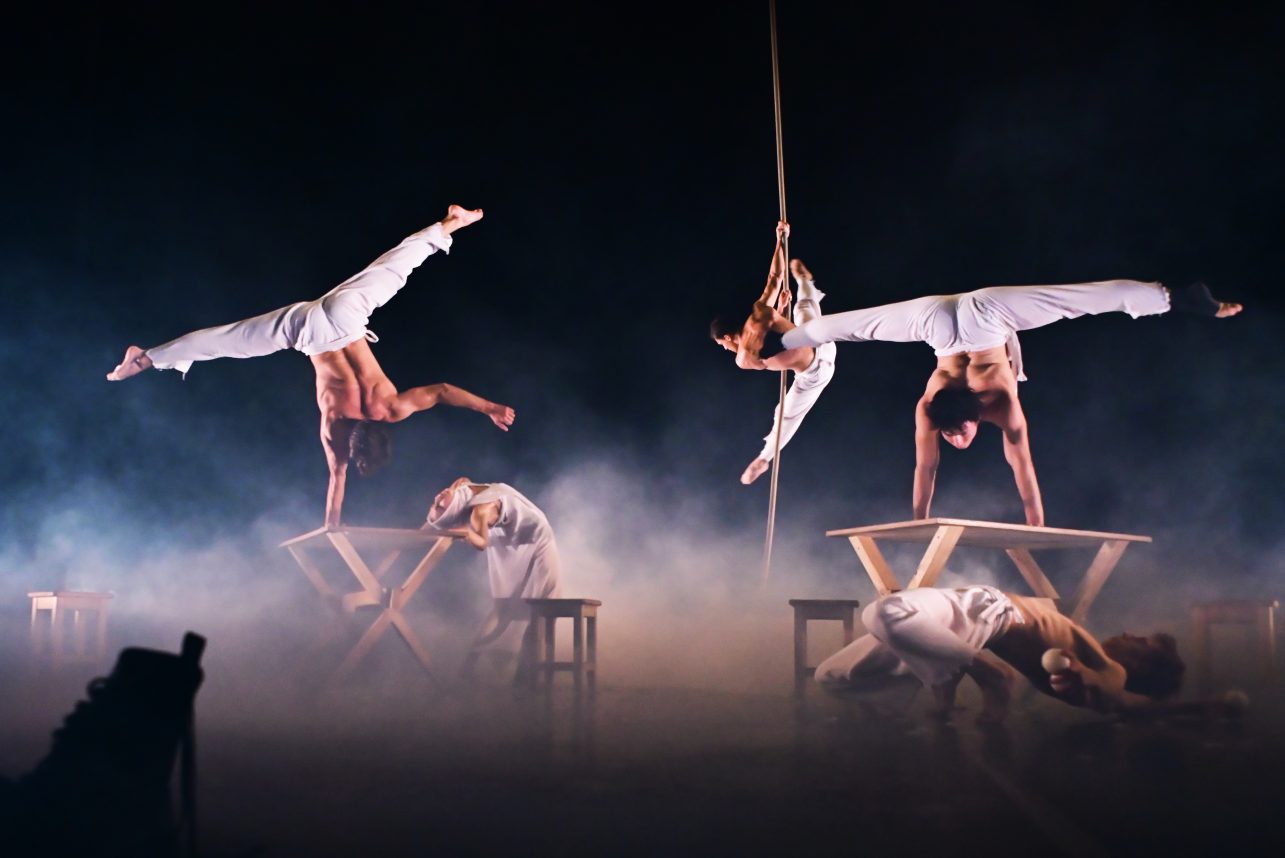
In 2020, the Inshi Circus is founded. People in Ukraine dream about travel, money, careers, and the future. In 2026, the Inshi Circus comes to perform in Lithuania. People in Ukraine dream about family gathering for dinner and… tomorrow coming. Six years separate these two events. Between them – the building of a circus company from scratch, successful shows, a pandemic, a full-scale war, exile, and the rebuilding of a company in another country. There is still one line connecting them: a wish to create and perform.
This is the thought I kept returning to during my conversation with Roman Khafizov, one of the founders of the Inshi Circus, as we talked about how the company came to life and about its upcoming visit to the Cirkuliacija festival. The group is bringing the performance “Rêves” (Dreams). The meaning of the word “dreams” today is very different from what it meant in 2020. To understand this change, it is worth going back to the very beginning, when the Inshi Circus was only an idea, one of the first attempts at opening the contemporary circus scene to Ukrainian audiences.
(This text was published in the September 2026 issue of the magazine “Kaunas Full of Culture”, titled “Fair”)
How Inshi Came To Life
The creation of the Inshi Circus was not entirely planned when its founders, Roman and Volodymyr Koshovyi, first met. Back in 2020, Roman received a proposal from producer Sergii Perman to work on the production of a Christmas show at the Palace “Ukraina”, the largest concert hall in Kyiv. As Roman was working in Budapest at the time, the possibilities for such a role were limited, but the two men agreed that Roman would work on the screenplay. Volodymyr was hired as the director and scenographer of the Christmas show.
Unfortunately, all the preparations and ambitions for the show were cancelled due to the COVID-19 pandemic. To prevent all the work from going to waste, Perman suggested creating a smaller version of the show on the small stage of the Palace “Ukraina” for an audience of no more than 100 people. What first seemed as the end, brought a new beginning. “At that time, traditional circus was much more popular than contemporary circus, and Ukrainians were not aware that we had some of the best contemporary circus artists. Many of them were working abroad because of wider possibilities and better salaries, but they came back home during COVID-19. Once we agreed to create a smaller show, Volodymyr and I decided that it would be a good opportunity to present Ukrainian artists to the Ukrainian public. We started inviting them and everyone agreed to perform,” Roman remembers the motives behind the show.
The first show was called “Inshi” (“Others” in Ukrainian), and the name would later become that of the entire circus company. It featured 15 artists on stage and grandiose scenography involving an elevator, screens, and a moving circle. “It was like a Batmobile,” Roman jokes. “At first the stage was all black, and then more and more of these features appeared instantly.” The pandemic period did not ruin the success of the premiere: the show sold out multiple times. Later, when additional restrictions were introduced, the show had to close for at least two months. This gave Roman and Volodymyr an opportunity to look for a bigger and higher venue, so they could incorporate aerial acts as well.
Once such a place was found, the two men founded a circus company named Inshi and immediately started working on a new show, “Сни” (Dreams), together with Mykhailo Makarov, the choreographer. The success of the first show “Inshi” paved the way for a second one and, later, a third, called “History of Magic”. “We were trying to provide good conditions, salaries, and opportunities for the artists working in the company. Things were getting better, people were happy, and the company was growing. Yet, by the end of the year, nobody wanted to believe it, but everybody was talking about the possibility of war in Kyiv,” Roman remembers.
Then came February 2022. russia launched a full-scale war against Ukraine. The artists of Inshi became involved in different forms of volunteer work, while at the same time trying to help and support people, friends, and their own families. From France, Roman did these things as well, while also searching for possibilities for the company to continue its work.
Creating In Exile
It quickly became clear that continuing to run a circus company under wartime conditions would be extremely difficult. The company had to reconsider where it could exist. “During the summer of 2022, I travelled and looked for places to live, as my contract had expired, and France seemed like the best country for it. Circus is very popular and strongly supported here. I started learning the language and immediately began looking for solutions and opportunities for the Inshi company to move and continue performing.” Roman’s idea was to bring the whole company to France. He began building connections with the professional contemporary circus community, French cultural institutions, and the French Ministry of Culture.
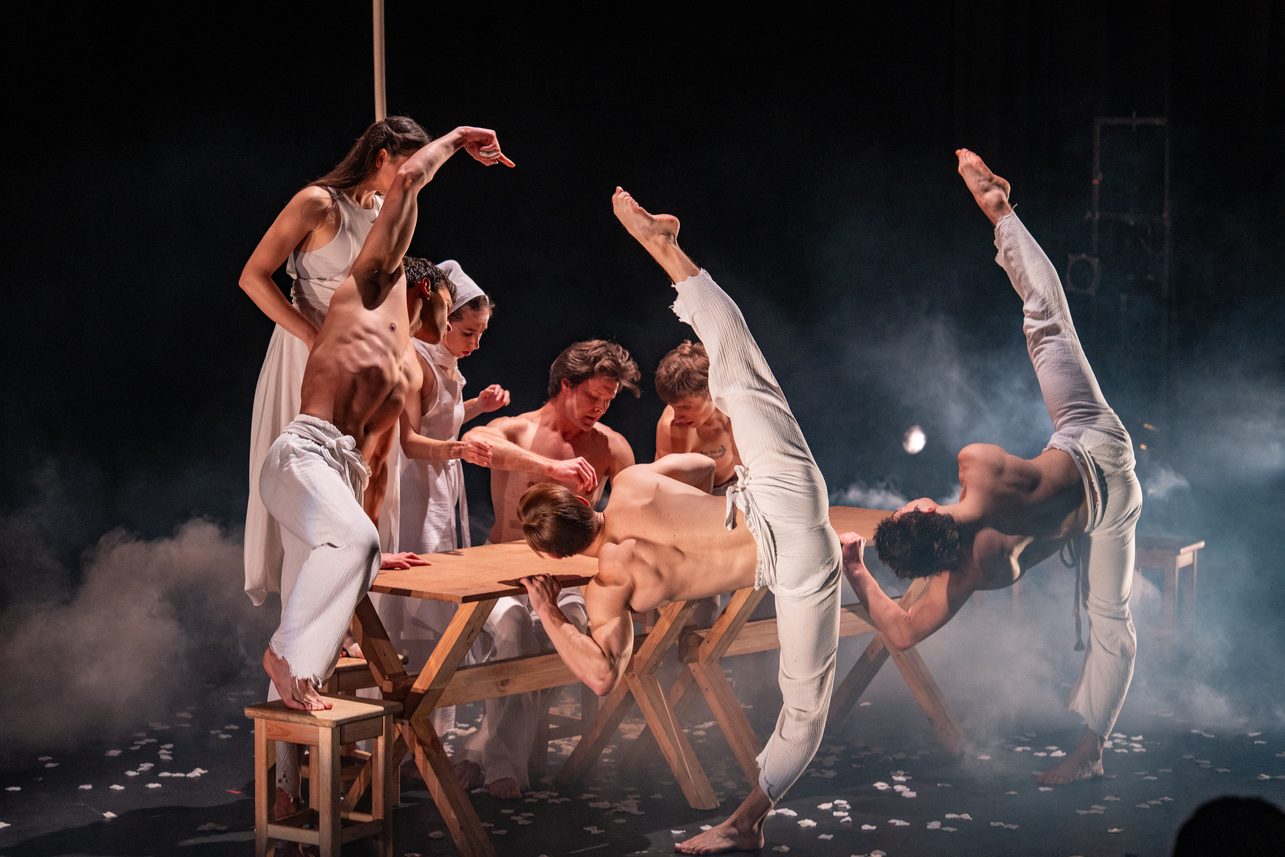
“Some theatres provided financial and technical support, artistic residencies, and some gave us spaces to perform. We were also fully supported in creating a new show and premiering it in France,” Roman tells me, noting that without Galyna Kiktyeva, a Ukrainian costume designer and designer of the company, Martin Palisse from Territoires de Cirque, Jean-Pierre Dufranc from DRAC Île-de-France, and Annabelle Cabariste from the City of Paris, professional development would not have been possible. The Inshi circus artists could come only after they had received official invitations. Bringing the whole group to France was not a one-time relocation either. Every three months, the Inshi artists must return to Ukraine and renew their documents. During early production, Roman worked with the artists in France, while Volodymyr created the scenography in Ukraine.
Dreams: The Show
The first show created in France was “Rêves” (Dreams), which premiered in November 2023. Following its French premiere, “Rêves” began developing an international life of its own and was recently presented to audiences in China. This work reflects the distance travelled since its founding. The show represents the dreams of Ukrainian people today, yet the dreams it speaks about are very different from those that surrounded the founding of Inshi in 2020. “Before the war, people dreamed about having more, travelling more, and various other things. During the war, many things changed. People dream about family, peace, and love, things that have become especially valuable during wartime. Now, a lot of children do not have a childhood, and one of the artists in the show has this dream as well: to have had a normal childhood.”
Roman stresses that the general idea of the show is not a direct drama. At the very beginning, everything is dark. Then the Ukrainian coat of arms appears as a poetic image of persistence, of continuing to dream, to live, to smile, and move forward. “We do not use direct symbols, but rather poetic forms of them. Every show brings a lot of emotions. The general idea is that you have to live fully every day, simply because another day might not come,” shares Roman. It becomes a symbol of having dreams, strength, and the ability to keep going, or simply put, a desire for an ordinary life.
Dreams: The Reality
“russia attacks every day, and it is getting worse and worse. Many of my friends live as if tomorrow might not come. If you ask them what they will be doing next month, they just laugh – no one makes long-term plans. My sister’s house near Kyiv was attacked today, and when we spoke, she said that this might be her last day,” Roman shares the latest news from Ukraine. Harsh is the reality of people living through the war, and yet there is still a desire to live and create. What does Inshi wish for in the future?
“When the war finishes, I want to go back to Ukraine and continue working there, but also have a continuation in France. From my observation during the war, the number of independent circus schools and studios in Ukraine has grown significantly; it has more than doubled. Many artists who remained in Ukraine began opening their own studios, teaching, and creating new spaces for the next generation of performers. Circus festivals have also continued to develop. At some of them, participation has increased significantly, for example, from around 70 to 200 participants. All of this shows that even during the war, culture and circus continue to live and evolve.”
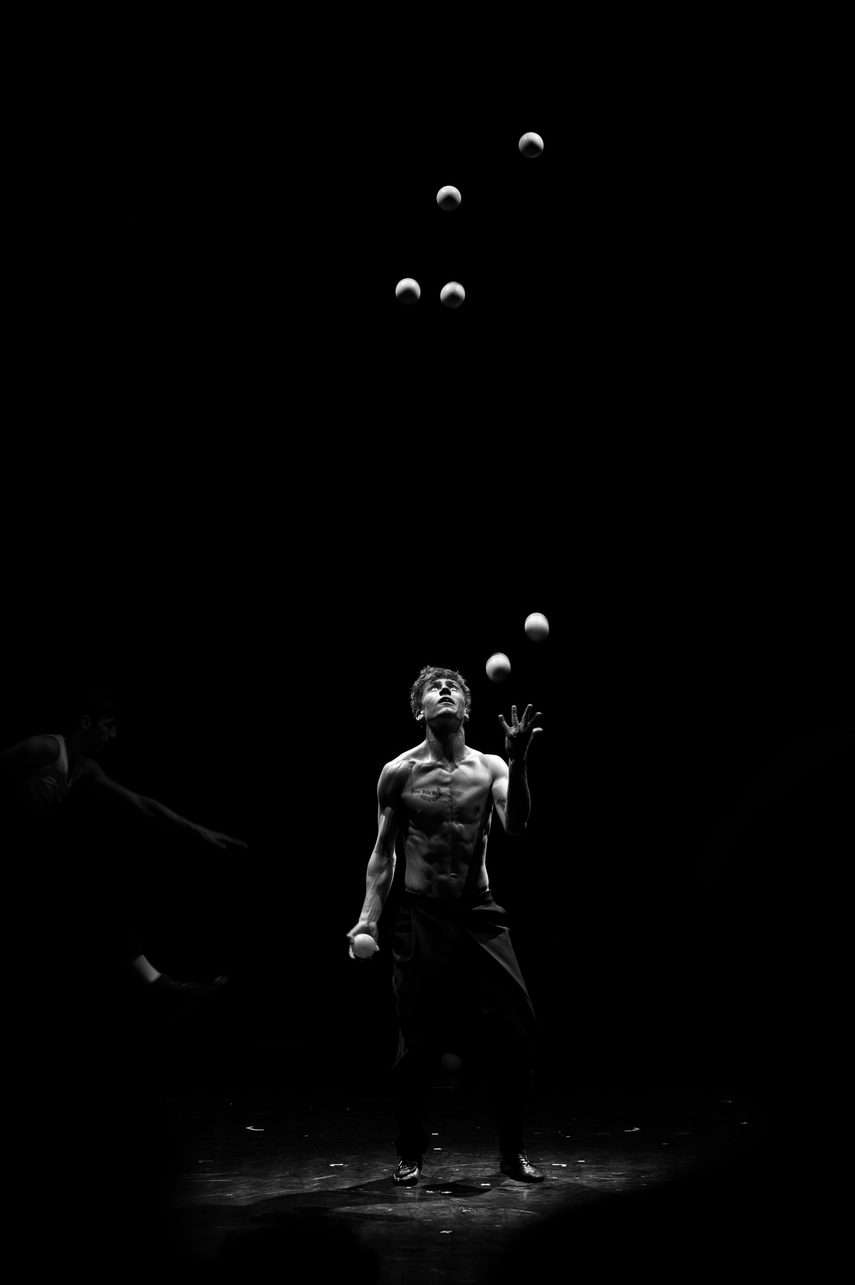
Many of these circus events still revolve around the traditional circus school, which has a strong footprint in the culture. In Ukraine, artists concentrate most on technique, discipline, body image, and visual representation, while Roman notes that French circus school values ideas and concepts most. Roman is working towards incorporating technical virtuosity from the Ukrainian tradition and conceptual development from the French contemporary circus scene into Inshi shows. “In Ukraine, it is important to perform a trick; artists are very strong and disciplined. In Inshi we try to combine the mind, the trick, even poetry. I know that we are on our way to making contemporary circus better known in my country. People are contemporary and they are ready for it; there is simply a lack of this type of circus. I hope that Inshi and other companies will do a lot for contemporary circus,” Roman shares his overview. I am sure it is only a matter of time, even when both the nights and the days are uncertain.
“`