With Christmas approaching, it is time to ask – can good art be found at fairs? Do artists shy away from the associations linked to fairs – craft, negotiation, and sales? Do they even want to participate in them?
I spoke about the traditions of annual art fairs born in Kaunas and their unexpected discoveries with Prof Jonas Audėjaitis, Dean of the VDA Kaunas Faculty, and Emanuelė Liesytė, President of the Student Council at the Kaunas Art Gymnasium. Both shared, as if by agreement, that a fair is one of the essential ways for an artist to go public: it is a celebration, a transaction, and a dialogue that connects professionals, beginners, and the city of Kaunas itself.
A Fair Is A Spontaneous Act
“One way or another, we are fair-folk. We show ourselves, we bring ourselves out – that is how we differ from other universities. Artists live for this,” Jonas Audėjaitis begins.
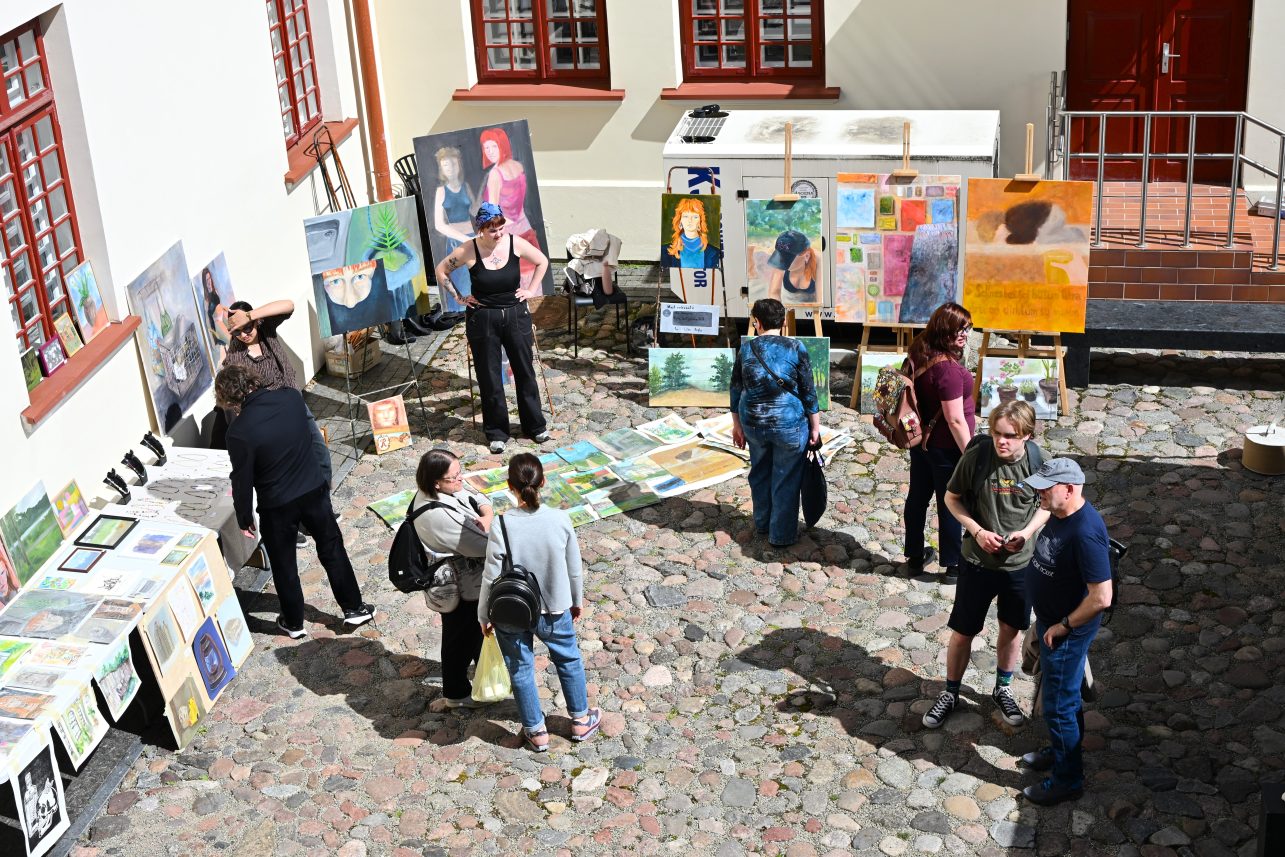
Life at the Academy is hard to imagine without presentations to the public: student trips to Lithuania’s regions and towns, study fairs, and various international scientific conferences take place constantly. However, the VDA KF (Kaunas Faculty) fair held in May is a living phenomenon, throwing the doors of the old Princes’ House on Muitinės Street wide open to the city, and allowing young visual artists to take their first steps towards the urban community.
Although mid-May is the busiest period for the Academy – a time of reviews and thesis defences – according to the Dean, the students themselves were fired up with the desire to join the celebration of Kaunas’ birthday. First organised in 2022 as an initiative to support Ukraine alongside the Lithuanian Artists’ Association, the fair quickly grew into an annual spring tradition.
Despite requiring considerable preparation, the fair is expanding rapidly: from one courtyard last year to two this year, incorporating dancers, musicians from the Kaunas Juozas Gruodis Conservatory, and lecturers appearing alongside students with their own works, including Pranas Griušys, Aušra Barzdukaitė-Vaitkūnienė, Eglė Velaniškytė, and Petras Lincevičius.
From Relationship To Transaction
The greatest value of the fair is the opportunity for a young artist to establish a direct connection with the viewer.
“When a work is taken to an exhibition and hung on a wall, you can talk to that object, but it won’t answer you. At a fair, the authors themselves answer. It’s a chance to hear feedback, to understand what people like, and what the demand for art is. And imagine the joy when a student’s work is bought! These are their first steps. They are important not so much for the money, but for the message: ‘my idea is accepted, I am recognised, I am on the right path’. It provides the incentive to keep creating,” the VDA KF Dean believes.
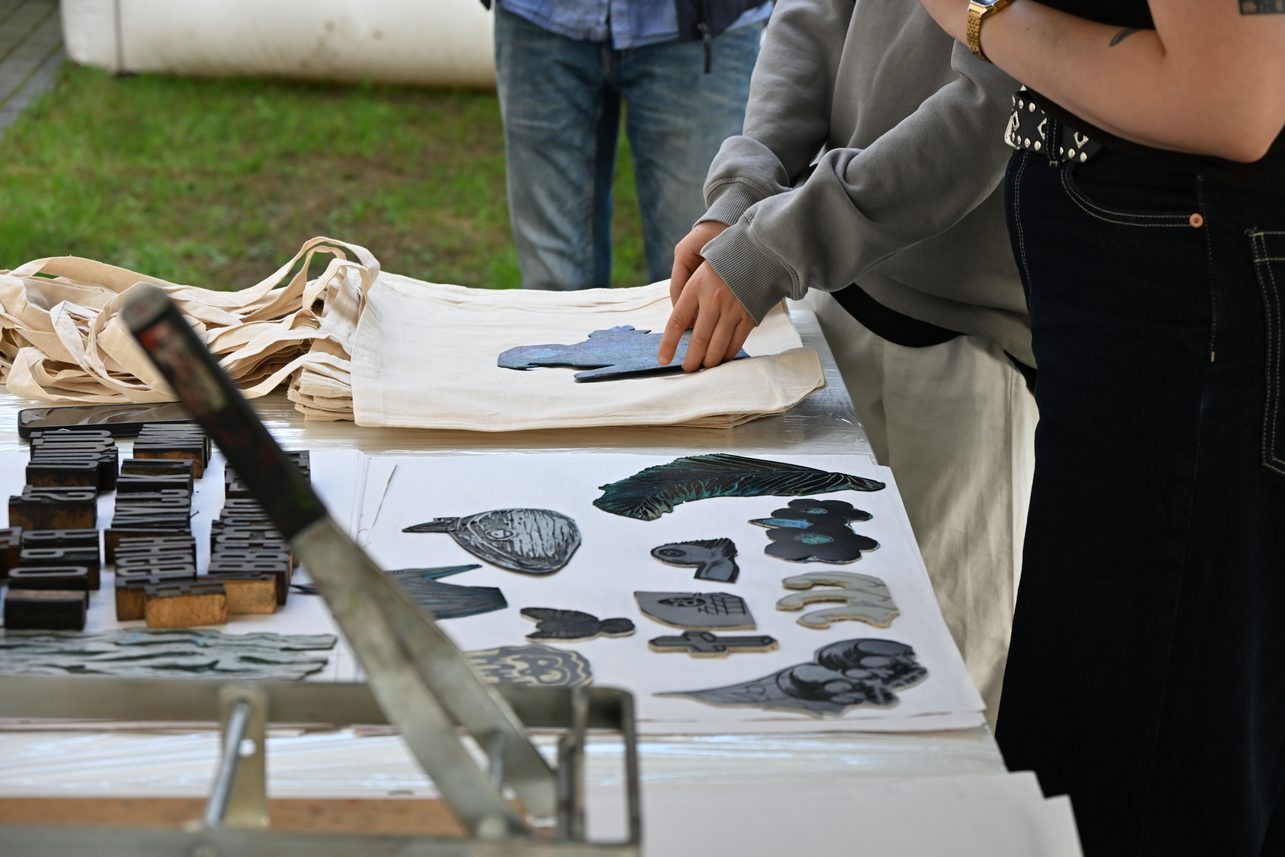
At the fair, one can find various techniques: watercolours, drawings, a great deal of printmaking, ceramics, small-scale sculpture, jewellery, and textiles – a multitude of primary, pure creative explorations which in the future – who knows – might themselves become highly sought after.
A Place Where Everyone Wins
In the spring, the students of the Kaunas Art Gymnasium (KDG) also invite you for a visit to Žaliakalnis. Their annually organised fairs are an unexpected opportunity to touch the past while coming together for a good cause.
The tradition of KDG fairs also began in 2022, following the start of the war in Ukraine. The desire to unite and organise support was strong, and the actions were decisive: the gymnasium decided to join the “Radarom!” campaign and utilised the works of former students that had been stored at the school for many years.
“Our school has rich archives where the works of current and former students are kept – the oldest of them date back to the 1950s. Many works in the collection are unsigned or forgotten, and there is a lack of space for them. So the idea arose to sell them and donate the funds to charity,” says Emanuelė Liesytė, President of the KDG Student Council.
The first charity fair far exceeded expectations – about 4,000 euros were collected for Ukraine, and space was freed up in the archive. Since then, the tradition has continued: funds have been raised for the R. Kaukėnas Support Fund, and this year’s fair proceeds reached the Sengirė (Old Woods) Foundation.
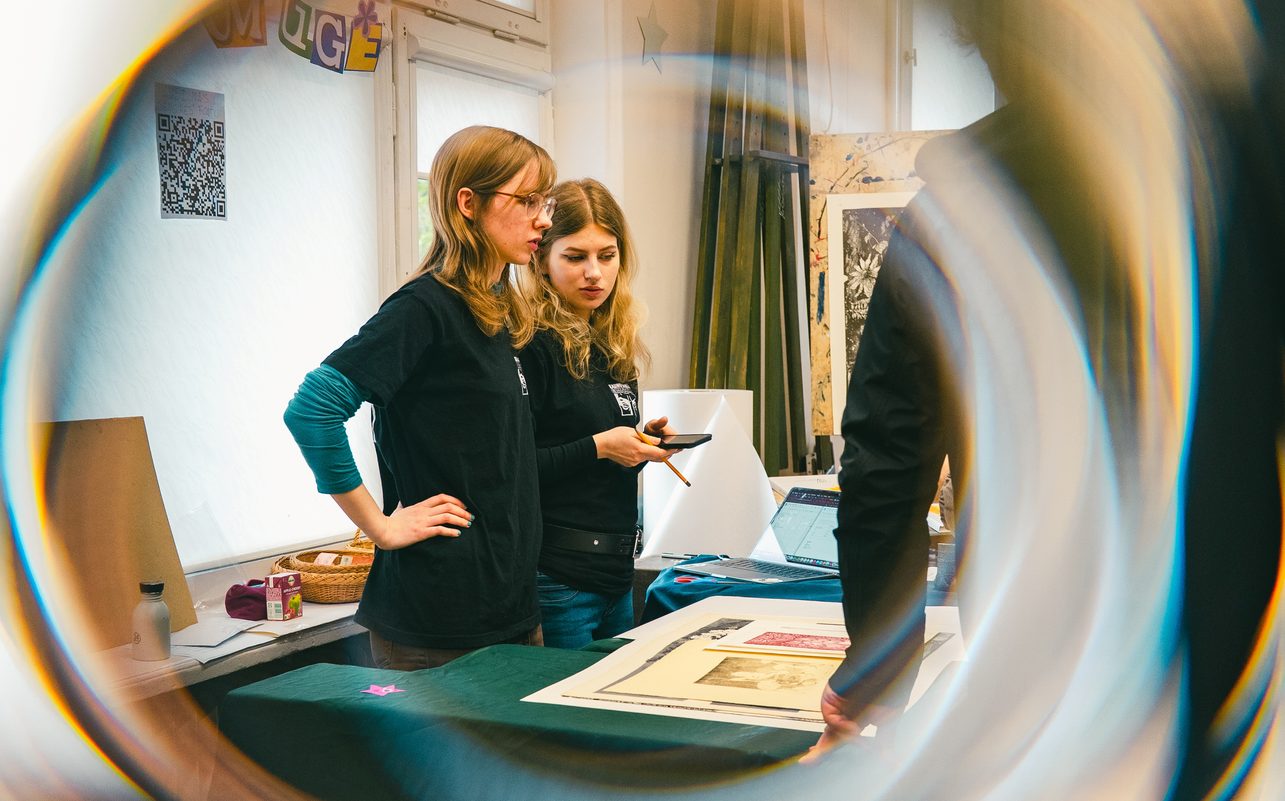
Although KDG students certainly have a heavy workload, it seems that many look forward to the fair, and the preparation begins with reviewing the archive. The gymnasium’s archive specialist Virginija Katkevičiūtė, alongside student council members and teachers, reviews the works to find those suitable for sale: tidy, without stains or obvious signs of wear.
When you arrive at the fair, you never know which works have been selected this year. Emanuelė remembers how art teacher Gintautas Vaičys, having discovered a couple of works signed by former classmates who had passed away, bought them to remember those people.
The teachers’ involvement in the fair is significant: they not only help organise it but also donate to it. The most expensive work sold at the fair was a watercolour brought by teacher Daiva Šlajienė in 2022, which supported Ukraine with two hundred euros.
The KDG fair usually takes place on the gymnasium premises in Žaliakalnis, in the spring or late winter, coinciding with student reviews and holidays. However, the gymnasium wants the event to become as open to the city as possible: this year, the band “Baltasis Kiras” played at the fair, face painting was offered, and hairstyle workshops took place.
When you prepare for the KDG fair next year, don’t bring cash – the payment for your chosen piece of art will be a direct transfer to the fund being supported that year. “We only keep enough money for ourselves to feed the volunteers,” the interviewee concludes.