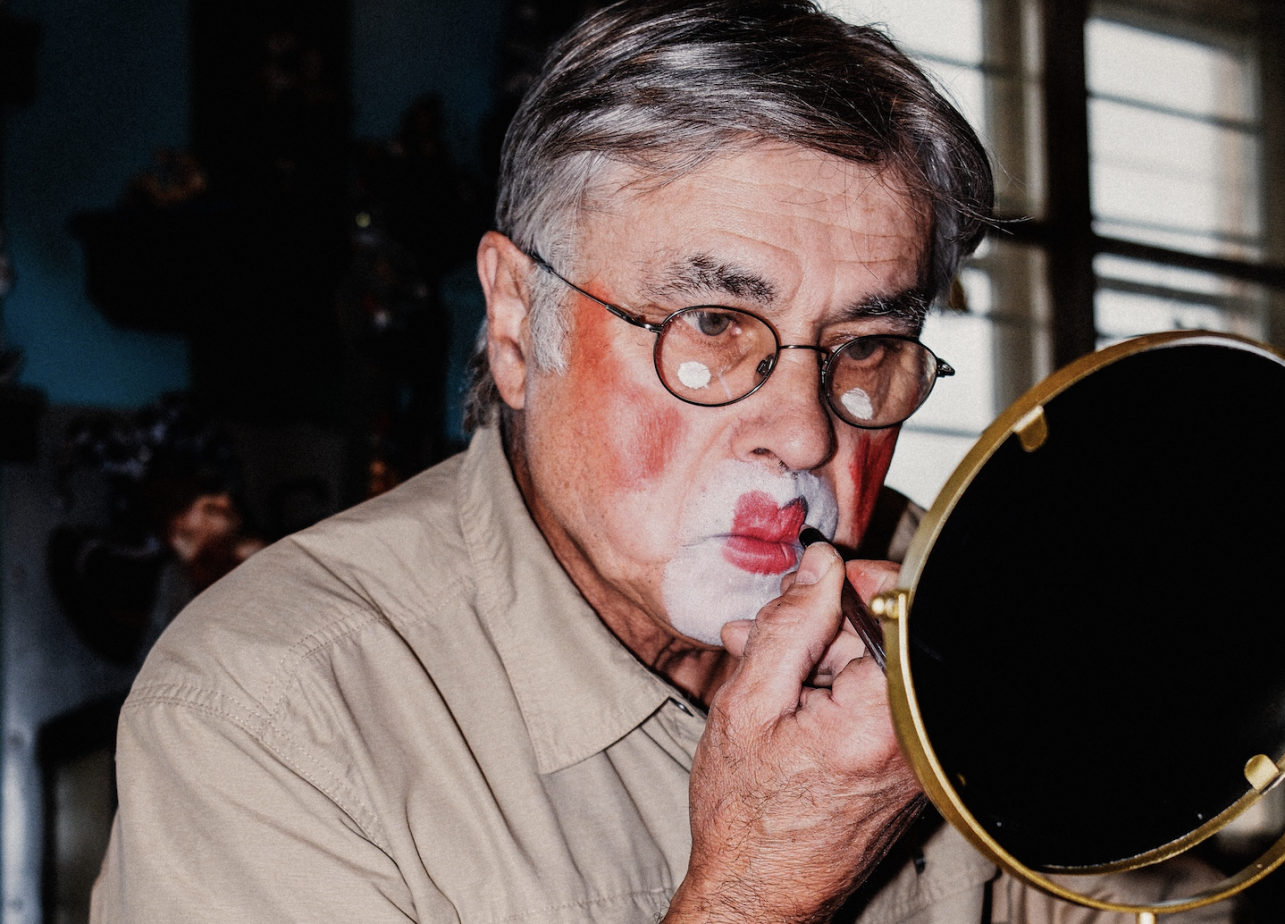
I return to Baltic Circus in Šančiai after a long break. I was last here when “Kaunas Full of Culture” was still learning to walk, so my memories have grown a little hazy. I find myself quietly gasping again: how authentic it is here, and how little, it seems to me, Kaunas residents themselves know this place. “Baltijos cirkas” (Baltic Circus) is the name of this entire complex and the movement gathered around it.
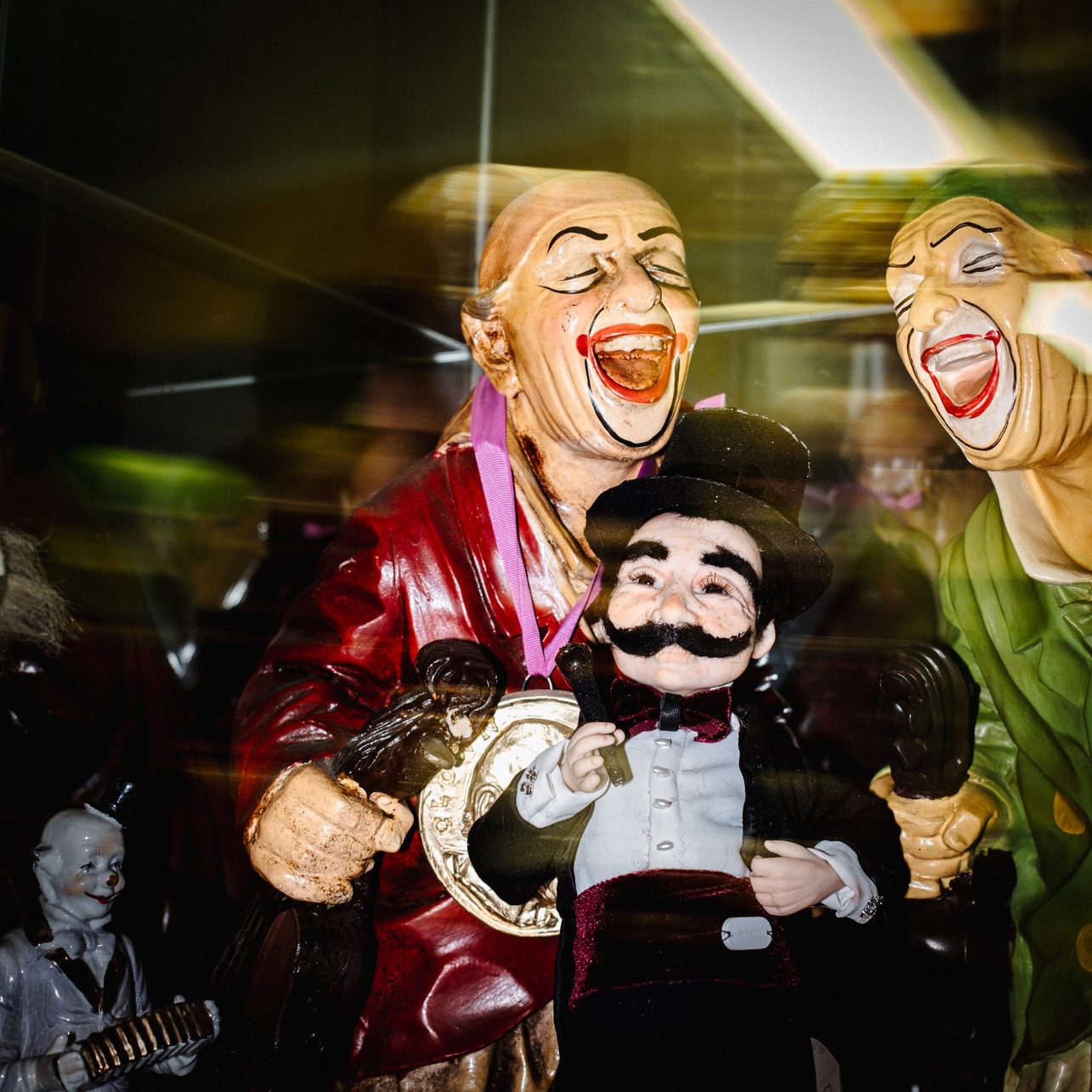
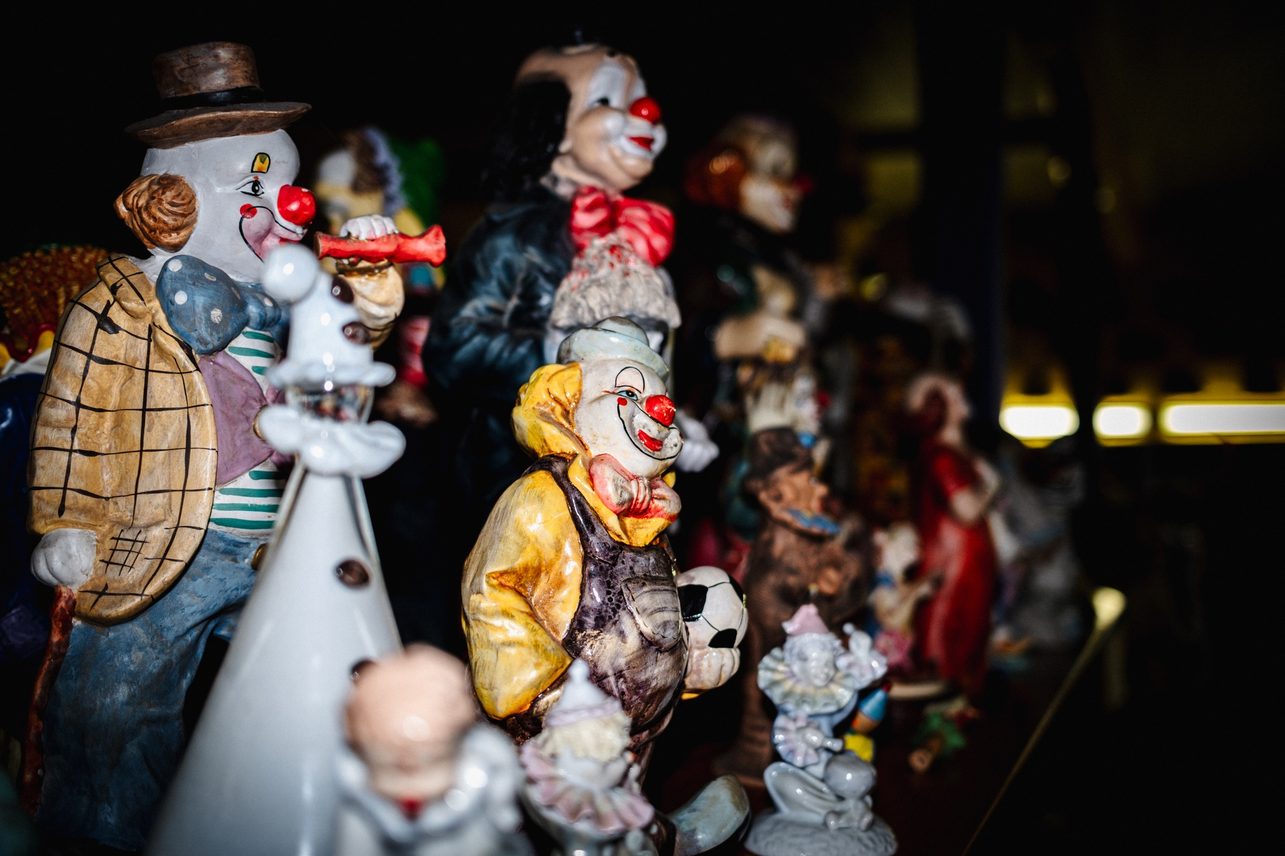
We begin our conversation with Ieva Variakojytė-Reynshtrom, project manager of Baltic Circus and head of the Kaunas Circus Arts Academy, in the chamber circus, where performances and academy training sessions take place. Students are already arriving, and between answers, Ieva manages to greet them, give instructions, and praise their tricks. A few exhibits greet us in the foyer, but the Clown Museum itself is located in a separate building in the same courtyard. Our conversation soon moves there. On this overcast day, it is rather dark inside; Ieva switches on the lights. Clowns line the shelves all the way to the ceiling, alongside family documents, photographs, and props made by the artists themselves.
“It is best to ask a clown about a clown. And I am no clown,” warns Ieva. She was born into a family of circus artists and represents the third generation of the dynasty, while her son represents the fourth. Her parents, Petras and Olga, met at the Moscow Circus and Variety Arts School; they studied on the same course and married before graduating. At that time, nearly five decades ago, there were almost no other such professional schools nearby, and the competition, she says, was as high as 130 applicants per place.
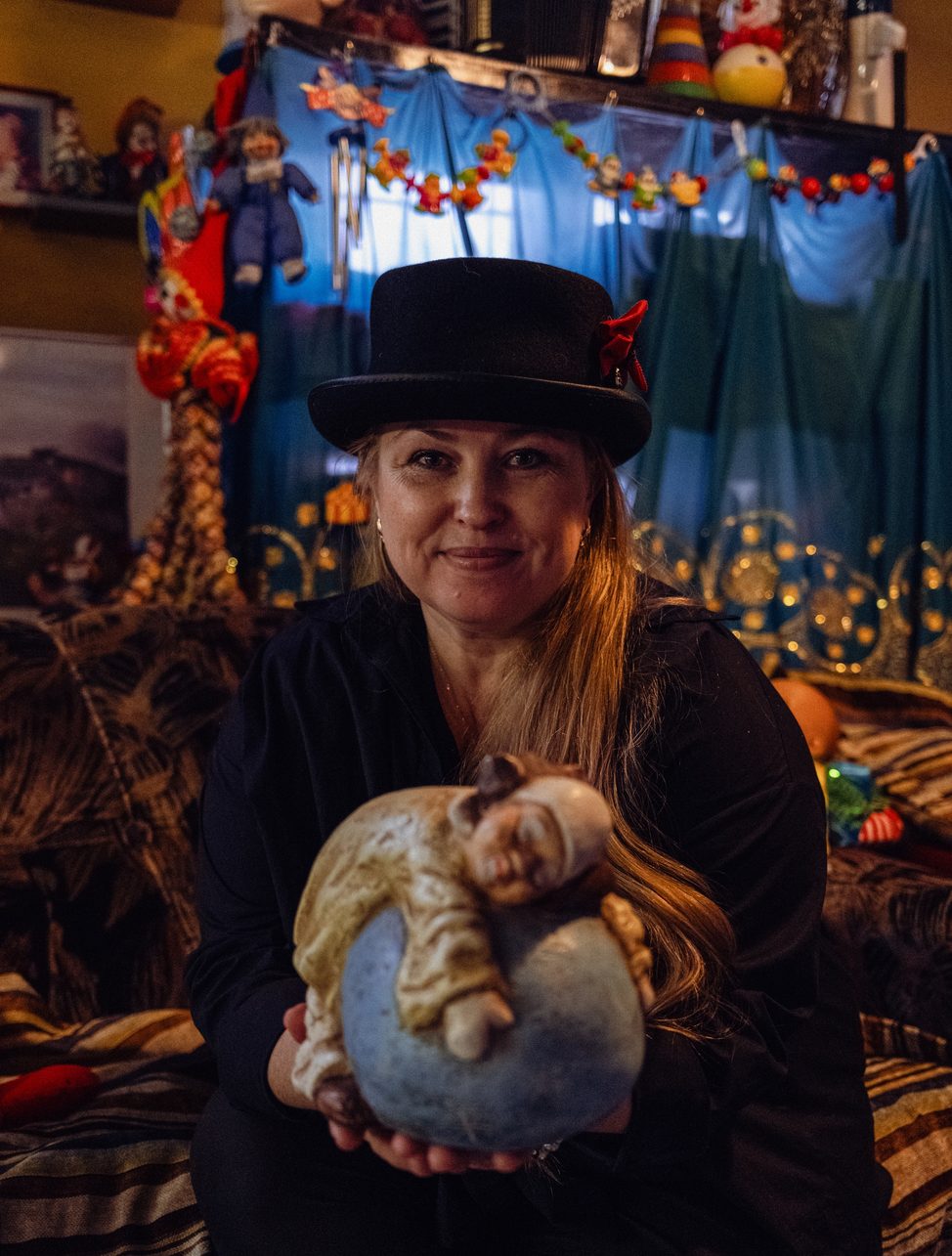
Her son performed in the ring from the age of five to twelve – both solo and with other artists. Now, having finished school, he is searching for his own path. Ieva is relaxed about this: people raised in circus dynasties sometimes want to test themselves where their family name does not follow them. “They stay away for a while and then return, they don’t disappear. I see his inclination and love for the circus, so everything is fine,” she says.
The family story begins more than a century ago. The first to enter the circus was Jadvyga Stankutė-Ramanauskienė, the sister of Ieva’s grandmother and wife of Jonas Ramanauskas, one of the pioneers of Lithuanian circus. Jadvyga was exceptionally flexible from a young age. Her father owned an inn where travellers stayed, and the girl would show guests flexibility tricks – what is known in the circus as contortionism. Jadvyga once shared that her father trained her: he didn’t know how to do it himself, he just gave instructions, and she would succeed.
Jadvyga also brought her sister Vladislava, Ieva’s grandmother, into the circus. She was different – persistent, with a strong character, a powerful acrobat. Later, the sisters performed a bicycle act together: Jadvyga would work on top, and Vladislava at the bottom. “In the circus, both roles are equally important. If you don’t have a good ‘bottom’, the ‘top’ can’t do anything. It requires balance, strength, and a fair amount of endurance,” Ieva explains.
On both sides of the family, there were journeys to America and attempts to stay there, but the wives insisted on returning to Lithuania. Jadvyga and Vladislava arrived in Kaunas already as circus artists. In the temporary capital during the interwar period, many branches of art were flourishing, the Metropol variety show was operating, and the grandmother even preserved a certificate testifying that she worked at the Small Kaunas Theatre. As regimes changed, the opportunity to perform on stage was lost several times; therefore, Ieva muses, the old documents might have preserved not just the fact of employment, but nostalgia itself.
During the Soviet era, artists had to adapt, but the family history is full of small tricks. The Pillars of Gediminas appeared in the emblem of the Lithuanian circus collective “Vilnius”. On one badge, the pillars even coexisted with the flag of Soviet Lithuania; later, a version with the Lithuanian Tricolour appeared. Even while working in Siberia, the artists celebrated both Christmas and Easter. According to Ieva, they would pretend to be marking someone’s birthday or anniversary. Outsiders would sometimes wonder why the troupe had so many occasions to celebrate.
At that time, artists could not choose where they worked – their routes were assigned by the system. In Lithuania, the professional collective “Vilnius” appeared roughly every five years; they earned the most for the system and were most warmly received in Siberia, where many exiles lived. After the restoration of independence, the private sector emerged, but over time, in Ieva’s eyes, things became much more disorganized. Ieva emphasises that Baltic Circus was the first professional circus organisation in post-independence Lithuania, influencing the growth of the circus field, the restoration of historic circus studios, and the emergence of new organisations. In 2007, Baltic Circus was the first in the region to be admitted to the European Circus Association, and in 2009, it became a member of the Association of Theatres for Children and Young People, Assitej Lietuva. Despite their intensive activities and desire for recognition, circus remained an unusual field for Lithuanian institutions: “Our Ministry of Culture isn’t used to having a circus. But we can’t be anywhere else – we are culture.”
Ieva’s parents graduated from circus school as gymnasts. Her mother worked in a bicycle figure-riding act, while her father’s transition into a clown happened gradually. During holidays, he would assist a clown, later he began working with pigs in a neutral role. When he included his wife, who had worked in acrobatics for fifteen years, in the act, her role remained classical, while his became comic. In the first photographs of the clown, there are colourful costumes, yet the character is serious. “He was a serious clown,” says his daughter.
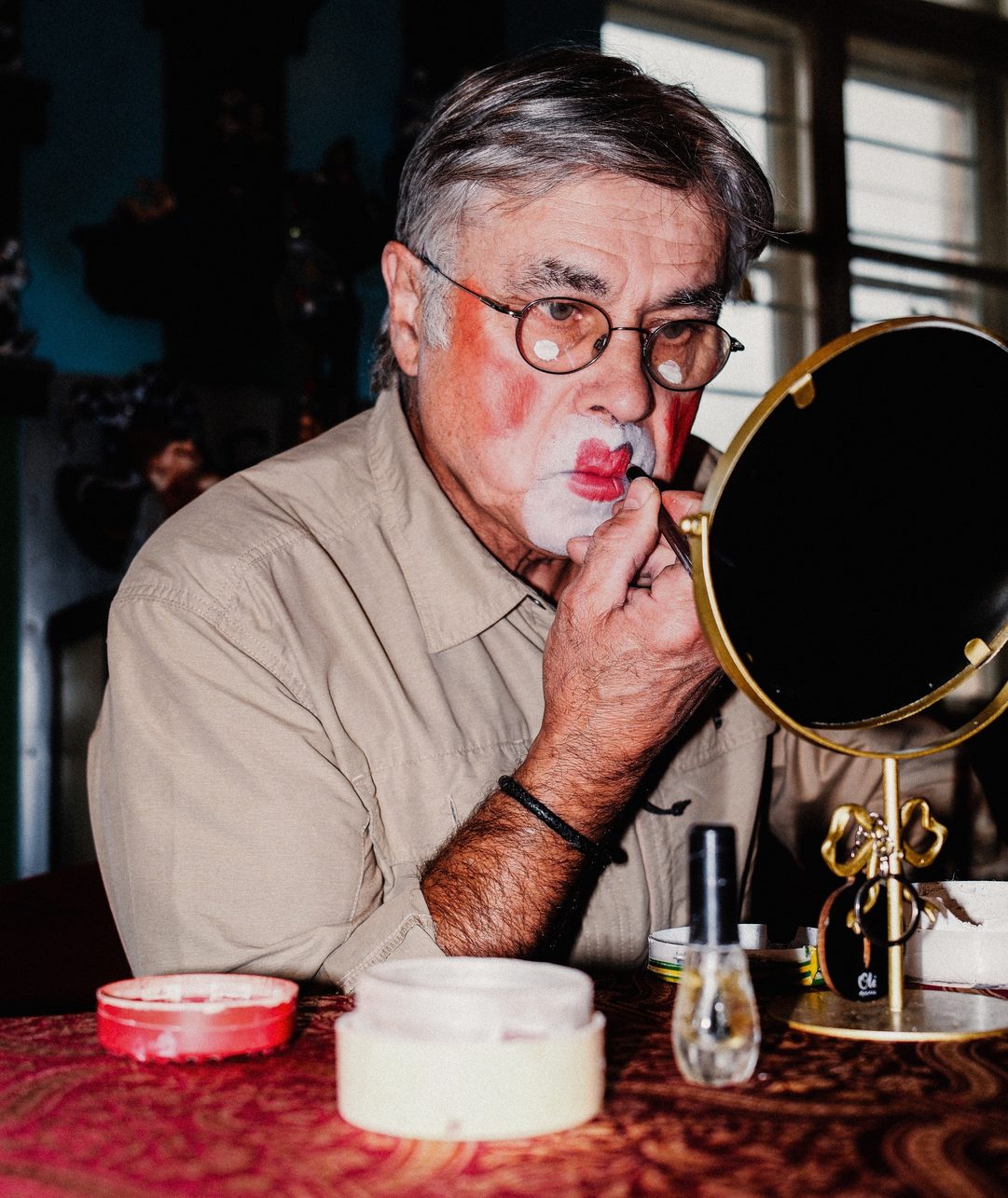
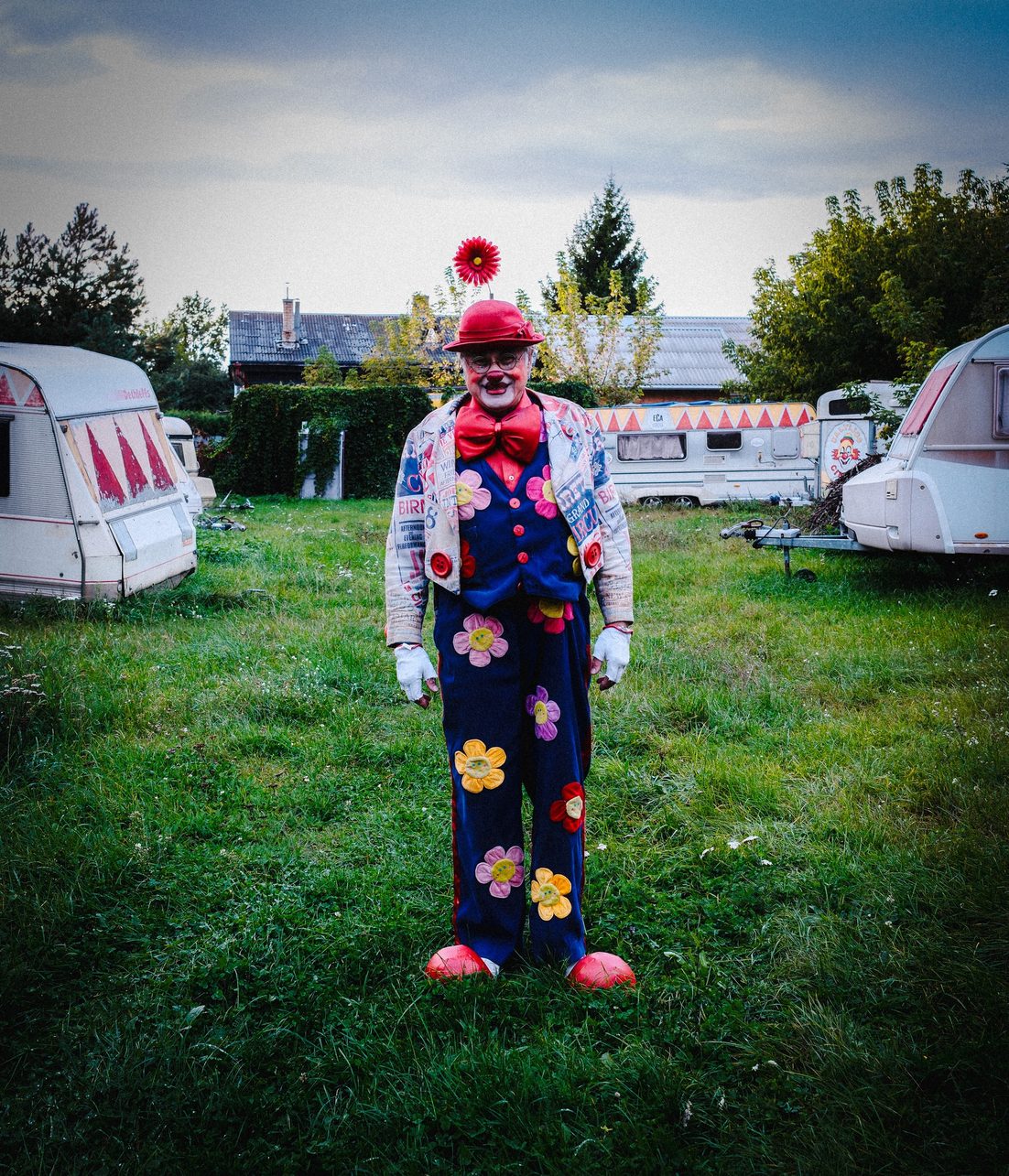
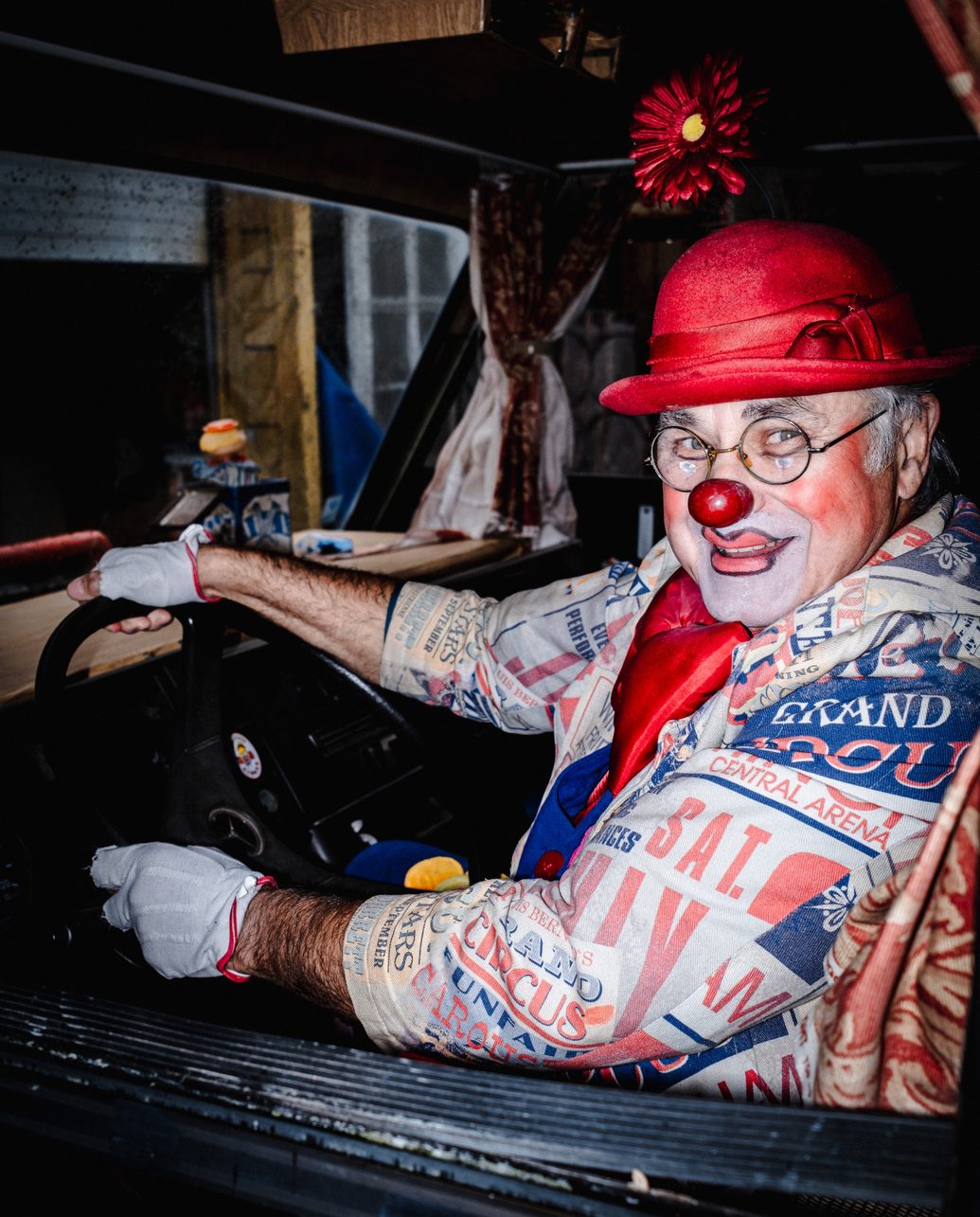
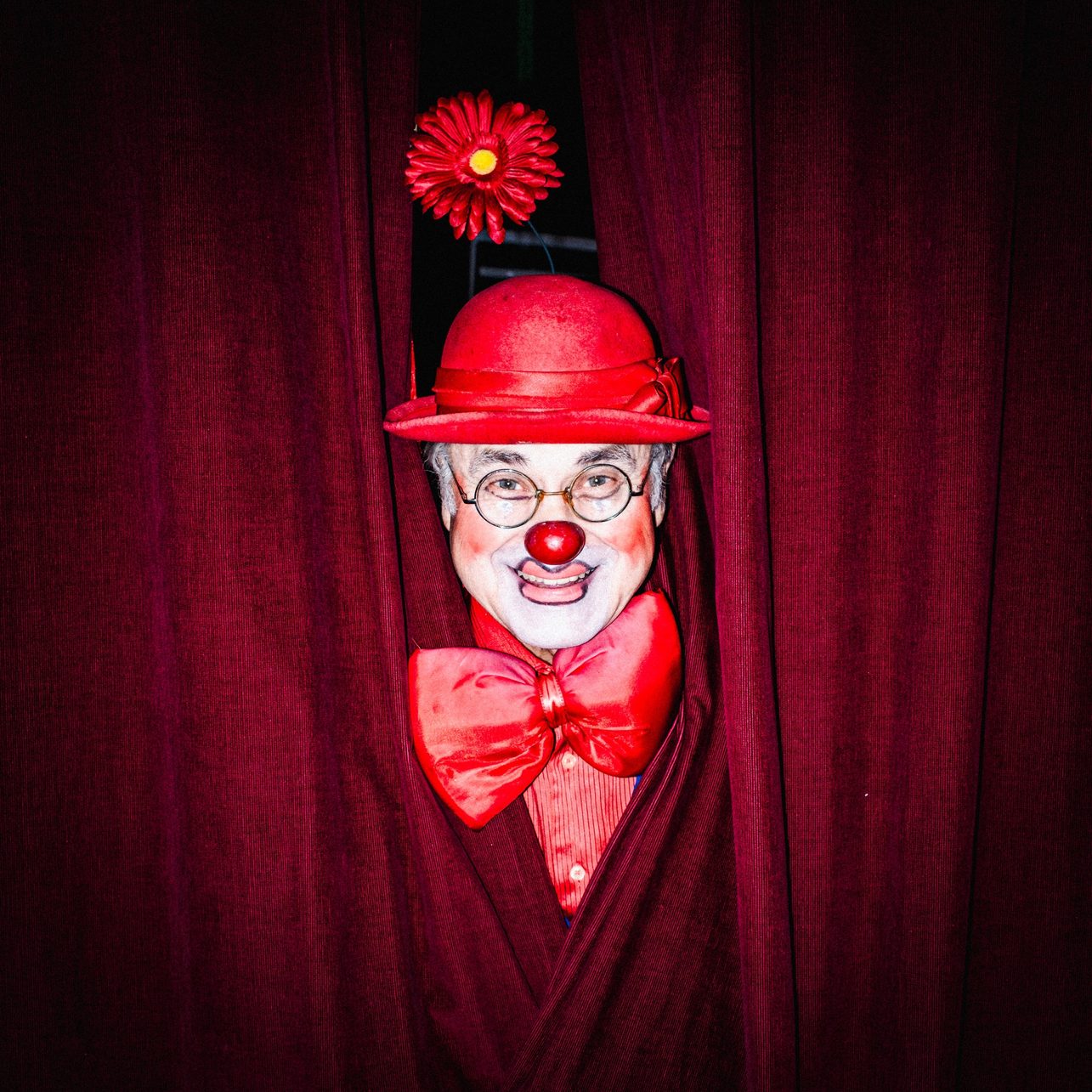
A clown is not necessarily noisy, unpredictable, and equipped with a red nose. He can be a mime, creating a Pierrot-type character without words. One red-nosed clown Ieva mentions was shy, gentle, as if constantly bashful – funny precisely because of that. Another clown hardly acts himself but creates situations with the audience. For this, she emphasises, great skill is required: the person must not get angry, but rather be happy to have become part of the performance.
Clowns come from different genres – acrobatics, gymnastics, acting – or they train specifically for this profession from the start at circus school. Among them are people with Master’s or Doctoral degrees, writers, and poets. Ieva says she cannot explain where the desire to be a clown comes from. “It draws you in. A kind of calling inside. A clown enjoys bringing joy to people. The role cannot be full and good without devotion.” Therefore, she is baffled by the habit of calling people “clowns” when one wants to insult them: “My father is a clown. How am I supposed to feel when some piece of scum is called a clown? A clown is something else entirely.”
After the restoration of independence, the family worked for two more years at the stationary Riga Circus. There, her father acquired his first mobile circus, and upon returning to Lithuania, he established Baltic Circus. Kaunas was an obvious choice – the home city where his grandmother and other artist relatives lived. Space was needed for a large operation, so the authorities of the time offered several premises. The building chosen in Šančiai had been gutted by fire, so they installed a dome instead of a roof. For years, the family searched for like-minded people, sponsors, and patrons, and eventually, after more successful tours, they put roughly two years’ earnings into the premises. Admittedly, although the buildings are fully maintained by Baltic Circus, they belong to the state.
The pandemic changed and expanded the nature of their activities. In 2020, the troupe was still touring in Latvia, following changing restrictions every week, working with masks and disinfectant, with a limited number of spectators. In the autumn, everything shut down – the tours stopped, and the academy could not operate. That was when Ieva started another job. Today, she still works full-time in another service and says that only because of this can she continue her activities in the circus.
There are currently about fifteen regular, advanced students in the academy, with newcomers also joining. At one time there were as many as seventy students, but Ieva decided that quantity was not the goal. The children who stay are those who want to achieve something – not necessarily to become artists, but not just to pass the time either.
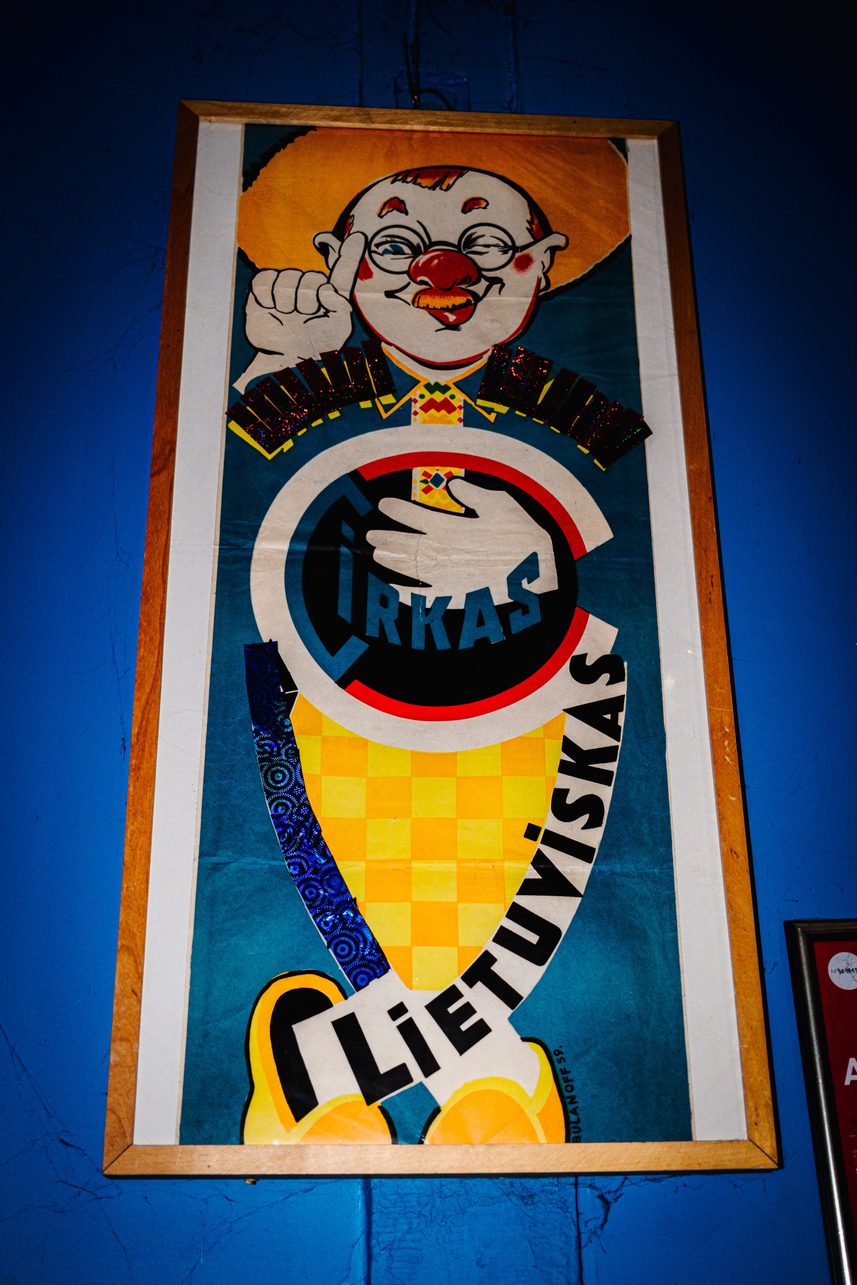
Since 2013, both the academy and the Clown Museum have operated at the Baltic Circus headquarters. The latter began with a clown painted by her father 37 years ago. Although he was not a painter, one day he simply felt the urge, managed to get hold of some oil paints, and painted a picture. For a long time, it travelled in his touring luggage. When the renovated museum premises were established, exhibits arriving from various countries gradually filled the shelves to the ceiling. Artists passing through would stop by and be amazed by what had been created. At first, teachers she knew would request tours; later, the activities were expanded through the “Culture Passport” programme.
At the end of 2024, the collection was counted at more than 2,700 clowns, later included in the Lithuanian Book of Records; now there are certainly over 3,000 exhibits, according to Ieva. They are rubber, felted, knitted, porcelain, valuable, and simple. The museum also receives individual guests: during the week of our conversation, two people from Denmark and two guests from Belgium visited. Opening the exhibition for just two visitors is not easy when other work awaits, but Ieva tries to find time for foreigners. She would like to install QR codes next to the exhibits to make the displays more attractive and informative – it is impossible to tell all the stories during a single tour. The project did not seem relevant to the Lithuanian Council for Culture, but Ieva does not intend to give up.
In the exhibition is a photograph of Jonas Ramanauskas, one of the creators of Lithuanian circus, whose stage name was Barnabas; beside it is a clown nose he made himself, though it has lost its moustache over time. Elsewhere are antique boxing gloves, grandfather’s photos, old juggling rackets, and clubs. The latter are assembled from pieces of wood and plywood, decorated with whatever could be obtained at the time. To catch the light while spinning or flying, they are covered with shiny sweet wrappers. “But even those sweets didn’t exist then. You had to get hold of maybe two kilograms of them,” says Ieva. Today, circus equipment can be bought in specialist shops; there was a time when you had to make everything yourself.
The oldest object in the museum, a mechanical “Trick Dog” piggy bank, is 101 years old. When a coin is inserted, the dog is supposed to perform a trick and drop it into the box, though the venerable mechanism doesn’t succeed every time. Nearby are staged family photographs. In one, an eleven-year-old Ieva is peeling potatoes with her father and brother because a visiting photographer asked for a simple everyday shot. For another photo, everyone dressed up in the best they had. “Such terribly impoverished times,” she recalls.
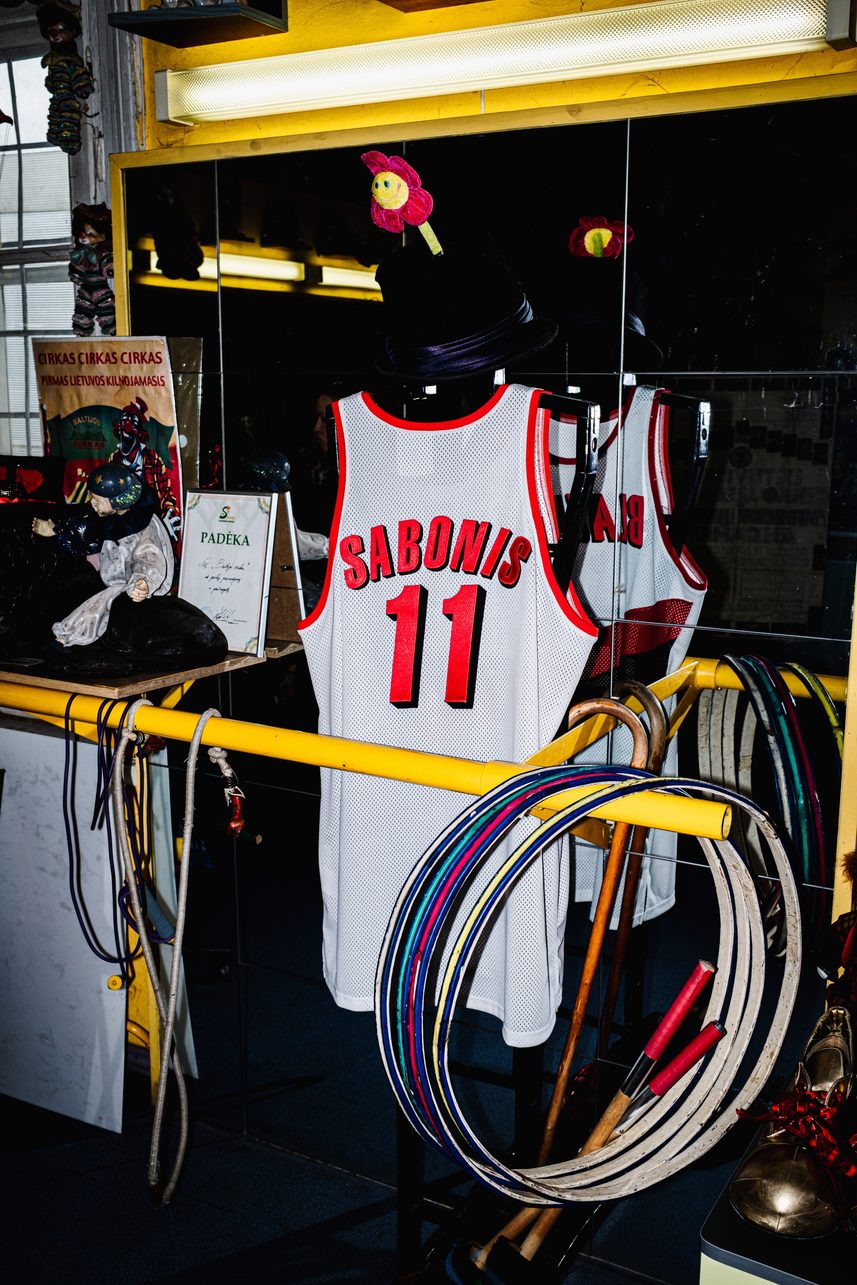
Another unexpected relic is Arvydas Sabonis’s jersey. The family circus was stationed near the former Žalgiris stadium on K. Baršausko Street, next to the Sabonis basketball school. The basketball player used to come to watch the performances and gifted a jersey. Amateur photos with the basketball legend have also survived: Ieva stands next to Arvydas on the barrier surrounding the circus ring, significantly smaller than him. An autograph from Sabonis dedicated to the Baltic Circus collective is also preserved.
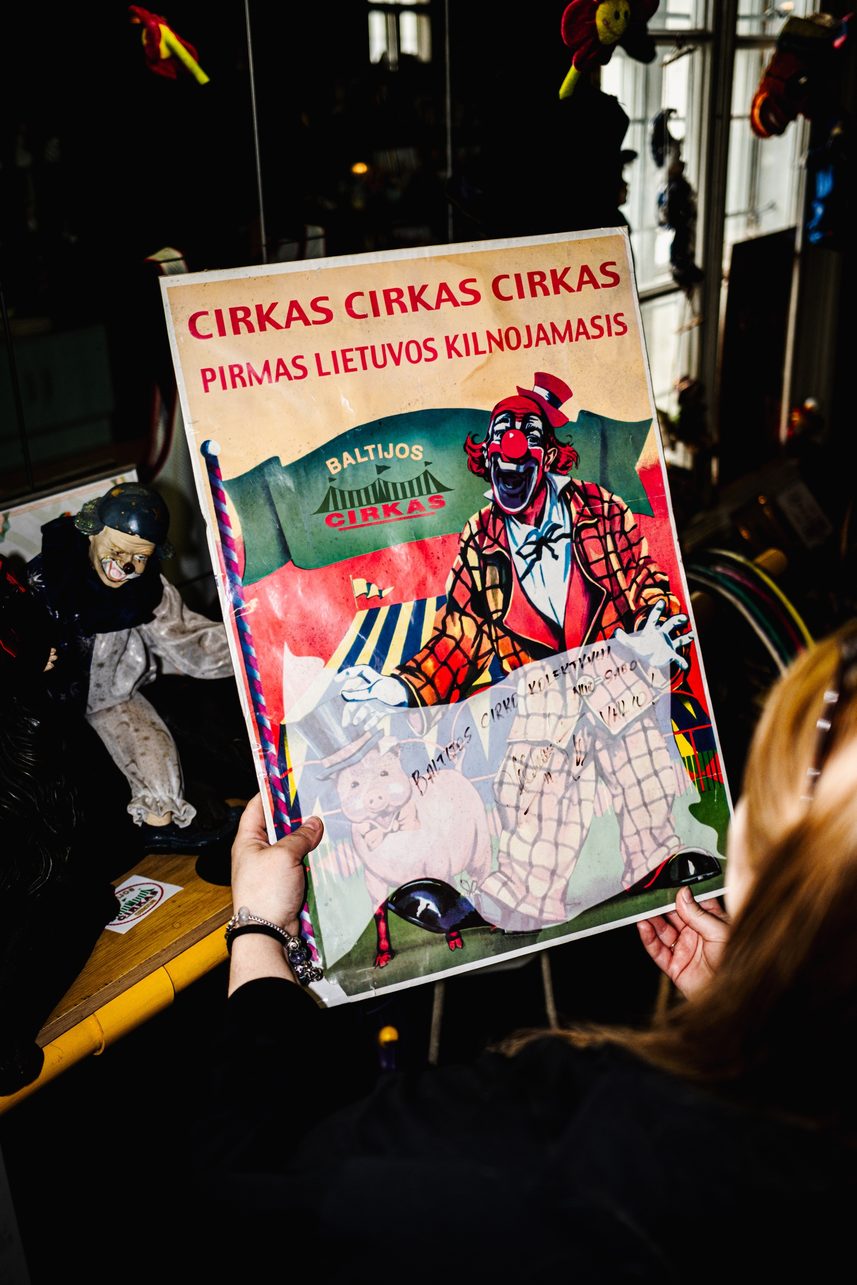
The family’s most prominent animal was a pig named Vilkas (Wolf). Ieva calls him the only pig in history to jump through fire. The secret of how he was taught this was reportedly requested even by Americans, who offered a reward back in the Soviet era. Her father didn’t give in, although he now sometimes jokes that he could have bought a circus with that money. Vilkas was exceptionally receptive: he understood everything instantly, sometimes without even needing a command. “A trainer is lucky if they happen upon an animal significantly smarter than the rest,” says Ieva.
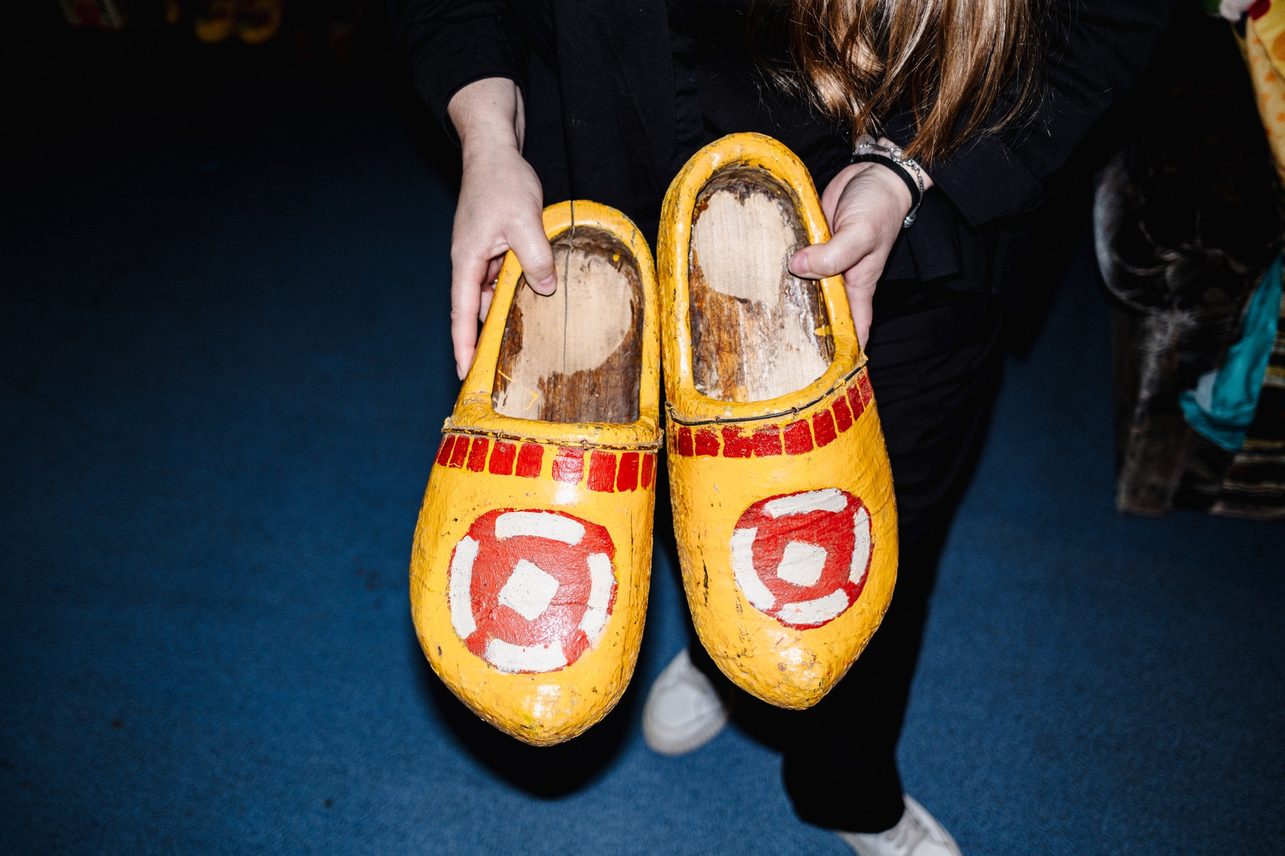
The act with pigs was started by her grandmother. The idea was suggested by an American artist of Latvian origin, Peterson, who envisioned a performance not with one, but with a whole troop of pigs. Out of the artists working in Latvia, Estonia, and Lithuania at the time, he chose her. In a later family act, Vilkas would jump through fire to specially composed music, while Ieva’s parents, Petras and Olga, wore stylised national costumes. It wasn’t easy for her father to perform acrobatic tricks while wearing heavy wooden clogs. Over time, people began gifting the grandmother small pig figurines, which led to a separate collection of them in the museum. The grandmother is gone, but the number of piggies continues to grow.
The pitting of traditional and contemporary circus against each other seems exaggerated and even artificial to Ieva. She mentions a perceived marginalisation: traditional circus struggles even to be included in general cultural events, and the word “circus” in Lithuania is still burdened with negative associations. Contemporary circus was long presented as an insufficiently developed, underfunded field, but in her view, the situation has now flipped – it is the one receiving funding, while traditional circus applications more often remain on the sidelines, failing to receive support. Nevertheless, she doesn’t want to force young people to create according to a thick inherited model: if they want contemporary circus, let them do contemporary. “We understand the concept. Why should we force a young person to create in a way they don’t want to? By nurturing children and youth in the academy, we encourage creativity, train young artists to perform tricks technically correctly and safely, and to be able to reveal their artistry; the style of expression is their choice. Whether it will be traditional or contemporary circus is for them and the spectators to decide.”
Today, artists have become more versatile. Once, a single strong act could suffice; now, to get into a good circus, one needs to have two or three, be able to dance, and to adapt. The aesthetics and method of creation differ, but the circus space itself, in Ieva’s view, remains shared. The opposition is strengthened by competition for the same limited funds.
She also quickly corrects the romantic notion of travelling. “It’s very fun, but terribly hard.” When the season is successful, everything seems great. However, when people lose money, when war, pandemics, or other shocks begin, the circus still goes on – only sometimes at a loss. Then you know that not only will you not earn anything, but you won’t even have anything to live on. The long history of touring is visible even on city maps: places where a tent once stood are built over today. In Kaunas, the circus used to stand near “Undinė” – the city’s first bowling alley – and where office buildings stand today. In Vilnius, the tent would stand in lots that seemed like complete outskirts back then, which are now surrounded by the grown city.
Ieva is interested in the recognition of circus tradition as cultural heritage in other countries. To her, this is an argument for why preserving this activity is important in Lithuania too. Her father named the small circus created by the family “chamber”, but not only by analogy with chamber theatre or orchestras. He used to joke about the “chamber” (prison cell) – a small space in which he was forced by circumstances to spread his creativity. Today, the chamber circus, academy, and museum are held up by two people – father and daughter.
Baltic Circus still feels the audience’s demand, and they have become more flexible since the pandemic: they organise private celebrations, outings, and educational sessions; they can travel to a company of a few dozen people. In the autumn, a project will take place at Krikštėnai Manor: the circus tent is supposed to stand there for a month and a half, with artists arriving for performances. However, when asked about the future, Ieva speaks first not of growth, but of strength. The circus sustains itself because the family sees the need for circus activities and brings in money from other jobs and pensions. “We don’t even complain. I just don’t know how much longer our strength will last. Without financial support, it is truly difficult to ensure the operation of a cultural institution. The children love it here, they want to attend the circus, so that’s why you make the effort. The legacy of my grandparents and other old artists is very important to me. As long as you can, you continue.”
Next year, Ieva’s father, the founder and long-time head of Baltic Circus, Petras Variakojis, will turn seventy. His daughter calls him the oldest clown still working in Lithuania and plans to mark the anniversary with several memorable events. Petras Variakojis is a member of the World Clown Association, and this year he visited his friend Gregory Popovich, who has a theatre in Las Vegas. The founder of Baltic Circus went to see how everything works there and to share experience, but ultimately he helped train one of the theatre’s employees – a five-year-old piggy. He himself doubted whether an animal of that age could still be taught anything. It could.
The rain has already stopped, and a vivid rainbow is visible from the courtyard. I am still enchanted by the stories I’ve heard, the colours, this entire meeting. Standing in the courtyard, my thoughts gradually settle: how quickly we attach labels to entertainment. Burlesque was at one time considered the height of kitsch, yet now its acts are shown in luxury clubs. Fashions change. One would hope that the tradition Ieva’s family is still continuing in Šančiai doesn’t vanish along with them.