I tried to remember my first visit to the circus – the most vivid memory is that I became part of the show: a clown invited me onto the stage to be his assistant, and during one trick, he pulled a white handkerchief out of my ear. Although it makes me smile today, at the time the trick seemed so convincing that for a good week I kept asking my sister if there was definitely nothing left in my ear.
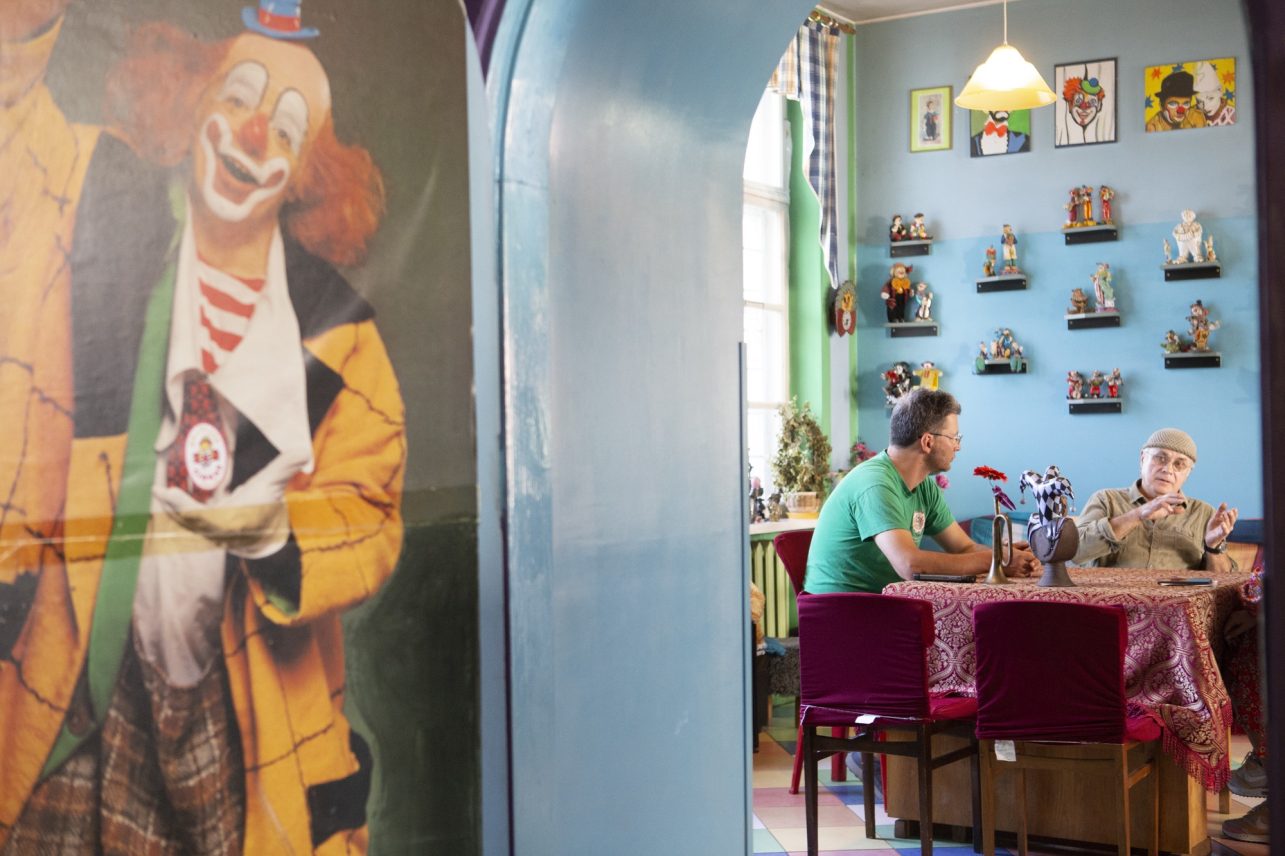
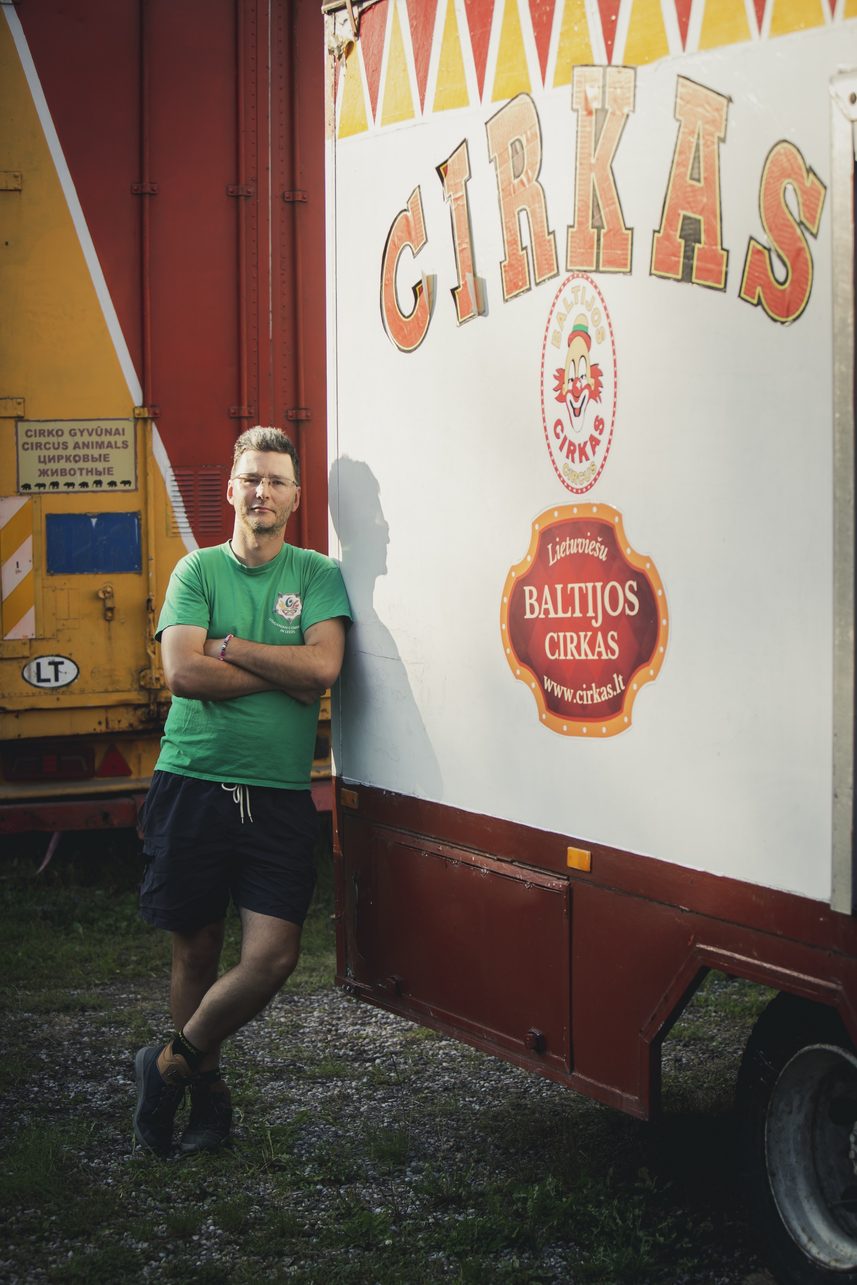
Deimantas Ramanauskas’s first encounter with the circus seems to have affected him somewhat differently. It was 1997, the “Baltijos Cirkas” was on tour in Panevėžys, and his mother took the young boy to the performance. Something clicked, and he found himself increasingly drawn to it. Only later did the old postcards, photographs, and today’s story emerge. Deimantas and I joked that it was probably “in the genes”. Therefore, we met to talk about his family’s connections to the circus and the history of the circus itself at the “Baltijos Cirkas” base in Šančiai. Deimantas’s relative and the host of this place, Petras Variakojis, soon joins the conversation.
Although the circus holds a special place in Deimantas’s family, he did not enter the ring himself. After finishing school, he moved from the Panevėžys region to Kaunas to study history at Vytautas Magnus University. He spent seven years there, completing his Bachelor’s and Master’s degrees in history, followed by pedagogical studies. During his university years, he became interested in academic research. In 2013, marking the 85th anniversary of professional Lithuanian circus, he prepared the first exhibition dedicated to circus history together with the university community, “Baltijos Cirkas”, and the Lithuanian Sports Museum. His professional path then led to work as a guide at the Kaunas Ninth Fort Museum – that was when he fell in love with the work of a tour leader, which he continues to do to this day. Realising he got along well with students, he also began a career as a history teacher six years ago, working not only in Lithuania but also in remote schools for Lithuanians living abroad. “You could say I’m a tour leader-teacher,” says Ramanauskas, introducing himself.
Circus In The Family
In fact, Deimantas didn’t know much about his family’s ties to the circus when he was growing up. “Historical memory wasn’t really discussed in the family,” he says. One of the most important keys to the family’s past was a photo album containing about fifty interwar and post-war photographs and postcards immortalising circus artists and their performances. Among them were photos of Deimantas’s grandfather’s cousin, Jonas Ramanauskas, and his wife Jadvyga, who became circus legends in Lithuania, as well as Antanas Stuknys, who was related to the circus on his mother’s side. It was this visual material that encouraged him to delve deeper not only into his own family but also into the history of the Lithuanian circus during his studies.
Ramanauskas then began collaborating with the Lithuanian Sports Museum, and the idea was born to hold an exhibition on circus history, as well as to write several articles about the origins of the circus. His research also brought Deimantas into contact with Airidas Junevičius, who had collected extensive material on the history of the Lithuanian circus. The interviewee emphasises that all visual material is very rare and valuable – postcards were often handed out to spectators after performances, so no further copies would remain.
History Of A Circus Dynasty
The history of professional Lithuanian circus began to take shape in the 1920s. One of its pioneers was Petras Tarutis, who left for Leipzig in 1924 to study the theoretical and practical aspects of circus science at the Academy of Circus Arts. After completing his studies, he returned to Lithuania and began gathering circus performers – this led to the first troupe, “Žvėrynas”, and later “Aušra”. Deimantas’s relatives eventually joined this circle of performers.
One of them was Jonas Ramanauskas, whose name in the history of Lithuanian circus is associated not only with the stage but also with strength sports – he was officially recognised as the strongest man in Lithuania six times. Together with his wife Jadvyga, they worked in the “Aušra” circus and developed an equilibristics act. Later, the group of artists grew and improved, eventually leading to the creation of the Lithuanian circus collective “Vilnius”.
For Petras Variakojis, this is the story of his family and his own life. His mother was Jadvyga Ramanauskienė’s sister. Jadvyga was the first to get involved in circus activities, and Petras’s mother later joined her. “Uncle Roma,” Variakojis says, using an affectionate nickname to begin his story. “He was short and didn’t look that muscular, but he was very artistic; everything was so convincing. I remember he used to stand on a rotating plinth, and that would be the first part of his act,” Variakojis recalls of Jonas Ramanauskas.
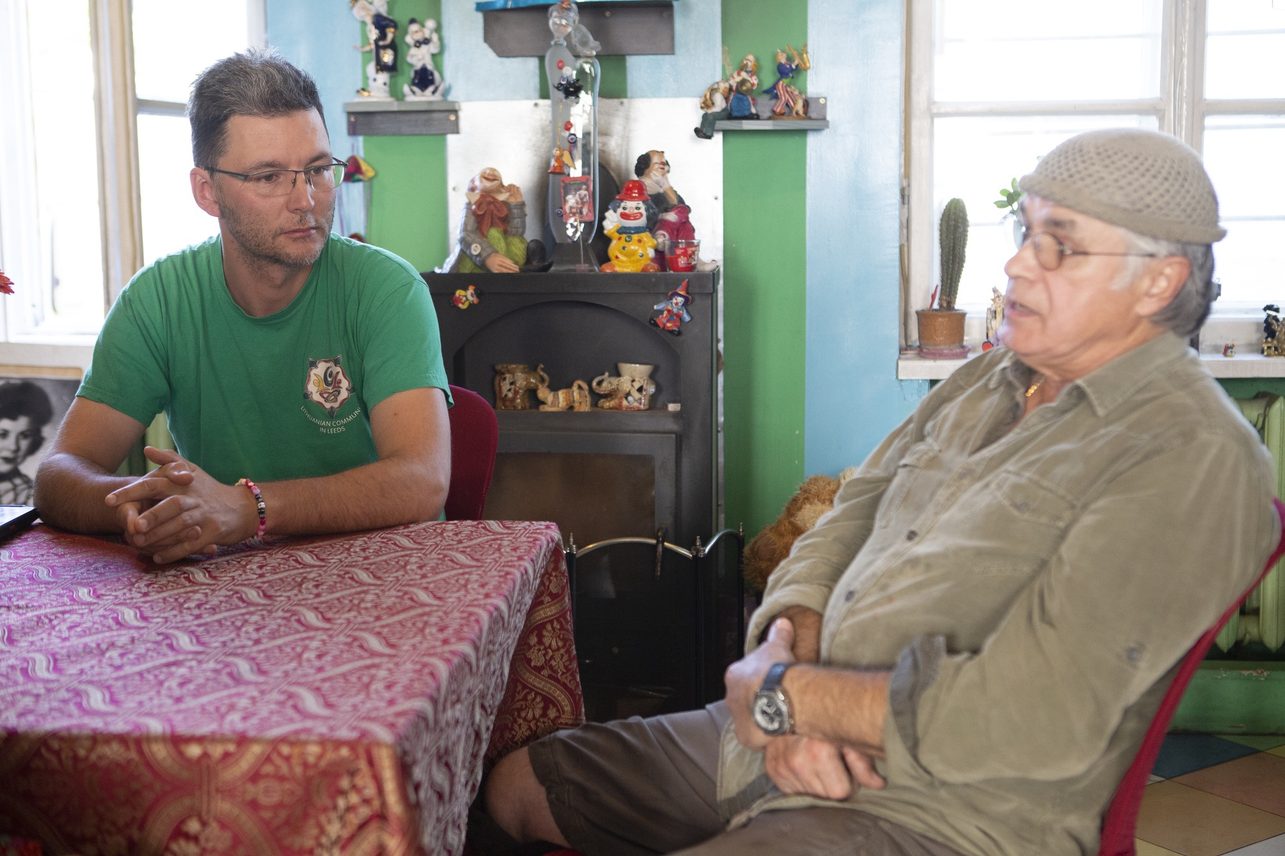
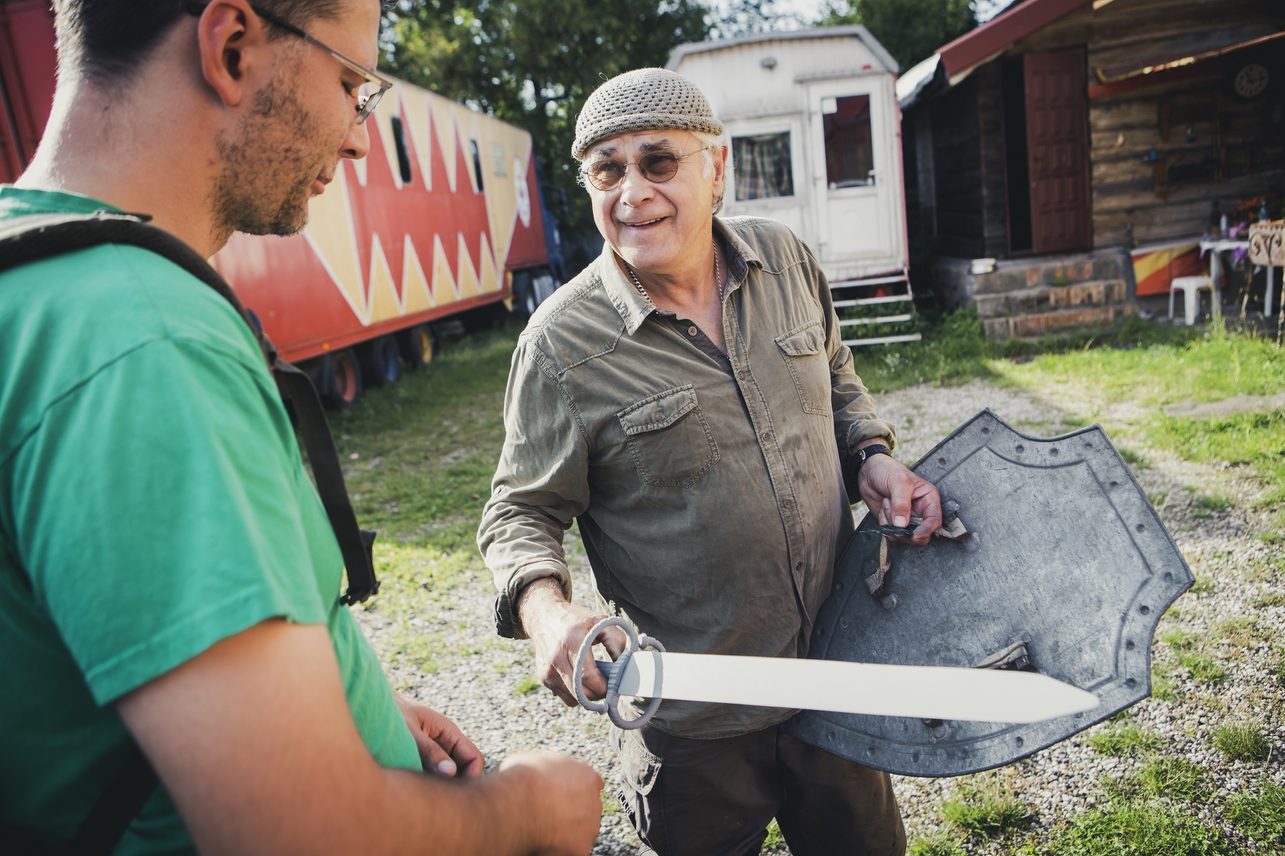
Among the most impressive acts performed by his uncle, Variakojis highlights catching a ball from a board onto the back of the neck and juggling balls. However, the stage characters created by his uncle – Barnabas and Juzė – proved most enduring. Petras associates them with old Lithuanian folk characters: Juzė with “Palangos Juzė”, and Barnabas with a typical country man. Even as we speak, Variakojis shows us a preserved character prop that is roughly 60 years old – a nose and glasses.
Petras considers the “Vilnius” collective to be one of the best circus troupes he has ever seen. “When the collective was on tour in Tashkent, the city authorities invited us to a parade, and our entire group wore national costumes. There was a man in the troupe called Stasys Bereišis – in those Soviet times, he decided to carry the Lithuanian Tricolour in the demonstration. Imagine, people weren’t afraid,” Variakojis shares the memory. He himself also continued the circus tradition. He was handed what he describes as the only act in the world featuring trained pigs, which were called “Lithuanian tigers”.
One of the most important markers of Jonas Ramanauskas’s legacy is the circus performers’ pantheon in the Eiguliai cemetery. “Uncle Roma achieved his goal of having all circus artists who died in Lithuania reburied in one place. Why? Many of these people died young, without starting families, so there was no one to look after their graves. And we are all – not just colleagues, but one circus family,” says Variakojis.
Circus Today
When asked about contemporary circus, Ramanauskas admits that its significance in culture could be greater. “This is not due to a lack of effort on the circus’s part – a large part of society has an unpleasant attitude towards it. They use the term inaccurately and think that the circus is only something to be laughed at,” says Ramanauskas. Yet the circus, according to both interviewees, is a synthesis of many arts: it merges a live orchestra, ballet, theatre, and scenography.
Ramanauskas notes that the technical level of contemporary circus has grown significantly and has come closer to classical circus. Although he admits to being less interested in contemporary circus himself, he supports the idea. Nevertheless, a connection with the tradition of classical circus is important to Deimantas. “First of all, to create something contemporary, you need to know the classical rules, and once you know them, then you can break and change them,” he explains. He also believes that contemporary circus festivals contribute to the understanding that circus is an art form equal to any other.
Legacy
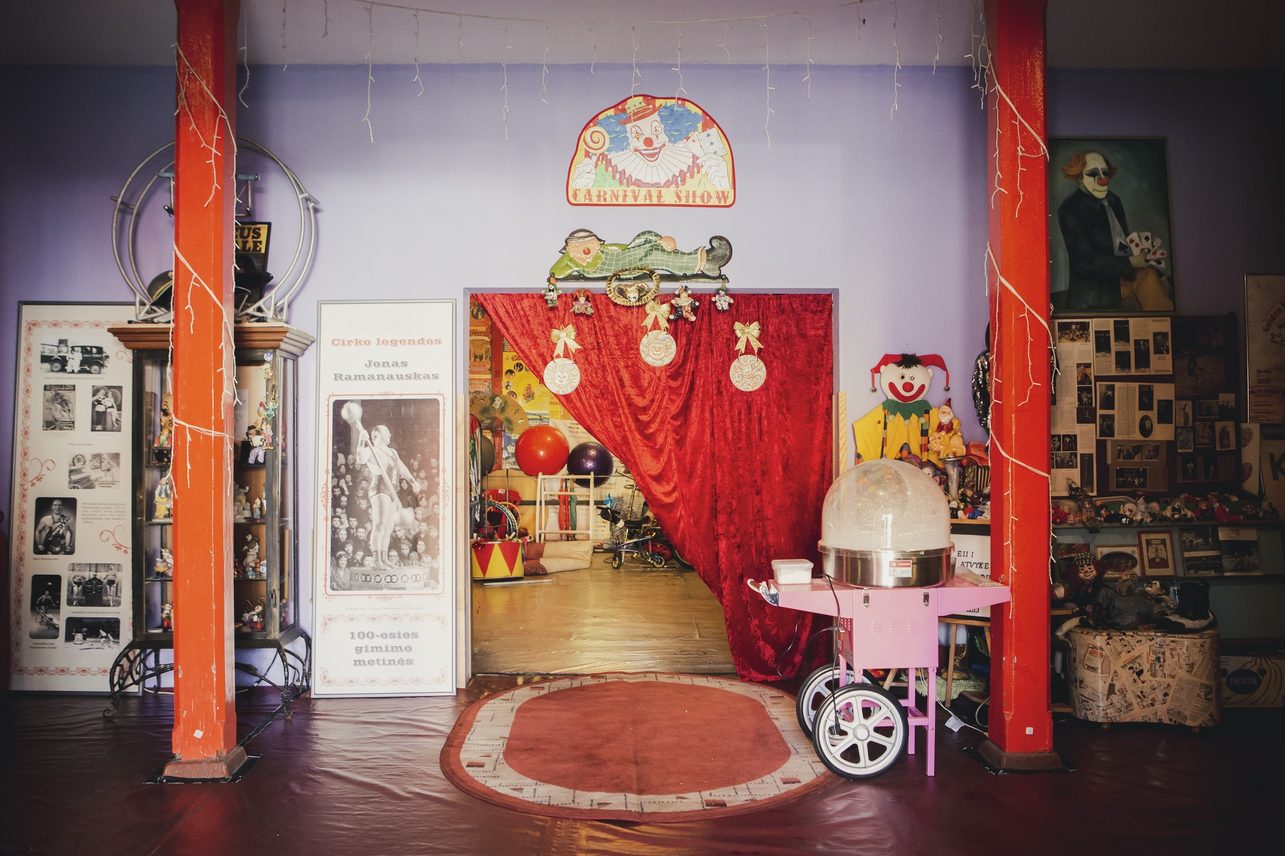
The family’s circus history survives today not only in the memories of relatives or old albums. Jonas Ramanauskas had set up a small museum at his house, where he collected photographs, items, and stage costumes of old circus artists. After his death, his wife handed the collection over to the Lithuanian Sports Museum, where a permanent exhibition dedicated to the circus was later established. To this day, one can see the weights lifted by Jonas Ramanauskas himself and Jadvyga Ramanauskienė’s performance bicycle.
Deimantas also contributed to the preservation of this history in his own way. While collecting material for the exhibition in the museum’s archives, he discovered boxes with hundreds of photographs, postcards, and other exhibits: “I was the very first and only person to have looked through everything,” he recalls. Thus, the interest in the circus that began in childhood eventually turned into research not only of his own family but of a much broader history of the Lithuanian circus. Although Deimantas did not enter the ring himself, he continues the family story by telling it and researching it. And remembering his first visit to the “Baltijos Cirkas” in 1997, the laughter heard at the beginning of our conversation seems quite apt.